
78 Skills that will be Difficult to Automate
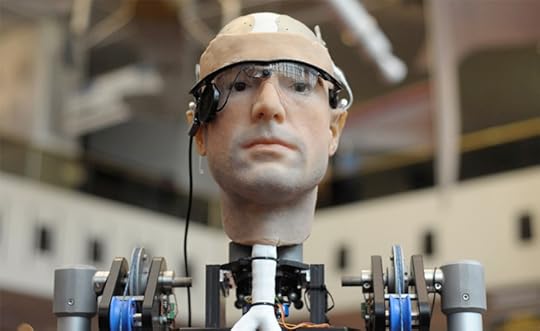
Recently my wife Deb and I were eating at a local sushi restaurant, watching the itamae (sushi chefs) carefully preparing each meal.
In Japan, becoming an itamae of sushi requires years of on-the-job training and apprenticeship.
For this reason, I asked Deb if she would prefer eating sushi that was prepared by humans or the same kind of meals prepared by machines. After thinking about it for a bit, she said that she’d prefer having a human chef because she liked the inconsistencies that go along with having a person at the cutting board.
For her, machines meant perfect consistency and perfectly prepared meals and that was less appealing than a human-centric operation with randomness added to the equation.
The key point here is that when it comes to automation, the marketplace will decide, and the market is not always logical.
We still go to concerts even though listening to prerecorded music at home is safer, more comfortable, and oftentimes better quality.
We still go to museums even though we can witness most of the images online without having to wait in lines and fight crowds.
We still go to coffee shops even though we can brew the same kind of coffee at home for far less money.
In each of these cases, the value of the experience far outweighs the incongruity of decisions being made.
Simply put, we live in a human-based economy, and humans are not always logical.
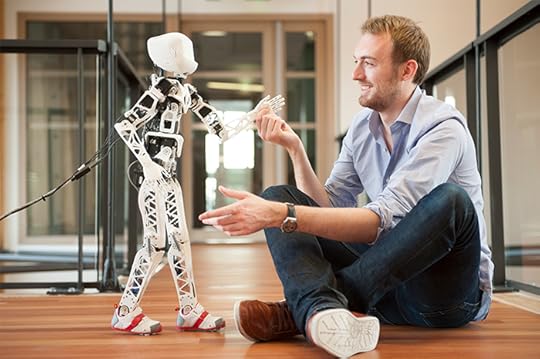 What role will robots play in your future?
The Irrational Human
Will a robot’s smile ever be as comforting as a mother’s smile?
If a robot tells you you’re beautiful, will that ever mean as much as when your boyfriend or girlfriend says it?
It’s easy to start listing all the so-called inferior traits that people have. Robots don’t sweat, complain, have to urinate, take breaks, get angry, or make mistakes.
We generally don’t design machines to be cruel, insulting,lazy, vindictive, violent, irrational, clumsy, greedy, envious, hotheaded, power-hungry, selfish, shy, tactless, superficial, or stupid.
However, humans come with a number of positive characteristics to offset all the negative ones. We can also be friendly, helpful, charming, warmhearted, risk-taking, courageous, empathetic, inspiring, bold, brilliant, resourceful, benevolent, gracious, humble, and forgiving.
When it comes to designing machines to replace humans, we often forget how enormously complex we are.
We have a need to compete, a need to belong, a sense of purpose, we crave attention, love, sex, importance, and the human touch. We must never underestimate the power of the human touch.
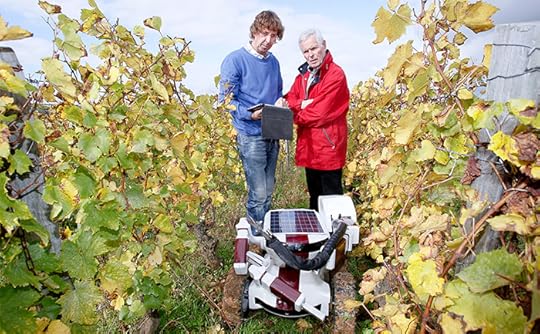 Every human deficiency creates a new market
The Human Economy
Yes, we are all flawed individuals, and as such, we have a number of basic needs.
We need things like water, food, shelter, clothing, safety, and security. Once those needs are met, a number of other needs kick in like our need for belonging, companionship, love, intimacy, and family.
As our lower level needs are met, we move up Maslow’s Hierarchy of Needs to things like self-respect, self-esteem, status, fame, recognition, power, and freedom.
While on the surface we come across as incomplete beings, lacking in so many areas, the reality is that our needs are what drives our economy.
Every human deficiency creates a new market.
Grocery stores wouldn’t exist if we didn’t need food. The housing industry wouldn’t exist if we didn’t need shelter and safety. The automobile industry wouldn’t exist without our need for power, status, and freedom.
Ironically, the reason robots exist is to support our basic human needs.
Robots, on the other hand, do not have the same kind of needs.
The Great “Either-Or” Debate
Will we buy music that’s generated by machines or music produced by humans?
Will we buy machine-made art, watch a robo-ballet, attend a car race with only driverless cars, or sit in a stadium to watch robo-athletes?
In virtually all of these cases, we’ll choose to do both. Certainly we will mostly choose one over the other, but we’ll buy human art along with robo-art. We’ll attend a human-run restaurant one day and a robo-restaurant the next. We’ll cheer on our favorite human team with one set of friends and cheer on our favorite robo-athletes with another.
We will also love some robots and hate others.
We don’t live in an “either-or” world. Rather, our human culture has grown up around a more inclusive “both-and” economy.
Yes, these new options will compete with each other, causing fewer restaurant workers per restaurant, and fewer artists and musicians to fill today’s demands. However, as demand increases, we may actually have more people working in these fields.
Our struggle will be to find the optimal balance. The best restaurant owners will use robots to gain efficiency; the best artists will use robots to produce far more art; and the best musicians and athletes to play with robots instead of play against them.
Tasks and Skills that will be Difficult to Automate
When we factor all of this thinking into a few practical guidelines, the safest jobs will form around:
Complex systems too expensive to automate
Creative endeavors that only humans can appreciate
Human to human interactions that produce an emotional response
Decisions that need human-based reasoning
Complicated outputs that demand a human translator
Situations that require the human touch
Settings where the loyalty of hacker-proof humans is preferable over digital machines
Human to human valuations
Positions where humans control robots
Human to human competition
As I step through this list, please understand that I’m talking about things that will be “difficult” to automate, but probably not impossible.
Once again, it boils down to this question. Given a choice, will people prefer food that is made by humans or food that is made by machines?
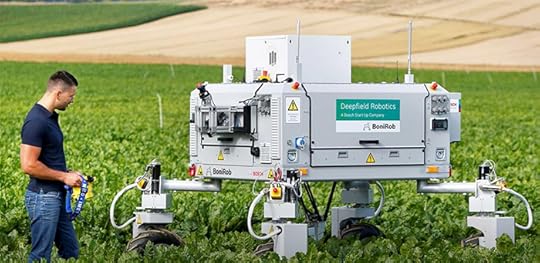 Farmbots are beginning to take center stage in the global ag world
Complex systems too expensive to automate
While there may be no such thing as a “complex system too expensive to automate,” the more complex the system, the more humans will be involved to oversee potential breaking points.
1. Space launches
2. Asteroid mining
3. Nanotech research
4. Deep ocean research
5. Demographic studies
6. Linguistics analysis
7. Material science
8. Failure analysis
Creative endeavors that only humans can appreciate
We have a great love for what creative people produce. Invariably we will use machines to help in these endeavors, but there will always be people directing the effort.
9. Artistic performances – painting, sculpting, dance, and design
10. Musical performances
11. Poetry
12. Fashion designers
13. Interior designers
14. Industrial designers
15. Beauty parlors
16. Reputation designers and managers
Human to human interactions that produce an emotional response
These may seem like tiny pieces of humanity, but the value of these nuanced interfaces play an extraordinary role in our relational experiences.
17. An encouraging smile
18. A persuasive argument
19. A personal handshake
20. A hug
21. A romantic kiss
22. A convincing sales pitch
23. A massage
24. Multiple facets of sexual relations and procreation
Decisions that need human-based reasoning
As our capabilities grow, we will see an ever-increasing need for ethical oversight. Our ability to destroy things will soon exceed our ability to create things, and we’ll need ever-vigilant watchdogs to protect humanity.
25. Creation of new laws, policies, and regulation
26. Government oversight
27. Basic troubleshooting
28. Business planning
29. Marketing strategies
30. Managing animal shelters
31. Child care workers
32. Basic and advanced problem solving
Complicated outputs that demand a human overseer or translator
As the number of sensors increase and the amount of data we’ll be dealing with on a daily basis exceeds human ability to comprehend, we’ll begin to automate the analysis. However, there will still be a need for human oversight to manage all the exceptions and edge cases.
33. Doctors and medical diagnosis
34. Data analytics
35. Judges and legal systems
36. Business executives
37. Privacy advocates and experts
38. Relationship building strategies
39. Birthing processes
40. Genealogical mapping
Situations that require the human touch
Humans are social creatures by nature, and strong social bonds invariably require human touch.
41. Teaching someone to sing, dance, or juggle
42. Teaching someone how to gracefully enter a room
43. Teaching someone how to win a debate
44. Teaching someone why it’s important to take a bath
45. Teaching someone to do gymnastics
46. Teaching someone to make a reasonable decision
47. Teaching someone the value of human life
Settings where the loyalty of hacker-proof humans is preferable over digital machines
Fallible humans may not seem like the strongest link in a secure system but in many cases they become a crucial disconnected node in an otherwise hackable digital structure.
48. Guarding the President (or other important people)
49. Holding a secret
50. Personal confidant
51. Safeguarding corporate knowledge
52. Robot displacement specialists
53. Robot consultants
54. Robot lobbyists
55. Leaders of robot resistance groups
Human to human valuations
Since robots do not value objects the ways humans do, or make decisions about what constitutes a fair price on a product, the need for human value judgments will continue to be important.
56. Buying stocks or commodities
57. Voting
58. Government policy decisions
59. Decisions to act on a policy violation
60. Buyers
61. Purchasing agents
62. Product and service ratings
63. Surveys and polls
Positions where humans control robots
There are many positions where people will use robots as tools and evolve along with their industries, growing with each new productivity advancement.
64. Business owners and managers
65. Software designers and coders
66. System engineers
67. Product designers
68. Robot maintenance and repair
69. Robot configuration specialists
70. Robot test technicians
71. Auctioneer that specializes in selling robots
Human to human competition
We’re much more interested in our standing among other humans over how we compare to robots.
72. Popular sports (i.e. football, basketball, soccer)
73. Olympics and Paralympics
74. Popularity competitions (i.e. beauty pageants, elections, etc.)
75. Loyalty programs
76. X-Prize competitions
77. Startup funding pitches
78. Conflict resolution
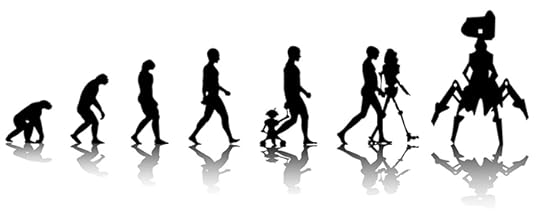 Is this what we should expect from the robot revolution?
Final Thoughts
One of my readers, BJ Brown, recently passed along the following story:
When I was in northwestern Canada in the 70’s I ask one of the locals why they still used dogs instead of snowmobiles. He replied, “When I’m out in bad conditions, the dogs have as much stake in getting home as I do. The snowmobile doesn’t care.”
Will robots ever truly care?
Contrary to popular belief, most robot and AI systems currently act as a complement to humans rather than a replacement them.
According to most experts, we are still years away from general artificial intelligence and full automation. But eventually, there will come a day where robots will perform most tasks and the role of humans in the production cycle will become marginalized.
My goal in writing this was not to develop an exhaustive list of “safe jobs,” but rather to create tools for thinking about the human role in our future.
Robots are coming. They’re coming with or without our blessing, and in shapes and forms we can’t even imagine.
But they also come with limits, limits that we will soon discover along the way.
Author of “Epiphany Z – 8 Radical Visions for Transforming Your Future”



Thomas Frey's Blog

- Thomas Frey's profile
- 2 followers

