
What we measure affects what we do
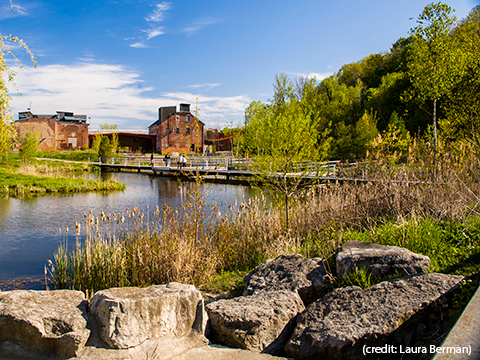
(Credit: Laura Berman)
"What we measure affects what we do. If we have the wrong metrics, we will strive for the wrong things" -- a prescient observation made by Joseph Stiglitz, Nobel Prize winner and former chief economist for the World Bank. What we're measuring got a bit clearer in Canada with the recent release of the Ecosystem Services Toolkit. This toolkit will help assess the benefits that ecosystems provide to people, communities and economies, and encourage factoring the diverse values of ecosystems into decisions. While the toolkit is designed for managers and analysts, the ecosystem services that are assessed provide a plethora of benefits to all people in Canada, regardless of where they live.
This interdisciplinary approach integrates science, economics and traditional knowledge. The toolkit incorporates ecosystem services analysis in areas such as environmental assessments, cost-benefit analysis and wildlife management. It provides a more comprehensive measure of well-being, which allows us to know whether our ecosystems are healthy or not and better manage them in the long-term. If we factor nature into decision-making, we can help conserve it as a green asset into the future, just as we do other forms of capital. A good accountant would never ignore the depreciation of a country's capital, yet our standard measures (e.g., GDP) fail to take resource depletion and environmental degradation into account.
I provided feedback for this toolkit and am excited about the possibilities of its uptake across the country in rural, urban and other settings. It is urgent that we shift our approach without delay. Growing human populations and increasing urbanization are intensifying demands on ecosystems and placing ecosystem services at greater risk. Due to the complex nature of ecosystem services, the more comprehensive approach detailed in this toolkit is needed when making decisions that affect ecosystems and their services.
Why is this so important? Because ecosystem services provide life-support (e.g., clean air, water and food), security (e.g., mitigating extreme weather events associated with climate change) and quality of life (e.g., cultural identity, recreation). The UN Millennium Ecosystem Assessment reviewed the condition of ecosystems and their services around the world and how they benefit human well-being. It found that, over the past 50 years, humans have changed ecosystems more rapidly and extensively than in any comparable period of time in human history, largely to meet rapidly growing demands for food, fresh water, timber, fibre and fuel. This has resulted in a substantial, largely irreversible loss in the diversity of life on Earth.
It's time to change our relationship with nature. Making nature count may be one of the most effective ways to do this.
Hey! Want more DSF? Join David Suzuki on Facebook


David Suzuki's Blog

- David Suzuki's profile
- 247 followers

