A limp reception to IPA Day. Hoppy beers make you flaccid
Rise up gruit drinkers, oh ye fans of unhopped ales. Lay down your swords IPA guzzlers, ye of the limpdicks. For you see, IPA producers, unlike The Church, don't want you to know about a medical condition known as "brewers droop."
 In my post today for All About Beer's Beer Soup blog, I examine this rarely discussed phenomenon that is particularly relevant as we celebrate IPA Day. It's one that Stephen Harrod Buhner saw fit to discuss quite often. Since I'm only alloted a limited word count for Beer Soup, I wanted to offer up some extra background from our friend Buhner not just on WHY hoppy beers produce brewers droop, but where such beers came from and why the Church actually had good reason--besides their own financial gain which is always the case behind any large entity's action--to oppose the implementation of hops. Excerpted from the full article found here.
Perhaps the organizers ought to promote craft beer next year with another style of ale the macros don't produce: the historical gruit.
(And thanks to Motifake.com where I "lifted" the artwork from their Demotivational poster.)
 In my post today for All About Beer's Beer Soup blog, I examine this rarely discussed phenomenon that is particularly relevant as we celebrate IPA Day. It's one that Stephen Harrod Buhner saw fit to discuss quite often. Since I'm only alloted a limited word count for Beer Soup, I wanted to offer up some extra background from our friend Buhner not just on WHY hoppy beers produce brewers droop, but where such beers came from and why the Church actually had good reason--besides their own financial gain which is always the case behind any large entity's action--to oppose the implementation of hops. Excerpted from the full article found here.
To understand the radical change that is involved in the shift from gruit to the hopped beer we now drink, it is important keep in mind the properties of gruit ale: it is highly intoxicating - narcotic, aphrodisiacal, and psychotropic when consumed in sufficient quantity. The hopped ale that took its place is quite different. Its effects are sedating and anaphrodesiacal. In other words it puts the drinker to sleep and dulls sexual desire. Hops is extremely high in estrogenic and soporific compounds. The phytoestrogens make it great for women in menopause but never good for men. (In fact there is a well-known condition among inn keepers and brewers in England called "brewer's droop.")
When Hops began to be suggested for use as a primary additive in ale, the opposition was tremendous. Those who held a monopoly on gruit production in Germany (the Catholic Church) and on pure ale in England fought hop introduction through the legislatures, proclamations of the royalty, writings of the day's medical practitioners, and through church edict. Hops, until this time, was merely one of the plants used all along in the production of beer - the earliest mention of its use probably being in Hildegard of Bingen's (1098-1179) Physica, though she insisted that other than its preservative qualities "It is not much use for a human being, since it causes his melancholy to increase, gives him a sad mind, and makes his intestines heavy."
Perhaps the organizers ought to promote craft beer next year with another style of ale the macros don't produce: the historical gruit.
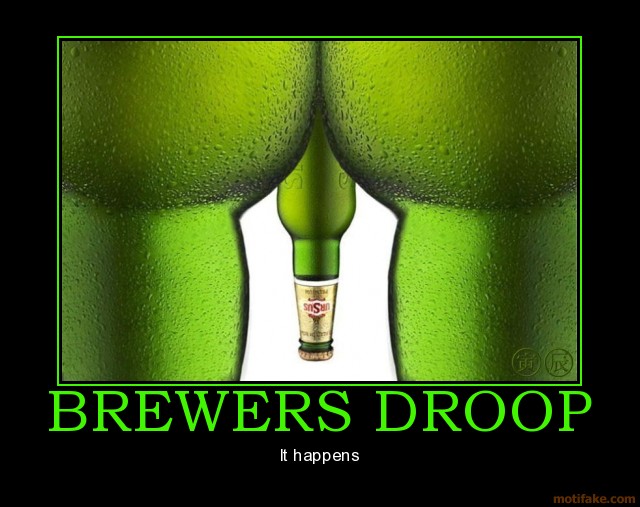
(And thanks to Motifake.com where I "lifted" the artwork from their Demotivational poster.)


No comments have been added yet.