When is a good age to stop reading stories aloud to chil...

When is a good age to stop reading stories aloud to children?
How about never?
Alright, so what are the chances really of being tucked up beside our seventeen year old reading a bedtime story. But many believe that once children have gained the skills to read for themselves, we can take a step back and let kids plough their reading fields alone. Which, of course, they can and should to an extent. After all, it’s an exciting process to allow children more independence; to observe their book choices and reading interests.
My eldest child decided a couple of years ago that she didn’t want to be read to anymore. I accepted this and encouraged her independence. But then I had a conversation with a friend who has been a teacher in her native Finland for many years (we all know by now about Finland’s well-documented academic excellence, but click here for more on this). She told me that she was read to by her parents until she was fifteen and was surprised to find that I wasn’t still reading to my children (aged 10, 8 and 6). In her words, ***
Since then, we’ve resurrected the tradition of family reading time and it’s been brilliant. It’s not always easy finding something that will suit all three of my children. There have been a couple of hits and misses, but on the whole it’s been a wonderful experience, not just for my children but also for me. It feels like important time with my children and it is very rewarding when they all become immersed and involved in a story, asking questions and talking about the book at other times. Not only can it hugely improve recall and listening skills, but by listening to a s
Here are the books I have read to my children in the past eighteen months to give you a few ideas. I’ve put them in the order of when they were first published rather than the order I read them.
The Jungle Book by Rudyard Kipling (1894)
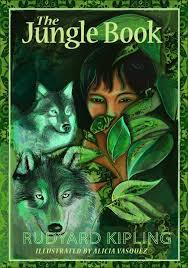
We are reading this at the moment. There are lots of thee’s and thou’s which threw the children initially but they’ve got into the swing of it now. Beautiful, atmospheric prose. My kids have already watched the movie (both versions), but that’s no reason not to go back to the book now.
The Wonderful Wizard of Oz by L. Frank Baum (1900)
This classic tale needs no introduction. Like The Jungle Book, because of the era this was written, there is some olde-worlde language. But the tale of Dorothy and her friends is easy to follow, even for my son who was five at the time.
Swallows and Amazons by Arthur Ransome (1930)
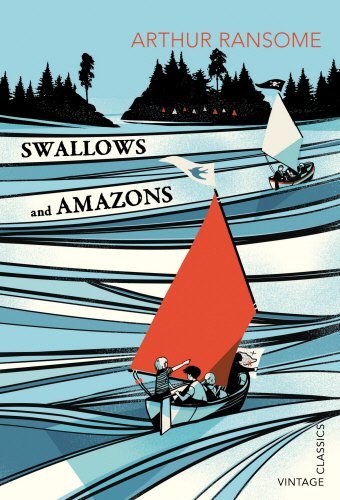
This is a long book, and proved a challenging one. My youngest’s attention drifted in and out of the story; I lost him when Ransome got carried away with nautical terms and more detailed passages of sailing, but his ears pricked up again when there was any talk of pirates! It took some time to read this but I’m glad we persevered and it made it all the more rewarding watching the fun new film version of the book this summer.
Thimble Summer by Elizabeth Enright (1938)
This is a sweet and tender tale of a young girl’s adventures one hot summer in small town 1930’s America. Not an enormous amount ‘happens’ but the descriptions and beautiful and engaging and all my children really enjoyed it. (As an aside, I am fairly horrified to discover that Enright is the single female author I have read so far to my children. I aim to start redressing that balance after finishing The Jungle Book!)
Stuart Little by EB White (1945)
This is a gorgeous little gem of a book. It won’t take long to read and Stuart’s adventures are heart-warming and captivating. EB White’s prose is full of intelligent humour and he allows the reader to answer some questions for themselves.
Mrs Frisby and the Rats of Nimh by Robert C O’Brien (1971)
This is the tale of Mrs Frisby, a widowed mouse and her four children who enlists the help of a community of highly intelligent rats when faced with a terrifying dilemma. My kids loved this book and became deeply involved in Mrs Frisby’s plight and the safety of her children.
Noah Barleywater Runs Away by John Boyne (2010)
This is a curious, haunting book. I was a little uncertain about reading it as Boyne is also the author of The Boy in the Striped Pyjamas which I definitely don’t feel my younger two would be ready for. However, I liked the sound of it and am also a big fan of Oliver Jeffers who did the illustrations for this book. In a similar way to – for example – The Little Prince, Noah Barleywater will need some time to digest. It deals with some quite difficult themes, namely the serious illness of a parent and a child trying to cope with this. But it raised some important questions amongst my children and I’m glad we read it.
This is a beautiful book trailer for Noah Barleywater with Oliver Jeffer’s gorgeous illustrations:
In Their Shoes: Fairy Tales & Folktales (2015)
Selected by Julia Nicholson & Anne-Laure Mercier
A collection of tales from around the world by a number of different authors. All connected to shoes, some of these stories were greeted with great enthusiasm whilst others were not so popular. I can’t deny I fell under the spell of the stunning cover of the collection and, on the whole, this is a worthwhile book which my eight year old is now re-reading alone and enjoying.
TIPS FOR READING ALOUD TO CHILDREN
Find a routine with reading, just like meals, and stick to this so that your children come to expect it. I read to my three after our evening meal whilst they are eating ‘pudding’ and most likely to be quiet and calm! If you’re unsure of what time will work best, play around a bit with it and see when the kids are most responsive.
If you have more than one child, aim for a book that pitches at the average age of your children. Either too advanced or too simple and your kids will lose interest.
Involve your children in the decision-making process of what to read next. If they are resistant to being read to, find a film they’ve enjoyed and read the original book if there is one. (NB It’s definitely more rewarding to read the book first, BUT this could be a way in for you, then you can go on to discuss the differences between the book and film.)
When you start reading each day, have a very brief discussion about what happened on the previous day to ‘place’ the children back into the story.
Look for books that have reasonable-length chapters or lots of natural breaks
We never grow out of pictures (at least, I don’t.) If possible, find a book that has some illustrations in it and share them with your children as you read.
ENJOY it! It is feeling like a drag or you and/or your kids are not enjoying the book, don’t beat yourself up about it and plough through it. Put the book aside and chose another one. Learn from what works and what doesn’t and be guided by the reaction of your children. Have fun!
Compliment this post with The 9 year old who read one hundred books in a year, Why engaging in poetry is a way into writing for kids & Carving a path for our children through written and oral landscapes.

The post appeared first on Rebecca Stonehill.