Pacific Northwest Native Plant of the Week: Goatsbeard (Aruncus dioicus)
I finally managed to take out a very large hosta plant in my front yard. I really hate removing healthy noninvasive plants, however nonnative they may be, especially when they’re pretty. But we all know that “pretty is as pretty does,” right? Being from northeast Asia, it really had no function here other than looking nice with those ultra-inflated leaves. I don’t think I’d ever seen even a honeybee on it’s blossoms, let alone a native bee. Plus, it was overpowering a fern that belongs in this neck o’ the woods.
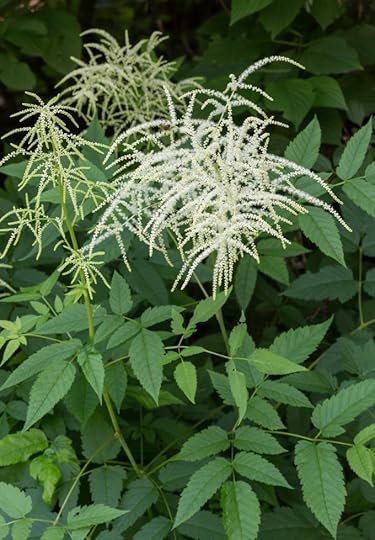
In its place now is a goatsbeard (Aruncus dioicus) plant that had volunteered in the back yard, courtesy its frisky goatsbeard parents. Also known as “bride’s feathers,” it’s actually much more eye-catching, and with ecological function that hostas can only dream about. It also fits well into the shade-loving native spread near the north side of my house, sharing space with a surprisingly robust western maidenhair fern (Adiantum aleuticum), an evergreen huckleberry (Vaccinium ovatum), a lonesome goatsbeard, and assorted other native ferns and ground cover, all of which can be found growing with it in nature.
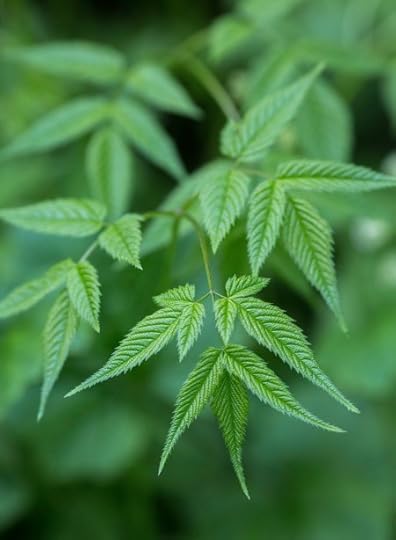 Goatsbeard’s compound, pointy, toothed leaves have a texture all their own and are particularly fetching in spring when they’re new. In early to mid-summer the main show begins when tall, feathery plumes composed of tiny, creamy-white flowers rise above the foliage. Male plants are more spectacular in flower than female, but regardless of gender, it offers a lovely presence in shaded to partly-shaded borders, under tall trees, or as a deciduous screen or short hedge.
Wildlife value
Goatsbeard attracts quite a few insect species, including native bees, syrphid flies, teeny tiny beetles that I don’t know the name of, and—if you’re lucky—mourning cloak butterflies (your odds will increase if you already grow their host plants, which include native willow, birch, hawthorn, wild rose). Small birds may eat the seeds, so leave the spent flowers to overwinter.
Try it at home
Found in most of western Washington, Oregon, and northern California, goatsbeard naturally occurs along streams and in moist meadows and forests, but also sometimes in disturbed areas such as roadsides. As such, it likes moist, rich soil (add compost!). Although it does best with at least a half day of shade, it can be grown in more sun in cooler, more northerly locations. Goatsbeard eventually will form a large clump, 3 to 6 feet tall and as wide, so space plants about four feet apart. Grow it with associates (those that naturally grow together and depend on each other), including Douglas-fir, western hemlock, western red cedar, vine maple, deer fern, maidenhair fern, inside-out flower, and western trillium. Enjoy!
To leave a comment, click on post’s title