Beneath the Surface
Beneath the Surface, by John Hargrove with Howard Chua-Eoan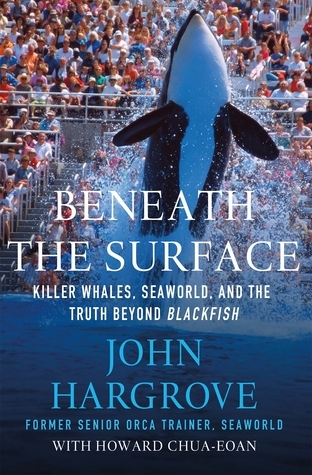 Blurb:Over the course of two decades, John Hargrove worked with 20 different whales on two continents and at two of SeaWorld's U.S. facilities. For Hargrove, becoming an orca trainer fulfilled a childhood dream. However, as his experience with the whales deepened, Hargrove came to doubt that their needs could ever be met in captivity. When two fellow trainers were killed by orcas in marine parks, Hargrove decided that SeaWorld's wildly popular programs were both detrimental to the whales and ultimately unsafe for trainers.After leaving SeaWorld, Hargrove became one of the stars of the controversial documentary Blackfish. The outcry over the treatment of SeaWorld's orca has now expanded beyond the outlines sketched by the award-winning documentary, with Hargrove contributing his expertise to an advocacy movement that is convincing both federal and state governments to act.In Beneath the Surface, Hargrove paints a compelling portrait of these highly intelligent and social creatures, including his favorite whales Takara and her mother Kasatka, two of the most dominant orcas in SeaWorld. And he includes vibrant descriptions of the lives of orcas in the wild, contrasting their freedom in the ocean with their lives in SeaWorld.Hargrove's journey is one that humanity has just begun to take-toward the realization that the relationship between the human and animal worlds must be radically rethought.This is the second book I've read on the subject of killer whales in captivity, a subject I'm very passionate about and interested in. Beneath the Surface is very different from Death at SeaWorld, but no less interesting, just different. It was less on an information dump and more readable. Written by a former sea world trainer, it tells the side of the trainers and even though it's got less figures and scientific facts, it feels a lot more personal as Hargrove tells you stories and anecdotes about the whales. It was really just a different set of information.It was well-written and very easy to read - it pretty much devoured it in one sitting! The complexity of the trainers relationships with the orca and the slow change in feelings towards captivity were fascinating and well depicted.The one thing I didn't like that he kept referring to the whales as going over to the 'dark side' when they showed aggression, but to me those words give the wrong impression. It sounds evil and cruel, but their anger and agitation is natural to me.All in all, very good book for people who want to know more about the daily lives of these beautiful animals in captivity, but don't fancy reading a huge, heavy-going tome like Death at SeaWorld.My favourite quotes from 'Beneath the Surface':'We swam with them. We kept them healthy. We saw them give birth. We watched them suffer. We looked them in the eye and caught a glimpse of their souls. Sometimes, we saw joy. Sometimes we saw things that were terrifying.''Captivity is always captivity, no matter how gentle the jailer.''SeaWorld may have set itself up as a kind of paradise - all theme parks do - but even the Garden of Eden was part of a morality story.''Whales do remember. Are they able to forgive?''In captivity, all the orcas are 'feral' children - they ha no adult orcas to socialise them properly. ... None of the original captive orcas were mature enough to take on the full role that matriarchs play in the wild.''A calf is always a calf, no matter how old the whale becomes, it is always its mother's son or daughter.''Your emotions shift. You move towards the dark side. And then, suddenly, an opportunity comes for revenge. Will you take it?'' "We need to realise that these are beings that suffer the same as we suffer, they want freedom the way we want freedom." '
Blurb:Over the course of two decades, John Hargrove worked with 20 different whales on two continents and at two of SeaWorld's U.S. facilities. For Hargrove, becoming an orca trainer fulfilled a childhood dream. However, as his experience with the whales deepened, Hargrove came to doubt that their needs could ever be met in captivity. When two fellow trainers were killed by orcas in marine parks, Hargrove decided that SeaWorld's wildly popular programs were both detrimental to the whales and ultimately unsafe for trainers.After leaving SeaWorld, Hargrove became one of the stars of the controversial documentary Blackfish. The outcry over the treatment of SeaWorld's orca has now expanded beyond the outlines sketched by the award-winning documentary, with Hargrove contributing his expertise to an advocacy movement that is convincing both federal and state governments to act.In Beneath the Surface, Hargrove paints a compelling portrait of these highly intelligent and social creatures, including his favorite whales Takara and her mother Kasatka, two of the most dominant orcas in SeaWorld. And he includes vibrant descriptions of the lives of orcas in the wild, contrasting their freedom in the ocean with their lives in SeaWorld.Hargrove's journey is one that humanity has just begun to take-toward the realization that the relationship between the human and animal worlds must be radically rethought.This is the second book I've read on the subject of killer whales in captivity, a subject I'm very passionate about and interested in. Beneath the Surface is very different from Death at SeaWorld, but no less interesting, just different. It was less on an information dump and more readable. Written by a former sea world trainer, it tells the side of the trainers and even though it's got less figures and scientific facts, it feels a lot more personal as Hargrove tells you stories and anecdotes about the whales. It was really just a different set of information.It was well-written and very easy to read - it pretty much devoured it in one sitting! The complexity of the trainers relationships with the orca and the slow change in feelings towards captivity were fascinating and well depicted.The one thing I didn't like that he kept referring to the whales as going over to the 'dark side' when they showed aggression, but to me those words give the wrong impression. It sounds evil and cruel, but their anger and agitation is natural to me.All in all, very good book for people who want to know more about the daily lives of these beautiful animals in captivity, but don't fancy reading a huge, heavy-going tome like Death at SeaWorld.My favourite quotes from 'Beneath the Surface':'We swam with them. We kept them healthy. We saw them give birth. We watched them suffer. We looked them in the eye and caught a glimpse of their souls. Sometimes, we saw joy. Sometimes we saw things that were terrifying.''Captivity is always captivity, no matter how gentle the jailer.''SeaWorld may have set itself up as a kind of paradise - all theme parks do - but even the Garden of Eden was part of a morality story.''Whales do remember. Are they able to forgive?''In captivity, all the orcas are 'feral' children - they ha no adult orcas to socialise them properly. ... None of the original captive orcas were mature enough to take on the full role that matriarchs play in the wild.''A calf is always a calf, no matter how old the whale becomes, it is always its mother's son or daughter.''Your emotions shift. You move towards the dark side. And then, suddenly, an opportunity comes for revenge. Will you take it?'' "We need to realise that these are beings that suffer the same as we suffer, they want freedom the way we want freedom." '


No comments have been added yet.