
In Which I Go Out on a Limb
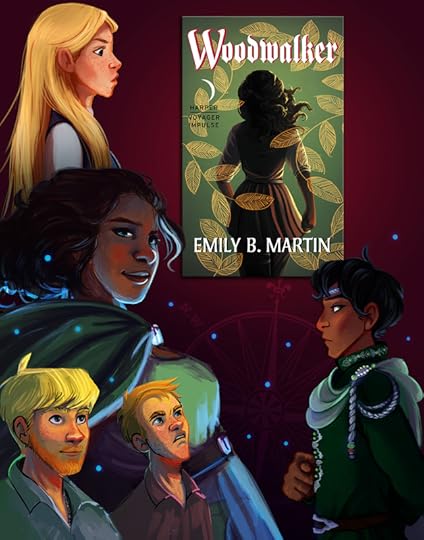
This evening I experienced what has been, so far, the most fulfilling moment of my fledgling career as an author. I had a book signing at our local Books-a-Million, and I signed and sold a decent number of copies. Things started off slow, so I had ample time to sketch in between interested readers. Behind me was the poster I put together showcasing the five main characters of WOODWALKER—Mae, the protagonist, Mona, Colm, Arlen, and Valien.
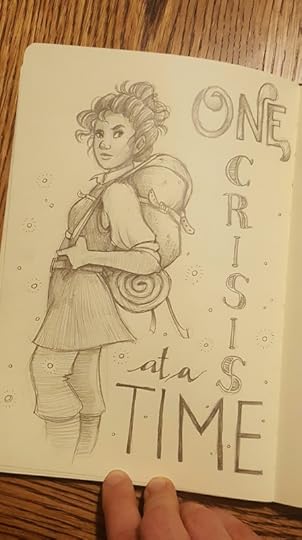
Sketching is often a good way to draw people in, and it worked for a mother and her two twin daughters, probably ten years old or so. They came to see what I was doing and exclaimed over the picture of Mae I was doodling. They asked about the book, and while they were a few years younger than the intended audience, I told them about how it was an adventure story starring a girl, which got them excited. They begged their mom to buy the book, and she agreed, saying that even if it was a little old for them, at least they would learn some new vocabulary words.
After I wrote their names in the book and signed it, I showed them the picture I had been drawing again.
“She’s the main character,” I said. And I pointed behind me at the poster, which is full color. “And that’s her, too.”
“Girls,” said their mother. “Look at her skin.”
The two girls looked at the poster and saw that Mae’s skin was dark like theirs. One of them looked back at me and put her arm around my shoulder.
“Can I give you a hug?” she asked.
I hugged her and her sister tightly and told them I hoped they liked the book.
 Despite how important the issue of diversity and inclusivity is to me, I find it very hard to talk about. I don’t post about it much, concerned about coming across as a “theater ally,” someone who acts a certain way only in the interest of having it reflect positively back on them. I think Twitter is partly to blame. For every sound opinion, there seems to be an equally sound conflicting one. Some people think white people should use our privilege to be vocal, some think we should be silent to let marginalized voices be heard. Some say we should identify ourselves as allies, some say we should cut it out with labeling ourselves allies in the interest of avoiding the aforementioned theatrics.
I struggle with whether I have the right to write a Cherokee-inspired character in Mae, or a black character in Rou, or a Latina character in Gemma. I struggle with how to write a Lord of the Rings-style fantasy set in an American world without appropriating culture. I struggle with wanting to tell everyone about my diverse cast of characters, wanting to insert myself in the “we need diverse books!” hashtags. I worry about unconsciously stereotyping. And I know I have little right to complain about the complexities of writing these characters, when at least I have the privilege of my voice being heard, rather than silenced, misconstrued, or told to change.
So I tend to err on the side of silence, hoping that instead my work will just speak for itself. And tonight, it did. Two little girls saw themselves represented in the hero of a fantasy-adventure novel, just like I saw myself in Daine, and Matilda, and Saaski.
Even this post feels slightly theatrical and disingenuous. But my gratefulness to those girls and their mother is real, and not because it makes me look good, but because this is the ultimate goal I've been working towards all this time--using my work to nudge inclusivity just a bit further. I wanted to tell them to wait until book two—that the romantic interest, and perhaps my favorite character I’ve written so far, is a young black man. But I didn’t. I just hugged them and thanked them for buying my book. I thanked their mother, and I told her this was important to me.
I hope they like it.
Sketching is often a good way to draw people in, and it worked for a mother and her two twin daughters, probably ten years old or so. They came to see what I was doing and exclaimed over the picture of Mae I was doodling. They asked about the book, and while they were a few years younger than the intended audience, I told them about how it was an adventure story starring a girl, which got them excited. They begged their mom to buy the book, and she agreed, saying that even if it was a little old for them, at least they would learn some new vocabulary words.
After I wrote their names in the book and signed it, I showed them the picture I had been drawing again.
“She’s the main character,” I said. And I pointed behind me at the poster, which is full color. “And that’s her, too.”
“Girls,” said their mother. “Look at her skin.”
The two girls looked at the poster and saw that Mae’s skin was dark like theirs. One of them looked back at me and put her arm around my shoulder.
“Can I give you a hug?” she asked.
I hugged her and her sister tightly and told them I hoped they liked the book.
Despite how important the issue of diversity and inclusivity is to me, I find it very hard to talk about. I don’t post about it much, concerned about coming across as a “theater ally,” someone who acts a certain way only in the interest of having it reflect positively back on them. I think Twitter is partly to blame. For every sound opinion, there seems to be an equally sound conflicting one. Some people think white people should use our privilege to be vocal, some think we should be silent to let marginalized voices be heard. Some say we should identify ourselves as allies, some say we should cut it out with labeling ourselves allies in the interest of avoiding the aforementioned theatrics.I struggle with whether I have the right to write a Cherokee-inspired character in Mae, or a black character in Rou, or a Latina character in Gemma. I struggle with how to write a Lord of the Rings-style fantasy set in an American world without appropriating culture. I struggle with wanting to tell everyone about my diverse cast of characters, wanting to insert myself in the “we need diverse books!” hashtags. I worry about unconsciously stereotyping. And I know I have little right to complain about the complexities of writing these characters, when at least I have the privilege of my voice being heard, rather than silenced, misconstrued, or told to change.
So I tend to err on the side of silence, hoping that instead my work will just speak for itself. And tonight, it did. Two little girls saw themselves represented in the hero of a fantasy-adventure novel, just like I saw myself in Daine, and Matilda, and Saaski.
Even this post feels slightly theatrical and disingenuous. But my gratefulness to those girls and their mother is real, and not because it makes me look good, but because this is the ultimate goal I've been working towards all this time--using my work to nudge inclusivity just a bit further. I wanted to tell them to wait until book two—that the romantic interest, and perhaps my favorite character I’ve written so far, is a young black man. But I didn’t. I just hugged them and thanked them for buying my book. I thanked their mother, and I told her this was important to me.
I hope they like it.


No comments have been added yet.
Emily B. Martin's Blog

- Emily B. Martin's profile
- 145 followers
Emily B. Martin isn't a Goodreads Author
(yet),
but they
do have a blog,
so here are some recent posts imported from
their feed.

