A WINK AND A NOD TO VLAD THE IMPALER
S. Lee Manning: Writing espionage novels requires a delicate dance between reality and fiction. It has to be realistic enough to be plausible, yet not so real that the reader may be distracted by knowledge of the real events or real people. Some writers beautifully blend real people and fiction, but I would be concerned that I couldn’t pull it off. It requires an impressive level of discipline and research – not that I don’t research or I’m not disciplined, but it does increase my anxiety about getting things right. With using people who are currently alive, quite apart from the legal questions, I would worry that real events or real people could date or pre-empt the plots of my novels. So, I do the balancing dance. I create a parallel universe, one where the past – World War II, the fall of the Soviet Union, 9-11, actually occurs – but one where fictional characters inhabit the high offices of state. My President of the United States resembles President Bartlett from the television show West Wing as much as he resembles any real life president, which is to say, not much.
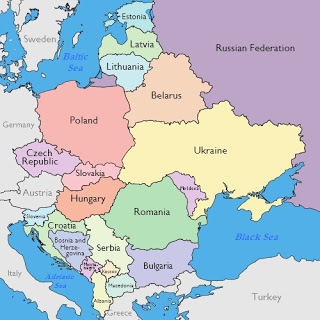
In my work in progress, Ride a Red Horse, Putin is not in office, but the office of the President of the Russian Federation and his underlings are preoccupied with finding ways to reestablish the boundaries of the former Soviet Union. So not Putin, but motivation and story line that owe much to Putin.
World tensions are similar, although I fudge it a little. Belarus is one of Russia’s closest allies, but if the current president should depart the scene and a democratic president be elected, Belarus could go the way of Georgia and Ukraine.
The closest I’ve gotten to a real historical figure is a wink and a nod to Vlad III of Wallachia, also known as Vlad Tepes, Vlad the Impaler, or Vlad Dracul. Vlad has been a favorite of writers since Bram Stoker made him into a vampire in the nineteenth century. To us, he’s a figure of horror, almost cartoonish in his evil. To Romanians, he’s something else, a nationalist, a folk hero who defended the country from the Ottomans.
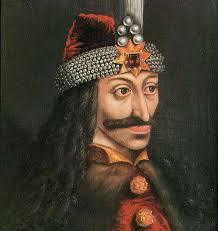 His history was fascinating. Romania in the fifteenth century was torn between east and west. Vlad III’s father made a deal with the Ottomans for power, and to ensure he would live up to the bargain, sent his sons, Vlad and Radu, to the Ottoman Court as hostages. They were treated well, taught literature and fencing, but Vlad resented his captivity.When he came to power, he rejected the Ottoman influence and fought off several attempts by Turkish troops to invade, impaling the captured Ottoman soldiers.
The famous stories of his cruelty seem to differ depending on the sources. German stories written after his death showed him feasting in a forest of impaled victims, impaling his own citizens for minor crimes. Russian stories had him as a great leader who was reasonable in using impalement to terrorize and dishearten the Ottomans, who wanted to subjugate Romania.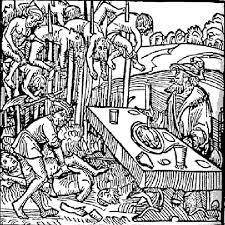
In Trojan Horse, I didn't incorporate the real historical figure but I made my villain, Mihai Cuza, a descendent of Vlad the Impaler, not only because the plot involved American involvement in Romania but because it upped the tension to have my villain copy his ancestor by killing people in a particularly gruesome and painful way. But I also liked the idea that Vlad III wasn’t a villain to the Romanians, despite his penchant for hoisting people on poles. After all, what villain doesn’t think he’s the hero? Cuza believes himself to be a Romanian patriot, and every unpleasant death is for the greater good of the country he loves.
And after all, having a good, three dimensional villain is what makes the best thriller novels. I like my villains, like my other characters, to be real. Just not too real.

In my work in progress, Ride a Red Horse, Putin is not in office, but the office of the President of the Russian Federation and his underlings are preoccupied with finding ways to reestablish the boundaries of the former Soviet Union. So not Putin, but motivation and story line that owe much to Putin.
World tensions are similar, although I fudge it a little. Belarus is one of Russia’s closest allies, but if the current president should depart the scene and a democratic president be elected, Belarus could go the way of Georgia and Ukraine.
The closest I’ve gotten to a real historical figure is a wink and a nod to Vlad III of Wallachia, also known as Vlad Tepes, Vlad the Impaler, or Vlad Dracul. Vlad has been a favorite of writers since Bram Stoker made him into a vampire in the nineteenth century. To us, he’s a figure of horror, almost cartoonish in his evil. To Romanians, he’s something else, a nationalist, a folk hero who defended the country from the Ottomans.
 His history was fascinating. Romania in the fifteenth century was torn between east and west. Vlad III’s father made a deal with the Ottomans for power, and to ensure he would live up to the bargain, sent his sons, Vlad and Radu, to the Ottoman Court as hostages. They were treated well, taught literature and fencing, but Vlad resented his captivity.When he came to power, he rejected the Ottoman influence and fought off several attempts by Turkish troops to invade, impaling the captured Ottoman soldiers.
The famous stories of his cruelty seem to differ depending on the sources. German stories written after his death showed him feasting in a forest of impaled victims, impaling his own citizens for minor crimes. Russian stories had him as a great leader who was reasonable in using impalement to terrorize and dishearten the Ottomans, who wanted to subjugate Romania.

In Trojan Horse, I didn't incorporate the real historical figure but I made my villain, Mihai Cuza, a descendent of Vlad the Impaler, not only because the plot involved American involvement in Romania but because it upped the tension to have my villain copy his ancestor by killing people in a particularly gruesome and painful way. But I also liked the idea that Vlad III wasn’t a villain to the Romanians, despite his penchant for hoisting people on poles. After all, what villain doesn’t think he’s the hero? Cuza believes himself to be a Romanian patriot, and every unpleasant death is for the greater good of the country he loves.
And after all, having a good, three dimensional villain is what makes the best thriller novels. I like my villains, like my other characters, to be real. Just not too real.


No comments have been added yet.