An Interview with J R Creaden
Each month for the coming year, I intend to interview a fellow science fiction author on this blog. Hopefully you will find it interesting, and may be even discover a new writer whose work you enjoy. I am sure that I will learn quite a bit about the craft in the process!
My first volunteer is J R Creaden. I read the introduction to her upcoming book and was grabbed by the questions it posed and the immediacy of the mysterious threat.
Anyway, on with the questions...
Do you write on a typewriter, computer, dictate or longhand?
For decades, I was a PC only gal. I got my first laptop for graduate school, and it’s all I use anymore, but that’s a recent development for me. I’ve written everything else longhand, typing it later. I’ve tried dictation, but I find my fingers are much better at composing than my mouth is.I know exactly what you mean about dictation. I can see it would help maintain productivity when on a long boring drive, or stuck in traffic, but otherwise it means so much more time editing. Do you have a soundtrack you write to?I used to write in complete silence, noise-cancelling headphones and all. I’ve experimented with listening to my favorite music while I write, but the lyrics distract me. Nowadays I write to the noise of my environment—whatever it is—even if it’s children playing, adults talking about work, or TV shows blaring from the next room. At this point, my prose is my voice; I don’t feel affected by much besides my inner ear.That's impressive. I can't write with other things in the background. I guess one of the benefits for those of us who are full-time authors is that thy can find quiet time. Do you write full-time or part-time?I’d say that I write full-time, despite parenting and working two jobs. I spend at least six hours each day writing, revising, editing, critiquing, or researching. I’m not sure I ever actually stop writing.Very impressive. I don't think I've managed six hours writing in a day very often at all. Perhaps the final re-write of Liberty was the longest, a weekend at home alone which I'd managed to keep clear of other work.Do you have any strange writing habits or rituals?I can’t write with shoes on. Something about having my feet restricted totally stumps me. Also, I can’t let my feet touch the floor without making myself get up, move around, and resituate myself, like a dog going in circles before he lays down. I totally get the shoes thing, I've taken my slippers off even to write this. But I'm the opposite about the floor. If I don't have my feet on the floor, I don't feel stable enough and I can' centre myself enough to focus. Most of the people I'm going to be interviewing are self-published, at least or some of their work. What would you say are the main advantages and disadvantages of self-publishing are compares to going through a traditional publishing house?Self-publishing seems to require a hell of a lot of work on the author’s part. PR, marketing, hiring illustrators and editors, navigating copyrights and platforms… I’m certain I’d rather spend my time writing new stories. That said, self-publishing sounds much less depressing than never getting published.
The reminds me about getting Liberty ready to publish. Everything went smoothly for Createspace, but I hit problems preparing the cover for IngramSpark.
Any other reasons you're going the indie route?Traditional publishing has always been my goal, because I want to “see” the product, to run across my own titles in readers’ hands at bookstores and libraries. That, and it might be nice for once for my family to acknowledge that I’m “doing something”.
After spending time outside the US, away from First World Problems, and the rat race of corporate America, I struggle to accept the “end” of traditional publishing. There are still places in the world where people don’t have cell phones, laptops, tablets, where they don’t even have libraries or bookstores! Sure, they can order them from Amazon, but at what cost? And how long will shipping take? Weeks? Months? Seasons? I write in English, and certain American values admittedly pulse across my pages, but I aim for a global audience, for the reader who might only ever have just “the one” book. If it’s not printed, how can my book make it to their deserted island, their isolated village, their mountaintop cabin?That is a lovely aim.
Thank you for taking part in this interview. I wish you well with your latest release.
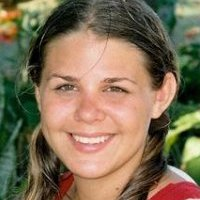 JR began her writing career as a child disgruntled with song lyrics. After some early success with poetry and essays, she spent decades distracted by songwriting and academia until her story dreams became too interesting to keep to herself. A Major Shift, JR’s first novel (rife with first-time novelist problems to solve), may permanently be “under revision,” but her current YA scifi project will soon be ready for public consumption or vivisection. Her goal is to share stories that inspire readers to embrace cultural diversity, the promise of science, and the value of humour and imagination to build a future that’s more Star Trek and less 1984. When she’s not writing, JR enjoys exchanging “your mama” jokes with her children, floating in lakes, and slaying virtual dragons.You can find her website at https://jrcreaden.wordpress.com or follow her on Twitter and Facebook.
My first volunteer is J R Creaden. I read the introduction to her upcoming book and was grabbed by the questions it posed and the immediacy of the mysterious threat.
Anyway, on with the questions...
Do you write on a typewriter, computer, dictate or longhand?
For decades, I was a PC only gal. I got my first laptop for graduate school, and it’s all I use anymore, but that’s a recent development for me. I’ve written everything else longhand, typing it later. I’ve tried dictation, but I find my fingers are much better at composing than my mouth is.I know exactly what you mean about dictation. I can see it would help maintain productivity when on a long boring drive, or stuck in traffic, but otherwise it means so much more time editing. Do you have a soundtrack you write to?I used to write in complete silence, noise-cancelling headphones and all. I’ve experimented with listening to my favorite music while I write, but the lyrics distract me. Nowadays I write to the noise of my environment—whatever it is—even if it’s children playing, adults talking about work, or TV shows blaring from the next room. At this point, my prose is my voice; I don’t feel affected by much besides my inner ear.That's impressive. I can't write with other things in the background. I guess one of the benefits for those of us who are full-time authors is that thy can find quiet time. Do you write full-time or part-time?I’d say that I write full-time, despite parenting and working two jobs. I spend at least six hours each day writing, revising, editing, critiquing, or researching. I’m not sure I ever actually stop writing.Very impressive. I don't think I've managed six hours writing in a day very often at all. Perhaps the final re-write of Liberty was the longest, a weekend at home alone which I'd managed to keep clear of other work.Do you have any strange writing habits or rituals?I can’t write with shoes on. Something about having my feet restricted totally stumps me. Also, I can’t let my feet touch the floor without making myself get up, move around, and resituate myself, like a dog going in circles before he lays down. I totally get the shoes thing, I've taken my slippers off even to write this. But I'm the opposite about the floor. If I don't have my feet on the floor, I don't feel stable enough and I can' centre myself enough to focus. Most of the people I'm going to be interviewing are self-published, at least or some of their work. What would you say are the main advantages and disadvantages of self-publishing are compares to going through a traditional publishing house?Self-publishing seems to require a hell of a lot of work on the author’s part. PR, marketing, hiring illustrators and editors, navigating copyrights and platforms… I’m certain I’d rather spend my time writing new stories. That said, self-publishing sounds much less depressing than never getting published.
The reminds me about getting Liberty ready to publish. Everything went smoothly for Createspace, but I hit problems preparing the cover for IngramSpark.
Any other reasons you're going the indie route?Traditional publishing has always been my goal, because I want to “see” the product, to run across my own titles in readers’ hands at bookstores and libraries. That, and it might be nice for once for my family to acknowledge that I’m “doing something”.
After spending time outside the US, away from First World Problems, and the rat race of corporate America, I struggle to accept the “end” of traditional publishing. There are still places in the world where people don’t have cell phones, laptops, tablets, where they don’t even have libraries or bookstores! Sure, they can order them from Amazon, but at what cost? And how long will shipping take? Weeks? Months? Seasons? I write in English, and certain American values admittedly pulse across my pages, but I aim for a global audience, for the reader who might only ever have just “the one” book. If it’s not printed, how can my book make it to their deserted island, their isolated village, their mountaintop cabin?That is a lovely aim.
Thank you for taking part in this interview. I wish you well with your latest release.
 JR began her writing career as a child disgruntled with song lyrics. After some early success with poetry and essays, she spent decades distracted by songwriting and academia until her story dreams became too interesting to keep to herself. A Major Shift, JR’s first novel (rife with first-time novelist problems to solve), may permanently be “under revision,” but her current YA scifi project will soon be ready for public consumption or vivisection. Her goal is to share stories that inspire readers to embrace cultural diversity, the promise of science, and the value of humour and imagination to build a future that’s more Star Trek and less 1984. When she’s not writing, JR enjoys exchanging “your mama” jokes with her children, floating in lakes, and slaying virtual dragons.You can find her website at https://jrcreaden.wordpress.com or follow her on Twitter and Facebook.


No comments have been added yet.