From Concept to Publication: WOW Blog Tour with Francie Healey
Posted by Kathleen Pooler/@kathypooler with Francie Healey/@FrancieHealey
Alzheimer’s Disease is the most common form of dementia, and despite extensive research and some advances in treatment options, there is no current cure. Francie Healey has addressed this dilemma in a creative and positive way by promoting what she calls ” conscious wellness”, empowering us to take charge of our health through diet and lifestyle choices. In her new cookbook, Eat to Beat Alzheimer’s, she provides a well-researched practical guide for selecting brain-protective foods that reduce inflammation and help delay the onset or minimize the damage of this dreaded condition.
My reviews of her book can be found on Amazon, Goodreads, LibraryThings and Riffle.
I’m happy to host Francie’s in her WOWWomen on Writing Blog Tour where she will discuss the story behind the story of her new book. If you leave a comment, your name will be entered into a random drawing for a copy of her cookbook.
Welcome, Francie!

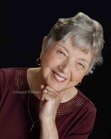
Author and Certified Health Counselor Francie Healey
From Concept to Publication
For me, the creating and writing of Eat to Beat Alzheimer’s from concept to publication has been a three year long journey that has been full of technical, creative, personal and spiritual growth. This book has been an avenue for all kinds of learning: how to deal with obstacles, how to have a strong voice, how to advocate for what really matters to me, how to compromise, how to relate concepts to readers that educate and empower, how to be brave, which is also, how to be vulnerable.
I couldn’t have persevered and succeeded without my team, my family, and the support of friends and mentors. And even with help, there are some moments that must be walked alone, that really are about the growth we yearn for on a very deep level. I believe any creative project or risk we take, anything that feels like a leap of faith into the life we hope for, will bring about situations where we need to confront our own shadow. In other words, taking action towards a meaningful dream will lead us along a path that must address the inner places that had been previously holding us back. For example, it had been my habit, formed very early on in life, to surrender my voice and defer to another’s authority, even if that other’s viewpoint differed from my perspective or need. When I was faced with the opportunity to go back into this old habit and sacrifice my own vision for the book, for what another proposed it should be, I had the chance to become more conscious of this temptation and to choose differently. I am happy to say that I used that opportunity to speak up and advocate for what I wanted for Eat to Beat Alzheimer’s, and was very well received. Of course that scenario had nothing to do with anyone else, and everything to do with me, and what I personally was learning from this creative process.
From my perspective, addressing this level of psychological and spiritual growth was essential for the writing and publishing of Eat to Beat Alzheimer’s to continue moving forward. Even as I was refining my writing, researching and organizational skills, I still needed to address the deeper growth opportunity for this experience to be successful in a way that was aligned with my own vision and needs.
There were, and are, many levels operating when we pursue a project like a book, and especially I think, a first book. My experience all the way through was a bit like a juggling act, constantly moving parts that needed tracking and attention, while always holding the whole picture in mind.
Researching for Eat to Beat Alzheimer’s opened up so many paths that it was important to stay focused on what needed to be in this book, versus what would overwhelm it. I really wanted to have rich research-based content that would ground the premise of the book for readers; so they would know why I used the ingredients and recipes I did and what was happening in their bodies from the foods they were eating. Eat to Beat Alzheimer’s is based in science and good data. I want my readers to have access to that information so they feel empowered in their decisions around food. As we looked into all the research, it became clear that this is an abundant and emerging field, so it was necessary to contain the information we gathered, and bookmark areas for later research and writing projects. Eat to Beat Alzheimer’s has been an incredible project that has meant a lot to me personally and professionally, and it appears to be just a starting point for more to come. As I continue to learn and grow, I am inspired to continue sharing what I am discovering about healing and wellness.
And now that Eat to Beat Alzheimer’s is published and in the hands of readers, I am really delighted to have made such an accomplishment that will also serve as a stepping stone to even deeper dives into this area of brain health and overall wellness. I couldn’t have sustained such a project if it wasn’t a passion of mine: bringing good information to people and helping clients and readers to awaken to the potential they have, right now, to make significant positive changes in their lives. On the other side of publication, looking back, I am grateful for the process, even the rigorous challenges, which only served to strengthen me as an author. I trust that Eat to Beat Alzheimer’s will offer readers valuable insight and healing because it certainly did that for me in the writing of it.
There is something very powerful about bringing an idea into form. To make a concept, that begins somewhat as a fantasy, into a reality is a birthing process. And like birth, it is hard and messy, and takes a lot longer than we think it is going to take. Moreover, it is transformational and humbling and very tender to put something that is precious to me (like healing with foods and empowerment with education) into form and out into the world. At times the pull to protect my idea and keep it safe appeared to be in conflict with completing the book and getting it out there. So much of the journey has been about surrendering and trusting. I think that is why Eat to Beat Alzheimer’s feels like a beginning to me, rather than the end of a project. Writing it has stirred up so much passion, curiosity, and inspiration to continue learning and writing and being a voice for wellness. I had to constantly surrender any fears that would push me towards perfectionism, control, and worry. Fear does not serve the creative process. Instead, invoking trust in the writing, and my life, helped the book take form and become clear. As much as my vision for Eat to Beat Alzheimer’s was important to me, it was not about controlling the process. Allowing the book to unfold, and using my vision as an anchor point was the way I was able to move along the trajectory and eventually finish the book for publication.
Writing, for me, is a dynamic process that synthesizes all the points vying for attention and wanting to be heard. It is important to honor each voice, or each point, allowing room for all, while holding the gestalt so that everything eventually flows within one stream, accentuating the underlying message of the project. For Eat to Beat Alzheimer’s that is a message of hope and empowerment. It is a message that I had to live and breathe as I wrote the book. Infused within the content of Eat to Beat Alzheimer’s, is the grit required to put one’s health as a priority and the courage it takes to awaken to our inner authority, which knows how to take the rein and steer each of us on a path of true vitality and wellness. Ultimately, disease is not inevitable, though death will come. We can all continue to awaken to our innate worthiness for health. Eat to Beat Alzheimer’s offers a lot of tools for turning in this direction, for choosing into life more deeply and honestly, by putting our needs, physiologically and otherwise, first and foremost.
Overall, I think any creative process can be a metaphor for living life. Bringing forward authentic expression about what we care about, what we love, and who we are is indeed, a recipe for health. Eat to Beat Alzheimer’s is infused with the many layers of healing and wellness, from the nutritional basics and biochemistry, to creating a mindset of openness and kindness, to instructions for cooking and creating health with foods. As I move forward as an author and a health and wellness professional I am excited to continue exploring each layer more intimately, and sharing my explorations with the world.
Book Summary: Eat to Beat Alzheimer‘s offers a practical guide and an empowering tool to bring nourishing, healthful, and delicious food into the lives of people concerned about Alzheimer’s and other cognitive problems. Almost 9 million people in the U.S. suffer from Alzheimer’s and other forms of dementia, and the toll is rapidly increasing. This book will appeal to everyone concerned about dementia and memory loss in either themselves or a loved one.
Recent research makes clear that the impact of aging on the brain can be reduced by simple diet and lifestyle modifications. The delicious food choices and easy-to-prepare recipes in this book are based on the latest findings showing that they can help slow the progression of Alzheimer’s and other conditions like it, or prevent them entirely.
Readers will gain the knowledge and tools to take charge of their health by incorporating tasty, healing foods into their diet. The information in this cookbook will be as relevant and useful 20 years from now as it is today. And the recipes will still be just as delicious.
Eat to Beat Alzheimer’s is available on Amazon & Barnes and Noble

Paperback: 200 pages
Genre: Cookbook
Publisher: Terra Nova Books (June 30, 2016)
ISBN-10: 1938288610
ISBN-13: 978-1938288616
Amazon Link: click here
About the Author:
Francie Healey is a licensed mental health counselor in private practice in Santa Fe, N.M. She specializes in the psychology of eating, helping people with health conditions to develop conscious eating habits and understand how food contributes to healing. Using her expertise to help clients manage cognitive decline through nutrition, Francie educates them on meal planning; the creation of simple, nutritious meals; and other keys to achieving a healthy relationship with food. She holds a Master’s Degree in Counseling, and is a Certified Health Counselor and a Licensed Mental Health Counselor
Find Francie Healey Online:
Website: Eat to Beat Alzheimers
Facebook: https://www.facebook.com/francie.healy.7?fref=nf
Twitter: @FrancieHealey
LinkedIn: https://www.linkedin.com/in/franciehealey
***
Thank you, Francie for sharing your passion for wellness and for providing an excellent resource for all of us to learn more about how we can take responsibility for our own health through simple, nutritious foods. You’ve also shown us how being connected to your passion for wellness and purpose for writing helped you to bring your book to fruition.
***
How about you? Do you feel like you’ve taken responsibility for your own health? Do you have any questions for Francie?
A commenter will be selected at random to receive Francie’s book.
We’d love to hear from you. Please leave your comments below~
Next Week:
Monday, 7/25/16:
“A Physician’s Assistant Shares His Story: An Interview with Memoir Author Sean Conroy”
Sean is the author of Through The Eyes of a Young Physician’s Assistant. He has offered to give away a copy of his memoir to a commenter whose name will be selected in a random drawing.