More Than the Whole
This afternoon, my daughters baked a raspberry tart, gathering like any craftswomen the pieces of their creation: oats, sugar, butter, fruit. Thinking over the book I’m writing, like any writer I gather my pieces – characters in their tangible and intangible complexities (a green and gold wool vest, a port wine birthmark, the memory of driving rashly along a rainy street), story, and language – shaping this creation.
But a book is greater than the sum of its pages and cover, and I kept thinking of Akenfield, a nonfiction book about a small Suffolk village in the 1960s, told primarily in the villagers’ own voices. The village, too, of course, is more than the sum of its people: nurse, blacksmith, head mistress, gravedigger, odd-job man.
Now that the tart is half-eaten, made in merriment by two sisters, I see that sweet delight is more than the sum of its parts, too.
… I am willing to forgo a lot of the things other people now take for granted in order to keep Akenfield, by which I mean the deep country. The power of wonder is here…. It is man’s rightful place to live in Nature and to be a part of it. He has to recognize the evidence of his relationship to the great natural pattern in such things as flowers, crops, water, stones, wild creatures. Where he destroys such evidence… he gradually destroys a part of himself.
From the village poet in Ronald Blythe, Akenfield
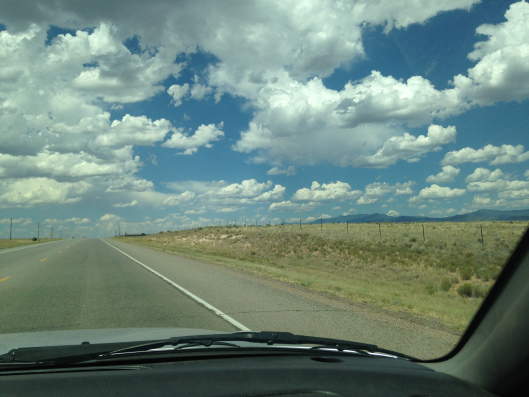
Galisteo, New Mexico