
"From across the centuries" - An article about Shakespeare for Catalonia Today magazine
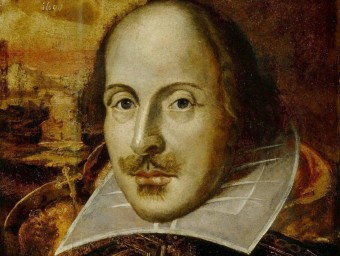
One of the greatest things about Shakespeare - one of the things I love most about his writing - is his rare ability to have his characters speak for themselves but also somehow show a more universal state of mind. His fiction is as real as it can get despite the fact that we are reading his words or hearing them said hundreds of years after he wrote his works.In Shakespeare's famous play Hamlet, the title character, the Prince of Denmark is depressed. His father has been murdered by an uncle and his mother has quickly remarried. Hamlet feels compelled to take revenge for his father's death but his new isolation and sadness cause him to be on the point of suicide. He says:"I have of late—but wherefore I know not—lost all my mirth, forgone all custom of exercises, and indeed it goes so heavily with my disposition that this goodly frame, the earth, seems to me a sterile promontory; this most excellent canopy, the air—look you, this brave o'erhangingfirmament, this majestical roof fretted with golden fire—why, it appears no other thing to me than a foul and pestilent congregation of vapors. What a piece of work is a man! How noble in reason, how infinite in faculty! In form and moving how express and admirable! ...The beauty of the world. The paragon of animals. And yet, to me, what is this quintessence of dust? Man delights not me. No, nor woman neither."To me this is one of the most moving of Shakespeare's passages. I first heard it performed by Richard E. Grant, playing an unemployed actorin the final scene of the superb film, "Withnailand I." Here, the character is seemingly making a balancing act in his mind, weighing up the good and bad of his species and the universe we inhabit. His judgement is a heavy one, as if mankind does not merit a place in the cosmos. Or is Hamlet just speaking for himself alone? That is another beauty of Shakespeare's writing. He is a poet and surely the greatest in the history of the English language. His words are open to many interpretations still (even after thousands of academics have picked them apart syllable by syllable) and this pliability gives his ideas a freshness that never dries up.As a wordsmith and creator of English, it's also generally accepted that no-one can be compared with Shakespeare. When he couldn't find a word to do the job he wanted he simply invented a new word and many of these words live on in the language today. His writing benefited from him also being an actor. Shakespeare knew how lines could be delivered and had an extraordinary ear for how their musical rhythm would be heard by audiences.[This article was first published in Catalonia Today magazine, April 2016.] (The Flower Portrait above was long thought to be a contemporary painting of the Bard, but a 2004 investigation found it to be a 19th-century forgery. / Photo: ARCHIVE.)


No comments have been added yet.
"First thought:" My Substack page

For readers who like stimulating & original lit-bits on social & personal issues. From the mind of an always-curious author/teacher/journalist living long-term in Europe (Catalonia/Spain.)
- Brett Hetherington's profile
- 10 followers

