
Tom Stoppard, to the life
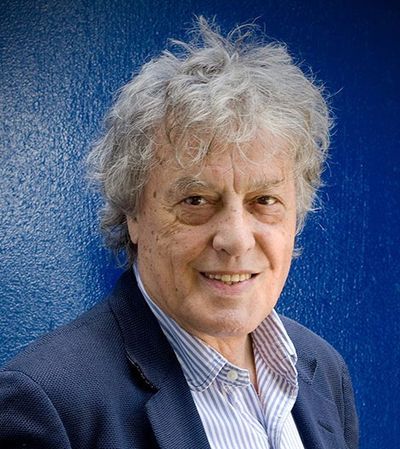
Tom Stoppard, 2013; copyright Peter Tarry/Times Newspapers Ltd
By CATHARINE MORRIS
���Biography adds a new terror to death.��� It was Oscar Wilde���s line that sprang to Tom Stoppard���s mind when he was asked by Hermione Lee about his own ���suspicions about biography��� at the London Library���s recent Words in the Square festival. We were in a marquee holding our champagne flutes, and their talk ��� an amiable conversation between a biographer and her subject ��� was part of the celebrations for the Library���s 175th birthday. Stoppard is the Library���s President, and has been a devoted member for some forty years.
Lee gave as evidence of Stoppard���s ���suspicions��� the ���ruthless and ridiculous questing biographer��� Bernard in Arcadia. ���You have been quoting my characters rather than me,��� Stoppard replied, ���which is not entirely unfair.��� He told us that he had that morning started reading a book by David Kynaston which features an ���abject, furious��� letter written by Kenneth Tynan ���when he was seventeen���. It had brought to mind ���every kind of consideration to do with things you���d forgotten yourself being disinterred. But I think it���s all fair, and I would like to be the kind of person who is completely indifferent to such things���. When Lee suggested that there might be more to his scepticism than that, he conceded that he had a lively sense of perspectives differing from one another ��� a ���famous if not notorious��� aspect of police witness statements that has also provided what is ���almost a sub-genre��� in fiction and in film.
So what can biography offer if not the absolute truth? Stoppard quoted W. H. Auden: ���A shilling life will give you all the facts���.���But one also reads a biography because it���s well written.��� (When the two things are combined, a book may be considered ���one of the great biographies���, he said ��� Richard Ellmann on James Joyce, for example.) And what is the advantage, Lee wondered, in using real people as characters in plays ��� A. E. Housman, James Joyce, Lenin, Shakespeare . . . . ���One isn���t writing biography in a peculiar form . . . . It is simply ��� or much more clearly to me ��� that the person who stimulates certain ideas and provokes you in certain ways happened not to be a character of fiction.���
Lenin featured in another fruitful line of questioning ��� about what it���s like to watch or re-read a play you wrote many years ago. Stoppard declared himself ���very cold-blooded about that, actually���, and was reminded of something said by George Devine, who ran the Royal Court Theatre in the 1950s and 60s ��� that ���all problems are technical���. He described a problem he is currently having with Travesties (a play first performed in 1974), which will be back in rehearsal in August. In it, Mrs Lenin ���quotes at some length from everything Lenin ever said or wrote on the subject of art���. Stoppard has come to conclude since writing the play that ���Just because it���s interesting, doesn���t mean it���s motoring the story���. ���Are you going to change it?���, asked Lee. ���You know,��� said Stoppard, ���the director is waiting for the answer to that question.���
That led to a story about something that happened the day before Travesties opened for the first time. One of the characters had a monologue that lasted about ten minutes, but the actress had a bad throat, so they used only the first paragraph, and Stoppard discovered that he preferred it that way. When the play was later rehearsed in French for the first time, the director rejected Stoppard���s suggestion that the monologue be cut in the French too ��� ���Oh, no no! C���est magnifique!��� ��� and reported, once the play had opened, that it had gone down extremely well (���Incroyable! Parfait!���). Stoppard went to see it for himself, and found that ���it was exactly as he said ��� she did the entire speech; you could have heard a pin drop ��� but he never actually mentioned that she was naked���.
Stoppard was able to add, once the laughter had died down, that this story demonstrates how ���every moment in a play is some kind of equation . . . . In other words, the speech can be just the right length if you���re looking at something that interests you . . . . And a speech a quarter of the length can be too long if there are other things in the equation which aren���t balancing���.
There were lots of nice insights like that:
���I don���t think one ought to know too much about the play as it will be when it���s finished".
And:
���Although theatre is a literary art form in many respects, it���s not wholly so . . . and it���s much more understandable as . . . an attempt to describe something which hasn���t happened yet���.
When speaking of talent as the sine qua non of writing of an artistic kind, Stoppard added that ���when I say talent, I don���t mean skill. I mean something which nobody understands���; and, on being asked whether he felt it a writer���s duty to be socially and politically engaged, he said that this was ���actually quite a difficult, troubling question���:
���Cyril Connolly said the only duty or purpose of a writer is to write a masterpiece. Nothing else matters. The masterpiece could be about the tulips in St James���s Square. And yet, and yet: so many great works of art have survived by the virtue of what they are . . . being intellectually engaged with rather than with some intrinsic aesthetic".
Stoppard's dry humour was never far from the surface. He said that after his assistant started typing up scripts for him in the mid-1970s (it had taken him a while to get over his shyness about it), he ���started putting her surname into what she was typing just to wake her up���. Her name occurs in everything he���s written since then, ���and she now is becoming very critical about what kind of role she is being given���. After describing the social timidity that was part of the personalities of both Isaiah Berlin and Turgenev (two figures who loom large in Stoppard���s intellectual biography), he said that he saw it in himself, too. ���Everybody thinks I���m really, really nice, don���t think I don���t know it. They think ���Oh, he���s so nice!���. They have no idea what���s going on . . . . I���m a fairly benign person, but I���m quite aware that I am making an impression on people I meet, and I���m not careless about the kind of impression I leave.���
That���s not to say that he thinks about himself a lot ��� by his own account quite the opposite, in fact: ���The last thing that occurs to me to do is to, as it were, account in any way for the nature of my work . . . by picking over my charmed, happy, bumpy ride to this point. Perhaps I should be more interested in myself, but I really am not, I really am not���. What a good thing, then, that Hermione Lee is.


Peter Stothard's Blog

- Peter Stothard's profile
- 30 followers

