
Storytelling Rules
I went to a screening of The English Patient on Monday evening that had a talk with author Michael Ondaatje following.
I still love that movie and it stands, for me, as one of the most amazing adaptations of a book ever. Not because it adapted the novel directly, but because it didn't. Because it found the compelling story hidden inside the poetic and difficult to penetrate novel. Because it took beautiful images from the novel that didn't have any tension or forward plot momentum and managed to create scenes, relevant to the story, to show those beautiful images. I mean, they changed a flashback about a University lecture on wind into a life-or-death scene that was also pivotal to the romance they chose to tell. (In the book, I much preferred the Kip/Hanna romance and barely noticed the Katherine/Amalsy one...)
The late, amazingly talented, Anthony Minghella wrote the screenplay (and directed) but Ondaatje was involved in early discussions about how to make the novel into a film and gave extensive notes and thoughts on not only the first 4 or 5 drafts of the screenplay, but was also involved in the film's editing. He said that he, Minghella and the producer spent 3 full days of meetings going over notes on each of the first four drafts. Pretty unusual for an novelist to be involved to that extent in a movie and goes to the mutual respect that Ondaatje and Minghella had for each other.
One great example of Ondaatje's lack of ego over having his novel changed was this paraphrased quote: I love the book Beloved, so I don't think I could bear to see the movie made of it, but I was happy to let someone do a movie of The English Patient. He also said something like: They didn't do anything to my novel. My novel is still the same.
But while all that was fascinating to hear about, what really struck me were the few examples Ondaatje gave as things he learned from the filmmaking process, both from Minghella and from the editor, Murch, about storytelling. Things that seemed very basic to me. Things I learned within the first year of novel writing.
For example, Kip, in the novel, doesn't appear until about halfway through. Minghella insisted that if he was a main character, he needed to appear near the beginning of the movie, hence they added a scene at the start, where Hanna runs into a mine field and Kip is there.
The Caravaggio character's role in the movie was also very different in the book vs the movie. (Beyond the fact that they made the Canadian characters from Montreal, not Toronto. Annoying to me!) In the book, he shows up because he knows Hanna from Toronto, and while he adds some flavor and probably a little tension (it's been a long time since I read the book) he's actually part of the plot in the movie and he's key to tying the plots of Hanna in the present to the plot of Almasy in the past. In the movie, Caravaggio doesn't know Hanna. He goes to the church looking for Almasy (The English Patient) to exact revenge. Same/similar character, some of the same scenes, but TOTALLY different use of that character. Minghella knit all of Ondaatje's disparate pieces together.
I think what most struck me (beyond how brilliant all these changes were, because I already thought that) but how none of these things had occurred to Ondaatje. He said that he actually added a small scene with a previously late arriving character in his next novel, Anil's Ghost, as a result of learning that "tip" from the movie makers.
Now don't get me wrong. Ondaatje still thinks he wrote the novel the way it should have been written. He still thinks that practically every character having multiple, out of order flashbacks was the best way to write The English Patient. He still thinks that long, beautiful passages in the POV of characters who just walk on screen, but have nothing to do with the story was the right choice for the novel. But he could see that they weren't the right choices for the medium of movie storytelling and he seemed to loved that. To have enjoyed learning about more structured storytelling.
It's such an interesting hypothetical question to me... If he'd written The English Patient using a more conventional storytelling structure, he might not have won the Booker (and all the other awards) but I think the book still would have been an amazing bestseller, maybe even a bigger bestseller, and more people who bought it would have actually read it. :) (I remember seeing it on a list of the top 10 books people have bought but couldn't get through reading.)
At the end, Ondaatje told us a story about a man who came up to him at the movie premiere, and thinking he was the screenwriter, told him how he thought it was fabulous how he wrote such an amazing screenplay based on such a terrible book. That got a big laugh and I love that Ondaatje thought it was funny, too.
Molly and Sinead know that early on this writing thing I had ambitions of writing more literary novels, but listening to Ondaatje on Monday night, while I completely admire what he does, I realized yet again that I prefer story over art in books. Sure, you can pull a conventional storytelling structure apart and make it creative and cool (The Time Traveler's Wife, anyone?) but I do like to be able to find that through line and I thought it was hilarious that Ondaatje, such a famous and acclaimed novelist, acted as if he didn't previously understand some of those basic storytelling conventions.
Other pleasant surprise of the night? I totally forgot that Naveen Andrews played Kip. Such a beautiful man. Who couldn't love a movie with Ralph Fiennes, Colin Firth and Naveen Andrews. Yum.
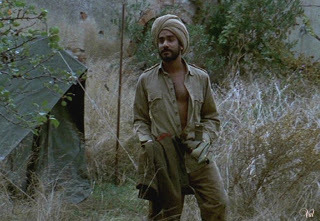 Photo from http://fanzone50.com
I still love that movie and it stands, for me, as one of the most amazing adaptations of a book ever. Not because it adapted the novel directly, but because it didn't. Because it found the compelling story hidden inside the poetic and difficult to penetrate novel. Because it took beautiful images from the novel that didn't have any tension or forward plot momentum and managed to create scenes, relevant to the story, to show those beautiful images. I mean, they changed a flashback about a University lecture on wind into a life-or-death scene that was also pivotal to the romance they chose to tell. (In the book, I much preferred the Kip/Hanna romance and barely noticed the Katherine/Amalsy one...)
The late, amazingly talented, Anthony Minghella wrote the screenplay (and directed) but Ondaatje was involved in early discussions about how to make the novel into a film and gave extensive notes and thoughts on not only the first 4 or 5 drafts of the screenplay, but was also involved in the film's editing. He said that he, Minghella and the producer spent 3 full days of meetings going over notes on each of the first four drafts. Pretty unusual for an novelist to be involved to that extent in a movie and goes to the mutual respect that Ondaatje and Minghella had for each other.
One great example of Ondaatje's lack of ego over having his novel changed was this paraphrased quote: I love the book Beloved, so I don't think I could bear to see the movie made of it, but I was happy to let someone do a movie of The English Patient. He also said something like: They didn't do anything to my novel. My novel is still the same.
But while all that was fascinating to hear about, what really struck me were the few examples Ondaatje gave as things he learned from the filmmaking process, both from Minghella and from the editor, Murch, about storytelling. Things that seemed very basic to me. Things I learned within the first year of novel writing.
For example, Kip, in the novel, doesn't appear until about halfway through. Minghella insisted that if he was a main character, he needed to appear near the beginning of the movie, hence they added a scene at the start, where Hanna runs into a mine field and Kip is there.
The Caravaggio character's role in the movie was also very different in the book vs the movie. (Beyond the fact that they made the Canadian characters from Montreal, not Toronto. Annoying to me!) In the book, he shows up because he knows Hanna from Toronto, and while he adds some flavor and probably a little tension (it's been a long time since I read the book) he's actually part of the plot in the movie and he's key to tying the plots of Hanna in the present to the plot of Almasy in the past. In the movie, Caravaggio doesn't know Hanna. He goes to the church looking for Almasy (The English Patient) to exact revenge. Same/similar character, some of the same scenes, but TOTALLY different use of that character. Minghella knit all of Ondaatje's disparate pieces together.
I think what most struck me (beyond how brilliant all these changes were, because I already thought that) but how none of these things had occurred to Ondaatje. He said that he actually added a small scene with a previously late arriving character in his next novel, Anil's Ghost, as a result of learning that "tip" from the movie makers.
Now don't get me wrong. Ondaatje still thinks he wrote the novel the way it should have been written. He still thinks that practically every character having multiple, out of order flashbacks was the best way to write The English Patient. He still thinks that long, beautiful passages in the POV of characters who just walk on screen, but have nothing to do with the story was the right choice for the novel. But he could see that they weren't the right choices for the medium of movie storytelling and he seemed to loved that. To have enjoyed learning about more structured storytelling.
It's such an interesting hypothetical question to me... If he'd written The English Patient using a more conventional storytelling structure, he might not have won the Booker (and all the other awards) but I think the book still would have been an amazing bestseller, maybe even a bigger bestseller, and more people who bought it would have actually read it. :) (I remember seeing it on a list of the top 10 books people have bought but couldn't get through reading.)
At the end, Ondaatje told us a story about a man who came up to him at the movie premiere, and thinking he was the screenwriter, told him how he thought it was fabulous how he wrote such an amazing screenplay based on such a terrible book. That got a big laugh and I love that Ondaatje thought it was funny, too.
Molly and Sinead know that early on this writing thing I had ambitions of writing more literary novels, but listening to Ondaatje on Monday night, while I completely admire what he does, I realized yet again that I prefer story over art in books. Sure, you can pull a conventional storytelling structure apart and make it creative and cool (The Time Traveler's Wife, anyone?) but I do like to be able to find that through line and I thought it was hilarious that Ondaatje, such a famous and acclaimed novelist, acted as if he didn't previously understand some of those basic storytelling conventions.
Other pleasant surprise of the night? I totally forgot that Naveen Andrews played Kip. Such a beautiful man. Who couldn't love a movie with Ralph Fiennes, Colin Firth and Naveen Andrews. Yum.
 Photo from http://fanzone50.com


No comments have been added yet.


