
Do You Fit In With Company Culture? A New Algorithm Knows.
Society has come to accept algorithms as arbiters of love. Millions of marriages each year owe their genesis to the matching smarts of back-end code belonging to a dating app. Algorithms, in this way, have fundamentally changed how we find a mate, arguably the most important decision of our lives. If we’re willing to entrust algorithms with this essential task, then it only makes sense that algorithms and bots will continue leaking into our lives’ other seminal processes.
I wrote a book, Automate This, on how algorithms, AI and the like are taking over the world. But I wrote that before eHarmony brought its experience in relationship matching and applied it to the workplace. EHarmony wants to help companies and workers avoid mistmatches of personality and culture, decreasing what it calls “regrettable churn” in the workplace while aiming to double the average time an employee spends at a company. Lofty goals.
The intuitive view on this is that eHarmony is simply applying its relationship matching algorithms to a similar problem. But the riddle in this case, matching people to companies, is more complicated. EHarmony’s new product, Elevated Careers, which it is rolling out as a beta enterprise solution for some trial clients, has to search out worthwhile matches in an environment of one-to-many, where the one is the prospective employee and the many is some kind of representation of the company or team. Pairing people romantically, on the other hand, is a one-to-one match, a simpler comparison model that can be optimized and honed more easily.
The legacy dating solution also incorporates the powerful and immediate feedback of humans. Two people are unlikely to press forward with a serious relationship if they aren’t utterly compelled by its prospects. The feedback from job interviews and a feeling of true fit, for both employee and company, can be far more ambiguous, as anybody who has gone through a hiring process—from either side—knows well.
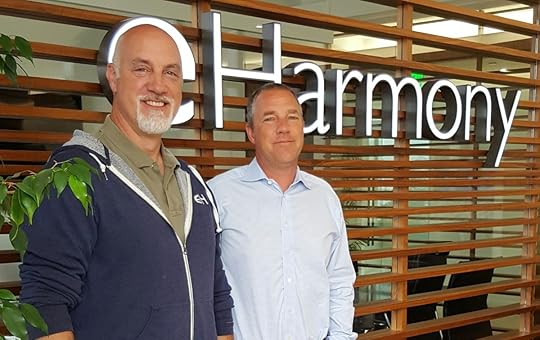
Steve Carter and Dan Erickson are behind eHarmony’s new foray into the workspace.
For eHarmony, solving the biggest part of the problem means forming some kind of profile of a company’s makeup and culture. As anybody who is well-read in business books and MBA fodder knows, company culture has been a favorite flavor within the business press for a number of years—and startups often stress its creation and maintenance from day one. But, as Dan Erickson, the general manager of Elevated Careers points out, there can exist a disconnect between what executives perceive or desire their company’s culture to be and what it actually is. “We are not allowing the HR dept or the C-suite to just say what the culture is—we’re using current employees to get a real reading,” Erickson says.
To determine a company’s true culture, eHarmony administers personality tests to a wide swath of current employees. The results, on a singular level, are anonymized, as it’s the aggregate data that tell the story in this case. With this holistic company profile in hand, eHarmony’s algorithms can get to work finding fits between applicants and a company’s existing culture.
The platform went live to job seekers and hiring companies in April. EHarmony partnered with SimplyHired to backfill its database with several million jobs. It doesn’t have extensive personality profiles of any of the listing companies, of course, because companies haven’t yet had the chance to participate in the personality testing for employees. The first company to go onto that platorm will be AT&T, which is having its employees at retail stores around the Bay Area participate. Once a solid personality and culture profile has been determined for each store by the eHarmony algorithm, AT&T will be able to try to hire new employees based on that data. The idea, of course, is to fit the right people to the right stores.


Christopher Steiner's Blog

- Christopher Steiner's profile
- 21 followers

