#ReadNobels Meets #TTWIB: Week 3
For our April challenge, combining #ReadNobels with Travel the World in Books (#TTWIB), Aloi of Guiltless Reading has posed the following questions for Week 3.
Week 3: What other Nobel Prize-winning authors/books have you discovered? And which would you like to read? Any surprises?
Some of the books I hope to read are by authors new to me (Selma Lagerlöf, Wisława Szymborska), whereas the rest are by authors I know, but wish to read more of.
Sigrid Undset (1928):
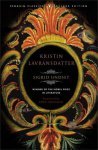
Kristin Lavransdatter (I plan to reread this one in the new Penguin Classic edition.)
The Master of Hestviken (another medieval novel)
Ida Elizabeth (a modern-day story of a marriage)
Biography of St. Catherine of Siena (I need to finish this one)
Jenny (story of a painter’s pilgrimage to Rome)
Selma Lagerlöf (1909):
The Wonderful Adventures of Nils
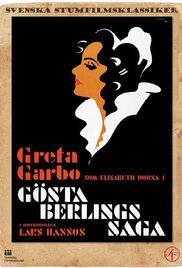
The Story of Gösta Berling (made into a 1924 silent film starring Greta Garbo)
Thomas Mann (1929):
The Magic Mountain
Sir Winston Churchill (1953):
The Second World War
A History of the English-Speaking Peoples
Halldór Laxness (1955):
Independent People (currently reading)
Aleksander Solzhenitsyn (1970):
The First Circle
The Cancer Ward
Although he has probably become most famous for his nonfiction account of The Gulag Archipelago, his novels allow his complete artistry to unfold in the subtle characterization of people under daily life-and-death pressures.
Wisława Szymborska (1996):
Five of her poems can be found at Nobel Prize site.
When asked why she had published less than 350 poems, she answered, “I have a trash can in my home.” (source: Wikipedia) I just have to read something by a woman who would answer like that!
“Possibilities” reads like the set of answers to a very sophisticated online quiz that gets shared among friends. Her tone is witty, at times abrupt, but sagacious in a deadpan way. I’d like to read more of her poems.
José Saramago (1998):
A History of the Siege of Lisbon

As a former copyeditor, I find the premise of this book fascinating: a proofreading error is deliberately slipped into a work of history, with big consequences.
Doris Lessing (2007):
The Grass is Singing
*****
The most surprising thing, for me, about the Nobel Prize winners in literature is the list of notable absences: Leo Tolstoy (d. 1910), Mark Twain (d. 1910), Marcel Proust (d. 1922), James Joyce (d. 1941), Richard Wright (d. 1960), Jorge Luis Borges (1986) are some names that come to mind. Of these, Tolstoy and Twain died within a decade of the first literature Nobel Prize being awarded, and the others lived well into the Nobel Prize era. An award is only as good as its list of past recipients; the Nobel Prize in Literature is undoubtedly a gathering of excellence, and it has become increasingly diverse in its selections over time. Awarding of prizes are subject to many factors, not least of which are politics and the ebb and flow of taste and literary controversies. The omissions merely emphasize that art itself will likely surpass, and confound, any attempts to define, once and for all, its pinnacles.
*****