
Straying from the Canon: To Be--or Not to Be--the Characters Sir Arthur Conan Doyle Created?
If you want to start an argument, ask any two Sherlockians their opinion of the last Sherlock episode, “The Abominable Bride.” The resulting dispute will probably focus on this question: How far should modern writers go in altering the original characters created by Sir Arthur Conan Doyle? My own opinion on the matter has changed in recent years--even, in fact, since last October, when I wrote the following review:
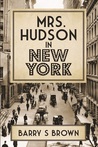 Mrs. Hudson in New York by Barry S. Brown
My rating: 4 of 5 stars
As this was my first encounter with this series, I was a bit startled to find Sherlock Holmes’ landlady speaking with a Cockney accent. That was but the least of the surprises, for (as his fans already know) Barry S. Brown has reinvented the relationship between Mrs. Hudson and her lodgers. It turns out that our world-famous sleuth was no more than a front man. The real brains belonged to the middle-aged, unassuming widow who hired Holmes and Watson to help with her detective agency, meanwhile renting them their rooms. In this adventure, Mrs. Hudson and her two employees travel to a wedding in New York, which must be delayed when her young cousin’s baseball player bridegroom is accused of shooting J.P. Morgan. Other luminaries (Mark Twain, for example) put in an appearance; and Mr. Brown presents a well-researched, convincing portrait of Gilded Age New York. Populated with interesting minor characters and full of twists and turns, the mystery itself is highly entertaining, even if its denouement seems closer to Agatha Christie than to Conan Doyle. For Sherlockian traditionalists, Holmes and Watson may lose much of their original lustre in their diminished roles. Readers who can accept the novel on its own terms should find Mrs. Hudson in New York a thoroughly delightful outing.
Mrs Hudson in New York is available from all good bookstores including The Strand Magazinehere, Amazon USAhere, Amazon UKhereand for free shipping worldwide Book Depositoryhere. In ebook format it is inKindlehere, Kobohere, Nookhere, and Apple Books (iPad, iPhone)here.
In retrospect, I fear I may have been unjust in denying Mr. Brown a final star. I enjoyed his book and felt that it succeeded very well in what it set out to accomplish. Yet, I never could quite overcome my shock at finding Dr. Watson, and even the famous Sherlock Holmes, reduced to mere employees, obediently taking their instructions from the brilliant detective I had somehow mistaken for their landlady. Undoubtedly, my reaction stemmed more from my own Sherlockian history than from any fault attributable to Barry Brown.
From the moment I finished The Hound of the Baskervilles at about age twelve, I was forever hooked on Holmes. Unlike my fellow Sherlockian David Marcum, however, my motto was: “Accept no substitutes.” I had no interest in pastiches, or even Baring-Gould's "biography." I did read The Exploits of Sherlock Holmes, because Doyle's son had written it. Even by my twenties, I had branched out only to the extent of reading Nicholas Meyer's first two Holmes novels. Otherwise, I remained entirely loyal to the Canon.
All that began to change about eleven years ago, when I sat down to write a Sherlock Holmes story of my own. Back in February, I discussed that story in Marcia Wilson's blog (https://graspthenettlehard.wordpress....), so please go there for more if you are interested. For now, suffice it to say that when I finished "The Adventure of the Tainted Canister," I was convinced that I had written a traditional pastiche. Only much later—when TC was finally published—was it pointed out to me that my story’s ending takes it far outside the Canon. For all my efforts to replicate Doyle faithfully, I had consigned Dr. Watson to a place where his creator had never imagined he would go.
Having taken far more interest in pastiches lately, I find that I am not alone. On the MX authors’ website, and in other venues, I have encountered Sherlock reimagined as a Lego toy, a smitten young lover, a giant Kodiak bear, a vampire (briefly), a foul-mouthed curmudgeon, a beekeeper who is a secret agent, a beekeeper who marries his young female apprentice, and a beekeeper so old and decrepit that he only keeps bees. In one famous short novel I have never had the courage to begin, he has even been accused of being Jack the Ripper.
So which of these portrayals strays too far from the intentions of Holmes' original creator? With so many opinions on that subject out there, it would be presumptuous of me to offer a definitive response. Traditionalists (as I believe David Marcum has remarked) posit that modern-day pastichuers should, at the very least, avoid damaging the characters of Holmes and Watson as they were first conceived. My own outlook--despite one glaring transgression of that principle--remains traditionalist, so I shall adhere to it in future work. Yet, I can appreciate the “public domain” argument of those who (whatever the wishes of Conan Doyle's estate) now consider his creations fair game for their experiments. Some of the examples I have cited, as well as the latest episodes of Sherlock, in my opinion go too far. Nevertheless, I am willing to concede that Holmes may once—or even twice—have had a girlfriend, and I am open-minded about the number and happiness of Watson’s wives. As for vampires, one played a pivotal role in my first published (non-Holmes) story, and I have enjoyed several well-done novels about Holmes confronting them.
Let me end by proposing “well-done” as an oil that may help to soothe these troubled waters. If a non-traditional pastiche treats the original Canon with deference and affection, if it places Doyle’s characters in new or unexpected situations that are neither offensive nor preposterous, and if it succeeds on its own terms as a story, then perhaps it is entitled—even among us traditionalists—to a respectful hearing. Barry Brown’s Mrs. Hudson in New York met all of those criteria for me. I hope, in future blogs, to feature other novels that did so as well.
Mrs. Hudson in New York by Barry S. BrownMy rating: 4 of 5 stars
As this was my first encounter with this series, I was a bit startled to find Sherlock Holmes’ landlady speaking with a Cockney accent. That was but the least of the surprises, for (as his fans already know) Barry S. Brown has reinvented the relationship between Mrs. Hudson and her lodgers. It turns out that our world-famous sleuth was no more than a front man. The real brains belonged to the middle-aged, unassuming widow who hired Holmes and Watson to help with her detective agency, meanwhile renting them their rooms. In this adventure, Mrs. Hudson and her two employees travel to a wedding in New York, which must be delayed when her young cousin’s baseball player bridegroom is accused of shooting J.P. Morgan. Other luminaries (Mark Twain, for example) put in an appearance; and Mr. Brown presents a well-researched, convincing portrait of Gilded Age New York. Populated with interesting minor characters and full of twists and turns, the mystery itself is highly entertaining, even if its denouement seems closer to Agatha Christie than to Conan Doyle. For Sherlockian traditionalists, Holmes and Watson may lose much of their original lustre in their diminished roles. Readers who can accept the novel on its own terms should find Mrs. Hudson in New York a thoroughly delightful outing.
Mrs Hudson in New York is available from all good bookstores including The Strand Magazinehere, Amazon USAhere, Amazon UKhereand for free shipping worldwide Book Depositoryhere. In ebook format it is inKindlehere, Kobohere, Nookhere, and Apple Books (iPad, iPhone)here.
In retrospect, I fear I may have been unjust in denying Mr. Brown a final star. I enjoyed his book and felt that it succeeded very well in what it set out to accomplish. Yet, I never could quite overcome my shock at finding Dr. Watson, and even the famous Sherlock Holmes, reduced to mere employees, obediently taking their instructions from the brilliant detective I had somehow mistaken for their landlady. Undoubtedly, my reaction stemmed more from my own Sherlockian history than from any fault attributable to Barry Brown.
From the moment I finished The Hound of the Baskervilles at about age twelve, I was forever hooked on Holmes. Unlike my fellow Sherlockian David Marcum, however, my motto was: “Accept no substitutes.” I had no interest in pastiches, or even Baring-Gould's "biography." I did read The Exploits of Sherlock Holmes, because Doyle's son had written it. Even by my twenties, I had branched out only to the extent of reading Nicholas Meyer's first two Holmes novels. Otherwise, I remained entirely loyal to the Canon.
All that began to change about eleven years ago, when I sat down to write a Sherlock Holmes story of my own. Back in February, I discussed that story in Marcia Wilson's blog (https://graspthenettlehard.wordpress....), so please go there for more if you are interested. For now, suffice it to say that when I finished "The Adventure of the Tainted Canister," I was convinced that I had written a traditional pastiche. Only much later—when TC was finally published—was it pointed out to me that my story’s ending takes it far outside the Canon. For all my efforts to replicate Doyle faithfully, I had consigned Dr. Watson to a place where his creator had never imagined he would go.
Having taken far more interest in pastiches lately, I find that I am not alone. On the MX authors’ website, and in other venues, I have encountered Sherlock reimagined as a Lego toy, a smitten young lover, a giant Kodiak bear, a vampire (briefly), a foul-mouthed curmudgeon, a beekeeper who is a secret agent, a beekeeper who marries his young female apprentice, and a beekeeper so old and decrepit that he only keeps bees. In one famous short novel I have never had the courage to begin, he has even been accused of being Jack the Ripper.
So which of these portrayals strays too far from the intentions of Holmes' original creator? With so many opinions on that subject out there, it would be presumptuous of me to offer a definitive response. Traditionalists (as I believe David Marcum has remarked) posit that modern-day pastichuers should, at the very least, avoid damaging the characters of Holmes and Watson as they were first conceived. My own outlook--despite one glaring transgression of that principle--remains traditionalist, so I shall adhere to it in future work. Yet, I can appreciate the “public domain” argument of those who (whatever the wishes of Conan Doyle's estate) now consider his creations fair game for their experiments. Some of the examples I have cited, as well as the latest episodes of Sherlock, in my opinion go too far. Nevertheless, I am willing to concede that Holmes may once—or even twice—have had a girlfriend, and I am open-minded about the number and happiness of Watson’s wives. As for vampires, one played a pivotal role in my first published (non-Holmes) story, and I have enjoyed several well-done novels about Holmes confronting them.
Let me end by proposing “well-done” as an oil that may help to soothe these troubled waters. If a non-traditional pastiche treats the original Canon with deference and affection, if it places Doyle’s characters in new or unexpected situations that are neither offensive nor preposterous, and if it succeeds on its own terms as a story, then perhaps it is entitled—even among us traditionalists—to a respectful hearing. Barry Brown’s Mrs. Hudson in New York met all of those criteria for me. I hope, in future blogs, to feature other novels that did so as well.


date newest »
newest »
message 1:
by
Marcia
(new)
Apr 26, 2016 07:20PM
 I agree. This is a very good "well done" and many people will respond positively to the concept of Mrs. Hudson as the brains behind the Holmes.
reply
|
flag
Senile Musings of an Ex-Boy Wonder

An occasional blog on Sherlock Holmes, other historical and literary topics, and whatever else occurs to me
- Thomas A. Turley's profile
- 8 followers

