
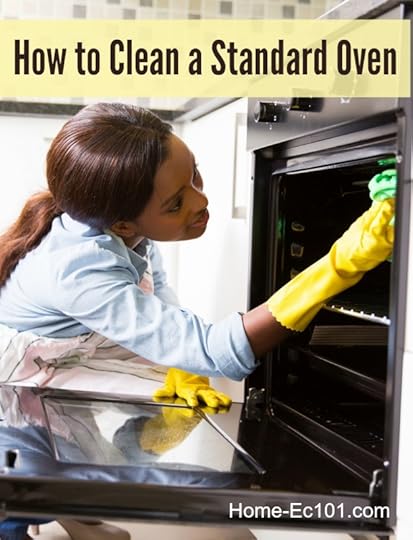
How to Clean a Standard Oven
Dear Home-Ec 101,
I’ve scoured your site and haven’t found a post about cleaning an oven.
Can you give me some pointers. I am 30 years old and NEVER cleaned an oven a day in my life…. I am nervous.
Signed,
It’s Gotten Smoky in Here
 Heather says
Cleaning an oven takes energy, the food particles -polymerized grease splatters and baked on spills are difficult to remove. The longer you go between cleanings, the worse the situation will be.
We’ve talked about the different kinds of energy as it relates to laundry, the same principle applies here. Energy, for this purpose, comes in three forms: thermal (heat), chemical, and physical. Since your oven doesn’t have a self-cleaning option, you’re stuck with chemical and physical, more likely a combination of the two.
Self-cleaning ovens work by getting so hot they reduce food particles to ash that can be easily wiped away (after the unit has cooled completely, please!). If your oven racks are stainless steel, they must be removed prior to starting the cycle. The oven heats to about 880°F, which you’re right is not hot enough to melt stainless steel, but depending on how they were made, it might weaken the filler metal holding the rack together.
If you’re going to be running the self-clean cycle, you’ll probably want to do it on a day you don’t mind having the windows open and running a fan. Maybe I definitely allow too much time to pass between cleanings, but the “slight” odor is usually “significant”. Before starting the cycle, look at the bottom of the oven and remove (or scrape out) any significant build-up from spills.
If heat energy isn’t an option, you’re stuck with chemical and physical energy.

Click this picture to learn more about cleaners!
Household ammonia is a solid choice and has other cleaning uses. Remember, the fumes aren’t pleasant and if you don’t use it appropriately, this chemical can be harmful. Always use ammonia in a well-ventilated area and keep away from children.
To use ammonia to clean your oven, allow the oven to cool COMPLETELY, pour 1/2 cup of ammonia in a shallow glass or ceramic dish and place on the bottom rack in the oven and close the door. Leave this overnight. The ammonia fumes will go to work on the burned on grease, reducing the amount of physical energy it will take to remove the residue.
In the morning, wear gloves and use a rag dampened with dish soap and water to wipe out any residue. If there is still significant residue on the glass, you’ll need to do a little more to finish the job. Give the oven a few more wipes with soap and water to remove any trace of ammonia. Remember kids, chemistry is fun, but unintended reactions are not.
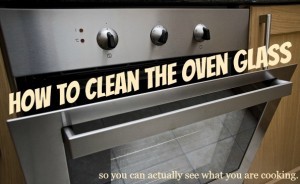 After you are absolutely sure that the ammonia has been removed fully, you can switch to a cleaner like Bar Keeper’s Friend to work on the grease spatters on the glass.
If you have very young children at home and do not want to risk having ammonia or oven cleaner in the home you can certainly use only physical energy to clean your oven. Keep in mind, that you’ll be scrubbing for quite a while. You might want to break this chore into several sessions instead of one long scrub.
Wiping out the COOL oven with a damp rag after cooking items that spatter will allow you to go longer between deep cleanings.

Click the picture for more tips!
Good luck!
Submit your questions to helpme@home-ec101.com.


CommentsThank you Thank you for this post!! I really Appreciate it!!! ... by Elizabeth


Heather Solos's Blog

- Heather Solos's profile
- 12 followers

