Ken Hughes's Blog, page 6
July 2, 2016
Secrets of Suspense – Shadowed’s “Birdseed Scene”
“When your psychic senses are fading and the gangster’s lair has the perfect defenses, how do you break in with birdseed and a rock?”
That’s my Twitter profile, and I’ve always liked how it challenges my characters to own the moves they make, and challenges me to write suspense and surprises worth reading. So today I’m going to walk through the steps of that caper sequence, along with some of the tools I used to crank the suspense up. Plus, one secret and terrible shame about the story. Ready?
As the scene begins in Shadowed, Paul Schuman has been observing the furniture shop that is the front for the sinister loan shark Arthur Quinn.
Why a furniture shop? Because I know a few people whose attitude to filling their houses is close cousin to worse ways to run themselves into debt, so Paul could fume over hearing Quinn use his most manipulative lines during ordinary sales pitches. (At least, they’re the lines Paul thinks are Quinn’s worst; this is still early in the book, the author chuckles evilly.)
He’s looking for evidence that Quinn has gotten his hooks into Paul’s family again after years of freedom. More, he’s starting to remember hearing Quinn’s voice as part of the barely-remembered night he emerged from the hospital with the power to enhance his five senses. Most of all, the memory fragment itself (Quinn saying “I’m sure They’ll pay it all”) is echoing more and more loudly in Paul’s head every time he tries to use his ability, so the clue itself is eroding his best weapon when he needs it most. (Fading abilities are a plot I’ve loved ever since Stan Lee showed his fondness for sending Spider-Man against his ultimate enemies with his powers down.)
So that’s the “psychic senses fading.” The “lair’s perfect defenses” start with what statistics show is the ultimate protection from burglars, and also the one thing more perceptive than Paul at his best: a huge guard dog. Backed by a set of alarms and a high-quality security guard who’s never far from the room.
Now, a seven-foot brawler of a protagonist could just wade through those with a generous author, or a master spy would have a dozen tricks ready. But the people I write tend to be what I call “roguelings,” tricksters in training that are close enough to ordinary people that nothing comes easy.
So instead of grabbing a sniper rifle and a utility belt of dog repellent, our hero’s run for equipment begins with:
Then he took out the tools he needed: Two empty cardboard boxes. Heavier gloves for the cold night. And a light, folded net he’d scavenged the previous year… he knew at a glance that the net would be no help with the dog, but that wasn’t his plan.
On the way back, he paused at a pet shop. The place had no alarms, and the lock opened almost as soon as he sharpened his sense of touch. Since Quinn’s dog would be trained never to accept food from a stranger, he simply took the bag of birdseed he’d wanted, plus a spray bottle of cleaner he found in the closet. Then he threw some money on the counter and left quickly, with just the act of stealing anything from some random person leaving a bad taste in his mouth.
–That last line is a reminder of Paul’s code. He lives in hiding for fear of people forcing him to use his power for all the obvious insidious plans, but he’s also determined to scrape by without stealing one thing except evidence.
The very next line raises the stakes:
As he stepped outside again, something touched his face. Snow was falling.
Memories pressed down on him, crushing thoughts of the last two long winters of shivering nights, with fewer crowds outside to hide in, and always dreading the tracks he left in the harmless white stuff drifting down all over the streets.
Writing gives me the delightful chance to delay the first snowfall of the season until just the hour that it’ll discourage my character. Or I could have triggered it at the exact moment it would have hurt (or even helped) him most, but that’s a much bigger gun that’s harder to justify. (Buffy pulled it off in her third year, but that’s Joss Whedon…)
After a few more lines I mention Paul making “one more stop” to tease the reader, and then I skip a line and drop straight into the next scene with the start of its explanation:
The pigeons moaned. It was the only word for their frantic cooing from the cardboard box he’d crammed them into. Even winter had its uses, at least it made the birds desperate enough for food that he could net half a dozen within walking distance of Quinn’s building. And as that brick shape came in sight, Paul stopped to pour more seed into the box to quiet the birds again.
He left the cooing box halfway up the block, in the alley behind the buildings, and moved forward to Open and study his target again. Same dog, same window and alarm, and he waited until he could just make out the guard still patrolling inside.
Alright then.
That lists what’s in Paul’s bag of tricks tonight, and the quick-cutting between scenes has let me hide his thoughts on just how he’s about to use them—really, a boxful of pigeons? And I’ve summed up the situation again, and used that little line as the starting gun we’ve been waiting for.
First, he walked under the window and along the alley, back and forth, scuffing his feet around until the still-light layer of snow looked as if a whole gang had marched through it; a clumsy camouflage, but he could hope the guard wouldn’t look too closely. And with any luck, this would be finished before enough snow fell over those to make his later tracks clear.
Then, he hefted the biggest discarded bottle he’d been able to find, and flung it straight through Quinn’s window.
(Another short-ish paragraph for a game-changing moment. Rhythm matters.)
An alarm shrilled and the dog exploded into barking, both sounds ringing down the streets through the window’s broken pane. The dog fell silent again, almost at once… too well-trained to keep going when nothing more was happening.
When the alarm cut off and Paul could hear the guard moving inside again, he darted up the block with the box of pigeons. Then he waited in the cold until the guard had made his sweep around the building and settled back inside. I thought some of those wires were in case someone broke the window. But that’s all I need for now.
He poured another helping of seed into his cardboard pigeon-coop and began easing the four-way overlap of the top flaps open. With all the care he could manage, he parted them just enough to reach both hands in—wishing he could use his thicker winter gloves when they pecked at him—and pulled out one struggling bird before closing the top again. He placed that pigeon in his second, smaller box, and carried it under his arm to the fire escape and up.
The dog stood right under the window, a brown and black brute that looked like a Doberman but seemed a bit heavier than most. It growled but didn’t bark yet, and for a moment Paul wondered if his plan would work.
Then he raised the box up to the high window-pane he’d smashed, and popped the pigeon through the hole.
The dog went mad. The bird beat its wings to catch itself in the air and fluttered around the room with the dog chasing it and barking in a frenzy. The animals hopped from one desk to another as the pigeon circled but couldn’t turn tightly enough to stay airborne within the walls…
Paul slid back down to the alley and ducked around the corner. He strained his hearing to focus past the barking and the echo of his memory, praying that the trick would work.
Not that he had any trouble hearing the guard’s “What in hell…?” Paul could imagine him watching as the dog and bird chased around the room. A moment later, the barking ceased and Paul caught one wild flutter of the pigeon. It was outside again, having finally squeezed back out the broken window.
Paul followed the guard’s cursing all the way to the window and heard it grow louder still the longer he stood there. When he stomped away again, Paul could only wait in the cold, and found himself envying the other pigeons that could huddle together in his box for warmth. But the guard didn’t come back to cover the window; the top pane he’d smashed would be difficult to block, as Paul had hoped.
Carefully, Paul pulled out another bird from the box, trying not to think of the one slip of his hand that might let the struggling flock burst free and ruin his whole night’s work. Again, he sent the bird inside and then dropped back out of view as the dog’s barking split the night. When he heard the guard enter again, he grinned wickedly; since the window was broken, was it so odd that birds would try to get to the warm room inside?
Can you guess what “the trick” is yet? I’ve spelled out the situation and Paul’s steps toward the answer, and some readers might be putting the pieces together.
But Paul and his plan have also been initiating the action for the last couple of pages, with everyone else only reacting. So:
Then he heard a loud metallic cough sound, a “Damn!” and then one more cough, and then the dog hushed. As the footsteps moved away, Paul realized what the guard had done.
He’d shot the pigeon. He’d blown it apart so they could get back to work, and he’d done it using an illegal silencer and an ominously good aim.
Paul crouched down in the dark, chilled through with a cold deeper than the winter. He’d always maneuvered far away from armed guards, targeting secrets or at least strategies that kept him away from real physical danger. He chose his own cases, sometimes selecting unsavory types—but he’d never dared go up against a real criminal like this loan shark. Arthur Quinn seemed more dangerous by the hour.
Quinn’s They’ll pay it all echoed louder than ever in his mind, and Paul wondered how many ways Quinn made his enemies “pay.”
Again, my heroes aren’t bulletproof. If one of them is going to take on an armed guard, he has to be all too aware of what he’s getting into.
Paul shook his head, trying to clear it. Dangerous or not, Quinn’s words were all he knew about that night and whatever memory was blocking his power. And if Quinn was part of that night, maybe I’ve always had to stop him.
The next pigeon seemed to tremble a bit more than the others when he pulled it from the box. Paul tried to hold onto his city-bred contempt for the “winged rats,” how there were always more of them and more pigeon droppings everywhere they flocked. But the more the bird thrashed in his hands, the harder it was to keep his touch from Opening to feel its panicked heartbeat.
This pigeon was luckier than the last; the guard shot once, then swore and walked away, letting the dog chase it out the window again.
For the pigeon after that, the guard didn’t come at all. Finally.
And that’s how Paul deals with a guard dog he simply can’t shut up: he makes it bark so much it’s ignored.
That kind of security judo is a common trick in classic storytelling. My favorite example is from Watership Down: a rabbit hero swims past a raveonous fish by floating a dummy rabbit in the river until the pike ignores it, and then him.
But just because the guard’s less eager doesn’t get rid of the dog.
Carefully watching the alley’s corners and windows for observers, Paul took his last bird and other tools up the fire escape. The dog stood just behind the glass with its teeth bared, waiting.
But this time, Paul peered at the window, looking from the hole at the top on down to the latch and then to the tiny, hidden sensor along the jamb inside. Even while Opening sight, he could barely make out its wires there along the side of the frame, against its mate on the window itself. He unwrapped a sliver of metal from his pocket, his gloved fingers careful of the sharp edge on one side.
He stared harder at the tiny switch, struggling to push back the shadows that pooled around the wires. From the design, they should be about there and there, and he’d done this many times before. But this time…
He Opened to listen again for the guard, took a deep breath, and strained past the thunder of I’m sure they’ll pay it all.
They won’t pay.
Paul started, looking around the alley below. But nothing had stirred except the drifting snow; the thought was another memory. They won’t pay, Quinn had said that night. Paul knew it now. They won’t pay.
But he must have said “They’ll pay!” Which one was it?
With Paul right there at the window, his echoing memory’s brought up a whole new level of static to interfere with his power. Of course that’s the moment to escalate it… well, one of the moments.
He gritted his teeth. Gripping the metal piece as firmly as he could through the glove, he Opened to the shape in the shadows along the window, fighting to ignore the two memories so he could just see the wires, know the distance…
In one move, he reached down through the broken pane to stab the metal’s edge into the wood below, pressing its length between the sensors at just the proper angle. Nothing snapped, no alarm blared… and he yanked his hand back up as the dog snapped at him.
The metal stayed in place. He tried to Open his hearing to follow if the electrical path had changed, but all he heard were Quinn’s words and the dog’s thwarted growls.
Time to find out.
The dog watched his every motion now, so he took the last pigeon from his box and slid it through the hole. The dog barked as the bird fluttered by, but this time, it turned right back to the window as Paul reached in again to flip the latch.
He pulled his hand back in time, but the dog kept barking, and Paul could only hope the guard was still sick of false alarms. And that the other alarm here…
The window slid up, just three inches for now. No bells rang, but the dog snarled and snapped just beyond that gap.
And Paul raised the pet store’s spray bottle and squirted cleaning fluid into its face.
Is it cheating that I haven’t mentioned that spray bottle in five pages? I don’t think so, since Paul made a specific stop to get just it and the birdseed, and most of the time since has been building up the question of what he’ll do with them all.
Now, the action is on.
The dog yelped and pulled back, giving Paul a moment to fling the window up. As the dog started toward him again, he gave it another spray, then caught up the bird net and flung it over the beast.
Paul grabbed the bottle again and leaped through, into the room.
A few desks and cabinets stretched around him in the dim light. He turned back to see the dog already shaking off the thin net, as expected. He stepped back and pumped the spray as the dog charged—but it squirted once and then the trigger clicked in without pumping any liquid. He back-pedaled and pumped more slowly, but now the spray only made the dog flinch back a moment.
The inner door’s this way—Paul took a step, and his hip bashed the edge of a desk. The dog lunged.
He spun around the desk and threw himself at the door. For one frozen moment, he wondered if he’d ever heard the guard open it. What if it’s locked? Then he seized the handle and wrenched it open, which sent a spasm through his injured arm.
As he stepped through, the dog came up behind him. Paul ducked sideways and gave the spray bottle trigger one hard squeeze. The spray drove the dog back only a step, and Paul pumped wildly, felt the trigger catch on nothing—He smashed the bottle into the animal’s head, knocked the dog away, then leapt back out through the door and slammed it shut.
Gasping for breath, he listened to the dog’s muted barking for a moment. The spray bottle had split open in his hand, and he set its remains quietly on the floor.
Paul looked past the desks to the office’s little file cabinet and then marched back to slide the window shut and gather up the net. That left him in the space between the alarms, with the dog trapped, and the guard tired of checking out all these noises.
So Paul has risked life and limb, wrestled with his own mind as well as the dog, and faced that awkward moment where the spray bottle clicks on empty—something many of us have actually felt with our own hands (hopefully in safer conditions). And the last line just summed up how everything’s worked out in the end.
Right?
Wrong.
“Alright, what now?” the guard growled, as the outer door’s lock clicked open. Paul dropped flat, behind a desk just as the light came on.
He heard the guard march in as the dog in the side room kept barking and scrabbling at the door. He tried to Open his hearing to track the guard better, but then broke off as the memories of Quinn’s voice almost deafened him. Somewhere up near the ceiling, he heard the pigeon still fluttering around.
The guard stomped down to the inner door and paused in front of it, listening to the dog trapped behind it. “How did you pull that off, boy?”
Oh God, when he lets the dog out— Paul peeked over the desk at the path around the furniture to the outer door. He’d only have a moment while the guard was distracted—
He heard the pigeon flap toward his hiding place, saw the guard start to turn his way and ducked down again by reflex. The bird landed right on the desk, and Paul held his breath, but he couldn’t hear the guard move. Please, please…
“Yes, sir?”
A phone call, now? Paul strained to hear the voice on the other end, but heard only they’ll pay it all, they won’t pay, they’ll pay…
“Thor got into the back room, sir. Someone broke a window here, and he’s been chasing the birds that keep flying in…”
(I almost named the dog Buttercup instead of Thor, just to avoid the obvious. But laughs are a gamble when the scene’s this high-strung.)
The guard’s voice stopped so suddenly that Paul knew his boss had cut him off. Paul tensed, waiting.
At last, he said, “Understood,” and walked away from the door. The dog kept growling behind it, but he said, “Sorry, boy, that’s enough excitement for you.”
Then Paul heard a faint beep and looked out to see the guard pushing a combination on the alarm control panel. Paul threw his thoughts toward seeing that keyboard, but the mocking memories choked off his concentration.
The guard turned away and Paul remained crouched down until he heard him finally walk out and shut the door. Gone. I’m safe.
Safe? No, Quinn must have told the guard to leave ‘Thor’ in the back room…
Paul struggled to fit the pieces together. So now Quinn knew about this latest disturbance himself, but the guard hadn’t told him about the others? Of course, their alarm system must have left the inside of this main room clear for the dog to patrol but kept a silent alarm in the back room. That was what Paul had triggered by knocking the dog in there, and what the guard had shut off now… and that alarm was the only one that signaled Quinn personally.
So now Quinn is awake—maybe even on his way here, if he’s suspicious enough. And I just shut the dog in with the only things Quinn made sure to monitor himself!
All that work, and it was all to put Paul on the wrong side of the door.
Paul scowled at the net he’d gathered up; it had barely slowed the dog down before. He glanced around, looking for something else to use. Maybe a chair, to fend the beast off or hit it… no, if he missed once, the dog would drag him down. But what if Quinn was on his way, and time was running out? This might be his last chance to learn what was haunting his power…
Paul yanked off his coat and moved to the door. He spread the coat out in both hands and crouched down, feeling for a moment like a baseball catcher with some flimsy, two-handed mitt. The dog barked louder, scrabbling right at the door.
Twisting the knob, Paul kicked the door open and turned that step into a crouching lunge forward, springing to meet the dog and wrapping the coat around it. They crashed to the floor together, his arms clutching Thor in a bear hug.
The brute writhed in his grip; he felt its jaws straining to rip free from the few layers of cloth that kept them from his captor’s chest and throat. Paul crushed the coat around it, desperate to keep the dog from getting leverage. With all his weight, he pressed the dog to the floor.
His injured arm burned and the dog’s nails ripped at his thighs as the jaws fought to get their grip. Paul could only hold on, thinking Tighter, I’m still twice your size, dog, and I need this…
If I can push my hero to the point that after all his tricks there’s only brute strength and willpower left, the scene’s usually on the right track.
After an eternity, the dog’s thrashing stilled. Paul hung on a little longer, his muscles aching, his heartbeat settling as one fear faded to another.
His hands fumbled around the dog’s sides and he Opened to feel for its breathing, but felt only the flood of Quinn memories now. As he let the power fade, he caught a weak stirring within the dog. It was alive.
Relieved, Paul staggered to his feet and dragged the limp body outside the room, then closed the door to leave himself in the dark. For one long moment, he felt every tremble in his gasping body. Sweat soaked through him and his new injuries flared with pain that was almost worse than the throbbing of his abused arm.
He felt weakly along the wall until he could work a light switch and then looked around.
The room was tiny. A few posters lined the walls. Instead of a desk, it had a small, empty table, set between a well-padded chair and a TV set. Nothing else.
That’s the end of the chapter.
Of course the scene isn’t quite over. The next few pages explore whether the room’s really empty, and Paul faces his other challenge, fighting through the memories that have tangled up his power until he can manage to scan the room properly.
So those are the pivotal pages of “the birdseed scene.” Slow, careful buildup of Paul’s plan, and looking for everything from the weather to the building layout to his past’s rising aches in his head to keep changing the game for him.
Looking back at the scene a book or two later, I still think it holds up well. It’s been my favorite for live readings and chapter samples, ever since Shadowed was first written.
Knocking Thor around that way still bothers me a bit; the dog was only doing what he was trained to do. (And I haven’t forgotten that pigeon, just trying to find food in the winter and getting shot for its trouble.) But I’ve always hated to flinch from what I think the story has led me to—and I never put the dog through anything my human doesn’t get, and worse. Besides, in The High Road it tends to be the people that lose out and the birds… well, that would be telling.
Lastly, I did promise a “terrible and secret shame” about this story. It’s simple: if you look back at the scene and its Twitter tagline, Paul only used the first half of the promised “birdseed and a rock.” In the first drafts he did put a rock through the window to start his raid, but during revisions it turned out that “the heaviest bottle he could find” was easier to pick up on a city street. And yet my profile still uses the simpler word.
Oops.
It turns out that, all along, Paul had to do it without a rock.
On Google +
The post Secrets of Suspense – Shadowed’s “Birdseed Scene” appeared first on .


June 18, 2016
Sources of Magic – Part Two
If you know where something comes from, it gives you a head start on guessing where it’s going, doesn’t it? So when you’re reading or writing a fantasy tale, understanding just where that set of magicians draws their magical energy from can point to some of its best storylines.
In the other part of this list I mused on the idea that seemed like the simplest (until we look closer), that power’s simply lying around for use, as well as the hardcore drama of drawing it from someone’s life energy. But I’ve seen two other types as well:
Magic from… Stuff
This is the great catch-all approach: if the other magic systems are fueled from places and people, this one draws from specific things. And just how those “things” work sets so many of the limits of magic.
Note, this isn’t all the “enchanted items” and magic-enhancing wands that are usually part of a world’s magic; those usually seem more like the kind of tools or power batteries a magician might make because of the power he has. I mean worlds where magic itself can only start from one kind of source, ever. Such as:
Magic is Mine(d): In Brandon Sanderson’s Mistborn books, magic comes from a talented person consuming bits of the right mineral; from using tin for enhanced senses, to “atium” for a near-invincible glimpse into the future. Other stories might use herbs, fresh dragon’s blood, or whatever the writer comes up with. So for any world where raw power can be dug up or literally snatched from people’s hands, it’s primed for stories about searching out, bargaining for, conquering, and hoarding supplies of the best materials. (Or beating a magician by simple disarming her.) All in all, this can lead to many of the same clash-of-nations story possibilities as the setting-based sources, but even more open to characters getting control of them.
Weirder yet. Metals are a nice simple source, but stranger sources can fuel stranger stories. Brent Weeks fuels his magic from light in the Lightbringer books… in fact it’s light’s color, so we see a man floating in the bright daylight ocean and out of luck because he doesn’t have the gift to tap into blue. Or in Nat Russo’s Necromancer Rising and Necromancer Falling, magic comes from energies left behind by death—so a battlefield is the last place you’d want to take on his heroes.
Come to think of it, the most famous magic of our time uses a touch of this. The Harry Potter books are full of creatures and plants that are inherently magical, but a human witch or wizard is (usually!) powerless without a potion, device, or a wand, and those all seem to be built from pieces of those wizardly materials. Of course the stories didn’t make much use of that angle; Harry never used up his wand’s phoenix feather and had to replace it. But it is still a possible limit… imagine a world, or even a Potterverse future, where wand-empowering creatures became all too rare. Or where only a few magic schools had succeeded in raising the things, or where Muggles realized they could destroy magic’s power by hunting down the creatures that generated it. (So why is the new movie called Fantastic Beasts and Where to Find Them…)
Magic from the Gods
I’ve put this last, but of course it’s the oldest idea in magical fiction, and the myths and beliefs behind it. It says magic is never a human power, it can only be given by spiritual forces, of one kind or another.
And what that means in a story… if the other systems can stories around how people get control over different power sources, this puts the focus on what gods the story has, and what it takes for a person to serve them. With a benevolent god, a story could trap a character between that god’s demands and his own human wishes of he wanted the power for. (Say, Ciara Ballintyne’s In the Company of the Dead.) With a more evil spirit, the same conflict could get dark much faster (any devilish-deal story) or settle into the horror of the people who have to fight that kind of dark power.
And if a story has multiple gods (like the Dungeons & Dragons pantheons with their assorted clerics), a character having to choose one plays up the contrast between their different natures even more. Serving a god of justice and courage might seem an easy choice for a hero… until Mercy offers to give his brother that second chance, or Vengeance holds out a shot at his oldest enemy …
So magic could be based on the difference between places, or making use of people, or managing things, and the last might well be about following ideas. (Hmm, aren’t those the four categories of nouns, that make up everything?)
And like so much else of storytelling, a magic’s source might come down to contrasts. Whatever one point magic depends on, what about that makes the difference between have and have-not characters, and what—or better yet, who—is likely to change that? If the magic takes different forms, is it because the source does too? And all of those might become the choices that heroes and villains have to struggle between.
Looking back at my own writing, it’s clear I built The High Road to mix Place and Thing ideas. Mark and Angie discover they can draw out gravity-controlling magic from only one secret spot that’s been hidden away in the city park… but it’s also dependent on the old family belt that’s attuned to it. Most “objects of power” in stories don’t count as true sources since they always seem to be tapping into a larger system of magic, but here the belt (and some leather scraps that obviously came from it) are the only way to access that magic and fly. If my heroes were separated from those talismans, would it be more or less of a handicap than keeping them away from the park? –By the end of the book, the odds are that our heroes will be able to compare…
And before that, in Shadowed? Paul Schuman isn’t so sure where his power to enhance his senses comes from. When that book ends, he’s only begun to understand.
One last question, if you’ve seen the manga and anime Fullmetal Alchemist: Its alchemy draws on a single, consistent system. But the way its power involves currents of energy, stored power, and what’s beyond the Gate… it spills into all four.
Now that’s impressive.
On Google +
Photo by Matt Romack Photography 
The post Sources of Magic – Part Two appeared first on .
June 7, 2016
A little Summer Reading

SPRING BREAK GETS WILD ON THE LIVELIEST CRUISE IN THE PACIFIC UNTIL THE UNDEAD CRASH THE PARTY.
Eighteen-year-old Sylva Fleischer and her friends raise the dead for a living for police investigations and mourning families. Two years after her high school crush, a hot guy named Brandon, is assumed dead, Sylva’s friends convince her to go on a spring break cruise in an effort to suppress her depression over him. But when passengers mysteriously die and reanimate into flesheating zombies like she’s never seen before, Sylva plunges into a horrifying struggle between a ship infested with the undead and the scariest thing of all: a second chance with Brandon after she discovers he’s still alive. This is a zombie story that eats right to the core and leaves you licking your chops for more.
Got zombies? Sylva Slasher does…
About the author:
Ace Antonio Hall graduated from Long Island University with a BFA. He is a former NYC middleschool English teacher that now resides in Los Angeles. Ace’s short story dead chick walking made the Fall 2013 edition of the best-selling Calliope Magazine and his science fiction story, they, won the Honorable Mention distinction for the 2013 Writers of the Future Award. For updates and news, follow him on Twitter @aceantoniohall or visit www.aceantoniohall.com
BLOOD LINE by Lynn Ward

Lauren Pell is chief of security for the Terran station on Krhyllan, a planet wracked by ancient feuds and hatreds. When the king’s young son Deran is attacked by the savage Blood Painter assassins, the feared Blood Painters, Lauren fights, schemes, defies—whatever it takes to rescue him.
Convinced she failed to save the life of her own child, she will save this one, even if revealing some secrets endangers Krhyllan itself.
About the author:
Lynn Ward is a native Texan recently transplanted to California. A speech pathologist in her day job, she reads, does martial arts and humors a neurotic cat. Blood Line is her first novel, after having sold short fiction in the past. Currently, she is working on a new novel and exploring the wilds of Los Angeles.
MAMA by Robin Morris
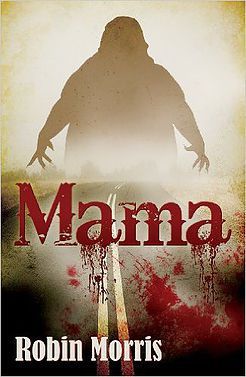
As the Conover family drives from L.A. to Chicago strange things begin to happen. Nine year old Michael sees a face form in the window of the family car. Two creepy children stare at fourteen year old Alison at a motel. A car follows the family for many miles, then hits their car and drives away.
Wherever the Conover family goes, wherever they look, they see a large woman and her children coming closer. The woman and her children are superhumanly strong. They can enter a locked room without opening the door.
Confused and scared, the Conovers can’t comprehend what is happening to them. Everywhere they turn they see the woman and her children. The woman is Mama, and as she teaches her children, like a lioness teaching her cubs to hunt, the Conovers realize that they are the prey.
About the Author:
Robin Morris has had stories published in print anthologies and on the web. She collected many of her stories in “Halloween Sky and Other Nightmares.” This is her first novel.
PREY by Katy Mann
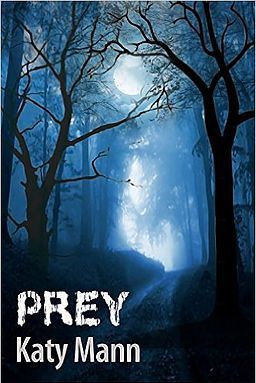
Christa, a shy college student, is interning at a Chicago law firm. One morning, she spots a mysterious stranger across the street from her office. This seemingly casual incident tears Christa from her world and sends her into a terrifying struggle with the remorseless immortal, Mack.
Mack comes from another time and place, not so long ago in years, but very far from Christa’s urban world. Mack came of age in the era of bootlegging, where the strong took what they needed to survive, and he has become interested in Christa.
On a trip to Europe, Christa comes across evidence of the supernatural, which she tries hard to ignore, but on her return she ends up being trapped in a clandestine network where human blood is farmed to satisfy vampire thirst.
Soon she becomes caught in a power struggle between two covens, a fight that threatens her mortal existence and forces her to make choices leading her into a deeper understanding of humanity and her own soul.
This is not a love story.
Prey is a novella and has a word count of 35,000 words.
Katy Mann grew up in the Midwest where she attended the University of Chicago. She moved to California with her tabby cat, Gus, in 1995. A life-long reader, she divides her time between the real world, when necessary, and the worlds created in books and her imagination, when possible.
The post A little Summer Reading appeared first on .
June 4, 2016
Sources of Magic – Part One
Where does magic come from?
It’s something I’ve noticed in more and more stories: some go further than others in explaining just how someone’s supernatural power is, well, powered. I don’t mean the rules for who can use it and how, or the history behind it. I mean whether magic’s defined as drawing on some particular source that acts a little like actual fuel, or if it “works like magic” with all its limits in some other form. Because each choice opens up a whole different set of options for a writer, and it tells a reader some of the directions a story might take.
For instance:
Magic from Thin Air (but, Is some air thinner than others?)
For many writers, the easiest choice is not to choose. Magic’s supposed to be too fun, or at least too fundamental, to the story and the world to make it act like some ordinary kind of energy. So the mythos has other kinds of specific limits, but no sorcerer is going to just run out of gas. If it’s explained, it’s usually that magical energy is floating free in the world, or the space between worlds, and there’s more of it than any mortal spellcasting can drain.
Except… if I look closer, I often see ideas like that leading to a story that takes a wider look at the geography of the world(s), or sometimes the course of history. Even the land isn’t constant, and a tale can do great things like:
Location, location, location: Are some places richer in power than others, and why? Who controls the supernatural power points, and who’s left in the badlands? You can see a class struggle or a war coming, if it ever stopped…
Bonus option: The mundane lands. If a writer wants to mention a tragic, familiar world where magic can’t exist, there’s no need to say its physics are simply hostile to it. Just position that place at the far edge of the source of power.
Power by type: Many of the most fun options in wizardly world-building are contrasting one form of magic against each other. But what if the difference isn’t in genetics or training, what if “the Land of Fire” is where fire mana is thickest, and the mage who comes there used to dealing in illusions has to change his tactics fast?
Prison zone. Sooner or later most supernatural villains (or heroes) need a way to trap a wizard. It might be that magic-blocking runes or cold iron walls work by simply cutting off the flow of energy they need.
“The Magic Goes Away.” Of course that’s Larry Niven’s classic book that looked at the question of the world’s mana being used up before our eyes. Any story can ask, what kind of new arcane discovery—or just widespread of training and spelluse—might kick the use of power up to unsustainable levels. Are the people who see what’s coming the ones who’ve been causing it? Who tries to hold it back, by treaty, by force, or by hiding the secrets of power? So many possibilities.
And of course, even if the energy’s free doesn’t mean using it is. Most stores agree that at least concentrating on the power is enough to at least tire someone out. But for contrast:
Magic from Life (but, Whose life, and death)
These are the stories that go for the jugular, where magic’s powered by the most dramatic source of all, the blood or soul or strength of the living. Naturally the possibilities can get very dark very fast, or sometimes reach a new kind of inspiring. Such as:
Sweat is still sweat: Levitating a rock uses the same source as picking it up, simply the user’s own fatigue. So flying across the county is essentially running a marathon, and lifting a car is either impossible or a way to burn all your strength in seconds; a great straightforward limit. (Although since it’s tracking physical effort, how does that translate to nonphysical powers—how “heavy” are the thoughts a telepath pulls out of someone’s head? Or, if a telekinetic could just reach it, how much strength does it take to stop someone’s heart?)
So, power is sacrifice: Sooner or later every hero has to be pushed to his limits, and magic like this puts those limits right within reach. (Remember, the first “Marathon runner” delivered his message and dropped dead.) Only the bravest heroes and the most fanatical villains will dare to reach the true heights of power…
Power is sacrificES: –unless they cheat, that is. All a world needs is one way to steal someone else’s strength for “blood magic,” and even a petty thug or the most well-meaning everyman can be one decision away from all the power he needs, and all the conflict the story needs.
Strength in numbers: a villain can steal power and a noble hero only uses his own strength, but an even nobler hero would be the one who earned the loyalty and free gift of his friends’ power. Or on the other side, a manipulator can string a cult of “willing” donors along, and victory might go to the largest army after all.
Clearly worlds of the first, geographical type have a head start on comparing whole regions or their setting’s larger questions… while the second can zero in choices and conflicts between individual characters. All good, story-rich options.
Next time, I’ll look at the other two main groups I see.
And for now: there’s a classic Phil Foglio joke that evil sorcerers are impossible to shop for, because all they want is “more power”—unless you get them some alkaline batteries. Wonder how he knows…
On Google +
The post Sources of Magic – Part One appeared first on .
May 21, 2016
Story – Find More and Dig Deeper
What makes a good story? But that’s a question anyone would answer differently… so it might be clearer written the other way around: what story counts as good, at least for a thrillseeking, fiction-obsessed geek like myself. And how that can’t help but be the first steps in understanding the fantasy I’m trying to write.
The blogging world is full of easy answers to that, enough options to make the choice hard. Conflict of course, real use of story structure, characters—that one always make me wince the way it’s thrown around so casually, but that’s a post for another day.
Or it might start with basic genre. Comedy and mystery are all very well, but I’m the one who notices that DC Comics now has its superheroes on a broadcast network at 8 pm for four out of five weeknights. Still, the screenful of power beams don’t make me forget that an Arrow villain can “hack a nuclear missile to fuel for launch in 24 hours”… and the missile’s keepers never think to yank its wires. Agents of SHIELD has a plainer costume style, but it can be a downright relief to switch over there and hear its super/spies talk about a mission plan that at least knows when it’s cutting corners.
Call it sheer believability. A story can rub two cool elements together and trust that they’ll make enough sparks, or it can trace out what that coolness ought to have behind it to bring it into the story, and some of the other effects that they generate as well. Anyone can come up with a mind-reading hero, but exactly what he do to switch off his gift every minute of day? How many layers of suspicion do his friends have to go through to really trust him?
Dig deeper. Let a story work out how many ripples each twist makes, and use them to give more glimpses of how much is going on, more signs of why it all matters. With background they call it rich world-building and a convincing environment; when a character reacts to more of them it’s better characterization.
That and, I’d rather read and write about how someone flunked out of Arcana College than Notre Dame. Paranormal elements need at least as much detail as “the gritty mundane” does, if they’re going to give us a full sense of what it’s like to have power at our fingertips—and how that power’s not the same as how other writers work it. (No, Batman can’t keep swinging on down the block like Spider-Man, not if his grapnel’s still human technology.)
And with all those extra routes to look down… shouldn’t a story use them instead of following the proverbial beaten path? Yes, some tales are more comforting than others, and the overall arc ought to hold together. But even a familiar storyline ought to pick just how many things are allowed to wrong (and right), and own that to make us feel the pressure.
Or when the story’s not so simple? Well, take a look at K M Weiland’s nod to Brent Weeks: http://www.helpingwritersbecomeauthors.com/how-to-write-books-readers-cant-put-down/. Brent is an author who bends rules until they scream to keep the reader hooked.
Dig deep, and hit hard. That sums so much of it up.
Or, here’s something I put together last year:
How should a hero fight for his life? With what weapons?
How would you?
Would you tense to catch the first echo in the alleys around you, that could be your enemy about to strike? Charge forward to reach the person you’re protecting in time? Every step could be the one that lets the enemy get behind you–and if you have the gift to see right through those shadows or leap over the walls, could you use it in time?
And, what would you fight for? What person, or what dream, would make you step out of your daily cubicles and into the line of fire? Think of the day after the adventure, trying to go back to work and wondering who might be tracing you back to your own life… or if, just maybe, you have a chance to stay out there and build something better.
Except, who can you really trust? It might be that you can protect your family best by working with that “enemy,” if you can get the right leverage on him. Or perhaps the friends, that you thought were safer away from the things you’ve seen, have their own reasons for walking into danger too. And every move, every choice you make, could be leading you deeper into a trap where no amount of power can break you free because you never spotted how–
–It’s alright. You don’t have to turn the page.
When I’m writing supernatural suspense, I know one thing: never fight fair.
On Google +
The post Story – Find More and Dig Deeper appeared first on .
May 7, 2016
Review: Jim Butcher’s Codex Alera series
Can I write about the Codex Alera series and keep it out of the shadow of Jim Butcher’s signature Dresden Files books? It ought to be possible… but I’m not going to try.
(One caveat: Furies of Calderon and Academ’s Fury are the only Alera novels I’ve read so far. Yes, “so far”—if you’re standing in front of a bookshelf or a Click To Buy button right now, you can take those two words as my recommendation. Or you can read on for my spoiler-free musings of what makes the books work, and what they show about what makes medieval-type fantasy so different from urban fantasy.)
Many of Alera’s readers must be coming there wondering if it will have some of the Dresden magic (of the storytelling kind, of course). Or as we true Dresden-philes see it, whether any other concept could cram so much fun into so few pages. And honestly, for this series that isn’t the goal.
Butcher likes to say these books are written out of his original love for classic “swords-and-horses” fantasy. In that it’s spot on: sprawling empires and clashing armies, all hingeing on valiant village leaders or conflicted spies.
It’s an appealling world, too. Alera is visibly descended from a “lost Roman Legion,” so a legionnaire wields a gladius and the culture mixes some history with the storytelling. The magic’s straightforward but not dull: its “furies” (spirits) don’t only fling the obvious element around, they’re as prized for their indirect effects, from enhanced strength to empathy. Plus, by the second book there are threats with more sinister options than armies and assassins, so anything can happen.
Best of all, it is Jim Butcher, so the thick of a fight can be as exciting and twisty as anything ever written. And there’s no shortage of fights.
What a Dresden fan would notice most is the difference in characters and pace. Harry Dresden is one of the most colorful, history-laden characters around, and he swims in a sea of fascinating friends that are scrambling to stop multiple plots in all too few pages. Codex Alera gives us Tavi, a shepherd boy we first meet for endangering his herds (and the fate of nations) when a village girl asks him to bring him some flowers… we soon see his cleverness against impossible odds, but he’ll have to climb up a 700-page book or two to be as obviously interesting as some folks we know.
But then, it’s the measured pace of his climb that’s the essence of the series. This is meant to be 700-page fantasy, with multiple viewpoints, wide worldbuilding, and all the rest.
Epic vs Urban Fantasy?
In fact: I’d recommend comparing Codex Alera with the Dresden Files for anyone who wants to ponder the differences between medieval-based fantasy (or medieval life) and modern life and contemporary-setting fantasy. It’s all in that slow, multicharacter pace of how old-fashioned heroes move throught the world.
Or as Tolkien readers would say, you can’t have a classic journey if it’s easy to Call The Eagles.
Urban fantasy keeps pace with the modern world. That means layers of the world’s texture can take form in half a page, and each battle that breaks out and each implication of the magic might ripple out with Internet speed to change hundreds of pieces of the world. It’s no coincidence that Harry Dresden is one of many UF heroes who spend a healthy chunk of time telling the reader just how the unearthly affects their “ordinary” earth in so many ways, and that a major writing question in the genre is whether magic keeps to the shadows or if the public is in some stage of discovering it.
But in Codex Alera, more than one plot point hinges on whether news can reach a fort in time, a whole dozen miles away. And that slowness is a key to fantasy like this: making us feel that each town and city has roots and buffer spaces that keep them from spilling into each other like our interconnected age does. A writer there has to take time to make each of those separate places real, without quick reference to the modern world, hence those fantasy tropes that help us get our bearings. The best fantasies of this kind either make us live those rhythms, or—and this is the Alera approach—use them to keep the story always close to the next crisis. Either way we readers need that local understanding, because the hero can only function in by learning each place’s separate rhythms of village councils, mountain survival, and chains of command—and he needs to be downright lucky to be in the right place to get armies moving in time at all.
No airplanes, and only a few wind-spirits to ride. Call it “you’ll believe a man can’t fly.”
#Epicfantasy needs slow journeys - you'll believe a man *can't* fly. #CodexAlera http://bit.ly/CodexAlera
Click To Tweet
Codex Alera respects that steady pace, and it isn’t a series that’s meant to be devoured. It’s a smooth, enjoyable read along familiar territory with frequent lunges forward into thrills. Stick with it, and see what it delivers.
The post Review: Jim Butcher’s Codex Alera series appeared first on .
April 16, 2016
The High Road sample from Chapter Three
One of the pleasures of having a book on its final draft… yes, in spite of delays The High Road should be out this fall, and no, I didn’t schedule that to be one of my flying puns. Sometimes I don’t have to.
Anyway:
One of the pleasures of having a book on its final draft is looking at the storyline and picturing which moments readers would like an early peek at. I always think of my books as layering one moment on top of the next to build suspense from start to finish. But there’s a different perspective in… call it looking down on the story and dropping right into a scene just for its own sake.
It’s got its own challenges too.
Spoilers? The High Road has, let’s say one or two twists to it, and I’d hate to give too much away—but there’s no fun in offering pages that look like the CIA’s been testing out its “Classified” stamps, or being left with a vanishingly few number of scenes I could share at all.
Then there’s the tone: is it better to pick moments just for maximum excitement, or look around for different moods and paces to show a more complete picture? What’s the best balance?
So here’s a scene I think you’ll be interested in. It’s set a few hours after the previous sample, with Mark and Angie standing in the hospital. Mark hasn’t had a chance to tell Angie about how her family’s belt had him flying (and now it seems to have used up its power), and he’s more or less managed to keep the crazy side of his story out of the answers they’ve been giving to one Detective Lee:
Finally Lee glared at them both for a long moment, then growled, “So nobody saw who drew a weapon first, Dennard or this boy you can’t identify. And Rafe Martinez is the only one of them you know. It’s a start.”
He muttered something that might have been be in touch, and whirled away to march off.
Mark watched him make his way to the far door, feeling wrung out and dazed but just grateful when he finally stepped from view.
“That’s enough!” Angie stepped in front of Mark, grabbing both his arms. In a low, fierce voice she said, “Lee couldn’t have believed you weren’t hiding something there, and he doesn’t even know you.”
“What—”
“You’re hiding things from the police, with the gang after us? That’s almost as wrong as hiding it from me. What did Dad do?”
Mark swallowed and took a breath.
“—Oh God, what did he do?” Angie gasped. “Or, what did you—”
“No! Or…” He shook his head weakly. “It doesn’t matter right now. And you wouldn’t believe me anyway.”
And Angie actually smiled, a small, reluctant grin. “You were right about Dad, all these years. After that—me, not believe you? That is the craziest thing I’ve heard all night.”
His lips twitched into their own smile, and he felt some of the tension loosen from his muscles. Keeping her calm had to be easier than keeping secrets from her… if he could just make the belt work again to fill in his story’s craziness. His eyes went back to the bench, where he’d left it in its satchel.
The satchel was gone.
He blinked, stared at the coat he’d left it next to, and cursed himself for letting it out of his hands. He looked around frantically; could a thief have just walked through? What if it they’d watched Lee go and just now grabbed it, with the detective gone?
He dashed down the corridor, slowing for an instant to grab his coat and check that the satchel and belt hadn’t fallen behind something, then bolting on down the way. Angie ran at his heels without a word. He burst through the swinging doors, dodging doctors and patients and staring down the corridors, left and right, hoping there would be something to see—
One movement caught his eye, a few rushed steps about the way one figure dashed around a corner and out of view. Not a Blade, or any kind of young man, but a woman, a figure in gray with something familiar about her.
Out of nowhere, a sudden idea struck. He shouted, needing to be overheard, “If she makes it to the roof we’ll lose her!” then flung himself after her. His legs burned, not with the aches he’d felt a minute ago, but with the strain of not being able to close those six running steps faster.
The woman was gone. His eyes swept over the doorways, the scattered staff and the way one startled-looking doctor had turned to look toward… an Exit door, stairs? Trying not to think how long he might have before orderlies closed in around them, Mark scrambled for the door.
Nothing. Even as he froze and held his heaving breath silent, he couldn’t hear any footsteps going up the stairwell.
“The elevator!” Angie said, at his elbow, pulling him back into the corridor. She waved at a pair of metal doors, as if she’d just seen them closing. “Heading up! Mark, that looked like—”
“Come on!” He pounded up the stairs.
When he passed the next floor Angie slowed behind him, reaching for the door out; of course, what if the woman had slipped out at one of these floors? But instead of opening the door, Angie spun away and rejoined him in the charge upward.
The roof, we have to gamble on that, or else there’s too many other choices. If she heard me, fell for my trick and went for the roof, she’ll be trapped when the belt doesn’t work… unless she knows something I don’t. Faster, faster, how many more floors are there, can’t think about what Angie must be thinking, she trusts me enough to follow my lead, but we’re chasing a woman who pounced on a split-second opportunity and might well pull it off… just like…
Angie had pushed ahead of him by the time they reached the roof. She was the one who wrenched the door to the roof open and led them out into the storm.
He stared through the rain and the night, across the pools of water lying over the open space that must have been a helicopter landing pad. For a moment he couldn’t see, but then, shading his face from the water blowing in his eyes, Mark spotted the figure standing near the edge of the roof. She was reaching into the satchel.
Angie rushed toward her. Behind her, Mark found himself comparing the woman across the roof to Angie’s old pictures. The rain-soaked suit that had been gray before was an all-out business suit, not the simpler clothes she’d favored then, and the hair plastered around her face looked shorter now, but if he were closer he knew he’d have seen the resemblance.
Angie shouted, “Mom!”
The woman’s head jerked up and she looked toward her daughter. Mark thought he saw her head turn right past him in the rain to lock onto Angie ahead of him. She yanked the belt half out of the satchel.
An instant later her head dropped again to stare at the belt. Can she feel that it’s drained now?
Then she took a step and stood at the roof’s edge.
Angie took a step of her own toward her mother and screamed out, “What are you doing? Dad was almost killed, and you’re—why?”
Instead of speaking, the woman—Katherine Fletcher? Kate Fletcher Dennard? Kate Woodward, Angie always called her—drew the satchel back, poised to fling it away somewhere it would be lost in the city dark. She paused.
Why’d she show up tonight? Mark wondered. Did she have some kind of watch on her daughter and her ex for signs of trouble, or—
“Let me guess,” Angie hissed. “Are you working with the Blades? Paying them to kill Dad and get you the belt? You’ve got enough money.”
She took another step, but her mother raised the satchel a little higher, and Angie halted at the warning.
—Why is she stopping, how could Angie know what the belt is…
“That’s a good theory.” Her voice was nothing like her daughter’s, less fierce, but with a kind of solid resonance that pushed right through the wind. “Except that it would mean I’d involve those kids, or bother attacking Joe now.”
The contempt in her voice sounded real enough. Mark tried to catch any other emotion in her tone, but came up empty. So if she wasn’t out to get her ex… then did she want the belt herself, and she was only pretending she’d throw it away?
Her eyes seemed to be on her daughter. Mark took a slow step backward. Could he edge around, behind her, hidden in the rain? Don’t stop to wonder why Angie never told me about the belt.
“The orderlies will come up here soon,” Angie warned her mother. “We made enough noise. Or, in this weather, the hospital might even need the helicopter space. And they all saw you running from us.”
“You’ll try to arrest me for… purse snatch—” Lightning and thunder cut her off, blasting almost over their heads. When the booming had echoed away, she went on “How much would that hurt me, when it’s only your word against mine that this was ever yours?”
“Whatever keeps you from trying this again.” Angie’s voice rose a fraction.
“And you think that’s worth the attention it’ll get you?”
Was that surprise in her voice? Mark couldn’t see clearly enough in the darkness, with maybe ten paces of heavy rain between them. He crept toward the roof’s edge, wincing when his shoes splashed in the puddles, telling himself the wind must be swallowing any telltale sound.
Angie shouted, “The Blades are after Dad’s head, and I’m not letting that happen! I can live with some ‘attention!’”
“But which of us are people going to believe? A resentful, abandoned daughter attacks her mother? All that will start is a circus. It won’t stop me.”
Circus? Even with the rain tearing at the edges of their voices, Mark thought he’d heard an extra ring of conviction in that one word, one thing that rang truer than the rest to him. Was that why she was here, for fear of a whole other kind of exposure? Was she trying to get the belt or just keep the world from finding out its secret?
And, would any of that be so bad? came the thought, even as he continued edging toward her, praying some flash of lightning wouldn’t reveal him in the night. As long as we survive the Blades, did the belt really matter?
“Do you think hanging onto this trick can keep Joe alive?” she said. He was five steps away from her now, and she was still glaring at her daughter. “Or that the police can—they can line up all around him, and will still be dozens of Blades watching for the moment they look away. That dance has been going on for as long as bitter children stopped caring what it cost them to lash out at someone. And you think you’re so clever you’re going to change it all?”
“If I have to,” Angie flung back.
But… ‘Bitter children’? Is she trying to make her daughter hate her?
“I have to have that belt, Mom. Or I’ll tear your life apart, I’ll use every story I can make up that anyone will listen to.”
Except telling me, for all our lives—Mark shoved that can of worms back down in his mind. Another step closer.
Her mother shook the belt’s slack that dangled from the satchel, out of Angie’s reach. “If it’s gone, you have no reason to make any trouble for me. And you wouldn’t bother me and drag a child like my son into this—you want protection from your enemies, not revenge on me.”
“Are you sure? You think I’ll worry about your son if they get my father?”
The woman smiled. “I’m sure.”
Wait, why was she talking at all? Did she really think she could back Angie down, or was she ready to toss away the thing she feared, and just stalling—
Angie snapped “Damn you, Mom, what happened to you?” And as she did, Mark lunged.
His feet splashed and slipped a moment, but he leaped forward as Kate started to pivot, winding up for the throw, her move bringing the prize toward him as his fingertips raked out and struck, caught, closed around canvas and leather and dragged them down.
She staggered a moment as her lesser weight pulled against his, then caught her balance and let the prize go, backing away. Her features face might have been a mask for all it showed.
Angie stepped to his side, glaring at her. “Still think we don’t have a chance?”
Her mother returned the glare, then glanced at Mark and back to her. “So that’s your decision. You won’t give the thing up.”
Mark swallowed. I guess it is—but what’s Angie going to do?
Her mother pressed on. “And if those street punks find out what the belt does? At least tell me they don’t already.”
“I don’t know,” Angie said. “Why is an old belt worth stealing?”
Mark’s jaw fell open, and he stared at Angie and the small triumph in her eyes. She didn’t know what the belt did, she’d never known—and never hidden it from him—but she’d still been ready to face her mother down for it… He felt his knees going weak.
But the older woman’s mask didn’t crack. She only said, slowly, “You… don’t know. But you played along, all through that, only because…”
“Because you showed us it was important.” Angie smiled tightly.
Mark looked from mother to daughter, and felt a wild laugh trying to well up: you thought you could outmaneuver this girl? That’s how fast she learns. But over that in his stomach lay the sick fear of the Blades chasing them down the park, bullets flying.
Kate Woodward shook her head, slowly. “Poor, poor girl,” she sighed. “What the belt ‘is,’ is not worth using. You won’t listen to me, but you can ask your father about the Fletcher house—”
“Hey! You want to tell me what that chase was?”
A man splashed toward them, a plump figure in blue shouting like the outraged guard he had to be.
Angie stepped closer to her mother. Mark followed to hear her hiss, “What? Why isn’t it?”
Her mother glanced at the approaching guard, then gave Angie one long, probing look. “Ask him. Or ask your friend,” and she nodded toward Mark, “how he knew I might head for the roof.”
And she actually started to turn away. Angie grabbed for her shoulder, calling “Oh no you don’t—”
She broke off as her mother looked back at her. If her face had been hard to read before, now it was the picture of stone-hard will, giving back nothing but echoes off its silence.
Then the guard reached them, and she pulled away from Angie to meet him. “I’d like to apologize for the commotion inside. I wasn’t ready to see my daughter here, and… it got out of hand.”
“Out of hand? You tore through the ward to get away from family?” The guard folded his arms and tried to block her, but Mark could see him starting to back down from her gaze.
Angie said “We should never have let it happen. We didn’t knock over any patients, did we?”
“Her father is in surgery,” the older woman went on, and she moved past him to the door. “We’re not at our best right now. But do you really think you can press any charges for this?”
The guard looked from her back to Mark and Angie, and the two followed her lead in moving off the soaked roof. The moment they reached shelter and the guard closed the door behind them, she started down the stairs.
“This can’t be the worst disruption this place has seen…”
On Google +
The post The High Road sample from Chapter Three appeared first on .
April 2, 2016
Review: Brandon Sanderson’s The Reckoners trilogy
When one of the short-list Best Fantasy Authors Out There writes a superhero series, pay attention. But since that author is Brandon Sanderson, the concept for the Reckoners books is “a world where there are no superheroes, only supervillains.”
Which sounds like a comic-book inspired dystopia… which it’s not.
It’s an investigation, and a slugfest, and all-around fun, among other things.
Sanderson is best-known for matching other big-name fantasy writers sprawl for sprawl, with books like his Mistborn trilogy-plus, or his taking over the Wheel of Time series, and his current Stormlight Archive (planned as ten books? so what do I do with my other two wishes?). But the Reckoners trilogy is one of his changes of pace, short novels with a mostly lighter tone.
These aren’t epics, they’re about Epics, and how (and why) to take those villains down.
Now that created-as-novels superheroes are a genre, there’s no lack of authors grappling with the questions of just which parts of the comic book experience to recreate. It’s harder than it looks, and not only because it’s replacing panels with prose and monthly installments with unified arcs for a full-size book and series. But so much of comics’ strength and weakness is the gonzo energy of different writers throwing out a new idea each and every month and trying to wrestle that into a coherent story. And I’m sure editors as much as fans ponder the next “reboot” and look longingly over at the novelists who make a story with a plan (or make us believe they had). Except that that anything-goes richness is as much a part of the comics experience as the word balloons.
So, just which parts of the comics does Sanderson use, and what does he rebuild his own way?
Superpowered action, check. The Reckoners are a team of resistance fighters trying to take back the world from its powered-up rulers.
More than that. Sanderson’s already known as the master of smart magical battles (eg his Three Laws of Magic), so he can dive deep into just how to outmaneuver a villain who can see danger coming or mixes teleporting with direct attacks. The hero David (of course the would-be giantslayer is David) takes a geeky pleasure in reciting Epics’ abilities as well as fighting them—and because it’s supervillains, he’s perfectly willing to point out the moment when a power stops making sense and you Just Have To Deal With It. For a comics fan, that’s a doubly appealing viewpoint to be in.
And like most of Sanderson’s tales, the action is there to alternate with and build up to larger mysteries of what’s going on. After all, when the first book (Steelheart) is about how to defeat Evil Superman, the real challenge has to be discovering just what his secret Kryptonite is. And since—avoiding multiple spoilers—the forces and alliances have a way of evolving over the series, each discovery naturally leads to a new one.
I’d call the tone as much caper as cape. The banter between David and his team gets as much space as the action, with the same feel you’d find in Mistborn of misfit heroes working their way through a challenge that keeps getting deeper. And since these books are in fact short novels with a definite conclusion at Book Three, the pace stays quick and relatively light.
Supervillains and no #superheroes - @BrandSanderson's Reckoners books are more caper than cape. #review…
Click To Tweet
If the series has a weakness, it is “weaknesses,” and how it has only so much space to justify all the added wrinkles about the nature of its Epics. Call that a choice; it prioritizes the fun and action over taking every step to show why it comes down to weird rocks or barely-glimpsed cosmic forces. (We Sanderson fans know he’s already used both, and some of the combinations have been, well…) Besides, a slightly-rushed explanation is one of the founding points of comics anyway.
Steelheart, Firefight, and Calamity are solid es-cape-ades (yes, I had to) that find their own way to push most of the buttons a comics reader wants, and all the ones a book can. Be sure you start with the first, at “I’ve seen Steelheart bleed.”
On Google +
The post Review: Brandon Sanderson’s The Reckoners trilogy appeared first on .
March 19, 2016
Magic In Common interviews
Here are the collected Magic In Common interviews, where I talk with different authors about their understanding of magic, the paranormal, or other fantastic element in their storytelling.
Maurice Broaddus
Author of The Knights of Breton Court series, Orgy of Souls, and many more: http://mauricebroaddus.com/
1. Let’s start at the beginning: how did you know you wanted the kind of magic you use in your writing?
How I use magic changes with each story and what I’m trying to do with it. With The Knights of Breton Court trilogy, since I was essentially re-telling the Arthurian saga, the roadmap was laid out for me. With the story being told through the lives of homeless teens, my approach for it was that magic would stand in as a metaphor for homelessness: both are all around us if we know what to look for.
2. Magic can open a whole set of doors (and pitfalls) in the plot of a story, with new opportunities for characters. How has your concept of magic meshed with your plots?
Yes, magic can be a crutch, a built in Deus ex machina in case one writes themselves into a corner. For me it’s like any other part of world-building. I work out as much f it as possible in advance so that I know the “rules” I need to play within. I knew going in, for example, I was going to use my love of the idea of ley lines as mystical boundaries dividing up the city. That element has popped up in several of my stories.
3. Pick a character in your stories. Of all the ways they could use their magic, what’s their approach for choosing what to do with it, how to go about it, and what are the challenges or limits that puts them in conflict with?
Merle, my “magical redneck,” was a fan favorite, not the least because of his on-going arguments with his squirrel companion. Magic was a tool that he wasn’t always in control of. In a lot of ways, he’s a relic ready to be put out to pasture, a magic user in the age of reason, science, and technology. So his is a constant call to look to the old ways, to look back on the stories and rituals which have shaped people in order to find their way
4. When magic touches your characters’ lives, how does it tend to change their lives or their viewpoint?
When one confronts magic, it’s like that scientist/skeptic in a horror story when confronted with a demon of some sort. They have lived within their worldview only to have that paradigm shattered. Then it’s a scramble for survival while they piece together a new or broader way of looking at life.
5. What authors, myths, or other sources does your view of magic admire or draw from? Is there anything you think one source hasn’t done justice to?
So I recently had to write an essay where I had to create a mythological history of Kurt Vonnegut. I re-imagined him as a practitioner of chaos magic. It gave me an excuse to study the work of comic book writer, Grant Morrison, and his views/practice of it.
6. Sometimes it just clicks. Tell me about your favorite scene or moment where your brand of magic brought the story up to a new level.
In The Knights of Breton Court, the main character, King, is the classic reluctant hero. There comes a point where the forces pulling at his life has him going up against the effects of the “Dragon’s breath.” Like the skeptic earlier, he could continue in a state of denial and end up dead, or he could realize this ish just got real.
It’s funny how we rarely think of the “monsters” as magical. I wrote the Green Knight as an elemental. He was a magical creature existing and making a (brutal) life for himself in the real world. He as my favorite character
7. Looking ahead for your writing: what’s your biggest hope for something you want to capture for writing about magic that you haven’t done yet?
The current novel I’m writing will be all about finding magic as a way to cope with life. It follows a gamer who lives in a world without magic, but loves the idea of the wizard character he has created for himself. So on one level it’s about a guy LARP-ing through life, on another it’s about finding ways to know yourself, discover who you are and to create your own reality.
8. About yourself now: what form of magic would you most like to have, and what would you use it for?
I had a discussion with my aunt who is a practicing obeah woman in Jamaica. She told me that because of my faith—I’ve been a Christian for decades—that I have a powerful obeah spirit. With that in mind, I think any faith, any system of belief, is to make us better people and be used as instruments of healing and making the world a better place.
On the other hand, I was raised on comic books and magic can also equal super powers, from Dr. Strange to Dr. Fate. So there’s a good chance I’d slip on a pair of tights and go fight crime.
9. What’s the most important thing you want to convey to your readers when you write about magic?
I get asked a lot about how I can be a Christian and write about magic the way I do. I have never seen these as incompatible bedfellows. We live in a world full of mystery. My worldview is already bent toward seeing the world as a spiritual place, that there is more to life than what we see and that there are forces all around us that can be drawn upon.
Ksenia Anske
Author of the Siren Suicides series, Rosehead, and other books: http://www.kseniaanske.com/
1. Let’s start at the beginning: how did you know you wanted the kinds of magic you use in your writing?
I didn’t. I didn’t know anything. Most of my story ideas would come to me in a kind of fleeting daydreaming or in nightmares. I’d wake up and write down snapshots of scenes, and that’s what would end up being the magic that I’d write about.
2. Magic can open a whole set of doors (and pitfalls) in the plot of a story, with new opportunities for characters. How has your concept of magic meshed with your plots?
The concept of plots didn’t really enter my mind until I was well into writing my third book. I heard the term but I didn’t fully understand it. So you could say, I wrote from the point of view of something magical happening to the characters as a way of showing myself and those who’d read my books that pain could be conquered. That beautiful things could grow from ugly things. That there is love where you thought could be only hate. It’s like dragons. We want to believe in them because if there are dragons, then there could be anything. It’s like hope. So I suppose my plots grew out of hope. And even now when I write, I don’t think about plots much. I mostly let myself imagine things and when they come to me, I write them down.
3. Pick a character in your stories that has access to magic. Of all the ways they could use it, what’s their approach for choosing what to do with it, how to go about it, and what are the challenges or limits that puts them in conflict with?
Actually, all the main characters from my books take magic as reality. They not so much believe in it or use it as they live it. Then there are those who oppose it. Conflict arises from this. When it does, I let the characters take over and do as they please. They dictate my stories, and I simply write them down. It never crossed my mind to think of them as having challenges or limits. I let them do what they want.
4. When magic touches your characters’ lives, how does it tend to change their lives or their viewpoint?
Magic is wonderful. It’s freeing. It’s healing. To me it’s the same as to my characters—something that makes bad things bearable. Magic tells me I can overcome anything, and so it tells my characters. After all, they’re all part of me.
5. What authors, myths, or other sources about magic do you admire or draw from? Is there anything you think one source hasn’t done justice to?
I grew up on Russian fairy tales that were dark and foreboding and outright horrific at times, full of dark creepy magic that made your skin crawl. Then there were the translated Grimms’ Fairy Tales that were as dark. Both had lots of animals with magical powers, roaming the woods and the shadows and the night. I also read most of the One Thousand and One Nights, and that put in my head the exotic richness, the bizarre, the odd, the extravagant, the lavish and the bloody. Kipling. Poe. Pushkin. Jansson. Later Bulgakov, Strugatsky Brothers, Lem. They all fed me. Plus my life experiences that I always turned into magical things in my head.
6. Sometimes it just clicks. Tell me about your favorite scene or moment where your brand of magic brought the story up to a new level.
Panther in ROSEHEAD, the talking whippet, was a character who started talking all of a sudden. And it was like it was supposed to be, nothing strange about it. I guess I always wanted a talking dog, and then it just clicked. It happened. He is now probably one of the most beloved characters in all of my books. So my readers tell me.
7. Looking ahead for your writing: what’s your biggest hope for something you want to capture for writing about magic that you haven’t done yet?
I never think of it this way. My biggest hope is to be able to keep writing full-time. That’s magic to me. Every day I go places without leaving my house, and the things I didn’t think were possible are possible. They are so real, they’re more real than what I think is real. It’s my hope to be inside this dream for as long as I can.
8. About yourself now: what form of magic would you most like to have, and what would you use it for?
I’d probably have all the boring bits doing themselves. Like it’s very annoying that I have to pee and brush my teeth and feed my body, and let it sleep, and so on. If I could magically do away with boring things like that (add to it dishes and laundry and bills and whatnot), then I’d just write and read. That’s what I’d do. Oh, and I’d want to magically read all the books there are by stretching time or something. Because there is never enough time for all the books I want to read.
9. What’s the most important thing you want to convey to your readers when you write about magic?
That it’s possible. Magic is possible. Anyone who says otherwise is not worth listening to. I recommend hitting them on the head with a big book—then they’ll suddenly see magical stars. Or purple flying pigs. Or some other wonders of magic. Who knows. They might even start believing in it.
Rayne Hall
Author of Storm Dancer and editor of the Ten Tales collections: http://raynehallauthor.wix.com/rayne-hall
1. Let’s start at the beginning: how did you know you wanted the kind of magic you use in your writing?
For every story, I choose a system of magic that’s compatible with the setting. For a historical story
set at the courts of Renaissance Italy, I write about Alchemy, and for contemporary fiction set in
modern Britain I often choose Wicca. I’ve written about Druidism, Shamanism and many other
forms. When I invent cultures, like I did for the Storm Dancer mythos, I also invent magic systems. These are based on real forms of magic, and compatible with the scientific knowledge, social norms and religious beliefs I created.
2. Magic can open a whole set of doors (and pitfalls) in the plot of a story, with new opportunities for characters. How has your concept of magic meshed with your plots?
In my story, the magic – especially its opportunities and pitfalls – is part of the plot. I don’t superimpose the magic on a story idea, or try to blend it with another plot. The magic develops as the plot develops, and the other way round.
3. Pick a character in your stories. Of all the ways they could use their magic, what’s their approach for choosing what to do with it, how to go about it, and what are the challenges or limits that puts them in conflict with?
Merida in my dark epic fantasy novel Storm Dancer is a magician who can change the weather with her dance. As a formally trained, highly qualified magician from a society where the use of magic is state-licensed and strictly controlled, she uses a systematic, formal approach. Everything has to be just right – the location, the planetary alignment, the period of fasting, the number of musicians playing, the height of the pyre – and she follows every rule in detail. The big challenge is working magic in situations where the rules don’t apply, and she needs to exercise her own judgment. She also has to work in conditions which are far from ideal, something she’s never done before. Of course, she misjudges and things go horribly wrong. I put her in a series of such situations, each worse than the others, and watched how she reacted to these dilemmas.
4. When magic touches your characters’ lives, how does it tend to change their lives or their viewpoint?
Magic changes the world the people live in – sometimes only for a fleeting time, sometimes permanently, either for better or for worse – and how they deal with these changes tests, reveals and shapes their personality. When people have the opportunity to wield magic themselves – either because they are a magician, or by employing the services of one – they need to decide what they really want, and if they are willing to accept the consequences for themselves and for others. Both the choice itself, and the consequences can alter the course of their lives.
5. What authors, myths, or other sources about magic do you admire or draw from?
There’s so much mythology, literature and real-life magic out there, I could not possibly list everything I admire our draw from. Let’s just look at some fantasy books I’ve enjoyed reading:
Krabat by Otfried Preussler, a famous German YA novel that uses magic as a metaphor for the way the Nazis drew naïve young Germans into their ban, their true intentions hidden until it was too late.With A Single Spell by Lawrence Watt Evans, an entertaining novel in which a apprentice magician isn’t able to complete his training, and has to forge his way in the world before he has learnt more than one spell.
Mage Heart by Jane Routley, a novel featuring a naïve student magician getting pulled into challenges far bigger than she’s equipped to handle.
6. Sometimes it just clicks. Tell me about your favorite scene or moment where your brand of magic brought the story up to a new level.
Each time Merida works magic in Storm Dancer, she has to overcome bigger challenges and leave more of her perceptions behind. I enjoy showing the escalation, and testing her mettle. It’s fun to watch squirm, cope and grow as a person.
7. Looking ahead for your writing: what’s your biggest hope for something you want to capture for writing about magic that you haven’t done yet?
I want to write stories about magic’s dark side… about an evil sorcerer who uses other people’s pain as a source of his magic, and about people who use magic for their own greed and power-lust. Several ideas are already simmering in my cauldron.
8. About yourself now: what form of magic would you most like to have, and what would you use it for?
Sometimes I wish I could change the weather. Then I’d take some of Britain’s surplus rain and send it to the drought regions of the earth where it’s sorely needed.
9. What’s the most important thing you want to convey to your readers when you write about magic?
Magic, needs to be used responsibly, ethically, wisely. When working magic, you need to consider the consequences, including how may affect others, and decide if the desired outcome is worth the price. Using magic without thought, or while in the grip of lust or greed, can cause great pain and regrets. The magic in my fiction is metaphor for all empowering skills – use them responsibly.
On Google +

The post Magic In Common interviews appeared first on .
March 5, 2016
Masquerade or Unmasqued? Hiding Urban Fantasy’s Magic
It’s one of the longest shadows cast over any story that places the fantastic in our own world: how much can it still be “our” world if the man on the street believes in magic? And the answer always used to be, he can’t know.
It’s best known as “the Masquerade.” The idea that the supernatural (or the horrific, or the hints of Weird Science, or whatever the story plays with) is still a secret from the public at large.
Lately I’ve been wondering, just what made that the rule for so long?
Under the Masquerade – or not
Because it has been the rule. Not always in the same form, but it’s been one of the defining forces of all kinds of contemporary fantasy. If a more-than-normal story wasn’t set in Middle Earth or the rocket-riding future, that had to mean its power was tucked away in a dark corner. Think The X-Files putting its truth “out there” and always out of reach, or Harry Potter keeping so much of its action in a secluded castle complex.
But that has… changed. Today urban fantasy makes settings like Ilona Andrews’s magic-wracked Atlanta a counter-trope to all those years in the shadows, but there are just as many Jim Butchers keeping their Harry Dresdens under wraps. –Except even there, Harry used to advertize as “a wizard,” and the police had a barely-official Special Squad that paid some of his bills.
(I’d say “brave new world,” but I can’t call unmasqued worlds all that new since Harry did that advertising in the phone book; remember those? So yeah, writers have had options for a while now.)


Of course, it could be just be an FX issue holding the onscreen media back. TV tended to look silly when it showed too much power flying around, so it took tales like X-Files and Buffy The Vampire-Slayer (superb stories, kickboxers in makeup for critters, and “so call it another gas leak story” jokes) to pad their monsters out with suspense until tech was able to let The Flash run free. And movies took their time too, but actual comic books were lifting cars back in 1938 using nothing but ink.
–Except Smallville had more superpowers to juggle with than Flash does, and that show still kept Clark Kent out of costume for ten years, with classic masquerade battles. And superheroes are known for not only saving the world but putting on their street clothes and going back to a workplace that’s almost calm about the apocalypse of the month. DC and Marvel worlds don’t hide their superpowers, but they’ve still kept everything else more normal than not by sheer force of tradition. Especially making secret identities possible.
(And yet, Civil Wars and Batman V Superman will be taking anti-hero riots onto the screen this spring. But then, comics did them first, and their worlds recovered from those too.)
Do They Want to know a Secret?

So what does that say about masquerades and the story itself?
I have to take one more glance at history here, and note that a lot of the energy in real-world supernatural tales used to be in out-and-out horror. If someone was going to melt into mist in “our” world, odds are it would be a vampire or an experiment gone wrong… emphasis on wrong, dangerous, and a battle for survival for outclassed heroes. And sure enough, urban fantasy today is likely to keep those vampires around, even if it’s let the human side grow up enough to fight back.
Call it a reminder: we keep finding ways to make our fantastic elements feel fantastic, whether it’s by tying them to mysteries or forcibly keeping Clark around for contrast with Superman. So putting a masquerade over a world can mean…
Starting beside the reader: Most of us don’t know what it’s like to fly, so opening with a completely muggle-raised Harry Potter gives us a hero we can relate to. (Beginning with a grown Harry Dresden is certainly different, but that mundane point of reference is still in view from his office.)
Exposition = Suspense: The nearer the hero is to the world’s ignorance, the more we can savor each glimpse of the deeper world because there’s more room for it to be new. Uncertainty becomes thrills, and each world-building glimpse is a much appreciated revelation, done right.
Spotlight: Filling the world with people who don’t even know about the weirdness makes the hero look cooler by comparison, and the public that much more in need of his protection. (If they don’t come off as idiots, anyway.)
Interactions: As long as the town doesn’t know there are monsters, Buffy can walk around the halls trading normal school gossip and being judged for something more important than her slaying skills—like whether she still hangs out with Willow. Ordinary plotlines come more easily and feel more real when the world still has a sense of that normal.
Consequence Control: Logically, how well would the human beings we know handle finding out about demons, clawed mutants, or other supersized unknowns? It’s hard to write a world that’s only a little panicked, and easier to just keep it in the dark.
On the other side, ripping off the masque means anything’s possible. You can show a world tearing itself apart over the uncanny, or one like Laurel Hamilton’s that known about vampires for so long the books begin after they’ve been granted legal rights. (Barely.) You can show how many jobs a wizard can really do, and what the union fights over them are like. You can work out layer on layer of altered history or interacting institutions and forces and all the fun that true speculative fiction writers have been hogging for themselves, and do it based on forces that don’t have to follow any rules but your own and the story’s.
All in all: writing a masquerade forces the focus off the world and back onto the characters. It’s a simpler challenge than doing justice to how magic would change everything… but I still like it.
Part of the fun of The High Road has always been keeping Mark and Angie aware of how conspicuous they’d be if they started flying anywhere in public view. As magicks go, that one’s one of the most deliciously difficult powers to keep under wraps. But (since there’s a levitation pun for every occasion), we’ll have to see if they’re up for the challenge.
The post Masquerade or Unmasqued? Hiding Urban Fantasy’s Magic appeared first on .