
Susan Scott's Blog, page 125
July 26, 2011
Nature vs. Nurture: Are Leaders Born or Developed?


The question of whether leaders are born or developed is a hot button issue that often draws a line in the sand forming two camps: Nature vs. Nurture. I see it fitting right up there with politics and religion as a topic to avoid at a party if you don't want to engage in a heated discussion.
I find the question fascinating when it is posed on an organizational level. The answer determines a lot about the company's culture, and says something about the institution as a whole.
Here's why: if your organization thinks leaders are born, then they believe there are ready-made leaders waiting to rise through the appropriate ranks and land themselves in leadership positions.
If your organization thinks leaders are developed, then they believe they need to offer leadership development and training programs so those who wish to become leaders can obtain the skills necessary to grow into leadership roles.
Culturally these are two very different companies.
One culture will show a consistent pattern to promote from within, the other will reveal a company that consistently hires from the outside. It directly informs whether a company will offer continuing development options for their workers, or rather have the mentality that their employees are fully formed and require no additional learning.
I would make the argument that believing there are natural born leaders is a very passive way of viewing leadership. And while I think many companies in the past held this point of view, they often saw their best and their brightest revolve in and then out of their front doors.
The idea of a natural born leader is stagnant and one dimensional. Your best and brightest employees are your best and brightest because they are continuous learners. They've stayed curious, and continue to push the envelope.
A culture that views leadership on a flat level won't keep these kind of innovative employees, because their trajectory is both up and down, and they seek out organizations who will partner with them when they are developing their course.
If you asked this right now of your organization how would they answer? The next question would be: are you happy with the response you get back?
For more information about leadership development and training, visit our site (www.fierceinc.com).


July 21, 2011
Leadership Actualization

How can you be the kind of leader that actually creates an environment where employees are free to speak their minds, tell the truth, be creative and innovative all while achieving outstanding results? Tall order. I know. So, what does it take? Are there any leaders out there who have achieved this level of "leadership actualization"?
I aspire to be one and I don't think I am there yet. If you've already achieved leadership actualization, then you've probably stopped reading by now or are in a place of leadership nirvana – if not, you'll see yourself in my leadership 'pain'.
When my brilliant plan or idea gets shot down or someone throws a "wrench in the works" it's often really hard to hear. Do you often want to defend your view point, your well-thought-out idea? Me too. It's easy as a leader to just tell people to "get on board with the plan".
And yet…
How can we muster the courage to ask the hard questions and truly honor the differing perspectives?
What do you really think of this idea, this plan?
Where might I hit an unforeseen roadblock or barrier to achieving this idea?
What have I not taken into consideration?
In what ways might this plan fail?
Leaders who can ask these questions are more likely to make better decisions - decisions that get buy-in – decisions that those leaders don't have to waste time selling or fixing. Leaders who ask these questions are more focused on making the best decision rather than being right.
Leadership actualization is not about being right and having all the answers. It's about making the best decisions and involving people at many different levels of the organization to do that with you.
Paying your dues is out. Involving multiple, competing perspectives is in. Some leaders get this. Some don't.
How would you answer some of these questions?
For more information about leadership development and training, visit our site (www.fierceinc.com).
July 12, 2011
A Conversation with Jill Kohler of the Kohler Academy
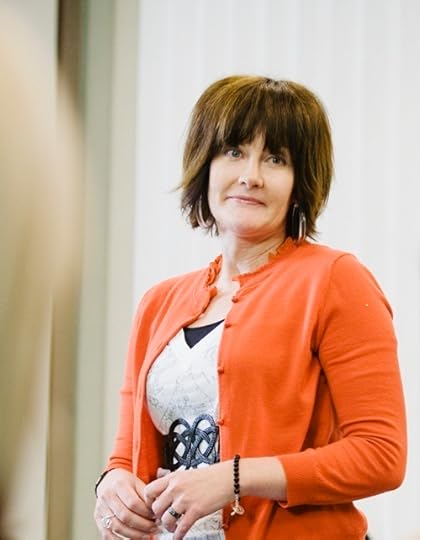
Recently I interviewed Jill Kohler who is the Founder and President of the Kohler Academy, an innovative and cutting edge beauty school in Scottsdale, Arizona.
Jill Kohler is dedicated to the schools mission to be "a different kind of Cosmetology and Skin Therapy school."
Jill is setting herself apart by offering a more comprehensive education to her students. In addition to being the only bumble & bumble University partner in the world, Kohler Academy offers a Life Skills class, Kohler Academy Industry days and the chance to study abroad every winter and spring.
Recently the academy was awarded "Best School Culture" a national award given by Modern Salon.
Jill offered some insight around leadership, and what it's like leading a beauty school that is always staying ahead of the curve.
WHY AS A LEADER DO YOU FEEL LEADERSHIP DEVELOPMENT AND TRAINING IS IMPORTANT TO YOUR ORGANIZATION?
Leadership is a broad term, it's a generalized word, and at first I had to find what leadership meant to me. I clearly saw a lot of examples of leadership that really turned me off, either through working with people who were poor leaders or manipulative leaders. I felt I needed to help people realize their own leadership skills, so they could find their voice, because either the words didn't mean anything to them, or they didn't feel they could show themselves around other leaders.
I've empowered my people even if they have no one underneath them, no direct subordinates. They still have to find their voice and become a leader. So do the students. If their salon owner someday says "I'm going to pay you half under the table and half on your paycheck" they have to find the leader in them that says, "That doesn't feel good to me. It feels wrong and I can't sleep at night with that decision. I'm going to take the risk of saying you can't do that or I'm going to have to leave." That gives them the ability to lead their own lives! You don't have to have a team of six people, be responsible for payroll, and know the HR laws to be the leader.
Consistency in leadership is huge! They want to believe in something. It's sort of like me and a political leader. I really want to believe that there is someone out there, who is a really good and honest person. So when I find someone, I'm really watching them. Are they going to make the right decisions? Are they going to say or do the right thing? I do think if leaders consistently make the wrong choice the team will pick up their toys and play somewhere else. However, they might not quit. I'll never forget a seminar I was in one time, where the person said the only thing worse than an employee who quits and leaves is an employee who quits and stays. They erode culture and diminish everything you work so hard for.
WHAT IS YOUR TOUGHEST CHALLENGE?
What I found as I was developing people and the company was there was a little bit of "yes-sing" going on. With my leadership team, and I have five on my team, I felt like there was side stepping or not wanting to disagree with me. So I started going into the mineral rights mode from Fierce. I started asking questions - tell me why I'm wrong?
This really helped invite people to say, "Well you're not thinking about the curriculum or you're not thinking about the flow of the day or those grades will never be posted in time". Whatever the thing is! I think before I would ask that question they would just figure it out, but there was a lot of inefficiencies and loss of productivity in trying to figure out the way "Jill wants it". I'm not even a hair dresser for god's sake! But I own a beauty school, so I have to ask the question "Why doesn't that work?" My Director of Education is constantly saying to me, "Because you're not a hair dresser and that won't work at all!" It's so great because I then say "Oh tell me more! What else, what else, what else?"
You can get really isolated as a leader if you're not willing to have people disagree with you. They would have gotten it solved the other way, now we just get there quicker and with a few more laughs.
YOUR SCHOOL JUST WON AN AWARD FOR "BEST SCHOOL CULTURE", DESCRIBE THE CULTURE OF YOUR ORGANIZATION.
We have a cultural expectation of feedback. You want to know the truth? I have a leadership team that can do it. We can sit in a meeting and say, "What happened?" and they can say "Oh that's me, that's all me! I'm sorry. Let me tell you what happened." They just own it and apologize. The tier below the leadership team, are still not completely comfortable with showing vulnerability. It's really hard for people to say, "Yeah you're totally right, I'm not handling that well". Certainly the cultural norm here is to praise publicly and coach privately. Even if it is happening right there, I would pull the person off the floor and give myself that space to give the feedback.
The culture of Kohler, I don't know if you want to talk about energy, because I feel like I always have to do a disclaimer: we don't sing Kumbaya! We just have to be careful with culture, because I don't want Shannon to be like Nikki and Nikki to be like Jen. I really value that they're not a bunch of robots walking around. They might quote something they've learned or I've said, and they follow the core values of Kohler, but I really like their individuality. It's important to me that they stay true to that. Some people are funnier, some people cleverer, some quick witted, and so there is energy to it all. In our admissions office they talk a lot about it, how it just feels different here. A prospective student will say "It feels so different in your school" and they expect that.
We do a lot of training. The staff is usually in training for two hours on Thursdays and the students are in the weekly Life Skills assembly, either with me or a guest speaker. There I will share stories or my team will share stories about what is going on in the real world. We do a daily forecast where the staff stands around the refrigerator and talks about what's happening today. Every morning we have a huddle with the students, every week the Life Skills assembly, and every month we have a staff meeting. So we gather a lot!
My team is a big reason our students rise to the cultural bar we set. I think our team is likable and intriguing. We do contests and we always go to the Broadway shows that come into town. We karaoke, potluck, we like each other and people can tell. All this doesn't really matter if the people on the inside aren't taking care of each other on a real and genuine level. That's why I think it's so important to mine for problems, to ask the question "Tell me why that's not going to work?" to be really consistent for my staff and students. People show up when they think they're going to be embraced and pushed.
For more information about leadership development and training, visit our site (www.fierceinc.com).
June 30, 2011
Celebrate the Fourth of July with Conversation

In honor of the upcoming holiday here in the U.S. when we celebrate the birth of our nation and the signing of the Declaration of Independence, I've been thinking a lot about how conversations shaped our nation.
The Declaration of Independence, the Bill of Rights and the U.S. Constitution are all living and breathing documents that illustrate where our nation's conversations have taken us in our two hundred and thirty five years of being a country.
We continue to shape how our country looks, to not only each other but the world, and I continue to think of how we as a society are influencing these documents by not only what we are talking about, but how we are talking about it.
Case in point, this morning on the drive into work my husband and I had a fifteen minute conversation around a National Public Radio (NPR) story we heard about President Obama's budget address yesterday. He and I disagree on the state of American politics, and I decided this morning that instead of putting my dukes up and having the "I'm right, you're wrong" fight, I would instead listen to my husband's point of view and ride the wave of his train of thought.
The outcome? I learned that while my husband and I both viewed the President's address the same way ideologically, we were really having a conversation about the climate these conversations were being discussed in. I realized in those quick 15 minutes that I was out of integrity with myself. I was being incredibly cynical and rooted in that position just to prove the point that I thought the system was broken. Did this conversation move mountains? No. Did it make me realize that I do, in fact, want to continue these conversations so that someday mountains can move? Yes.
As we gear up for another election year, as our country continues to shape and define what equality for all means, and as we celebrate our nation's history, I'm going to refer back to a key belief we hold here at Fierce: "While no single conversations is guaranteed to change the trajectory of a career, a company, a relationship or a life - any single conversation can". I would add that this is true for a country too.
For more information about leadership development and training, visit our site (www.fierceinc.com).
Susan Scott's Blog

- Susan Scott's profile
- 859 followers

