
Susan Scott's Blog, page 122
November 16, 2011
Creating Customer Connection Through Conversation


The recent economic upheaval has proven especially challenging for the retail sector. Although the economy showed signs of improvement through the end of 2010 and the first quarter of 2011, the recent downturn sent the Consumer Confidence Index plummeting at the end of July.
This and other indicators foretell a rough holiday shopping season and an uncertain future. With struggles looming it is more important than ever for retailers to find ways to differentiate themselves – and this means going beyond dropping prices, adding incentives, and decorating store windows.
With their confidence bottoming out, customers want something more. Scratch that, they demand something more. And that is: Connection. So how does one move the customer relationship from mere transactions to meaningful connections that foster loyalty? It starts with the conversation.
Here are 3 mantras your sales force should commit to memory.
1. I will be here, prepared to be nowhere else.There's nothing quite like standing at a cash register while being asked a series of questions by a sales associate who is making little or no eye contact. Do you need batteries? We're running a special on x, would you like to purchase 1 more and save $2? Would you like to open a credit card account? May I have your email address so we can notify you of upcoming sales? And on and on and on.
I find this all-too-common practice frustrating as do countless others. Why? Because I merely represent an "opportunity" for the sales associate as they rundown their checklist of the company's self-serving agenda. To top it off, I have nowhere to go. Cash register = captive audience.
Now don't get me wrong. I understand the need and the positive intentions underlying most of these practices; however, building a relationship with the customer should come first, ahead of corporate profits. I don't know of anyone who wants to have a relationship with a company through its credit card or mailing list.
Rather, we want a relationship with the people. So if you see me or anyone else standing at your cash register, engage with me. Set aside your agenda and simply be present in this moment. Right now. Even if it's Black Friday and I'm your 200th customer of the day. By doing this first, your recommendations no longer solely represent your needs, but expand to encompass my best interests as well.
2. I will obey my instincts. The human condition is a tricky one. There are tangibles and intangibles we desire and yet, when put on the spot, we may back down and settle for status quo for fear of sticking out or being perceived as difficult. This tendency isn't the problem. The real problem arises when we accept an answer at face-value, even though we sense something else is going on.
In customer service, it's perfectly normal for a customer to tell that a sales clerk she's "fine" or doesn't need help – but do a gut check. Does she look fine? Or does she look lost? If you sense that not all is going as well as your customer says, take time to inquire. In all of my years, I have never had someone become angry with me for taking an extra moment to check in. In fact, the result is quite the opposite. It demonstrates that they are important to you, and that you are paying attention and in tune with their needs.
3. I will come out from behind myself, into the conversation, and make it real. In order for connections to occur, we need to be dealing with the genuine article. Not some corporate hologram of the ideal employee complete with 100% adherence to the almighty policy and procedure manual.
Remember, business is personal and people act for emotional reasons first, rational ones second. There is no faster way to drive a customer away than to avoid the personal, unique nature of every individual. Have you ever called into a customer service line for help only to be given a generic response that doesn't help you in the least? We all have. And we usually put a special little star by companies like that.
There is a reason that companies like Zappos and Nordstrom excel in the area of customer loyalty. They place a high premium on building relationships with their customers, and take time to identify and meet the needs of individuals, rather than offering canned solutions.
Of course, it can be difficult to deal with an angry or upset customer, but by taking time to really understand the grievance or problem, retailers can ensure both that the customer feels heard, and that they can offer a real, meaningful answer. If you want to create the kind of long-lasting relationships that bring customers back time and time again, engage in authentic conversations, rather than dispensing generic solutions.
In a time of poor economics and a saturated marketplace, you can carve out your competitive edge in the area of customer connectivity. If your sales force is present, aware, and authentic, the customers will be there to stay.
For more information about leadership development and training, visit our site (www.fierceinc.com).


November 15, 2011
Is the Need to be Right, Wrong?

What does being "right" get you? And to what lengths will you go to achieve it?
More and more it seems we live in a world where being "right" is the most important thing. On the national stage we see politicians who would rather be "right" than work together.
In the news we hear about students stealing SAT tests in order to get the "right" scores for college, rather than really learning the information. Just last week we saw the downfall of Penn State head coach Joe Paterno, who chose to be "right" over doing the right thing.
It seems in our current world facts are subjective. More and more it's one's personal context that makes something "right" or "wrong".
If we apply this way of thinking to our businesses what happens? If the people within companies get swept up in the momentum of justifying their actions for the end goal of being "right"; where does that lead us?
The truth is, being "right", is subjective. We can justify our contexts to be whatever we need them to be. We discard what proves our context false and highlight what proves our context true. We can do this by surrounding ourselves with people who share the same viewpoints, or in other words, our "right" point of view.
It becomes harder to sustain when we engage in thought provoking ways with those who have differing opinions. This challenges our firmly held beliefs and makes us examine ourselves.
When we become isolated, it's so much easier to live on our "right" square. Is this isolation moving our organizations and our world in the direction we want it go?
Is this context working for us?
I've fallen victim to justifying my context for the sake of being "right". So this week I'm challenging myself to examine my context. When I feel that burning desire to ignore what doesn't suit me, I'll engage even more.
My goal for the week is to not isolate myself from what could possibly make me "wrong".
Will you join me?
For more information about leadership development and training, visit our site (www.fierceinc.com).
November 11, 2011
10 Tips for Veterans Entering the Workforce

In 2012, nearly 30,000 U.S. troops will be withdrawn from Afghanistan. Upon returning home, many will leave military service to enter the civilian workforce. While many businesses will jump at the opportunity to hire veterans, the difference between military and civilian communication styles can make the transition challenging for both parties.
Here are 10 tips to help ensure new veterans make a smooth, successful transition to corporate America.
1. Stand out from the crowd.
Individuality is highly prized in successful private sector organizations. Be sure to highlight your unique talents and strengths during interviews so an employer can see how you would enhance their team. Blending in won't do you any favors.
2. Disagree in an agreeable way.
Organizations aren't looking to fill their ranks with "yes men." In fact, groupthink is considered deadly in the private sector, and those who challenge ideas respectfully and thoughtfully are often considered invaluable. When you see things differently, describe your viewpoint without making anyone wrong. Employers will come to view you as someone they should have at the table.
3. Communicate directly.
Rather than information flowing up or down a chain of command, direct communication is required in organizations. Address issues one-on-one in a timely and thoughtful manner. Fellow employees and supervisors alike will appreciate your candor, and these direct conversations will help you to build important workplace relationships.
4. Praise often.
Frequent recognition is key in developing and sustaining positive working relationships. Don't wait for "big wins" to pat someone on the back. Rather, acknowledge contributions on a regular basis. Positive reinforcement will build rapport with your team, and serve as a strong motivator.
5. Develop leaders, not followers.
In mentoring or leadership positions, focus on drawing out the insights and perspectives of your employees before jumping in to solve the problem. Allowing others the opportunity to build problem-solving muscle will develop future leaders, ensure that employees feel heard and appreciated, and will reflect highly on you.
6. Involve others in the decision-making process.
Getting to "ground truth" when making key decisions is an essential function in today's business climate. Seek out multiple perspectives when considering decisions that will impact other team members or business units. Taking the time to get it right will pay off in spades down the line.
7. Delegate clearly and generously.
The notion of "command and control" in corporate America is nearly obsolete. Gone are the days when a leader pulled the trigger and sent the troops off to execute. Give direct reports varying levels of decision-making ability with clear direction as to where and when they need to report back to you. By joining in the strategic process, rather than just execution, they will gain fulfillment by actively participating in the organization's collective success.
8. Don't be afraid to fail.
One of the toughest transitions into any new job – whether it's transitioning from military to private sector, or even a new position within the same organization – can be gaining the confidence to make your own decisions. When unsure, ask your supervisor to define the areas where you own the call and then act on it. There is much more leeway for errors in businesses big and small. In fact, it's expected.
9. Ask for what you need.
In the civilian world, there is no "standard issue" to equip you for every occasion. Rather, you are expected to speak up and be proactive when a need arises. Employers appreciate team members who are self-sufficient in driving their own success, and who actively seek to do so.
10. Emphasize relationship over rank.
People don't follow people because of rank or title. They follow those who inspire and value them. That said, barking orders will result in your career having a very short shelf life. Place utmost importance on your relationships and earn the respect of your colleagues on a day-to-day basis.
As you can see, many hard and fast rules that were essential for survival in the military are the antithesis of how to navigate the halls of corporate America. Adjusting your strategy to suit your civilian comrades while remaining true to your team and objective will result in a smooth, successful transition.
For more information about leadership development and training, visit our site (www.fierceinc.com).
November 10, 2011
Is it Really "Hit or Miss"?

While at the gym the other day, I overheard a woman describing a situation in which she ended the conversation with the phrase "it's so hit or miss." She then started to talk about another unrelated topic and again ended with "it's so hit or miss."
This got me thinking about that phrase.
Admittedly, I've used it in reference to not finding something I was hoping to buy at a store where inventory turns frequently. And the more I thought about it, I realized what a significant impact that phrase can have if we are living our lives and leading organizations with that context.
If we drill down on this phrase, it essentially means we are accepting the present moment as is, randomly, without directions or plans. The reality is, if I did some research, data exists out there to tell me what store might be receiving the item I had interest in purchasing.
When I think about trying to navigate an organization through treacherous waters with this context, I am likely to overlook all the little moments that could be adding up to a disastrous outcome. And when I don't get the results I want, I likely won't be able to pinpoint exactly why.
At Fierce, we believe skilled leaders track the little moments so that they can steer through complexity successfully and not contribute a negative outcome to a 'hit or miss' situation.
Instead of chalking up the next outcome to being 'hit or miss' perhaps ask the following:
How did I/we/our team arrive at this place?
What questions are we not asking to gain the information we need?
Am I happy with the result? If not, what can I do to change it?
Where should I be at this point?
The answers might surprise you!
For more information about leadership development and training, visit our site (www.fierceinc.com).
November 8, 2011
GenMobile is on the Move

Last week a colleague and fellow blogger of mine, Stacey Engle, shared that our generation, GenY, has a new nickname: GenMobile. This new label speaks to both a love for our mobile devices and our fluidity in the world.
I really like this new label and feel it's relevant to our generation. Recently I read a piece in Human Resource Executive titled: Generation Why Not. The article focuses on GenMobile and our willingness to re-locate, and how companies can take advantage of this opportunity.
According to Kelly Global Workforce Index: The Evolving Workforce, a 2011 study that surveyed 97,000 people across 30 countries, 85 percent of millennials would like to relocate and 40 percent would move to another country.
Showing that GenY'ers are not only willing to move, they're asking for it.
Maybe it's the confidence of having all the information you could possibly need in the palm of your hand. With Facebook, Twitter and Skype available to stay close to family and friends. All of a sudden China doesn't seem very far away. Plus, with more and more of us putting off getting married and having children, there's not a whole lot to keep us settled.
So what does this mean for companies looking to retain the newest emerging workforce?
First, companies are no longer just competing with organizations in their country. Second, it's calling for global companies to think bigger. According to the HR Executive article, doing this can be a big win for smart organizations.
Companies investing in opportunities to travel and work abroad will find themselves with eager GenMobiles to fill those positions. Providing more options for expansion and moving toward an even bigger global society.
I'm reminded of the Thomas A. Edison quote: "Good fortune is what happens when opportunity meets with planning." Organizations are standing on a path paved with gold. Those that take advantage of this opportunity and plan ahead for it will have the competitive edge.
November 4, 2011
Your Question Matters

How often do you get asked a truly thought-provoking question? I'm talking about the step-back-a-moment kind of question. All the time? Twice a week? Never?
Less thought-provoking questions are asked every day – multiple times. I've recently paid attention to how regularly I ask and get asked "how are you?" or "how's it going?". The next part of the exchange usually involves the person responding "good", "really well" or something of the sort. Then the other partner takes his or her turn. Often times, the question is just a ritual.
And I'm not knocking the ritual. I'm just concerned if those kinds of questions are the extent of what I ask or get asked in a day…potential is lost. Deliberate questions have the power to bring relationships to another level.
For instance, starting a one-on-one conversation with "how are you?" versus "what's the most important thing we should be talking about today?" opens a very different conversation.
Fierce recently conducted a survey on employee-supervisor relationships titled Horrible Bosses, and we found 80% percent of respondents who reported a good employee-supervisor relationship claim that the most important thing a boss can do to create a positive working relationship is to both solicit and value their input.
Soliciting and valuing input, which ultimately creates connection, does not come to fruition by superficial interaction– it is propelled by poignant, thought-provoking questions.
This need for deeper connection exists in conference rooms and offices – no doubt. However, the need also lives at your dining room table, your coffee shop, your community meeting – everywhere.
We know the need exists – what's stopping us?
For more information about leadership development and training, visit our site (www.fierceinc.com).
November 3, 2011
New Report: The Financial Rewards of Employee Engagement: Better Relationships Bring Results
We're pleased to share with you a new Fierce, Inc. report that shows why employee engagement is the lifeblood of successful organizations. Learn how your organization can strengthen workplace relationships, increase engagement and impact the bottom line by building competency in three key areas.
The Financial Rewards of Employee Engagement: Better Relationships Bring Results, now available for complimentary download, shares data on why employee engagement matters and answers the following questions:
What are the risks of valuing quick wins over long-term strategic planning?
How does open communication impact shareholder returns?
What is the most important thing a leader can do to create a positive working relationship?
For answers to these questions and more, download your complimentary copy of The Financial Rewards of Employee Engagement: Better Relationships Bring Results now.
For more information about leadership development and training, visit our site (www.fierceinc.com).
October 27, 2011
Conversation is the Anti-Bullying Solution
[image error]
October is Anti-Bullying month. While the topic has national attention, let's engage in conversations on how communities are going to handle bullying issues across our country. Having children of my own, and being a former educator, it's a topic that is near and dear to my heart.
As I gear up to head off to this year's 2011 Annual Learning Forward conference with Fierce, where our Founder Susan Scott will be doing a session on Accountability, I can't help but step back and see how important, now more than ever, it is for teachers and administrators to create an environment for our children where personal accountability is not just talked about, but actually occurring. Our children's safety, academic growth and the school environment are dependent on it.
Being personally accountable involves having the conversations that need to occur. Bullying becomes an issue when conversations aren't happening or are ignored. Time and time again we hear stories about children not going to an adult when being bullied or when they see it happening to others. They do this because it's scary to stand up.
Fear of the unknown keeps the kids silent. Fear of not knowing how to have the conversation keeps the adults silent.
When we provide administrators, teachers, children and young adults the tools to engage in conversations that may be difficult, we give them the skills to come out from behind themselves with their feelings and opinions and combat fear with curiosity.
Having the conversation opens up the pathways for real relationships to get established. In strengthening these relationships between students, students and teachers, and students and parents we're being accountable to one another. We have to teach our children this skillset so they can live the motto "If it is to be, it is up to me".
In honor of Anti-Bullying month and because our children and schools need us too, let's have this conversation.
October 25, 2011
A Conversation with Dr. Suzi Kalsow of Buena Vista University
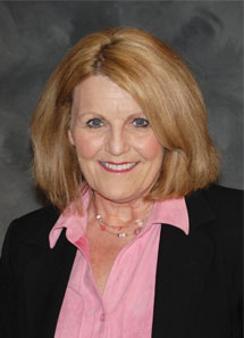
Recently I interviewed Dr. Suzi Kalsow, Associate Vice President for Academic Affairs and Dean of Graduate & Professional Studies at Buena Vista University.
As a certified trainer in Fierce Conversations, soon after assuming her new position this summer, she took all of her seventy plus employees through the two day training to lay a foundation and clarify the direction for the department over the next several years.
She and Buena Vista University are leading a progressive charge to bring leadership development and training to each student that attends their institution and its impressive 15 career centers. The goal is to equip each graduate with the skills necessary to be a dynamic member of the workforce.
Dr. Kalsow offered insight around how she creates a culture that welcomes feedback and her hopes for the University.
WHAT IS YOUR TOUGHEST CHALLENGE AS A LEADER?
I think my biggest challenge is personal: how do I develop into the kind of leader that can help my staff be the most effective? The people I work with are highly dedicated and so passionate about what they do, and they've had tough bumps in the road with leadership in the past.
If we say the challenge is out there we give up control. I've done the two day Fierce Conversation training with all my employees now and they're watching to see if I actually walk the talk. If I don't, I've asked them to call me on it. Already I've had an employee say to me, "well didn't you say…?" It's one thing to do training, but then as a leader you have to live it day-to-day.
For example, when I find myself frustrated with marketing, I don't talk about the marketing department, I talk with them. Instead of complaining about them to someone else, I picked up the phone and say, " Can we talk about this?"
AS A LEADER HOW ARE YOU CREATING A CULTURE THAT EMBRACES FEEDBACK?
It starts with being physically present. I'm on campus three days and at our career center sites the other two. In the past if a leader showed up it meant there was big trouble and somebody was getting fired. Now I want to make it routine like, "I'm just here, get used to it!"
Secondly I ask them to give me feedback. It takes courage, especially since their coming from a past that used fear and intimidation. I have to understand that even though we had those two days of training together, after years of doing things a certain way, you have to be patient when asking for change.
How you handle the feedback is important. If it's critical critique-I swallow, listen to the feedback and don't get defensive. We're a small network, even if we are spread out across the state, and word spreads fast. I want them to say, "Oh she handled that well."
When I ran one of my first meetings around program curriculum, after the meeting was done one of my faculty members came to me and basically said the meeting sucked. People left the meeting feeling like nothing was accomplished, and it wasn't a great use of their time. I listened to the feedback.
Later, I went to talk to her and thanked her for caring enough about me, the meetings, and what we're hoping to accomplish to share the feedback. Instead of thinking she did this to hurt me or she didn't want me to be successful, I chose to make a positive assumption about her, and I was right.
Afterward I named her my Assistant Dean. I think that sent a powerful message. Great leaders want the truth, weak leaders want compliance. I decided I want to be a great leader and so I chose an assistant who will tell me the truth. The great thing was I got to delegate those meetings to her, and it's her gift! Now we have a whole new program rolling out under her leadership.
WHAT ARE YOUR HOPES FOR BUENA VISTA UNIVERSITY?
I would love to see every one of our graduates leave with leadership training. We could look at students and say, you won't get this anywhere else. Not just 15 students or top identified students, but everyone. My hope is to graduate all students with the personal qualities and leadership skills that aren't normally a priority everywhere else.
The other vision I have for the people at our career sites is to expand and find people who haven't had educational opportunities and be the ones to offer that to them at the college level. Some of them are first generation high school graduates. I would like to see our career sites grow so that we listen to what people want and we're nimble enough to offer it to them.
AS A LEADER WHAT DO YOU TAKE PRIDE IN MOST?
I'm most proud that we are addressing the issues of the culture knowing that it impacts our end game and results. Our first goal when we went through the Fierce Conversations training together was to really clarify for ourselves how we were going to treat people around here. I'm proud that we are dignifying all positions and that everyone knows their perspectives matter. Even if they don't have the education or salary that some of us do, our administrative assistants are treated with dignity and are asked for their input.
I think that valuing all perspectives at all levels is a source of pride. We're creating a problem solving culture. Also I like that by offering Fierce Conversations training it can help our staff on a personal level. It's not: do this at work and you'll be successful. Living like this at home isn't such a bad idea either.
For more information about leadership development and training, visit our site (www.fierceinc.com).
October 20, 2011
Ladder vs. Lattice: Do We Need One Designated Leader?

What do the two newest American grass-root movements, The Tea Party Movement and now Occupy Wall Street, have in common? There are no discernible leaders.
What does that say about current attitude about leadership?
So far this era is not producing the "Martin Luther King Jr's" of the past. Instead, with the invention of social media, large groups can communicate quickly eliminating the need for a centralized hub of coordination. Anyone can start a Facebook group. To start a movement, we've logistically eliminated the need for a narrow circle of leadership.
A model with less centralized leadership is not entirely new. Progressive corporations such as W.L. Gore & Associates have been doing it since 1958. They say: Gore has been a team-based, flat lattice organization that fosters personal initiative. There are no traditional organizational charts, no chains of command, nor predetermined channels of communication.
Instead of direction concentrated with one leader, everyone is expected to initiate and have responsibility. The organization's strength is in the numbers.
Should business be looking to our political movements and corporations like Gore for guidance?
Are people yearning for a culture that provides ownership to a large group rather than a discernible few?
For more information about leadership development and training, visit our site (www.fierceinc.com).
Susan Scott's Blog

- Susan Scott's profile
- 859 followers

