
Jane Brocket's Blog, page 65
December 1, 2010
two-by-two
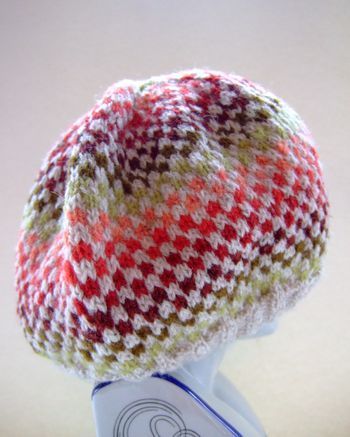
It's on days like this that I think maybe I should take photos in the full light of summer that look as if they are taken in December. It is so dull today that these are the best I can do. I tried to take more but the cold, iron-grey light prevented me. And I am certainly not going outside in the bitter wind in search of better light...
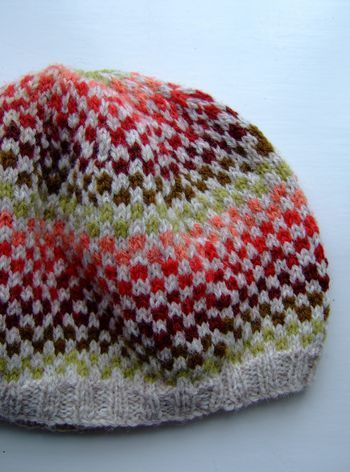
These are a couple of hats I knitted a while ago with Jamieson's of Scotland DK yarn. I wanted to see what happened when I took the binary system of Fair Knitting to its simplest conclusion (traditional Fair Isle knitting only ever has a maximum of two yarns per row). So I knitted these with two yarns and repeated two stitches per yarn per row. It's a simple and colourful variation on a chequerboard theme and makes a very warm hat because it's all double thickness.
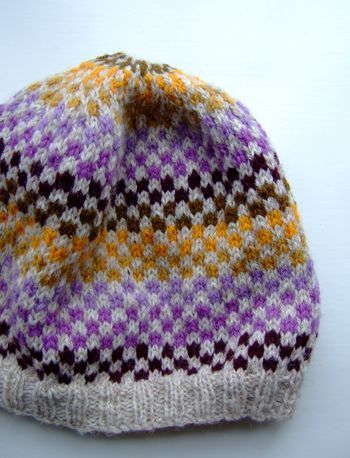
But I am still not going outside.


November 29, 2010
baker beware
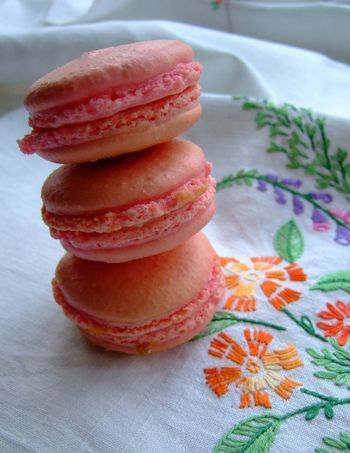
Phoebe and I went to a macaroon class on Saturday. We had a good time, learned how to make them properly, and came home with boxes of beautiful, pastel macaroons that looked like something we might have bought in Paris. Today the macaroons are still looking beautiful, pastel, and Parisian on our windowsill, since nobody has eaten them. This has nothing to do with preserving their delicate appearance or me forbidding anyone to touch them. No, the simple reason is that they don't taste good.
The macaroons bear out my basic baking belief that simplest is best. The macaroon shells are totally traditional and delicious, but the fillings are too clever for their own good. As soon as we saw that we would be making lychee/white chocolate/rosewater, orange and lemon curd/cinnamon, and dark chocolate/mint fillings, we decided we would remove at least one flavour from each combination (lychee, rosewater, cinnamon, mint) to make it nice to eat. However, it turned our we were working in groupsm, and Phoebe and I couldn't be subversive, so we filled our pretty and perfectly formed shells with stuff and goo we knew we wouldn't be eating.
Tellingly, the only macaroons that were eaten within minutes of us getting home were those with a caramel filling. Because they were simple and quite simply delicious.
November 26, 2010
4.02pm
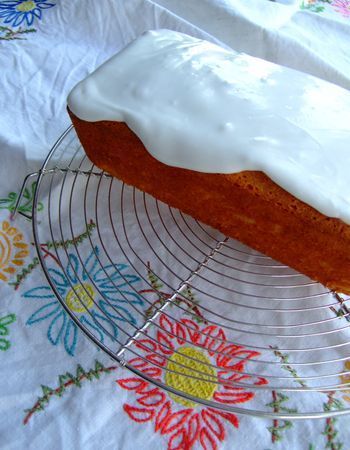
[photo taken a minute ago]
4.02 pm on the school clock means joy for the children.
4.02 pm on the home clock means icing a lemon cake. (Recipe in The Gentle Art of Domesticity.)
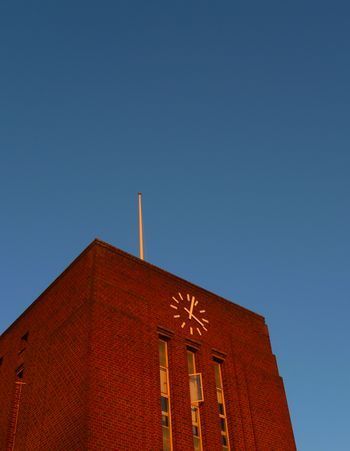
[photo taken a week ago]
By 5.02 pm both school and cake will be a distant memory.
November 25, 2010
cold embrace
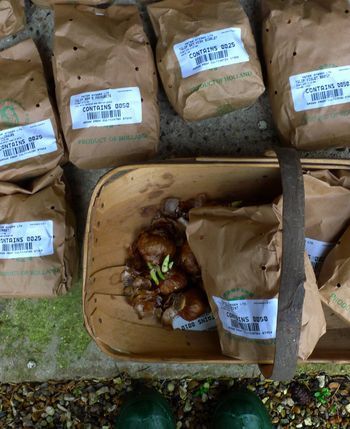
I hate being cold. I can't stand having an icy-tipped nose, blue-white fingers, and numb toes. I loathe cold rooms, cold winds, and cold butter than won't spread in the morning.
The cold has come early this year, well before I had prepared for it by hunting out the hotties and thick cardies, planning a fruit cake or two, trying to work out how the new heating system in the kitchen functions, and this has made me think again about how to combat the cold. Normally I deal with it by staying inside as much as possible and for as long as possible, but this week I'd made arrangements and unfortunately they nearly all involved the bitter outdoors. Yet I found they all had compensations.
:: A football match with the slapping, cold wind blowing in our faces from the Thames, and Manchester City slapping down our team. BUT the atmosphere, pantomine antics of crowd and performers, and hot Bovril made up for the cold-blooded deafeat.
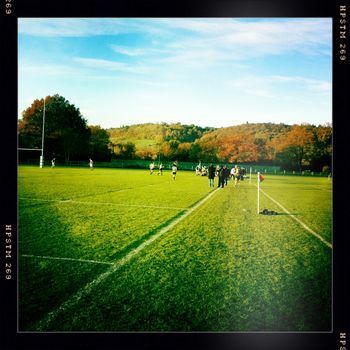
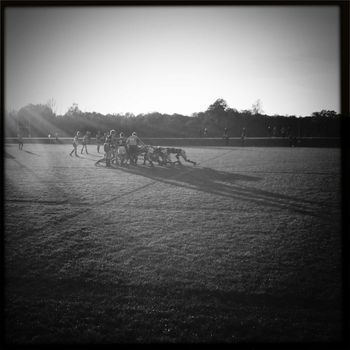
:: An exciting school rugby match in glorious surroundings and sunshine during which my feet apparently ceased to exist. BUT our team won.
:: A swim yesterday morning in an outdoor pool which was like swimming in thick, swirling, Hound of the Baskervilles mist. Wet hair and a wet face feel very cold at 1 C. BUT the pool is heated, and it felt magical to swim with the weak sunshine and bare trees occasionally appearing through the mist.
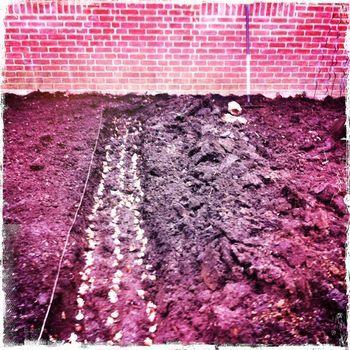
:: Planting hundreds of tulip bulbs that will not wait for better weather. Simon and I dug trenches over the weekend and felt like something out of Hamlet or a play by Beckett ('down in the hole, lingeringly, the grave-digger...') with soil, spades and black humour. BUT it kept us warm and made us laugh.
[it is well-nigh impossible to make bulb trenches look attractive in a photo]
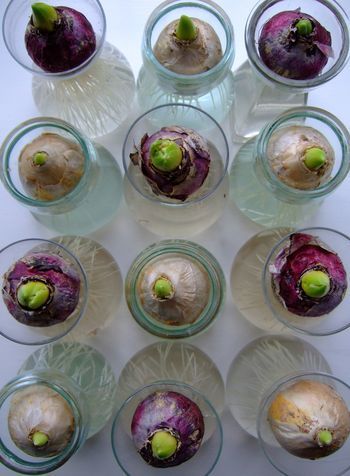
:: Sorting out the hyacinths that are being forced in the dark, chilly porch and garage. BUT it's quite amazing that the cold actually kick-starts the bulbs into life - quite the opposite to how it usually makes me feel.
'Embrace the cold' should be my new motto. After all, it's hardly Antarctica outside, and nothing like what Captain Scott, Apsley Cherry-Garrard, Captain Oates, 'Birdie' Bowers and Edward Wilson went through (all heroes of mine, as well as Herbert Ponting, who are brought to life brilliantly in The Birthday Boys by Beryl Bainbridge). Whenever I feel cold taking out the bins or bringing in the post, I always imagine how terrible it must have been for them to go outside in a howling Antarctic gale and take the anemometer readings and sort out the weather measuring instruments with bare hands. It all puts my 30 second dashes outside in perspective.
Somehow, though, despite the occasional compensations, I don't think I'll ever warm to winter's cold embrace.
November 23, 2010
textures
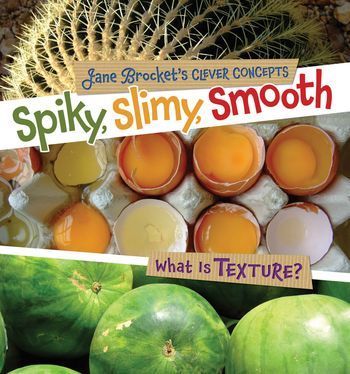
All through their childhood, I read enormous numbers of books to Tom, Alice and Phoebe. (We still laugh at memories of Phoebe bringing in at least fifteen books when asked to find something for me or Simon to read to her.) Books were undoubtedly the best way of creating calm, restoring peace, reducing noise levels, starting dicussions, sitting closely, and keeping all three happy at the same time (the other solution was fresh air). We read colour books, fairy tales, animal stories, rhymes, modern books, classics, and lots of beautifully illustrated books. But the one thing I always felt was missing was a range of books with photographs in them, and what a missed opportunity that was.
Even though I could see the gap in the market, I never thought I'd ever have my name on a children's book. So it's still quite a surprise to see this cover (it will be even more exciting when I hold a real book in my hands) because this is my photography between the covers of a book for young children (say in the 4-8 year range although it's very suitable for younger children, too). It is the first of four 'concept' books for Millbrook Press which is part of Lerner Publications, and it's been quite an educational experience writing it (quite apposite, as Millbrook is an educational imprint).
It all came about because of blogging. Carol, now my fantastic editor, is a passionate knitter and started reading Yarnstorm a long time ago. She contacted me out of the blue to say that she thought my photographs and style might be suitable for children's books, and would I be interested in writing a proposal? Well, it doesn't take much for me to imagine new books (as Dr Suess says, 'Oh the things you can think up, if only you try') so I came up with ideas, Millbrook liked them, I then realised that writing books for children is nowwhere near as easy as it looks, and now we are getting closer and closer to the publication of the first title in the series in March 2011. And when my copies arrive the tables will be turned and I shall be bringing a pile of books to my children with a big smile and asking them to read to me.
(The book is also available retail from Amazon.com,Amazon.co.uk and even Amazon.co.jp)
November 21, 2010
extraordinariness
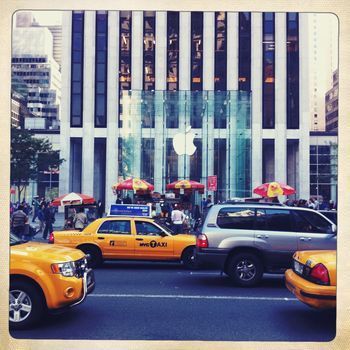
[little apple in Big Apple]
Although I am very find of ordinariness, there is nothing like a big helping of extraordinariness to help me compare and contrast. (Before I go any further, though, I have to say I have a bit of a thing about the word 'extraordinary' as I cannot bring myself to say out loud. I think this is because I hear it so often in discussions and on the radio when it is articulated in a very theatrical way as 'extrorrrrrdinary' and is so over-used in some quarters that it often means the opposite.)
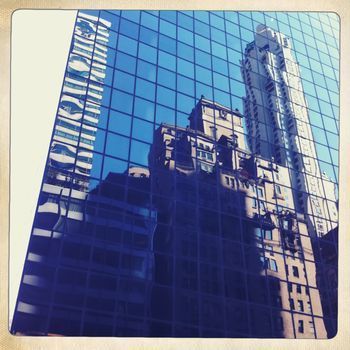
[old reflected in new, Park Avenue]
Anyway, something that is absolutely, truly, magnificently extraordinary with as many rs as you care to insert, is the architecture in Manhattan. Arriving in NYC is one of the most exciting experiences imaginable; all those sky-scrapers laid out on the long trestle table of Manhattan, looking like every film made in the city that you've ever seen. It is so cinematic that it has an air of unreality about it, as though it couldn't possibly have been build by ordinary humans.
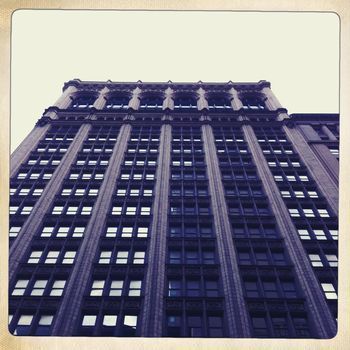
[towards the older end of Fifth Ave]
But, of course, the architects and builders of Manhattan were, and are, both ordinary people and quite extraordinary visionaries, and on my recent visit I started to consider for the first time the types of personalities that commission, design and build these phenomenal structures.
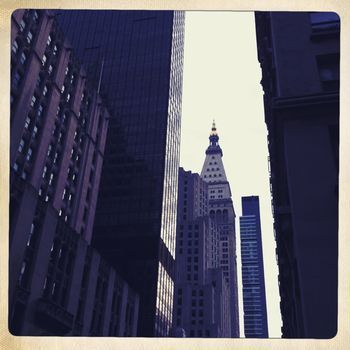
[needle-thin apartment block near Madison Square Garden]
These are huge, imposing, revolutionary, exciting, awe-inspiring structures.
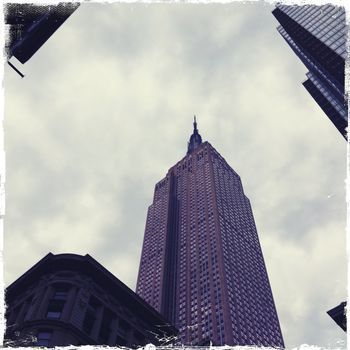
[Empire State Building]
And I am beginning to suspect that it requires a gigantic ego not only to conceive of such scale, but to convince others it must be built, and then see the project through to the very end.
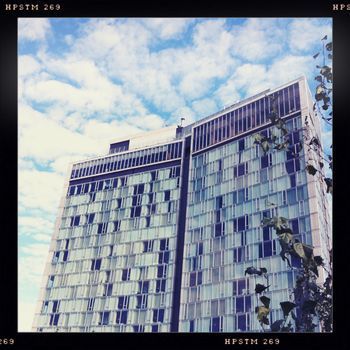
[The Standard Hotel]
My guides to the huge buildings and massive egos were Eric P. Nash and the MAS book which are excellent. The former gives the the history, characters and battles, the latter ensures you never miss a good skyscraper when walking past it (shockingly easy to do after a while when you start to take it all for granted).
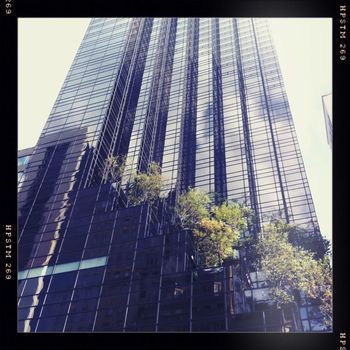
[attempts to humanise the Trump Tower]
My photos were all taken on an iPhone because I wasn't on my own and stops for photography weren't easy. But in fact it turned out that NY is the ideal subject for Hipstamatic fun and games; I have seen so many old/grainy/filmy/wierdly lit/cartoon/atmospheric films and photos of the city that it was interesting to see how the app captures so many recognisable effects.
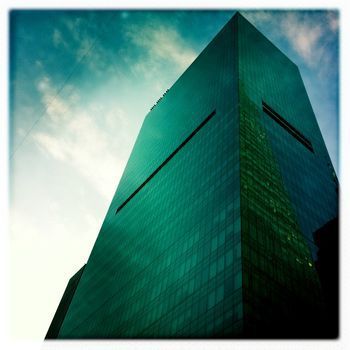
[brand new, near Bryant Park]
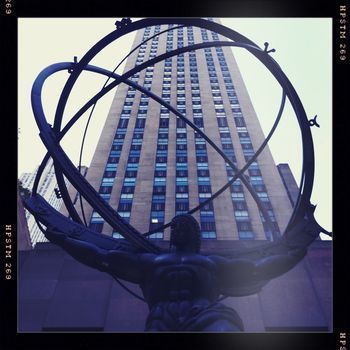
['Atlas', Rockefeller Center]
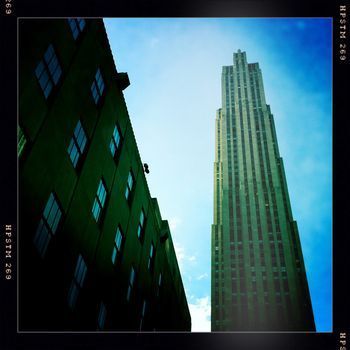
[Rockefeller Center]
And here, to conclude on the subject of extraordinary visions and egos, is a list of my favourite Manhattan films, each with its very own visual style:
An Affair to Remember, Laura, Holiday, The Big Clock, Rear Window, The Thin Man, When Harry Met Sally, Manhattan, Easter Parade, North by Northwest, Barefoot in the Park, Breakfast at Tiffany's, Pickup on South Street, Annie Hall.
November 17, 2010
4pm
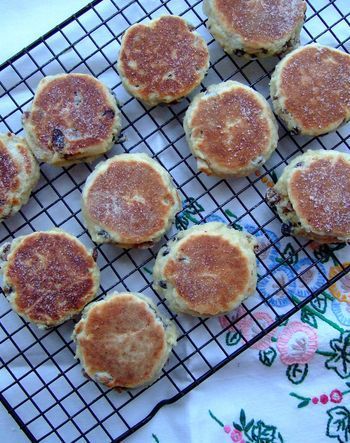
[Welsh cakes at 4pm]
4pm on a cold, foggy, November day in England can be a quite horrible or strangely enjoyable time. Memories of walking home from school in the fog, legs freezing, not being able to see the pavement opposite, envying all the brightly lit living rooms from the outside stay in my mind as the horrible version. But then there are moments when the sheer melancholy November gloominess becomes something wonderfully atmospheric, especially if you are in the middle of a bustling, energetic town or city with all the newly switched on bus, street and shop lights looking like a scene from a Gainsborough Pictures film. And it's can even be positively pleasureable to consider the fading light and gloom when you are home already, and warm and cosy inside.
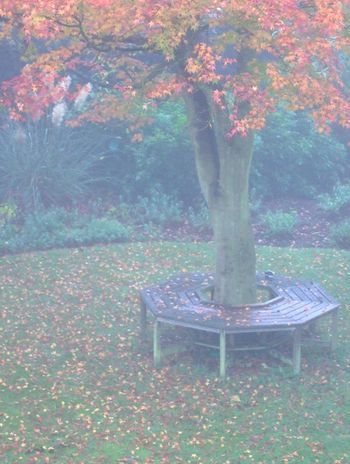
[Fog in garden, tree in fog at 4pm]
It's at this time of year that Virginia Woolf comes into her own. I've written about the Diaries before and yesterday took another look at the way she writes about late autumn days in London. I'd just made some incredibly fast and easy Welsh cakes with currants, sultanas and caster sugar for my weary schoolchildren (recipe in this book), and was delighted to read of VW on 15 November 1919, 'sitting after Saturday tea...full of currants and sugar and hot tea cake, after a long cold walk'.
It seems the only way to make the most of the tricky 4pm-in-November moment is with electric light and warm cake. But I think I knew that all along.
[Posted at 4pm GMT]
November 16, 2010
rules and the breaking thereof
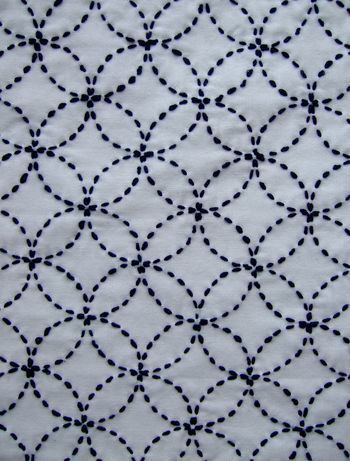
I sometimes wonder who writes the rules (not laws) that so many of us follow unthinkingly. And how they come to be accepted wisdom, to the degree that it is then noteworthy when they are broken. At the 'Impressionist Gardens' exhibition in Edinburgh, I was surprised to read that Pierre Bonnard apparently 'breaks all the rules' when in Blue Balcony he depicts a garden scene from a first floor balcony of a house (not the correct perspective) and then has the temerity to put a tall hedge at the end of the garden to block any further view. It amazes me that this was ever seen as rule-breaking; it is, after all, how we see life every day and always have done. How can we let ourselves be blinded by rules to the extent that they prevent us from seeing clearly?
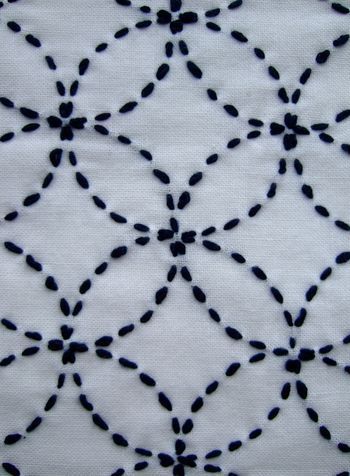
I have been having these subversive thoughts while gently stitching, but it is the gentle stitching that has provoked them. I've never done any sashiko before, but last week I bought a pre-printed piece of soft, loosely woven fabric, a horribly sharp sashiko needle, a couple of skeins of long-staple cotton sashiko thread, and started stitching. I'd looked up a few directions beforehand and was reassured by the fact that there is nothing too rule-like about sashiko (it's not imperative that you use any of the authentic Japanese stuff, your stitch length/technique can suit your style and motion, a special thimble is optional). I also soon discovered that sashiko is the most wonderfully junior school-level stitching imaginable.
I remember when I was seven or eight and desperate to get sewing. The first things we were given were thick needles and soft fabric, and as beginners we were told to use the thread double and to tie a knot in the end to anchor it. Of course, it was made very clear that when we were doing 'proper' needlework (about four years hence) we would graduate to a single, fine thread and there would be no question of knots anywhere in our work. The thing was, though, that I truly enjoyed working with thick threads, simple stitches and useful knots, and struggled to understand why finer, thinner, knotless work was seen as inherently superior.
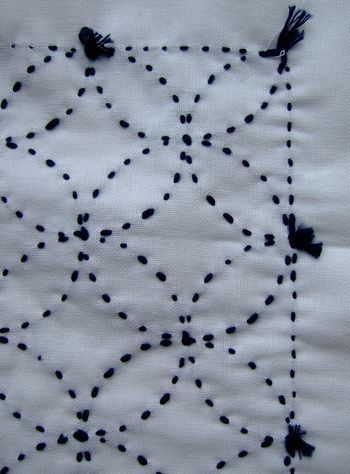
So it is utterly liberating to find out that sashiko relies on double threads, knots, and super-simple, happy running stitch on clever line patterns for its beautiful effects. It is so easy and rewarding to follow the dotted lines, all the while feeling thrilled that you are breaking every abitrary rule your needlework teacher ever imposed. I made this piece in three nights, and was so absorbed and unworried about getting it 'wrong' that I was surprised when I saw I'd finished it. How is it, I wondered, that for centuries in Japan it's been fine to make bold, textural, stitches with thick, double thread and lots of knots on the back, and all the while in the West this very simplicity and practicality has been ruled out by those who know better?
Good job I now have the reverse kit to work on - indigo fabric with off-white thread - so that I can carry on wondering and rebelling.
[Sashiko supplies from The Cotton Patch. Pattern is Olympus Shippo Tsunagi, and my thread and needle are also the Olympus brand. I didn't use a special thimble. Best source of information is Susan Briscoe.]
November 12, 2010
ordinariness

Life here is very, very ordinary at the moment, and I enjoy and cherish ordinariness enormously. I have a new project and in the last two weeks have had a huge burst of creativity which I think sprang from the very fact that nothing exciting is happening. I have quite surprised myself with my output, although the rest of the family remain as ordinarily unperturbed as ever by the sheer amount of stuff in progress which hampers their movements around various rooms. I, on the other hand, have been having a lovely time with colours and textiles, skills and ideas, books and words, friends and family. Many people say that walking helps them with their ideas, especially writing ideas, and I find it's the same with routine which creates a gentle rhythm that frees the mind and allows new ideas to germinate and develop.
Ordinariness has a lot going for it. It sounds dull, worthy, and boring, but just this week I have been listening to the wonderful, very gorgeous Hugh Bonneville reading Philip Larkin's Letters to Monica on Radio 4 (I never thought PL would make me laugh, but his letters do) and was intrigued by the contrast between his remarkable, outwardly ordinary, life as a librarian, and his poetic output. And there is nothing better than a novel about ordinary lives, ordinary people and ordinary days - just look at The Fortnight in September for a brilliant evocation of the depths and interests of ordinariness.
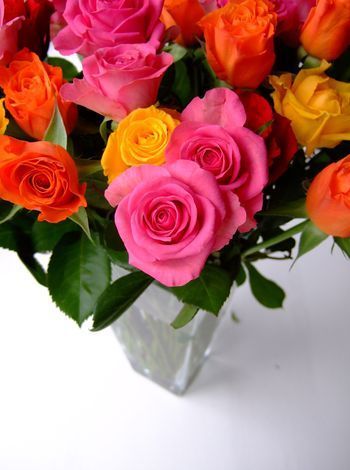
The only issue I have with ordinariness is which photo to use to illustrate it. I feel it should be a pile of homework books, a mountain of washing, Tom playing rugby, Alice in her Saturday job uniform, Phoebe with her massive headphones on, Simon with his feet up and eating as many biscuits as he can hold in his hand, me watching Mad Men. Only Martin Parr could do this properly, so I'm sticking with some extraordinarily bright and totally unseasonal roses which I often buy when life is very happily ordinary.
November 9, 2010
switched on
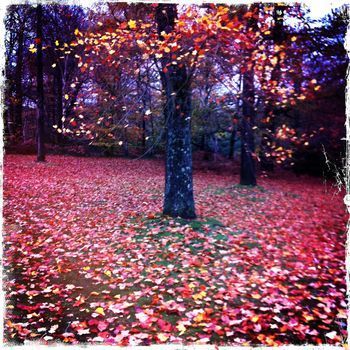
The trees have been blown almost bare overnight but I saw this one on a walk this morning which looked as though its few remaining leaves were a crown or chandelier of lights casting a glow on the ground beneath.
Jane Brocket's Blog

- Jane Brocket's profile
- 27 followers

