
Brendan Halpin's Blog, page 26
March 13, 2011
The Perils of Pernicious Positivity
I just finished reading Barbara Ehrenreich's Bright Sided: How The Relentless Promotion of Positive Thinking Has Undermined America.
It's a completely brilliant book in which Ehrenreich systematically takes down relentless positivity in all its forms. She's not advocating negativity; rather, she's saying that we need to acknowledge that some events don't have a bright side and that it's not necessarily true that things are always going to get better.
She articulates very clearly how the dark side of The Secret and the rest of the positive thinking hokum out there is victim blaming-- if something bad happens to you, it must be your fault for being too negative.
It's also very interesting to see how positive thinking and motivational speaking, which started as a way to pacify laid off or soon-to-be-laid-off workers, actually came to infect the minds of management, leading to what Ehrenreich dubs the era of postrational management.
I don't think this book will really change anybody's mind--it's more for people like me who have this vague sense that all of this relentless positivity is horseshit and will enjoy reading some really lucid arguments that confirm this.
I am thinking, though, about how Ehrenreich's call for realism applies to writing. As anyone who knows me even a little bit can attest, I'm a cynical, cranky bastard, and yet even I have been infected by the positive thinking virus.
There's this whole mythology in creative work that you have to just believe in yourself and success will come. But as anyone who's watched early rounds of American Idol can attest, believing in yourself is not enough. Plenty of people believe in themselves but aren't actually any good.
We read about J.K. Rowling and all of her rejections and think, "yes, I should keep at it no matter what." But for every J.K. Rowling, there are probably millions of people who were rejected an equal number of times and never became multi billionaires. Sometimes you have to relentlessly follow your dream. And sometimes you have to be realistic and get some bills paid.
Here's where positive thinking affected me negatively: Even as it became clear that my sales were not very good and my advances were declining, I remained convinced that I could make a living as a full-time writer forever. The next book was going to be a best seller, or the next expression of movie interest was not going to evaporate. After all, I wanted it really bad, and anyway, I suffered a horrible tragedy and the universe or God or whoever owed me!
Well, this kind of thinking led me to stretch out my full-time writing career long past the point where I should have given it up and gotten a real job. This (along with a few other factors) caused a financial crisis that my family still hasn't recovered from.
There's nothing wrong with being optimistic, but you just can't make serious plans based on the idea that things will always get better. (This, as Ehrenreich points out, is what brought us to our most recent financial crisis). It's a lot smarter to make plans based on the idea that things will stay the same or get worse.
As far as writing, or any other creative endeavor goes, you need talent and a whole hell of a lot of luck. I guess it's comforting to believe that our wishes can influence a chaotic and often cruel world, but it just isn't so.
I have worked with a lot of young people who believe that all they need to succeed as rappers is confidence and dedication. None of them have thus far broken through. This isn't to say that none of them will, but just to say that confidence and determination aren't enough to make you successful. You need luck, too, and you can't control that.
Here's an example to counter all of the anecdotes in the positive thinking propaganda: the song "Na Na Hey Hey Kiss Him Goodbye," which lives on and pays royalties today as a sports and politics related taunt, was loathed by its creators, who viewed it as an embarrassing b-side throwaway and refused to put their own names on it. And yet, despite its creators' negativity, this became one of the most successful singles of all time.
It's somewhat terrifying to realize that we, like Howard the Duck, are trapped in a world we never made, that our fates are ultimately beyond our control. But conducting ourselves like wanting something is the same as having it is just foolish.


March 3, 2011
For Writers New to Twitter
As I've mentioned before, writers are scrambling to promote themselves in a world where nobody knows how to sell books anymore.
So a lot of us are turning to twitter in hopes of "creating a platform" or "branding ourselves" or whatever the hell the windbags who make a lot of money spouting crap like that at conferences call it.
I've recently picked up a bunch of writer followers who clearly don't understand the culture of twitter, so this is my fumbling attempt to try to explain it.
I guess the first thing I want to say is this: twitter is interactive. Pretty much everything flows from this. If you don't find interacting with people on twitter enjoyable in some way (which is fine--no judgment! I usually don't find interacting with people in real life enjoyable, so I feel your pain), you really shouldn't even create an account.
To put it another way: if you are doing nothing but posting links about your book, you are going to annoy people. They are not going to click on your links, and they will unfollow you, and whatever time you're spending on twitter is not helping you sell books.
People mock twitter all the time, saying stuff like, "who the hell cares what I had for breakfast?" But twitter is all about getting some fun and even some nice, sustaining human connection out of little moments. I recently tweeted about an order of breakfast nachos I enjoyed, and had several nice little mini-conversations about whether this is, in fact, a work if sheer genius and the best food ever. (yes. and yes.)
So as far as promoting yourself and your books, you need to talk about stuff you find interesting, talk back to people who are saying interesting things, maybe post links to stuff on the web you found interesting, and generally establish yourself as an interesting person. And then when you post something about your book, or your appearance at some store, people might actually click on it.
Or maybe not. Nobody knows how to sell books anymore, so maybe twitter won't help at all! Sorry-- I'm just too cynical to be a cheerleader for just about anything. Which is why I haven't rebranded myself as a social media guru.
Many of the big stars in my primary field--YA fiction-- are, in the parlance of some 3rd party services, "twitter snobs." That is to say, they follow a tiny percentage of the people who follow them. You can get away with this if you have a big fan base that you've built before coming to twitter. If not, follow people back. It's an easy, painless way to establish a connection with a reader.
Finally, if you are a writer who wants to know how to use twitter well, you should probably follow Mitali Perkins, who is a twitter star, a talented writer, and a kind and generous person to boot. You could do a lot worse than just watching how she uses social media and trying to do the same.
February 25, 2011
Glee, Scars, and YA's Censorship Problem
Well, another YA novel is under challenge: this time it's Scars, by Cheryl Rainfield. (A book I had never heard of before this, which is now getting tons of free publicity courtesy of one library patron in Kentucky. O, my fans and supporters, you could do this for me! Sigh...)
As I wrote when the Speak controversy happened, the real threat to artisitc expression in the YA arena is self-censorship. And to illustrate this, I'd like to talk about last week's episode of Glee. I am apparently the only person on twitter who does not regularly watch this show, but I did watch last week with one of the Glee-addicted teens I live with.
While the episode did end on a semi-preachy note, it depicted the following things: teens getting drunk without suffering any consequences other than a severe hangover. Adults getting drunk. Ditto. Someone (can't remember who) making the observation that drinking is fun.
All I could think as I watched this was that this episode, which was probably watched by literally millions of teens, was something you just couldn't get away with in YA literature.
I wonder if this is because people still have the idea that literature's purpose is to instruct rather than entertain. Whatever the case, I know that I, and many other YA authors I've spoken to have been asked by editors to tone down references to drinking and sexual activity in our YA novels.
Now, I do not want to dump on editors--unlike their colleagues on the adult side of publishing, YA editors still really edit their books. Their attention to our work is one of the reasons that there's such a boom in quality YA literature right now. To put it another way--if YA literature is, as a whole, of a pretty high quality right now, that's because editors are forcing us authors to make it better.
But editors also have to be concerned about commerce as well as art, and they are afraid of including content that will cause your book to be avoided by librarians and teachers. For the most part, this means sex and alcohol (and, I suppose, marijuana and other recreational drugs.)
So in literature aimed at teens, we have to avoid telling the truth about two pretty important facets of teen life. You can depict these things under certain circumstances, but you pretty much have to show these actions having consequences that they don't always have in real life.
Let's put it this way: I don't know anyone from my circle of friends and acquaintances in high school who hadn't been sexually active and drunk before graduation. (I mean by the time they graduated. Not, you know, right before graduation, though I'm sure that's true of some of them as well.) Yes, both sex and booze sometimes have terrible and tragic consequences, but mostly they don't. So in depicting a world in which sex and intoxication are always fraught with big consequences, YA fiction is fundamentally not telling the truth about the world in which teenagers live.
This terror of teen sex also leads to a kind of perversely sex-negative and anti-feminist culture in YA fiction. By which I mean this: I have read way more books in which girls are sexually assaulted than books in which they have consensual, enjoyable sex.
Because TV is only expected to entertain rather than educate while entertaining, it's able to tell truths about teen life that YA literature can't tell. This is a shame because reading is already not the most popular leisure activity. How can we get teens to turn off the TV and read a book when even a fantasy of teen life like Glee is able to be more truthful about teen life than most YA fiction?
February 22, 2011
Don't Write for Free: Huffington Post Edition
Back in August, I advised against writing for free. I've been thinking about this a lot lately in the wake of the sale of the Huffington Post to AOL for 315 million dollars.
The Huffington Post does not pay its bloggers. What it offers in lieu of payment is "exposure." This is real, as The Huffington Post is extensively linked to, tweeted, and facebooked. Unfortunately, exposure doesn't pay the bills. This makes blogging for the Huffington Post a great deal for CEOs of non-profits, celebrities, and anybody else with another job that puts food on the table.
It also makes it absolutely moronic for anyone who is primarily a writer. You can't eat exposure, and American Express is not really interested in how many page views you've gotten when your bill is due. (I tried telling them about a starred review a few months ago. Not only did they fail to congratulate me, they actually still wanted their money!)
Now a bunch of unpaid bloggers are complaining because they feel that they added value to The Huffington Post and they want a piece of the sizeable pie that Arianna Huffington is gorging herself on.
Perhaps surprisingly, I have no sympathy at all for these people. They signed on to a stupid deal, and they are now getting exactly what they were guaranteed all along: nothing. There have always been ads on the site, so it's not like there wasn't any money coming in. They knew what the deal was, they signed up for it, and nothing at all has changed. They are still expected to add value to someone else's product for free. It's just that they now understand exactly what they're not getting.
I guess the bottom line for me is this: no one should ever be surprised when a business tries to make money. All businesses exist solely to make money. I'm not saying that no business cares about their product or their workers, but that they only do so insofar as they think it's going to make them money.
People always get worked up about stuff like this: why does the radio suck, why did this or that thing change about a business I liked: well, it's because the business thinks it can make money doing that, and every other consideration is secondary.
In my neighborhood, people are wringing their hands because Whole Foods is replacing a more or less locally-owned supermarket. They act surprised that the localish business is abandoning the community. But the corporation that owns the supermarket believes this sale will bring it more money than operating the supermarket. They are acting as corporations act. Similarly, the anti-Whole Foods crowd derides Whole Foods' efforts to appear green and organic and hippie-ish as "greenwashing." That is to say, Whole Foods doesn't really care about this stuff--they just want to appear to care about it in order to make money. Well, of course! Whole Foods has a business model that involves selling expensive (and delicious. So, so delicious) food to guilty liberals, and they've realized that some nominal attention to environmental issues will help them make money.
This is what corporations do. Any corporation that tells you they have a priority other than making money is lying.
I think a lot of misunderstandings and anguish could be avoided if people just remembered that corporations exist to make money.
And this, I guess, one of the key reasons I identify as a liberal. Corporations can't be expected to look out for the good of society; it's not their job. It, therefore, has to be the job of government and organized labor to ensure that considerations other than profit get some attention.
And it has to be your job as a writer or any kind of worker not to give your labor away. Duh.
February 14, 2011
A Valentine for Bobbie Gentry
I remember a lot of story songs from when I was young. "Run Joey Run," "Copacabana," "Indiana Wants Me," "The Night the Lights Went Out in Georgia" "The Night Chicago Died"...well, there were a lot of them. But the one that I always found creepiest (this must have been when it was rereleased in conjunction with the movie, since I wasn't alive when it first came out) was Bobbie Gentry's "Ode to Billy Joe."
As a kid, I didn't like this much because it kinda freaked me out. I think I had a sense that this song was fundamentally more serious than the others I mentioned above. Although most story songs are tragic, most of them just seem like kind of a goof, like the tragedy the song relates is not real.
This one, though, felt real.
As I got older, I came to appreciate this song as a really awe-inspiring example of storytelling. Gentry, who wrote the song, just packs more story into this three and a half minute song than most people do in pages and pages of prose.
In the first two verses, we understand what kind of life this family lives, what kind of relationship they have, and the torment that the narrator is feeling. You try doing that in a minute. It ain't easy. Indeed, it's probably nearly impossible, since almost no one ever manages to do it.
The juxtaposition of the family's real concerns--the biscuits and black eyed peas--with the fact of Billy Joe's death is chilling. And though the narrator never explicitly tells us how she feels about Billy Joe, we get the whole thing from a few sparse details. And so much is left to our imagination--what did they throw off the bridge? Why did Billy Joe kill himself? Ultimately it doesn't matter, of course, but I love the fact that it's not spelled out for us.
Basically, as someone who makes a living--okay, supplements his living--telling stories, I really appreciate the genius of this song. It's every bit as brilliant a short story as Raymond Carver's "Cathedral," which is one of my favorites. But unlike Carver's work, you can sing along to this one.
Here's Bobbie Gentry on the BBC in 1968, the year of my birth, singing (actually singing, mind you! Not lip syncing!) "Ode To Billy Joe." I loved the song already, but after seeing this video, I'm a little bit in love with Bobbie Gentry herself.
Bobbie Gentry retired from performing and recording years ago, but she is alive and I assume well and living in Los Angeles. She's 66 years old, and I don't know if she ever googles herself. If she does, though, this is for her: this is a work of art that I really deeply admire. It's a source of inspiration for me in my work. Though I'll probably never capture a setting, a family, a mood and a story as perfectly as you did in as few words, I admire the hell out of what you did here. Thank you!
Postscript: Having grown up in the 1980's in a popular culture dominated by the narcissism and phony nostalgia of the baby boomers, I'm relucant to overpraise the 60's, but in researching this song, I found this fact. In 1967, "Ode to Billy Joe" hit number one by knocking off the previous number one, which was the Beatles' "All You Need is Love." "Ode to Billy Joe" was supplanted at number one by the Box Tops' "The Letter." Now that's a freaking amazing trio of number ones.
February 9, 2011
On Bad Reviews and How to Respond to Them
There are a lot of great things about being a professional writer. One of the bad things is that people will sometimes say unkind things about your work.
Sometimes their criticism will not be fair. Sometimes their criticism will be mean-spirited. Sometimes their criticism is neither mean-spirited nor unfair, and of course this is the stuff that hurts worst of all.
But you must never, ever ever respond to them. Wanna know why? Read this.
We can pick apart this blog entry, but that would be mean. Okay, let's do it just a little bit. You can't complain that anyone is unqualified to review your book. If they're qualified to buy it, they're qualified to have and express an opinion. Also, um, a review can't be objective. Kind of by definition.
But anyway, here's the thing. There is no way to complain about a bad review without making yourself look stupid and petty and thin-skinned, but worse than that, when you respond to a bad review, you are admitting that the criticism stung, which implies to the world at large that it is valid. Plus, then you can have a comment war or a twitter beef or whatever that will draw even more attention to the fact that someone said bad things about your work. I never heard of Sylvia Massara before today, and now the only thing I know is that she can't take criticism and that something in the original review really hit her hard, which probably means its a criticism she has of her own work that she was hoping the outside world would overlook. (Maybe I'm projecting. Those are always the criticisms I hate the most. The ones where I read them and go "Crap! I was hoping no one else was going to notice that!")
I know it's tempting, (I've been getting some criticism lately that I'm just itching to respond to. Itching like a case of poison ivy, I say!) but for the sake of your reputation and your dignity and your career, you've got to resist. Resist!
You had your say when you wrote the book. The rest is up to other people.
If You Don't Know Dick
In 1990, I took a science fiction class from Judith Moffett. One of my favorite English classes ever. One day Kim Stanley Robinson came to speak to us and talked about how great Philip K. Dick was. We had read The Wild Shore for class and I really liked it (Red Mars & Green Mars are his masterpieces, but they hadn't been written yet. I advise skipping Blue Mars.), so I went and picked up Time out of Joint. This is back when Dick was still not a respectable writer but had a cult following mostly due to Blade Runner, and all of his books, even the old, pulpy, not-very-literary ones like Time Out of Joint had been reissued with illustrations on the cover featuring Dick's bearded face.
Well, I was hooked immediately and spent the next two years off an on reading as much of Dick's work as I could get my hands on. (My faves, in case you care: The Penultimate Truth, Ubik, We Can Build You, A Scanner Darkly, and Valis.) (The Divine Invasion, though, is pretty much unreadable, as is The Transmigration of Timothy Archer).
I also read Lawrence Sutin's excellent biography of Dick, entitled Divine Invasions.
I'm not going to go on and on about the awesomeness of Philip K. Dick except to say now that he's become a somewhat respectable literary figure, don't let that discourage you. His work is accessible, entertaining, and deep--popular culture at its absolute best.
Dick's books used to carry a blurb from Ursula LeGuin that said something to the effect of "He is our homegrown Borges." She was saying that they had similar preoccupations, which they did, but think Dick is better than Borges. And I love Borges.
All of this is occasioned by my picking up Breakfast at Twilight, a collection of Dick's early stories. It is awesome, but here's what I really like. You know how with some writers, you have to kind of overlook whatever weird prejudices and biases they had because of the time in which they'd been raised and were writing? Well, I just read a story called The Turning Wheel, and it totally rekindled my admiration for the guy.
For one thing, it's a profoundly ant-racist story. From 1953. I mean, this is a white guy who was born in 1928. In the future world of this story, society is highly stratified, with caucasians on the bottom. The story's protagonist talks a lot about "Caucs", and their savagery, the fact that their hairiness indicates that they are closer to neanderthals than the East Asian, South Asian, and African peoples who occupy the top levels of the society. At one point he follows "two strapping bucks." Now, I've read enough that I've seen that word applied to black men plenty of times and clucked to myself at the racism of the past, but this story made me feel the insult in a way I probably never could have otherwise. (I know that this kind of thing is a science fiction trope, but what can I say, it still works on me.)
Now, the guy was far from perfect, and indeed, suffered from pretty serious mental illness late in life, but still, in this aspect anyway, he wasn't a man of his time. He was ahead of his time.
Not only that, but the highly stratified society depicted in the story is controlled by a priest class, or "bards" as the story has them, who follow a highly stratified religious belief system created, or possibly revealed by Elron Hu. Or, to give him his full title, Elron Hu, Bard.
The guy was mocking Scientology in 1953, when it had barely gotten off the ground! (Here's a great article about Scientology that just came out. It's really long but quite riveting.)
So, to finish off my title, if you don't know Dick, I humbly suggest you check him out.
February 5, 2011
Making The List: The Bitch Media Kerfuffle
I often tell people how the YA world feels more supportive and community-like than the adult fiction world. I stand by this, but the YA world has its share of tempestuous teapots.
Take this, for example. Bitch Media, which I confess I've never heard of before reading about this controversy, offers up 100 young adult books for the feminist reader.
Scroll down and read the comments. Apparently three books that initially made the list were then excised from the list because people objected to their inclusion for a variety of reasons.
Scott Westerfield weighs in, asking that his book be removed from a list that he considers, in light of the purging of certain titles, an embarrassment.
All of which raises three questions for me.
1.) As near as I can tell from the titles I recognize, these books are all books with strong female protagonists. Which makes me wonder what the point is, really. Compiling a list of YA novels with strong female protagonists is a bit like compiling a list of action movies with strong male protagonists. Why not just write "Twilight is profoundly anti-feminist, why not pick up something else" instead of going to the trouble of making a list?
2.) What is art for? No, I mean, really. Kind of a deep question to spring from something as trivial as a niche publication's list, but seriously. Bitch media writes: "These stories will empower teenage and adult readers alike." But is that why we read fiction? I think we engage with any kind of art for a variety of complicated reasons, and our reactions to it can also be complicated. Does art shape or reflect our ideas? Yes! Does it shape or reflect culture? Yes! Not to get too hoity-toity, but it seems to me that our interactions with art are complicated enough that trying to find art that fits into an ideological box or that can be read for strictly pragmatic reasons is always going to be kind of a fool's errand.
3.) Who gives a shit? No, really. Not just about this list, but about any list? I mean, look, we all want to be recognized for our work, but these lists are bullshit. Because what do we, the writers, want from them? We want, primarily, to chip away at the public consciousness in hopes of selling some books. "Aha," we think, "now that my book appears on a list, more people are going to buy it!"
But, the thing is, that's not really true. I know this from talking to my fellow writers whose work appears on more lists than my work does. I also know it from being a reader. How many books have I ever bought because they appeared on a list? Zero. I buy books because interesting people recommend them, or because I pick them up and they look cool, or, occasionally, because I've heard a lot about them and they are supposed to be good. (This last group almost always disappoints.)
So if lists don't really drive sales, what good are they? Well, they provide writers--a petty and insecure bunch, to be sure--with some sense that we haven't wasted our time. But the thing is, we can also get that through the magic of the internet. Actual readers can email us, or tweet at us, or post on our facebook pages, and when they do, it always feels like a huge win. I mean, I've liked a lot of books, but I've rarely felt moved to reach out to the authors, so I know that as easy as it is to do, it's still special and important in a way that inclusion on somebody's bullshit list never will be.
January 25, 2011
Fantastic FAUXMANCE Twofer Giveaway!
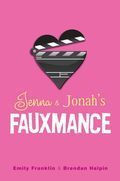
Hi everybody! I'm very excited because JENNA AND JONAH'S FAUXMANCE, co-written with my friend Emily Franklin, is coming out one week from today.
I saw this article about annoyance/author Ayelet Waldman disingenuously claiming to be broke when explaining why her publisher gave ipods away to people who bought her book, and it got me thinkin'.
My publisher is not kicking in any ipods, and, unlike the Waldman/Chabon household, I actually am broke, but I can offer you a token of my appreciation for your support of JENNA AND JONAH'S FAUXMANCE and my work in general.
Here's how it's gonna work. If you haven't already, go and like my facebook page.
When JENNA AND JONAH'S FAUXMANCE hits the stores next week, take a picture of yourself with the book and post it on my facebook page. (Note: while I certainly appreciate every purchase, you need not actually buy the book to enter. But please consider it if you have the discretionary funds available. If not please support me and your public library by borrowing it from them!)
I will pick ten people who post photos by midnight on February 8th to get a signed copy of one of my other books! ( I will try to honor preferences and requests, but I may be limited by the number of copies I have on hand. I'll tell you right now that I'm out of HOW YA LIKE ME NOW, FOREVER CHANGES, and LOSING MY FACULTIES.)
If more than ten people take me up on this, I will use random.org to pick the winners. Just because my drawing names out of a hat video was kinda boring.
Thank you for your support, and I hope you'll take me up on this. Photos of real people holding real copies of my books will be a big morale booster for me! And you could win a book!
January 24, 2011
English Class! Huuuh! What is it Good For?
I was a high school English teacher for ten years. During this time, I was terrible at teaching novels, and, therefore, I hated it. I mean, really, how many books have you read in your life that you wanted to spend THREE WEEKS talking about?
Now, as the parent of middle school students, I'm seeing English class from the other side again. And I'm convinced that my prejudice against teaching novels is not just a case of me manufacturing convictions based on my shortcomings; teaching novels in English class is actually destructive to reading and literacy.
This cuts to the heart of what you think English class is for. Some people (me!) think English class should be about skill building. Others (who are wrong!) think it should be about content delivery.
Teaching novels allows English teachers to pretend they've got a content-heavy discipline to teach, like Algebra. The whole cultural literacy argument plays in here too. If you believe that every student should be exposed to Dickens, for example, then it falls to the English teachers to deliver this content.
I see two problems with this: One is that reliance on novels leads to English departments developing book lists rather than curricula. If tenth grade is just "the year we read Macbeth and My Antonia," then you don't have to worry about what skills you should be working on, and what skills the students need to have mastered in the ninth grade in order to succeed in class. You just shove the books in front of them, give the tests, and collect the papers.
The second problem is that a steady diet of classic literature leads to a dance of deception that is antithetical to reading. Here's how it goes: you assign Great Expectations because your curriculum (which is really just a booklist) demands it. But your students, most of whom don't read for pleasure, can't really read Great Expectations. They're not prepared for the density of the sentences. You wouldn't give trigonometry problems to pre-Algebra students, but students are routinely assigned dense and difficult novels when they simply don't have the reading background to prepare them to succeed at those assignments.
So they cheat. They look up the summaries on sparknotes. This will allow them to pretend to have read the book and to complete your tedious end-of-chapter assignments. My children routinely have to do a half-hour's worth of tedious questions after reading a chunk of the book; this kind of assignment manages to kill any enjoyment that the few students who are able to read the book might squeeze out of it.
Again, ask yourself--how many books would you read if you knew you were going to have to answer a bunch of questions at the end of each chapter?
At the end of it all, you can move on, satisfied that you've covered the required material, but nothing real has happened, except that the students have learned some real-world lessons about how to fake their way through heinous tasks. Which is, after all, an important lesson. But that's probably not what you were trying to teach.
There is a tremendous amount of value in teaching students to read closely and critically. Ours is such a bullshit-intensive culture that students really need to be able to examine words carefully. And yet you can teach these skills using short stories and poems. This has a couple of advantages.
1.)The people who make cheating material--er, I mean "study aids" can't possibly keep up with the volume of short stories and poems out there.
2.)It is therefore much harder to fake your way through a discussion on a short story or a poem (and you can probably read the poem quickly at the beginning of class even if you were supposed to read it at home) and so students are actually reading. True, they're not chugging through the massive number of pages that the novel-intensive curriculum requires, but they're not doing that anyway!
Of course, this then requires you to look at your curriculum across grade levels and figure out what skills you're building when. Which is hard work.
I know it's just a crazy dream, but I'd love to see more English departments move to eliminate novels from the curriculum.* If they do, they might manage to turn out a much higher percentage of intellectually curious readers.
*Except, of course, for novels written by me, which should be bought in bulk by every English department in the country.


