
Brendan Halpin's Blog, page 10
November 18, 2013
Diversity in YA: What About Class?
One of the things I like about writing YA is that there's always a passionate and vibrant discussion about it all over the internet. In this discussion, issues of diversity and privilege come up all the time.
And class is almost always ignored.
So I'd like to say a few things.
One: There is a relatively rigid class system in the United States. If you're born poor, middle-class, or rich, you're likely to stay that way. (Though of course you can fall out of the middle class and into poverty--this is currently the most common kind of class mobility in this country.)
Two: Being middle class or rich in this country comes with a whole host of privileges that make your life easier.
Three: The poor are the most despised group in this country. And yes, this is wrapped up in racism, because a lot of white people think that only black and brown people are poor, but you don't have to go any further than the crap a lot of people post on facebook to see how much people hate the poor.
Four: Hating the poor is a great way to reassure yourself that their fate will never befall you. It's also a great way to excuse yourself from complicity in their fate. If people are poor because they are too lazy and stupid not to be, then they deserve what they get, and I don't have to think about how I'm actively helping to keep people poor.
Five: If you're not poor, you're actively helping to keep people poor. We live in a pretty binary system: you're either screwing or getting screwed. To put it more directly: if you are female, or gay, or lesbian, or Black, or Hispanic, or Asian, or whatever and you are not poor, you may be oppressed, but you are also, in a lot of ways, the oppressor.
Six: Perhaps instead of incessantly complaining that your middle- or upper-class privilege is incomplete (lookin' at you, Columbia grad Maureen Johnson!) , you might try to undo your cranio-rectal inversion and examine the plight of people who grow up with no money. And live with no money. And who don't have the advantages you've enjoyed for your entire life. I do not mean that sexism and racism and all the other isms don't exist, but so does oppression of the poor. And I grow awfully weary of people who complain about the oppression of upper class people without seeming to ever spare a thought for the poor. It's always easier to point out how you're being wronged than to examine how you're wronging others.
Seven: Any discussion of privilege or diversity that doesn't take class into account is simply incomplete. I don't think it's an accident that the middle class or rich people who mention these issues on the internet a lot don't ever mention class.
Eight: The diversity we should be depicting in YA literature includes class diversity. I've written before about how literature should be both a window and a mirror. Who's opening a window for middle-class and wealthy kids to learn about the people who are less fortunate than themselves? Who's holding up a mirror for poor kids to see their experience reflected in our art? Is it you? Why not?
Nine: John Hughes and Judy Blume are to YA literature as George Romero is to zombie movies: the rest of us are playing in a sandbox that they built. John Hughes, for all his flaws (the racism and frequent cruelty of his comedy), addressed class in both Pretty in Pink and The Breakfast Club. Why don't we have the same courage?
Ten: Dystopian fiction is probably the only place where you see class issues addressed consistently in YA fiction. ( I don't think of Enter the Bluebird as a dystopia, necessarily, but I suppose I did the same thing in that book.) I have mixed feelings about this. On the one hand, I'm happy to see the issues raised. On the other hand, I wonder if the dystopian settings let modern readers off the hook a little too easily: oh, the society in this book isn't like mine! In this book, kids kill each other on TV for our amusement! I welcome anybody's thoughts about this.


An Aside About Pretty in Pink
I'm working on a piece about class and YA literature (that is to say, socio-economic class, not the movie starring Jacqueline Bissett and Rob Lowe), and of course it's difficult to talk about such a thing without addressing Pretty in Pink, but I realized that what I want to say about Pretty in Pink is beyond the scope of the other post, so I'm putting it here.
The ending of Pretty in Pink provoked a controversy that tore our country apart, turning brother against brother and causing a rift that has only now just begun to heal.
Okay, not really, but it was kind of controversial. And I realize now that the Andie-Duckie friendship pretty much precludes an ending that makes everyone happy.
Apparently the original ending had Andie and Duckie dancing together, and this filled test audiences with so much rage that they re-shot the obviousy-tacked-on, not-set-up-by-anything-else-that-happens ending where Andie and Blaine get together.
So here's the issue: if the movie is a fantasy for girls (as the director and producers decided it was), then the idea that you can be a smart, quirky girl and have a great-looking guy fall for you and never overcome the obstacles between you probably felt like a sucker punch.
But, of course if it's a fantasy for boys, as I thought it was when I was watching it, then the idea that even the quirky, arty girls are always going to overlook the guys they connect with best in order to throw themselves at a good-looking jerk who treats them badly felt like a sucker punch.
In a sense, the movie is doomed by its own success. If Duckie were less appealing, then Andie rejecting him and breaking his heart wouldn't have mattered as much.
Here's Duckie lip-syncing "Try a Little Tenderness." Two notes for my younger readers: lip-sync scenes were big in the 80's. This probably has something to do with MTV, which used to only show music videos such as one now watches on youtube. Also, the scene takes place in something called a "record store." These used to be everywhere. I love gadgets and technology, but I do still mourn the death of these places.
November 13, 2013
What I've Learned About Self Publishing
Over the last few months, I've interviewed a number of DIY authors and other artists. Now, I'd like to turn my attention to another DIY author: me!
I sat down with myself to ask myself a few questions. The transcript follows.
Brendan Halpin, Blogger: Thanks for stopping by!
Brendan Halpin, Novelist: I was in the area.
BHB: So tell me why you decided to do Enter the Bluebird on your own.
BHN: Well, the choice was pretty much made for me. The book was turned down by a raft of publishers, most of whom said they really liked the book, but they didn't think a superhero novel would sell. And then there were some others who said no because they didn't think a novel by me would sell.
BHB: Ouch!
BHN: Right? So I ran the Kickstarter and got some money together and did it myself!
BHB: And what did you learn from that process?
BHN: Well, I learned that being a publisher is hard. That is to say, it's a bit heavy to be responsible for the whole project and putting the pieces together and paying for it. Having said that, there were a number of things about it that were great. In the editing process, we really focused on making the book better rather than making it safer. So the drug addiction and sex trafficking and stuff that I might have had to sanitize or remove if I'd been working with a big publisher all stayed in. Also, I got a cover that looks exactly the way I want it to look. There was no learning to live with a cover I don't love--so this book looks exactly the way I want it to look, which makes me happy. It's pretty rare in producing any kind of art that you don't have to compromise your vision at all.
BHB: Oooh! Compromise your vision! Listen to mister artiste! But don't compromises sometimes make better art? Didn't you write about that recently?
BHN: I mean, I did get this book professionally edited, so there were things I had to rephrase, jokes that didn't work that I took out, stuff like that, but all of this stuff just helped me make this the best version of the book I wanted to write rather than the book someone else wanted me to write.
BHB: Can you tell us how you found your editor and your illustrator?
BHN: Sure. My editor, Deb Bancroft, is a friend from way back. She's done beta reads for me in the past, and I knew that she both got what I was trying to do with the project and would be fearless about telling me if something wasn't working.
Erik Evensen, who did the illustration and designed the cover, was recommended to me by illustrator Abigail "No Relation" Halpin. We had talked about something Halpin-related on twitter, and I asked if she knew anyone who'd be good for this project, and she sent me to Erik.
BHB: So networking. Do you know anything about those sites where you post a job and people bid on it?
BHA: Only that I worked with a company that had hired a guy in India to do web design through one of those sites. And, I mean, the work was done competently, and cheaply and fast, but there just wasn't a lot of care put into it and the follow-up questions after the initial job was done were pretty much ignored. So I just feel like if you're investing in a passion project like this, you shouldn't go with fast and cheap.
BHB: Fair enough. What's been the biggest challenge of this whole process?
BHA: Just getting the general public to know that the book exists. I mean, I used to kind of dump on some of my publishers because I'd had a book only sell 4 or 5 thousand copies. And now I realize how incredibly difficult it is to sell even that many copies. And what a disadvantage you're at if you publish something yourself.
BHB: How are you at a disadvantage? Control! Freedom! Branding! J.A.Konrath!
BHA: You're at a disadvantage because literally anyone with a computer can put an ebook together. Which means that the overwhelming majority of self-published books are just not professional products. Some of them definitely are, but most of the stuff that's out there just isn't. So you have to work against that preconception that people have that because it's not coming from a legacy publisher, it's crap.
So, for example, I sent about probably 50 requests for reviews. And I got four responses. Most book bloggers didn't even acknowledge the email. And these were people who had reviewed some of my previous work. Most of the bloggers who have posted reviews of my previous work say on their site that they won't even consider a self-published book. I get why they do this, but it does make it difficult.
And it's difficult to get Amazon reviews and goodreads reviews, which has proven pretty interesting. It's actually way easier to get people to buy a book than to review it. Either because I like to sound off on my opinion or because I'm cheap, I didn't actually know this, so that surprised me.
BHB: So what's been successful?
BHA: Not much. I paid to promote the initial Facebook post about the book, and it was seen by about 8,000 people. None of whom bought the book. I printed up bookmarks for a free ebook and placed them in 4 local comic book stores in order to try to reach that audience. It was a fun day, but a total of zero people downloaded the free ebook, so that was a fair amount of money and time that has not paid off. I put the book on sale for my birthday and got a bunch of people to buy it, but that was with heavy social media promotion.
BHB: That's good! It shows you're using social media well, right?
BHA: Yes, but I really don't want to go that route anymore. There's a relatively small number of people who help me out with retweets and link sharing and such, and I just don't want to burn them out by continually asking for favors. They've already done so much.
BHB: So what are your criteria for success? How will you know if you can call Enter the Bluebird a success?
BHA: I really wish I could say that I'm happy just to have the book out there and looking fantastic and being a completely kickass YA noir superhero novel, but the truth is that I'm really not satisfied with that. I had really hoped that I could actually make some money on this book, and thus far that hasn't happened. Ideally I'd like to clear enough that I could pay for editing and cover design for a sequel.
BHB: But why don't you just run another kickstarter for that?
BHA: See "burning out my small group of supporters" above.
BHB: So where do we go from here?
BHA: I don't really know. I mean,the book is still out, and it's still awesome, and there's plenty of time for momentum to build. I continue to believe that once people read this book, they're going to like it and tell people, and I just sold a bunch for my birthday, so we'll see. I will continue to think about what else I can do to let people know about the book, and I will continue to rejoice every time the number of copies sold increases by even one. This is a good thing about this process: I get a real lift from every single sale. I'm looking forward to a lot more lifts.
October 28, 2013
Lou Reed and Me
I was a bit puzzled by my own reaction to Lou Reed's death.
I love the first Velvet Underground record, I love VU, and I like some tracks from the other albums a lot.
And it's really not much of an exaggeration to say that most of the music I've liked the best in my life simply wouldn't exist without Lou Reed. It is pretty much impossible to overstate his influence on popular music, and you can only say that about a handful of people.
The Velvet Underground and Nico came out three months before Sergeant Pepper's Lonely Hearts Club Band. And yet it still feels contemporary, whereas Sergeant Pepper's feels like an interesting artifact of its time.
Oh, yeah, and also I listened to Lou's post-VU masterpiece New York about a million times in 1989-90.
So why was my only reaction to his death this rather shitty tweet: :"If your art is good enough, people will be sad when you die even if you're unkind to people for half a century."
I mean, fair enough, Lou did have a nasty reputation as a cruel dude, but still.
And then I figured it out.
My late wife Kirsten shared a birthday with Lou Reed. (And John Bon Jovi and Dr. Seuss.) She died at 35 having lived a positive life and having devoted her adult life to helping people and having not built a reputation for being a dick.
Lou built a repuation for being a dick and also flirted with death through all kinds of drug abuse. And he lived to be twice Kirsten's age, outliving her by ten years.
Lou Reed is not to blame for the fact that the world is a vicious and cruel place marked by colossal unfairness. But I guess he kind of symbolized that to me. Which is not all that fair--Lou made great art, which is one of the only things we can do to try to mitigate the awfulness in the world.
So, yeah. Thanks, Lou. Sorry for being a dick.
Here's Lou & the gang doing "Andy's Chest." It's lighter and more nonsensical than most of his stuff, and one of my favorites.
October 23, 2013
On "Boy Books."
The last time I tried to write about this, I was a jerk and pissed off the internet.
Which brought unprecendented traffic to my blog, so please feel free to write long blog posts (with links, please!) about how I need to check my privilege for the following mansplanation.
I do think that the authentic experience of teenage boys is underrepresented in YA fiction. I don't think this is a crisis or anything, but I do think it's something that is happening.
Caveat: everyone should read widely. Books can be great windows, and you learn a lot from reading about other kinds of people.
But books are also mirrors. We read in order to see other people, but also to see ourselves reflected back, and this is where YA is not serving boys well.
If you don't think that boys deserve to see themselves reflected in literature because they have lots of privilege in other areas of society, I hear you, but I disagree with you. Though I do agree that boys should read about girls.
But boys (and girls) should also be able to read about the authentic teenage boy experience. Obviously these experiences are as different as the people who have them, but I do think, at least in this culture, there are certain commonalities: the mind-warping, nonstop horniness that coexists with tenderness and longing and sentimentality; the fear that you are always falling short of what it means to be a man; the contrast between locker room bravado and real intimacy; the joy of talking shit with your closest friends...I could go on. I just don't see this stuff reflected in books very often. Indeed, it's so rare that most people can probably name the books; King Dork, Spanking Shakespeare, and a handful of others. It's just not that frequent for boys to be able to pick up a YA book and say, "hell yes. This person gets me. This book is true." There are lots of other joys of reading available to boys, but this one is, in my opinion, in pretty short supply.
And that's all I have to say about that. Thanks for listening!
October 22, 2013
Deep Thoughts on the State of YA
The other day, there was a minor Twitter backlash over this
article in a college newspaper in which the author complained in rather harsh
fashion about some YA books she read that she felt were formulaic crap, and a
few people rose up to say “hey, all YA isn’t like that, be quiet.” Other people
replied with, “You should not criticize those books so harshly.” (I haven’t
read the books in question, so I can’t say whether the criticism was fair,though it certainly was harsh.)
There
has also been some discussion among authors on the internet about how it’s not
a good idea to say anything negative about a fellow author’s work. I know that many, though certainly not all book
bloggers operate under the same “if you can’t say anything nice, don’t say
anything at all” framework.
So here’s
what I have to say about this.
Of
course there is a lot of formulaic crap in YA fiction. There’s a lot of formulaic crap in every
genre. Even literary fiction! (Though Orson Scott Card is a truly loathsome
individual, his observation that a lot of literary fiction consists of stories
about young men who are having difficulty writing is a pretty devastating and
accurate critique.) We don’t do our
genre any favors when we reflexively defend any criticism of it. Right now YA fiction is lousy with dystopias
and love triangles, and a lot of this is because authors and editors are
chasing trends, not because they have a passion to tell that particular
story. So when people say, “hey! This
sucks!” we should not tell them to be quiet; we should thank them for being
passionate about our art.
Some of
the best books out there right now are YA books. At the same time, the shelves are groaning
with crap—cynical, paint-by-numbers crap that insults the readership. “It’s just YA! They’ll buy anything! Throw in a shabbily-constructed dystopia and
give the girl two hot boys she can’t choose between. It’s gold!”
I think
it’s not only okay to say that crap is crap; it’s important. Because the cynical will continue shoveling
crap our way unless we call it what it is.
And if we’re positive about everything all the time, our positivity
loses any credibility. This is tough because
most authors, at least the ones that I’ve met, are nice people, and also it
hurts when your work is criticized. But
you learn from criticism; and if we want passionate advocacy when people like
our books (which I do! Tell your friends
about Enter the Bluebird, willya?), we have to expect passionate criticism when
they don’t. If art—any art, really
matters to you, you’re going to be passionate about both the things that you
like and the things that you hate.
I guess
I’d like it if the YA community took a more positive view of itself. We are strong enough and good enough that we
can call out the crap merchants without damning everyone else, and we can
recognize when something sucks and demand better. We don’t have to ooh and ah every time a
non-YA writer thinks they can crank out a YA book because how hard could it be. We don’t always have to be lovey-dovey and
supportive because not everybody’s work deserves that support. We can recognize
that writing YA well takes talent and work and that not everybody has the
talent or is willing to put in the work.
And we can recognize that chasing a buck is almost always a great way to
produce some really shitty art.
October 12, 2013
Buy a Comic, Get an Ebook!
I spent Saturday driving around Massachusetts going to some excellent comic stores.
I started off at Bellingham's Friendly Neighborhood Comics, where my good friend Seamus Cooper once did a signing for The Mall of Cthulhu. Ernie, the owner, is an awesome guy who is passionate about comics and literacy. I bought Rocket Girl and Red Sonja from him.

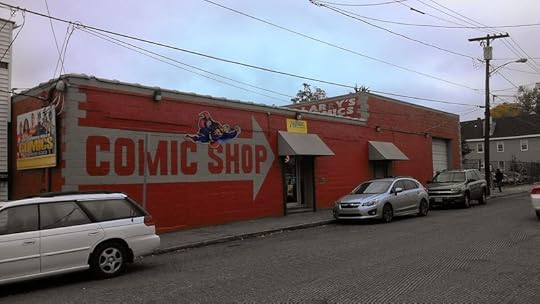
From there, I went to Lowell, to Larry's Comics, where Danny behind the counter was very nice and where I bought an exclusive variant cover of Afterlife With Archie, which is, in all seriousness, a completely excellent horror comic that any fan of horror comics or Archie comics needs to have immediately.
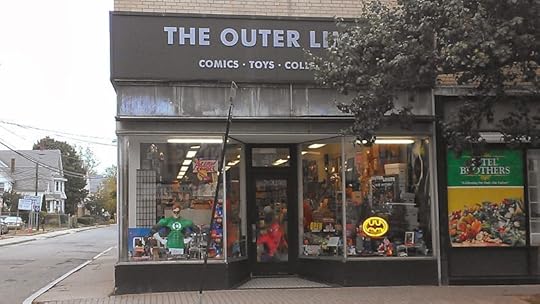
And then on to Waltham to Outer Limits, where I had a great conversation about writing and bought Astro City and a couple of issues of Deadpool and successfully resisted the big Conan magazines from the 70's.
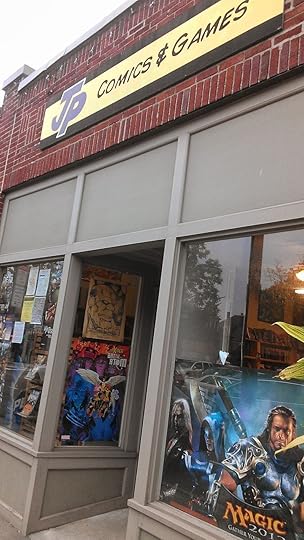
And finally back home to JP Comics and Games, where I ordered a copy of the 13th Age rulebook and got expert opinions on its good points. (pretty excited for this one)
"But Brendan," they ask, "why are you telling us about what you bought at various comic stores?"
Because, my friends, I not only bought stuff at each store, I also left goodies for my fellow comic fans at each location. So if you stop in to Friendly Neighborhood Comics, Larry's Comics, Outer Limits, or JP Comics and Games, you can pick up a bookmark with instructions for a free download of my YA noir superhero novel Enter the Bluebird in the DRM-free ebook format of your choice!
"But Brendan," they say. "I don't live in the Greater Boston area. And I would like to buy comics and get a free ebook!"
Well, you're in luck. Here's the deal: go buy something at your local comic store. I don't care what it is. Tweet a photo of your receipt (I'm only interested in the store and the date, though if you wanna give a shoutout to the comics you bought, go for it!) at me (@bhalpin) or post the photo on my facebook page www.facebook.com/authorbrendanhalpin and I will tell you how to download your own free copy of Enter the Bluebird.
Offer expires November 6th, so get your butts out to a comic store!
Your comic store is a local independent business and a place that builds community. And while the comic book guy from The Simpsons is a fairly accurate portrait of the guys who worked in the comic stores of my youth, the guys (and gals!) who work in today's comic stores are almost always friendly, interesting people who are passionate about their favorite art form and who will happily talk comics and culture in a welcoming and non-condescending way. Regular comic store shoppers know this already, but the rest of you--get out there!
October 1, 2013
Enter The Bluebird!
Today is the day! The official launch of Enter the Bluebird is upon us!
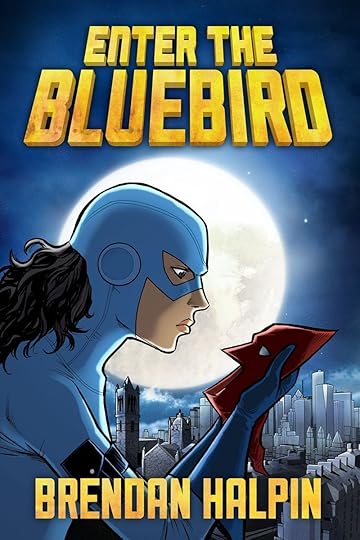
Enter the Bluebird is the story of Julie Rouge, who's nearly 16 and can't wait to join her mother, the masked crimefighter Red Talon, patrolling the crime-ridden streets of New Edinburgh.
Unfortunately, Julie's mom has disappeared, and, while searching for her, Julie is going to discover that the city she calls home is even nastier, more corrupt, and riddled with toxic secrets than she ever knew.
If you like comic books, if you like crime fiction, or if you just like stories where female protagonists kick all kinds of ass (and teeth!), you're gonna dig this one.
A bunch of awesome Kickstarter backers who helped me pay for professional editing and cover design. So though I am doing it myself, it is every bit as professional a product as any of my books that have been published by a traditional publisher.
And it rocks.
But don't take my word for it! Check out this review! Or this one!
Or just head over to the book's site and check out the first four chapters for yourself!
Once you're convinced, you can get the ebook for a mere $4.99 for Kindle, Nook, or Kobo. Or splurge and get the paperback for only $10.99!
If you've already read the book, please consider leaving a review anywhere reviews can be found and/or telling lots of friends. I paid an editor and cover designer, but I don't have enough left to hire a publicist. I will be letting people know about the book, but a recommendation from a reader always means way more than a recommendation from an author.
September 30, 2013
DIY Author Spotlight: Kirsten Feldman!
A few years back, I had the pleasure of beta-reading Kirsten Feldman's coming-of-age novel No Alligators in Sight. Loved it. Full disclosure: Kirsten and I met in grad school, and she and her family showed great kindness to me after the death of my wife Kirsten (no relation). But that's not the kind of debt you can repay with a blog post.
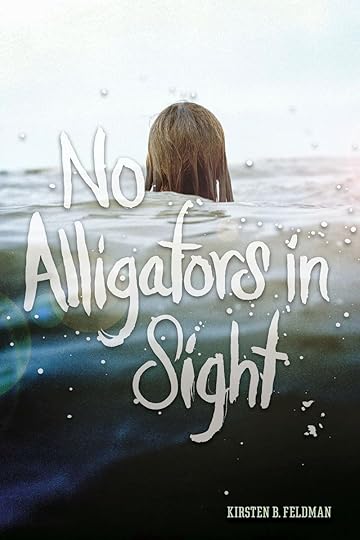
Anyway, Kirsten's book is great and comes wrapped in a gorgeous cover. I sent her some questions about her book and her experience as a DIY author. And here are her answers!
1.Tell me a little bit about your journey to DIY publishing. Why'd you decide to do this book yourself?
I tried the agent route and fought my way out of the slush pile not once but twice, only to have the agents bail for their own life vagaries. I saw an article by Hugh Howey, the author who's had all the success with WOOL and its successors after beginning in self-publishing, and decided to give it a try.
2.What surprised you about the process of doing the book yourself? What was awesome? What sucked?
I was surprised at how easy it is. Now NO ALLIGATORS IN SIGHT is no longer sitting in a file; it is out in the world. The awesome part is seeing the book "live" and selling; the other part, not really sucky but just all new to me, is figuring out how to publicize it. From what I hear, this issue is not limited to ebook authors but extends to print authors as well, unless they are already big names.
3.Your cover looks freaking awesome. Tell me about it.
Thanks! I am thrilled with the cover. I had thought about designing the cover myself but did some research and got advice to go with a real designer, since the cover is the first thing most potential readers see. I worked with George Restrepo, and he is amazing. We started with nine possible variations, inspired by imagery and covers that I already liked, whittled it down to three, and had a panel of experts (a group of teenage girls) vote. Voilà.
4. Who's your ideal audience for this book? What other books is it like in terms of tone or style or subject matter?
Since it's a coming-of-age novel, one of my favorite genres, I see it as an easy crossover for both the young adult audience and the adult audience. To me NO ALLIGATORS IN SIGHT is reminiscent of books like Sarah Dessen's THAT SUMMER, Stephen Chbosky's THE PERKS OF BEING A WALLFLOWER, and Elizabeth Berg's DURABLE GOODS, where the teenage narrator voice shines through and guides the reader's experience in an intense, personal way. It's also a journey novel, with the journey happening literally and internally, so I often thought of Yann Martel's LIFE OF PI and Mark Haddon's THE CURIOUS INCIDENT OF THE DOG IN THE NIGHT-TIME.
5.How much, if any, of the story of NO ALLIGATORS IN SIGHT comes from your own experience?
I like a quotation by Stephen King, "Fiction is the truth inside the lie." To me fiction is truth, and truth is fiction. I think our personal experience colors everything about our travels through the world, not just what we write. Granted, I have lived in Provincetown, spent time in Key West, and have a brother, but Lettie and her family are their own living, breathing characters with their own stories to tell.
6.What's your favorite thing about NO ALLIGATORS IN SIGHT?
I'd have to say the characters. I got so fond of them as they walked around in my head and demanded that they be let out onto the page. I'm so pleased they now have the chance to tell their story to real live readers.
7.Have you been checking the Amazon rankings constantly since you released the book? How's it doing?
I actually don't look at the rankings since I've just started, but I do look once at week at how sales are going. To me every sale is a victory.
8. What's going to feel like success for you with this project? Have you won already because you got it out there? Do you feel like you need to make back the money you spent on the cover design? What's the point at which you can say, "cool. That was a win for me?"
Of course it would be nice to sell a million copies, but indeed I do feel that I've "won" because NO ALLIGATORS IN SIGHT is out there. Every new reader who takes the journey with Lettie and Bert is a joy for me.
9. Anything else?
I thank you for inviting me to your blog; I always enjoy my visits. The dark humor in your own books tells such true, vivid stories, and I look forward to your next one. Speaking of next, I am working on my next novel, a stand-alone and the tale of another teen on the cusp of her life. If readers want to reach me, the best way is through my website: http://kirstenfeldmanbooks.blogspot.com/
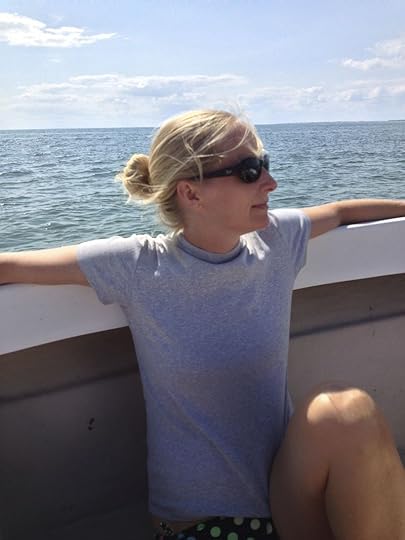
Kirsten Bloomberg Feldman received her undergraduate degree in comparative literature from Brown University and her master's degree in English education from Tufts University. She has written professionally for The Boston Globe, the Whitney Museum of Art, Edwin Schlossberg Incorporated, Exit Art, deCordova Sculpture Park + Museum School, and many area print and online publications. She grew up on Cape Cod and the Connecticut shoreline and now lives outside of Boston with her family.
September 29, 2013
My Speech to New Hampshire Young Adult Librarians
Last Thursday, I went to Portsmouth New Hampshire to speak to the Young Adult Library Services conference at the Portsmouth Public Library. (Which is a really nice library, by the way.) I was pretty intimidated about speaking to the best-read, most-knowledgeable people in this field, so I actually prepared remarks lest I just start babbling and get lost in a haze of profanity and poop jokes. There was some profanity in the Q&A, but as far as I remember, I kept the poop jokes in check.
Anyway, here's what I said to these librarians, who were really an awesome bunch of people. They seemed to like it. (Or at least they didn't throw anything at me). Maybe you will too:
Hello and happy Banned Books Week!
I’ve often joked about how I wanted someone to ban one of my books because it would be fantastic for my sales.
But having read the blogs and/or tweets of librarians facing a book challenge, I know that such events are gigantic, awful pains in the butt, and I certainly don’t want anyone to have to go through such terrible stress just so I can move some more copies. I don’t know if you folks get thanked enough for the hard work you put in defending the freedom to read, so I would like to thank you on behalf of both authors and readers for every dirty book on your shelves.
I know a very little bit about what book challenges do to librarians. I’d like to talk about what they do to authors--even those of us who haven’t had a book challenged--and then segue into some deep thoughts about art.
On the writing and publication side, book banners have disproportionate power. This is the famous chilling effect on free speech, and it works like this. The sales people are afraid that teachers and librarians won’t buy a controversial book for fear of it being challenged. (I don’t know if this fear is justified or not--all the librarians I’ve met have been pretty passionate defenders of the freedom to read--but the sales people certainly believe it.) The editors are afraid that the sales people won’t get behind a controversial book, so they pressure authors to edit “controversial material” out of their books. The stuff that turns out to be controversial is mostly profanity, sex, drinking, and drug use. Or as many of us called it, high school.
Here are a few examples: my editor had me cut out pretty much all the swearing in my first Young Adult Novel, How Ya Like Me Now. (This despite the fact that my novel Donorboy, which has a teen protagonist but was not marketed as a YA novel, is rife with profanity and remains my best-selling book.) I’m still proud of the book, but reviewers complained that it felt sanitized. Which is true. It was.
I read a dystopian novel that I won’t name but which you’ve probably all read too, and the main character finds herself alone for a period of weeks with the boy she’s in love with, there is no mention of any sexual activity at all taking place. I corresponded with the author, who told me, “yeah, they originally had sex, but my editor made me take it out.”
When I was editing Forever Changes, I had to fight to keep a scene where my main characters went to a party and drank beer. “Are you sure you want to endorse teen drinking?” my editor asked. “I’m not endorsing it. I’m depicting it.” I wrote back. The scene stayed, but the attitude behind my editor’s comment is pretty widely shared and reveals a big problem that young adult literature faces right now.
A lot of people seem to feel that young adult literature should be instructive. This is such a deeply-ingrained idea that it permeates the way even big fans of YA literature talk about it. A lot of reviews of Notes From the Blender talked about how Trish and I were too heavy-handed with our messages. Which is funny because I didn’t think we had one. The male protagonist becomes a vegan and doesn’t drink, which are both reactions to what he sees as the cruelty and stupidity in the world that took his mom from him when she was killed by a drunk driver. So he felt strongly about this stuff, but I’m not a vegan, nor am I straight edge, nor was I in high school. I wrote about a character with strong opinions, and people assumed I was trying to press those opinions on them. Because of course young adult literature is instructive.
A while back when there was that Wall Street Journal article about how terrible young adult literature is, Twitter went nuts with the #yasaves hashtag. Whenever Speak gets challenged, people rise up to assert that it’s not a dirty book. I think both of these arguments cede too much ground to the book banners.
To assert that YA saves is to agree that it should be purposeful. YA, like any art form, can have a profound effect on people, but that doesn’t mean it necessarily will or that it necessarily should. To say that the discussion of sexual activity in Speak is not problematic because the book is about a rape is to tacitly agree that discussion of consensual, fun sexual activity is, in fact, problematic.
And so, even in this current boom in young adult literature, where even bestselling literary hotshots feel like they have to try a young adult book (and shove me off the shelves in the process), young adult literature still doesn’t have the status of other art forms. And it won’t until we stop insisting on or agreeing with the idea that it has to be instructive.
Other forms of entertainment don’t bear this burden. So Glee can air an episode in which the entire teen cast gets drunk, and the most serious consequence is a hangover, while those of us who write YA often feel like we can’t show kids drinking unless we show the terrible consequences of bad decisionmaking. [note: at this point I went on a legthy, tear-stained digression about the "Donna Martin Graduates" episode of 90210. I can't, sadly, remember exactly what I said, but I can relate a handful of vigorous head nods in the audience accompanied by polite looks of incomprehension.] Teens on TV can talk about sex and have sex and have it be a fun, if complicated, part of life, whereas thirty-eight years after Forever came out, it still feels daring and revolutionary to have a book about a consensual sexual relationship between teens that doesn’t have life-altering consequences.
So if YA is not instructive, what is it for? It’s for the same things other art forms are for: it’s a mirror and window and an escape. We read to see ourselves reflected, we read to find out about other people, and we read, hopefully, for fun. And in this, we’re in competition with TV and video games and every other art form for our audience’s time. And given the choice between something that’s good for you and something that’s fun, how many teens are going to choose something good for them? Emily Franklin and I were talking to high school classes yesterday, and when I asked a group of seventy-five students who among them reads for pleasure, five people raised their hands.
God bless those five kids, and the librarians who press awesome books into their hands. But we have to do better than that. And we won’t unless we stop hobbling young adult literature with the idea that it has to teach a lesson.
Thank you for all your excellent work and thank you for inviting me here and listening to me rant for a few minutes.


