Sands Hetherington's Blog, page 17
April 28, 2015
Book Recommendation Time! The Best Historical Fiction for Children
I’ve written a few posts now about how important it is for us as parents to help our children fall in love with reading. But today I want to take this one step further—I think it is important for us to get kids interested in reading about history. History is one of those subjects that a majority of people sleep through during grade school and don’t even consider studying past their few general ed requirements in college. But it’s also one of the most important subjects out there, if only to keep our world from repeating its past mistakes.
I’ve been a history buff from the time I was a kid, and I think that is largely due to teachers who made the subject interesting for me and books that made historical stories come alive in a tangible way. So I’ve compiled a short list here of some books for kids that hopefully will do the same for them.
Number the Stars, by Lois Lowry

I’m sure you’ve heard of this classic already, but I couldn’t help but put it on my list. It takes place in Copenhagen during World War II, and it is a beautiful story that helps children to see the difficult reality of the Holocaust, while also telling of a friendship worth risking lives for.
Ben and Me: An Astonishing Life of Benjamin Franklin by His Good Mouse Amos, by Robert Lawson

First published in 1988, this funny, entertaining story tells the story of Benjamin Franklin and the founding of the United States of America through the eyes of a mouse named Amos. According to the book, Amos gave good ol’ Benjamin all of his best ideas. It’s a very charming book filled with important historical information, and I guarantee your child won’t be able to get enough!
She Was Nice To Mice: The Other Side of Elizabeth I’s Character Never Before Revealed by Previous Historians, by Alexandra Elizabeth Sheedy

Yet another historical tale told with the help of mice! This one takes place in the Elizabethan era, and follows the life of a mouse living in Queen Elizabeth’s courts. What I think is interesting about this book is that it was written by a twelve-year-old. It really helps kids relate to an era from long ago because it was written by a child who related to it herself!
Pink and Say, by Patricia Polacco

This picture book (still intended for kids ages 5-9) is set during the Civil War. It tells the story of a black Union soldier named Pinkus Aylee finding and rescuing white Union soldier, Sheldon Curtis (who goes by Say). It is a tragic story based on true events from the author’s own family history. To me, the Civil War is one of the most interesting historical events, and I give this book my highest recommendation.
Did you read any historical fiction when you were a kid? Did it help grow a love of history in you as an adult? Leave a comment and let me know!


 *protected email*


April 21, 2015
Writing on Vacation is Hard To Do: Here’s How to Keep Your Story Alive on the Road!
One of the difficulties that comes with being a writer is that your job is never finished. You don’t get to come home at the end of the day and cut off thinking about your job completely, and you don’t get to take a two-week paid vacation; as writers, our thoughts are always consumed by the story we are writing. For people who like to travel, like me, this difficulty is made even harder. Writing on the road is not an easy task, but here are some pieces of advice I’ve learned and used through the years to make writing and traveling coexist as easily as possible.

Write at the beginning or end of the day. Chances are, if you’re traveling with others, they won’t want to be up at sunrise ready to start the activities of the day. Or if they do, they won’t be awake late into the night. Choose which time of day you have the opportunity to be alone and use it to write. Bonus: you’ll get to see some beautiful sunrises or the midnight glow of the moon in a place you’ve never been before.
Write during downtime. Every vacation has downtime. Maybe you’re trying to kill time before your next bus or train arrives, maybe there’s an hour wait before your table is ready for dinner, or maybe everyone has decided to take an afternoon nap. When you aren’t actively doing something or spending your time with loved ones, use the time to write. It will put your mind at ease to accomplish something, and you’ll be able to enjoy your next activity that much more.
Think about your story while driving. This piece of advice is mostly relevant to road trips, but it can also be applied if you have a long drive to reach a certain destination from your hotel. When you’re driving, you can’t do much else other than think. Use the time to think about your story—what you want to happen next, if your characters are developed enough, what you think you need to work on, and what you think you’re succeeding in. Brainstorming and analyzing your writing is sometimes just as important as actually getting the words down, and you’ll feel more prepared when you find time to sit down at your computer next.

Enjoy your travels. Your writing will benefit from you living your life to its fullest. I know, I know. It’s hard to turn off that little voice in your head that tells you you need to be writing. But when you are in a new place, seeing new sights, and spending time with the people you love, it’s important that you dedicate time to fully immersing yourself in the moment. Your story is always there to come back to at the end of the day. By letting yourself truly enjoy your vacation, hopefully you’ll experience a number of things that you can use in your writing later on. A writer’s true job is to live . . . otherwise there would be nothing for them to write about.
Do you try to write when you travel? What advice do you have for staying on track even when you’re away from home? Let me know in the comments!

 *protected email*
April 14, 2015
Book Trailers 101: The Tools You Need to Make Your Trailer Work
As authors, we write books for people to read. We don’t make movies; we want people to follow our stories through our words. So where do we start when we have to all of a sudden turn our literary stories into visual ones?
Well, when I was making my trailer for Night Buddies Go Sky High, I began by thinking about what a book trailer ought to do.
1. Give readers information on what Night Buddies was about.
2. Give readers a feel for what they would find on the page.
3. Generate enough interest in a viewer to look more into reading a Night Buddies book.
When you’re creating a book trailer, you have to understand that most likely, the trailer won’t sell the book. Trailers are used as a jumping point, meaning that they should be intriguing enough, cute enough, or funny enough for someone to think, “I want more.” With that in mind, I knew I had to focus on how to give readers information about my book and give them a feel for its style in an intriguing, cute, or funny way. No pressure.
I think the best thing you can do as an author is work with what you have. I knew I wasn’t going to make a million-dollar, special-effect-filled, Hollywood-style trailer. My book didn’t call for one of those. What I needed was something simple, short, and to the point. I decided to use what visual tools I already had—the illustrations from my book—and combine them with my strongest asset, my writing.
What I ended up with was this:
I utilized what tools I couldn’t use in a book, mainly audio such as children’s cheering and music in the background that gave a sense for the whimsical, cute nature of the story, to make the trailer that much more interesting to watch, but overall I just let my characters tell the story, just like they do in the book. I’m of the mind that book trailers don’t have to, and really shouldn’t be, complex. If you have an interesting story, and a book trailer that really represents it, you don’t need to worry about making it feature-film status.
Do you enjoy watching book trailers? Have you used one to promote one of your books? Link it in the comments below!

 *protected email*
April 7, 2015
Need to Get Your Boys to Read? Here’s My Top Tips to Help You Do it!
You want to know what I think? I think that right now, we are living in a time where most boys are encouraged to play sports or video games by their friends and by society to be considered “normal” or “cool.” We aren’t living in a world where the next generation of boys will be a generation who loves to read. But that’s not right. Reading opens up kid’s minds to think of things they might never have had the creativity to imagine before, it improves their performance in school, and it’s a way for them to entertain themselves away from the Internet or the television, which they’re probably getting more than their fair share of.

So how do we do it? How do we make the next generation a generation of boys who read? Here’s my top four ideas about where we begin.
1. Put interesting books on acceptable school reading lists. Books don’t have to be extraordinarily literary or realistic to be beneficial to education. Especially among younger kids, why not let current bestsellers count toward silent reading credit? Why not let kids do book reports on something they find interesting? If they can read what is popular amongst their generation, kids might start bonding over the books they read just like they do over the video games they play.
2. Never put down books that they find interesting. To go along with my first tip, as parents we shouldn’t judge books that seem too silly, or too “boy-ish.” The book is based off a video game? It’s still a book. The book is about some guy who wears underwear outside his pants? It’s still something for them to get acquainted to the literary world with. If we want boys to read, we have to let them read what they want; the more they do read, the broader their literary interests will become.
3. Seek out reading role models. A lot of celebrities participate in reading campaigns for children. Seek them out. Or maybe there’s a teacher, an older sibling, or a basketball coach they look up to greatly; ask that person to talk to your kid about reading. If the person they think is the coolest in the world tells them they think reading is cool, chances are your child will want to give it a shot.
4.Take your child to book fairs/festivals. Book fairs usually have lots of games set up for kids, and book festivals have everything from games to live readings and full-on shows to peak the younger generation’s interest in reading. They happen all over the country, are usually free entry, and will end up being a fun day for the family—your child finding a book they’re dying to read would just be the cherry on top.

How do you interest your child in reading? Do you think it’s still important for kids to read? Let me know in the comments below!

 *protected email*
March 31, 2015
Making the Decision to Write a Book
I guess you could argue whether you ever “decide” to write a book—sometimes the idea is just in you and you feel obligated to write it down, or sometimes you’re just born to be someone who never walks away from a blank page. For me, writing the Night Buddies books fell somewhere in between needing to write it and deciding to write it. Let me walk you through just how it went.
First off, I was born a reader. And when my son John was born, I knew that I was going to do whatever I could to introduce him to the joys of reading too. (To see a post about how to go about getting your kid to love reading, click here.) Like I’ve mentioned in this blog before, to get John to really get into story-telling I had him come up with his own character; and that’s when Crosley, the first character for the Night Buddies series, was created.

But having a character for me and my son to talk and imagine up stories about was not something I immediately imagined would lead to me writing a book. That was something that occurred to me in slow bits, over many years. I had always been a lover of books, and I had written a few short stories here and there, but when I started thinking about Crosley being a character for the page and not just in our home, a short story just didn’t seem like enough. That’s when I started thinking about a book.
But when deciding to write a book, you can’t just think about one character. I had a good start, but a long road ahead. I had to think about another main character—and who better to star in my stories than my own son? Then I had to think more in-depth about the story and what my two characters would do together, I had to think about why Crosley was a red crocodile instead of a normal green one, I had to come up with a host of other, secondary characters. In short, I had to develop an entire world. But the more I thought about these things, the easier it started to get. And by the time I had everything thought out, the decision was already made.
I was going to write a children’s book!

From there, of course, there were many challenges along the way. But by committing myself to this project and having the firm goal of, “I’m going to write a full-length children’s book” in my head, all those challenges were easier to overcome.
If you’re thinking you might have an idea for a book, or maybe the only idea you have is that you want to write a book, I suggest that you decide to do it. You’ll have a lot of work ahead of you, work that could take years to complete, but I can tell you this . . . turning my little idea of a crocodile named Crosley into a real, tangible book was the best decision I have ever made.

 *protected email*
March 24, 2015
I’m a Self-Published Author: Here’s Why You Should Be Too
In today’s world, self-publishing is an option available to every author, on any budget. With the mass of books being released this way, you might wonder if putting your book out in the world without a traditional publisher is worth it. Will anyone read it? Are you wasting your time?
As someone who has successfully self-published three juvenile fiction titles, I’m here to tell you that in a lot of ways, self-publishing is actually better for authors than traditional publishing. Here’s why:
Once you are satisfied with your book, you can release it. When you want to publish traditionally, there are a number of hurdles you have to overcome before your book is released. You’ll spend months seeking out agents, months revising the novel once (and if) you find an agent, months seeking a publisher, and if it doesn’t work out, that’s close to a year or longer of having a completed novel that nobody is able to read. And even if you do lock down a publisher after all that searching, it’ll probably be a year or two before they release your book. When you choose to self-publish, as soon as you’ve written your book and spent time editing it or having it professionally edited, you can release it—you would have a book on shelves for people to read in the same amount of time it would take for you to finish your first round of agent querying!
Your have full control over your story. Traditional publishers may decide to publish your book under certain conditions: it needs a love triangle included, the crocodile should really be a dinosaur, etc. They want the books they publish to resemble what is already selling, and if your story aims to be a bit different, they might ask you to change it. When you publish your own book, it is 100 percent your story, on your terms.
You reap the benefits. Let’s say you write a bestseller. Or even just a moderately successful novel. If you had it traditionally published, chances are the contract you signed gives a huge amount of the royalties to the publisher—most take up to 85 percent. You’ll also have to share 15-20 percent of the profits with your agent, leaving you with . . . well, you get it. When you self-publish, you earn a much higher percentage of your royalties. With Createspace, one of the most popular self-publishing services, for example, authors earn 40 percent of the royalties. I’d say that’s a pretty outstanding difference.
How you go about marketing is up to you. Even with traditional publishers in today’s world, marketing is a responsibility mostly left for authors to take care of themselves. But if you self-publish, you can decide if you want to take on a publicist, who you want as your publicist, and how exactly you want to go about promoting your book. Since all the money for marketing is coming out of your wallet (which I know can be a bummer), you get to decide what levels you will go to in order to publicize your work. You don’t have to settle for a subpar publicist and mediocre marketing if you’re not on your publisher’s list of most-anticipated novels; your book is your priority, and you can publicize accordingly.
When we put so much effort into writing and perfecting our stories, I think it is only natural that we have as much control over the publishing process as possible. I certainly know that I wouldn’t have chosen to publish Night Buddies any other way.
How do you feel about self-publishing? Would you consider going that route to publish your book? Let me know in the comments!
*protected email*
March 17, 2015
Night Buddies Go Sky High Is Finally Here!
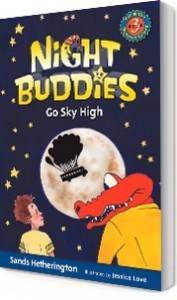
It’s the day I’ve been looking forward to for awhile now. Yesterday, my third children’s book, Night Buddies Go Sky, was officially released!
In all the excitement leading up to this day, I thought I would share with you all exactly how the Night Buddies series came about. And if I’m being truthful, I have to give credit to my son John. We used to read together every night, but one night when it was late and he wanted the stories to continue I advised him to start making up his own adventures, and that’s how Crosley the red crocodile was born! We came up with Crosley stories all the time until he became a member of our family.

Once John was already grown, I realized that between Crosley and my son John, I had the makings of a book in my hands . . . and that began the long journey to where I am today. I had written short stories in college, and have been a long-time book addict, but deciding to write a children’s book was the biggest writing project I had ever taken on. It became clear to me early on, however, that there were only two, very basic things I needed to make the Crosley book a reality—always use more imagination than I first thought to use, and write the thing every day until it’s done. The combination of these two things has gotten me through three books so far!

In Night Buddies Go Sky High, our two Night Buddies John and Crosley fly over to the Pineapple Cheesecake Factory to top off Crosley’s supply. Once there, they find Big Foot Mae staring at a mysterious new dot in the sky . . . and it turns out Brother Crenwinkle has seen it too! They decide to investigate the thing, so they modify their racing blimp for extreme altitude and take off into the stratosphere. What they find will absolutely warp your mind!
In honor of the book’s release, I’m giving away five free books on Goodreads. All you have to do to enter the drawing is click on the link below and click “Enter to Win!” The giveaway will be open through April 16, so be sure to tell your friends to enter too!
https://www.goodreads.com/giveaway/show/130452-night-buddies-go-sky-high
Finally, I just want to say a thank you to all my readers. Your support has been instrumental in continuing to bring Crosley to life book after book, and we both hope you’ll enjoy this new adventure!

 *protected email*
March 10, 2015
Other Children’s Book Titles I Highly Recommend!
With the release date of Night Buddies Go Sky High fast approaching but still not upon us, today I thought I would take the liberty of recommending great children’s books that are similar in some way (content, writing style, etc.) to the Night Buddies series so that you and your child can find the perfect book to read together!
Captain No Beard: An Imaginary Tale of a Pirate’s Life

This book aims for an audience a little bit younger than the Night Buddies books, but it’s definitely worth the read. The story is about a young kid named Alexander and his cousin Hallie who turn Alexander’s bed into a pirate ship called “The Flying Dragon,” and go on crazy adventures! It’s similar to Night Buddies in that it plays with language and dialogue that is unique to the characters, which makes the story really come to life and fun to read. The book won Kirkus Reviews’ Best of 2012 in the Children’s Indie Category, and after giving it a try you’ll be sure to understand why!
Akimbo and the Crocodile Man

I had to put this book on the list for a number of reasons, including the fact that one of the main characters is named John, and there a number of crocodiles in the story (sound familiar?). The second in a series, this tale revolves around a boy in Africa named Akimbo who is invited on a field study with crocodile expert John. But when John gets attacked by one of the crocodiles they are working with, Akimbo has to find the bravery to go on his own in a dangerous place in search of help. The book is filled with adventure, and is very fast-paced! Like the Night Buddies series, boys between the ages of seven and ten would really enjoy this read.
Tales of the Time Dragon

Kids being led on adventures through time by a big red dragon? That could be similar to a certain kid being led on adventures by a big red crocodile! This book is great because it combines a fun fictional story with real historical knowledge, and includes maps, a list of historical facts, and a glossary. It’s about two kids who get sucked into their computer when doing a research paper, and end up traveling through time. It’s recommended for kids in either first or second grade, and I would say it’s a definite must-read (this coming from a history buff like me)!
What are some of your favorite children’s books? Leave a comment below to let us know.
Happy reading!

 *protected email*
March 3, 2015
Timeless Authors Share Their Perspectives on Parenting
Mark Twain

“When I was a boy of 14, my father was so ignorant I could hardly stand to have the old man around. But when I got to be 21, I was astonished at how much the old man had learned in seven years.”
In this quote, I think Twain is getting at something that can give us parents great relief—children and parents are meant to grow and learn together. You might not know everything the second you become a parent, but by being one you will learn new things from your experiences and your child every day.
Lewis Carroll

“When you are describing, a shape, or sound, or tint; don’t state the matter plainly, but put it in a hint; and learn to look at all things, with a sort of mental squint.”
As parents, we are the first, and most present, teachers our children will have. In this quote, Carroll lets us know that the more we encourage our children to critically think about new things they encounter, the better teachers we will be.
Louisa May Alcott

“Your father, Jo. He never loses patience, never doubts or complains, but always hopes, and works and waits so cheerfully that one is ashamed to do otherwise before him.”
This quote, taken from one of Alcott’s masterpieces, Little Women, describes a father who should be an example to us all as parents by reminding us the importance of patience. Being patient with our children, even on days when they like to try that patience to our wits ends, will ultimately lead to a happier home life, and will make us good examples for our children to follow.
Frank Baum

“The imaginative child will become the imaginative man or woman most apt to create, to invent, and therefore to foster civilization.”
A parent who fosters imagination in their child rather than hindering it is more likely to be a parent whose child becomes an asset to our world. Baum wholeheartedly believed that our nation, and our world, was built by those whose imaginations were large enough to envision great things, and he believed that reading to one’s child and building an acceptance and love of imagination in them would lead to the betterment of society as a whole.
Dr. Seuss

“So be sure when you step, Step with care and great tact. And remember that life’s A Great Balancing Act.”
I think this is one of the greatest lessons for a parent to learn and accept. Our lives become hectic, trying to get our children to and from school, helping them build science projects, baking for school bake sales, and meeting for student/teacher conferences, all while trying to work, pay bills, and get household chores done. The great Dr. Seuss reminds us that we should only take on the things that we can give our attention to fully, and that learning to balance all the things thrust upon us is key to maintaining our sanity and our happiness.

 *protected email*
February 24, 2015
How Roald Dahl Inspired Me as a Children’s Book Writer
Even before I got into writing the Night Buddies books I was a fan of Roald Dahl—author of books including Charlie and the Chocolate Factory, Matilda, and James and the Giant Peach. He is known as one of the 20th century’s best children’s authors, and I can certainly say that as a reader his books never failed to captivate my imagination and pull me inside the stories; he had me hooked from his first word to his last. But when I took on the task of writing my own book series, I started looking to Roald Dahl not only as my favorite author, but also as one of my biggest writing inspirations.

Dahl began his writing career by writing down the things that he knew. His first published story was about his experience as a fighter pilot in World War II, and his first children’s book, The Gremlins, was about “mischievous little creatures that were part of RAF folklore.” This is where I learned my first lesson in storytelling: writing what you know, even in books that take place in worlds far from reality, will always get you the best results. In Night Buddies, even though the books are entirely fictional, I had to use emotions, situations, and types of relationships that I knew in my life in order to make them come alive on the page.
Books like Charlie and the Chocolate Factory reach children because they are unique, they are told from the voices of children who differ from the norm, and they use more imagination than most people could ever dream of having. Dahl didn’t feel the need to make everything in his books “pretty,” the way some children’s authors do, and is in fact known for his dark humor and sometimes grotesque scenarios. This kind of writing inspired me to write the Night Buddies books in the most real, authentic way I knew. The creativity he used in his stories inspired me to keep thinking further outside the box in order to create books I can now say I am proud to have written and feel confident that children will love.

“I have a passion for teaching kids to become readers, to become comfortable with a book, not daunted. Books shouldn’t be daunting, they should be funny, exciting and wonderful.”
This quote by Dahl stuck with me throughout my writing experience, and should inspire any of you attempting to write your own children’s books. In the process of writing a book, sometimes it is easy to get caught up in using impressive language or trying to come up with sweeping universal themes, but remembering that what children need is a book that they are going to have fun reading makes the entire writing process much less intimidating, and always leads to a better book being written.
If you haven’t read one of his books, I suggest you drop everything and go pick one up now. You’ll be a happy reader—and a better writer—for it.

 *protected email*