Jacqueline Ward's Blog, page 9
June 8, 2018
Cover Reveal: Perfect Ten
It's here! The cover for Perfect Ten is released this week. I am thrilled because it captures Caroline Atkinson's anger perfectly. My publishers and the cover designer have done a fantastic job, and the tagline, RAGE BEFORE BEAUTY, gives readers a strong clue of what is to come!
Thank you to everyone who has pre-ordered the ebook or the trade paperback, the release date is 6th September and I am very much looking forwards to hearing what you think.
Three months to go - counting down!
Fascinating - Paula Daly
A tense and gripping portrayal of how one man's abuse forces his victim into a rollercoaster ride of revenge. Jacqueline Ward knows how to ratchet up the tension in this timely debut for those of us affected by #MeToo - Sanjida Kay
Reading this book felt like riding a high-speed, super-charged rollercoaster called Revenge. You'll go from cheering Caroline on to screaming at her to stop and then back again, all in the turn of a page. Hugely engrossing - a dark delight. - Catherine Ryan Howard
The post Cover Reveal: Perfect Ten appeared first on Jacqueline Ward .


June 1, 2018
Angry Women: Picasso and Amazon Reviewers
Last week I was lucky enough to visit the Tate Modern in London to see the Pablo Picasso exhibition ‘1932 – LOVE, FAME, TRAGEDY’
 Girl in the Mirror
I knew a little about Picasso’s life but this visit was a real education about who he was, not least how he divided his time between his wife Olga and his son, and his lover Marie-Thérèse Walter. The narrative to the journey through Picasso’s paintings in 1932, which were primarily studies of Marie-Thérèse in various styles and mediums, included a quote from a fellow artist who describe her as ‘changing like the wind – she could be smiling then angry in the same second’. This is illustrated in the painting Girl Before a Mirror, where Marie-Thérèse appears as two people; happy Marie-Thérèse and angry Marie-Thérèse.
The paintings of her are, in some cases, highly sexualised and objectified, with Le Rêve portraying her apparently dreaming with a penis attached to her head. But, overall, I got the impression that, despite being his mistress, Marie-Thérèse was a woman who would take no shit. She was a woman on a mission – a mission to get Picasso. When he went back to his wife she would go on holiday to the South of France. And, towards the end of the exhibition, we are informed that she eventually resorted to the ultimate mistress trump card of becoming pregnant, in the hope that this would somehow magically change a man who feels it is right to cruelly deceive. Predictably, it did not, and Picasso left her in 1935 for the next in a long line of women in his life. If I were Marie-Thérèse, I would have been angry too.
The Girl in the Mirror is Picasso’s observation of the ‘two sides’ of Marie-Thérèse, pulled out and committed to canvas as remarkable worth commenting on. Her angry reflection is portrayed as coarse and ugly, raw. Marie-Thérèse’s anger seems, to Picasso, abnormal, in a world where women are valued for calm and composure, even in the extreme emotional situation she found herself in.
Angry is not popular. Not for women. In one of my novels, The Truth Keepers, Kate Morden is angry at her father for leaving her and at life. She is involved in the Iraq war and angry at the fate of civilians, including her friend Saana, and the treatment of dissidents. Yes, Kate is really fucking angry. This is clear throughout the novel, yet Amazon reviewer (Mike) says:
This was actually a different espionage story line. It would have been good and I would have given it 5 stars, except for the main character, Kate Morden. One angry lady. Everything and everyone pisses her off, she’s constantly annoyed and irritated. She’s condescending, treats everyone like they’re beneath her and always with a temper. I was initially going to look at this author’s other books (detective stories), but don’t want to waste my money now. The lead character might be the same. Don’t know why the author has such an angry lead character. It really distracted from the story.
Similarly, there was a division in reviews for what ‘Mike’ describes as ‘detective stories’ which feature DS Jan Pearce as she hunts for her missing teenage son. Why is she so upset, ask some of the reviewers? Why is she emotional and angry? Why does this woman who suspects someone has kidnapped and perhaps killed her son swear so much and eventually strike out angrily alone when no one helps her?
Are we so used to passive women in art that an angry woman is completely surprising? Or is this a reflection of the oppression of women, where it is much better/easier/compliant for everyone else when we are smiling and pliable than when we are fucking fuming? Is this why the #metoo campaign has taken so long, because women’s anger is so unacceptable that, in order to survive in the world we have to smile, look seductive-on-demand and sob gently into our handkerchiefs instead of raising our voices and seething?
My next novel, Perfect Ten, introduces a very angry lady, Caroline Atkinson. She is on the losing end of a relationship and wouldn’t it be nice for her husband Jack if she would just smile and let it go? Not be angry. Play the game. Move on.
She doesn’t move on. Far from it. She makes him pay.
But you will have to wait until September 6th to find out exactly how livid Caroline is, and what she does about it. And how, in parts, the story it mirrors Marie-Thérèse’s and other women’s plight when faced with infidelity.
What would YOU do?
Perfect Ten, is available on pre-order, release date 6th September 2018 from Corvus Atlantic Books
The post Angry Women: Picasso and Amazon Reviewers appeared first on Jacqueline Ward .
May 22, 2018
Let me tell you about love. Let me tell you about Manchester.
On this day, when Manchester wraps its arms around those who need it, I’m sharing a story I wrote last year for Womens Words MCR about my relationship with the city.
‘Let me tell you about love.
I lived in Oldham as a teenager, before I knew love properly, but regularly travelled to the city to buy clothes and records, and to hang out with friends. The excitement of travelling on the 82 bus and turning into Oldham Street stays with me today. Later I went clubbing at the Hacienda, I went to concerts at the Free Trade Hall and then at the Arena. It all adds up to a growing relationship that I didn’t even realise was happening.
But love. Let me tell you about my Manchester love. I was brought up in an age where love was about romance, about getting a man and keeping him at any cost. Isn’t that what all the songs said? Wasn’t that what love was about? But was it? I had watched my Ancoats born grandmother go through a terrible marriage and my mother followed suit. It almost writes its own story that I did too. But one day the buzz of the city woke me to something else.
I worked in a small office on Piccadilly, exhausted and depressed from years of hurt and fresh from an acrimonious divorce. I watched the city from my tiny office window, hour to hour, day to day, year to year, envious of the smiling people who played in it, and finally it called to me. The vibrancy, the difference, the absolute extremes of human life, it all made me want to BE THERE NOW. I’d hidden my heart away, but now it was time to love again. Not a relationship, a romance. No. I didn’t trust people. Not any more. But I did trust this city that was there for me every day, with things to do, art to see, food to eat, just to sit with me. Around me like a big Mancunian hug. So I went on a date with Manchester in my lunch hour every day. ‘Do something different every day’ I agreed with my new interesting preoccupation. I fell in love with the architecture, the hidden treasures skywards and the underground tunnels below.

And the bees, everywhere. I walked the pavements and searched the libraries and, eventually, the universities, for knowledge I knew must be there. I knew every inch of my love, yet there were always new experiences.I didn’t realise how deep my love was until I spent some time away and dreamt of the Arndale every single night. I sat in a hot, balmy climate for almost a year, pining for the Manchester rain. I didn’t know that love could be extended beyond people, that you could form a relationship with a place or a thing. Life doesn’t make that clear. But Manchester did.
But Manchester. Oh, Manchester. Like all love, there is hurt. I am fierce and strong with my city as a backdrop, but injure it and you wound me, deep. Like Manchester did for me all those years ago, I’ll step up and protect it any way I can, as any lover would. I am defensive and loyal, but fair, recognising the good and the bad and taking my part to address the balance.
 Older now, and hopefully wiser, I go there when I can and still make memories. I go there in my mind, set my books there in its rich world of grounded reality, cobbles and brews. It changes, but inherently, Manchester is the same. It’s not about the buildings or the (wo)man-made features. The street art comes and goes and I am glad, because Manchester is a canvas on which souls are grown and developed into a collective experience of love that transcends the individual.
I always feel at home in my Manchester, my city, where being a woman has always been standing at the foot of a wealth of knowledge of the experience of the women who have gone before and are not afraid to give us signposts. Like all society, those with no empathy and an axe to grind will chop away at freedom, burying opportunity deep in prejudice, but the signposts are there, and, like it was for me, it may take a while for them to become visible, but they are there, embedded in my beautiful city.
Let me hold up a signpost here for all those who haven’t yet seen the Manchester light, adding to all the pioneering women who went before, to light the pathways to love, pride and freedom.
Let me tell you about love. Let me tell you about Manchester.’
My next novel, Perfect Ten, is set in Manchester. Available on pre-order, release date 6th September 2018 from Corvus Atlantic Books
The post Let me tell you about love. Let me tell you about Manchester. appeared first on Jacqueline Ward .
May 3, 2018
Impostor syndrome: a working class writer and the scenic route
 There are a lot of questions lately about where all the working class writers are; I am here. I was born in a deprived area to parents who worked in factory and trade jobs and who had not attended university. The lived with relatives in the 1960s and saved for a house deposit.
When I was born my retired, but still working part-time grandparents, took me so my parents could earn enough to live. All was well in our small Northern town existence until, at just sixteen, I had a baby.
I was told my life was ruined, but it wasn’t. I met and loved my daughter, then my second daughter and my son. My relationships failed and I became a working single parent. Yet I knew there was something else. I put myself through a degree in my early 30’s and then embarked on a PhD. I had to pay my own fees as the thesis, how women construct their health identity, was not on the University postgraduate programme.
While this sounds fabulous and empowering, which in many ways it was, I still faced problems. Every time the well-spoken lecturers were quoting the research subjects in deprived areas they used my broad accent. The deprived participants were my neighbours. I became afraid to use my voice when, in fact, I was studying why women have no voice. It wasn’t until I read Mary Beard’s Women & Power that I realised the real effect this had, and why.
Then, at my viva, I was actually called out as an impostor. My thesis needed a reflexive chapter where I put into context my situated experience and how it affects my research. Naturally, I explained my background working class single parent. During my viva I was told that someone ‘just didn’t buy’ my ‘rags to riches story’. That it was impossible for someone with my background to access the ivory tower of academia and that I was playing for sympathy.
I got a rewrite with a six month deadline. I did it in three and got my doctorate. I went onto be nominated for an MBE for services to vulnerable people, people like me who were continuously deprived of a voice.
Then I began to write. And write and write and write. I published my thesis and wrote around that, then I embarked on fiction. I always knew that if I had the opportunity earlier, instead of being pressed down into the depths of poverty so hard that it was almost impossible to claw my way out, I would have become a novelist. I had been writing since I was in primary school and was an avid reader. But instead, I worked in pubs and nightclubs and garages at night and an office during the day to support my children and my studying to become a psychologist.
Now I have become a novelist. I achieved my dream. I have my voice and I will use it. But I am still working class. I still claim my heritage of feeling less-than because the struggle is still real. At London parties and work events people still call me out and imitate my accent and find it amusing. Intersections cut across class and gender as my Dr title and MBE are rarely carried across and I am constantly referred to as Mrs, which I am not.
I don’t care. Maybe I am an impostor; someone from a different world stepping in and out. I still work full-time at a charity and write in the early mornings – not in my ivory tower but in the small terraced house I have lived in for twenty-eight years in and area that sits near the bottom of the Indices of Deprivation. But what if I am? I am here and my rags to riches story is real. This life has taught me that my riches are not financial, rather they are access to creating through writing and art, something that as a teenage single parent I never dreamed would be possible.
But it was. It really has been the scenic route, but I am finally here.
The post Impostor syndrome: a working class writer and the scenic route appeared first on Jacqueline Ward .
May 2, 2018
Find the good… #findthegood
Life is stressful for lots of people at the moment. The endless gloomy weather we have had in the UK has underpinned a general feeling of dissatisfaction, if the news headlines and social networking sites are anything to go by.
In my own life, I am emerging from a bittersweet year when I got my dream book deal but lost my mum. I saw winter as a recovery time, and now I am blinking into the spring with the excitement of publication looming in September. I cannot wait. I’ve been thinking a lot about my character Caroline in Perfect Ten and her journey, and the lead character in the book I am writing, and the things they have in common is tenacity and endurance. Battling against adversity.
So now that the days are longer and lighter, I am embarking on a new 100 day project called #findthegood
Every day I am going to post something positive on social networking, something fab from my daily life that will lift me up and make me see how wonderful life is. Not every day is perfect, but this way every day will be lifted with positivity.
Join me. Tag me.
Twitter: @jacquiannc Tweet your #findthegood picture and tell us what it is
Insta: @jacquiannc_ Post your #findthegood photo on Instagram
Facebook: JACauthor Post on the #findthegood Facebook page
The post Find the good… #findthegood appeared first on Jacqueline Ward .
March 25, 2018
Great Expectations
As the date for the release of Perfect Ten comes ever closer – still 25 weeks to go but I am so excited that it may as well be tomorrow – I wanted to write about an important aspect of Caroline, the central character’s, life, how it affects many women’s lives including my own, and how it stops women being independent and trusting of other women. Great expectations. In particular, what we think love will be.
 One of my teen idols, David Cassidy, died on 21st November 2017. I had watched him fade away with dementia for several years but when he died it made me listen to his album ‘Cherish’. Walking to work with my headphones in and listening to David’s velvet voice made me realise that I knew every word to every track on the album. I was shocked to discover that it was released in 1971 when I was ten years old.
David was not my first choice in teen idols in 1971. I ‘loved’ Donny (14), automatically sensing my mother and father’s approval of the clean cut teen, but secretly pined for Marc Bolan (24) and David Essex (24), who represented and more dangerous and older option. I fully bought into what ever this obsession was and dutifully hung posters on my bedroom wall so could wake up with my true love(s) – yes, at ten years old, because this was what the world presented me with.
My Cassidy revival has reminded me of how I learned about love and what I expected it to be. To be absolutely fair, David was twenty one in 1971 when I was ten, and had every right to be singing about ‘we’ve been lovers too long’ and ‘my first night alone without you’. But at ten years old, my tender ears were already hearing about love and loss when perhaps I should have been roller skating and skipping rather than having my expectations for the future honed to a fine point.
Donny’s songs were a little more regurgitated, with old songs such a Puppy Love, an old Paula Anka song and Too Young, rehashed from a Nat King Cole classic, released in 1972 when I was eleven, tried and tested on a previous generation.
In Perfect Ten, Caroline tells us how she believed her marriage to Jack would be ‘perfect’ and never even contemplated a variation from the ‘we are in love’ model that is drip fed to us in cultural form – often through lyrics and stories. And when it did, she clung on to it because what else is there? Anything else is beyond expectations. She believes that it will all turn out right in the end and expects that love will conquer all. It is only when something final and terrible happens that she takes action. Caroline is strong, but many other women who are left abandoned with no cultural reference point do not fare so well.
By the time I was a teenager I was certain that I would find ‘The One’ and that the formula for love, which was only ever broken by wicked women who steal your man, was inevitable. This was the beginning of my misunderstanding that other women were my enemy, a false belief that divides and rules women and isolates them from feminism. I hadn’t imagined that these mystical and magical boys could be responsible for anything.
Caroline feels this and acts. Her actions and choices touch on the darker side of femininity, the parts of women that seek revenge at any cost, often erroneously against other women.
My expectations were almost completely unaligned with real life and the human condition, and now, when I listen to the lovely David singing I can completely see why, when the cultural signals led me in a different direction from independence. I have aged and, I hope, wizened, but Cherish remains in 1971 as a testament to what I learned love was. So, no, David, in many cases, it couldn’t be forever, it turns out.
But the good news, that you and your crooning cohort neglected to whisper to us, and to only us, is that it is OK. Because, ultimately, we are just fine all by ourselves.
The post Great Expectations appeared first on Jacqueline Ward .
February 25, 2018
Flawed Mothers in Fiction – or are they?
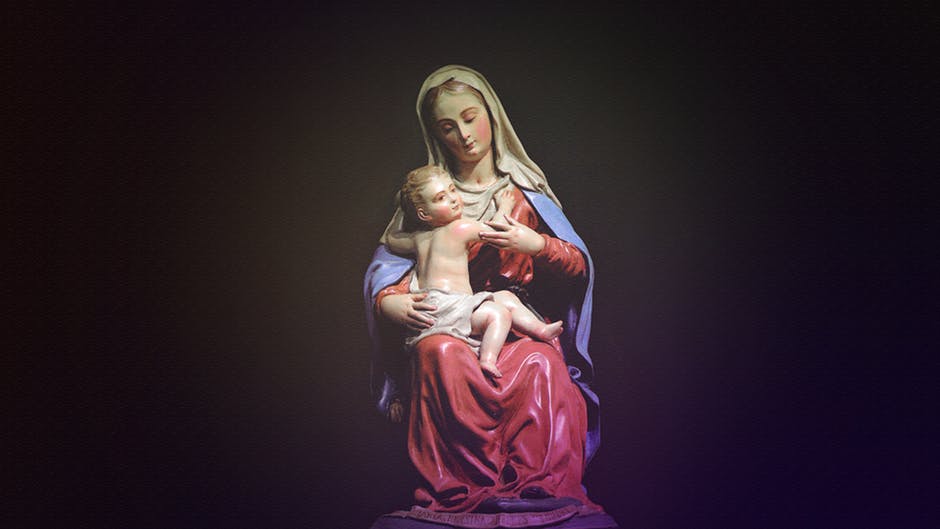 To celebrate International Women’s Day on March 8th, from today until the end of March I’ll be writing articles about ‘flawed’ women in fiction.
As a psychologist and as a woman, I have never warmed to passive women in fiction. I see them as a foil to the ‘bad man’ and isn’t that too easy? Of course, the concepts of protagonist and antagonist demands that we have conflict and I’m all for it, but, in my opinion as a reader and a writer, it is lazy to write passive, simpering female protagonists and active, evil male antagonists.
Yet this trend persists in the guise of overly ‘sympathetic characters’. If women have a strong voice or a social habit, or god forbid a range of sexual partners, they are portrayed as damaged. One facet of this that has been heavily commented on is ‘flawed’ or ‘bad’ mothers in fiction. From Mrs Bennett to Adrian Mole’s mother, Pauline, these fictional women have been described with the usual adjectives especially reserved for women who do not conform to the ‘quiet, reserved, unconditional love’ mother motif that pervades the social norm but rarely exists outside the patriarchal gaze. Women love their children and love motherhood, but have multiple identities which they carry out consecutively. This, in real life, is not flawed, but necessity.
Of course we want mothers to be good; we want them to care for children and provide for them, but isn’t part of being good providing a strong basis for independent living in a world that, once you leave the nest, becomes the savage reality of dog eat dog? I do not see women in fiction who, in addition to being a mother, show their personality, as ‘flawed’. Or ‘bad’. I see them as interesting and intricate. Unless they are criminal, obviously, but even then, I need to see the psychological motivation which is separate to the crime and not simply ‘mad and bad’ or ‘stupid’. I want to know what they are thinking and feeling so I can make my own mind up.
I would argue that commercial fiction today needs mothers who women can identify with. Novels are not a lesson, but a resonance. The skill in writing realistic mothers in today’s world lies in characterisation of women who have children and who let their individuality and everything that comes with it – alcohol, joy, painkiller addiction, confidence, body image issues, love, neurosis – shine through, but enough that we still know them and kind of like them. That we would still go to the pub with them, meet them for lunch. Or at least tolerate them. That they have a rounded story.
I recently met two of these mothers in books I read last month. I picked them up at random, but both turned out to be about mother-daughter relationships, but from very different perspectives.
The first was The Child, by Fiona Barton. This novel centres around the skeleton of a baby found on a building site. It is narrated from four points if view, and focuses heavily on a reporter who investigates. All these women are mothers and this is the central message of the story, but the author makes an impression with Jude, the mother of one of the other narrators. Jude is a narcissistic woman now, seemingly uncaring, but Barton has made us see Jude’s past and why she is like this. We see, through Emma’s viewpoint and Jude’s narration of her inner self, the conflict she has suffered throughout her life. It is this exploration that allows us to understand Jude’s motivations in the story.
The second book was The Queen of Bloody Everything by Jo Nadin. There are two mothers in this book, Edie, the single parent hippie, and Angela, a Stepford Wife-ish suburban housewife. They are thrown together as their families grow and this relationship alone provides a conflict which compares but never judges the different ways they care for their children – and they do. Despite their quirks and ticks, they care deeply. This subtext adds an extra delicious dimension to the novel, but it is Edie’s extraordinary determination to live her own life that shines through. She pushes the boundaries for sure, but we see her so well through the eyes of her daughter Dido that she is entirely forgivable and, as Dido grows up a little bit pathetic. But never flawed or bad, because don’t we all know mothers like Jude and Edie?
It is important that women as mothers are portrayed realistically. Not as bad or flawed if they make a mistake or – shock horror – have a life outside childcare, but as people living lives that are affected by the past and expectations of the future. Multi dimensional characters whose motivations lie with and outside their children and partners. It is the stereotyping of women is all areas of life that has led to the misogynistic ‘good girl’ culture that presses women and girls into a single-dimension pastiche of what women and their lives are really like.
As I mentioned above, commercial, and indeed, literary fiction are not lessons in life, but they are cultural markers. They are ways that we can feel not alone and see glimpses of ourselves in our resonation with the characters. Writers observe life, readers resonate. Most of all, commercial fiction is escapism, and while we want to escape into a story that is different to our own, we still need to recognise the players.
The post Flawed Mothers in Fiction – or are they? appeared first on Jacqueline Ward .
February 5, 2018
The Story of My Story: Perfect Ten
 Now January is over and done I’m starting to look forward to 2018 even more. In case I hadn’t mentioned it, I have a novel out this year! Perfect Ten will be published on the 6th September 2018. As you can imagine, this is very exciting for me, and I’m going to start at the beginning to tell you why.
Many years ago I decided that I would write a non-fiction book. It was about domestic abuse and how to recover. I suppose it would have been classed as a self-help book. I penned a detailed proposal and bought a copy of the Artists’ and Writers’ Year Book and sent it along to all the non-fiction publishers who accepted books like this one. The response was unanimous – silence. I wasn’t even worth a rejection letter. Except for one publisher who replied:
Dear Madam
Thank you for your proposal. While it looks interesting, I note that you do not have any qualifications in this area. May I suggest that you seek such qualification as to make you knowledgeable before you send further proposals.
Yours faithfully
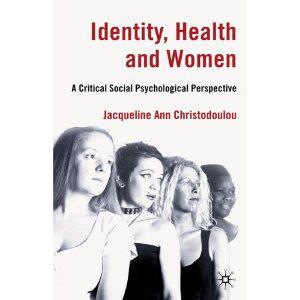 I was, of course, quite despondent. Because I had children very young, I only had six ‘O’ levels. On the plus side, being a single parent meant I had a lot of evenings free when my children were in bed to study. I embarked on a degree followed by a PhD and got some experience working in domestic violence on management boards and in refuges. I did a study on Women’s Health and published my PhD thesis in an academic book Identity, Health and Women.
But I still hadn’t really accomplished what I wanted to. I had, however, started to write novels. My study of narrative psychology and storytelling compelled me to write, and I found that this was a way to release the silence that was trapped within.
I wrote several novels and some of them were published, but they were not THE book. I fully expected it to be a non-fiction book, but I wasn’t entirely sure of the format. One day, I got up and started to write about Caroline Atkinson. At first I wasn’t sure where the story would go, but soon it became clear to both myself and Caroline that this was it! This was the book I was always meant to write.
When you read Perfect Ten (I hope you will!) the subtext to this story is around the concept that the non-fiction publisher rejected all those years ago. But the experience I actually needed was the understanding of storytelling so as to wrap it up in Caroline’s life and relationships.
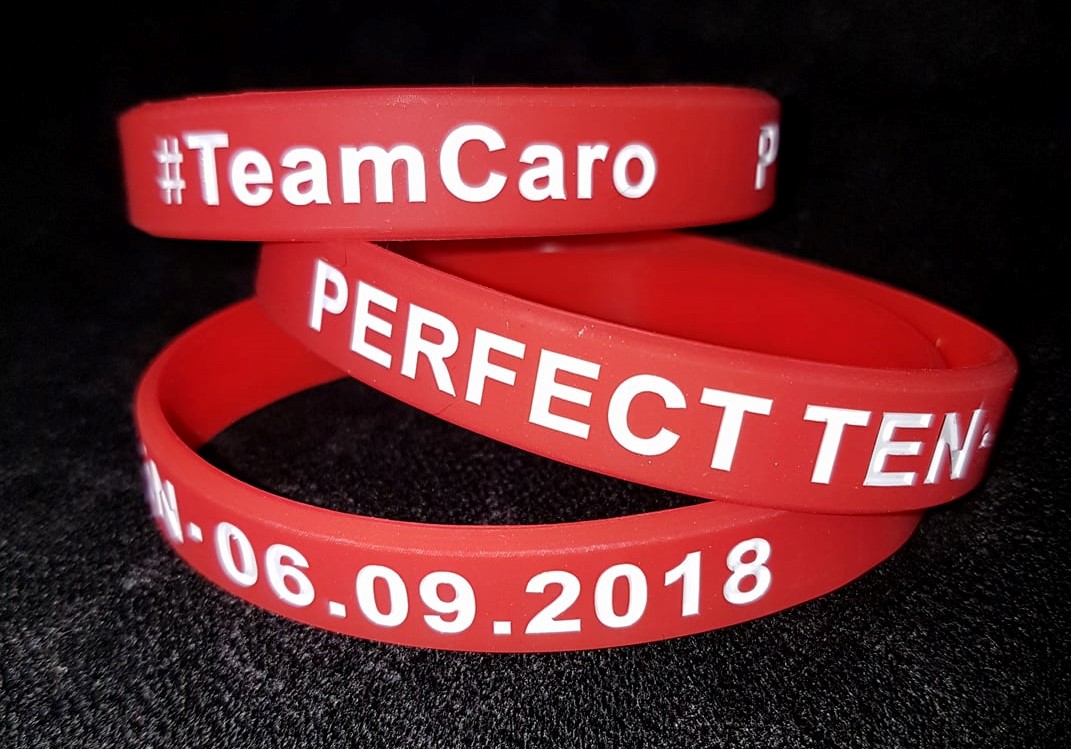
Everyone who has read Perfect Ten so far has resonated in at least one way, and everyone has an opinion on whether they are #teamCaro or #teamJack. Publication looming large and I hope you will join me an Caroline’s stomp through stories of love, loss and revenge.
There will be more news about ways you can join myself and Caroline on this journey and how you can have your say on every aspect of the book and much more. Sign up for my newsletter in the sidebar to keep updated!
The post The Story of My Story: Perfect Ten appeared first on Jacqueline Ward .
January 26, 2018
When I went on a script writing weekend… lessons learned
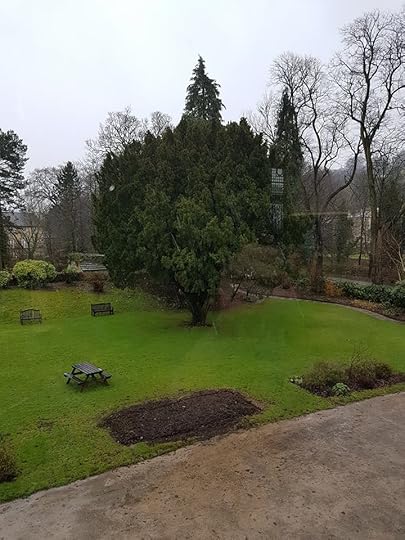
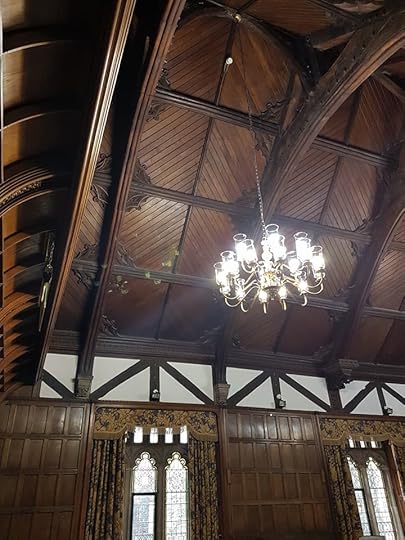
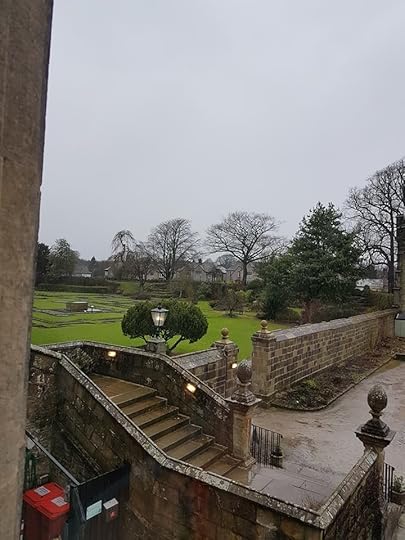
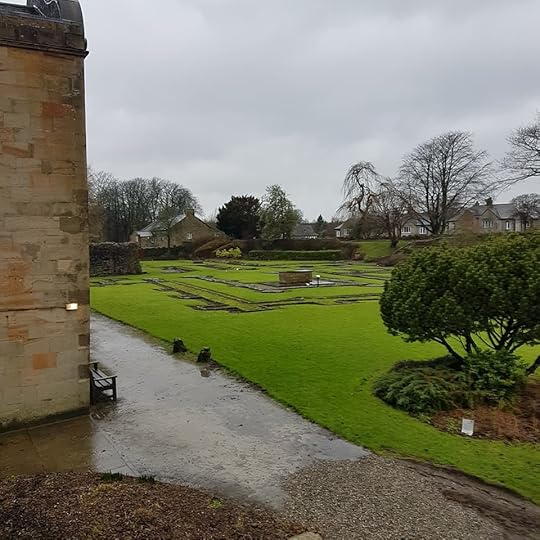
Last weekend I spent three days at Whalley Abbey in Blackburn, Lancashire with Scriptwriting North. Fourteen of us arrived fresh for writing, table reads and some lovely food. But what we got was much, much more.
 We started with a workshop in character, which was very useful, particularly when it got practical. I mapped out the central character in my new screenplay and it really helped to form ideas.
Next we had a table read and acted out each other's screenplays. Hearing the dialogue is an exciting and illuminating experience - what works on the page doesn't always work on the table read. The notes were useful and there was a chance to air the changes in a second table read.
Those of us who brought treatments got feedback on our ideas and learnt a lot about layout and what others include.
There was plenty o f time for writing and I easily reached my target on 10k over three days. It's difficult to explain how Whalley Abbey inspired me and enhanced my creativity. But I wrote several new chapters and a new full length feature treatment, as well as changing my screenplay.
Between sessions there was time for chatting with other writers and this was absolutely invaluable. Writing can be isolating, and while there are beta readers to discuss manuscripts and scripts with, often there is no one to discuss the ins and outs of the industry.
 Scriptwriting North works with writers at all levels, and all the writers were a lot of fun and open to discussion. I found out so much about the way scripts are progressed, and just as much about the barriers. The weekend was a raging success on all levels and I want to share some of the things I learned with you:
Everyone gets notes and notes are useful. They are critique not criticism and a positive development
Reading out loud is one of the most useful things you can do with your work
Other writers want you to succeed and are joyful at your success. When I updated everyone on the progress of Perfect Ten, they were delighted
Just like me, all writers, no matter what level they are at, get rejections and disappointments. It's all relative of course, but these are learning opportunities and not failure
So thank you to Beth and Gareth and to everyone who attended the weekender, here's to next time!
1
2
3
4
The post When I went on a script writing weekend… lessons learned appeared first on Jacqueline Ward .
January 12, 2018
Adele’s song and writing a novel
So what does Adele’s song ‘Hello’ have to do with writing a novel? Apart from the fact that her music is fabulous and that she collected her MBE two people in front of me, I don’t know much about her.
What I do know is that her song ‘Hello’ achieves what all writers want to do: identify a high concept and make that resonate with the maximum amount of people. ‘Hello’ is about past love and regrets and it’s full of scalable emotion. It leaves us (well me, anyway) wondering who had hurt her so much for her to be able to convey that feeling so well.
Just like Adele’s song works on multi levels – the music, singing and genre as well as the meaning and the context – a novel needs to speak about life and what that means to people as well as being grammatically accurate and having an attractive cover.
So how does this happen? Is it at the idea stage or at the writing stage? Is it in the seed of the theme or does it develop with the story? Quite often meaning is not explicit. It can be so obscure that it’s invisible, but deeply evocative. A story has a beginning, a middle and an end, but an emotionally scalable story also has emotional depth.
The use of conflict in storytelling, as well as raising the stakes for the characters helps to weave a sense of risk and danger in a story, but in order to make a reader feel the longing for a lost love requires the writer to tap into a particular set of circumstances that many other people have felt. This is the shape of the story, and how it fits with others.
The challenge, then, is to find a story that is unique and then to make the emotional depth the same for everyone. So the same, but different. No pressure then.
Writing is a skill and a craft. Correct use of commas and semicolons may make some people cry with joy, but the exchange of emotions between the characters and the reader is the magical ingredient that can’t be bottled.
Adele has it right – many people on Twitter criticism that her music sounds ‘all the same’, but surely that’s the point? She’s found her voice and her brand and once again she’s found something that the majority of people can resonate with. But don’t take my word for it – see for yourself.
The post Adele’s song and writing a novel appeared first on Jacqueline Ward .