Rebecca Stonehill's Blog, page 2
February 5, 2025
Protected: Solarpunk: Creating the future by imagining it
This content is password protected. To view it please enter your password below:
Password:
The post Protected: Solarpunk: Creating the future by imagining it appeared first on Rebecca Stonehill.


January 31, 2025
Upon being told I will burn in hell
A couple of weeks ago I re-posted on both my Instagram and Facebook stories something shared by Jewish Voice for Peace. It stated that Israel had responded to the initial ceasefire agreement by killing another 85 people (this number was a conservative estimate and it subsequently climbed much higher). The next day, when I opened up my laptop I was greeted with a few messages from various family members in America telling me I would ‘burn in hell’, that ‘my father would be ashamed of me’ and that he would have ‘disowned me with these views.’ (Except, these are not views. These are facts. But I won’t get into that right now.) One person asked me ‘what has happened to you?’
Let me add some context and history. I am not Jewish and was not raised Jewish. My father was Jewish and his own parents escaped Poland and settled in Chicago, managing to bring over large numbers of people. Many in my family perished in the Holocaust and going to Auschwitz-Birkenau as a young person had a profound effect on me. I grew up with Anne Frank as a constant companion as a child and teenager, and as an adult, one of my favourite and wisest of books became An Interrupted Life – 1941-1943 – The Diaries and Letters of Etty Hillesum. She is far less known than Anne Frank (which always shocks me) but lived on the other side of Amsterdam and died in a concentration camp. I even chose one of Etty’s phrases as the title of my memoir, The Sky Within.
After school, I worked on a kibbutz in Israel and went back a few times in the next years to visit Israeli friends and explore the region. At university, I had a big Israeli flag on my wall, wore a necklace that had my name in Hebrew on it and started exploring my Jewish roots more. And then I took a course alongside Anthropology entitled Politics, Economy and Society in the Middle East. I remember sitting in these lectures, my eyes wide open as the history and culture of this region opened up before me, a turbulent, stained map. And I realised something during that year: that Israel was deeply problematic. It pained me to admit this to myself – I had thrown myself into the Israeli dream and loved it and what it stood for with an unbridled fervour. But this door had been opened, and the more I read and researched, the more I realised I had been naïve. I had only seen one side of this troubled story.
I spoke to my father about it more and more. We clashed terribly when we talked about it, but my Dad was full of humour and good grace, and we never fell out about it. His favourite saying was I may not always agree with you, but I’ll fight to the end for you to have your say. Dad wasn’t religious and never went to Synagogue, but culturally, he was deeply attached to Judaism and the state of Israel.
Fast forward many years from that idealistic university student with her Israeli flags and Hebrew necklace and I wonder what he would say about the genocide and persecution of the Palestinian people (which, as we know – or if we’re willing to really look – pre-dates October 7th by many decades). Perhaps we would still clash. And though I’ll never know for sure, I can’t believe he would condone this. And he certainly wouldn’t have disowned me. I feel the same about Anne and Hetty. Their words, wisdom and humanity have been stamped in indelible marker on my heart and soul. I know these people. They are my friends. And I cannot believe they would be alright with their descendants doing the same to another people what was done to their people. I do not want the end of Israel, I want peace in the region. And peace cannot begin with what has been taking place, and continues to take place.
Gabor Maté is a Hungarian Jew, Holocaust survivor, writer and psychologist whose work I have respected for some time. When I saw this on Instagram recently, I thought yes. Thank you Gabor. Thank you for speaking this horrifying, devastating truth.
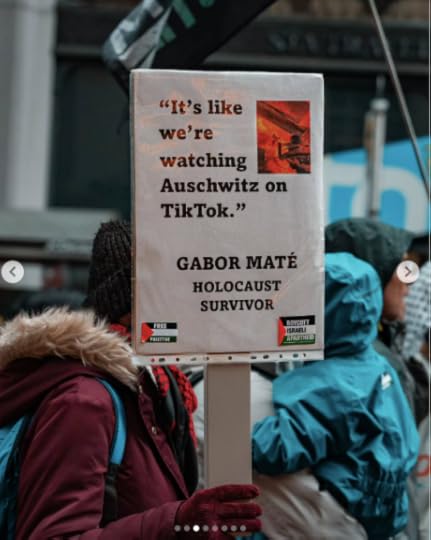
And I also thought: I am proud of my Jewish heritage. And I do not and cannot support the continued persecution of the Palestinian people. And I know that both of these things can be true at the same time.

Thank you for reading this. It has taken a while for me to pluck up enough courage to write these words. I know some people won’t agree with what I’ve written here, and that’s ok. I just ask you to be respectful and kind if you would like to respond to this and pause before doing so.
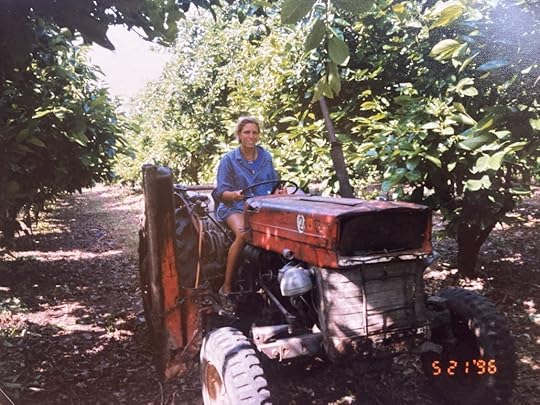
Me working on a kibbutz near Rehovot, Israel in 1996
(Credit to Nazar Hrabovyi for the header image)
The post Upon being told I will burn in hell appeared first on Rebecca Stonehill.
January 6, 2025
A thing or two about perseverance
A number of years ago I was walking around outside Old Spitalfields market in London when I came across a plaque in a square. I stopped to read it, and something shifted in me the way that it does when I know something important has happened. The plaque read that in this place a few centuries previously, ‘wife-sellings’ took place, and the important thing that happened? A seed was planted in my bones right at the moment for a new novel.
Fast forward a global pandemic and hours, weeks and months of crafting a new novel. This was the first book set on my native soil and went back to an earlier time period than I had based a story in so far. It charts the journey of a young girl with a deep connection to nature in 1830s rural Norfolk who sets out to educate herself amongst intense rural poverty, industrialisation and rampant superstition. The wife- selling, ultimately, is a small part of the story but nevertheless, this was the starting point for me, sparking a curiosity of how and why such a horror could have taken place.
As with each new novel, I started sending it out filled with optimism; after all, I believed in this book. The rejections slowly started rolling in, as they do: this is part and parcel of a writer’s life. Some agents requested the full manuscript which always filled me with hope. I remember one agent coming back and saying I loved it, but I didn’t love it enough. And there was another publisher who told me that all three directors had to fall in love with it, and only two of the three did. Just before Christmas of 2022, I received the news that every aspiring author longs for: an agent wanted to take me on. I remember crying tears of joy, because the truth is I had been waiting for this for around 15 years. I felt like I really, truly deserved this.
But then the following year, this agent retired and that was it. It’s impossible to describe the crushing blow this was for me and at that point, I decided to put this manuscript away and work on the next book. That one took a year to write (it’s called Elemental – more of that in another blog) and once completed, I decided to give Rosie Crow a final airing before relegating it for evermore to the bottom drawer. A small publishing house asked for the full manuscript, but then I heard nothing. I waited, and waited, and waited. And just before Christmas, two years after I got an agent for this book and one year after I lost him, I heard back from the publisher with these words: I want to publish Rose Crow.
Yes. Thank you universe. Finally. Finally.
Over the weekend we celebrated my husband’s 50th birthday and at his party one of his old friends asked me why and how I could keep putting myself through this. 83 rejections for The Poet’s Wife (my first novel which consistently sells the best) and 60 for The River Days of Rosie Crow. Hours, weeks, months and years of hustling and sending my words out into the world. And those words very often being batted back at me. I don’t think I gave him a very good answer that night, but this is my answer to him now and to anyone else who also wants to know:
I can’t not write. It hasn’t been a career for me in a financial sense, because I only get pocket money from it. (According to a study carried out by the University of Glasgow in 2018, average yearly author earnings were £10,497 and no doubt have dropped since then. Just let that sink in for a moment). Yet the root of the word career comes from a French word from the 1530s, carriere, which means road or racecourse. And yes, this has been my road ever since I was a young child forming her letters in a notebook and realising how these markings on paper made me feel powerful and whole.
And I keep going because I believe I can write. Stories, surely, are not stories if we keep them to ourselves, and I have stories aplenty to tell. Sometimes they do feel like that racecourse from the origin of that word, career, in that I can’t get them out fast enough. They clamour in my head, fighting for space, calling Tell me next! No, my turn! And then there’s that amazing (and occasionally disquieting) moment when your characters start speaking to you, telling you what they think and believe and want to do. Yes, it really does happen.
So that is a much longer answer to why I don’t give up. Why I can’t give up.
Stairwell Books will publish The River Days of Rosie Crow towards the end of this brave new year. Read more about Stairwell here. My most recent novel is called Elemental – A Novel of Courage in Verse, and now I need to begin the journey once again of sending it out there, being rejected, not giving up. We’ve all heard the stories about those authors the big publishing houses fight over and vast figures being waved in front of noses followed by film, play and TV rights. But believe you me, to say this is the minority would be a vast understatement. I think I know a thing or two about perseverance, so I’ll keep going for as long as it takes for someone to believe in me and my words.
Thank you for reading this blog. Compliment it with a post I wrote ten years ago when The Poet’s Wife was finally accepted, reflecting on rejection & the curious no-man’s land of waiting to hear back.
ps The photo in the header is of Marsham Heath – Rosie Crow lives on the edge of this beautiful heathland in North Norfolk.
The post A thing or two about perseverance appeared first on Rebecca Stonehill.
December 8, 2024
Top 5½ books of 2024
It’s that time of year when I like to do a round up of my top reads of the year. I spent a little time making a list and then crossing out and adding, followed by more crossing out and adding. Which is always the way, and it means I read some great books and there were some close contenders. Speaking of which, for some reason a number of the books I read in the first half of the year were flops for me which was slightly bewildering. Does that ever happen to you? Anyway, I’m happy to report that books read in roughly the second half of the year managed to make up for ones I wanted to chuck against the wall.
So, here we go:
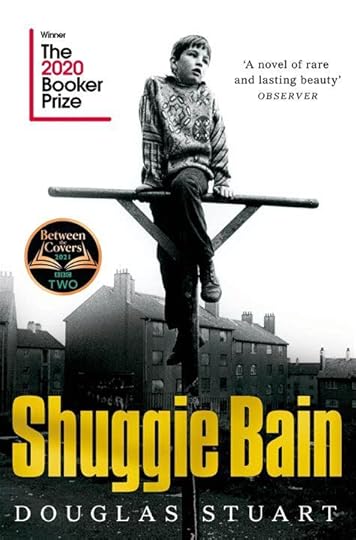
Despite the fact I bought this book of my own free will and it was sitting on my shelf for a few years, I couldn’t face pulling it out because I’d heard so many people who had read it use words such as ‘brutal’ and ‘depressing’ when talking about it. I wasn’t sure I could face it. But then someone in my online book club chose it and that was it, the book was pulled out. And honestly? I was hooked from the very first page. Yes, Douglas Stuart’s Booker prize winning tome is far from an easy, light read. But from the very opening page I was rooting for young Shuggie in a way that literally took my breath away. This is a long book, and I read it in a week, bunking off from other tasks I should have been doing. Born in an impoverished part of Glasgow, all Shuggie wants is for his mum to be well, and to be free from the alcoholism that plagues her. And as a reader, I desperately wanted Agnes to be well too, so that she could love Shuggie in the way he deserved to be loved.
This is beautiful, powerful, heart rending writing, filled with the kind of detail that is only possible from the author having lived some of these experiences himself. If I were pushed to state my book of the year, I’d go for Shuggie. The review on the front calls it ‘a novel of rare and lasting beauty’ and I couldn’t agree more. It is devastating, but also devastatingly beautiful and it will stay with me for many years.
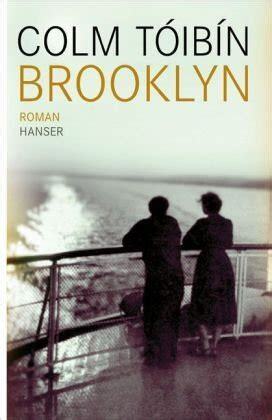
Eilis is a young woman living in a small town in Ireland in the 1950’s, who is offered the opportunity to emigrate to Brooklyn. Although close to her mother and sister, she is encouraged to go and once there, sets about carving a new life and work for herself. While her future initially seems rosy in the US, particularly after falling for Tony who comes from a big Italian family, she receives heartbreaking news that pulls her back to Ireland and makes her question everything she had come to believe about her new life.
Awash with wry, touching observations as Eilis navigates a new land, new love and keeping one foot in her old world and another in her new, I loved this intelligent, character-driven novel and will definitely read the sequel at some point, Long Island.
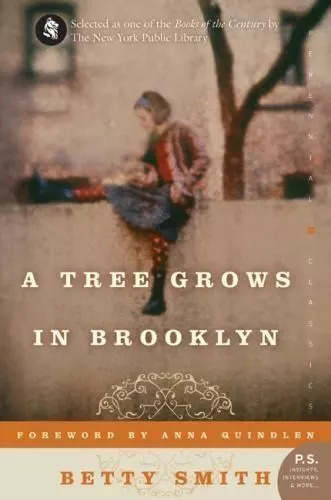
Sometimes it happens to me that I’ve so enjoyed a setting of a book that I want to read something else set there. This is exactly what happened with my previous read, where Brooklyn feels utterly distinct and separate from New York City. A Tree Grows in Brooklyn (written in 1943) had been on my radar for a few years but I decided to read it straight after Brooklyn, winding the clock back another fifty years to the early twentieth century. As with Douglas Stuart’s writing, Betty Smith mined her own personal experience of being raised in Brooklyn’s Williamsburg slums and again, a little like Shuggie, I adored the novel’s heroine, plucky young, bookish Francie Nolan.
This is an unsentimental, stark account of being raised in poverty which deals with issues such as the alcoholism of Francie’s father (eeek, another alcoholic parent), the blatant favouritism her mother demonstrates towards Francie’s brother and trying to learn the codes to cope in a vast slum school. Yes, life is hard for Francie. But no matter what it throws at her, she refuses to be bowed and uses her intelligence and skills of observation to make sure she can survive and even thrive in this kind of environment.
While the novel’s setting may be bleak at times, the book itself is anything but. Shot through with a warmth, laugh-out-loud humour and tenderness that revolves around a large cast of colourful family members and neighbours, this book is a gem which I can’t quite believe I’d never read before. The New York Times has described it as ‘One of the books of the century’ and I wouldn’t disagree.
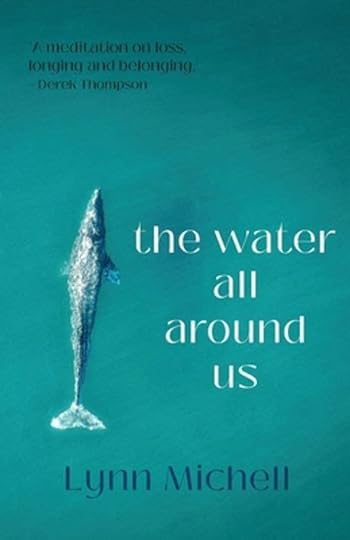
I think this was my surprise book of the year. Just before I headed to Scotland, I pulled this off my shelf as remembered that it was set there. Set on an unnamed Scottish island, the story revolves around three different narratives. First there is young Fenn, the daughter of crofters who, having not lived there long, finds it hard to be accepted by the islanders and spends inordinate amounts of time alone on the islands wild beaches. Jess was an American marathon swimmer who is running from something, though what this is only slowly and gently unfolds over time. Finally, and most unusually, we have the perspective of a young male whale who has been separated from his pod and is searching looking for them, finding himself beached on the island (this scene happens right at the start so it’s not a spoiler) while the islanders desperately try to help him.
I thought this was such an unusual, poignant novel. I think it’s incredibly hard to write from the perspective of a non-human creature without anthropomorphising, but I think Lynn Michell handles it fantastically. As these three lives converge on the island’s white-sanded beach, it sensitively raises questions of belonging, dealing with grief and the perils of our changing oceans.
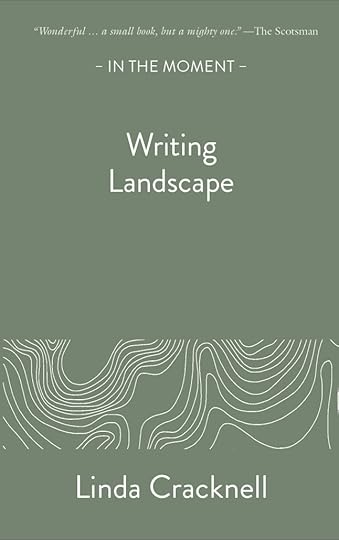
I went to a book festival while I was in Scotland and heard Linda Cracknell talking about a different, more recent book (Doubling Back). Whilst that also sounded fascinating, I decided to buy this beautiful, slim little volume of essays. Vital to Cracknell’s writing is Susan Sontag’s advice to Love words, agonise over sentences, and pay attention to the world and this shines through in each and every sentence. Her thoughtful and thought-provoking essays offers wonderful tools and suggestions for anyone wishing to write in a way that roots us more in landscape, or for those who love to be out in nature and wish to hone their skills of observation and attentive looking.
Her writing reminded me a little of Robert Macfarlane’s (if you’ve not read any of his books, you definitely need to look him up) and I also loved her adventurous spirit as a solo woman, for example travelling by bike out to a small island only connected to the mainland at low tide and retracing her parents steps from seven decades previously as she embarks on a three day trek.
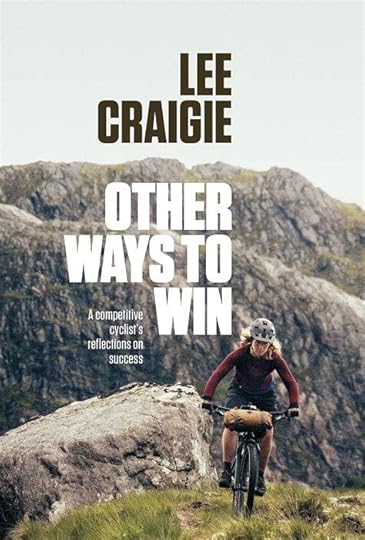
‘The humble bicycle and the spirit of the human being. Together, it transpires, we can perform miracles.’
The reason this is number 5 ½ has nothing to do with it being half a book or that it has any less merit than the others mentioned. It’s simply because I’d already compiled my 2024 list and posted my blog. But I had to add it to my list. On my last day in Scotland I browsed in the wonderful Highland Bookshop in Fort William and spotted it. I needed something to read for my long train journey home and as soon I saw it, I knew this would be the book to keep me company. I had met Lee a couple of weeks previously in Knoydart and we’d had a brilliant few meet ups of dinner, lots of chatting, a night in the pub that ended with whisky tasting and a cold loch swim (which helped with the whisky head).
I know absolutely nothing about the world of competitive cycling and while this is about Lee’s journey of finding a healthy relationship with this sport she’s so passionate about (as well as some frankly mind boggling accounts of physical + mental challenges), it’s also about so much more. Lee explores far-ranging themes such as attentiveness, access to wild spaces, the ways our system fails restless children, what success really looks like, loss, friendship, the power of storytelling and community, the kindness of strangers, finding balance and a great deal besides. Filled with warmth, wisdom, humour and compassion, it doesn’t matter if you’ve never been on a bike or competed in a race, this is definitely a book to read and press into the hands of others. It left me feeling renewed, restored in spirit and yes, eager to use my humble bike more.
Other noteworthy books:
 The Reluctant Fundamentalist by Moshin Hamid The Kids by Hannah Lowe (poetry) The Manningtree Witches by A.K.Blakemore Piranesi by Susanna Clark Supporting Cast by Kit de Waal The Last Sunset in the West: Britain’s vanishing West coast orcas by Natalie Sanders
Thank you for reading this. How about you? I always love good book recommendations and would welcome any fantastic reads from your year.
Wishing you a very Happy Christmas and here’s hoping that your 2025 is filled with wonder, laughter and, of course, some very good books 
Compliment this blog post with my top books of 2023, of 2022 and my favourite books of reading outside my ethnicity in 2021.
The post Top 5½ books of 2024 appeared first on Rebecca Stonehill.
Top 5 books of 2024
It’s that time of year when I like to do a round up of my top reads of the year. I spent a little time making a list and then crossing out and adding, followed by more crossing out and adding. Which is always the way, and it means I read some great books and there were some close contenders. Speaking of which, for some reason a number of the books I read in the first half of the year were flops for me which was slightly bewildering. Does that ever happen to you? Anyway, I’m happy to report that books read in roughly the second half of the year managed to make up for ones I wanted to chuck against the wall.
So, here we go:
Despite the fact I bought this book of my own free will and it was sitting on my shelf for a few years, I couldn’t face pulling it out because I’d heard so many people who had read it use words such as ‘brutal’ and ‘depressing’ when talking about it. I wasn’t sure I could face it. But then someone in my online book club chose it and that was it, the book was pulled out. And honestly? I was hooked from the very first page. Yes, Douglas Stuart’s Booker prize winning tome is far from an easy, light read. But from the very opening page I was rooting for young Shuggie in a way that literally took my breath away. This is a long book, and I read it in a week, bunking off from other tasks I should have been doing. Born in an impoverished part of Glasgow, all Shuggie wants is for his mum to be well, and to be free from the alcoholism that plagues her. And as a reader, I desperately wanted Agnes to be well too, so that she could love Shuggie in the way he deserved to be loved.
This is beautiful, powerful, heart rending writing, filled with the kind of detail that is only possible from the author having lived some of these experiences himself. If I were pushed to state my book of the year, I’d go for Shuggie. The review on the front calls it ‘a novel of rare and lasting beauty’ and I couldn’t agree more. It is devastating, but also devastatingly beautiful and it will stay with me for many years.
Eilis is a young woman living in a small town in Ireland in the 1950’s, who is offered the opportunity to emigrate to Brooklyn. Although close to her mother and sister, she is encouraged to go and once there, sets about carving a new life and work for herself. While her future initially seems rosy in the US, particularly after falling for Tony who comes from a big Italian family, she receives heartbreaking news that pulls her back to Ireland and makes her question everything she had come to believe about her new life.
Awash with wry, touching observations as Eilis navigates a new land, new love and keeping one foot in her old world and another in her new, I loved this intelligent, character-driven novel and will definitely read the sequel at some point, Long Island.
Sometimes it happens to me that I’ve so enjoyed a setting of a book that I want to read something else set there. This is exactly what happened with my previous read, where Brooklyn feels utterly distinct and separate from New York City. A Tree Grows in Brooklyn (written in 1943) had been on my radar for a few years but I decided to read it straight after Brooklyn, winding the clock back another fifty years to the early twentieth century. As with Douglas Stuart’s writing, Betty Smith mined her own personal experience of being raised in Brooklyn’s Williamsburg slums and again, a little like Shuggie, I adored the novel’s heroine, plucky young, bookish Francie Nolan.
This is an unsentimental, stark account of being raised in poverty which deals with issues such as the alcoholism of Francie’s father (eeek, another alcoholic parent), the blatant favouritism her mother demonstrates towards Francie’s brother and trying to learn the codes to cope in a vast slum school. Yes, life is hard for Francie. But no matter what it throws at her, she refuses to be bowed and uses her intelligence and skills of observation to make sure she can survive and even thrive in this kind of environment.
While the novel’s setting may be bleak at times, the book itself is anything but. Shot through with a warmth, laugh-out-loud humour and tenderness that revolves around a large cast of colourful family members and neighbours, this book is a gem which I can’t quite believe I’d never read before. The New York Times has described it as ‘One of the books of the century’ and I wouldn’t disagree.
I think this was my surprise book of the year. Just before I headed to Scotland, I pulled this off my shelf as remembered that it was set there. Set on an unnamed Scottish island, the story revolves around three different narratives. First there is young Fenn, the daughter of crofters who, having not lived there long, finds it hard to be accepted by the islanders and spends inordinate amounts of time alone on the islands wild beaches. Jess was an American marathon swimmer who is running from something, though what this is only slowly and gently unfolds over time. Finally, and most unusually, we have the perspective of a young male whale who has been separated from his pod and is searching looking for them, finding himself beached on the island (this scene happens right at the start so it’s not a spoiler) while the islanders desperately try to help him.
I thought this was such an unusual, poignant novel. I think it’s incredibly hard to write from the perspective of a non-human creature without anthropomorphising, but I think Lynn Michell handles it fantastically. As these three lives converge on the island’s white-sanded beach, it sensitively raises questions of belonging, dealing with grief and the perils of our changing oceans.
I went to a book festival while I was in Scotland and heard Linda Cracknell talking about a different, more recent book (Doubling Back). Whilst that also sounded fascinating, I decided to buy this beautiful, slim little volume of essays. Vital to Cracknell’s writing is Susan Sontag’s advice to Love words, agonise over sentences, and pay attention to the world and this shines through in each and every sentence. Her thoughtful and thought-provoking essays offers wonderful tools and suggestions for anyone wishing to write in a way that roots us more in landscape, or for those who love to be out in nature and wish to hone their skills of observation and attentive looking.
Her writing reminded me a little of Robert Macfarlane’s (if you’ve not read any of his books, you are missing out) and I also loved her adventurous spirit as an older woman backpacking out to a small island only connected to the mainland at low tide and retracing her parents steps from seven decades previously as she embarks on a three day trek.
Other noteworthy books:
The Reluctant Fundamentalist by Moshin Hamid The Kids by Hannah Lowe (poetry) The Manningtree Witches by A.K.Blakemore Piranesi by Susanna Clark Supporting Cast by Kit de Waal The Last Sunset in the West: Britain’s vanishing West coast orcas by Natalie Sanders Right now, I’m reading The Lost Lights of St Kilda by Elizabeth Gifford which I’m really enjoying
Thank you for reading this. How about you? I always love good book recommendations and would welcome any fantastic reads from your year.
Wishing you a very Happy Christmas and here’s hoping that your 2025 is filled with wonder, laughter and, of course, some very good books
Compliment this blog post with my top books of 2023, of 2022 and my favourite books of reading outside my ethnicity in 2021.
The post Top 5 books of 2024 appeared first on Rebecca Stonehill.
November 15, 2024
Guest Interview with Amanda Fox: Writer, Wonder, Activist
‘Refuse to fit into the box that others have tried to make for you.‘

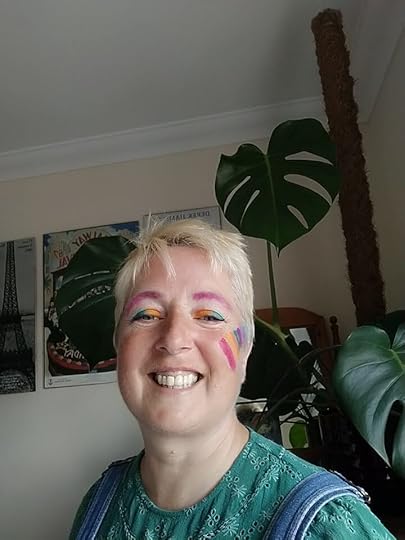
It’s hard to introduce my latest guest on the blog, Amanda Fox, as I realise that she defies description in many ways. There’s something about her that helps me to feel, more than I feel with anyone else, that ‘You have to let the soft animal of your body love what it loves.’ (Mary Oliver). In other words, that we can’t separate ourselves from the animal kingdom.
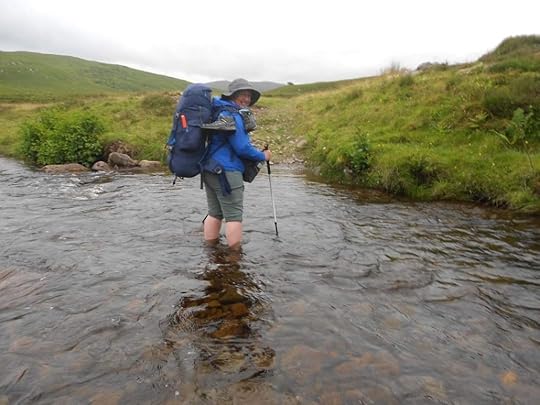
I first met Amanda as a neighbour in the previous house I was living in. She is rarely to be seen without her dog Halo, a beautiful borzoi, and if he isn’t loping along regally beside her, he is whizzing along in a carrier behind her bike, his head poking out of the top as his ears flap in the wind, taking it all in. Amanda has a strong love of justice, of the natural and more than human world, of people, ideas and conversation. One thing our family were always struck by in coming to know her as a neighbour is her ‘can do’ attitude. She never sees any wall or challenge as insurmountable and in our household, if we’re faced with a difficulty, it’s become a catch phrase to say ‘think like Amanda.’
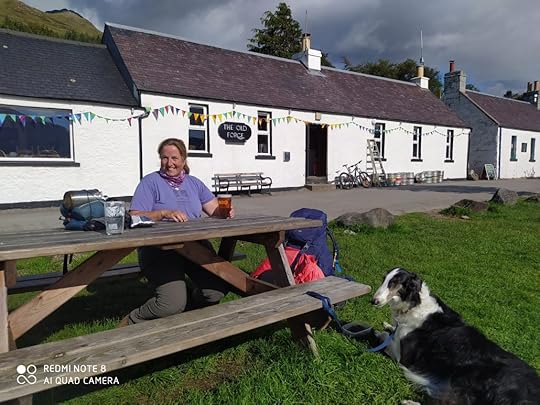
She never judges and is both fiercely gentle and gently fierce. Honestly? She is one of the reasons I initially stepped into activism, as I thought, I want some of what she’s got. And as a lovely aside, it was Amanda who told us about going to Knoydart in Scotland where she went walking with Halo, falling in love with its rugged beauty. And now, here I am, sitting precisely 110 steps (I counted last night) away from where she is pictured above, sitting in front of The Old Forge, the UK’s most remote pub.
Thanks for agreeing to come on my blog Amanda.
1) How long have you been writing for and what kind of writing do you do?
I had a teacher, Mr Benny, who would give me amazing feedback about my writing at primary school. As a result, I wrote lots of poetry and entered and won a poetry writing competition when I was ten. I journaled all the way through High School, and loved story writing but, coming from a working class background, my daydreaming was inevitably replaced by finding ways to make a living, how to bag a boyfriend, and whether or not the landlady at the pub would serve fourteen year old me.
In my consciousness, writers were people who had money and a posh education, so I just ditched my habit. Those things that we love in infancy don’t seem to completely go away though, and the longing to be able to shape words skillfully remained there as background music. Now, in my fifties I am finally nurturing what feels like a really important part of myself, by doing a degree in Literature with Creative Writing. I now can’t imagine not writing every day. My favourite module so far has been one on experimental writing. I love writing with that kind of freedom, rather than considering genre or audience. At the moment I am mostly trying to improve my prose and, by the time I complete my degree, I’m really hoping that my grammar and punctuation will have sorted themselves out. I am currently a comma criminal.
It’s still a challenge to consider myself a writer but it is now a daily practice. I love it and I am encouraging my skill level to catch up with my enthusiasm.
2) How does your activism inform your writing or vice versa?
Without activism I wouldn’t be writing. One of the most destructive acts of a class system is that societal views of your social class become so internalised at a young age, that children’s future’s are largely predetermined. So much creativity is lost because working class people have their confidence destroyed, or lack the financial freedom to contribute to the arts. It was activism that cracked my own internalised beliefs enough, for me to be able to see them clearly and begin to reshape myself according to a dialogue of my own choosing. When you become embedded in an activist community, like Extinction Rebellion, where everyone is consciously trying to dismantle structures of oppression, healing and empowerment become almost inevitable. Activism also teaches you resourcefulness and to find ways of living that you might not have previously considered. This is especially useful for creative writers, as many people who write have to have multiple things going on in order to be able to feed themselves. That learning and the safe footing of my activist community gave me the confidence to apply for the UEA degree course that I am now on.
Studying there is the most exciting period of my life so far. To some extent we all write what we know but, rather than activism informing my writing, the act of writing itself is my activism. The system that we live in never meant this outcome for me; this glorious immersion in art. Every morning when I sit at my laptop and begin typing, it feels like a revolutionary act.
3) How does the natural world inform your writing?
The relationship that I have with the natural world feels too intimate to be able to write about it directly. I don’t think I have the language skills to do such a love affair justice. However, I do find that plants, insects and wild animals often infiltrate a piece of writing that I am doing, even if it starts off feeling a million miles away from that subject matter.
4) What are you most proud of in your life?
Breaking a window at Barclays. It is perhaps the occasion in my life when I was acting most authentically in line with my conscience and I felt very connected to my faith as I broke that glass.
5) If you were to press one or two books into the hands of everyone you know and say, you have to read this, what would it be?
Bridget Jones Diary, because it’s a super easy read and I find it hilarious, and To Kill a Mockingbird, because I just love Atticus.
…..although I am torn because I also want to say Chavs by Owen Jones, which is about the demonisation of the working class. Every word was relatable and every word made me angry.
6) Did you have a favourite book as a child?
I was fanatical about the Famous Five, even insisting that everyone call me George. All I’ve ever wanted is a dog, some reliable friends and a bit of an adventure. George had all that and an island of her very own and I lived vicariously through her.
I always fumed about Anne but now I also think, fuck being almost as good as a boy. We are so much better in so many ways and I reckon Ivor Cutler has it right with his song Women of The World.
7) Where do you feel most at home?
In a tent with Halo my dog…especially if my friends tents are nearby too.
8) Who or what inspires you the most?
My mum. I know it’s a boring answer but she seemed capable of the kind of enfolding love that St Julian describes in her Revelations of Divine Love. I think that mum came about as close to being a vehicle of divine love as it is possible for a mortal to achieve.
9) What work has been the most meaningful to you over the years?
I worked for fourteen years at a wildlife rescue and rehabilitation centre. The team just clicked. We loved what we were doing, we loved each other and the mix created this hotbed of pure happiness. There can be no higher purpose than magnifying joy and we nailed it. There were so many funny moments, so many moments of warmth and grief, that I felt like I had been planted, slap bang, into the best bits of a James Herriot novel.
10) What advice would you give someone who wants to write but lacks confidence?
There’s a reason that you lack confidence and it isn’t your fault. Whoever did that to you, fuck them. Write something and share it, just to get your own back. Refuse to fit into the box that others have tried to make for you. However scary it feels, you deserve to feel the freedom on the other side of that fear, and it will be less scary than a life half lived.
Squirrel
“Squirrel” I say, in an excited voice to Halo. The kind of voice that, in some dogs, would spark an explosion of fur and speed and teeth. Halo’s head doesn’t move off her front paws, on the sofa, but her eyes slide lazily in my direction.
“Squirrel!” I try again, seeing my sunflower hearts at the feeding station going down rapidly; the squirrel taking the piss really with the patio doors being wide open and a thirty kilo sight hound laying on the sofa just inside. I try a higher pitch and slightly louder. “Squirrel!”
Halo yawns, looks at me with resigned eyes, aware that she must do her duty. Slowly unfolding her limbs she stands up on the sofa but then circles as if about to lay down again, testing.
“Squirrel!” I insist.
Halo reluctantly steps off the sofa. Stretches a long and languid downward dog and ambles towards the door. The squirrel freezes comically, upside down on the feeder, like it’s trying to win a particularly competitive game of musical statues; one limb poking out to the side and a front paw stretched forward in mid air. Unblinking, it momentarily assesses the situation and then leaps. Its grey bushy tail is halfway across the garden before Halo breaks into a lope. Halo doesn’t intend to disturb the rhythm of her day by actually catching the squirrel and so it is over the fence after her eighth stride. Halo sighs deeply and walks back towards the house. Before she is even at the patio doors the grey head has appeared at the fence and the squirrel snips a defiant “tch tch” remark at the retreating hound who is too placid to respond, and besides, it is a Sunday afternoon and the sofa is calling.
I notice the slight stiffness of Halo’s hind legs as she walks and that the squirrel’s isn’t the only grey fur. I remember that Halo is eight years old and that the average lifespan of a borzoi is ten years. I curl up on the sofa beside her, noticing again, in the way that I have noticed with increasing frequency over the years – each year the noticing becoming more acute – how absolutely perfect she is. My hand rests on Halo’s warm, rising and falling chest, my own chest aching with the knowledge that one day I will joyfully shout “Squirrel!” and my words will be swallowed by a sinkhole of unthinkable proportions. It is Sunday afternoon and I have decided that I won’t leave the sofa today. Halo senses this and her facial features relax into the form associated with happiness. The dog equivalent of a contented smile. Not that obvious gawking mimicry that golden retrievers do. No, borzois have more subtle expressions, that only those that know them can properly decipher. When you know, you know. Physically and mentally connected, Halo and I watch the squirrel demolishing the sunflower hearts together, like an elderly couple who have been married for many years and no longer need conversation.

Thank you Amanda for this gorgeous snapshot of a precious moment, and thank you for featuring on my blog and being an inspiration to me and countless others.

Compliment this blog post with reading about Ruth Jenkins, spoken word poet and textiles artist & guest post with disabled writer Ann Young.
The post Guest Interview with Amanda Fox: Writer, Wonder, Activist appeared first on Rebecca Stonehill.
October 10, 2024
Starting the day with writing
During lockdown when we were all looking for outlets to put in a chink in the monotony of our days, I heard about London Writers Salon. Which is a bit of a misnomer now, as people take part from all across the globe. But it’s true that it started in London, with a couple of friends who wanted to provide a space for the writing community during those uncertain days. On the first day, 9 writers turned up, by day 5 there were thirty, and it has grown from strength to strength ever since. People write together for an hour at 8am every morning to encourage one another to put words to paper. I thought I’d give it a go and, fast forward a few years, I’m still a regular attendee.
So, what is London Writers Salon (or The Writer’s Hour as it’s also known as now) and how and why does it work? On a normal day, between two and three hundred people sit in their little zoom boxes (today, as I type this, there are 265 of us) tapping away or writing long hand on their individual writing projects. The sound is muted so we’re not distracted, but before this happens, we are given a warm welcome by two hosts, who are often rotating (and they all somehow feel like friends now – if I were to see them in the street, I’d give them a big hug). We type into the chat what we’re working on and then one of the hosts shares a motivational quote.
Here’s the quote from today from Graham Greene:
Writing is a form of therapy; sometimes I wonder how all those who do not write, compose, or paint can manage to escape the madness, melancholia, the panic and fear which is inherent in a human situation. I am not a religious man. I don’t believe in God. But I believe in the power of writing. It is the only way I can confront the things that make me suffer. It allows me to understand, and it is an escape from the pain of things I can’t control. I write because I have to.
And then begins fifty focussed minutes of quiet writing before we type into the chat how we got on and one or two people are invited off mute to share what they’ve been working on. The idea during this hour is to avoid distraction; the hosts say every single day that we can write or we can do nothing. We can stare out of the window (often an important part of the creative process), we can drum our fingers on the tabletop, we can look into the middle distance, or we can write. And even though we are all spread out across the globe and nobody is going to know if we quickly check our email or Facebook, somehow I never want to, I want to stick to the task I’ve been set. After all, it’s only fifty minutes and there is a shared accountability that connects us, that says: we are here to write. (Though I must confess that occasionally I do get caught up in deciding what music to listen to which is a perennial problem for me – hmmm.)
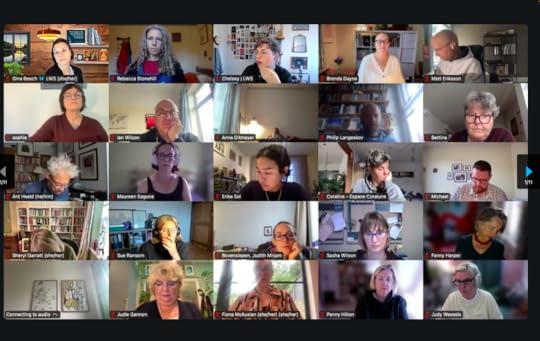
Before I start writing, I have a very quick flick through the screens and chose someone at random to pin to my screen and pretend I’m writing with them. I look at their faces, the background of their room and their clothes and imagine what kind of person they are. I send them silent good wishes to all their hopes, dreams, fears and whatever it is that they’re working on and then I get down to the business of writing.
I cannot express how much I have got done over the past few years during Writers’ Hour. So many poems have been written, so many stories have been polished, so many words have been added to my manuscript count, so many of my creations have been submitted to literary magazines, to websites, to agents . And even if I don’t manage to pen a single other word during the course of the day, if I begin the day with Writers’ Hour, it feels hugely satisfying.
At the end of the session, we leave with a one-word check out. Invariably, even if I start the session in a fog of exhaustion (thank you, chronic insomnia), I end it feeling lighter and more resolved to get on with the rest of my day. I also love hearing about the work of others and the variety of projects people are working on, from morning pages to a sticky middle section of a poem to working on reports and dissertations to putting the final flourish to a novel.
If you’re interested and live in a different time zone, amazingly The Writer’s Hour has four sessions a day that are held at 8am London, New York, Los Angeles and Auckland time zones. There are all kinds of online gatherings, events, workshops, challenges and competitions as well which I mostly haven’t been able to get involved with. There’s even a podcast. But if I do find space for more of this, I know where I’ll be going.
Click here to find out more about this incredible resource and community for writers, and a huge, heartfelt, writerly thank you to the founders, Parul and Matt.


Thank you for reading this blog post. Compliment it with an account of how one special friend reads me novels on WhatsApp in installments & a reflection on the curious world of waiting which I’m in again now, that twilight zone of having sent out your book and you’re just waiting to hear back.
The post Starting the day with writing appeared first on Rebecca Stonehill.
August 29, 2024
Friendship, Reading & WhatsApp
This blog post is dedicated to wonderful friend & reader Réne Petersen
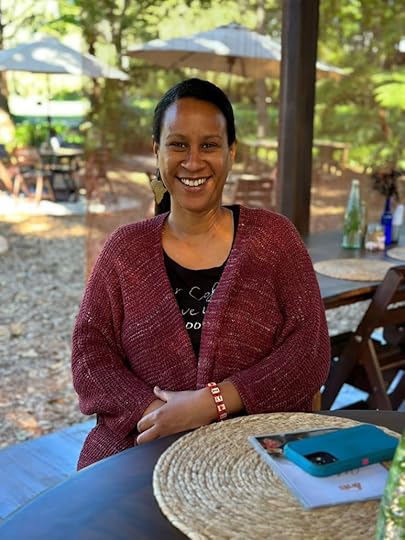
Back in 2019, I wrote on this blog about a good friend who had just finished reading me a book in chapter instalments on WhatsApp. Fast forward five years, and this lovely friend is still reading to me.
Why? Well, I’ll get to that in a minute.
First of all, as we’re on our tenth book – which deserves a bit of an acknowledgement and celebration – here are the books that she’s read me over the years, in no particular order:
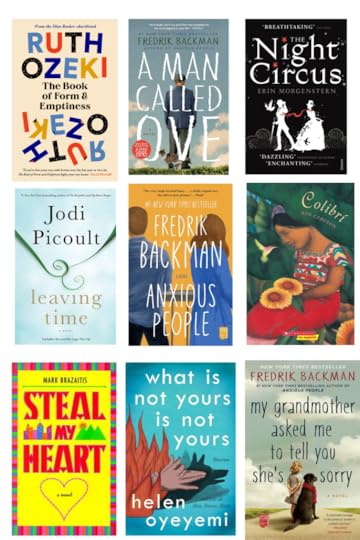
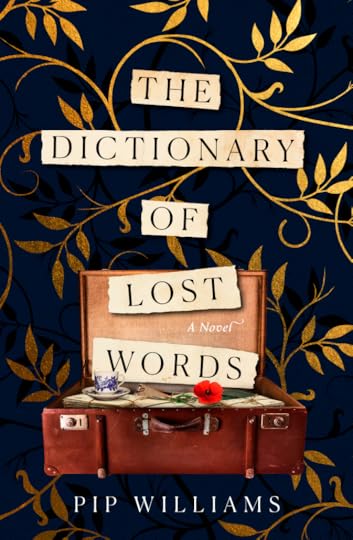
And this is what we are reading now. Well, I say ‘we’ but it’s Réne who’s doing all the work.
Let me go back a bit. Réne is originally from Cape Town but we met when we were both living in Nairobi – she was my eldest child’s class teacher and it wasn’t until towards the end of our time there that a firm friendship was formed between us. If I’m being very frank, we got extremely drunk together one night and that was that really. We laughed and laughed and laughed and have been good friends ever since. We did, of course, also bond over our shared love (read: obsession) with books.
But then Réne left Nairobi, and we did too and we were ended up in lands far from one another. She now lives in Guatemala where she still teaches, a country that is close to my heart as this is where I met my husband. It has been far, far too long since we’ve seen one another. It actually breaks my heart a little. But we’ve managed to stay in touch and it is truly the biggest treat and gift to open WhatsApp and see a message notifying me of a voice recording from her. I love listening to that tell-tale clink of ice (she sometimes drinks beer with ice when she’s reading to me) and the way she can dissolve into a fit of laughter when she reads an amusing passage. I love listening to her beautiful lilting South African accent and the occasional stumbling over a phrase when she says No. Wait. Let me read that again.
Sometimes there is a long break between books and sometimes Réne goes straight on to the next one. She normally sends me a few possibilities and I tend to choose one which doesn’t have too many characters or timelines or plot-lines as I can find this hard to follow on audio. (The Night Circus, for example, I loved, but I need to go back and re-read it myself, which I will.) But this lovely tradition has stood the test of time. As you can see from the images, we really like Fredrik Backman. If you haven’t already discovered the delights of this Swedish author, do check him out. I actually think that A Man Called Ove, the very first novel Réne read me, remains my favourite. Or perhaps it’s because it was the first book, so felt really special.
So, why did Réne start reading to me? I really struggle with sleep. Chronic, sustained sleep deprivation is brutal. I don’t really have the words for it. Ok, I wrote an entire book about it, so there are some words there. But Réne knew how hard it was for me and she asked me, how can I be there for you? (This is the best question. It says: I don’t have a solution, but I want to be a good friend.) And she came up with this suggestion of reading to me. She’d never done it before, and I’d never even listened to an audio book at that stage. But it worked, as in: for Réne it proved a relaxing activity after a full day of teaching and for me, it proved really comforting to be read to.
It was also Réne who let me know during her recent visit to Nairobi that the library I started up from its humble beginnings in a shoe cupboard at the kids’ school (when I used to cart back extra suitcases of books bought from charity shops each summer) has gone from strength to strength and is now a thriving part of the school community. How that made my heart sing. And that she thought to let me know as well because she knew how much that would mean to me.
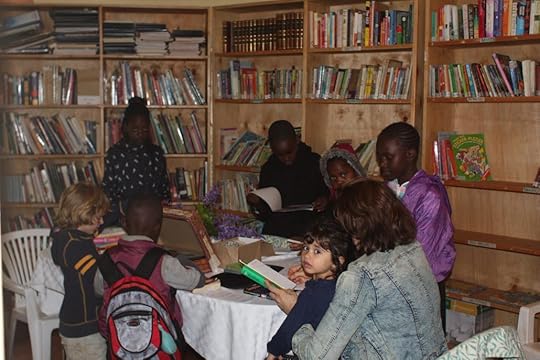
The school library around 2015, with my son on the left
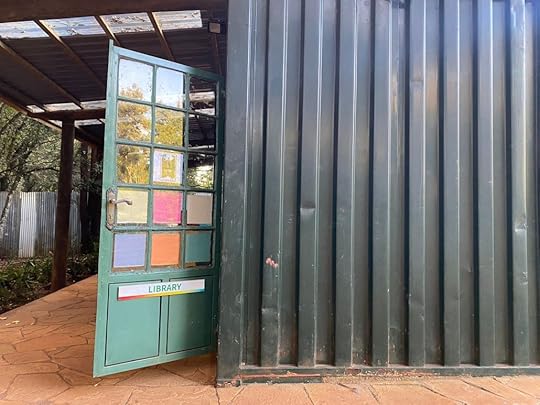
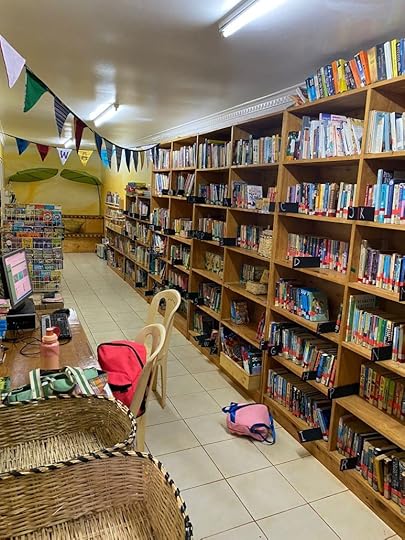
The school library in 2024, in its own dedicated cabin
And here we are, ten books on and whole worlds of stories between us. We have travelled from suburban Stockholm to the wilderness of Botswana; from Lago Atitlán in Guatemala and into the magical world of Le Cirque de Reves. Réne reading to me has taught me so many things. For example, it has taught me how to ask that question, how can I be there for you? It has helped me to be kind to myself, giving myself permission to just stop and curl up on the sofa and close my eyes and let her words paint pictures. I mean, we all loved being read to when we were children, right? Just because we grow up, doesn’t mean we love it any less, we just don’t often have this opportunity. So how lucky am I to have someone read to me in this way?
So, Réne, muchísimas gracias from the bottom of my bookish heart for your time, for your care, for your love of the power of story. And for your very special friendship.

Thank you for reading this blog post. Compliment it with my first blog post from 2019 writing about Réne reading to me or my favourite five reads from 2023.
The post Friendship, Reading & WhatsApp appeared first on Rebecca Stonehill.
August 17, 2024
Publication of poems in Dodging the Rain
A couple of weeks ago I had two poems published in an online literary journal, Dodging the Rain. I’d like to say a few words about both of these poems to give you some background.
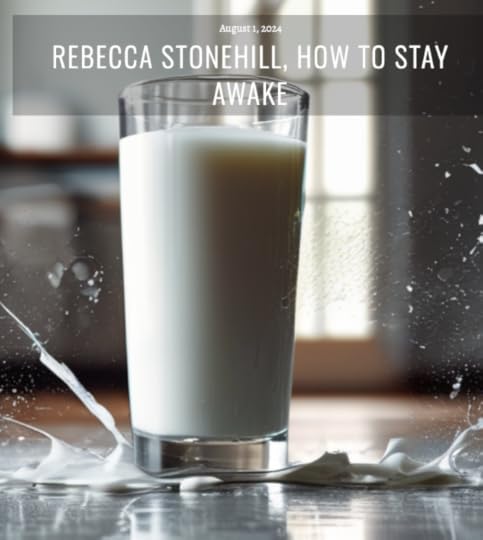
The first poem, Milk, is a true memory from my childhood. It does feel important to say, however, that this was not a common occurrence. My parents separated when I was young but I was in the fortunate position that they remained good friends, all the way to the end of my father’s life. We even all went on holiday together. I’m sure one of the reasons why this memory is so vivid is precisely because it was so rare. I didn’t grow up in a violent household and whilst my father could lose his temper (which human out there doesn’t?), my mother was really calm and I don’t remember her often raising her voice.
The second poem, How to Stay Awake, is inspired by my challenges at night I often have in sleeping. I’ve wrestled with chronic insomnia now for almost two decades and it’s often when it’s quiet and still at night that my mind, frustratingly, comes alive and starts thinking about niggles from the day, world events and personal situations. I often sit up in my bed and meditate to try and regulate my mind back to a state of equilibrium – sometimes this works but often it doesn’t.
War seems to be a constant in this world, but I can’t deny that the current conflict in Gaza has disturbed me hugely and doesn’t help me rest easy at night. In this second poem, I remember a conversation I had as a young person with my grandmother about the Holocaust and why she didn’t do anything when she knew what was happening. The parallels are both ironic and heartbreaking. It’s worth stating that I am of Jewish heritage, so I’d like to say #CeaseafireNow and #FreeTheHostages
Thank you for reading this blog post. Complement it with reading my poem about refugees and asylum seekers, Beneath the Same Sun & my prize winning poem, Tripoli Dreaming, which charts memories of an elderly immigrant’s earlier life in Libya.
The post Publication of poems in Dodging the Rain appeared first on Rebecca Stonehill.
June 18, 2024
My Defence Statement in Court
What is an activist? It can be so many things. We don’t have to glue our hands to the pavement or abseil down bridges with huge banners (though of course, we can also do that). I believe that if we are actively engaged in reflecting on where our world is hurting and trying to remedy that and be part of the solution rather than the problem, we are activists. We must all be activists. Each and every one of us are needed.
Last year, I was an activist with my body and heart, putting myself on roads to plant my flag that screamed Our earth is suffering. Our current systems are not working. This year, my activism is building a novel about four female activists, word by word, hope by idea by vision.
Yesterday I was in Stratford Magistrates Court in London with two other incredible activist women I’m proud to know, to be tried for my first arrest in June 2023. The judge has not yet come to a decision and we will receive our verdict in a few days time. But whether we’re found guilty or not-guilty (and I will feel not guilty, either way), the three of us stood up in court and spoke our truth. This is a version of what I said:
My name is Rebecca. I am a 46 year old writer, teacher, wife and mother to three amazing teenagers. My youngest child is 13. He loves cycling, scouts, camping and making fires. My middle child is 16. She loves drama, singing, making clothes and drinking bubble tea. My eldest is 17. She is always reading, playing instruments and is studying sciences for A levels which she is passionate about and hopes to go to university next year to study biology further.
When my husband and I decided to have children, we knew we had a duty of care to protect them. And this eldest daughter, whose name is Maya, asked me last year how we can protect who and what we love when we are facing climate collapse. She urged me, begged me, to stop talking about how worried I was about the climate emergency and actually do something about it.
In the year 2050 Maya will be 44, not much younger than what I am now. According to the last IPCC report, by then we will have far exceeded the supposedly ‘safe’ upper limit of 1.5 degrees temperature rise above pre-industrial levels. Far more likely we’ll be at 2 degrees and over a billion people will have been displaced from their homes. Will Maya be one of them?
By 2070 Maya will be 64 and most probably we’ll have reached 3 degrees. This will leave around one third of the global population living in extreme heat. The Amazon rainforest ecosystem, the great lungs of the earth, will most likely have collapsed.
By 2090 Maya will be 84, close to the age of her grandparents. By now we’ll be at 5 degrees which is described as unliveable. A planet that may be able to sustain certain species, but not humans.
Each generation is given two things: 1) The gift of this living breathing world and 2) The duty to keep it safe. This contract has been broken, and it’s happened on our watch.
In June last year I slow marched down Hangar Lane as is my legitimate right to protest under Articles 10 and 11 of the European Convention of Human Rights. I was there to raise awareness of the climate and ecological emergency, NOT to get arrested. We didn’t glue ourselves to anything or lock on. We kept moving, were peaceful and made no noise. We had all attended a non-violence training to ensure everything was kept peaceful, wore hi-vis jackets so we could be seen and had amongst our group highly trained de-escalators. I accept that I didn’t get off the road when asked to by PC Farooq. I spent under 30 minutes in total on a very busy road which always experiences high levels of delays anyway at rush hour. I hate disrupting people. I’m conflict averse and have never been charged with a crime before. I respect law and order and I’m also terrified by how much all of us should fear the breakdown of this that is to come on our current trajectory.
Do I regret my actions? I regret inconveniencing people, but I don’t regret stepping up. No blue lights were blocked. PC Farooq stated that I needed to move onto the pavement and would arrest me under a Section12, presumably bc I was causing a ‘more than minor disruption’ which would make a Section12 necessary. With all due respect to him, because he was kind and polite throughout, I do not accept this. Nearly 10 million people live in London. On any normal day in this area it is common to be delayed by an hour or more. This was NOT more than minor disruption.
To find us guilty today is to criminalise good, moral, thoughtful citizenship. When I was waiting to go into the police station, I talked to the Chief Inspector about Norfolk where I was from and from where he’d recently been on a cycling holiday. He actually said – and I quote – we need to keep these places beautiful so you people need to keep doing what you’re doing. I know I have no proof of this, but I am asking you to take my word as I am here to tell the truth today. This is the same Norfolk that in the heatwave summer of 2022 that’s been likened to the Blitz, dozens of hectares of Wild Ken Hill, a wildlife reserve that often featured on Springwatch suffered devastating damage from wildfires and countless mammals, reptiles, amphibians and rare birds were killed.
In the words of Nelson Mandela, ‘Sometimes it falls upon a generation to be great.’ Well, history is calling us from the future to be great and we all have a choice, including you when you cast your judgement on us. If you find us guilty today, what or who is that you are protecting? Is it the ‘general people’ of London? No, I’ll tell you what it is: you will be protecting wildfires, floods, sea level rise, starvation, vast suffering and earth system breakdown. And I want to be able to tell Maya and my other children and all the young people that I love that I at least tried. And you should do the same.

Thank you for reading this blog post. Compliment it with reading In Defence of Life and Love , the poem I wrote during the week of my first arrest in London that I am being currently tried for in court & Lessons in Weariness, a poem written in response to my third arrest last year.
The post My Defence Statement in Court appeared first on Rebecca Stonehill.