Rebecca Stonehill's Blog, page 69
October 22, 2014
Beebopsbooks

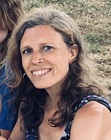
Naomi & ‘Beebop’ (Livia) at Delamere Forest, celebrating the Gruffalo’s 15th Anniversary
Naomi writes a blog called Beebopbooks which promotes a love of children’s literature and reviews various books for children and their parents. Naomi has kindly agreed to guest blog today, talking about her passion for children’s books, the importance of libraries, stories her daughter loves and also the intriguing idea of reading to rabbits as a way for children to lose their inhibitions whilst reading aloud. Many thanks indeed, Naomi and Beebop 
“Reading has always had a special place in my heart. From sitting on my nan’s knee, saying the words along with her, reading under the desk in school instead of doing maths, to the adult me reading on my way home from work. Books have been a motivator, an escape and a journey. I’m sure most of us have memories of reading as children, often when life moved at a slower pace and it seems a shame to lose those potential memories in children today.
A focus on reading has been on the decline in schools for quite some time. Despite the Ofsted recommendations in 2012, to promote “reading for enjoyment for all”, a love of books has taken a back seat to achieving academic results and reading purely to achieve target grades. The closure of public libraries due to funding cuts has also hit children hard, especially in today’s economic climate when a new book can be a luxury.
Thankfully, there are signs things are changing. I have recently been involved in a project with a local rabbit rescue and primary school. The children read a book of their choice to the rabbits, increasing their confidence in reading, communication and social skills. The rabbits had a lovely time too! A friend of mine has a stepson, William (aged 6), who finds it very difficult to read aloud to adults but reads beautifully to the animals he lives with. He says they don’t interrupt, they just listen! The experience of reading to unborn children is also being promoted as a way to increase the bond between mums (and dads!) with their babies. Babies can hear outside the womb from 23 weeks gestation and can start to recognise voices and word patterns. When babies are born and life turns completely upside down, it can be a wonderful few moments peace from health professionals, visitors and housework to sit together and read. Kerry and baby Fred, 14 weeks, are currently working their way through Roald Dahl! I regularly take my daughter to our library read and rhyme sessions. We sing some rhymes, make a racket and then listen to a story. We’ve been going since she was 3 and a half months old and to be honest, it started as a way to just get out of the house. However, I have seen her learn to grasp instruments to join in with rhymes, pay avid attention to the story being told and smile when being read to. Now she is older, I’ve seen her try to turn pages, reach out to touch the illustrations and sit forward to grab a book. One occasion that especially sticks out in my mind is, when queuing (for a long time) in our local children’s centre, Livia decided to get a bit grumpy, along with 15 or so other children. A sleepless night coupled with a hot, noisy room doesn’t make for a happy mummy, and having already exhausted the supply of toys I’d brought with me, I rifled through a pile of books. The book I picked up was Augustus And His Smile (if you haven’t read it, you really should) and almost instantaneously, she was quiet. It was that moment when I realized that even very young children can fall in love with books.
Augustus is obviously one of our favourites, along with The Tiger Who Came To Tea and The Gruffalo. The Tiger Came To Tea was my favourite as a child so I wanted to share that with Livia and we fell upon the Gruffalo in our local library, quite by accident. We’re big Julia Donaldson fans in our house and have quite a stack to get through, so please keep an eye on our blog for reviews!
Reading to our children can be a beautiful bonding experience and will create memories for both you and your child to take forward into adult life. Reading shouldn’t just be as part of an academic process, but something to relax them, to enjoy as a pasttime and to share with the people they know and love.”
Follow Naomi’s wonderful blog, Beebopsbooks for some great book recommendations for little ones, like her facebook page and follow her on twitter.
The post Beebopsbooks appeared first on Rebecca Stonehill.


October 20, 2014
Vintage Peer Gynt Storybook
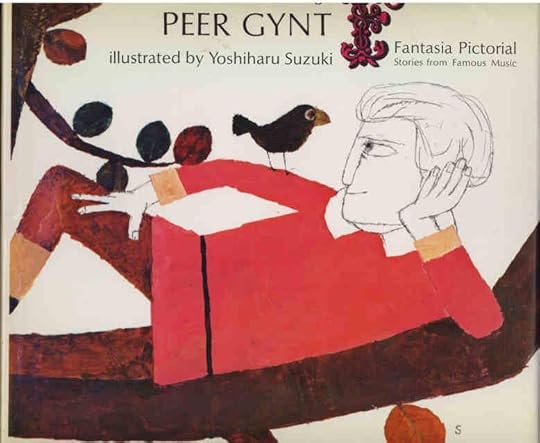
As a child, I loved to be read Yoshiharu Suzuki’s (Japanese Illustrator) version of Swan Lake. His delicate, almost childlike but compelling drawings drew me into the world of Odette and Prince Siegfried and made watching the ballet performance many years later that bit more meaningful. Fast forward to the more recent past, I came across another of Suzuki’s books whilst rummaging in a charity shop. This one is Grieg’s Peer Gynt, a depiction of the the play that inspired Grieg’s musical interpretation of Ibsen’s 1867 play. Our Swan Lake book is buried in a box in storage back in the UK, but in the meantime I love reading Peer Gynt to my three. What better way to introduce young children to stories from the ballet or opera than depict the tales within the colourful and characterful pages of a storybook.

In this story, we follow the adventures of roguish, boastful Peer in Norway from kidnapping a bride at a wedding, to joining in with the festivities of devilish trolls, to escaping to Africa where his greed makes him a wealthy man before ultimately repenting of his avaricious life and finding solace in the arms of Solveig, the only girl he ever loved.

First published in 1970, this gem of a book is sadly now out of print. But you just never know what a rummage in a charity shop or second hand book shop might produce. So do keep an eye out for Peer Gynt or Swan Lake or indeed any of his other ‘Stories from famous music.’


The post Vintage Peer Gynt Storybook appeared first on Rebecca Stonehill.
October 9, 2014
The Twelve Dancing Princesses by Jane Ray

I absolutely love Jane Ray’s books for children: her illustrations, laced with gold, are sumptuous and detailed with richly decorated borders and her prose sparkles and dances. I want to share ‘The Twelve Dancing Princesses‘ with you today, adapted from the much loved fairytale from The Brothers Grimm. This book will particularly appeal to girls of all ages and has been a firm favourite in our family since buying the book after meeting Jane Ray in our local children’s bookshop (now sadly closed down), The Lion and the Unicorn, in Richmond, London.

‘They came to a garden of gold, where plump and delicious fruits hung down from the branches, burnished and bronzed.’


Jane Ray has written and illustrated a plethora of other books which I urge you to look at and also will share her love of art and story through workshops she gives as schools in the UK. I managed to get her into my children’s old school where she did a workshop on Mythical Beasts and from what I gather, they all absolutely loved it. To visit Jane’s website, click here and to see her other books click here.
The post The Twelve Dancing Princesses by Jane Ray appeared first on Rebecca Stonehill.
October 7, 2014
Pippi Longstocking
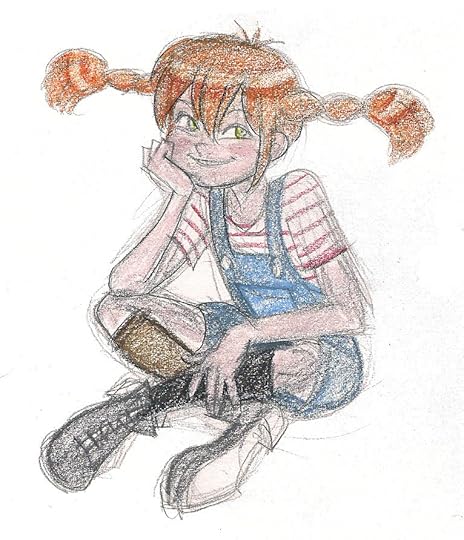
Ah, Pippi Longstocking. It is impossible not to love this girl. Gutsy, fierce and the ultimate powerful feminist, I think I’d secretly like to be Pippi. Anyway, something interesting happened yesterday whilst doing a Pippi Longstocking workshop for my Magic Pencil after-school club. One of the girls who has been coming along for some time, I’ve found it difficult to engage her. I don’t feel she doesn’t want to be there, but I do think the group discussions and writing activities are a challenge for her which is, of course, no bad thing. However, when I introduced our friend Pippi Longstocking yesterday and read a chapter of her book preceding a writing activity, this girl couldn’t stop laughing. It was honestly the most animated I have ever seen her.
She had never heard of Pippi Longstocking before yesterday which I was a little surprised to hear, but why, really, should she have done? Her creator Astrid Lindgren was Swedish, born in 1907 and Pippi, one of Sweden’s most famous exports may be known and loved across Europe and North America but far less so the rest of the world. When I told this same girl what she had missed in the previous session, a workshop based around Alice in Wonderland’s swallowing of the ‘Drink Me’ potion, again, she looked fairly blank. My first reaction was surprise as Alice, I was sure, was known the world over. But of course, this attitude revealed a great deal more about me and far less about the girl in question. Because yes, Pippi Longstocking and Alice in Wonderland are inspiring, strong, independent fictional characters but does Kenya have its own host of strong female role models? Of course it does, I just don’t know about them and I really should.
Three generations of Kenyan school children have grown up reading the adventures of Enid Blyton’s Famous Five, set in a distant time and place, talking in a strange dialect and having the kind of adventures that are very difficult for kids here to relate to. As Chimamanda Ngozie Adichie, the Nigerian writer, talks about so eloquently in her TED talk ‘The danger of a single story’ (which I urge you to watch), a person’s authentic voice (in writing and other forms) can only be found if they eschew the myth of a single story and start to create from one’s own reality and truth.
This has spurred me to dig deeper into the rich storytelling tradition of the African continent, particularly in Kenya. But in the meantime, if Pippi Longstocking and her exploits can amuse and inspire, then that makes me very happy. At the end of the writing session yesterday, this ten year old girl sidled up to me and whispered ‘Can I borrow the book?’ This is the first time she has asked to borrow a book the whole time she’s been coming to the writing club and as she walked away, before she’d even got in the car she had her nose buried in it. Good old Pippi.
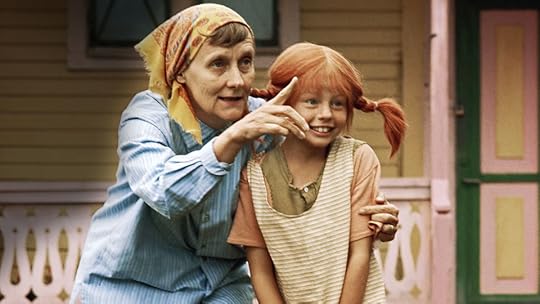
Astrid Lindgren and ‘Pippi Långstrump’ during the making of the 1969 film
The post Pippi Longstocking appeared first on Rebecca Stonehill.
October 6, 2014
Guest Post for Tony Riches
http://tonyriches.blogspot.com/2014/1...
Tony Riches
October 3, 2014
Philip Pullman’s Alethiometer
Without this being a conscious choice, my monday afternoon creative writing groups seem to have divided into girls and boys as my after-school club is a group of girls and then I go on to do another session with boys. Now normally I am not in to dividing genders into these artificial, single sex groups. However, this has naturally evolved for me on my monday afternoons and I can’t deny that I’ve really enjoyed observing where this has taken us. I feel that eleven year old boys can quite often be at the age where they are turned off reading and writing…and poetry? Oh, PL-ease (Truth be told, I have yet to convert them to poetry…but I’ll get there if it’s the last thing I do!). So what I find is that I have to employ some different tactics with them, in a way I find I don’t really with the girls, to interest and engage them.
I’m sorry if this sounds like I’m gender stereo-typing and of course I’m not saying that girls can’t enjoy these themes as well, but here are some examples of what I’m talking about: shrinking potions, sci-fi, time-machines, monsters, espionage, battles, gore and toilet-humour (especially toilet humour.) With these kind of themes in mind, last week with my group of boys, I structured a session around an ‘alethiometer’. If you have read Philip Pullman’s ‘Northern Lights’, you’ll know what an alethiometer is (and if you haven’t, I urge you to do so, I’m currently reading it with my 8 year old and it’s a breathtakingly good book). ‘Alethia’ means truth in Greek and an alethiometer is essentially a truth-reading device which Lyra, the novel’s heroine, is given to find out for herself its purpose. Here’s what it looks like:
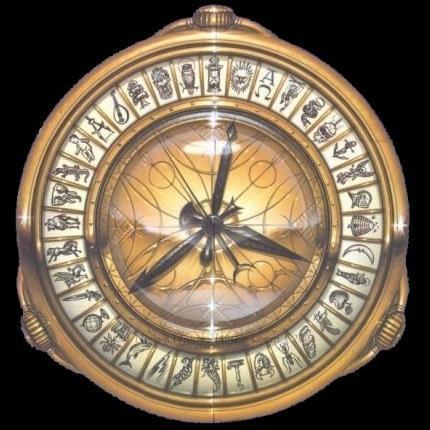
I gave the boys a big print-out of the alethiometer and encouraged them to discuss several ideas, such as which symbol represented them and which would be their truth and their untruth. I then asked them what it might be used for before they finally did a piece of writing whereby they imagined a parallel fantasy world in which the alethiometer would be used on a regular basis.
Ok, so there was no toilet humour here  However, there were lots of opportunities for the boys to stretch their imaginations into parallel worlds and I was really excited by what they came up with.
Speaking of Philip Pullman, here is a fascinating article he wrote a while ago on why he doesn’t agree with age-banding on books, a sentiment I whole-heartedly agree with.
The post Philip Pullman’s Alethiometer appeared first on Rebecca Stonehill.
October 2, 2014
Ndiritu Wahome spins some fairytales
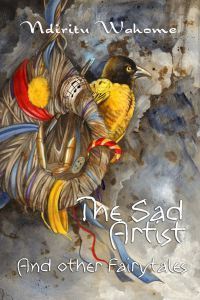 I met Ndiritu Wahome at Storymoja Literature Festival in Nairobi and as I’m a big fan of writing for children, it’s great to come across people here in Kenya who write for a younger audience, particularly if their writing is a shift away from the mainstream. Born in 1987, Ndiritu has been writing since he was thirteen and his latest book, The Sad Artist and Other Fairytales delves into the genre of magic realism through the lives of different people across society, for example the Artist, the Politician, the Businessman, the Young Man and the Child. He says that ‘…in their pursuit for success, each of the characters is faced with a different set of challenges, diverse set of lessons and dissimilar paths, which all lead to possible redemption.’ Ndiritu has kindly agreed to be featured on my blog and it would be wonderful if you could support him by looking at his website, buying his latest book from Amazon or Barnes & Noble and finding out more about his writing life.
In Ndiritu’s words… The Sad Artist and Other Fairytales is a collection of stories that are deeply steeped in magical realism. I sought to look at the challenges people (including Artists, like me) face. Writing as an Art is itself redeeming, liberating, and can bring in the writer a deep sense of untold joy. Yet, like the diversities in life, the art of writing can be lonely, germane, and depressive sometimes. Even then, by telling stories in a magical fantasy setting, I sought to convey the message that even in the deep contrasts of life, there is some magic in the small things we do, and all we need is to look closer into ourselves to experience these things.
Even though the tales in this book are set in the mystical world of magical fantasies, I drew a lot of inspiration from present real life occurrences. Some of the vicissitudes espoused by the characters in the story, I have, as everyone else, one way or the next experienced them. Yet, my interactions with people from different backgrounds and ages fascinated me so much, that I could not stop thinking too about these different experiences that every person goes through.
Magical fantasies are mostly perceived as childish, and one may be inclined to think this way. However, many of the stories in The Sad Artist and Other Fairy Tales are written not only for children and the young adult, but even for the grown up. The moral that weaves through the series of these stories is the idea that your dreams are valid, and can be achieved, no matter how your present reality may look like. All of us will agree that this ideal is true for adults, as it is for children.’
The target audience of The Sad Artist and Other Fairytales is for ages 13-22 but both younger and older people can also enjoy them.
‘What you ask of me is too much. Nevertheless I will think about it.
However, I must tell you something,” she said. “I have one who loves
me. He has me. We are in a serious relationship. We have been together
from the very day we were born. We have grown together, and I have
come to love him dearly.’
Adapted from the story ‘The Boy Who Loved a Girl.’
Follow Ndiritu on twitter here and facebook here.
The post Ndiritu Wahome spins some fairytales appeared first on Rebecca Stonehill.
September 30, 2014
The Pilot and the Little Prince
I was listening to the wonderful Cerys Matthews on her Sunday morning radio show on Radio 6 (if you’ve never tuned into this, I urge you to do so – it’s very eclectic music including a live session, as well as poetry and recipes!) and this week she chatted to somebody at Pushkin Press. This Press translates books, children’s included, from a number of foreign languages into English and as today International Translation Day has been celebrated, I thought I’d share one of Pushkin Press’s translated books with you. I don’t own it, but would dearly like to do so as this is the illustrated life story of Antoine de Sainte-Exupery and I’m a huge fan of his, particularly his book The Little Prince.
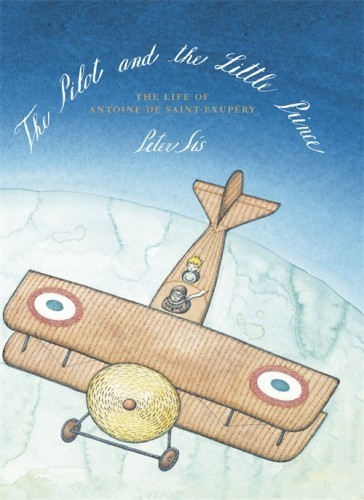
‘The Pilot and the Little Prince’ is written by Czech-born, American Peter Sís and charts the life, final flight and disappearance of Saint-Exupery: adventurer, dare-devil, aviator, writer and illustrator. Just like The Little Prince, Sís’s book can be read on many levels so works perfectly for both children and adults.
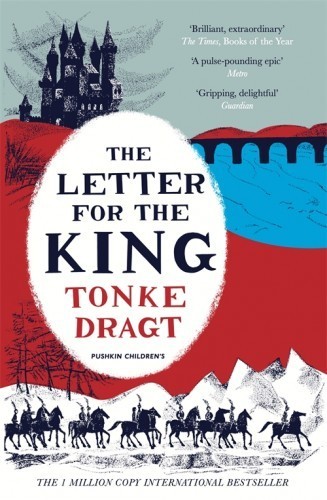
Visit the shop of Pushkin Press to see other children’s books translated to English from their original language, including the exquisitely illustrated ‘The Letter for the King’ by Tonke Dragt (translated from its original Dutch by Laura Watkinson). This book was discussed by Cerys Matthews on Sunday and the story of one boy’s battle against evil has even been named as the best children’s book of the past 50 years.
The post The Pilot and the Little Prince appeared first on Rebecca Stonehill.
September 28, 2014
Book publication party of The Poet’s Wife

We were so excited on friday night, publication day of The Poet’s Wife, that we completely forgot to take photos. Here is a single one my husband took whilst I was reading a passage from the novel. It was such a wonderful evening and just wonderful to share it with about twenty-five lovely people I have met here in Nairobi. Initially, I was feeling disappointed not to be in my native England for the launch but I’ve been overwhelmed by the support and enthusiasm I’ve received out here in my adopted country. Just as I adore Granada (and in many ways, ‘The Poet’s Wife’ is a love letter to this wonderful city), the more I grow to love Kenya, it feels very special that my next novel (which I’ve written two chapters of so far) is set in a land that is also capturing my heart.
In case you haven’t seen it, to buy The Poet’s Wife, please click this link to buy from Amazon UK and this link to buy from Amazon US. PLEASE do leave a review too – it makes a huge difference, encouraging more people to read it. Thanks so much.
The post Book publication party of The Poet’s Wife appeared first on Rebecca Stonehill.
September 25, 2014
Publication day for The Poet’s Wife!
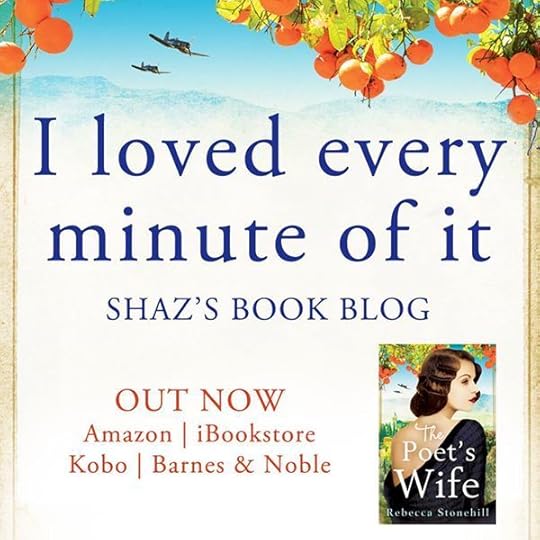
My debut novel, THE POET’S WIFE is out today! PLEASE buy it, let me know what you think, leave a review on amazon and goodreads and tell your friends and family about it. Thank you
The post Publication day for The Poet’s Wife! appeared first on Rebecca Stonehill.