Ian S. Bott's Blog, page 25
April 23, 2016
Weekend Writing Warriors April 24
Weekend Writing Warriors is a weekly blog hop where participants post eight to ten sentences of their writing. You can find out more about it by clicking on the image below.

Continuing a draft scene from my current WIP. Last week a hungry Shayla, disguised as a forestry worker from off-planet, entered a work canteen and felt her spidey senses tingle. As she started serving herself, she got clear signals that she’d somehow broken an unwritten rule...
=====
With a sidelong glance, Shayla noted the dark skin and hair of a Wala native, similar to her chosen cover identity. “Trouble with the locals?” she asked in the same tongue.
The young woman behind her nodded. “The good food is reserved for Firenzi workers.” She gestured further down the counter where cauldrons of greasy stew simmered. “We get to enjoy their misbegotten take on chakchouka.”
For the first time, Shayla saw that the scattering of workers around the room was anything but random. There were no signs, no barriers, but the tables were clearly segregated with the prime seats near the windows occupied exclusively by Firenzi crews.
From the corner of her eye, she also noticed the cashier making what he probably imagined were discreet hand signals, and a pair of thugs lounging near the door getting to their feet. Bloody amateurs.
=====
Writing update: I’m deep into drafting The Ashes of Home, sequel to Ghosts of Innocence. So far, I’m keeping to schedule, and just today passed the 40k word mark.
Continuing a draft scene from my current WIP. Last week a hungry Shayla, disguised as a forestry worker from off-planet, entered a work canteen and felt her spidey senses tingle. As she started serving herself, she got clear signals that she’d somehow broken an unwritten rule...
=====
With a sidelong glance, Shayla noted the dark skin and hair of a Wala native, similar to her chosen cover identity. “Trouble with the locals?” she asked in the same tongue.
The young woman behind her nodded. “The good food is reserved for Firenzi workers.” She gestured further down the counter where cauldrons of greasy stew simmered. “We get to enjoy their misbegotten take on chakchouka.”
For the first time, Shayla saw that the scattering of workers around the room was anything but random. There were no signs, no barriers, but the tables were clearly segregated with the prime seats near the windows occupied exclusively by Firenzi crews.
From the corner of her eye, she also noticed the cashier making what he probably imagined were discreet hand signals, and a pair of thugs lounging near the door getting to their feet. Bloody amateurs.
=====
Writing update: I’m deep into drafting The Ashes of Home, sequel to Ghosts of Innocence. So far, I’m keeping to schedule, and just today passed the 40k word mark.


April 16, 2016
Weekend Writing Warriors April 17
Weekend Writing Warriors is a weekly blog hop where participants post eight to ten sentences of their writing. You can find out more about it by clicking on the image below.
Last week a hungry Shayla, disguised as a forestry worker from off-planet, entered a work canteen and felt her spidey senses tingle.
=====
Joining the line at one end of the servery, Shayla flashed her work badge to a sleepy cashier and took a mess tray. She glanced along the rows of hot trays, and spooned a portion of sweet fries.
Her scalp crawled once more at the sudden silence nearby. The cashier had miraculously wakened. “Umm, you can’t ...” He stammered to a stop when Shayla treated him to her best ice warrior glare.
“Hey,” someone hissed behind her. “I guess you’re new here.” The speaker used a dialect common on the Wala home world.
=====
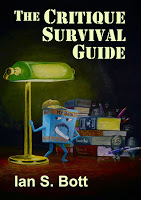 Just a reminder, The Critique Survival Guide is a **free** e-book packed with tips for writers to get the best out of the (sometimes harsh and intimidating) process of being critiqued.
See the links in the side bar...
Last week a hungry Shayla, disguised as a forestry worker from off-planet, entered a work canteen and felt her spidey senses tingle.
=====
Joining the line at one end of the servery, Shayla flashed her work badge to a sleepy cashier and took a mess tray. She glanced along the rows of hot trays, and spooned a portion of sweet fries.
Her scalp crawled once more at the sudden silence nearby. The cashier had miraculously wakened. “Umm, you can’t ...” He stammered to a stop when Shayla treated him to her best ice warrior glare.
“Hey,” someone hissed behind her. “I guess you’re new here.” The speaker used a dialect common on the Wala home world.
=====
Just a reminder, The Critique Survival Guide is a **free** e-book packed with tips for writers to get the best out of the (sometimes harsh and intimidating) process of being critiqued.See the links in the side bar...
April 9, 2016
Weekend Writing Warriors April 10
Weekend Writing Warriors is a weekly blog hop where participants post eight to ten sentences of their writing. You can find out more about it by clicking on the image below.
Last time I introduced a mysterious character that Shayla was hunting, just because I liked the description. This time I thought I’d backpedal a few pages and show Shayla, working undercover, on his trail.
=====
Shayla wheeled the trike into a gap at the side of the road, lined up with a half dozen assorted work vehicles, and dismounted. It was still early for lunch, but her stomach growled in protest. Stretching cramped limbs, she climbed steps up to the canteen and pushed through swing doors into the darkened shed.
Suffocating mugginess engulfed her after the cold crisp outdoors. A heady blend of spice and charcoal washed her nostrils setting her stomach gurgling again.
Rows of mess tables stretched into the distance. The only natural light came from windows behind her overlooking the street. Elsewhere, yellow ceiling lights served only to enhance the shadows at the edge of Shayla’s vision. Small huddles of early diners covertly regarded her as she made her way towards the serving counter near the far end of the room. The nape of her neck prickled.
=====
Last time I introduced a mysterious character that Shayla was hunting, just because I liked the description. This time I thought I’d backpedal a few pages and show Shayla, working undercover, on his trail.
=====
Shayla wheeled the trike into a gap at the side of the road, lined up with a half dozen assorted work vehicles, and dismounted. It was still early for lunch, but her stomach growled in protest. Stretching cramped limbs, she climbed steps up to the canteen and pushed through swing doors into the darkened shed.
Suffocating mugginess engulfed her after the cold crisp outdoors. A heady blend of spice and charcoal washed her nostrils setting her stomach gurgling again.
Rows of mess tables stretched into the distance. The only natural light came from windows behind her overlooking the street. Elsewhere, yellow ceiling lights served only to enhance the shadows at the edge of Shayla’s vision. Small huddles of early diners covertly regarded her as she made her way towards the serving counter near the far end of the room. The nape of her neck prickled.
=====
April 3, 2016
Unblocking characters
Whereas the setting helps frame the action and avoids it all happening in a vacuum, the characters are what really bring the story to life. Often, when I find myself blocked, it’s because I don’t properly understand my characters.
At this point, the avid plotters will be wagging their fingers at me and gesticulating to their inch-think binder of lovingly alphabetized five-page-long character sheets. “Fill these out,” they cry, “and all will be well.”
“Nuts!” I reply. “That doesn’t work for me.”
Now, it’s important to remember that there is no right or wrong here. This is a game of try stuff out and find what works for you. One writer’s block-busting technique will often be another writer’s Muse-poison. You might find character sheet templates a boon, I happen not to.
What I do pay attention to is what drives a character. That may be rooted in their backstory, their affiliations, a particular trait ... when I get stuck, one of the things to explore is whether I’ve got a good handle on main and secondary characters’ drivers.
Sometimes it’s possible to simply sit down and list things out - the character sheet approach - but sometimes a bit more subtlety is needed to trick characters into revealing themselves.
I’ve blogged before about character interviews. I find this a great tool to help get into a character’s mind, and some surprising insights can come out. Things that you, the writer, never knew were there.
A related approach is to summarize the main gist of the story in a few paragraphs from each character’s point of view. Bring it alive to them - what is their part in it?
My current WIP was stuck in limbo for ages until I tried a variation on this theme. I listed out the main individuals and alliances, and for each one wrote out: what was motivating them, what their goal was in the story, and how they planned to reach that goal. That has since developed into a changing chart over time as goals collide and unfolding events either help or thwart them. Understanding the original motivation and goals is helping to flesh out realistic responses to events as they play out.
I’m sure there are lots of other tricks to help unlock a character’s mind. What suggestions do you have?
At this point, the avid plotters will be wagging their fingers at me and gesticulating to their inch-think binder of lovingly alphabetized five-page-long character sheets. “Fill these out,” they cry, “and all will be well.”
“Nuts!” I reply. “That doesn’t work for me.”
Now, it’s important to remember that there is no right or wrong here. This is a game of try stuff out and find what works for you. One writer’s block-busting technique will often be another writer’s Muse-poison. You might find character sheet templates a boon, I happen not to.
What I do pay attention to is what drives a character. That may be rooted in their backstory, their affiliations, a particular trait ... when I get stuck, one of the things to explore is whether I’ve got a good handle on main and secondary characters’ drivers.
Sometimes it’s possible to simply sit down and list things out - the character sheet approach - but sometimes a bit more subtlety is needed to trick characters into revealing themselves.
I’ve blogged before about character interviews. I find this a great tool to help get into a character’s mind, and some surprising insights can come out. Things that you, the writer, never knew were there.
A related approach is to summarize the main gist of the story in a few paragraphs from each character’s point of view. Bring it alive to them - what is their part in it?
My current WIP was stuck in limbo for ages until I tried a variation on this theme. I listed out the main individuals and alliances, and for each one wrote out: what was motivating them, what their goal was in the story, and how they planned to reach that goal. That has since developed into a changing chart over time as goals collide and unfolding events either help or thwart them. Understanding the original motivation and goals is helping to flesh out realistic responses to events as they play out.
I’m sure there are lots of other tricks to help unlock a character’s mind. What suggestions do you have?
March 31, 2016
Free and bargain books
The Support Indie Authors group is at it again, hosting 40 authors offering over 60 free and bargain e-books.

The offer is on all day April 1, but it's no joke! There are books to be grabbed either free or discounted to $0.99. Visit the SIA site for details.
The offer is on all day April 1, but it's no joke! There are books to be grabbed either free or discounted to $0.99. Visit the SIA site for details.
March 27, 2016
Weekend Writing Warriors March 27
Weekend Writing Warriors is a weekly blog hop where participants post up to eight sentences of their writing. You can find out more about it by clicking on the image below.
It’s been a while since I took part in this blog hop, and as I’m deep into drafting my next novel I thought it would be fun once in a while to drop in a snippet hot off the keyboard.
This segment is from a little way into the story. Shayla is looking for a man who’s been reported to be causing trouble, and has followed a lead to a makeshift bar in a remote forestry work camp.
=====
Shayla noticed the man even before talk in the room stilled.
It wasn’t his size that marked him out, though he could comfortably stand toe to toe with a bear. It wasn’t the startling contrast between graying, almost white hair and beard framing his florid face. It wasn’t even the motley layers of many-times-patched clothing that drew her attention.
It was his eyes, his expression. Not blank, not vacant, but not here. He steered himself to a seat in the corner, heedless of the people scurrying out of his way. For all his immense physical appearance, the man was utterly absent from the room.
For a moment, Shayla felt herself being pulled from her world and into whatever alternate reality this man inhabited, as though her presence here was a substance that could be siphoned off into a vacuum.
=====
It’s been a while since I took part in this blog hop, and as I’m deep into drafting my next novel I thought it would be fun once in a while to drop in a snippet hot off the keyboard.
This segment is from a little way into the story. Shayla is looking for a man who’s been reported to be causing trouble, and has followed a lead to a makeshift bar in a remote forestry work camp.
=====
Shayla noticed the man even before talk in the room stilled.
It wasn’t his size that marked him out, though he could comfortably stand toe to toe with a bear. It wasn’t the startling contrast between graying, almost white hair and beard framing his florid face. It wasn’t even the motley layers of many-times-patched clothing that drew her attention.
It was his eyes, his expression. Not blank, not vacant, but not here. He steered himself to a seat in the corner, heedless of the people scurrying out of his way. For all his immense physical appearance, the man was utterly absent from the room.
For a moment, Shayla felt herself being pulled from her world and into whatever alternate reality this man inhabited, as though her presence here was a substance that could be siphoned off into a vacuum.
=====
March 25, 2016
Unblocking setting
I’ve said before that I’m an extremely visual person, and this shows up in my writing process. Sometimes I can write actions and dialogue and even descriptions in a vacuum, but only up to a point. Eventually I’ll grind to a halt without something more substantial to anchor my mind.
I write best when I can picture the scene with an almost cinematic quality. When I’m struggling, it’s often because I haven’t achieved this visual clarity, and the answer is often to get out pens and paper to solidify the surroundings.
Alongside the text of the novel I accumulate a binder of maps and plans, from whole worlds, to countries, towns, and individual buildings. I blogged about this a few years ago. As well as helping overcome blocks, these sketches bring other benefits. Once I’ve committed details to paper I can be confident that future scenes in the same setting will be consistent. Fleshing out the plans beyond the obvious needs of the story also suggests incidental details to bring descriptions alive. The mood of a scene is best expressed through a choice handful of finely-observed specifics than through any volume of vague generalities.
The simple act of drawing a map is often enough to keep the writing flowing. On rare occasions I might capture more detailed setting descriptions when I want to establish a specific mood or feel, though it’s usually enough to just draw out the framework and my mind can fill in the details on the fly. I don’t generally worry about consistency at this level because a detailed description of a setting usually only pops up in one place, and I can easily refer back to the text for later consistency.
Mostly, these notes are only sketchy and partial, just enough to allow me to move on. But I’m also slowly transferring them into iDraw to publish on my website.
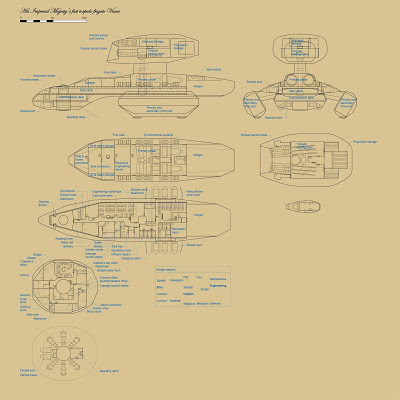 Examples like this go way beyond the needs of the story, but I’m hoping this background material will be of interest to readers.
I write best when I can picture the scene with an almost cinematic quality. When I’m struggling, it’s often because I haven’t achieved this visual clarity, and the answer is often to get out pens and paper to solidify the surroundings.
Alongside the text of the novel I accumulate a binder of maps and plans, from whole worlds, to countries, towns, and individual buildings. I blogged about this a few years ago. As well as helping overcome blocks, these sketches bring other benefits. Once I’ve committed details to paper I can be confident that future scenes in the same setting will be consistent. Fleshing out the plans beyond the obvious needs of the story also suggests incidental details to bring descriptions alive. The mood of a scene is best expressed through a choice handful of finely-observed specifics than through any volume of vague generalities.
The simple act of drawing a map is often enough to keep the writing flowing. On rare occasions I might capture more detailed setting descriptions when I want to establish a specific mood or feel, though it’s usually enough to just draw out the framework and my mind can fill in the details on the fly. I don’t generally worry about consistency at this level because a detailed description of a setting usually only pops up in one place, and I can easily refer back to the text for later consistency.
Mostly, these notes are only sketchy and partial, just enough to allow me to move on. But I’m also slowly transferring them into iDraw to publish on my website.
 Examples like this go way beyond the needs of the story, but I’m hoping this background material will be of interest to readers.
March 19, 2016
More on writer’s block
The sinking feeling staring at a blank page, and seeing it as a depressing reflection of my own mind.
Having too many thoughts flying through my mind, but they are elusive - the moment I reach to solidify one in words, it slips through my hands and I’m left grasping for the next, and the next...
Having a scene that I want to express, but unable to get past an obstacle - a word, a name, a description - and I’m writing, deleting, rewriting over and over unable to move on until I get it just right...
Finding endless excuses to avoid facing the manuscript and the prospect of writing.
Are any of these feelings familiar?
Writer’s block comes in many guises, none of them pleasant, all of them frustrating. All of them mean we are spinning our wheels not writing when we should be writing.
And there’s loads of advice and techniques out there for how to get around it. I talked last week about one of them - just keep writing - and why I don’t find it satisfactory on its own.
In order to employ “just keep writing” successfully, you need to be clear to yourself about exactly what you mean in this instance by “just keep writing” (because it can mean an awful lot of things) and understand what it is you expect to gain. More generally, people are rarely clear what’s going on when they experience writer’s block, so they try techniques in a haphazard way hoping that something will work. It’s like trying to cook a meal by pulling random implements off the shelf in the hope that one of them might prove useful.
I’ve come to the conclusion that these symptoms that we call writer’s block are simply signs of something deeper. My subconscious mind is usually (not always, but usually) telling me that I haven’t gained the necessary clarity about what I want to write. My response to this kind of block nowadays is to try to be more systematic, more scientific, in looking for the underlying issue. Rather than throw random solutions at the problem, I try to understand the problem first, and then choose a suitable tool from my toolkit to address it.
Conversely, I’ve noticed that when the words flow the easiest, I have a clear picture of the scene in my mind, of the characters involved, their goals, and their surroundings. That doesn’t mean I have everything in the story mapped out, though the larger plot can also be a stumbling block at times, that’s just the way I write. I can leap ahead and totally pants scenes that I envisage, and work out how to weave them into the big picture later.
On those occasions when I’ve been successful at meeting writing goals right through a first draft, my process includes just enough planning, plotting, and scene-setting to keep ahead of the writing curve. I try to sniff out the potential blockages and deal with them before they become a problem, or recognize when I’m hitting a sticky patch and ask myself what’s getting in my way.
Yes, sometimes I’ve also taken the advice to work on something else, to take time out. But nowadays I don’t look on that as a direct technique - as in “write something else and as a direct result you’ll miraculously find it easier to write this story”. I see it as an acknowledgment that although I have unfinished business with this story, the answer isn’t going to be forced. In other words, working on something else gives me time out so I can come back to the story with fresh eyes, but the underlying problem will still be there waiting to be solved.
What does writer’s block feel like to you, and what’s worked for you to overcome it?
Having too many thoughts flying through my mind, but they are elusive - the moment I reach to solidify one in words, it slips through my hands and I’m left grasping for the next, and the next...
Having a scene that I want to express, but unable to get past an obstacle - a word, a name, a description - and I’m writing, deleting, rewriting over and over unable to move on until I get it just right...
Finding endless excuses to avoid facing the manuscript and the prospect of writing.
Are any of these feelings familiar?
Writer’s block comes in many guises, none of them pleasant, all of them frustrating. All of them mean we are spinning our wheels not writing when we should be writing.
And there’s loads of advice and techniques out there for how to get around it. I talked last week about one of them - just keep writing - and why I don’t find it satisfactory on its own.
In order to employ “just keep writing” successfully, you need to be clear to yourself about exactly what you mean in this instance by “just keep writing” (because it can mean an awful lot of things) and understand what it is you expect to gain. More generally, people are rarely clear what’s going on when they experience writer’s block, so they try techniques in a haphazard way hoping that something will work. It’s like trying to cook a meal by pulling random implements off the shelf in the hope that one of them might prove useful.
I’ve come to the conclusion that these symptoms that we call writer’s block are simply signs of something deeper. My subconscious mind is usually (not always, but usually) telling me that I haven’t gained the necessary clarity about what I want to write. My response to this kind of block nowadays is to try to be more systematic, more scientific, in looking for the underlying issue. Rather than throw random solutions at the problem, I try to understand the problem first, and then choose a suitable tool from my toolkit to address it.
Conversely, I’ve noticed that when the words flow the easiest, I have a clear picture of the scene in my mind, of the characters involved, their goals, and their surroundings. That doesn’t mean I have everything in the story mapped out, though the larger plot can also be a stumbling block at times, that’s just the way I write. I can leap ahead and totally pants scenes that I envisage, and work out how to weave them into the big picture later.
On those occasions when I’ve been successful at meeting writing goals right through a first draft, my process includes just enough planning, plotting, and scene-setting to keep ahead of the writing curve. I try to sniff out the potential blockages and deal with them before they become a problem, or recognize when I’m hitting a sticky patch and ask myself what’s getting in my way.
Yes, sometimes I’ve also taken the advice to work on something else, to take time out. But nowadays I don’t look on that as a direct technique - as in “write something else and as a direct result you’ll miraculously find it easier to write this story”. I see it as an acknowledgment that although I have unfinished business with this story, the answer isn’t going to be forced. In other words, working on something else gives me time out so I can come back to the story with fresh eyes, but the underlying problem will still be there waiting to be solved.
What does writer’s block feel like to you, and what’s worked for you to overcome it?
March 16, 2016
Spring Break
It’s Spring Break, and I’ve taken a few days off work while the rest of the family is also off. It’s a welcome break from routine, though at times more productive than restful with various appointments lined up and domestic matters to attend to.
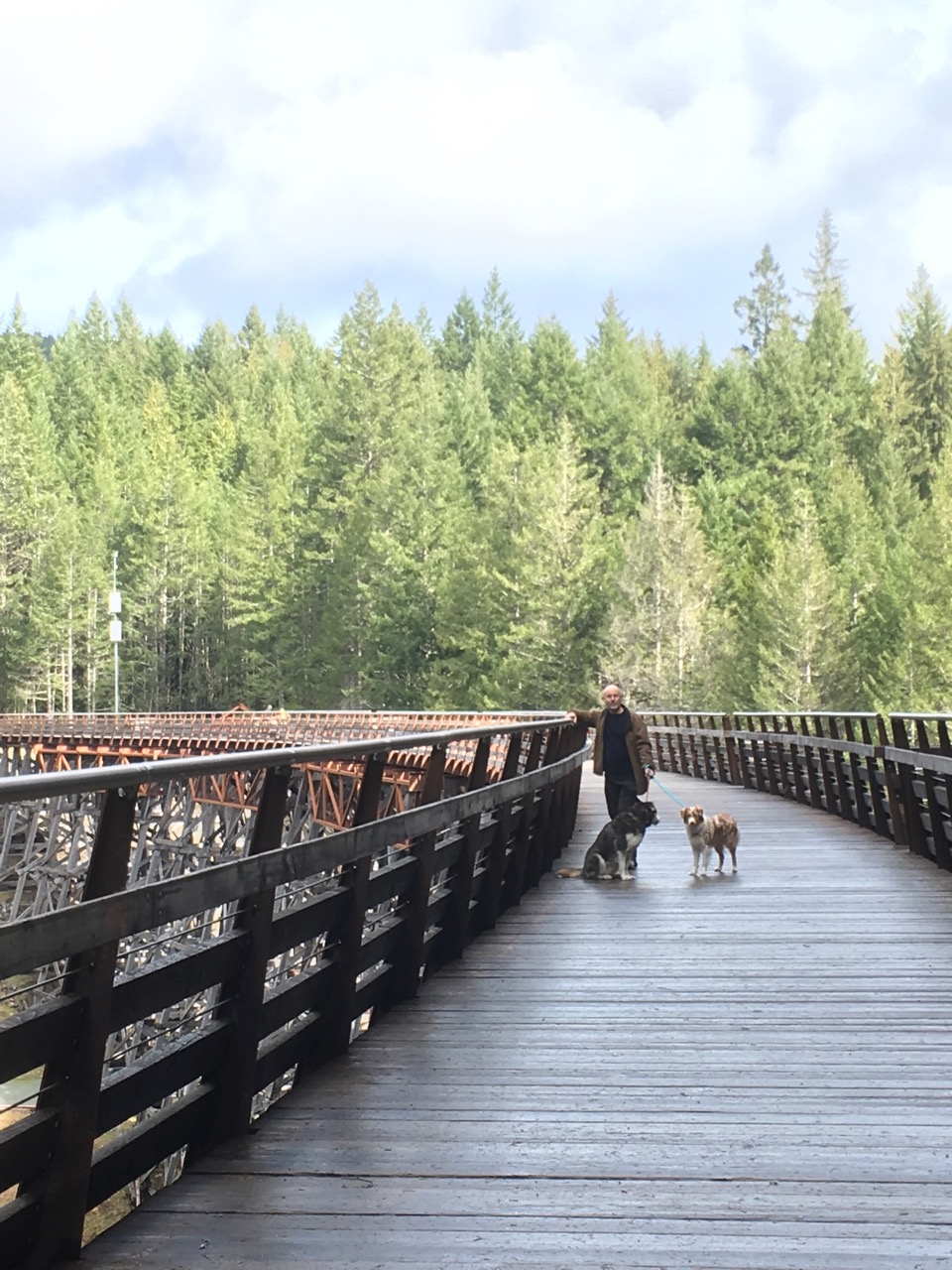
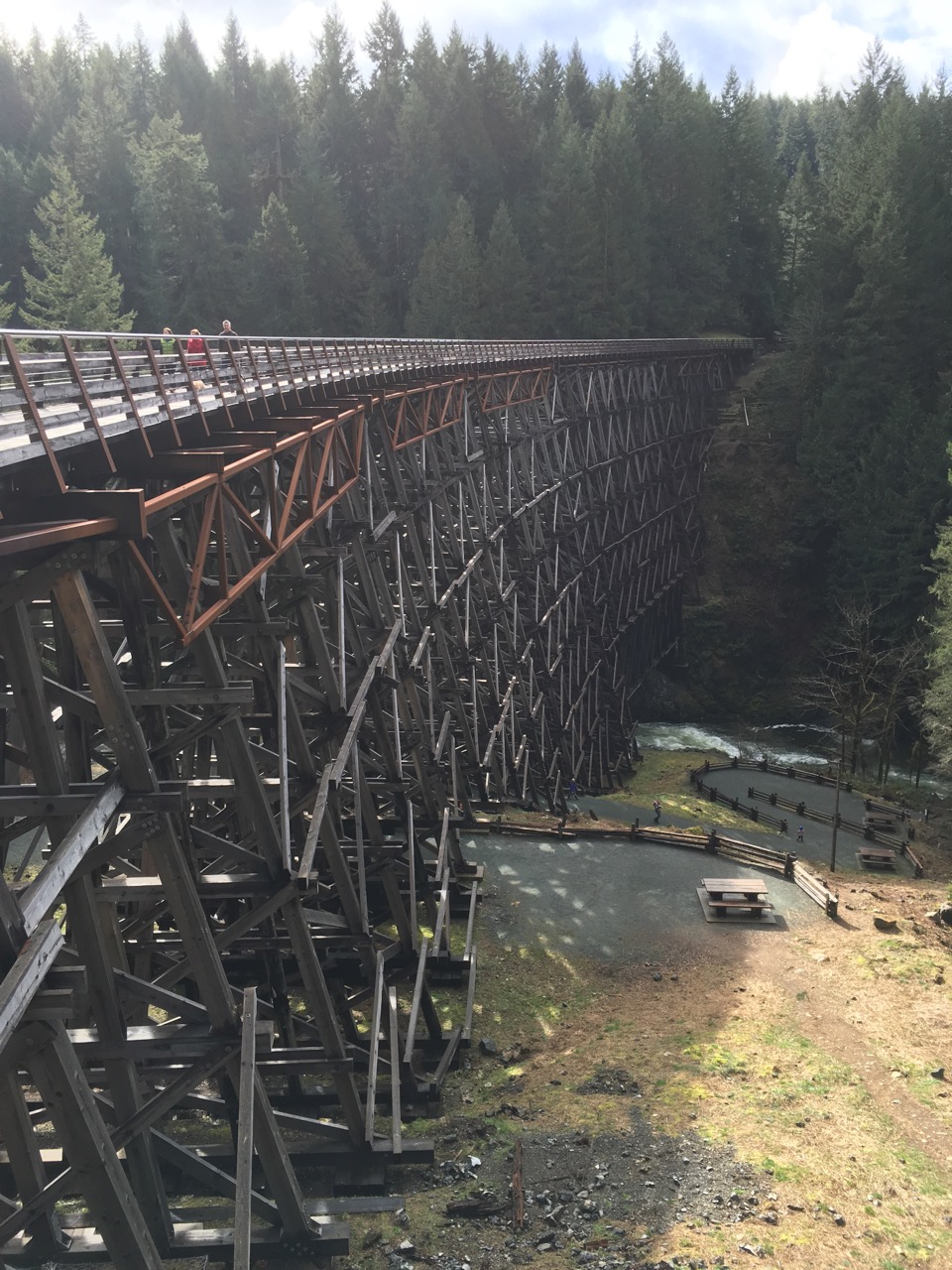
Yesterday, Ali and I took a drive a little way up island to Shawnigan Lake to visit the Kinsol Trestle. This is an old wooden railway bridge and, at 144' high, is one of the highest railway trestles in the world. Ali was very brave - she doesn’t do well with heights.
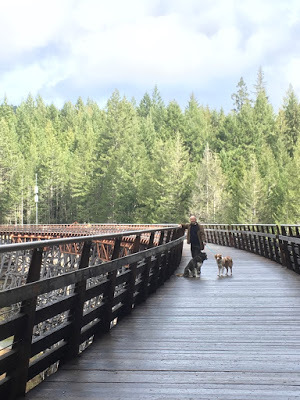 If you look closely, there's a few people down in the valley to give a sense of scale
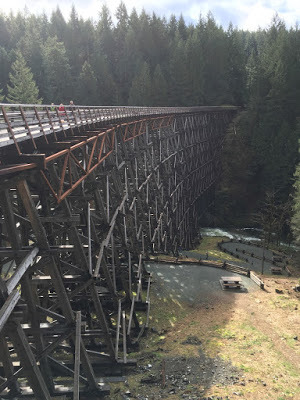 Yes that's me propping up one of the uprights

Managed to keep on track with the writing today, and we are bottling wine tomorrow.
How are you doing? Has Spring sprung yet in your neck of the woods?
Yesterday, Ali and I took a drive a little way up island to Shawnigan Lake to visit the Kinsol Trestle. This is an old wooden railway bridge and, at 144' high, is one of the highest railway trestles in the world. Ali was very brave - she doesn’t do well with heights.
 If you look closely, there's a few people down in the valley to give a sense of scale
 Yes that's me propping up one of the uprights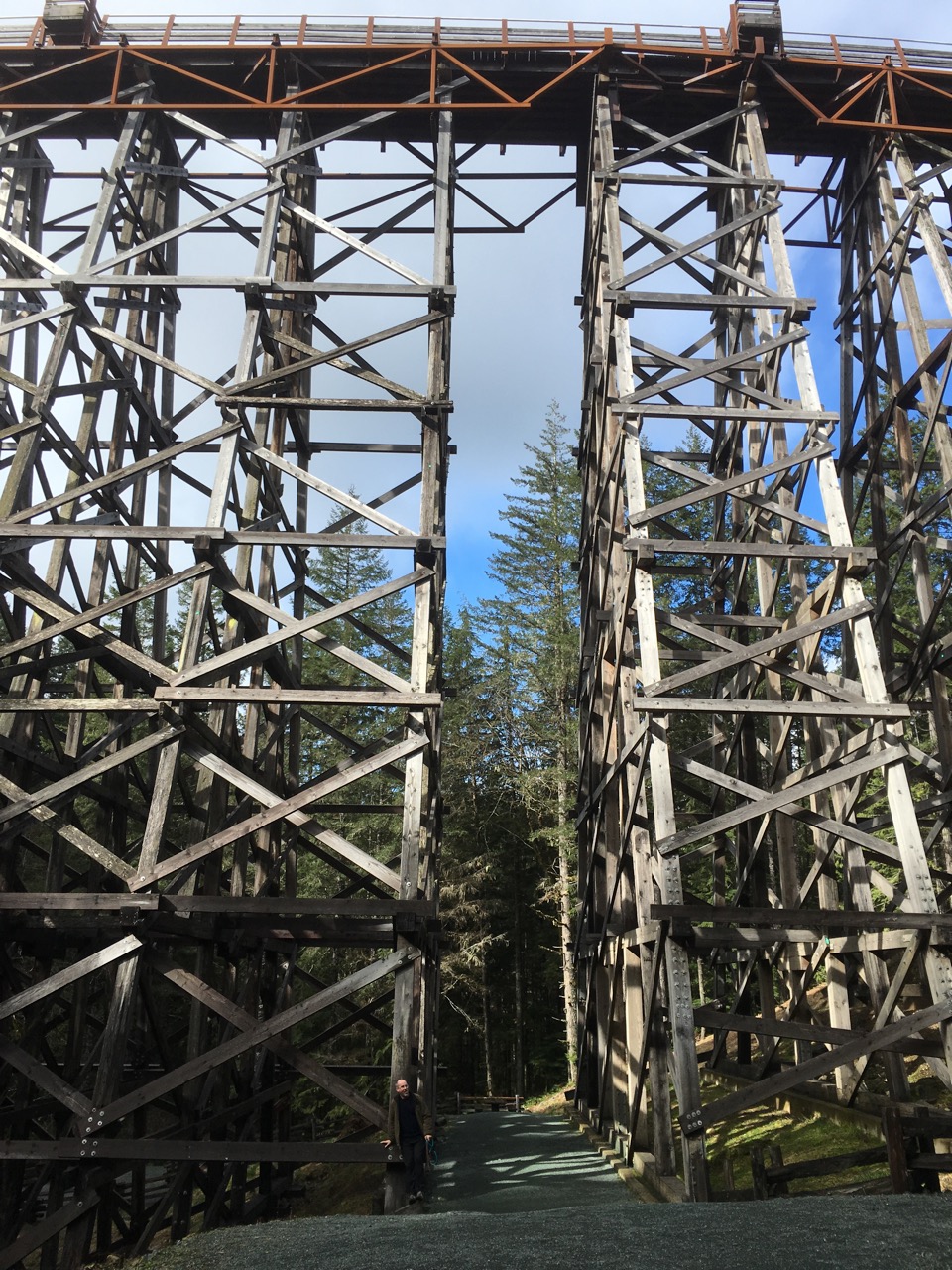
Managed to keep on track with the writing today, and we are bottling wine tomorrow.
How are you doing? Has Spring sprung yet in your neck of the woods?
March 12, 2016
Just keep writing...
And why that doesn’t cut it for me
There’s lots of writing advice that sounds simple on the surface, but is often misunderstood and actually opens up some pretty deep discussions at times. “Kill your darlings” and “Write what you know” spring to mind.
Now I’m into drafting a new novel, the dreaded writer’s block is always out there, on the periphery, haunting my efforts. I’ve experienced it before and it’s not fun.
Just want to say, I’m not in that position right now. I’ve just completed a third week staying on or ahead of target, long may it continue.
However, a discussion on Goodreads talked about “Keep writing”, which is often touted as the panacea for writer’s block, and to which I usually respond, “Bollocks it is!” And it got me thinking about the advice, and what writer’s block looks like, and how I’ve got around it or avoided it myself. I’ll come back to the latter in future posts, but ...
First off, the advice itself
What does it mean when people say “Keep writing”? Superficially it seems to suggest keep putting words down on paper and blast your way through the block. That’s the bit that I have trouble with because that just doesn’t work for me. It does work for some people (and good for them - I keep saying the only universal rule in writing is “do what works”, so if it works, it works) just not for me.
I’ve come to the conclusion that when I experience writer’s block, it is often a symptom of something deeper. It usually means that I don’t have a clear enough picture of something important, and that is causing a logjam. Logjams are typically not solved by piling on more logs.
But “keep writing” is more nuanced than that. There are many variations on the “keep writing” theme, and my “Aha!” moment was to realize that these variations are quite distinct tools that have all got lumped together under the “keep writing” banner. And on reflection I find I’ve done the variations myself, so perhaps it ain’t all that bad after all.
It can be used to mean...
Develop good writing habits: Not bad advice. However, given that the actual writing part of a novel is only about 10% of the total effort, I prefer to think of it as be professional and keep doing something productive towards your writing goals. Right now for me, yes, that means actual writing. But at other stages of the process it could equally mean research, critiquing, revising, preparing for publication...
Employ one of a range of writing techniques: Some people like to free-write to get their creative juices flowing, and sometimes the “keep writing” advice is given in that kind of vein - write anything, just to get the words flowing. This doesn’t work for me, but I do use a variety of other techniques that involve writing to get me past a blockage. I’ll talk about these in future posts, but suffice it to say, these are used as tools carefully selected from my toolkit to achieve specific results. One thing I don’t do is just write any random stuff for the sake of writing.
Write something else: Sometimes you need to distance yourself from a project before you can get it moving again. Yes, I’ve done this too, so it makes sense to me.
Don’t fret about marketing and write the next book: OK, this doesn’t address writer’s block, but it does speak to the trap we can easily fall into of sucking our time into non-productive efforts.
So, “keep writing” can mean lots of different things, which is probably why it gets so misunderstood. What does it mean to you?
There’s lots of writing advice that sounds simple on the surface, but is often misunderstood and actually opens up some pretty deep discussions at times. “Kill your darlings” and “Write what you know” spring to mind.
Now I’m into drafting a new novel, the dreaded writer’s block is always out there, on the periphery, haunting my efforts. I’ve experienced it before and it’s not fun.
Just want to say, I’m not in that position right now. I’ve just completed a third week staying on or ahead of target, long may it continue.
However, a discussion on Goodreads talked about “Keep writing”, which is often touted as the panacea for writer’s block, and to which I usually respond, “Bollocks it is!” And it got me thinking about the advice, and what writer’s block looks like, and how I’ve got around it or avoided it myself. I’ll come back to the latter in future posts, but ...
First off, the advice itself
What does it mean when people say “Keep writing”? Superficially it seems to suggest keep putting words down on paper and blast your way through the block. That’s the bit that I have trouble with because that just doesn’t work for me. It does work for some people (and good for them - I keep saying the only universal rule in writing is “do what works”, so if it works, it works) just not for me.
I’ve come to the conclusion that when I experience writer’s block, it is often a symptom of something deeper. It usually means that I don’t have a clear enough picture of something important, and that is causing a logjam. Logjams are typically not solved by piling on more logs.
But “keep writing” is more nuanced than that. There are many variations on the “keep writing” theme, and my “Aha!” moment was to realize that these variations are quite distinct tools that have all got lumped together under the “keep writing” banner. And on reflection I find I’ve done the variations myself, so perhaps it ain’t all that bad after all.
It can be used to mean...
Develop good writing habits: Not bad advice. However, given that the actual writing part of a novel is only about 10% of the total effort, I prefer to think of it as be professional and keep doing something productive towards your writing goals. Right now for me, yes, that means actual writing. But at other stages of the process it could equally mean research, critiquing, revising, preparing for publication...
Employ one of a range of writing techniques: Some people like to free-write to get their creative juices flowing, and sometimes the “keep writing” advice is given in that kind of vein - write anything, just to get the words flowing. This doesn’t work for me, but I do use a variety of other techniques that involve writing to get me past a blockage. I’ll talk about these in future posts, but suffice it to say, these are used as tools carefully selected from my toolkit to achieve specific results. One thing I don’t do is just write any random stuff for the sake of writing.
Write something else: Sometimes you need to distance yourself from a project before you can get it moving again. Yes, I’ve done this too, so it makes sense to me.
Don’t fret about marketing and write the next book: OK, this doesn’t address writer’s block, but it does speak to the trap we can easily fall into of sucking our time into non-productive efforts.
So, “keep writing” can mean lots of different things, which is probably why it gets so misunderstood. What does it mean to you?