Tushar Mangl's Blog, page 30
November 14, 2016
Is it time for redemption for Indian Banking System
Indian banking system is a sad story. We have one of the largest concentrations of government dominated banks around the world. India has also a rigid and strict regulatory system for banks. Such is the inscrutably of the regulators that they encourage cheap and bulk loans to large corporates but should such big people try to own banks, it is frowned upon. Customer service is an alien concept to Indian banks, public or private. Convenience to the public is least of their worries as the penetration of formal lending is quite less giving them a God like status.
It is no wonder though that a parallel economy exists in India right under the nose of well-heeled bankers and regulators. They act as enablers to this system, fostering an economic activity that forms most of the financial transactions in the country. Indeed, India being a cash-oriented economy is largely due to indifference and lack sided attitude of banks.
People prefer to keep cash at home than banks even though the government owns more than 25 banks. To go to a bank for a transaction is often a nightmarish task which often involves a lot of paper pushing and frustrating delays. The situations at private sector banks are no good either.
Anyone who has had a chance to look at the NPA statements of banks can see how carelessly they have handled public's money. It's like there is no method or logic to the way credit was extended to the chosen ones. Bad loans are surmounting by each passing quarter even though the economy is growing at a steady space.
Thus, Prime Minister Modi's step to demonetize currency notes of 500 and 1000 rupees is a God sent opportunity for the banks to reform. Ideally, it should have been their job to move the country to a cashless society. But instead of them, it is the Prime Minister and the Minister of Finance, who are doing all the pushing. From Jan Dhan Yojna to Demonetization, it is all the will of the leadership being executed by the banks. And they have to do that.
After all, the leadership is pumping in hard earned money of the public (around 25,000 crore rupees this year alone) into banks as equity so that banks can keep up their hobby of distributing bad loans, encouraging borrowers to not pay and flush more people money in the toilet. They owe the political leadership that much to follow their plans.
But the queues to change currency notes and deposit money in banks could have been much shorter had the banks done a decent job at their own end. Had they promoted digital technology for payments or made people aware about alternative means, people would not have been carrying so much cash anyway.
The huge surge in deposits is, therefore, an opportune moment for banks. They can be reborn into a lean and mean financial institutions dedicated to all segments of society and not just the super rich. This would do well to diversify their client base and make good business sense too.
It is no wonder though that a parallel economy exists in India right under the nose of well-heeled bankers and regulators. They act as enablers to this system, fostering an economic activity that forms most of the financial transactions in the country. Indeed, India being a cash-oriented economy is largely due to indifference and lack sided attitude of banks.
People prefer to keep cash at home than banks even though the government owns more than 25 banks. To go to a bank for a transaction is often a nightmarish task which often involves a lot of paper pushing and frustrating delays. The situations at private sector banks are no good either.
Anyone who has had a chance to look at the NPA statements of banks can see how carelessly they have handled public's money. It's like there is no method or logic to the way credit was extended to the chosen ones. Bad loans are surmounting by each passing quarter even though the economy is growing at a steady space.
Thus, Prime Minister Modi's step to demonetize currency notes of 500 and 1000 rupees is a God sent opportunity for the banks to reform. Ideally, it should have been their job to move the country to a cashless society. But instead of them, it is the Prime Minister and the Minister of Finance, who are doing all the pushing. From Jan Dhan Yojna to Demonetization, it is all the will of the leadership being executed by the banks. And they have to do that.
After all, the leadership is pumping in hard earned money of the public (around 25,000 crore rupees this year alone) into banks as equity so that banks can keep up their hobby of distributing bad loans, encouraging borrowers to not pay and flush more people money in the toilet. They owe the political leadership that much to follow their plans.
But the queues to change currency notes and deposit money in banks could have been much shorter had the banks done a decent job at their own end. Had they promoted digital technology for payments or made people aware about alternative means, people would not have been carrying so much cash anyway.
The huge surge in deposits is, therefore, an opportune moment for banks. They can be reborn into a lean and mean financial institutions dedicated to all segments of society and not just the super rich. This would do well to diversify their client base and make good business sense too.


November 11, 2016
Extreme Reactions to the Demonetization of Currency Drive
So our Prime Minister told us all on Tuesday who the real boss in the country was. Let the UP wallahs and Tata walas debate on their own bosses. The country knows clearly who its boss is.
The extreme reaction to his announcement is bewildering. You had shops opening way past midnight even of those branded companies whose CEOs tell you how concerned they are for the economy and bullshit. They opened over night to facilitate currency conversion to gold and other expensive items.
And then there was the mad rush to ATMs. Within hours every ATM in the country was bled dry of its hundred rupees notes and other currency. As the PM announced that old currency will still work at Petrol Pumps, each pump was made bone dry as if cars were lurking around thirsty without petrol nd diesel.
This coming from people who want their politics clean and neat. Who rant about at every forum how their government does nothing for them. I feel that the way situation was handled by the government was superb but the way the public reacted was showed an insecure, immature country.
The government managed things well from the top. PM makes the announcement as he is the best person to assure people that things will be okay. I trust him enough for that. But people don't. He got the banks to shut the next day, got his government's men into action with detailed information and procedures to move forward. There was no confusion, everything crystal clear. The RBI moved in tandem with the new currency. In anticipation of huge deposits, the banks have also swung into action trying their best even if they were caught unprepared for such a move.
It was understandable that there would be pain. But people had to over react. As my grocer told me,"'where did all that money go which was withdrawn from ATMs on 8th night? Sure there is enough money in the system."
He was right of course. It is not that we only have big notes in our pockets. There are smaller notes too. Yes, I might have to cut down my shopping a bit, but I won't die, that I am sure of.
There seems to be an unnecessary mad rush outside ATMs and banks as if the country has an emergency declared. Already businesses have accepted that their payments will be delayed, the grocers know that they might have to sell on credit for few days and no one is demanding a recall of loans right now. Everyone knows that for few days things will not go smooth.
So, the mad rush is unwarranted. If everyone goes in the bank at their own pace, they will get currency. More currency is still pouring in. All that negativity about poor not getting anything is nothing but a dismal reaction to a good action by the government. If people of India were so much concerned for their poor brethren, poverty would have surely ended by now. India has a huge gap between rich and poor and all this hue and cry in social media would really read sad to anyone.
As if we are to prove that we will demotivate the government by not backing a good step.
Things are difficult yes. But they are not desperate either.
The extreme reaction to his announcement is bewildering. You had shops opening way past midnight even of those branded companies whose CEOs tell you how concerned they are for the economy and bullshit. They opened over night to facilitate currency conversion to gold and other expensive items.
And then there was the mad rush to ATMs. Within hours every ATM in the country was bled dry of its hundred rupees notes and other currency. As the PM announced that old currency will still work at Petrol Pumps, each pump was made bone dry as if cars were lurking around thirsty without petrol nd diesel.
This coming from people who want their politics clean and neat. Who rant about at every forum how their government does nothing for them. I feel that the way situation was handled by the government was superb but the way the public reacted was showed an insecure, immature country.
The government managed things well from the top. PM makes the announcement as he is the best person to assure people that things will be okay. I trust him enough for that. But people don't. He got the banks to shut the next day, got his government's men into action with detailed information and procedures to move forward. There was no confusion, everything crystal clear. The RBI moved in tandem with the new currency. In anticipation of huge deposits, the banks have also swung into action trying their best even if they were caught unprepared for such a move.
It was understandable that there would be pain. But people had to over react. As my grocer told me,"'where did all that money go which was withdrawn from ATMs on 8th night? Sure there is enough money in the system."
He was right of course. It is not that we only have big notes in our pockets. There are smaller notes too. Yes, I might have to cut down my shopping a bit, but I won't die, that I am sure of.
There seems to be an unnecessary mad rush outside ATMs and banks as if the country has an emergency declared. Already businesses have accepted that their payments will be delayed, the grocers know that they might have to sell on credit for few days and no one is demanding a recall of loans right now. Everyone knows that for few days things will not go smooth.
So, the mad rush is unwarranted. If everyone goes in the bank at their own pace, they will get currency. More currency is still pouring in. All that negativity about poor not getting anything is nothing but a dismal reaction to a good action by the government. If people of India were so much concerned for their poor brethren, poverty would have surely ended by now. India has a huge gap between rich and poor and all this hue and cry in social media would really read sad to anyone.
As if we are to prove that we will demotivate the government by not backing a good step.
Things are difficult yes. But they are not desperate either.
October 28, 2016
This day 10 years ago

It is a decade now since I started my first blog, My Musings in October of 2006. Over the years, it has transformed into different avatars, some successful some not, but my effort to blog has remained as eager as ever.
In ten years, the blog not only changed names or URLs at times but also its themes and genres. It became the launch pad for my first story The Thakur Boy which I wrote in 2007. The Avenging Act also became possible due to this blog. Whenever I am about to do something new, I like to come back here, the comfort place for all things creative for me.
So many people ask me, how did you manage so far. Several bloggers drop down after some time of beginning to blog. In my case, blogging gave me a life I had never known. I never knew I could write stories. I still can't believe I could even attempt to pen poetry (hence I named my poetry collection as The Reluctant Scribbler).
There have been a variety of lows, including declining readership with advent of microblogging and vlogging. People have often criticized my style of writing which still bothers, but not as much as it used to before. Then their is the tinge of guilt for not paying much attention to the blog. Not being as regular I hope to.
Believe me guys, this was not easy. I have been always too close to give up, yet held back. I don't know why or how. But somehow I stuck around.
I like to believe that it all became possible due to support and love of my friends and readers, who always stood by me. I am still taken aback, hearing compliments from them. I might not name you guys, due to reasons of laziness but you know how much I appreciate your being in my life (The list is pretty long, so I am skipping the naming thing).
Thank You every one.
So what next? Well I have always believed in trying out new concepts, new things. A guide book on content writing has just been released and now I am on Udemy too. Next, a couple of stories are in the pipeline, which I hope to finish my February. (At least one of them). The blog would itself see more emphasis on finance and investments, along with ongoing themes of politics, books and self.
October 27, 2016
Is this the end of the Tata Empire?
Nearly four years ago when Cyrus Mistry became chairman of the Tata Sons Board, one of India's largest conglomerate, he inherited a huge mess left over by his predecessor.
Nearly any company your pick from the Tata stable, mismanagement from the top is clearly written over them. Like a sarkari company, they all are moving along in a zombie kind of way, knowing that their name would survive them.
Indeed, Ratan Tata started off his own stint at Tata started in the 70s with big duds like NELCO and Empress Mills that failed badly. In recent years, his Nano project was by and large a media hype and nothing else. You declare a car for 1 lakh, sell it for more than that, and then the cars keep burning on roads. They are not sold properly, they have quality issues. Again, the name kept him going. In another company, in another country, perhaps the chairman would have been asked questions. Here, things were coated in PR about affordable cars which no one wanted.
Look at the Indian Hotels - Orient Hotels deals. A disaster. The decision to expand and open hotels around the world, when you barely have cash and demand is shrinking also is questionable.
And then Ratan Tata decided to buy Corus. In the Indian share market history, one of the worst examples of fooling shareholders would be the Corus deal. It drove Tata Steel to an abyss of debt and uncertainty but thankfully the Chairman who pushed it, was a Tata so all was okay.
If one looks at the agreement with Japanese company DoCoMo, who would agree to give a partner a fixed amount of money (huge amount of money) in case things don't work out? Even to the untrained eye, it would seem to be a weird idea.
Even while picking his successor, Ratan Tata took a lot of time. Compare this to L&T and ITC where Chairmen are already grooming their successors and preparing them for the big role. It shows a business maturity and sensibility. And when he did find a successor, he chose the son of the largest individual shareholder of Tata Sons.
Cyrus may have ruffled feathers, especially while cutting down dividends of group companies. But the mess in which they are, does it even make sense to pay heavy dividends?
Like a feudal lord, disturbed with his legacy and shrinking importance, Ratan Tata wrested control from Cyrus in a childish immature manner. It was surprising that several lawyers were handing out media statements on behalf of Tatas, filing caveats and preparing for war, when Cyrus hadn't even responded yet.
I think in this whole turn around, Cyrus Mistry came out to be the winner. Why spend all this time, at Tata Sons when he can work with his father, Shapoorji, a business magnate in his own right. Indeed, Shapoorji's wealth is estimated close to $ 14 billion and before becoming chairman of Tata Sons Cyrus was managing it quite well.
Things might go hard for him in short term with power struggles with Tatas and re - establishing position at his father's firm, but in the past 4 years, he has shown his mettle.
The clear loser is the Tata Group. How can anyone now expect good candidates to apply for the Chairman post, when on past two occasions, they just carried out whims of Tata Trusts? At best they can expect a cherry picked sycophant to head the company. The manner in which the public image of the group has hurt is even worse than the time when their PR person, Nira Radia spoke on some tapes we all heard and associate with the 2G scam.
They have also taken upon themselves to fight a personal war with their single largest individual investor who owns 18% in the holding company. How can we expect anything constructive now?
Interesting to watch out would be role played by the only other Tata on the table : Noel, who is also related to Cyrus by marriage. Tata Trusts would hope that Mistris would now sell their stakes, but then the shares were bought years ago. They would have made enough money out of their investment through dividends. They could easily hold on to them, and make life difficult for Tata Trusts. Especially if Noel decides to side with them,
Other than that are the millions of shareholders of the individual companies of the group who have been sucker punched into believing that they have invested in a safe and stable company. It is being run by insecure people, moving the company to its slow death.
Nearly any company your pick from the Tata stable, mismanagement from the top is clearly written over them. Like a sarkari company, they all are moving along in a zombie kind of way, knowing that their name would survive them.
Indeed, Ratan Tata started off his own stint at Tata started in the 70s with big duds like NELCO and Empress Mills that failed badly. In recent years, his Nano project was by and large a media hype and nothing else. You declare a car for 1 lakh, sell it for more than that, and then the cars keep burning on roads. They are not sold properly, they have quality issues. Again, the name kept him going. In another company, in another country, perhaps the chairman would have been asked questions. Here, things were coated in PR about affordable cars which no one wanted.
Look at the Indian Hotels - Orient Hotels deals. A disaster. The decision to expand and open hotels around the world, when you barely have cash and demand is shrinking also is questionable.
And then Ratan Tata decided to buy Corus. In the Indian share market history, one of the worst examples of fooling shareholders would be the Corus deal. It drove Tata Steel to an abyss of debt and uncertainty but thankfully the Chairman who pushed it, was a Tata so all was okay.
If one looks at the agreement with Japanese company DoCoMo, who would agree to give a partner a fixed amount of money (huge amount of money) in case things don't work out? Even to the untrained eye, it would seem to be a weird idea.
Even while picking his successor, Ratan Tata took a lot of time. Compare this to L&T and ITC where Chairmen are already grooming their successors and preparing them for the big role. It shows a business maturity and sensibility. And when he did find a successor, he chose the son of the largest individual shareholder of Tata Sons.
Cyrus may have ruffled feathers, especially while cutting down dividends of group companies. But the mess in which they are, does it even make sense to pay heavy dividends?
Like a feudal lord, disturbed with his legacy and shrinking importance, Ratan Tata wrested control from Cyrus in a childish immature manner. It was surprising that several lawyers were handing out media statements on behalf of Tatas, filing caveats and preparing for war, when Cyrus hadn't even responded yet.
I think in this whole turn around, Cyrus Mistry came out to be the winner. Why spend all this time, at Tata Sons when he can work with his father, Shapoorji, a business magnate in his own right. Indeed, Shapoorji's wealth is estimated close to $ 14 billion and before becoming chairman of Tata Sons Cyrus was managing it quite well.
Things might go hard for him in short term with power struggles with Tatas and re - establishing position at his father's firm, but in the past 4 years, he has shown his mettle.
The clear loser is the Tata Group. How can anyone now expect good candidates to apply for the Chairman post, when on past two occasions, they just carried out whims of Tata Trusts? At best they can expect a cherry picked sycophant to head the company. The manner in which the public image of the group has hurt is even worse than the time when their PR person, Nira Radia spoke on some tapes we all heard and associate with the 2G scam.
They have also taken upon themselves to fight a personal war with their single largest individual investor who owns 18% in the holding company. How can we expect anything constructive now?
Interesting to watch out would be role played by the only other Tata on the table : Noel, who is also related to Cyrus by marriage. Tata Trusts would hope that Mistris would now sell their stakes, but then the shares were bought years ago. They would have made enough money out of their investment through dividends. They could easily hold on to them, and make life difficult for Tata Trusts. Especially if Noel decides to side with them,
Other than that are the millions of shareholders of the individual companies of the group who have been sucker punched into believing that they have invested in a safe and stable company. It is being run by insecure people, moving the company to its slow death.
September 29, 2016
Narendra Modi silences his critics once for all
When some terrorists from Pakistan attacked Uri the other week, the biggest casualty was the image of our Prime Minister. A quick peep into social media would have shown anyone the impatience for action, like he had promised. I was amused to see people bringing out Indira Gandhi's name as someone who was really bold enough leader. That was of course more insulting to Dr. Manmohan Singh then to Mr. Modi as Singh unlike Modi had been at help for a decade yet the Congress had to dig into 70s to find a name to prop against Modi
By sanctioning a surgical strike yesterday Modi has really shown his mettle as one of the shrewdest PMs we ever had. What he tried was risky, innovative and immensely successful, First, he took the bitter pill of bad publicity to his name as someone not doing enough. Then with Sushma Swaraj's help at the United Nations, a diplomatic offensive was launched. At the sideline was talks about Indus Water Treaty and MFN status to India. With people hammering for action as not realising the importance of such initiatives, Modi remained patient. He is known to play to the gallery but this time he almost took a back seat and let others do the talking. He then decided against SAARC meet, which was pretty obvious but was handled quite well by India. With other nations supporting India, it didn't come as a unilateral but a joint decision by member nations.
And then came the news of the surgical strike. It is not the strike that is quite important. It is the strategy of execution. The Prime Minister waited, gave time to Army to plan well and not pushed it to take a knee jerk reaction. Then look at how it was announced to the world. A senior Amry officer and a senior foreign ministry official briefed the media. There was no denial, no bragging. Just plain fact. Yes, a unit of army went across LOC and terminated terrorists. It was wonderfully presented to the world. As India had already stated clearly to the World that Pakistan is a terrorist state and should be dealt accordingly. So even if the World is shocked and surprised, all countries were given clear inklings. They now cant say that they were shocked or say anything substantial against the strike.
Also the PM has probably shut the opposition up for the time being. The kind of rhetoric that was coming from opposition was like India goes to war daily and today should be no different. There was too much criticism for the government. The attack on Thursday morning would have surprised them all. The obviously had to now back the government. On his part, Modi's government briefed all opposition leaders to make sure a united polity is maintained.
By showing a grit and patience like Vajpayee did through Kargil and then operation Prakaram, Modi has not only managed to silence his critics but maybe won some admirers along the way.
By sanctioning a surgical strike yesterday Modi has really shown his mettle as one of the shrewdest PMs we ever had. What he tried was risky, innovative and immensely successful, First, he took the bitter pill of bad publicity to his name as someone not doing enough. Then with Sushma Swaraj's help at the United Nations, a diplomatic offensive was launched. At the sideline was talks about Indus Water Treaty and MFN status to India. With people hammering for action as not realising the importance of such initiatives, Modi remained patient. He is known to play to the gallery but this time he almost took a back seat and let others do the talking. He then decided against SAARC meet, which was pretty obvious but was handled quite well by India. With other nations supporting India, it didn't come as a unilateral but a joint decision by member nations.
And then came the news of the surgical strike. It is not the strike that is quite important. It is the strategy of execution. The Prime Minister waited, gave time to Army to plan well and not pushed it to take a knee jerk reaction. Then look at how it was announced to the world. A senior Amry officer and a senior foreign ministry official briefed the media. There was no denial, no bragging. Just plain fact. Yes, a unit of army went across LOC and terminated terrorists. It was wonderfully presented to the world. As India had already stated clearly to the World that Pakistan is a terrorist state and should be dealt accordingly. So even if the World is shocked and surprised, all countries were given clear inklings. They now cant say that they were shocked or say anything substantial against the strike.
Also the PM has probably shut the opposition up for the time being. The kind of rhetoric that was coming from opposition was like India goes to war daily and today should be no different. There was too much criticism for the government. The attack on Thursday morning would have surprised them all. The obviously had to now back the government. On his part, Modi's government briefed all opposition leaders to make sure a united polity is maintained.
By showing a grit and patience like Vajpayee did through Kargil and then operation Prakaram, Modi has not only managed to silence his critics but maybe won some admirers along the way.
September 20, 2016
Hello Bastar - Rahul Pandita
A reporter goes deep into the Maoist's territory and brings out an amazing account of one of the most turbulent movements of Independent India. Rahul Pandita does not simply go by secondary research, indeed most of the reportage here is first hand. He has himself interviewed various people supposedly associated with the Maoists.
The cause itself is a lost one now. Even China could not benefit entirely from his vision. It was the men who followed him, truly built the superpower that China is. But the bitter truth also is that the Maoist movement succeeded and failed mostly due to the complete apathy of large urban populace to the plight of the country.
A book I would highly recommend to all who are interested in India's modern history.
The cause itself is a lost one now. Even China could not benefit entirely from his vision. It was the men who followed him, truly built the superpower that China is. But the bitter truth also is that the Maoist movement succeeded and failed mostly due to the complete apathy of large urban populace to the plight of the country.
A book I would highly recommend to all who are interested in India's modern history.
September 17, 2016
Our Moon has Blood Clots - Rahul Pandita - Review
Rahul Pandita's Our Moon has Blood Clots is an insightful read into the travails and hardships faced by Kashmiri Pandits over decades. They have been forced into exile time and again, their religion making them an easy mark, their identities always under grave threat. It is indeed true that the Indian State's attitude towards Pandits is mostly to ignore them, as if wishing that ignoring a problem will solve it.
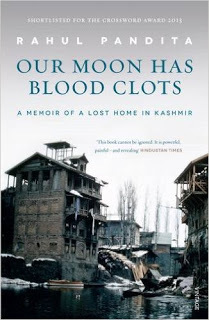
In his book, Rahul takes us through his childhood home and how Pandits used to live in the Kashmir Valley.He chronicles the bloody exodus of thousands of Pandits in the 90s and how they were made unwelcome in their own land. The state of refugees is appalling as Rahul describes it, and one wonders why no ever raised a voice against it.
His research is well done. He does not stop at one story, he digs up many stories of Kashmiri Pandits to get that right picture, the right perspective. The butchering of Pandits in 1947 add to the text and some how completes the book.
A must read, I say for every Indian for simply we all ought to know about this. Kashmiri Pandits have faced persecution since times immemorial. At hands of foreign invaders, the Mughals, the invaders again in 47 but to be persecuted by their very own is a different story altogether.
Publishing label - VintagePages - 257
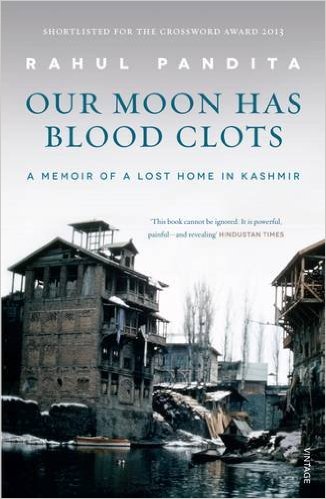
In his book, Rahul takes us through his childhood home and how Pandits used to live in the Kashmir Valley.He chronicles the bloody exodus of thousands of Pandits in the 90s and how they were made unwelcome in their own land. The state of refugees is appalling as Rahul describes it, and one wonders why no ever raised a voice against it.
His research is well done. He does not stop at one story, he digs up many stories of Kashmiri Pandits to get that right picture, the right perspective. The butchering of Pandits in 1947 add to the text and some how completes the book.
A must read, I say for every Indian for simply we all ought to know about this. Kashmiri Pandits have faced persecution since times immemorial. At hands of foreign invaders, the Mughals, the invaders again in 47 but to be persecuted by their very own is a different story altogether.
Publishing label - VintagePages - 257
September 16, 2016
Curfewed Nigh - Basharat Peer
Curfewed Night is Basharat Peer's first book. It is narrated in a form of a survivor story whose live revolved around some of Kashmir's toughest times. The book mirrors the hypocrisy of Kashmiris, enjoying subsidised schooling, government jobs, studying in state run Colleges and never being grateful about it. Instead we have romanticism for AK 47s and pride of militancy. The book also throws light on the total aloofness of Delhi politicians towards the hatred of Kashmiris. This is reflected in Army's treatment towards the Kashmiri populace, the torture and rapes.

The army it seems has been stuck into this wonderland with no particular sense and plan to do something. Its prerogative is to maintain 'peace' but what can it do for the turmoils within?
Read this book, if you want to feel sympathetic towards the Kashmiri cause. Which is to have everything and to do nothing for it. Indeed, when I was reading about the tortures and shoot outs, I wondered, why would any Army leave those guys alone, if they openly brandish imported ammunition, openly deny any allegiance to the law of the land and are proud of their militant tag. The army might have gone overboard but what were these people expecting? A banquet in their honour?
Publisher - Random House
Pages - 239

The army it seems has been stuck into this wonderland with no particular sense and plan to do something. Its prerogative is to maintain 'peace' but what can it do for the turmoils within?
Read this book, if you want to feel sympathetic towards the Kashmiri cause. Which is to have everything and to do nothing for it. Indeed, when I was reading about the tortures and shoot outs, I wondered, why would any Army leave those guys alone, if they openly brandish imported ammunition, openly deny any allegiance to the law of the land and are proud of their militant tag. The army might have gone overboard but what were these people expecting? A banquet in their honour?
Publisher - Random House
Pages - 239
September 11, 2016
Joyful by Toks Adebyi
A concise yet powerful book packed with anecdotes from Toks own life. It is an inspirational book that guides you to succeed in life and live a quality life. Despite many failures, Toks had the courage to continue his struggle.
If you have been there, where life looks like it has reached a abysmal low, this book could be for you. It is not at all preachy, its exact and has a lot to offer. Also present are various interesting quotes that are quite insightful.
Pages - 102
Self Published.
If you have been there, where life looks like it has reached a abysmal low, this book could be for you. It is not at all preachy, its exact and has a lot to offer. Also present are various interesting quotes that are quite insightful.
Pages - 102
Self Published.
September 9, 2016
Surge Pricing By Indian Railways
At a time when the society is discouraging surge pricing by taxi operators, the Indian Railways has shocked one and all by asserting its monoplistic structure.
It has introduced surge pricing, on so called premium trains even though they are actually overpriced shoddy trains which are preferred by people mostly due to the alternates. The last time I travelled in a Shatabadi, the window in the toilet was absent. Instead they had fixed a paper carton like the ones we use for packaging to fill in the gap. The alternate trains are more shoddy have a poor time table and very badly managed. In most of such trains the tickets are not even checked properly. Thus allowing more indiscipline and chaos. So, by the reason of railways, since it is a monopoly why not loot people in the name of surge pricing? And what better time than the festive season when people are going home to bring this measure in?
The central government was expected to bring in effeciency to railways to cut down expenses. Also remove corruption and punish those indulging in wrong practices. Instead it has resorted to grandstanding and to increase prices to cover for the sloth in the railways.
It has introduced surge pricing, on so called premium trains even though they are actually overpriced shoddy trains which are preferred by people mostly due to the alternates. The last time I travelled in a Shatabadi, the window in the toilet was absent. Instead they had fixed a paper carton like the ones we use for packaging to fill in the gap. The alternate trains are more shoddy have a poor time table and very badly managed. In most of such trains the tickets are not even checked properly. Thus allowing more indiscipline and chaos. So, by the reason of railways, since it is a monopoly why not loot people in the name of surge pricing? And what better time than the festive season when people are going home to bring this measure in?
The central government was expected to bring in effeciency to railways to cut down expenses. Also remove corruption and punish those indulging in wrong practices. Instead it has resorted to grandstanding and to increase prices to cover for the sloth in the railways.