Heather Weidner's Blog, page 80
February 17, 2020
#ThisorThatThursday Interview with Author LeAnna Shields
I’d like to welcome LeAnna Shields, author and mystery podcaster, to the blog for #ThisorThatThursday.
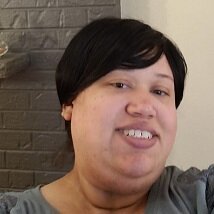
Favorite things to do: Writing, podcasting, and watching old movies
Things you’d run through a fire or eat bugs to get out of doing: Being on
Survivor.
Things to say to an author: I loved your book. How did you figure out that great character.
Things to say to an author if you want to be fictionally killed off in their next book: Oh if only I didn’t have a real job than I’d sit around and write like you.
Things you always put in your books: hopefully a good mystery
Things you never put in your books: swear words
Things that make you want to run screaming from the room: wasps or anything that stings or
has more than four legs.
Things you’d walk a mile for: I’d walk a mile for some great chocolate or a great coffee
drink.
Favorite beverage: Iced coffee or Chai lattes
Something that gives you a sour face: Macha (sp) Tea it tastes like grass (not that I’ve eaten grass)
Music that drives you crazy: I can’t stand hard rock music.
Favorite music or song: I’m a huge fan of pop violin music right now my favorite song is
Dreamer by Black Violins
Words that describe you, but you wish they didn’t: Fearful, shy, and plus-size
Words that describe you: Creative, fun, loyal, and introverted
Things you wish you’d never bought: Oh so many, but if I had to peg it down I’d say a
paint set I don’t think I’ll find the time to use.
Things you ever want to run out of: Chocolate Milk and iced coffee
Easiest thing about being a writer: Easiest thing about being a writer is (for
me at least) creating the character. They just seem to find the back door of my
imagination and come on in. Lol.
Hardest thing about being a writer: The hardest thing about being a writer is finding the
right words.
Things that hamper your writing: a comfy place, a good movie, and figuring out my podcast
Things you need for your writing sessions: Music, coffee, and a comfy place
Things you need to throw out: Bathroom scale, jeans, and clocks
Most embarrassing moment: My aunt was teaching me to drive using her golf cart and I drove it into her neighbor’s front yard, right over their Christmas decorations. Thank goodness it wasn’t a
nativity scene, or I’d still be hearing about it.
Proudest moment: My proudest moment was when I published my first book.
You can visit LeAnna at her website and find her books, Sparx of Suspicion and The Art of
Facts on Amazon.
Her podcast, The Cozy Sleuth, is available on Anchor.com or wherever your readers find their podcasts.


February 14, 2020
Cyber Security Tips for Writers

I attended a cyber security discussion this week, and these are good reminders for anyone who is on the internet. Cybercrime is a real threat to everyone. (Thanks, Peter for the great presentation!)
Just like physical security, if you see something odd, say something.
Hackers look for easy routes to attack or access your system. Don’t be an easy target.
When you buy devices that connect to your home internet, make sure you change the password from the manufacturer’s settings. (This means cameras, routers, and other smart devices. These can also be hacked.)
Phones are easy targets for hackers. Make sure yours is secure. Be careful of public wifi.
Change your password frequently. Don’t use the same password for all of your sites.
People post a lot of personal information on social media sites. Don’t use your street name or pets’ names for passwords. Those passwords are easier to guess from the information you post on social media..
Passphrases are harder to guess. These are longer phrases or sentences that have meaning to you.
Everyone has a lot of passwords to remember. Don’t write them down. Use a password locker like KeePass or Password Safe to store them securely.
Don’t click on links you don’t recognize.
Never give out personal information unless you’re on a secure site (https).
Make sure you install updates and patches on your devices regularly. Many of these fix security issues.
Pay attention to details. Check your bank and credit card statements. Follow up if there are unknown charges (especially small ones).
Here are some terms that everyone needs to be aware of:
phishing - This is when someone sends an email, designed to look like one from a specific person or company to trick users into providing personal or financial information.
spear phishing - This is when a phishing campaign is targeted at specific people.
vishing - This is when someone calls or leaves voicemail messages that appears to come from a reputable company. The idea is to trick the person into revealing personal or financial information.
SMishing - This is the practice of sending text messages with the intent of tricking the receiver into providing personal or financial information. (It gets its name from SMS Short Message Service [texting]).
juice jackng - This is when a public charging station is contaminated with malware or viruses that infect the unsuspecting user.
It’s a big, crazy world out there. Be careful and be aware.
February 7, 2020
Movies about Writing and Writers
Tributes this week to the late Kirk Douglas reminded me of a bunch of movies that I haven’t seen in a while. Then that reminded me about movies about writers and reporters and writing. And of course, I started making a list. How many of these have you seen?
A Man for All Seasons
A Portrait of an Artist as a Young Man
Absence of Malice
Adaptation
All The President’s Men
Almost Famous
American Splendor
As Good as it Gets
Barton Fink
Becoming Jane
Bright Star
Broadcast News
Capote
Citizen Kane
Dead Poets’ Society
Fantastic Beasts and Where to Find Them
Fear and Loathing in Las Vegas
Finding Forrester
Finding Neverland
Funny Farm
The Ghostwriter
The Girl with the Dragon Tattoo
The Help
Henry and June
Her
His Girl Friday
Iris
Julia
Julie and Julia
Kafka
Kill Your Darlings
Manhattan
Midnight in Paris
Miss Potter
The Motorcycle Diaries
Moulin Rouge
My Left Foot
Naked Lunch
The Royal Tenenbaums
Saving Mr. Banks
Shadowlands
Shakespeare in Love
The Shining
Sleuth
So I Married an Axe Murderer
Stand by me
Sunset Boulevard
Sylvia
Throw Mamma from the Train
Wilde
Wonder Boys
The World According to Garp
What else would you add to the list?
January 31, 2020
The Stuff I Research

Recently, I’ve done a lot of interviews for blogs and promotions for my latest Delanie Fitzgerald mystery, Glitter, Glam, and Contraband. One question that I’m asked a lot is how much research do you do for fiction Surprisingly, it’s a lot. (And I love the research quest part of the writing journey.)
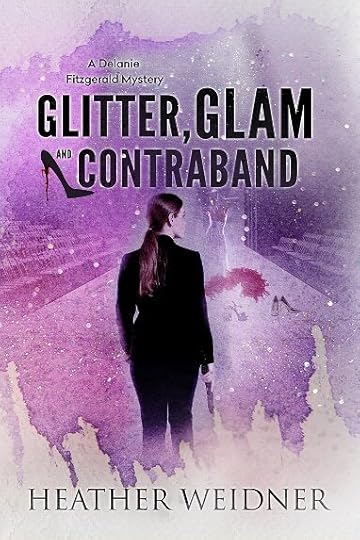
For this book, I did a lot of research on the care and feeding of poisonous reptiles (enough to give myself the heebie jeebies — And now snakes keep appearing in pop-up ads on my social media sites.) I also did a lot of research of banned species in Virginia. Many thanks to the Virginia Department of Game and Inland Fisheries. They have a wealth of information on their site. I interviewed several people who raise snakes or exotic fish.
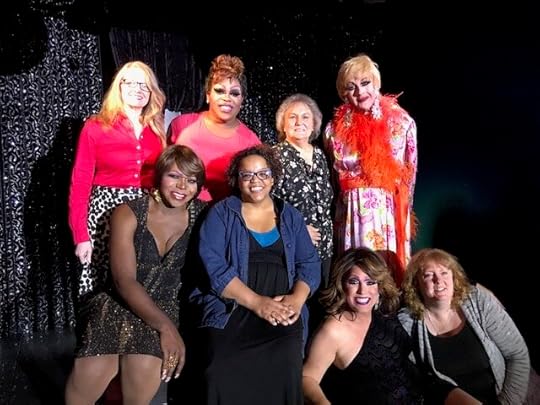
I had never been to a drag show, so I went with my writer pals, Rosemary Shomaker, Fiona Quinn, and Tina Glasneck. We went to Godfrey’s in Richmond, VA for a fabulous brunch. The entertainers were very helpful when they found out we were mystery writers.
There is also a time capsule/corner stone in the story, and I did a lot of research on what goes into these and what happens to them. So what happens if someone puts something in one that shouldn’t be there?
Right now, I’m working on a short story set around the Church Hill neighborhood in Richmond. In the 1920s, the railroad was repairing and expanding a tunnel in the neighborhood when there was a cave-in. It killed several workers. They and the train were trapped inside. After several days of failed rescue/recovery attempts, the railroad sealed the tunnel. And to this day, it’s still sealed as the final resting place of the workers and the train. There are lots of local legends and stories about the tragedy. Some are even tied to the Richmond Vampire. I’ve driven past the site hundreds of times, and I didn’t realize it was there. I’m fascinated with the lore around the history of the event. Reporter Mark Holmberg has done many stories on the site through the years, and I spent hours reading articles and posts and watching videos.
My story in the newest Mutt Mystery, “The Fast and Furious” (March 2020) takes place at a fictional racetrack. I had to do some research on cars, car parts, and NASCAR short track races. My husband rebuilds classic cars, and I got the idea for the murder weapon when he dragged me to the auto parts store. The newest story, “Strut Your Mutt,” is a dog show caper. I had to do a lot of research on the dog show world, pet chipping, and social media influencers.
So even though the stories and characters are fictional, a lot of research goes into making the story believable and real. I want to get the details correct and make the mystery/murder plausible. If you’re a writer, check out Fiona Quinn’s blog, Thrill Writing. She helps writers get it right.
January 19, 2020
Why Can't I Finish My Book?

It took me about five years to write, edit, revise, query, and get my first novel published. I thought I was a slow writer, and there was too much going on in my life at the time to focus. I work full-time in IT, and everyone has commitments and responsibilities. Two years ago, I tried an experiment. I wanted to see how productive I could be if I put some focus on my writing time. (That year, I finished two 73,000 word novels, one 15,000 word novella, two 4,000 word short stories, and one 3,000 nonfiction article.) Here’s what I learned…

I always put important things on my calendar, but my writing time wasn’t there. I would always tell myself that I’d fit it in. I scheduled some “office” time for writing. And I stuck to my schedule.
I realized I was watching too much (bad) TV and movies. We still watch our favorite shows, but we DVR most everything now. I watch it when I have time (and I don’t have to sit through the commercials).
Look at where you spend your time for a week. Are there things that are big time wasters that you really don’t need to do?
I can’t sit at my desk for hours. I get restless, and it’s not good for you to sit so long. Schedule little breaks, and do other tasks (e.g. load/empty the dishwasher, put laundry in the washer or dryer, fold laundry, sort the mail). After a little break, I’m recharged and ready to get back to work.
Determine when you are most productive and schedule your writing time then. I’m a (very) early morning person. I’ve never been productive in the late evening hours. Learn what works for you.
Figure out tasks you can do at other times. I use my lunch time at work to write, proofread, or revise. That gave me 5 hours additional writing hours a week.
I also print copies of work that needs to be revised. I take these with me when I’m waiting at the dentist, hair dresser’s, doctor’s , or DMV.
If you find yourself spending too much time on your social media sites, find ways to schedule your posts. It’s a more efficient use of your time.
When we do sit down to watch TV (We are football and college basketball fans), I use my tablet to scan through my social media feeds. I get to do two things I like, and I’m not spending hours on each.
I try to write something every day. It does make a difference. When I’m working on a novel or novella, I keep a PostIt note on my desk. At the end of each session, I write down the date and the word count, so I can see my progress. Some people are very formal, and set up spreadsheets with daily word counts. Do what works for you. If you miss days, it will take you time to catch up, and that time could be better spent on other tasks.
With my first couple of books, I got stuck in revision paralysis. I would revise and revise, and then I’d put it down for a while. Then I’d pick it back up and start over. I would also start revising before I finished the manuscript. Now, I write the first, sloppy draft. I don’t do major rereads or revisions until the first draft done.
Find a good critique group, beta readers, and writing partners. These people will help keep you on track. If you have a monthly commitment to provide pages for the group to read, you’ll do better at staying on task.
Learn how to say “no” nicely. You are constantly bombarded with requests for your time. Figure out what’s important, and say “no” or “not now” to some that you really can’t commit to.

January 17, 2020
Writing - Individual or Team Sport?
I never played team sports as a kid. I wished that I had. There are some life lessons that are gained from working (winning and losing) as a group. Writing is mostly a solitary endeavor. I research, write, and revise by myself. But I believe that authors need others, and here’s why…
Relationships are key in life. You need those special people who will share your celebrations and help build you up after a bad day.
You need a sounding board to ask questions or bounce ideas off.
Others are in different stages of their writing careers. They can give advice or ideas.
They can help motivate you and keep you on track.
Authors who help promote you are invaluable. Treasure these people.
You need some trusted early readers to give you honest feedback about your work.
Find a writing group. The relationships you build are important. You will have access to information, people, and opportunities. The contacts are invaluable. I got my first mystery writing credit from my group’s anthology. And I can’t tell you how many contacts have led to book signings or special projects.
It reminds you that you are not alone.
The best decision I made in my writing journey was to join a writing group.
January 10, 2020
Lookin' Good! Design Tips for Authors
You, as the author, are your brand. You need to have a consistent look and feel with your website, business cards, newsletter, blog, and social media pages. Here are some tips for making your presence look unified, professional, and planned.
Get a professional headshot. Selfies shouldn’t be used on websites or book covers. Make sure that you update it every two or three years (or if your look changes). Don’t be one of those authors who uses the same photo for twenty years.
When you make a graphic to be shared on social media posts, make sure to choose the size that fits that platform. I use Canva, and it has a series of templates for each site that are sized correctly. The templates vary whether it’s a post, banner, or event. You also don’t want to stretch or resize a post graphic for a banner. It won’t look good.
When you use a photo or graphic, make sure that it is sized so that it can be viewed. I’ve seen author bookmarks where you can’t see the book cover or title. Also make sure it is proportional. Some people stretch the graphic, and it’s too skinny or too fat.
Pick colors that are complimentary and match your style of writing. My first published work was a story in a mystery anthology with a black, white, and red cover. I used those colors on my website and social media pages. When I talked to a publicist about my author sites later, she recommended that I choose brighter colors since my mysteries were light and humorous. You can use a color wheel to help you choose complimentary colors. There are lots of free ones on the internet.
Make sure you use a quality, high resolution graphic or photo for print and web. If not, it will look pixilated or grainy and not professional.
You may want to consider getting a logo for your name. It is another graphic that you can use on your sites.
If you use a photo other than yourself on your social media sites, make sure to have something like a logo that identifies it as you. This helps people find you.
When you’re making graphics or bookmarks, LESS is better. Don’t cover the entire graphic with text. Focus on important things like title, URL, ISBN, and book cover. Too much, dense text is hard to read.
Some authors use business cards or postcards instead of bookmarks. It’s a neat give-away that doesn’t cost that much to produce.
When you create business cards, bookmarks, or postcards, make sure to use both sides. I tend to put my latest book on the front of the bookmark, but I put the other series on the back
I made notecards/post cards with my book covers. I put the covers on one side and left the back in white. I use these to write notes. And If you don’t want to use it as a postcard, it will slip into an invitation or other sized envelope.

January 3, 2020
How to Make an Author Smile
Everyone likes a bit of serendipity and a nice surprise — including authors. Here are some ways you can make an author’s day…
Buy their book. Read it, add it to your collection, or give it as a gift.
Recommend the book to your friends.
Add the book to your reading list on Goodreads.
Leave a review on Goodreads, Amazon, B&N. It doesn’t have to be a book report. You can leave one line about what you liked. Online retailers use reviews to determine book placement in ads and promos.
Recommend the book to your book club.
Invite the author to visit or Skype with your book club.
Take a picture of the book when you see it in a store or library and tag the author on social media. It’s neat to see where your book pops up.
Request that your library order the book.
Pop in at an author’s book signing.
Share the author’s posts on social media.
What else would you add to my list?

December 31, 2019
Happy New Year!

Wow! It’s a new year and a new decade! I hope your 2020 is fabulous!

December 28, 2019
Detours and Roadblocks in Your Writing Life
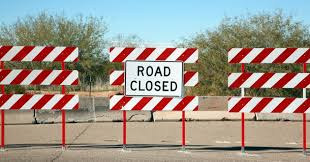
I drive the back roads through southside Richmond to my day gig in the mornings instead of taking the toll roads. This week, unexpectedly, I hit a roadblock when a downed light pole blocked the main road. I’m familiar with the way that I always get to work, but I was on my own in the dark yesterday in a neighborhood that I wasn’t familiar with (at 6:30 AM). (And if you’ve ever been to RVA, you’ll know that the streets often do not run parallel. They tend to meander.) With the help of GPS, I was able to navigate neighborhood streets and get back on my path.
Our writing life is often like that. We hit roadblocks and detours. It’s inevitable, but I believe you will be more successful along your journey if you can react and navigate around them.
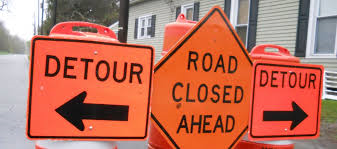
A lot of it is attitude. If you hit a disappointment or a pitfall, allow yourself some time to react. Scream, cry, mope, or eat chocolate for a little while. But then figure out how you are going to get around the obstacle. Sulking doesn’t fix the problem. Bad reviews, cancelled contracts, and rejection letters hurt. You can give up, or you can make a new plan.
Always have a plan B. It’s helpful to have a strategy for what you’re going to do if you hit an obstacle. It’s often easier to deal with if you know you have a backup plan.
Get organized. Keep your files straight (and backed up). Know where you put things. If you cut down on the clutter and the junk, and you can work efficiently, you’ll minimize some of your self-made roadblocks.
If you mess up, own it, apologize, and do your best to fix it.
Other people are going to disappoint you. They’re going to back out of commitments, forget to do things they promised, or say mean things. You need to decide what and who you’re going to spend your time on or with. Figure out what is important to you, and let go of what brings you down.
Make sure you take care of you. Eat right and exercise. You need to have a balanced life. Make sure you have some fun. And hang around people who make you laugh. My day gig is in IT, and it’s often serious. I love that the new PMO manager moved in the office next to me. She is fun, and she laughs a lot. (The crew nicknamed her Giggles.) I love that I can hear the laughter through the walls. It always makes me smile.
It’s almost a new year. And that’s always a great time to make resolutions or plans. I challenge you to make a plan for your writing life in 2020. It’s a new year and a new decade.