Marcey Rader's Blog, page 3
November 27, 2023
Breaking Free from the Busy Badge
Why do we wear our busyness like a badge? When anyone asks us how we've been, we proudly say, ‘You know the usual. Busy busy!'
Marcey Rader explains why ‘busyness’ is different from ‘business’.It makes us feel good to know that we're busy. Somebody wants us; somebody needs us. We are our own worst enemies.
Academic research suggests that our days are becoming increasingly jam-packed. It states that the analysis of holiday letters indicates that references to “crazy schedules” have risen dramatically since the 1960s. An analysis of Gallup data by Harvard Business School’s Ashley Whillans found that the percentage of employed Americans reporting they “never had enough time” rose from 70% in 2011 to 80% in 2018.
We must step away from the hectic pace of the always-on modern workplace, which leaves no room for breathing if we want to do meaningful work and become more creative and productive.
However, the majority of us lean in rather than step back. When we should be doing less, we put more effort into compensating for our lack of originality.
In any case, why is this happening? Why do we get so busy when we say we don't want to?
It’s an unrealistic expectation for some people. You believe there is no other option because your business is overworked and understaffed. For others, poor time management skills may be the cause. You have little time to concentrate on what needs to be done because you are bouncing between tasks.
But there’s another common scenario: We like being busy.
So if busyness is so bad, what’s the alternative? Sloth? Laziness? Apathy? Busyness isn’t just the absence of time; it’s also the absence of choice.
Researchers have proven the positive impact of activities that starkly contrast with busyness for years.
Here are just a few:Relaxation: Taking time to rest and relax can reduce stress, improve mood, and boost creativity. Research shows that when we take breaks from work and allow our minds to wander, we often develop innovative ideas and solutions.
Taking a break doesn’t always mean going out in nature since it’s a luxury that not all of us get. So what’s the alternative?
This can be achieved by creating a similar stimulus indoors using products such as Doterra Oils, Grow Fragrance, Brain.fm**, and many more. These allow individuals to create a relaxing environment without going through much trouble.
Mindfulness and meditation: Both of these have been shown to reduce anxiety, depression, and stress. These practices help us focus on the present moment and increase awareness of our thoughts and emotions.
Mindfulness and meditation aren’t easy to achieve. People who might initially find it difficult can use apps such as Calm to practice guided meditation. Devices such as Apollo Neuro** can be used to promote well-being by stimulating or relaxing the nervous system.
Physical activity: Regular movement can improve physical health, reduce stress, and boost mood. Exercise releases endorphins, which are feel-good chemicals that can enhance our well-being.
Exposure to Nature: Spending time in nature has been shown to reduce stress, improve mood, and increase cognitive functioning. Research suggests that even a short walk in nature can positively impact mental health. Individuals can create stimuli indoors as an alternative to going out if they can't afford the luxury of being outside. But outside is definitely better!
Social connections: Maintaining social connections with others is vital for overall well-being. Research shows that social support can help reduce stress and improve mental health. This does not, however, imply that busyness is solely a personal problem. It is the individual's and the organization's responsibility to resolve it, as with most focus and time management issues.
Simply stating that you want to be less busy is not sufficient. We've already seen that being too busy causes poor decision-making and burnout. Instead, suppose you want to escape the busyness trap. In that case, you need to take proper measures to ensure you and the people around you are not being burned out due to excessive workload. Courtney Carver captures this well: ‘When we try to juggle everything, we can't enjoy anything.'
Five measures you can take to manage your time and busyness:1. Prioritize tasks: Encourage employees to prioritize their tasks by urgency and importance. This helps them to focus on the most critical tasks first and avoid feeling overwhelmed. This can also be achieved by understanding where your time is going or keeping track of your time. This will help you set guardrails during the workday.
This can be done in two ways-
· First, track where the time is being spent. Rescue Time** is an app that shows you how much time is spent and where.
· Secondly, prioritize time by blocking out when you can accept meetings. Apps such as Acuity Scheduling** can be used for this.
2. Use of Time Blocking: Where busy turns into busyness is when you give it the freedom to control your schedule. There are always fires to be put out and meetings to attend.
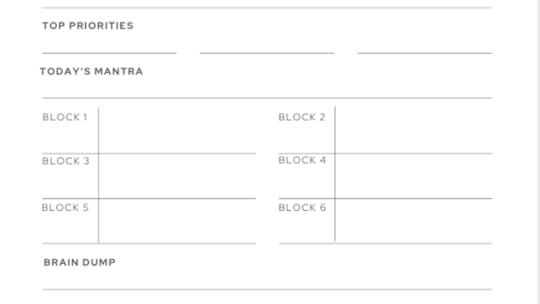
Instead, you can reduce daily busyness by setting aside time for it. One method that helps with this is time blocking. Simply put, time blocking is planning out time in your day in advance and dedicating specific “blocks” for certain tasks or responsibilities. Cal Newport, the author of Deep Work, summarizes the impact of this technique well ‘A 40-hour time-blocked work week, I estimate, produces the same amount of output as a 60+ hour work week pursued without structure.’
3. Delegate Tasks: Encourage employees to delegate tasks to team members with the necessary skills and expertise. This allows employees to focus on their core responsibilities and avoid being overloaded with work. Communication is the key to delegation since it’s important to understand the skill and expertise. Delegation and communication can be done quickly through the help of tools like Clickup**.
4. Set realistic goals: Set realistic goals and deadlines to prevent employees from feeling overworked and stressed. Setting achievable goals helps employees focus on their tasks and feel accomplished. This can only be done when individuals work on themselves to understand their key strengths and weaknesses. Our Powered Path Playbook is the ultimate tool for reflection and planning.
5. Providing support: Provide support and resources to employees struggling with the workload. This can include training on time management, stress management, and workload management, as well as access to mental health resources and support services.
Being busy in the right way can positively impact your self-esteem. But on the other hand, being overbooked can harm your overall well-being if you're so busy that you can't practice self-care, spend time with loved ones, or enjoy your free time. Changing your priorities can significantly improve your quality of life by removing yourself from work or other obligations that aren't necessary and intentionally resting and taking time for yourself, even though doing so may be difficult.
As Henry David Thoreau once said,
“It is not enough to be busy. So are the ants. The question is: What are we busy with?”
What about you? What do you want to advance?
Your Business or Busyness?
It’s time to let go of the Good to Make Room for the GREAT.
Post co-written by Marcey Rader and Rijul Arora.
Note: ** are affiliate links, meaning that we'll earn a commission if you choose to purchase. This commission comes at no additional cost to you. We use these ourselves and recommend them regardless, but if we can earn a small commission, why not?
The post Breaking Free from the Busy Badge appeared first on RaderCo.


November 21, 2023
6 Surprising Email Management Hacks
Do you need help taming your inbox because you feel that emails come in like a fire hose? Your inbox can be like a faucet that you turn on and off. You can achieve this by working offline or pausing your inbox.
Do you remember a time you were on a flight, and there was no Wifi on the plane? You got through all your pending emails, and it felt amazing. The beauty of working offline or pausing your emails is that it will keep all the new emails from coming in. You’re not seeing them, so you’re not getting distracted and can respond to what’s already in there.
But you can’t always board a flight to get your work done peacefully, can you? This is where you can use Boomerang** for Gmail to tame your inbox or the Work Offline feature in Outlook.
Constant distractions from email are affecting our productivity“Constant Communication is not something that gets in the way of real work; it has instead become totally intertwined in how this work actually gets done .” – Cal Newport, Author, Deep Work
Regularly checking email is an everyday task that’s impossible to avoid. No matter how diligent you are in hitting “reply,” managing a mounting email inbox is easier said than done. And if you’re less diligent—you’re more prone to letting your emails pile up unaddressed—that lack of inbox organization (and the anxiety of being in email debt) is likely affecting your productivity more than you realize.
One of our most popular training programs is Email Extinguisher, which provides simple steps to shrink the inbox and improve productivity.
The constant interruption and distraction from multitasking by constantly checking email can dramatically lower your productivity and disrupt your ability to enter a flow state when working on high-value projects. Luckily, there’s a way out of the chaotic inbox hole. To better manage our unruly inboxes, we tapped productivity pros for time-saving (read: life-saving) email management hacks that’ll bring us that much closer to the seemingly elusive “Inbox Zero.”
Here are six ideas to get you started on taming your inbox:Set aside time blocks for checking emails:“Deep work is so important that we might call it the superpower of the 21st Century .” – Cal Newport , Author, A World Without Email
A proven way to use email effectively is by allocating specific blocks of time to focus your attention on it. The best practice approach is taking two or three 20-minute blocks daily to work through your inbox. You can use apps such as focus booster** to help you.
Make sub-folders:Microsoft folders and Gmail Labels are some of the most underrated features every email client offers. This simple productivity habit of placing every useful email into a topical cluster can help you organize your inbox and better understand what’s coming in and going out. However, there is a tendency to hyper-organize. Don’t make so many folders or labels that you must scroll up and down or don’t remember what you put in them.
Set inbox rules or filters:You can set up Rules (Microsoft) and Filters (Gmail) to delete spam emails before they clutter your inbox, unsubscribe from useless newsletters, and add a separate account for potential junk emails.
Use your calendar to block time for checking emails:Calendar apps can help you stay on task, be productive, and manage projects. You can improve your email productivity by time-blocking (blocking off designated times for specific tasks) in your calendar.
Turn off notifications:This is one of the simplest yet most effective ways to get one step closer to focus mode. Turning off notifications will prevent you from being distracted by the messages that ring, ping, or buzz in your phone, watch, or computer.
Delay Delivery:Delaying your delivery if you work during someone’s off hours is courteous but also a strategy. I don’t want somebody to get a proposal from me at 5 pm because studies show we are more likely to resort to status quo or fear-based decisions when tired. I want them to get the email early during work hours when they are more likely to say yes. I strategically send my proposals at certain times. If you are in a position of hierarchy, it’s also important to know that it doesn’t matter how often you say, “I work at night or weekends, but you don’t need to respond“; most people will feel compelled to respond to you if they rank lower on the ladder.
You can also gain more wisdom from how I manage my inbox. I don’t get many emails because I use a lot of filters to bypass my inbox. I also make use of project management systems like ClickUp**.
Need personal help to tame your inbox? Reach out to us about our super-popular Email Action Plan!
From the above tips, what is one micro step you want to start with for taming your inbox?
Post written by Marcey Rader and Rijul Arora.
Note: ** are affiliate links, meaning that we’ll earn a commission if you choose to purchase. This comes at no additional cost to you. We use these ourselves and recommend them regardless, but if we can earn a small commission, why not?
The post 6 Surprising Email Management Hacks appeared first on RaderCo.
November 7, 2023
5 Ways to Prevent Decision Fatigue
Do you feel like you've been putting out fires all day at work but haven't gotten anything done?
All that switchtasking leads to decision fatigue.
Marcey Rader helps you increase your health-powered productivity by taking easy measures to prevent Decision Fatigue.Our decision-making power source is like our iPhone battery. We start the day fully charged at 100%, but our mental charge depletes as the day progresses and decisions are made.
Do you hit the snooze button or get up with the alarm? One decision. Battery down to 99%.
Do you make the bed or not? One more decision. Battery down to 98%.
Do you want to check your phone notifications first thing in the morning or do quiet time first? One more decision. Battery down to 97%!
And so the decision-making continues into our day.
The number and complexity of decisions throughout the day will decrease our willpower and discipline and increase that feeling of overwhelm.
Signs of Decision FatigueDecision fatigue may affect people differently, but there are some common signs.
• Mental fatigue
• Brain fog
• General tiredness
Choice fatigue can lead to worse decision-making, which can lead to:
• Impulsivity, especially impulsive buying
• Difficulty in making trade-offs: Decisions between two outcomes that each have pros and cons
• Procrastination and other avoidance behaviors
“Clutter is postponed decisions.” – Barbara Hemphill, Founder of the Productive Environment Institute
When what we last touched—around the house, in our car, in our inbox—becomes “left for later,” it becomes clutter.
Why do we do this? We want to live in an uncluttered environment, but “left for later” doesn't allow us to, ultimately leading to decision fatigue.
5 Ways to Decrease Decision FatigueWhether making decisions is tiring or not, studies show that many leaders try to combat decision fatigue by limiting the number of decisions they have to make. Former United States President Barack Obama, Steve Jobs, Matilda Kahl, and Mark Zuckerberg cycle between one or two outfits or colors to reduce their daily decisions.
1. Simplify your wardrobe.
Minimizing your wardrobe reduces the number of outfit options you have to consider. While you don't have to take it as far as Mark Zuckerberg, reducing your wardrobe also minimizes the number of morning decisions you make, saving your decision-making power for more important things later in the day.
2. Practice a morning routine.
Implementing routines and rhythms into your day is key to reducing decision fatigue.
If your mind is bombarded with choices first thing in the morning, your mental energy will be zapped by noon. Instead, keep things as predictable as possible in the morning.
Get up at the same time, have tea or coffee (Ideally, wait 1-2 hours in the morning to get the real caffeine boost!), enjoy some quiet time, read something inspiring, meditate on affirmations (Calm is my favorite app), exercise—whatever gets you most ready for the day.
For some, it might be as simple as creating a ‘To-do list,' while for others, it might be more complex. Different management apps could be used to simplify your morning routine, such as Clickup**, or you could use an analog reflection and planning tool, like our Powered Path Playbook. These will streamline your routine and help you make fewer decisions, leading to less decision fatigue.
Morning routines prepare your mind to tackle the day from a place of positivity.
3. Reduce the clutter in your environment.
If your environment is cluttered, you’ll constantly see items that must be addressed. The stack of bills on the counter, the pile of broken toys in the corner, and the pants that have been sitting to take to the dry cleaner for two weeks.
One of the biggest clutters that we go through every day is not in our houses or offices. It is the one found in our inbox. You can have decision fatigue due to poor email time management. We have an Email Action Plan with personalized recommendations for your role and situation.
Bottom line: clutter is distracting and draining, leading to even more delayed decisions (which causes more clutter!).
To become more productive, declutter your spaces, and embrace healthy living, check out my book Work Well Play More!
4. Apply the Rule of 3 to your To-Do list.
Write a list of everything on your mind each night to accomplish the following day.
Then choose the three most important tasks and commit to doing them (save the other tasks for another day).
You start your day with a plan by clarifying what you want to accomplish. You work deliberately, not reactively. Plus, your mind stays sharp because your mental energy is not bogged down trying to decide which tasks to address and which to let go of.
You can also check out our Powered Path program. It's the perfect course and tool to teach you to reflect, plan, and prioritize.
5. Simplify your meal routine.
Studies show the average American spends 40 minutes a day thinking about food. That’s more than 240 hours (10 days) a year.
Save that brainpower for more important decisions by creating a streamlined meal routine. Set parameters for your meals that allow for variety within your guidelines. This will help you plan meals, save time and money, reduce food waste, and feel more confident about your choices.
You can check out more techniques for reducing decision fatigue here.
Decision Fatigue's Primary CulpritClients say, “when my phone goes off, I just ignore it. When I get a pop-up, I just ignore it.” You can't. Instead, you're making a micro decision to either not react, not respond, or look at it so quickly that you think you ignored it. You didn't. You made a decision not to respond.
So if you have all of these notifications going on throughout the day, plus somebody knocking at your door, your dog's barking, and an Amazon delivery person comes, all of these decisions and distractions add up to decision fatigue.
What step do you want to take today to prevent decision fatigue?
Post written by Marcey Rader and Rijul Arora.
Note: ** are affiliate links, meaning that we'll earn a commission if you choose to purchase. This commission comes at no additional cost to you. We use these ourselves and recommend them regardless, but if we can earn a small commission, why not?

The post 5 Ways to Prevent Decision Fatigue appeared first on RaderCo.
October 23, 2023
Revolutionize Your One-to-Ones: The Surprising Benefits of Walking Meetings
Walking meetings for one-to-ones aren't just good for your butt. They're good for your brain and work relationships.
On average, we sit for 8 hours a day.
“Sitting is so incredibly prevalent, we don’t even question how much we’re doing it. In that way, sitting has become the smoking of our generation.” Nilofer Merchant, TED speaker on Got a meeting? Take a walk.
Do you spend most of your time in meetings just sitting? You can calculate the risk of your sitting time on your health here.
We’re spending a lot of time on our butts. You could consider buying a sit-stand desk from here**. Alternatively, why not just get out and do a walking meeting versus sitting across the desk?
A walking meeting habit also has other benefits. For instance, when sitting across the table from someone, there is a real or perceived hierarchy level. But, walking side by side, you lose that hierarchy. You’ll be more open and honest when walking.
When you're moving both sides of your body, after about 15 minutes, the neurons between the hemispheres of your brain start to connect, leading to a higher level of creativity and collaboration. I call walking meetings walkie-talkies. I discuss it more in my podcast on ‘All Work and No Play.‘
This method is also followed by leaders across the world. As per Steve Jobs's biography, he made a habit of walkie-talkies, especially for first encounters. Taking a long walk was his preferred way to have a serious conversation.
Client Case Study: Walkie-Talkies helped my client in a crucial conversation with an employee.My favorite walkie-talkie story was from a biotech company in Boston. I was coaching the director of contracts and finance. They had a team member make a million-dollar mistake and were considering firing her. She felt sick about it. I was coaching the director that day and commented, “I would think twice about firing her because she'll never make that mistake again. It wasn't malicious.” I also encouraged her to do this as a walking meeting to get them out of the office environment and away from curious eyes. When her direct report was in nature walking, it reduced her nervousness and anxiety. It relieved the adrenaline, and she didn't have to look at her boss. She was more open and honest. Also, her boss is a very tall woman. I'm only five foot two. So, when dealing with somebody much taller than me, I can't help but feel that hierarchy. One-to-ones are also great for phone walkie-talkies if you can't do it face-to-face. I do that all the time, especially with my family.
The Charity Miles app integrates with Outlook, allowing you to schedule a walking meeting one-on-one. While you're using it, you're also raising money for charity!
Walking Meeting Case StudyWant to read another story about how powerful walking meetings are? This excerpt is from an email from Matt Findley, Home & Land Lending Manager for Horizon Farm Credit, after attending my Meeting Power-Ups and Manage Well Remotely programs. It's so powerful it brought tears to my eyes.
“In your presentation, you stressed the importance of being disconnected from technology when conversing, thus allowing yourself to not be distracted. Once your training was completed, you and I discussed how we thought this would work with individual check-ins. Soon after, our management group had the opportunity to sit down with our teams and discuss 3–5-year plans for where they would like to go and how we, as leadership, can help them accomplish this goal.
I offered each one of my team members the opportunity to have the meeting as a walking meeting, face-to-face or virtual. Thankfully, all chose face-to-face or walking.
I asked the team members who chose walking meetings to come prepared to walk and not wear work attire. I also allowed them to select the location to meet.
We would start walking, and I would talk with them for the first five minutes (as you discussed, after 10-15 minutes, both sides of your brain are now connecting). During these five minutes, I took this as an opportunity to help explain the why. Why was this important to them, me, and Farm Credit? I also talked with them about our meeting and your shared impact on walking and disconnecting. Finally, I spoke with them about the importance of the symbolism of walking side by side. My definition was, I am not standing in front of you leading you to where you think you need to go, I am not walking behind you to push you to where I think you need to be, I am walking next to you as this is a journey, and I am here to support you along the way.
After that first five minutes, it was my opportunity to sit back and listen by asking one simple question – What's on your mind?
By asking this question, I was blessed with everything from family life, struggles that they were facing personally and professionally, and the good, bad, and sometimes ugly of normal everyday life that affects us all. This simple question will be one that I will continue to use with my colleagues as it invites them to take down whatever wall is there. This lets them know they have my undivided attention and that I truly care about hearing their experience.
Some of these conversations went on for miles, yes, miles. Most averaged two miles, and the furthest we walked was four miles in 98-degree heat (I think he wanted to find out if I was for real). To say the least, yes, I was for real. Once our discussion was completed, we found a bench (still not at the office) and did a read-back. We sat down, and I started writing notes. Then, once I completed a thought, I would follow up with them by saying This is what I heard you say. Was this your intent in this conversation? This allowed them to have final input and allowed me not to place my biases on the conversation.
Every one of my teammates who selected the walking meeting has told me this is how they want to have check-ins from here on out. I have had multiple walking meetings since this check-in and have really bonded with my team. One employee said the meeting filled his ‘cup of trust’ with me. I told him that was inspiring to hear because now he knows that my requests of him don’t come from a place of malice or distrust but from a place of need.
Thank you again for agreeing to speak with our management team at Horizon Farm Credit, as your ideas have allowed me to grow a stronger bond with my team.”
Matt Findley, Home and Lending Manager, Horizon Farm Credit
When can you schedule your first walking meeting and make an impact like Matt?
Post written by Marcey Rader and Rijul Arora.
Note: ** are affiliate links, meaning we'll earn a commission if you choose to purchase. This commission comes at no additional cost to you. We use these ourselves and recommend them regardless, but if we can earn a small commission, why not?
The post Revolutionize Your One-to-Ones: The Surprising Benefits of Walking Meetings appeared first on RaderCo.
October 10, 2023
6 Reasons to Start Using Do Not Disturb Mode on Your Phone
Landlines were great, right? I haven’t had one for over a decade, but if I did, I would only use that number for my husband and me so that we could turn our mobile phones completely off when the other person is away, out late, or traveling and know they could still get to us in case of an emergency. Sometimes do not disturb mode doesn't seem enough.
Marcey Rader advises using the ‘Do not disturb' (DND) mode on your phone to keep control when you deal with work-related issues.Back in the day, one of the major advantages of a smartphone over a landline was that it was essentially free of sales and spam calls. Times have changed. If I didn’t have Verizon Spam Filter, my mobile device would be full of useless, irritating, time-wasting robocalls and people trying to sell me lines of credit.
Inevitably, those calls come at an inconvenient time. When I am on a peaceful walk, focused on work, on a coaching call, or at dinner, to name just a few.
According to recent research, the average person checks their phone around 85 times daily. That is almost once every 15 minutes! With so many notifications vying for our attention, it is no wonder we struggle to stay focused.
Do Not Disturb mode is a feature people don't realize can alleviate most of these problems.
It is a setting provided in all phones that allows users to choose when and how they want to be updated with incoming alerts and notifications. With this feature, it is much easier to mute all calls, notifications, and alerts for tools like desk phones, softphones, mobile devices, and chat/ collaboration tools.
Maybe you think that getting notifications is not a big deal. And perhaps you feel that it's somehow convenient to be updated every hour of the day. But again, we are talking about productivity, and a simple buzz or flash can distract you and keep you from being productive.
Silence notifications and interruptions with Do Not Disturb mode when you need to focus on work, sleep, driving, etc. Configure Do Not Disturb and Focus modes in your phone settings.
 HERE ARE 5 REASONS TO USE DO NOT DISTURB MODE
1. Reduces distractions
A study published in the Journal of Experimental Psychology found that smartphone notifications can be a significant source of distraction, even if the user does not interact with them. Using the Do Not Disturb mode can help reduce such distractions.
2. Increases productivity
According to multiple research, it was found that using this mode can lead to increased productivity by reducing interruptions and distractions.
3. Improved sleep
Research conducted by the National Sleep Foundation found that Do Not Disturb mode at night can help improve sleep quality by reducing interruptions and allowing users to disconnect from technology fully.
Do Not Disturb mode does its part in providing a good night's sleep to its users. Still, there can be other external factors that may interfere with an individual's sleep. To overcome situations such as these, third-party products can be used. This can include basic things such as an eye mask** or as tech-savvy as AcousticSheep SleepPhones.**
4. Enhanced focus
This study by the University of California found that people who were interrupted by phone calls or notifications took an average of 23 minutes to return to their original task. Using Do Not Disturb mode can help enhance focus.
Freedom** is a similar third-party app that provides peace of mind to users by blocking notifications from selected apps or websites or the internet for a certain period.
5. Reduces stress
A study published in the Journal of Medical Internet Research found that constant smartphone notification reminders can increase stress levels.
The smartphone can be noisy and beeps and chimes announcing the arrival of a message or email, or some event in a game, can disturb your sleep. One solution is to turn off the sound, but your sleep might still be disturbed by the screen turning on if the phone is on the table beside the bed. However, with Do Not Disturb, you can get a good night’s rest in peace.
You might want to enable Do Not Disturb mode during meetings because the noises and screen activity can distract you and others.
Other scenarios include cinemas telling you to turn off your phone during the movie. Instead of doing that, you could enable Do Not Disturb mode. Driving a car is another occasion when you don't want to be disturbed by your phone because it could be dangerous.
6 REASONS TO PREFER DO NOT DISTURB MODE OVER OTHER OPTIONS1. Enhanced Privacy
Enabling the Do Not Disturb mode ensures that others won't see or hear your device's notifications when you're in a public place, meeting, or presentation.
2. Improved Flexibility
It can be put on an automated schedule, unlike airplane or silent mode.
For example, schedule it for 9 pm to 7 am so your sleep is undisturbed. Or, you could schedule a 30-minute window during lunch.
3. Minimize distractions
The main purpose of the Do Not Disturb mode is to help minimize distractions. This mode will mute all incoming notifications and allow people to do their job with the least possible distractions.
4. Customization based on your preferences
The mode can be tailored according to the preference of the user. If the user wishes not to receive any notification from anyone, they can use the default setting.
On the other hand, if they want to receive notifications from some specific contacts from their smartphone, they can do so by adding those contacts in the favorite section. This preferential treatment for Favorites is unavailable in Airplane Mode or when the phone is silent.
5. Saving battery life
Putting the device in the Do Not Disturb mode will stop the apps from running in the background, and the battery will drain out less than usual.
6. Reduces anxiety
According to Dr. Larry Rosen, a research psychologist and author of ‘The Distracted Mind: Ancient Brains in a High-tech world,’ the Do Not Disturb mode can be a helpful tool for reducing stress and anxiety. Constant notifications can be a source of stress and anxiety; taking a break from them can benefit our mental health.
Sometimes, we are so used to notifications that even if there are none; we mindlessly grab our phone from our pocket by default and check on it. It would lead us to tap on an application, like Instagram, and later realize we've spent 20 minutes scrolling through our feed. I'm sure you can empathize and relate to that!
You'll be surprised how often you check your phone or how much time you spend with it, even if it’s completely unnecessary. You can try apps like Rescue time** to track your phone usage. Awareness can lead to change!
As the author and entrepreneur Tim Ferriss once said, “The best way to get more done is to have less on your plate and more focus.” The Do Not Disturb mode is one way to help achieve this. You can also check out my article on ‘Intention or Distraction,’.
What are you waiting for? Enable Do Not Disturb mode to focus on the more important things in life.
Article written by Marcey Rader and Rijul Arora.
Note: ** are affiliate links, meaning that we'll earn a commission if you choose to purchase. This commission comes at no additional cost to you. We use these ourselves and recommend them regardless, but if we can earn a small commission, why not?
The post 6 Reasons to Start Using Do Not Disturb Mode on Your Phone appeared first on RaderCo.
September 25, 2023
Techniques Top Performers Use to Stay Focused at Work
Do you get distracted by people when you’re focusing on something important at work?
You’re not alone. On average, 84.4% of people are distracted at work. This research also states that co-workers (27%) are one of the most common distractions. This has a huge business cost as companies lose out on substantial profit and 720 hours a year per person working.
We obviously can’t eliminate our co-workers but can communicate our ‘focus time' to them. We forget that our co-workers can also be a good source of collaboration and human connection. One of the simplest and most important things you can do to tackle this problem is to use a visible sign.
But you have to be consistent. You can't have the visible sign-up all day long because you can’t focus 24/7. You only use the sign during your sacred focus time. Example:
I use a sign at home for my husband when I’m in Focus Mode or meditating.I'm a morning person. In my first 90 minutes, I am on fire getting tasks done, so my sign is on the door. It’s also on when coaching or speaking, so I’m not accidentally interrupted. I also block my internet distractions with Freedom** during this time.But, if I'm answering emails or working on marketing stuff, i.e., things that don't require that deep focus for me, I take the sign off the door. If you don’t have a door, hang it on your chair.
This technique (‘concentration crown’) is also followed by productivity thought leaders like Nir Eyal, Author of Indistractable: How to Control Your Attention and Choose Your Life:
Whenever you want to be focused, put on your most ridiculous hat— like a pirate hat or one with elf ears. This signals to others that you should not be disturbed! (Eventually, it will start getting you in the zone faster too). Once you set the ground rules that anyone wearing this crown cannot be disturbed, you’ll have your little safe haven for focused work sessions!
What do you want to use your visible sign for?
Here are seven more ideas to manage distractions and improve focus:Block outside stimuli with headphones and turn off desktop notifications to implement a quiet period of focused work in your office.The Pomodoro Technique is a brain training technique in which you focus on a task for 25 minutes, take a 5-minute break, and start again for 25 minutes. This is done for four periods, then you take a longer 20-30 minute break. You can start with 15-minute periods and build to 25 minutes if this is too hard initially. You can check out my favorite Pomodoro Time Tracking App, i.e., Focus Booster**.Meditation is also a brain training technique. It can start as simple as closing the eyes and trying to visualize the process of eating an apple, focusing on each sensation. Try stretching this to 10 minutes of focusing on one thing at a time. It may be helpful to try using meditation on an app like Calm.Technology Vacations – when the brain is confronted with two tasks, it will choose the easier one; technology is almost always the easiest. Being mindful of technology and setting limits can help the brain focus and concentrate. One technique is to use an app like Rescue Time** to understand how much time you spend on all websites and applications. This will help you plan breaks and maintain positive boundaries with technology.Prioritize and leave more challenging tasks for when the brain feels awake and refreshed. When completed, the brain can focus better, complete tasks quicker, and feel less drained. Make a list of the tasks needed and put them in order from hardest to easiest. Do the complex tasks before the brain is tired and take breaks.Make sure the motivation for a task is evident. This allows for a better focus. Concentration becomes easier when a passionate goal is involved and a clear reward at the conclusion.Calming music can help people block out noise and focus on their jobs. Brain.fm** is one such app that provides music for focus sessions and affects your brain positively to get in the zone.You can also check other things I recommend to focus at work.
What steps do you plan to use during your next focus session?
Most importantly, whether you're a senior executive or a multi-million dollar company founder, every successful person knows the importance of focusing on the task. A baseball player must be intensely focused on the moment, watching the pitch and deciding when to swing. A hedge fund manager overseeing billions of dollars must apply the same focused vision to his or her decision-making.
But for many of us, the focus seems elusive. We allow ourselves to be distracted by technology, people, and even our thoughts.
Luckily, we're here to help you revitalize your productivity!
Post written by Marcey Rader and Rijul Arora.
Note: ** are affiliate links, meaning that we'll earn a commission if you choose to purchase. This commission comes at no additional cost to you. We use these ourselves and recommend them regardless, but if we can earn a small commission, why not?
[image error]
The post Techniques Top Performers Use to Stay Focused at Work appeared first on RaderCo.
September 12, 2023
3 Easy Ways to Say No.
“Thanks so much for the invite! I won't be able to make it because I'm taking the weekend to regroup after a hectic week. It looks like it'll be a great event. Have an amazing time!”
Marcey Rader offers you an emotion-free-OUT! Learn easy ways to SAY NO when it makes sense for your business and sanity.It’s just two letters, and yet saying no can feel hard — even complicated. For many of us, saying no doesn’t just feel awkward. It feels wrong.
A 2016 research review examining people’s influence over others found, “Many people agree to things — even things they would prefer not to do — simply to avoid the considerable discomfort of saying ‘no.’”
So, whenever anyone asks you to do anything, you might blurt out, “Yes!, Sure!, Of course! and Happy to”, but in reality, you may feel the opposite. Maybe you’d rather be doing about a thousand other things.
“The difference between successful people and really successful people is that really successful people say no to almost everything.” – Warren Buffet
Saying ‘No’ every time can be tedious and time-consuming work. Using the following 3 simple techniques in your day-to-day life can prove useful.
Create an email template that rejects your invitation. Because you have written it beforehand, it takes the emotion out and may not make you feel so bad. We use apps such as Streak** and ClickUp** to manage our email templates easily. Think about what your guardrails are for your meetings. My guardrail is that I always talk to someone first over the phone before I meet them for coffee so that we don't waste each other's time. I also discuss this in my YouTube video on Why You Need a Phone Meeting Before You Meet Face to Face.Have a meeting budget. Determine how many hours a week you can spend in meetings. Twenty hours? Anything over 20 means something has to be removed. If you have less than 20 hours, you can add on a mentoring session or any other important meeting. The idea is to think of your time like a budget.Sometimes, we say yes because we don’t know what we want. Other times, we need to gather the courage to speak up. Saying no is a skill you can sharpen. The more you say no, the more natural it will feel. It’s well summarised by a quote from Steve Jobs ‘It’s only by saying NO that you can concentrate on things that are really important.’
Here are other things to keep in mind to become an expert at saying no the right way:
Value Your Time
Know your commitments and how valuable your precious time is. Then, when someone asks you to dedicate some of your time to a new commitment, you'll know you can't do it. You can use apps such as Acuity Scheduling** to mark appointments online and efficiently prioritize how many hours people can schedule with you a week.
Outsource
Consider if you can say yes to that project and outsource part of it. I like these platforms – iworker, virtual latinos and entigrity**.
Practice Before Saying No
Practice makes perfect. Saying “no” more often is a great way to get better and more comfortable saying the word. Sometimes, repeating the word is the only way to get a message to highly persistent people. When they keep insisting, continue to say no in a kind way. Eventually, they'll get the message.
Don’t Apologize
A common way to start is “I'm sorry, but…” as people think it sounds more polite. While politeness is important when you learn to say no, apologizing makes it sound weaker. You need to be firm and unapologetic about guarding your time. When you say no, realize you have nothing to feel bad about. You have every right to ensure you have time for the things that are important to you.
Set guardrails
Again, it’s important to be polite, but being nice by saying “yes” all the time only hurts you. When you make it easy for people to grab your time, they will continue to do it. However, if you set boundaries, they will look for easier targets. Show them your time is well guarded by being firm and turning down as many requests (not on your top priority list) as possible.
Take Time To Say “No”
Instead of providing an answer then and there, it’s often better to tell the person you’ll give their request some thought and get back to them. This will allow you to consider it, check your commitments and priorities, and be proactive rather than reactive. Do this only if it’s a consideration. Don't leave them hanging if you don’t want to do it. Just say no!
Offer An Alternative Timeframe
Suppose this is an option that you'd like to keep open instead of just shutting the door on the request. It's often better to say, “This sounds like an interesting opportunity, but I don't have the time. Perhaps you could check back with me in [give a time frame].” Next time they check back with you, you might have some free time to give them.
Be Sincere About Your Rejection
Don't be insincere about your rejection of someone's request. The person or project is often good, but it's unsuitable for you or at the right time. You can complement the idea, the project, the person, and the organization but say it's not the right fit or what you're looking for now. Be sincere in rejecting a request, as people can sense insincerity.
The bottom line is that saying no isn't easy, but once you master it, you'll find that you're less stressed and more focused on the things that matter to you.
“When you say yes to something you don’t want to do, here is the result: you hate what you are doing, you resent the person who asked you, and you hurt yourself.” James Altucher, The Power of No
When it comes from a place of resentment, can saying yes when you genuinely mean no ever be a good thing?
Post co-written by Marcey Rader and Rijul Arora.
Note: ** are affiliate links, meaning that we'll earn a commission if you choose to purchase. This commission comes at no additional cost to you. We use these ourselves and recommend them regardless, but if we can earn a small commission, why not?
The post 3 Easy Ways to Say No. appeared first on RaderCo.
August 22, 2023
Digital Downsizing: Embracing True Presence in a Connected World
In June, I had a revelation that may redefine how you interact with the world around you. I'm talking about a whole new level of presence and connection, thanks to my digital downsizing experience.
 Journey to Being Truly Present
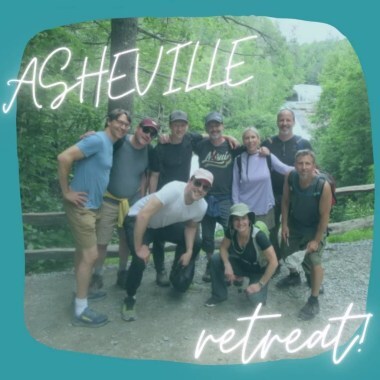
Picture this: a retreat in the mystical mountains of Asheville, an idyllic setting where time seems to stand still. Upon arrival, I discovered something both thrilling and uncomfortable: a cell phone dead zone. No service, no notifications, no distractions. Just pure, uninterrupted time with nine other inspiring speakers and business owners.
The Glorious DisconnectFor the first 24 hours, I'll admit, I felt the pangs of withdrawal. My fingers twitched to scroll through my phone, check my email, and send a quick text. But as the hours turned into days, something extraordinary happened. I felt a freedom and clarity that I hadn't felt in years. I was truly present, not just physically but mentally and emotionally too.
Our meals transformed into lingering conversations filled with laughter and insight rather than hasty bites in between phone checks. Activities became immersive experiences, free from the urge to check in or report back to the digital world.
What I experienced is that I've often felt that I was disconnected, but I wasn't. As long as I knew when the next time would be that I could check my phone or laptop, send a text or an email, or listen to a voicemail, I was never fully present. I was always anticipating a message or interaction. After about 24 hours of this lack of access, I felt what being truly present was like. And it was glorious.
Digitally-Downsized VacationI downsized recently for our 25th-anniversary vacation. We went to New Orleans and Portland, and on day one, I sent one text to my parents thanking them for being so wonderful to my husband. Then I didn't look at my texts, emails, voicemails, or Voxer messages for seven days. The only badges I have on my phone are voice mail because if someone calls nowadays, it means something, and Voxer, which is how I communicate with my team. I took those badges off and moved Voxer to my third screen on the phone, which is also where my email app is. This kept me from getting tempted to check it. The text was sticky. I have an OOO message on my emails and voicemail, but how do I let people know I won't respond to their texts?
It was a little bit of an inconvenient hack, but I achieved it nonetheless. I went to my settings to the Focus Mode and selected Driving since that is the only one that will give a response. I changed the response to say I'm away on my 25th anniversary and will not check text messages until July 25th. It was inconvenient because every time I wanted to check my phone for something – finding a restaurant, turning on music when I worked out, or checking a map, I had to select ‘I'm not driving' (it's a safety feature) and then turn it on again to the driving mode when I was finished. Still, it was worth it to be truly present with my husband.
It was a digital downsize. I still used my phone for maps, my Daily Burn app, checking my Oura Ring, and running my Apollo Neuro at night. However, I didn't interact with anyone electronically for the entire trip.
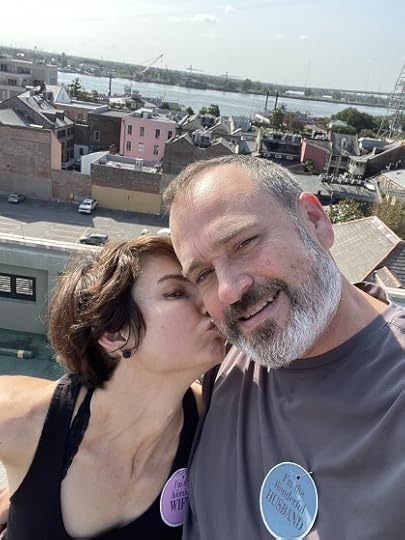
Digital downsizing is more than just putting your phone away; it's a conscious decision to be fully present in your life. My husband, Kevin, might not have been the biggest fan, but I was on cloud nine. It wasn't always easy, but the inconvenience was a small price to pay for the connection and presence I felt.
Here are some of my takeaways from this eye-opening experience:
Digital Downsizing is not Detox: “detox” implies that our devices are harmful. But it's not about eliminating technology but mindfully using it.Being Truly Present: Not checking your messages isn't the same as being unplugged. You're not fully present if you're still thinking about your emails. Your family can even feel “anticipatory stress,” knowing you might be distracted at any moment.Challenges and Rewards: Digital downsizing comes with challenges, such as finding the proper settings on your phone to avoid distractions. But the rewards, like deeply connecting with your loved ones, are priceless.Your Digital Downsizing ChallengeI urge you to try this digital downsizing experiment. See if you can go 24 hours or more without messages coming in or going out. Feel what it's like to be fully present. Experience a vacation without the constant pull of notifications and social media.
I know it might sound daunting, but I promise you, the benefits are life-changing. It's not about disconnecting from the world but reconnecting with what truly matters.
So, brave souls, are you ready to take on the digital downsizing challenge? I'd love to hear about your experiences and how this mindful approach has affected you and those around you.
The post Digital Downsizing: Embracing True Presence in a Connected World appeared first on RaderCo.
August 8, 2023
Creating a Culture of Contribution
In the corporate world, it's all too common to witness the glorification of the hustle-and-grind mentality. Elisabeth Galperin, RaderCo Productivity Specialist and founder of the company Peak Productivity shared invaluable insights on our Health-Powered Productivity podcast on moving toward a culture of contribution.
Guest post by Elisabeth Galperin.
As a business productivity coach, keynote speaker, and productivity trainer, I interact with professionals of all ages and at varying stages of their careers. Many are managers and leaders in midsize companies and large corporations. Others are entrepreneurs scaling their businesses, growing their teams, and expanding their products and services. All of them are sleeping less, working more, and taking on more responsibilities than they can handle in the workplace. Why? Because most individuals still believe this hustle-and-grind approach is the only, or maybe the best, way to climb the ladder toward success and leadership.
I almost always kick off my team trainings and workshops by asking participants to brainstorm a list of synonyms and connotations that come to mind when they see or hear the word BUSY. The responses are almost always the same negative words and feelings: stress, overwhelm, disorganization, inefficiency, spinning on a hamster wheel, multi-tasking, feeling out-of-control, whiplash, and chaos.
When I ask the same groups of professionals to reflect upon the word PRODUCTIVE, the connotations are much more positive: prioritization, execution, accomplishment, completion, meaningful work, proactive, effective, intentional, and adding value.
One word I rarely hear – yet often suggest and offer to those listening – is what I believe is the driving force and the core human value behind all working professionals' efforts, actions, behaviors, and goals: CONTRIBUTION.
Research is published on a near daily basis with evidence making it abundantly clear: a culture of busyness is not what today's companies and organizations will benefit from, nor is it what they can afford to encourage or allow. A culture focused on productivity is much more likely to create a desirable workplace environment. Yet, I would propose that the truly ideal workplace culture – where professionals dream of working and where individuals feel extreme gratitude to be team members – is a culture of contribution.
Steps you can take to create a culture of contributionAn organization with a culture of contribution has clearly defined the most meaningful tasks and responsibilities for each team member. It has created a role where those activities are prioritized and praised. A culture of contribution values each individual's unique skills and strengths and allows individuals to demonstrate and utilize those skills without placing unreasonable constraints on how long it takes or where work must be completed.A culture of contribution provides continuous clarity to each team member regarding how his/her daily tasks positively impact and directly contribute to the company's greater mission, vision, and values.A culture of contribution taps into the innate human desire to work at our highest level, put forth our best effort, and contribute in the most significant way possible to support the group's mission and success.Is this utopia truly attainable? I firmly believe it is.
Prioritizing Company CultureThe conversation around prioritizing company culture is here to stay. Members of the younger generations are demanding it, and the older generations are beginning to feel more empowered to ask for and expect more from their company than simply a paycheck and health insurance benefits. Most of us in the workforce will spend 90,000 hours at work over a lifetime. That is 30% of our lifetime! Doesn't it seem logical, then, that organizations and leaders would be wise to invest in efforts to ensure that their people are in a place where they are happy, well supported, and are significant contributors to the mission and vision?
Creating a culture of contribution is beneficial for everyone – team members, leaders, and customers. It can also have a domino effect of positive impact on family members and the community.
What is one first step you can take this week or month to begin creating a healthier culture of contribution in your workplace? In the words of George Leonard, “How to begin the journey? You need only to take the first step. When? There is always now.”
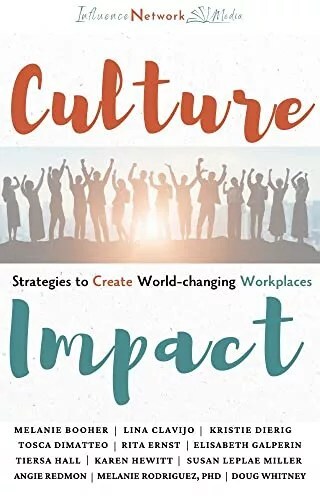
Buy the book – Culture Impact: Strategies to Create World-changing Workplaces.
The post Creating a Culture of Contribution appeared first on RaderCo.
July 25, 2023
How Crafting an Ethical Will Can Elevate Your Legacy and Bring You Closer to Family
This is a guest post by RaderCo Team Specialist, Judith Guertin.
Elevate Your Life with an Ethical WillLet's delve into a hidden gem that can profoundly impact both your personal growth and the legacy you leave behind. Amidst our fast-paced lives and growing to-do lists, a tool stands apart – The Ethical Will. This is not your average legal document; it's a treasure chest, a testament to who you are and what you stand for.
What is an Ethical Will?An Ethical Will is an age-old practice, recently rediscovered as a powerful personal development tool. It is an intimate letter to your loved ones, capturing the essence of your being. This document transcends basic information and delves into your journey, values, aspirations, and the wisdom you want to impart to future generations. The Ethical Will is where you narrate your life story, not as mere data points but as a living, breathing tale.
The Heart of The MatterTake, for example, a touching story of a grandfather named Joe who fulfilled his grandson's wish by writing down his life stories. His account was so heart-warming and full of wisdom that copies were made for the entire family. The pages brought Joe's voice to life, recounting his struggles during World War II, his lessons in friendship, honesty, and love, and how his experiences shaped his values and treatment of others. This Ethical Will became a family treasure.
 Crafting Your Ethical Will: A Productivity Powerhouse
Creating an Ethical Will can also be a powerful productivity booster. By introspectively answering the questions you set for yourself, you begin a journey of self-discovery.
Ten questions to kickstart your Ethical Will:What do you want to be most remembered for? A question to align your actions with your legacy.Which family traditions hold special meaning to you? This helps in understanding and preserving what matters most.What are your hopes for future generations? A reflection on what you wish to instill in others.How do you cope with life's challenges? Share your resilience strategies.Has a belief in a higher power influenced any decisions? Shed light on your spiritual journey.What is one life experience you hope your family gets to have? Share your awe-inspiring moments.What brings you joy? Dive into the simple pleasures that make life worthwhile.What is your fondest childhood memory? Connect with your roots.What is your most treasured possession? Share the stories behind your treasures.Who influenced different phases of your life, and how? Honor the ones who shaped you.Leave A Legacy That CountsAs productivity enthusiasts, we focus on getting more done. Crafting an Ethical Will redirects some of that energy inward, fostering personal growth and ensuring that what we leave behind resonates with meaning and love.
Get into the habit of writing down your thoughts and feelings. This practice not only shapes the invaluable gift you'll be leaving for your family but can also bring transformative change within you.
Embrace this journey with open arms. May your Ethical Will be a beacon of wisdom and love for future generations.
Thank you for joining us on this path of self-discovery and legacy building with an Ethical Will.

To learn more, check out Judith's book Beyond the Estate Plan Guide: Important Details Your Family Needs When You Aren't Here to Tell Them.
The post How Crafting an Ethical Will Can Elevate Your Legacy and Bring You Closer to Family appeared first on RaderCo.