Marcey Rader's Blog, page 2
April 22, 2024
Self-Care: Why It’s Not Just On You, But Your Company Too
Have you ever been scrolling through Instagram or TikTok and felt your blood boil at yet another post featuring someone's perfect sundae, serene bath, or woodland walk tagged #Self-Care? If you're nodding your head, you're not alone.
Look, I get it. Your life is a nonstop juggling act—caring for a family, managing a workload for two, perhaps? So, the idea of #Self-Care can sometimes feel more like a taunt than a helpful suggestion. If you've ever wanted to drop a snarky comment saying, “It must be nice to have time for self-care!” You're like 99% of our clients when they hire us.
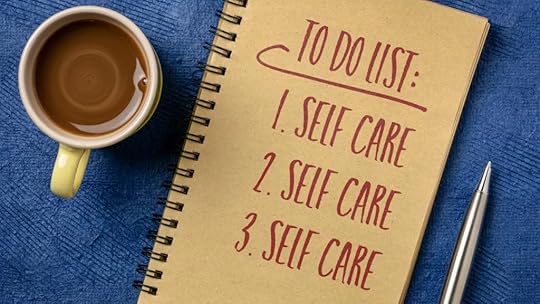
But hold up! Let's dig a little deeper before you fling your phone in frustration. Self-care is your responsibility, but it's not all on you. Companies and organizations also play a crucial role here. It's not just about adding “cool” perks like unlimited cold brew or Zen rooms. It's about rethinking the work culture that necessitates all this self-care in the first place.
 The Irony of Workplace Wellness Programs
Here at RaderCo, we get an insider's look at all sorts of wellness perks—everything from Employee Assistance Programs (EAPs) and virtual yoga classes to in-house massage therapists. Kudos to the companies for these offerings, but let's not forget one thing: all the perks in the world won't matter if employees don't have the time or mental bandwidth to use them.
Would you even need a 2-minute meditation from the insurance-provided app if you weren't sandwiched between back-to-back video meetings? Would you require an in-house therapist if your company culture didn't keep you on edge 24/7?
 The Failures We've Seen
All companies mentioned are anonymous, but the struggles are real.
Company A: The insurance provider slashed healthcare benefits but promoted a meditation app now included in their plan. Our client spent hours calling offices to find a covered psychiatrist who was actually taking patients for her 13-year-old son. Stressing over healthcare needs? That app is suddenly less appealing.Company B: They offer acupuncture and chiropractic services but won't cough up a dime for an ergonomic desk. One expectant mom, who was supposed to be hybrid, chose to work from home on her sit-stand desk to avoid discomfort—all because of a missing $150 standing desk in her corporate office. She felt the shaming from her team that she ‘got' to work entirely from home the last five months of her pregnancy. And she even had a doctor's note!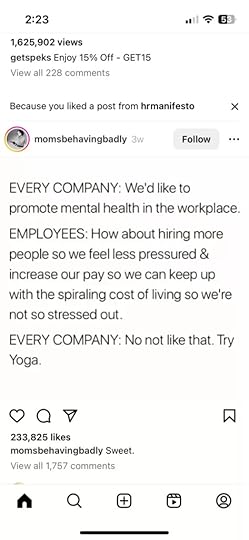 True Success Stories
Alright, enough of the downer stuff. Let's talk wins. A team at the University of Chapel Hill that we worked with for a year opted to spend their budget on productivity workshops and coaching over the typical parties and group lunches. Result? A more cohesive, efficient, and stress-free work environment. Read their case study.
Another client, Cook Wealth, reduced internal meetings and actually encouraged their team to—wait for it—enjoy nature walks together! And leaders led them! Read the case study summary.
Lastly, our largest client, Blueprint Medicines, provides productivity coaching packages to 15-18 individuals each year at all levels. It's not just for the executives or leaders. It's for everyone because if the people supporting the leaders aren't effective, happy, and healthy, it hurts the whole organization and brings bottlenecks of a different type.
We've implemented Design Days, where most of the company is meeting, email, and instant-message-free for an entire day once per quarter to allow everyone to do deep, focused work.
They've offered acute crisis counseling with our RaderCo Crisis Specialist for team members who have experienced things like the accidental death of a loved one, miscarriage, cancer diagnosis, and sexual assault. This is important because, while long-term therapy may be needed, the energy to find one in your plan (if it's even covered), get on a waitlist, or schedule an appointment, and then wait for that appointment is too much to bear and not helpful at the moment. Offering this option within 24-72 hours, with the expectation of one session or a few until they need or find long-term help, is invaluable to the employee and not a burden to coordinate. Read the case study.
A Call to LeadersIf you're in a leadership role, ask yourself: What workplace pressures are making your team members desperately need that #SelfCare? If you've tackled this challenge head-on, share your strategies with me. No-Meeting Friday (that you actually stick to)? Practicing email-free vacations where you shut them out of email? I want to hear it all!
So here's the final nugget: Self-care shouldn't be a burden, neither on the individual nor on the team. Let's make it something more genuine, more integrated, and ultimately more effective.
Looking to make your company the epitome of health-powered productivity? Contact RaderCo. We're in the business of changing business for the better.
Until then, find your balance and own it. Self-care is everyone's job.
The post Self-Care: Why It’s Not Just On You, But Your Company Too appeared first on RaderCo.


April 9, 2024
Joy Of Opting Out
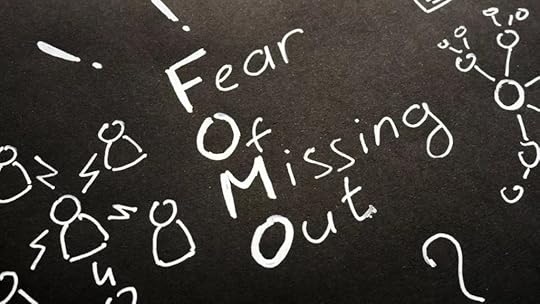
Almost everyone has heard the phrase Fear Of Missing Out or FOMO. The Oxford Dictionary defines it as – anxiety that an exciting or interesting event may currently be happening elsewhere, often aroused by posts seen on social media. I see and hear this so often, especially in younger people. I thought I would miss it when I dropped Twitter and Facebook in 2019 (I never had Instagram or TikTok).
Not once. Nope. Not even a tiny little bit.
I chose to be LinkedIn only because I only use social media for my business. I sign on twice daily, create posts, comment, and am off in five minutes or less.
 JOMO
JOMOJOMO stands for the Joy Of Missing Out and was coined by productivity expert Tanya Dalton, who wrote the book Joy Of Missing Out: Live More By Doing Less. I appreciate JOMO, and it's fun to say, but I don't use it because I honestly don't feel like I'm missing anything.
I do not miss taking strangers, peers, or even my friends to bed with me in the early morning or late at night. Only my husband is allowed in there.
I do not miss being distracted by what my friend Casey posts online when my friend Cindy sits across from me.
 Joy Of Opting Out
I coined the term Joy Of Opting Out in my book, Work Well. Play More! Productive, Clutter-Free, Healthy Living – One Step at a Time. I'm not missing anything. I'm opting out of seeing everyone's best selves that they post online or being a voyeur to people I only care a little about instead of spending time with people I do. I'm opting out of being inundated with ads that tell me I don't look young enough, my jeans are out for this season, and that I should really buy the latest bestseller.
I'm opting out of medical misinformation, deciphering what's real or fake news, and clickbait headlines.
I've never felt like I'm not informed enough. I still get news; I get it from news channels intentionally, not letting it just show up in a feed somewhere.
I still buy clothes and shop, but I typically go to a site when I want something, not because I've seen something I must have while I'm just looking at a friend's vacation photos.
Have I missed things? Well, maybe. Maybe I missed the photos of someone's newborn baby or their latest kitchen remodel. But if I'm close enough to them to care, I can also reach out personally and ask them to share their favorite pic. But quite frankly, I don't know if I've missed anything because I've also opted out of feeling the need to keep up with everything and everyone. I have my circle, and I reach out to them directly. I know I won't always be privy to the latest memes or inside jokes, and that's okay. The time, energy, and peace I get back are well worth the opt-out.
Is there something you are spending your time on…whether it's a social media channel, parties or events you don't like attending, a class you drag yourself to, or anything you would find joy in by opting out and filling that time or space with something else? I'm not anti-social media if it's used intentionally and you feel happy and good about yourself when you're done using it. I'm not against anything done with intention because you want to do it, not because you feel like you're missing out.
Remember, you're opting out…you aren't missing anything.
The post Joy Of Opting Out appeared first on RaderCo.
March 26, 2024
Simplify the What-Ifs
Have you ever considered what would happen if you weren't around to handle things? It's not a topic we often dwell on. Still, it's crucial to consider it to ensure that your loved ones and professional circle aren't left scrambling. RaderCo's very own Judith Guertin steps in with a brilliant solution – “Beyond the Estate Plan Guide: Important Details Your Family Needs When You Aren't Here to Tell Them.” She recorded a complimentary podcast, episode 80, on Crafting an Ethical Will. Pair these invaluable resources with your own electronic document that I'll describe, and you'll be ready to face the unexpected what-ifs head-on.

I took this concept to heart a few years ago. I crafted my own “Instructions for Marcey and RaderCo if Incapacitated or Stuck on an Exotic Vacation.” I shared this information with key individuals in my life – my husband, brother, and best friend/trusted second-in-command at RaderCo. I believe that preparation is power, and by sharing these non-legal instructions, I'm ensuring that everyone knows exactly what needs to be done, even if I'm not there to guide them.
ScenariosAbout 15 years ago, I was in a mountain bike accident and suffered a Grade III concussion. I wasn't allowed to look at a computer screen for three weeks. The day after, I picked up my toothbrush and didn't know what to use it for. Unfortunately, my team was stuck because they didn't know how to move forward, and my husband couldn't tell them where anything was.
I met a woman who had lost her son. Because he lived in another city, she didn't know who to contact, that he belonged to a gym and several meet-ups. Many people weren't aware he had passed away until after his memorial because there was no phone or email tree. Theft was an issue at his address because he had many things auto-shipped to him, and she didn't know what was coming next. It was not what she wanted to worry about while she was grieving.
My friend owns a business and was on vacation when the pandemic hit. He wasn't able to come back for almost seven months. Because he had to rely on an internet cafe for a few weeks before he could buy a laptop, and most internet cafes had very limited hours and availability, he had trouble taking care of things at home (and had his Dollar Shave Club order stolen from his front porch).
Here's a glimpse of what I've included in my personal instructions to give you some ideas for your own:
Long-term Care and Insurance: Let them know your insurance provider for long-term care and related details.Essential Document Location: Ensure they know where crucial documents or a safe are stored in your house.Digital Access: Share information about your password manager and who holds administrator access to manage online accounts.RaderCo Agreements: Access RaderCo client agreements, payment details, and refund procedures.Subscription Accounts: Make a list of paid subscriptions to cancel to prevent unnecessary charges.Phone Tree Contacts: Establish a list of individuals who can notify others. Financial Accounts: Share details about your banking, credit cards, and investments.Website Management: Outline steps to create a temporary landing page on your websites and manage your online presence.Social Media Notification: Plan for a professional social media update and eventual deactivation.Email Accounts: Set up autoresponders for your email accounts and specify handling after a certain period.Client Information: Ensure access to your Client Relationship Management System and key client contacts.Team Information: Share details about your team members and their roles.Business Closure: Provide instructions about your business insurance, PO Box closure, and more.Contact Information: Share your personal and business contact numbers.While predicting every scenario is impossible, this comprehensive list helps ease the burden for those left behind. It ensures a smooth transition, prevents unnecessary expenses, and maintains your professional reputation even after you can no longer manage things directly.
But what about extending this approach to 1-2 people beyond your spouse or partner? Think about who you trust implicitly and who possesses the right mix of practicality and emotional resilience. Share a condensed version of your instructions with them, tailored to their involvement in your life. Remember, it's not just about the details – it's about providing your loved ones with the tools to navigate the unexpected confidently.
The post Simplify the What-Ifs appeared first on RaderCo.
February 13, 2024
Creativity Through Discipline

You might think I'm the Queen of Discipline thanks to Gallup's StrengthsFinder, placing it among my top five strengths. Add in my Type A (Awesome) tendencies, and you could say I'm a lover of routines and habits. However, let's spotlight two very different groups of people I work with and see how creativity through discipline fits in their world.
The High-Achievers: Drowning in “Busy”Many of our clients at RaderCo are high-flying professionals who've mastered the art of “doing.” They're not lacking in motivation; they're drowning in responsibilities. The paradox? They're so swamped that even though they want to form new habits—be it exercising or meditation—they can't see past the urgent to get to the important. They often fall victim to Time Discounting, the belief that their future selves can juggle all tasks, attend their kid's recital, and earn a Ph.D., all while making dinner from scratch. They suffer from tunneling, where their brains are so overwhelmed, and they're multitasking so much that they have extreme decision fatigue. This fatigue makes us resort to status-quo decisions and procrastination.
The game-changer here? Habit stacking is tailored to their packed schedules. They are more likely to be amenable to routines, systems, and processes. They know they can help them. They just aren't always sure how to implement them. When they do? Big wins. Efficiency and purpose are restored.
The Creatives: Rebels with a CauseThen we have the creatives, the artists who cringe at the idea of a timetable as if it were kryptonite to their creativity. Take Lisa Wood, RaderCo's very own multi-talented artist and accomplished jazz singer. Lisa believed that until her creative husband taught her how schedules could improve her day-to-day life, including her artistic endeavors, and she would feel better and have more energy with her family.

Or let's consider my friend George Hage, a jack-of-all-arts who credits his Master's degree in Project Management for helping him escape the “starving artist” trope. Despite his occupation, he doesn't scorn routines; he sees being organized as integral to his creative success.

My husband, Kevin, is also a creative. He's played drums since he was seven, went to college for percussion, and has taught and performed professionally for 36 years. He's the first person to say he likes and needs a routine (and if I ask him to do anything before he's had coffee, shame on me!). He's often experienced the times when he has an entire day free and thinks that he'll get so much done, but because he doesn't have ‘bookends' or things to schedule in between, he finds he wastes the day away.

I see this with many people, no matter what their personality type. How many times have you taken a day or a week off with big plans, but because you want to be completely unscheduled, you reach the end of your day or week, or even your sabbatical and realize that you frittered it away and didn't make use of your time? You don't have to have a daily agenda, but having some task or goal and an idea to break it up and schedule around will make you significantly more likely to achieve it.
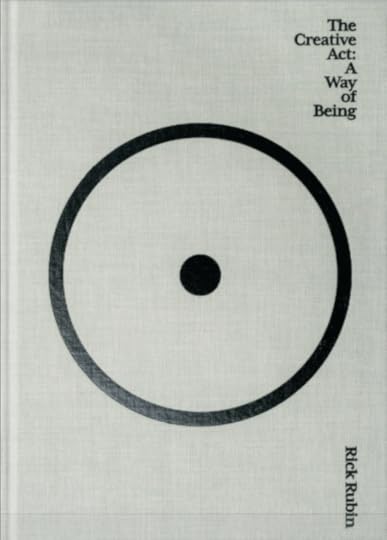
The Unexpected Discipline Advocate: Rick RubinStill not convinced? Let's drop the name Rick Rubin, the legendary music producer and a surprising advocate for disciplined living. In his book “Creative Act,” Rubin eloquently busts the myth that discipline and creativity are at odds:
“…the more set in your personal regimen, the more freedom you have within that structure to express yourself. Discipline and freedom seem like opposites. In reality, they are partners… Discipline is not a lack of freedom; it is a harmonious relationship with time. Approaching the practical aspects of your day with military precision allows the artistic windows to be opened.”
 Turn Routine into Your Creativity Rocket Fuel
Setting up routines in specific areas of your life can paradoxically free you to be more creative. A morning jog or a bit of journaling can pump your system full of endorphins or spark fresh ideas, preparing you to paint your next masterpiece or compose your next hit. Walking for 15-20 minutes connects the neurons between the right and left hemispheres of the brain, allowing you to think more creatively in problem-solving. Discipline isn't about constraining your creativity but setting the stage for it to flourish.
So, let's end with a challenge: What routine can you establish to supercharge your creativity? Your future self will thank you.
The post Creativity Through Discipline appeared first on RaderCo.
February 12, 2024
Why Snackable Moments Are Your New Productivity Hack
Ever find yourself so swamped that you barely have time to grab a bite, let alone hit the gym? We've all been there. So let's talk about the magic of snackable moments – “snacking”—not just food-wise, but life-wise.
The Power of a SnackWe're all experts at food snacking, right? You're running from meeting to meeting, so you grab a banana or a protein bar. It takes a minute—maybe five—but it does the job. It sustains you. It energizes you. And guess what? We often fit these tiny munch moments into our day without a second thought.
A Bite-Sized Entertainment FeastThe same goes for how we consume media. Don't have time for a 3-hour movie epic on a Tuesday evening but still want to wind down? You opt for a 30-minute episode of your latest Netflix obsession. Can't listen to an entire album? A quick Spotify shuffle for your favorite tracks will do. Quick, satisfying, and no commitment woes!
 So, Why Not Snackable Moments of Exercise?
When it comes to moving our bodies, though, we're stuck in an all-or-nothing mindset. No time for a 45-minute cardio session? We scrap the idea altogether. But hold on a minute—have you ever heard of NEAT? That's Non-Exercise Activity Thermogenesis, a fancy term for all the small movements you make throughout the day. Standing, pacing, even fidgeting—it adds up, folks! In fact, NEAT is a better predictor of your longevity than that morning jog you almost skipped.
Let's rename those small exercises to what they really are—Movement Opportunities. Imagine doing a quick set of lunges while waiting for your coffee to brew or some seated leg raises during a Zoom call. Trust me, these “exercise snacks” add up and make a significant impact on your well-being.
 Not Just Physical—Mental Snacks, Too!
Think meditation is a time-suck? Have you ever heard of a “breathing snack”? A couple of deep breaths, following a 4-6-8 count (inhale for 4, hold for 6, exhale for 8), can serve as your mini-meditation session. Like the movement snacks, these little moments of mindfulness accumulate into a more balanced, calmer you.
 Snack Your Way Through Projects
Feeling overwhelmed by a massive project? Try ‘snacking' it. Break it down into smaller, digestible tasks. Maybe you start by jotting down ideas on sticky notes or outlining a single slide for a presentation. Remember, Rome wasn't built in a day—but they were laying bricks every hour!
Bottom Line: Every Snackable Moment CountsSo, the next time you think, “I don't have time for this,” remember: you have time for a snack. Whether tackling a project, catching a breather, or squeezing in some squats, every little bit contributes to your overall productivity, wellness, and satisfaction. Here's to making life more “snackable”!
We have our own snackable podcast! The Health-Powered Productivity podcast holds bite-sized knowledge nuggets in 3-15 minute episodes. Subscribe on your favorite channel or visit www.helloraderco.com/podcast.
The post Why Snackable Moments Are Your New Productivity Hack appeared first on RaderCo.
February 7, 2024
Say Goodbye to Screen Lunches
Growing up, many of us were no strangers to eating in front of the TV. Holidays might have meant gathering at the dining table, but on a regular day? The TV trays were up, and the screen time continued through the meal. Screen lunches were common.
Fast forward to adulthood, and the scenario has only escalated. With laptops, tablets, and smartphones at our fingertips, screen lunches have become a regular part of our lives. But what if I told you that this habit harms your satisfaction with your meal and affects your productivity and health?
The Effects of Screen LunchesLess Satisfaction: Eating while distracted means we don't fully taste or appreciate our food. It doesn't get imprinted on our brain that we've eaten. The result? More afternoon snacking and less enjoyment. Eye Strain: Constant screen time affects our eyes. Most humans blink about 20 times per minute, but when we're concentrating on a computer, it can drop to 14 times per minute. We also don't do a full blink where the edge of the upper eyelid contacts the lower lid. This can lead to blurred vision, dry eyes, and headaches. A helpful tip: the 20-20-20 rule – every 20 minutes, look 20 feet out for 20 seconds.Screen-apnea: Sounds strange, right? But focusing on screens can lead to shallow breathing or even breath-holding. Pay attention next time you're working. Are you breathing shallowly or holding your breath? I know I do this when I'm not focusing on breathing. This affects our diaphragm moving up and down, which affects our digestion. You also create tension that can give you head, shoulder, and neck aches. You can return to a regular breathing rate by leaving your screen at lunch.Low Energy and Focus: We aren't robots. We need breaks to recharge mentally, foster creativity, and stay productive.Unhappiness: A connection exists between screen usage during breaks and unhappiness. It's time to invest in true restorative time. Your Guide to a Screen-Free Lunch
Changing lifelong habits can be daunting, but it doesn't have to be. Here's how to start:
Begin with one day per week, aiming to eat screen-free most days.If every meal is screen-bound for you, start with just one meal a day, be it breakfast, lunch, or dinner.Start your meal screen-free for at least ten minutes. Every bit counts!And what about those lunch meetings? Video lunches can feel strange and look impolite. If you must eat, turn off your camera and face your food.
Setting Up Screen-Free GuardrailsWe must embrace screen-free lunches as essential for our well-being. They help us:
Take a break to move our bodies.Focus in the afternoon and solve problems creatively.Breathe better, reset our eyes, and recharge our mental batteries.So grab that calendar and block your screen-free lunches. It's time to nourish your body and mind and foster a healthier relationship with technology.

Screen lunches might have been part of our past, but they don't have to define our future. Join the movement for a more balanced, happy, and productive life. It all starts with turning away from that screen and savoring your meal. And who knows? You might find your afternoons more energetic, focused, and creative.
The post Say Goodbye to Screen Lunches appeared first on RaderCo.
January 16, 2024
Stop Inviting Your Company to Bed
How much do you like to imagine sleeping with your boss, manager, or anyone else from your company? Ick, right? Stop inviting your company to bed with you!
Are you guilty of cuddling up with your company each night through emails, Slack messages, or other work notifications on your laptop, tablet, or phone? Your bed is for snoozing, reading, or sexy-time – not for the daily grind of scrolling through social media or checking work emails.
 Your Bedroom: A Sacred Space
Picture this: Your inbox is like a demanding stranger barging into your peaceful space, handing you a never-ending list of to-dos right before bedtime. Now, your brain's working overtime, processing all these demands while you're trying to drift off to dreamland. Note that not replying with your tapping fingers is still replying because your brain is answering. That's not relaxation, that's chaos!
And what about replying to that email or message late at night? Now, you're also stealing someone else's evening if they don't have the discipline to refrain from checking. Let's be courteous and save the work chatter for work hours.
Blue Light Blues
Don't even get me started on the blue light from your screens! It's like an unwelcome party guest, messing with your sleep cycle and circadian rhythm and pretending it's daytime. Your brain's all confused and secretes less melatonin, and falling asleep becomes a Herculean task.
Morning Madness
If you're diving into emails as soon as you wake up, what message are you sending to yourself? That work takes precedence over exercise, meditation, dental hygiene, family connections, or a nourishing breakfast? Priorities matter.
Let's face it: no one ever landed a dream job because they were the “World Champion of Email Checking.” So why let it dominate your life?
 Take Back Your Bedroom!
It's high time to reclaim your sacred space. Stop inviting your boss or manager into bed with you, and put yourself first. Your family, health, and personal well-being deserve top billing, not your inbox.
Your bedroom is your sanctuary to unwind and connect with what truly matters. So lock that virtual office door and savor the peace, joy, and relaxation that await you.
Remember, you're in control of your life. Embrace what matters most, and keep the work at bay. Happy snoozing! 
The post Stop Inviting Your Company to Bed appeared first on RaderCo.
January 2, 2024
Mastering Priorities: Are You Walking the Talk?
I'm often told that one of the reasons I'm trusted is because I walk my talk. It's not always easy, but I don't recommend anything I can't do myself. So, let's dive into the nitty-gritty of mastering priorities. That magic word we toss around like confetti at a celebration.
Your professional and personal life buzz around you like bees around a honey pot. But here's the thing: You can't be the queen bee for everything. Nope, not even you. So, we're capping it at three priorities each. That's the sweet spot. It might even be just one, and that's perfectly A-OK.
As my friend Melina Palmer of the excellent Brainy Business podcast says, we use time discounting to believe that our future selves will be better and do better. Future self will be able to accomplish five or ten things. We overestimate what we can do in a short period. Then, when we can't do it, we feel bad about ourselves. It's not that we are failures. We just weren't realistic in thinking through our priorities and how much our real selves will be able to complete.

Imagine you're on a cosmic journey, gazing down at Earth from a spaceship. That's your Annual view, broad and expansive. Then, you switch to an airplane view, cruising through the clouds as you tackle your Quarterly priorities. Zoom in a bit more, and you're on a skyscraper, checking out your Monthly ambitions. Drop down to the treetop level for your Weekly priorities. Finally, it's all about your Daily hustle down in the weeds, where the real action happens.
Aren't sure how to map this out. We have next-level training with prompts for reflection, planning, and prioritization in this format in our Powered Path Program and online productivity course!
But that's not the main point here. When I'm in the coaching zone with my personal clients, we're not just talking about priorities. We're turning the spotlight on them, Hollywood style.
Imagine a journalist shadowing you, crafting a ‘Day in the Life of You' story. Would they say you're rocking those priorities? Or would there be some awkward shuffling and throat-clearing?
Let's get real with an example. Check out this client, a true priorities juggler:
Annual Personal Top Three:Reign in that HgA1c level (yep, that's health lingo for a diabetes marker).Slash screen time, embrace the real world.Amp up spouse-listening skills.Hold on, we're not done. Let's narrow the focus a bit just to Priority One.
Quarterly PriorityDecode blood sugar patterns (Continous Glucose Monitor or CGM in the game).Monthly PriorityConquer the pill-taking routine.Weekly PriorityWalk for ten minutes after eating sugar-spiking foods based on CGM data.Seems like she's playing the priorities game, right? But ah, plot twist! Our journalist friend noticed some hiccups. She's scanning her CGM app when the day's almost done. Oops. That doesn't help her to know she needed to move after eating the cheese quesadilla for lunch or Kind bar for her 3pm snack.
She's also double-screening during episodes of The Morning Show and text-checking during her partner's stories of the day, which is not aligning with her other two priorities.
Now, let's shift gears to the professional realm:
Annual Professional PrioritiesGrab that advanced certification.Solve three bottleneck and process problems in the department.Level up presentation skills.Quarterly PrioritiesClock in 2 hours per week for certification.Outsmart refrigerated delivery snags in the supply chain.Focus on virtual presentation skills.Monthly PrioritiesSame ol' 2 hours per week for certification.Untangle supply chain knots in the scheduling system.Lock in those presentation coaching sessions.Weekly PrioritiesKeep up the 2-hour certificate grind.Re-strategize the supply chain scheduling to a dedicated team member.Crush that coaching session.Hold the phone! Our journalist, ever the observant sleuth, catches a curveball as she's following around our client. She's trading in certification time like a swap meet, barely squeezing in study sessions. She let people schedule over her certification time so that she only had about 45 minutes to study on Thursday late afternoon when she was tired.

She's also playing firefighter to someone else's emergencies. She showed up late to her coaching session because of someone else's fire that she felt compelled to put out.
When we reflected on the week, she could have pushed back on two meetings since they were last minute. She admitted she had FOMO and a little bit of guilt. When we discussed if the certification would help her at work, she said most definitely – it's actually a requirement for promotion! As for the coaching session, she wasted part of the company's money on the investment of the session by attending it late. If she hadn't checked her email one last time, she wouldn't have seen the email asking for a document at the last minute. By giving it to them, she has trained them that she will come in and save the day when it was their procrastination that made it an emergency in the first place. And guess what? It actually wasn't even an emergency. The person wasn't even using it until the next day.
So, here's the grand takeaway, folks. What do you say you prioritize? It's time to put it under the microscope. Health your mantra? How about taking a lunchtime stroll or powering down after dinner? Family on the frontlines? You'd better be present, not just physically there. And email aversion? Let's break up with those badges and notifications.
Ready to face the music? Imagine that journalist peeking into your day. What's their headline about your Top Three Priorities? Is it a rave review or a plot twist you never saw coming? The power to rewrite that story is in your hands. So, what'll it be?
If you need help mastering priorities, let's talk!
The post Mastering Priorities: Are You Walking the Talk? appeared first on RaderCo.
December 19, 2023
Unlocking the Power of Body Doubling
Can something as simple as another person's presence make it easier to focus on the task?
While no concrete research proves its effectiveness, body doubling is helping many people get things done.
According to a 2022 study, structural and functional differences exist in the brains of people prone to procrastination. This study shows that people can overcome procrastination when they work in groups where they can observe others with better productivity skills.
Body doubling (not like a stunt double) is working alongside someone who can motivate you to stay on a task that you find challenging. You don't even have to be working on the same thing. If you tell your body double what you’re going to work on and work together on your individual tasks, then you're more likely to be productive.
It’s one of those productivity tools we often use without ever calling it by name or consciously thinking of it as a hack.
For example, we might head to a coffee shop to work in the presence of strangers rather than completing tasks at home. We also tend to push ourselves harder at the gym, surrounded by others doing the same thing, than we might while working out at home.
There is additional research that suggests that social encounters activate the dopamine pathway, which is important for motivation and reward. Engaging with a body double may also help boost dopamine levels.
Six potential benefits of using a body double:The body double may model more effective ways to complete common and mundane tasks. People can also become more effective using tools such as Focus booster*. Using them individually or with your body double will only provide a positive effect. Working with a body double can make boring tasks less frustrating, creating an incentive and motivation to complete them.The body double provides some accountability and may even be able to offer feedback on distracting or self-defeating behaviors. If the strategy works, it may promote a sense of mastery and self-efficacy that inspires a person to develop additional techniques for focus. You can try out other techniques like Apollo Neuro**. An ankle or wrist device can help your sleep, focus, and relaxation by activating the parasympathetic rest and digest response. Increased sense of calm. A sense of ease can be induced through other means as well. For example, meditation apps like Calm can boost your focus levels.Body doubling works by targeting executive functions. It can also make an unpleasant task more enjoyable.“I don’t need you to help me, I just need you to keep me company as I do this”- Unknown
There’s currently limited research to support body doubling or to explain how it might work, but that doesn’t mean you won’t find it helpful. There’s lots of anecdotal evidence in support of this technique.
Choosing a supportive person who won’t distract or shame you is important. It’s also important to know other science-backed options can help you become more productive if you don’t have access to a body double.
Asking someone to be your body double might feel awkward, but the best approach is often straightforward. You could say, “It's something I heard can help with productivity. Would you mind just being around me while I work on this? Maybe you have something you could work on, too. Together, we can focus and achieve our goals”.
Bob Proctor (Author of Think and Grow Rich) perfectly captures the impact of this technique:
‘Accountability is the glue that ties commitment to the result.’
Post written by Marcey Rader and Rijul Arora.
Note: ** are affiliate links, meaning that we'll earn a commission if you choose to purchase. This commission comes at no additional cost to you. We use these ourselves and recommend them regardless, but if we can earn a small commission, why not?
The post Unlocking the Power of Body Doubling appeared first on RaderCo.
December 4, 2023
Unlock a Productivity Secret: Waiting to Drink Coffee
Who likes coffee?
Or rather… Who doesn't like coffee? Per a recent statistic, 64% of American adults consume coffee every day.
As people say, coffee is like a hug in a mug. Especially first thing in the morning! Most people can’t imagine starting their day without that dark elixir first thing in the morning. But waiting to drink coffee could be a big productivity booster for your late morning and afternoon.
With coffee, it's all about timing. So many people will drink coffee as soon as they get up, but if you waited just one hour to drink your coffee, it would actually give you a greater cognitive benefit.
Three reasons why you need to wait one hour before drinking your cup of coffee:· Cortisol is the hormone responsible for enhanced alertness and focus. Our cortisol levels rise and stay elevated for about an hour, warming our bodies and waking us up.
· Cortisol-derived alertness and concentration generally peak 30 to 45 minutes after waking. Waiting about an hour will give you the “true caffeine effect.” Effectively, this will boost your alertness, concentration, and productivity to the next level.
· Another good reason you might want to wait a little longer to have your first cup of coffee — drinking coffee on an empty stomach can bother some people. Low-acid coffee can be helpful for this.
I love iced coffee at my desk in the summer and hot coffee in the winter as part of my morning routine.
But if you drink coffee first thing in the morning because you can't start your day without it, focus on getting a good night's sleep the night before.
Let’s train our cortisol levels to work for us!Consuming caffeine while our bodies are already at peak cortisol production teaches the body to produce less cortisol (according to chronopharmacologists who study how drugs such as caffeine interact with our body’s natural biological rhythms).
Not only does this undermine the effect of caffeine, but it also works against cortisol’s alertness effect. Perhaps even worse, it may contribute to developing a tolerance for coffee (meaning it takes more and more to get to the same place—yikes)!
If we can hold off on that coffee for at least one hour, it won't compete with the cortisol. We won't need as much and it will last longer. Coffee is one of the best cognitive stimulants out there. Maximize it’s benefits!
When do you plan on drinking your next cup of coffee?
You can buy discount, high-quality coffee from Imperfect Foods* or other subscription services here*.
Cheers to your next cup of delicious coffee and increased focus!
Post written by Marcey Rader and Rijul Arora.
Note: * are affiliate links, meaning that we'll earn a commission if you choose to purchase. This commission comes at no additional cost to you. We use these ourselves and recommend them regardless, but if we can earn a small commission, why not?
The post Unlock a Productivity Secret: Waiting to Drink Coffee appeared first on RaderCo.