
Adam Chehouri's Blog, page 4
September 17, 2014
Arise and Bear Witness: Dr Ali Shariati - An Overview
 Much has been said and written about Imam Hussein and the event of Karbala, examining the historical role of the Imam but rarely have the purpose for which Hussein sacrificed himself been particularly inspected. In Arise and Bear Witness, Dr Ali Shariati examines the concept of sacrifice, that idea we call ‘martyrdom’ from an intellectual, philosophical and scientific point of view.
 In order to understand the true meaning of martyrdom, the ideological school from which it originates is first clarified. We understand from the first few pages the choice of the title Arise and Bear Witness, the Islamic meaning to martyrdom, in opposition to ‘death’ or ‘to die’ in non-Islamic rites. Therefore, Shariati dissects the concept of martyrdom within the context of its school of thought, viewing Hussein and the battle of Karbala as an eternal and transcendent phenomenon rather than solely a tragic event to cry about.
According to Shariati, the prophets are classified into two difference classes: Abrahamic and non-Abrahamic prophets. The first chain of prophets arose from the masses, for the missions of these prophets were aimed towards the people. The latter group were aristocrats, messengers directly related to the power structure. The ultimate mission of the prophets from the chain of Abraham was to establish one religion and its name is Submission “Islam”. Shariati beautifully states that “…the Prophet himself began his efforts to destroy all of the values of ignorance and aristocratic thinking … His movement is dedicated against deception, falsehood, polytheism, creation of discord, hypocrisy, aristocracy and class differences, to declare equality for all”. This brief historical flashback to illuminate to the reader that after the death of the Prophet (pbuh), discrepancies returned, and deviations appeared, which induced the uprising of Imam Hussein. Under the ruling of Othman, the Omayyids took positions in the Religion and Ali had to confront the ‘neo-ignorance’ and ‘neo-aristocracy’: “Ali is the base of resistance”. Time moves forward and the eldest son of Fatima (A) is the inheritor of Ali's administration sits in resistance to the reawakened neo-ignorance, "he is the manifestation of loneliness and isolation in Islamic society..." Now it is the Hussein's turn.
The approach taken by Shariati for the description of the period of Imam Hussein is an essential part of the chapter. Fifty years after the death of the Prophet (pbuh), the Omayyids have occupied every base of society and the disciples of the school of Mohammad (pbuh) fall into three groups. The first group are the people who stood against the perversion such as Ammar, Abdullah ibn Mas'oud, Hojr ibn Adi (the leader of the second generation of the Revolution). If the reader is interested in discovering the biographies of such figures that remained loyal to the message of Islam and Ahl al -Bayt, I suggest you read The Ten Granted Paradise (Google Books) by Sayyed Ammar Nakshawani. The second group by Shariati are those who have retreated into the quiet corners of the mosques, busy themselves with prayers and meditations, along with long fasting and mortification. Finally the third group are those Companions who abandoned the battlefield in full awareness at Badr, Uhud and Hunayn. Shariati postulates that two horrible cancers fell upon the people "in the Name of God" and "the religion of God". The analogies between that period, sixty years A.H and the crisis the Middle East is facing today with ISIS are tremendous if we examine these two cancers indicated by Shariati.
The first cancer is the cancer of religious authorities, the pseudo-Islamic scholars and clergymen. Their thesis is that regardless of what anyone has done wrong, deceitful he/she may have been, one should have hope for the forgiveness and mercy of God. Therefore, it is forbidden for you and me to call them bad names or fight against them. If you do call a criminal or an oppressor and condemn him it is a if you claim to be God, so you do not have the right to judge the oppressor and conspirator. The obvious result of such reasoning is total acceptance and obedience, consequently we should be patient and "leave everything to God". Shariati marvelously states that "this disease of hope or cancer of the religious authorities paralyzes the second generation of Islam.... it is the strict, responsible fundamentalist Muslims, sensing their responsibility every moment to enjoin the good and forbid the bad ".
The second cancer is the cancer of fatalism, the first school of thought created in the time of the Omayyids: The Divine Fate. In basic form, whatever one does is done according to the wishes of God, no one has any right whatsoever. They conclude that the Omayyids rule because God gave them power, Ali is defeated because of the will of God and so everything is out of our hands. Therefore, any protest and criticism of God's Will is prohibited. This is a continuous debate between intellectuals and scholars, the issue of pre-destination and free-will, and Ahl al-Bayt take a different stand in regards to this jurisprudential debate. So now sixty years after the migration, all of the powers are in the possession of the oppressive ruler, Mo'awiyyah that wants Imam Hussein to sit in the mosques of Damascus and teach theology, history of Islam and culture provided with a budget as long as he does not engage in any political activity.
Shariati finally shifts the focus into trying to define Imam Hussein's Revolution. Shariati dismisses the thesis that Imam Hussein left Medina to undertake a political or military revolt because the Imam did not have the possibilities available to him to make such a Revolution. Imam Hussein leaves Medina to Mecca announcing, "I am leaving Medina to invite people to the good and to forbid evil". In Mecca he announces "I am going to my death". Shariati views the purpose of his movement is neither to run nor to seek seclusion, but rather as a responsible leader sees if he remains silent, Islam will change into a religion of the government. Shariati explains: "He has only one weapon - death.... Hussein, the heir of Adam who gives life to the children of mankind, and the successor of the great prophets, who taught mankind 'how to live', has now come to teach mankind 'how to die' ".
I only find it fitting to conclude my overview by quoting Dr Ali Shariati's summary:
"Martyrdom, in summary, in our culture, contrary to others schools where it is considered to be an accident, an involvement, a death imposed upon a hero, a tragedy, is a grade, a level, a rank. It is not a means but is goal itself. It is originality. It is completion. It is a lift. It itself is mid-way to the highest peak of humanity and it is a culture."
May God bless the souls of our scholars, intellectuals and martyrs that have, are and will continue to spread the message of Islam, Ahl al-Bayt and the life of Imam Hussein.


August 21, 2014
Hold on To Your Diamonds - A Tribute to a Friend
This post is dedicated to a close friend of mine that I've had the great pleasure and honour of knowing since 2008. Earlier this year, in the month of March I opened my inbox and attached to an email was a letter titled The Journey of a Researcher Seeking Supremacy (مسيرة باحث يطلب العُلى).
I created this blog to satisfy some of my natural needs... the need to communicate and discuss with others. However as I previously confessed in the description of this blog, there is a story, a history of events that led to this awakening. A Journey.
A Journey that was at times difficult to swallow and digest, and yet found it challenging to define, to admit... to confess until...Until this small letter...مسيرة باحث يطلب العُلىThe Journey of a Researcher Seeking Supremacy
ذات يوم كان لي صديق, جمعتنا كليّة الهندسة, المكان الذي يستقطب أصحاب الاستعدادت الكامنة والقابليات العظيمة. يدخل هذه الكليّة طلاباً اعتادوا سماع المديح لانجازاتهم المدرسيّة, ويخرج منها مهندسون استطاعوا إِخراج إبداعهم إلى فسحة الواقع وآخرون انخمدت لديهم شعلة الإبداع واندفنت أحلامهم بفعل بعض الأجواء السّلبية التي تبثّها أنفس استسلمت لخوفها. والخيار دائما يعود للطالب فإماّ الإرتقاء أو الانحطاط. ولكنّ صديقي جرّب المسارين حتى رست أموره نهاية المطاف على شاطئ الأمان.
One day I had a friend, the Faculty of Engineering brought us together, the place which attracts owners underlying great capabilities. Entering this college students are accustomed to hearing the praise for their achievements at high school, and out they become Engineers able to take out their creativity to clear reality and others have extinguished torchs of creativity and dreams and burried by some of the negative sentiments broadcast by souls succumbed to fear. The choice is always up to the student either upgrading or decadence. But my friend tried both tracks until its affairs eventually docked on the shore of safety
كان لصديقي خلفيّة أخرى تختلف عن خلفيات أغلبيّة الطّلاب الحاضرين, فهو قد نشأ في بلاد ما وراء البحر والمحيط. كانت تربيته مُختلفة ما بين العائلة المتعلّمة حيث الأب العالم, وبين المدرسة الغربيّة المحفّزة للطالب الضّعيف ليتحسّن وللطالب المميز ليُبدع. في ظلّ هكذا أجواء كان لا بدّ لشخصيّة صديقي أن تكون مُشابهة لشخصيّة أيّ شاب لم يعتد السُّخرية ثقافةً بل العمل والجدّ نهج حياة.
My friend had a different background from the majority of the students, he was raised in the country beyond the sea and the ocean. His upbringing was different between an educated family where the father is a scholar, and between western schools that are catalyzed into improving the weak students and to stimulate the distinctive to innovate. Under such an atmosphere my friend had to have a similar character to any young man not accustomed to a culture of cynicism, rather than seriously working and approaching life
ربّما لسوء حظّ صديقي كما شاء له القدر الحكيم, أن ينتقل في مرحلة ما من عمره ليعيش في لبنان. فكانت المرحلة الجامعيّة من عمره في هذا البلد "المُعجزة". وبطبيعة الحال دخل صديقي كلية الهندسة بعد أن اجتاز امتحان الدّخول الأصعب في لبنان. ويا لها من فرحة تعمّ قلبه, فها هو يقترب من تحقيق حُلُمه والبدء في نزهة ليست قصيرة تمتدّ لخمس سنوات مليئة بالعلم والبحث والهندسة, فلطالما روادته أحلام الطّيران وانجذب خياله إلى التحليق مع المحركات النفاثة وغير النفاثة فوق الغيوم مواجها الريح العاتية بأجنحة متقنة الانسياب. فطموحه ينشد العلمَ الهندسيّ المُطلق.
Maybe unfortunately for my friend his will was to move at some stage of life to live in Lebanon. His undergraduate studies in this country was a"miracle". Of course my friend entered the Faculty of Engineering after surpassing the hardest entrance exam in Lebanon. What a joy permeated his heart, here he was approaching from achieving his dream and started a picnic not short span of five years full of science, research and engineering, for the dreams of aviation and gravitated his imagination to fly with jet engines and jet above the clouds facing the drafty wings with a neat flow. So his ambitions seek absolute engineering science
ولكن لا يلبثُ الحظّ العسير أن يعود من جديد ليقمع الأحلام الجميلة ويمارس هواية تصديع الطّموح وإضعاف العزيمة, فبعض القلوب المُشاغبة لن تهنئ لرؤية شاب جامح مُفعم بالحياة متناقض مع ثقافتها التي غلبها طابع السّخرية والمُلوّثة بمشاعر الحسد والغرور, فانهالت على صديقي موجات التّصديع المُفعمة بالخيبة, فترى الناس يضحكون لأفعال تلك الشلّة مُشجّعينها للتمادي في انحطاطها, فراحت نفسه تنصاع رويدا رويدا, فها هي النّفس القليلة الخبرة التي لم تعتد المكر تدخل في معارك وفتنٍ داخلية, وتطرح أسئلة مشبوهة: هل ما أجِدُّ به يستدعي السّخرية؟ وهل يجب أن أكون مثلهم؟ ربّما ينبغي أن أدخل الشِلّة؟فراحت الأفكار الرديئة تعبث بالقلب الضعيف وتقيّد الطموح وتنزل صديقي إلى مستوى أدنى وتزجّ به في سجن الكآبة! ولكن كيف للفطرة السليمة والنشأة المُجدّة أن تضيع هباءا, فالرّحمة لم تطلّق الكون يومًا, لكنها تتستّر وراء السّحاب أحيانا لحكمة خفيّة يكشفها الزمان عند انشراح الوعي وتنوّر البصيرة.
But the difficult luck come again to suppress the fine dreams and rift the ambition and weaken the determination, so some trouble making hearts will not settle to see the young lively runaway that contradicts with the culture that the majority of characters and souls have been overflowed with irony and contaminated feelings of envy and vanity, so my friend was struck with waves full of disappointment, you see people laughing at the actions of those coterie encouraging in their persistence, so his spirit began to comply with the same screeched, and here again the inexperienced soul, which did not invoke cunning intervention in internal strife and battles, suspicious and asking itself questions: Do you I find it ironic the calls I am hearing? Do I have to be like them? Maybe I should enter the coterie So the lousy ideas began messing the weak heart and restrict his ambition and my friend down to the lower level and immersed in a prison of depression. But how can common sense and industrious upbringing to get lost in vain, for the mercy never existed the universe, but it conceals sometimes behind the clouds for the its hidden wisdom is revealed at the time of the flowering of the consciousness and enlightenment of the insight
في البداية دخل رفيقي مرحلة التراجع في الجد والعمل, فأهمل ما اعتاد أن يقوم به حتى لاحت في الأفق علامات الهزيمة, فثار القلب إلى ما وصل له من حضيض وراح يكشف له زيف الأفكار المسمومة التي تسرّبت رغما عنه. وها هو يعود بقوّة ليكمل المسيرة ويحرّر طموحه ويفك القيد عن أحلامه ويخرج من وراء القضبان حيث الشلّة التي فضحت خوفَها شغباً, ويعود إلى أحضان العلم الدافئة ليروي عطش المعرفة. فها هي الأسرار تتوضح أمام عينيه, والإدراك يُبصر حيّز النور, وينهار زيف الثقافة المُنحطّة, فيعتزل الشلّة وتنتابه مشاعر الشّفقة لأنّ القلب السليم يحبّ لغيره ما يحبّ لنفسِه ويكرهُ لهُ ما يكرهُ لها, حتّى عاد الصّواب معيداً معهُ صديقي إلى ساحة البناء, ليشيّد العبور إلى المستقبل بسلام ومسؤولية. فالحبّ لا بد أن يغلب الضّغينة ليسود, ويحرّك الإنسان نحو العُلى.وها هو صديقي اليوم, مُهندسا ناجحا, وباحثا لامعا مرموقا, ترى وعيه قد انشرح للرّحمة الخفيّة التي اختبأت في مسيرته الجامعيّة لتوسّع طموحه من حدود الأنا إلى رحاب نشر المعرفة التي رأى فيها النّور.
Initially my friend entered the decline phase in his work, so he neglected what used to be done until came the grades of defeat, so his heart railed to what has arrived and began revealing the falsity of his ideas that leaked poisonous against his will. And here he is back strong, to complete the march and free his ambition, and lifted the restrictions to loose the constraints of his dreams and come out from behind bars, where coterie exposed their fear, and return to the warm embrace of science and to the thirst for knowledge. Here are now the secrets clarified before his eyes, and perception peeping into the light, breaking down the falsity of decadent culture, retiring from the coterie and haunted by feelings of compassion because healthy heart loves for others what he loves for himself and he hates what others detest for him, until he returned to the right construction yard, to transit to the future safely and responsibly. Because love must be predominant to prevail, and move the human higherHere is my friend today, a successful engineer, and a prominent researcher, you can see his consciousness yawn to the mercy that was hidden during college ambition to expand the boundaries of the ego to the dissemination of knowledge, which saw the light of day
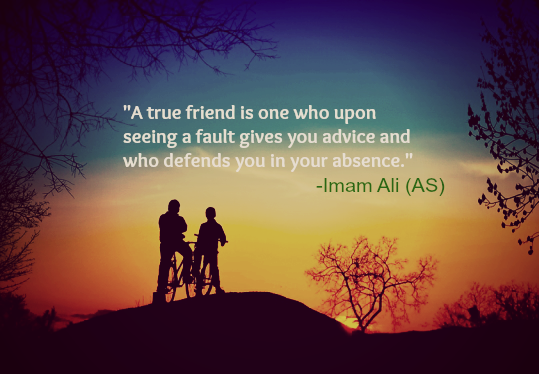
I leave you with this quote from Imam Ali Ibn Abu-Talib A.S
A brother is like gold and a friend is like diamond. If gold cracks you can melt it and make it just like it was before. If a diamond cracks, it can never be like it was before.
....So hold on tight to your diamonds
I created this blog to satisfy some of my natural needs... the need to communicate and discuss with others. However as I previously confessed in the description of this blog, there is a story, a history of events that led to this awakening. A Journey.
A Journey that was at times difficult to swallow and digest, and yet found it challenging to define, to admit... to confess until...Until this small letter...مسيرة باحث يطلب العُلىThe Journey of a Researcher Seeking Supremacy
ذات يوم كان لي صديق, جمعتنا كليّة الهندسة, المكان الذي يستقطب أصحاب الاستعدادت الكامنة والقابليات العظيمة. يدخل هذه الكليّة طلاباً اعتادوا سماع المديح لانجازاتهم المدرسيّة, ويخرج منها مهندسون استطاعوا إِخراج إبداعهم إلى فسحة الواقع وآخرون انخمدت لديهم شعلة الإبداع واندفنت أحلامهم بفعل بعض الأجواء السّلبية التي تبثّها أنفس استسلمت لخوفها. والخيار دائما يعود للطالب فإماّ الإرتقاء أو الانحطاط. ولكنّ صديقي جرّب المسارين حتى رست أموره نهاية المطاف على شاطئ الأمان.
One day I had a friend, the Faculty of Engineering brought us together, the place which attracts owners underlying great capabilities. Entering this college students are accustomed to hearing the praise for their achievements at high school, and out they become Engineers able to take out their creativity to clear reality and others have extinguished torchs of creativity and dreams and burried by some of the negative sentiments broadcast by souls succumbed to fear. The choice is always up to the student either upgrading or decadence. But my friend tried both tracks until its affairs eventually docked on the shore of safety
كان لصديقي خلفيّة أخرى تختلف عن خلفيات أغلبيّة الطّلاب الحاضرين, فهو قد نشأ في بلاد ما وراء البحر والمحيط. كانت تربيته مُختلفة ما بين العائلة المتعلّمة حيث الأب العالم, وبين المدرسة الغربيّة المحفّزة للطالب الضّعيف ليتحسّن وللطالب المميز ليُبدع. في ظلّ هكذا أجواء كان لا بدّ لشخصيّة صديقي أن تكون مُشابهة لشخصيّة أيّ شاب لم يعتد السُّخرية ثقافةً بل العمل والجدّ نهج حياة.
My friend had a different background from the majority of the students, he was raised in the country beyond the sea and the ocean. His upbringing was different between an educated family where the father is a scholar, and between western schools that are catalyzed into improving the weak students and to stimulate the distinctive to innovate. Under such an atmosphere my friend had to have a similar character to any young man not accustomed to a culture of cynicism, rather than seriously working and approaching life
ربّما لسوء حظّ صديقي كما شاء له القدر الحكيم, أن ينتقل في مرحلة ما من عمره ليعيش في لبنان. فكانت المرحلة الجامعيّة من عمره في هذا البلد "المُعجزة". وبطبيعة الحال دخل صديقي كلية الهندسة بعد أن اجتاز امتحان الدّخول الأصعب في لبنان. ويا لها من فرحة تعمّ قلبه, فها هو يقترب من تحقيق حُلُمه والبدء في نزهة ليست قصيرة تمتدّ لخمس سنوات مليئة بالعلم والبحث والهندسة, فلطالما روادته أحلام الطّيران وانجذب خياله إلى التحليق مع المحركات النفاثة وغير النفاثة فوق الغيوم مواجها الريح العاتية بأجنحة متقنة الانسياب. فطموحه ينشد العلمَ الهندسيّ المُطلق.
Maybe unfortunately for my friend his will was to move at some stage of life to live in Lebanon. His undergraduate studies in this country was a"miracle". Of course my friend entered the Faculty of Engineering after surpassing the hardest entrance exam in Lebanon. What a joy permeated his heart, here he was approaching from achieving his dream and started a picnic not short span of five years full of science, research and engineering, for the dreams of aviation and gravitated his imagination to fly with jet engines and jet above the clouds facing the drafty wings with a neat flow. So his ambitions seek absolute engineering science
ولكن لا يلبثُ الحظّ العسير أن يعود من جديد ليقمع الأحلام الجميلة ويمارس هواية تصديع الطّموح وإضعاف العزيمة, فبعض القلوب المُشاغبة لن تهنئ لرؤية شاب جامح مُفعم بالحياة متناقض مع ثقافتها التي غلبها طابع السّخرية والمُلوّثة بمشاعر الحسد والغرور, فانهالت على صديقي موجات التّصديع المُفعمة بالخيبة, فترى الناس يضحكون لأفعال تلك الشلّة مُشجّعينها للتمادي في انحطاطها, فراحت نفسه تنصاع رويدا رويدا, فها هي النّفس القليلة الخبرة التي لم تعتد المكر تدخل في معارك وفتنٍ داخلية, وتطرح أسئلة مشبوهة: هل ما أجِدُّ به يستدعي السّخرية؟ وهل يجب أن أكون مثلهم؟ ربّما ينبغي أن أدخل الشِلّة؟فراحت الأفكار الرديئة تعبث بالقلب الضعيف وتقيّد الطموح وتنزل صديقي إلى مستوى أدنى وتزجّ به في سجن الكآبة! ولكن كيف للفطرة السليمة والنشأة المُجدّة أن تضيع هباءا, فالرّحمة لم تطلّق الكون يومًا, لكنها تتستّر وراء السّحاب أحيانا لحكمة خفيّة يكشفها الزمان عند انشراح الوعي وتنوّر البصيرة.
But the difficult luck come again to suppress the fine dreams and rift the ambition and weaken the determination, so some trouble making hearts will not settle to see the young lively runaway that contradicts with the culture that the majority of characters and souls have been overflowed with irony and contaminated feelings of envy and vanity, so my friend was struck with waves full of disappointment, you see people laughing at the actions of those coterie encouraging in their persistence, so his spirit began to comply with the same screeched, and here again the inexperienced soul, which did not invoke cunning intervention in internal strife and battles, suspicious and asking itself questions: Do you I find it ironic the calls I am hearing? Do I have to be like them? Maybe I should enter the coterie So the lousy ideas began messing the weak heart and restrict his ambition and my friend down to the lower level and immersed in a prison of depression. But how can common sense and industrious upbringing to get lost in vain, for the mercy never existed the universe, but it conceals sometimes behind the clouds for the its hidden wisdom is revealed at the time of the flowering of the consciousness and enlightenment of the insight
في البداية دخل رفيقي مرحلة التراجع في الجد والعمل, فأهمل ما اعتاد أن يقوم به حتى لاحت في الأفق علامات الهزيمة, فثار القلب إلى ما وصل له من حضيض وراح يكشف له زيف الأفكار المسمومة التي تسرّبت رغما عنه. وها هو يعود بقوّة ليكمل المسيرة ويحرّر طموحه ويفك القيد عن أحلامه ويخرج من وراء القضبان حيث الشلّة التي فضحت خوفَها شغباً, ويعود إلى أحضان العلم الدافئة ليروي عطش المعرفة. فها هي الأسرار تتوضح أمام عينيه, والإدراك يُبصر حيّز النور, وينهار زيف الثقافة المُنحطّة, فيعتزل الشلّة وتنتابه مشاعر الشّفقة لأنّ القلب السليم يحبّ لغيره ما يحبّ لنفسِه ويكرهُ لهُ ما يكرهُ لها, حتّى عاد الصّواب معيداً معهُ صديقي إلى ساحة البناء, ليشيّد العبور إلى المستقبل بسلام ومسؤولية. فالحبّ لا بد أن يغلب الضّغينة ليسود, ويحرّك الإنسان نحو العُلى.وها هو صديقي اليوم, مُهندسا ناجحا, وباحثا لامعا مرموقا, ترى وعيه قد انشرح للرّحمة الخفيّة التي اختبأت في مسيرته الجامعيّة لتوسّع طموحه من حدود الأنا إلى رحاب نشر المعرفة التي رأى فيها النّور.
Initially my friend entered the decline phase in his work, so he neglected what used to be done until came the grades of defeat, so his heart railed to what has arrived and began revealing the falsity of his ideas that leaked poisonous against his will. And here he is back strong, to complete the march and free his ambition, and lifted the restrictions to loose the constraints of his dreams and come out from behind bars, where coterie exposed their fear, and return to the warm embrace of science and to the thirst for knowledge. Here are now the secrets clarified before his eyes, and perception peeping into the light, breaking down the falsity of decadent culture, retiring from the coterie and haunted by feelings of compassion because healthy heart loves for others what he loves for himself and he hates what others detest for him, until he returned to the right construction yard, to transit to the future safely and responsibly. Because love must be predominant to prevail, and move the human higherHere is my friend today, a successful engineer, and a prominent researcher, you can see his consciousness yawn to the mercy that was hidden during college ambition to expand the boundaries of the ego to the dissemination of knowledge, which saw the light of day
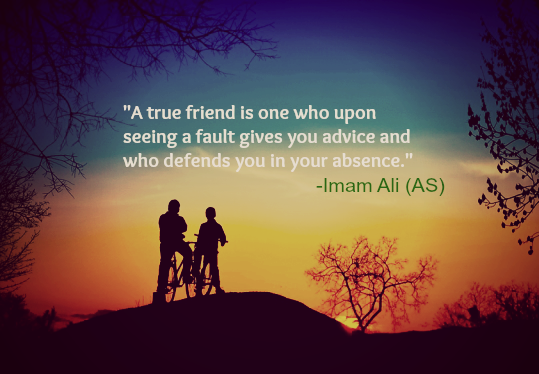
I leave you with this quote from Imam Ali Ibn Abu-Talib A.S
A brother is like gold and a friend is like diamond. If gold cracks you can melt it and make it just like it was before. If a diamond cracks, it can never be like it was before.
....So hold on tight to your diamonds
July 25, 2014
Where Shall We Begin? Dr Ali Shariati - An Overview

Where shall we begin? An ethical question that Dr Ali Shariati tries to provide an answer in seven parts. A close friend of mine introduced me to Dr Ali Shariati's philosophy after I had noticed the amount of shares and likes his Facebook page receives. Although he died in 1977, his sociology on religion and discussions are today examined by scholars and are unfortunately valued more than 20 years after his death. Upon listening of Sayed Ammar Nakshawani's lecture on Shariati famous work Fatima is Fatima, I decided that it is important that I enter the knowledge of Ali Shariati.
Where shall we begin? A title that captivated me and by the end of the first part I realized why Dr Ali Shariati is considered one of the most influential Iranian intellectuals of the 20th century. I invite you to read this book on the following links either read it online or download it from Google Play Books.
In part one Dr Ali Shariati tackles the question of where shall we begin? by first stating that the first step that needs to be taken by any person who possess a "social awareness" is to build a bridge between the "intellectual" and the "masses" in order to fill the existing gap between both poles. Furthermore, Part One answers the important question of Who Should Begin? Dr Ali Shariati calls them the"enlightened souls", the people that have the God-given gift of 'self-awareness' of their responsibility towards the general public.
In part two, Dr Shariati answers the question: for what purpose? He believes that an "enlightened soul" should play the role of a prophet, unlike scientists who seek to "improve" the society at what they are rather than "teaching" and guiding them towards the truth and to help them generate their self-awareness (much like the role of a prophet). Dr Shariati stresses once more that the lack of a precise definition of enlightened souls is much due to the our assumptions (Eastern societies) and confusions between "intellectual" and "enlightened". As to the characteristics not an enlightened soul, there is no universal enlightened individual, but rather depends on time, place, social environment and historical background. A wonderful example is given about the Western societies, where he sees that they have "become victim of consumerism and where all human dimensions and potentials have become restricted and limited by the production of goods, excess in consumption and the freedom of sex." Hence, he Dr Shariati suggests that the West is in need of a Sartrean revolution (Jean Paul Sartre).
In part three Dr Shariati discusses the misconceptions and theories concerning the roots of social problems offered by supposed "enlightened" individuals. The author debates the following:Enlightenment cannot be imported and those who assumed themselves enlightened because they imported knowledge to their homes deprived the Easter and Islamic societies from brilliant minds, in contrast the masses were deviated from the path of salvationSexual freedom: The demand for sexual freedom (bottom) is a substitute for more important kinds of freedom (top) that diverts the intention of the young generation from pursuing economic or political freedom (Africa and Asia have achieved sexual freedom but social problems remain)Alphabet: The Persian alphabet is not the problem but rather those who blame the complexity of an alphabet for their misery are trying to divert the attention of the people from the real cause; those who benefit from illiteracy. If the complexity of the alphabet was the cause then how can we explain the development of Japan or China.Book burning: The best opportunities and the best talents were wasted on defending or condemning book burning, while the real criminal lived in peace and security.From the above, Dr Shariati deduces that scientific, philosophical, technical and even artistic issues affords the luxury of logical evaluation and revision whereas in social issues the context of the argument or the thesis should be taken into account.
In part four Dr Shariati wonderfully argues that before evaluating a social theory, one must look at its contributions, context and consequences.
He states "the greatest responsibility of the enlightened soul is to identify the real causes of the backwardness of his society and discover the real cause of the stagnation and degeneration of the people of his environment. Moreover, he should educate his slumbering and ignorant society as to the basic reasons for its ominous historical and social destiny. Then, based on the resources, responsibilities, needs and suffering of his society, he should identify the rational solutions, which would enable his people to emancipate themselves from the status quo. Based on appropriate utilization of the resources of his society and an accurate diagnoses of its suffering, an enlightened person should try to find out the true causal relation- ships between misery, social illness and abnormalities, and the various internal and external factors. Finally, an enlightened person would transfer this understanding beyond the limited group of his colleagues to the society as a whole".
In brief, a contemporary enlightened soul should continue the path of his prophet by answering the call of 'where shall we begin in our society', rather than 'where shall we begin'.
In part five, Dr Shariati discusses once more that is is impossible to be an enlightened person without having a profound knowledge of and a presence in the conscience of the masses. He has to be able to understand the people, and at the same time, appreciate the historical condition they are in.
Dr Shariati bewares of reactive elements in Islamic societies where the enlightened soul "may divert people's attention from the present as well as the actual and material problems while, in the name of religion keeping the people preoccupied with the afterlife as well as abstract and subjective issues, so that Muslims are prevented from striving for a comfortable, affluent, and free life". On the other hand contemporary enlightened individuals assume that religion plays a negative role in the society by causing the masses to neglect their actual and material lives. Hence, in the tragedy of Iran, the people who controlled religion had transformed religion into a stagnant form, and the enlightened people don't understand religions. Thus the need of being an Islamologist.
In part six, Dr Ali Shariati discusses how an enlightened person should consider religion. Unlike a historian or philosopher where religion is studied in a scientific or subjective matter only, the enlightened person must find the 'social role' of his religion.
In Christianity, following the malice and misery caused by the established church and priest, the enlightened knew that in order to reform his religion he had to revive the motivating elements of his religion. In Shi'ism Islamm, one cannot debate that the two slogans of 'blood and sword' and 'leadership and justice' which had endured throughout history due to the uprising of Hussein are not authentic and genuine, but Dr Ali Shariati argues that they have been negatively interpreted. He states that 'Karbala is not forgotten, but the sword of Islam is', meaning that the rage of Hussein's blood is transformed to tears only.
It is vital that an enlightened person not be easily deceived and must seek to establish a proper culture balance in his society between spirituality, philosophy and materialism. Instead of being a translator of foreign works, he should engage himself in writing to refine life and spirit in his static society. Furthermore, Dr Shariati compares the life of Imam Ali and Pope St Paul. Imam Ali terminated pay scales and ordered equal salaries to everyone whereas Pope St Paul claimed 'that hunger is accompanied by inspiration'.
Once more, the role of an enlightened person is not that of an ordinary person, it is the mistake of a social leader , one whom is perceived as a prophet in Islam.
In this final part Dr Ali Shariati reviews the points that will enable an enlightened person to answer to the main question of where shall we begin by stating that (... hope that the enlightened person will reach a progressive self-awareness. For whereas our masses need self-awareness, our enlightened intellectuals are in need of "faith").
I invite you to like Dr Ali Shariati's Facebook page, listen to his lectures and speeches, read his books online or on his Facebook App and watch his videos & documentaries. I sincerely suggest that you listen to Sayed Ammar Nakshawani's lecture titles: 'Dr Ali Shariati's Fatima is Fatima'. Likewise, I added the book on Goodreads and I encourage you to add it to your shelf to spread this rare and valuable piece of work. In conclusion I put together this review in the hopes that we benefit from a true enlightened soul and to honour Dr Ali Shariati.
July 6, 2014
Juggling Between Two Nationalities...Easier Said Than Done: Part One - A Personal Confession
I am often asked the question, actually often is an understatement, rather frequently prompted to answer the following question: Where Are You From?
Born in Montreal, raised for 6 years in Canada, moved to Lebanon in 1996 only to move back in 2000 to Canada (Montreal and Windsor back and forth), returned to Lebanon in 2005, by then I was in my 9th grade and in the summer of 2006, moved back to Canada (this time Ottawa) only to return again in 2007 to complete my senior year in Lebanon. Graduated from the faculty of engineering in 2013 and now completing my PhD in Chicoutimi, Quebec.
Put yourself in my position, what would you answer if someone asked you where are you from ?
What is a nationality? It is nothing more than a civil status, for each state or country has its own set of doctrines and regulations concerning as to when a particular individual is granted his nationality. In other words, it is simply a small notebook given to its citizens, we call a passport- Nothing More ! In this sense I ask the following question: what physical, spiritual, social or intellectual change occurred after one is granted a given nationality? Do you gain more wisdom? Do you suddenly become an intellect or an enlightened soul? Obviously not.As for "identity"? If we agree that nationality is a civil status then are all citizens with a common nationality identical to one another? I define one's "identity" as the set of morals, principles and knowledge you built and gain threw time and space. Yes people of the same nationality share similar characteristics, but there is no direct correlation between space and ones identity.
Now I turn to the confusion (that exists especially in the Eastern societies) between nationality and identity. Presently, I am reading an excellent book by Dr Ali Shariati, where he states "The fact is that our assumption that the enlightened, scientist and intellectual, are synonymous has confused us so that we are not able to understand who is enlightened". Likewise, I believe that the fact is that our assumption that "nationality" and "identity" are synonymous has confused us to regard a direct correlation between nationality and social status. I speak from experience when I say that I have witnessed this confusion, and I admit that it has tremendously affected me during my teenage years. This impact can be seen in the evolution of my answer such as: Lebanese born in Canada, Canadian-Lebanese, Canadian but my parents are Lebanese, Lebanese, Canadian, and well its complicated. Although, I may not hold responsibility of moving back and forth between Lebanon and Canada, but adapting to the environment is my sole responsibility. Adapting does not mean change or break your boundaries, but rather learn to built a "self-awareness" and ultimately a proper "identity". Once you discover your self-awareness, time and space become one where, regardless of your location on this earth and regardless when your allocated, you can answer with pride and confidence, my name is ... and I am from... I have come to realize, the issue is not that incapability to identify where I am from but who I am. I pray to God in this Holy month of Ramadan to inspire and bless me with his hindmost knowledge, and allow us to receive his blessing in this world and the world hereafter.
Born in Montreal, raised for 6 years in Canada, moved to Lebanon in 1996 only to move back in 2000 to Canada (Montreal and Windsor back and forth), returned to Lebanon in 2005, by then I was in my 9th grade and in the summer of 2006, moved back to Canada (this time Ottawa) only to return again in 2007 to complete my senior year in Lebanon. Graduated from the faculty of engineering in 2013 and now completing my PhD in Chicoutimi, Quebec.
Put yourself in my position, what would you answer if someone asked you where are you from ?
What is a nationality? It is nothing more than a civil status, for each state or country has its own set of doctrines and regulations concerning as to when a particular individual is granted his nationality. In other words, it is simply a small notebook given to its citizens, we call a passport- Nothing More ! In this sense I ask the following question: what physical, spiritual, social or intellectual change occurred after one is granted a given nationality? Do you gain more wisdom? Do you suddenly become an intellect or an enlightened soul? Obviously not.As for "identity"? If we agree that nationality is a civil status then are all citizens with a common nationality identical to one another? I define one's "identity" as the set of morals, principles and knowledge you built and gain threw time and space. Yes people of the same nationality share similar characteristics, but there is no direct correlation between space and ones identity.
Now I turn to the confusion (that exists especially in the Eastern societies) between nationality and identity. Presently, I am reading an excellent book by Dr Ali Shariati, where he states "The fact is that our assumption that the enlightened, scientist and intellectual, are synonymous has confused us so that we are not able to understand who is enlightened". Likewise, I believe that the fact is that our assumption that "nationality" and "identity" are synonymous has confused us to regard a direct correlation between nationality and social status. I speak from experience when I say that I have witnessed this confusion, and I admit that it has tremendously affected me during my teenage years. This impact can be seen in the evolution of my answer such as: Lebanese born in Canada, Canadian-Lebanese, Canadian but my parents are Lebanese, Lebanese, Canadian, and well its complicated. Although, I may not hold responsibility of moving back and forth between Lebanon and Canada, but adapting to the environment is my sole responsibility. Adapting does not mean change or break your boundaries, but rather learn to built a "self-awareness" and ultimately a proper "identity". Once you discover your self-awareness, time and space become one where, regardless of your location on this earth and regardless when your allocated, you can answer with pride and confidence, my name is ... and I am from... I have come to realize, the issue is not that incapability to identify where I am from but who I am. I pray to God in this Holy month of Ramadan to inspire and bless me with his hindmost knowledge, and allow us to receive his blessing in this world and the world hereafter.
Juggling Between Two Nationalities...Easier Said Than Done - A Personal Confession
I am often asked the question, actually often is an understatement, rather frequently prompted to answer the following question: Where Are You From?
Born in Montreal, raised for 6 years in Canada, moved to Lebanon in 1996 only to move back in 2000 to Canada (Montreal and Windsor back and forth), returned to Lebanon in 2005, by then I was in my 9th grade and in the summer of 2006, moved back to Canada (this time Ottawa) only to return again in 2007 to complete my senior year in Lebanon. Graduated from the faculty of engineering in 2013 and now completing my PhD in Chicoutimi, Quebec.
Put yourself in my position, what would you answer if someone asked you where are you from ?
What is a nationality? It is nothing more than a civil status, for each state or country has its own set of doctrines and regulations concerning as to when a particular individual is granted his nationality. In other words, it is simply a small notebook given to its citizens, we call a passport- Nothing More ! In this sense I ask the following question: what physical, spiritual, social or intellectual change occurred after one is granted a given nationality? Do you gain more wisdom? Do you suddenly become an intellect or an enlightened soul? Obviously not.As for "identity"? If we agree that nationality is a civil status then are all citizens with a common nationality identical to one another? I define one's "identity" as the set of morals, principles and knowledge you built and gain threw time and space. Yes people of the same nationality share similar characteristics, but there is no direct correlation between space and ones identity.
Now I turn to the confusion (that exists especially in the Eastern societies) between nationality and identity. Presently, I am reading an excellent book by Dr Ali Shariati, where he states "The fact is that our assumption that the enlightened, scientist and intellectual, are synonymous has confused us so that we are not able to understand who is enlightened". Likewise, I believe that the fact is that our assumption that "nationality" and "identity" are synonymous has confused us to regard a direct correlation between nationality and social status. I speak from experience when I say that I have witnessed this confusion, and I admit that it has tremendously affected me during my teenage years. This impact can be seen in the evolution of my answer such as: Lebanese born in Canada, Canadian-Lebanese, Canadian but my parents are Lebanese, Lebanese, Canadian, and well its complicated. Although, I may not hold responsibility of moving back and forth between Lebanon and Canada, but adapting to the environment is my sole responsibility. Adapting does not mean change or break your boundaries, but rather learn to built a "self-awareness" and ultimately a proper "identity". Once you discover your self-awareness, time and space become one where, regardless of your location on this earth and regardless when your allocated, you can answer with pride and confidence, my name is ... and I am from... I have come to realize, the issue is not that incapability to identify where I am from but who I am. I pray to God in this Holy month of Ramadan to inspire and bless me with his hindmost knowledge, and allow us to receive his blessing in this world and the world hereafter.
Born in Montreal, raised for 6 years in Canada, moved to Lebanon in 1996 only to move back in 2000 to Canada (Montreal and Windsor back and forth), returned to Lebanon in 2005, by then I was in my 9th grade and in the summer of 2006, moved back to Canada (this time Ottawa) only to return again in 2007 to complete my senior year in Lebanon. Graduated from the faculty of engineering in 2013 and now completing my PhD in Chicoutimi, Quebec.
Put yourself in my position, what would you answer if someone asked you where are you from ?
What is a nationality? It is nothing more than a civil status, for each state or country has its own set of doctrines and regulations concerning as to when a particular individual is granted his nationality. In other words, it is simply a small notebook given to its citizens, we call a passport- Nothing More ! In this sense I ask the following question: what physical, spiritual, social or intellectual change occurred after one is granted a given nationality? Do you gain more wisdom? Do you suddenly become an intellect or an enlightened soul? Obviously not.As for "identity"? If we agree that nationality is a civil status then are all citizens with a common nationality identical to one another? I define one's "identity" as the set of morals, principles and knowledge you built and gain threw time and space. Yes people of the same nationality share similar characteristics, but there is no direct correlation between space and ones identity.
Now I turn to the confusion (that exists especially in the Eastern societies) between nationality and identity. Presently, I am reading an excellent book by Dr Ali Shariati, where he states "The fact is that our assumption that the enlightened, scientist and intellectual, are synonymous has confused us so that we are not able to understand who is enlightened". Likewise, I believe that the fact is that our assumption that "nationality" and "identity" are synonymous has confused us to regard a direct correlation between nationality and social status. I speak from experience when I say that I have witnessed this confusion, and I admit that it has tremendously affected me during my teenage years. This impact can be seen in the evolution of my answer such as: Lebanese born in Canada, Canadian-Lebanese, Canadian but my parents are Lebanese, Lebanese, Canadian, and well its complicated. Although, I may not hold responsibility of moving back and forth between Lebanon and Canada, but adapting to the environment is my sole responsibility. Adapting does not mean change or break your boundaries, but rather learn to built a "self-awareness" and ultimately a proper "identity". Once you discover your self-awareness, time and space become one where, regardless of your location on this earth and regardless when your allocated, you can answer with pride and confidence, my name is ... and I am from... I have come to realize, the issue is not that incapability to identify where I am from but who I am. I pray to God in this Holy month of Ramadan to inspire and bless me with his hindmost knowledge, and allow us to receive his blessing in this world and the world hereafter.
July 2, 2014
Overview of Citation Softwares: Managing your References
Let's face it, writing a research paper is not a simple task to say the least and surely we can agree managing your references and citations is time consuming if you don't use a citation software. I found this post on MIT Libraries that compares three of the most used reference managers: EndNote, Zotero and Mendeley that is worth sharing.
Currently I am using EndNote, and honestly I don't have any experience with any other reference manager software. Personally I cannot but say that I feel very comfortable using EndNote because it always me to synchronize my references between my Home and Work computers threw my EndNote account. But what I find the most useful is the ability to auto-attach my pdf files to its reference by simply importing them to my EndNote from Google Scholar for example. It can be very troubling to sort your files into categories, rename each file and pdf and yes, accessing that article you downloaded last month can be challenging. Hopefully this post that I re-blogged from MIT Libraries can help you choose your reference manager software. (Source)
What is citation software?Citation software helps you to:import citations from your favorite databases and websites.build and organize bibliographies.format citations for papers.take notes on articles and save them in your collection of citations.save and organize PDFs, screenshots, graphs, images, and other files for your research.Which program is right for you?The MIT Libraries support EndNote, RefWorks, Zotero, and Mendeley. How do you know which program is right for you? Some things to think about when you choose:What programs are your colleagues using? For example, if fellow researchers are all using Zotero to share citations, you might consider Zotero so that you can share your research, too.Use what you like! There is no one perfect program, so use what you're comfortable with.You can use more than one software. Records can be transferred from one program to another, so don't feel limited to choosing only one.
EndNote Zotero Mendeley Strengths?Excellent for organizing citations for papers and thesesGood customer supportHighly customizableCan handle a large amount of referencesSimple download of recordsGood for managing a variety of formats, including web pagesLots of functionality in an open-source product.Downloads records from several databases that don't work with other citation products, including Factiva, USPTO, Espacenet, & FreePatentsOnline.Can share citations and documents with othersGreat for managing PDFsDoes a good job of pulling citation metadata from PDFsCan share citations and documents with othersTypeDesktop client software; also has web interface, EndNote Web, through Web of Knowledge.Desktop software and browser add-on for Firefox, Chrome, and Safari.Desktop software and web-based. Works with IE, Firefox, Chrome and Safari.CostBetween $100-200. Find out cost & purchase software at MIT Coop, or at a discount through GovConnection via ECAT3.Web version free with software purchase, or to MIT users through Web of Science. Note: EndNote Web isn't as robust as the desktop version.Free with 300MB of back-up storage. Storage & group upgrades available for a reasonable monthly fee. Open source. Download Zotero.Free with 2GB of web space. MIT users have access to enhanced storage and group upgrades. See our Mendeley guide for details.Download Mendeley.Learning curveTakes longer to learn, but not difficult with training.Quick to learn; simple design, many online user guides and demos.Quick to learn; Pretty simple interface.How does it work?Export references from compatible databases into EndNote.Zotero can tell when you are looking at an item and shows an icon for it in the browser's URL bar. Click the icon to add the item to your Zotero references.Export references from compatible databases. Mendeley will also retrieve metadata for pdfs that are brought in.How simple is it to import records?Simple to import records from most research databases.Very simple, as long as the resource is compatible with Zotero.Very simple using the Mendeley browser plugin. However, the import doesn't work with as many databases as other products.What kinds of records can you import and organize (PDFs, images, etc.)?Best with records for traditional formats (articles, books, etc.).PDFs and other file types can also be stored in the records.Traditional formats (books, articles, patents), as well as web pages.PDFs, web screenshots, and other file types can also be stored in the records.Best with records for traditional formats (articles, books, etc.).PDFs and other file types can also be stored in the records.Can you search within PDFsYes, but search isn't intuitive.Yes. Make PDFs searchable by choosing to index them in the preferences menu.Yes. Highlights the words you are searching for.Are records in your library viewable by others?No.Yes, if you choose to share them. You can set up individual and group profiles and share records.Yes, if you choose to share them. You can set up individual and group profiles and share records.Can you export records to other citation software?Yes.Yes.Yes.Does it work with word processing software?Yes. Powerful formatting and customization features in Word; also works with LaTeX through BibTeX and Open Office.Yes. Works with Word and LibreOffice; also works with LaTeX through BibTeX. You can create a list of Works Cited for Google Docs.Yes. Works with Word and OpenOffice; also works with LaTeX through BibTeX.Does it back up your records?No.Yes, if you choose to back up or sync your Zotero library. A small amount of storage is free.Yes.Can you annotate PDFs (highlight & make notes)?Yes.No.Yes.Other important featuresHas a "find full text" option to download full text for records (when you have access to the PDF)Can be used for collaborative work with groupsWill automatically attach PDFs to records if you chooseIf you back up records, you can sync multiple computersIntegrated with work on web that you doVery good for collaborative workIf you back up records, you can sync multiple computersDoes it have a mobile site or app?Yes, an iPad app.Yes, a mobile site throughzotero.org. There's also an app called ZotPad for iPhone/iPad.Yes, an app for iPhone/iPad.Link to vendor documentationTechnical Support & ServicesDocumentationSupport
Currently I am using EndNote, and honestly I don't have any experience with any other reference manager software. Personally I cannot but say that I feel very comfortable using EndNote because it always me to synchronize my references between my Home and Work computers threw my EndNote account. But what I find the most useful is the ability to auto-attach my pdf files to its reference by simply importing them to my EndNote from Google Scholar for example. It can be very troubling to sort your files into categories, rename each file and pdf and yes, accessing that article you downloaded last month can be challenging. Hopefully this post that I re-blogged from MIT Libraries can help you choose your reference manager software. (Source)
What is citation software?Citation software helps you to:import citations from your favorite databases and websites.build and organize bibliographies.format citations for papers.take notes on articles and save them in your collection of citations.save and organize PDFs, screenshots, graphs, images, and other files for your research.Which program is right for you?The MIT Libraries support EndNote, RefWorks, Zotero, and Mendeley. How do you know which program is right for you? Some things to think about when you choose:What programs are your colleagues using? For example, if fellow researchers are all using Zotero to share citations, you might consider Zotero so that you can share your research, too.Use what you like! There is no one perfect program, so use what you're comfortable with.You can use more than one software. Records can be transferred from one program to another, so don't feel limited to choosing only one.
EndNote Zotero Mendeley Strengths?Excellent for organizing citations for papers and thesesGood customer supportHighly customizableCan handle a large amount of referencesSimple download of recordsGood for managing a variety of formats, including web pagesLots of functionality in an open-source product.Downloads records from several databases that don't work with other citation products, including Factiva, USPTO, Espacenet, & FreePatentsOnline.Can share citations and documents with othersGreat for managing PDFsDoes a good job of pulling citation metadata from PDFsCan share citations and documents with othersTypeDesktop client software; also has web interface, EndNote Web, through Web of Knowledge.Desktop software and browser add-on for Firefox, Chrome, and Safari.Desktop software and web-based. Works with IE, Firefox, Chrome and Safari.CostBetween $100-200. Find out cost & purchase software at MIT Coop, or at a discount through GovConnection via ECAT3.Web version free with software purchase, or to MIT users through Web of Science. Note: EndNote Web isn't as robust as the desktop version.Free with 300MB of back-up storage. Storage & group upgrades available for a reasonable monthly fee. Open source. Download Zotero.Free with 2GB of web space. MIT users have access to enhanced storage and group upgrades. See our Mendeley guide for details.Download Mendeley.Learning curveTakes longer to learn, but not difficult with training.Quick to learn; simple design, many online user guides and demos.Quick to learn; Pretty simple interface.How does it work?Export references from compatible databases into EndNote.Zotero can tell when you are looking at an item and shows an icon for it in the browser's URL bar. Click the icon to add the item to your Zotero references.Export references from compatible databases. Mendeley will also retrieve metadata for pdfs that are brought in.How simple is it to import records?Simple to import records from most research databases.Very simple, as long as the resource is compatible with Zotero.Very simple using the Mendeley browser plugin. However, the import doesn't work with as many databases as other products.What kinds of records can you import and organize (PDFs, images, etc.)?Best with records for traditional formats (articles, books, etc.).PDFs and other file types can also be stored in the records.Traditional formats (books, articles, patents), as well as web pages.PDFs, web screenshots, and other file types can also be stored in the records.Best with records for traditional formats (articles, books, etc.).PDFs and other file types can also be stored in the records.Can you search within PDFsYes, but search isn't intuitive.Yes. Make PDFs searchable by choosing to index them in the preferences menu.Yes. Highlights the words you are searching for.Are records in your library viewable by others?No.Yes, if you choose to share them. You can set up individual and group profiles and share records.Yes, if you choose to share them. You can set up individual and group profiles and share records.Can you export records to other citation software?Yes.Yes.Yes.Does it work with word processing software?Yes. Powerful formatting and customization features in Word; also works with LaTeX through BibTeX and Open Office.Yes. Works with Word and LibreOffice; also works with LaTeX through BibTeX. You can create a list of Works Cited for Google Docs.Yes. Works with Word and OpenOffice; also works with LaTeX through BibTeX.Does it back up your records?No.Yes, if you choose to back up or sync your Zotero library. A small amount of storage is free.Yes.Can you annotate PDFs (highlight & make notes)?Yes.No.Yes.Other important featuresHas a "find full text" option to download full text for records (when you have access to the PDF)Can be used for collaborative work with groupsWill automatically attach PDFs to records if you chooseIf you back up records, you can sync multiple computersIntegrated with work on web that you doVery good for collaborative workIf you back up records, you can sync multiple computersDoes it have a mobile site or app?Yes, an iPad app.Yes, a mobile site throughzotero.org. There's also an app called ZotPad for iPhone/iPad.Yes, an app for iPhone/iPad.Link to vendor documentationTechnical Support & ServicesDocumentationSupport
May 23, 2014
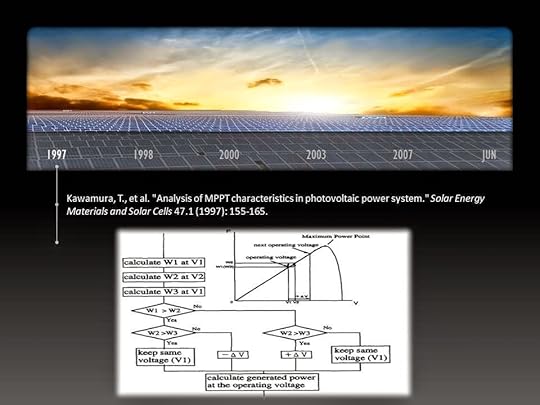
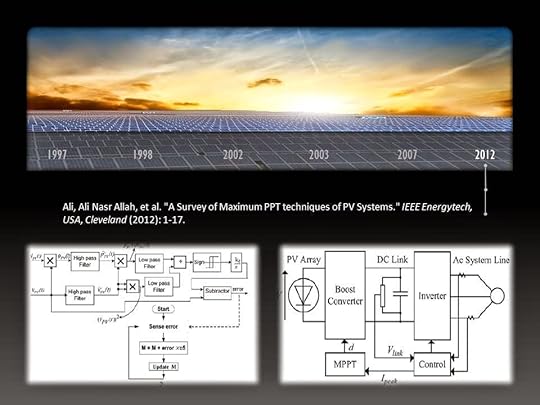
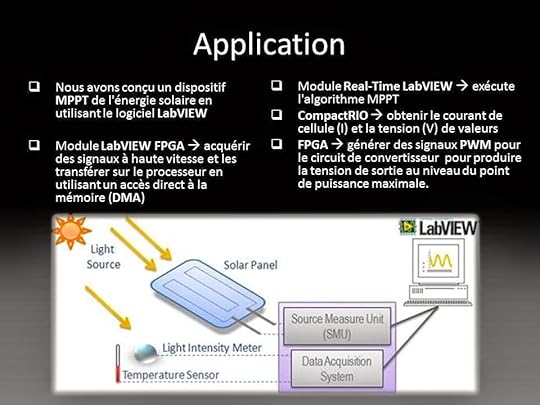
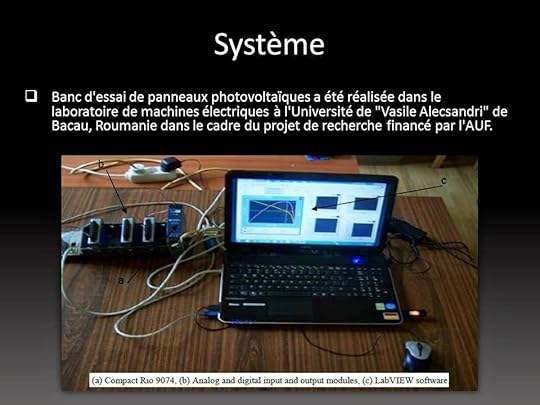
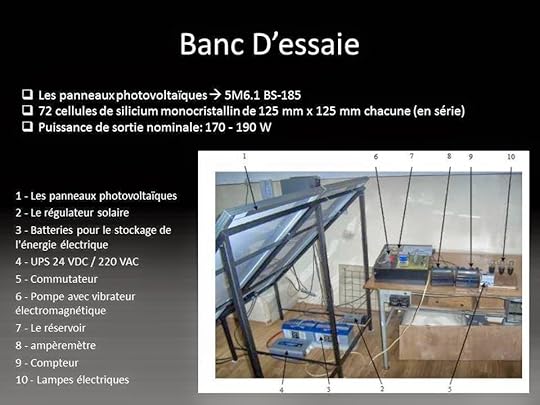
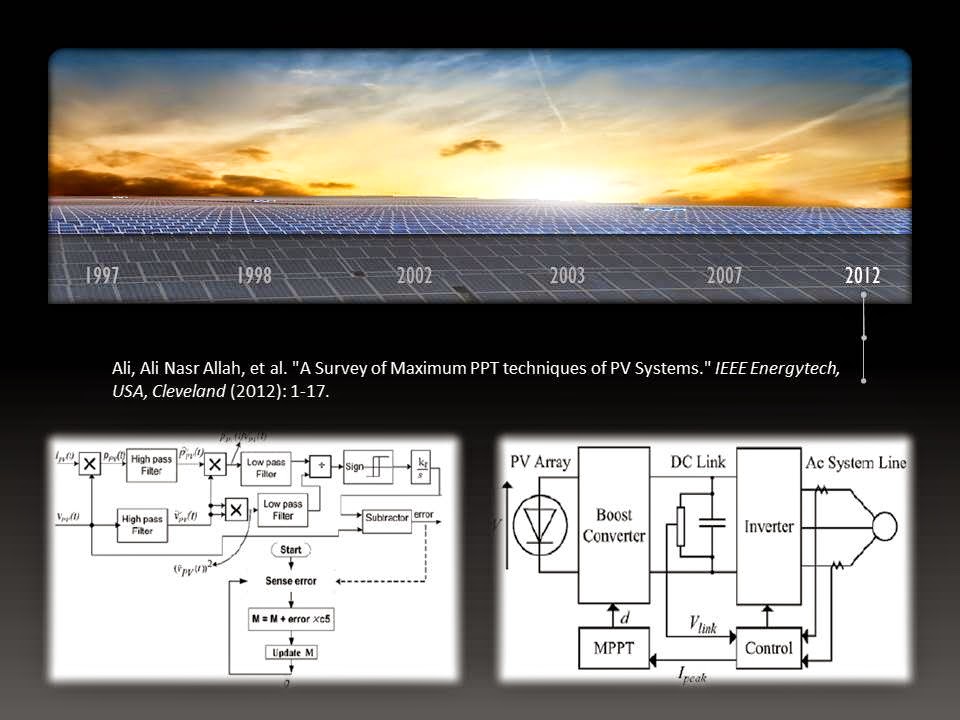
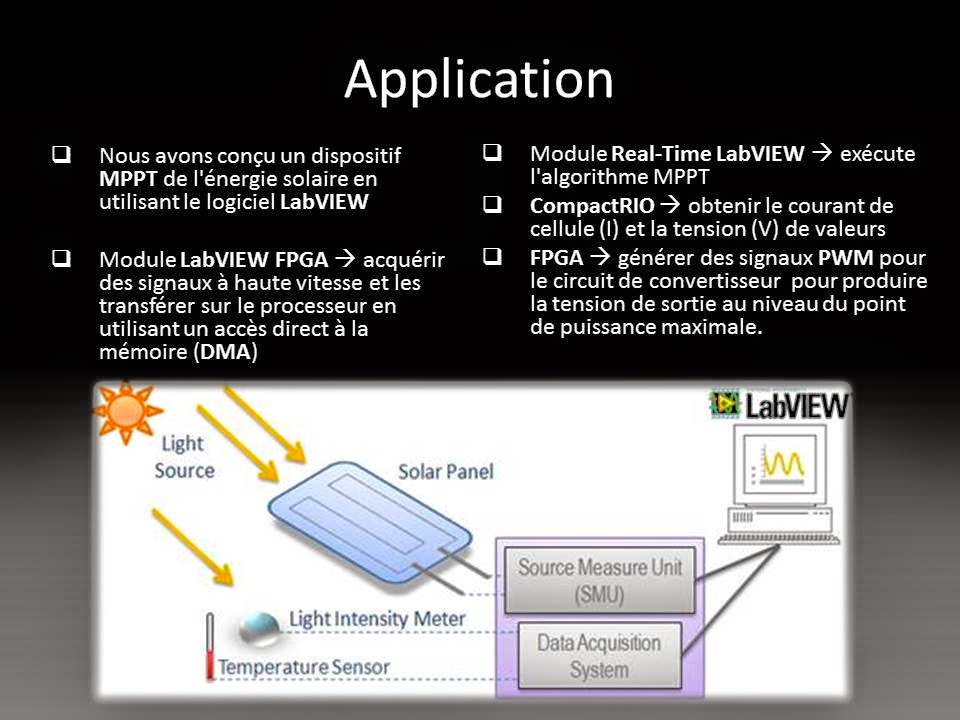
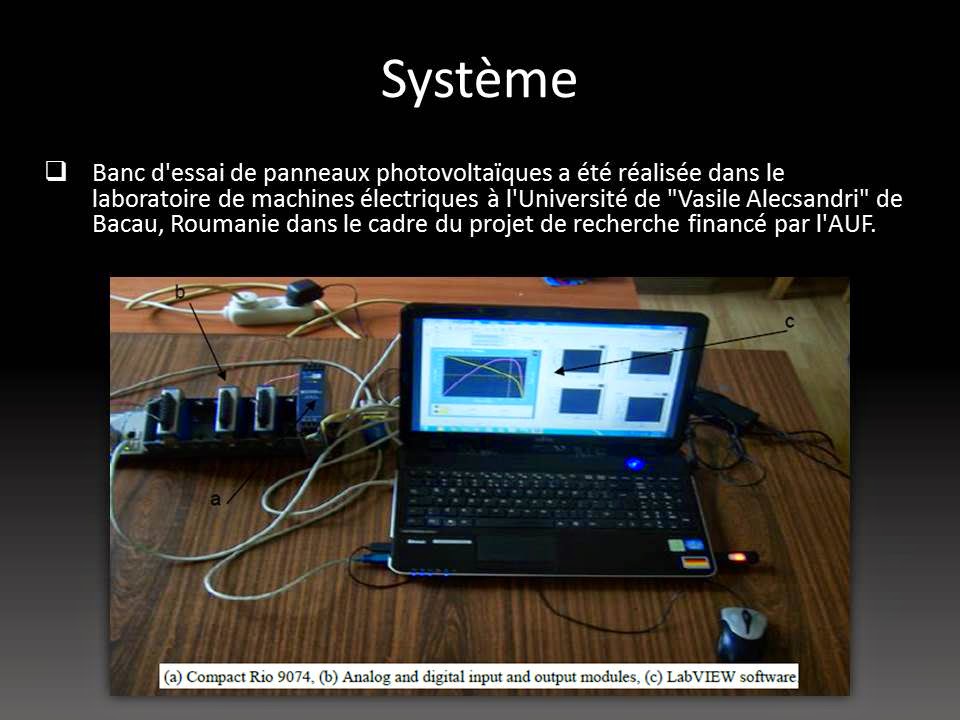
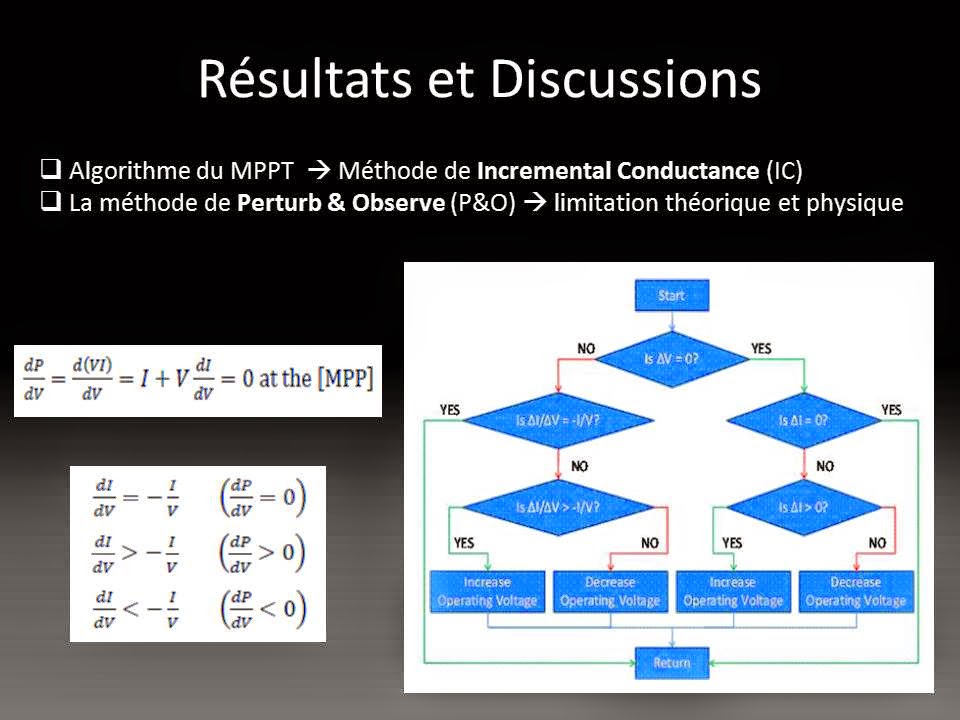
Conference Paper: Real Time Simulation of a Photovoltaic System with Maximum Power Point Tracking
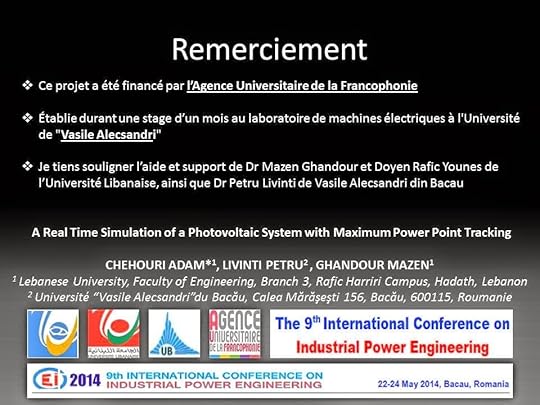
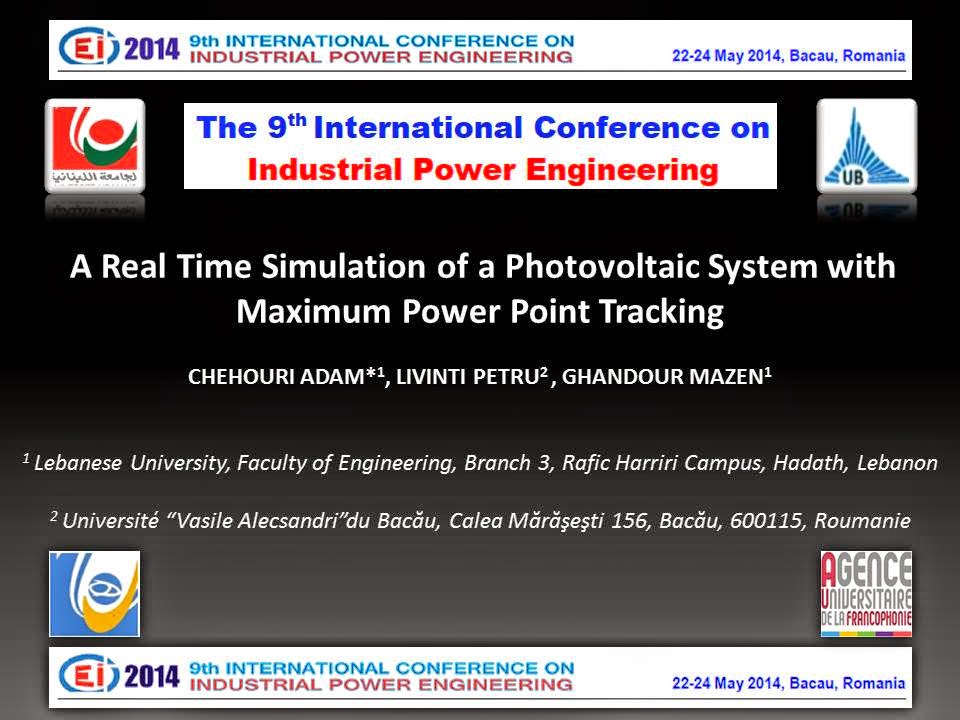
My recent publication is a paper accepted in the proceedings of the International Conference on Industrial Power Engineering in Bacau, Romania (CIEI 2014).
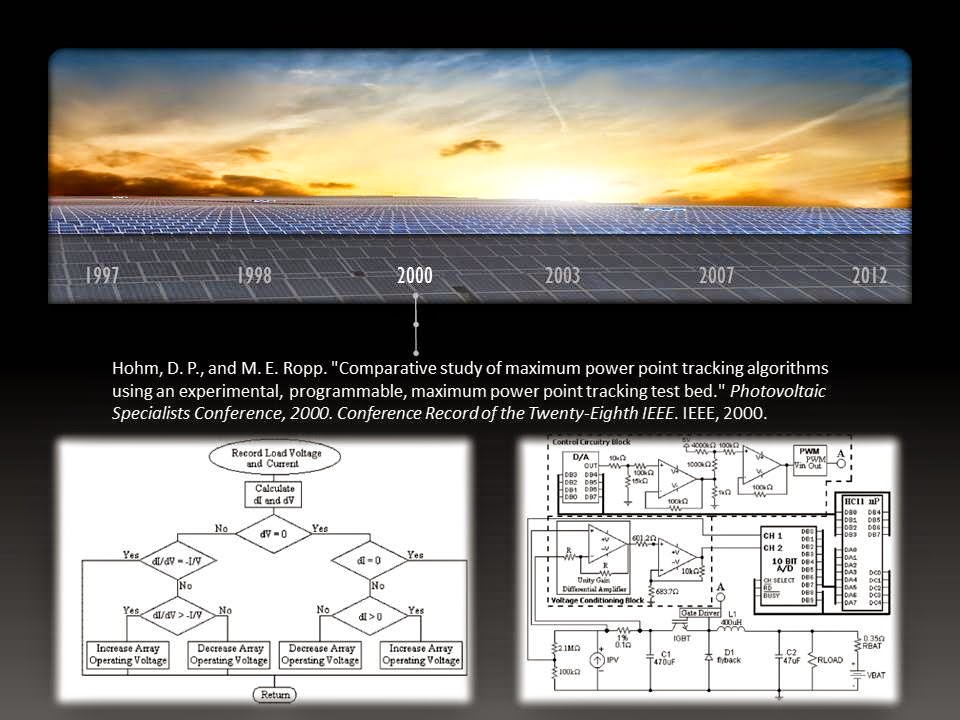
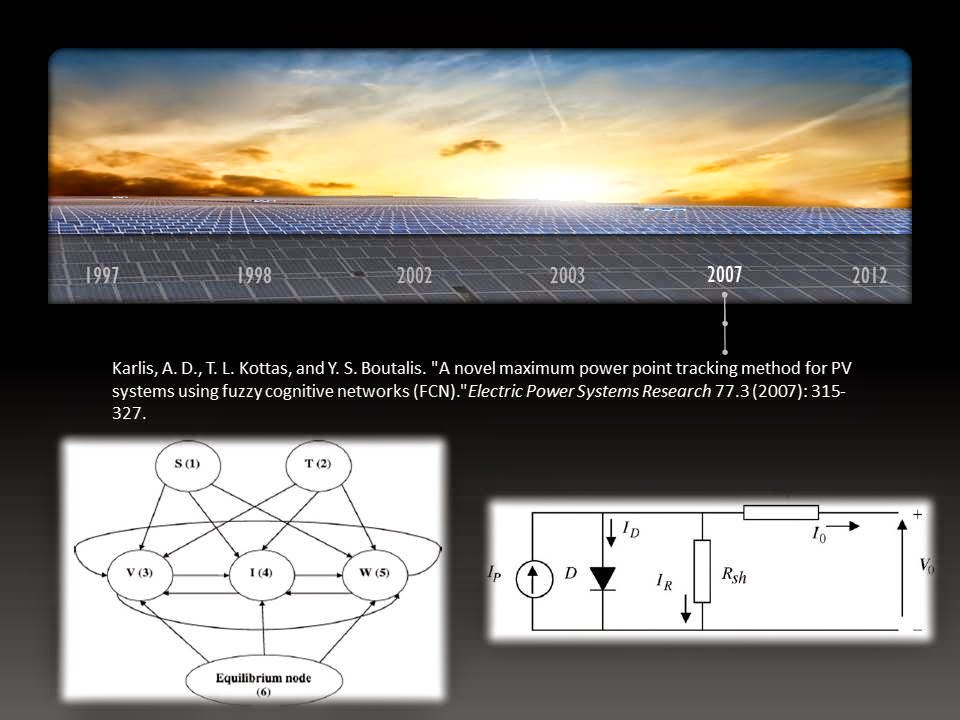
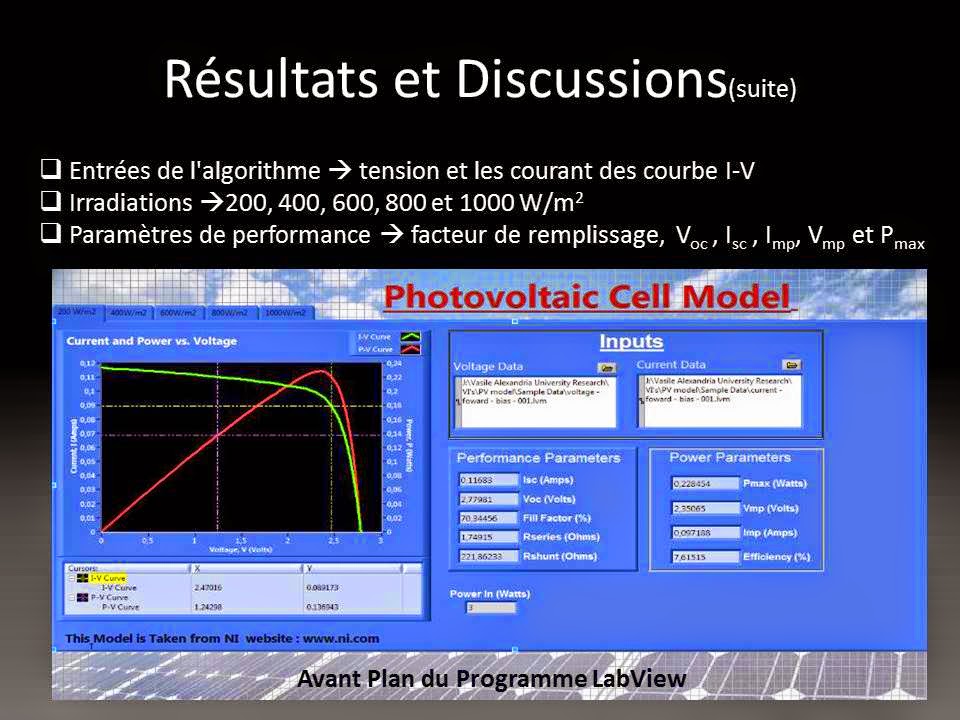
Abstract:This work presents an experimental stand for the study of a power electronics control system to locate and track the maximum power point of a photovoltaic (PV) array to ensure efficient power transfer from the solar cells to the load under varying environmental conditions. A real-time photovoltaic solar cell measurements and a control system was developed to guarantee that the maximum power output is attained. This stand is built at the Electrical Machinery Laboratory of “Vasile Alecsandri” University of Bacau, Romania.
The full paper can be found in the Constellation UQAC repository and below you will find the power point presentation presented on May 22, 2014.

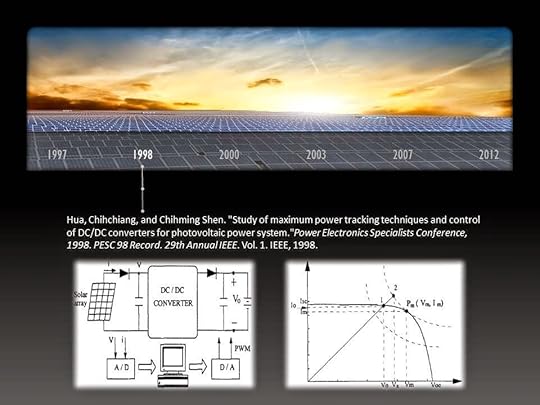
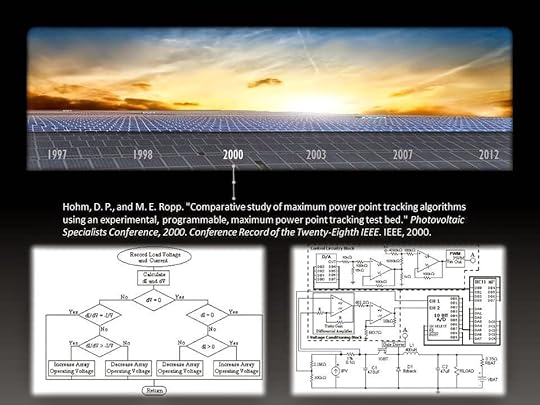
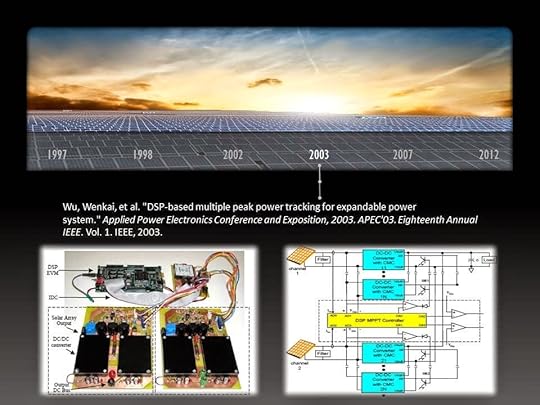
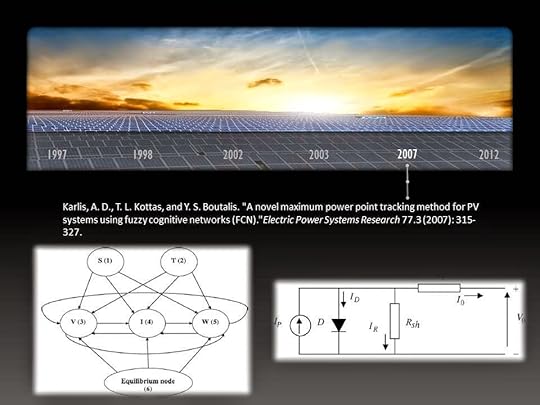

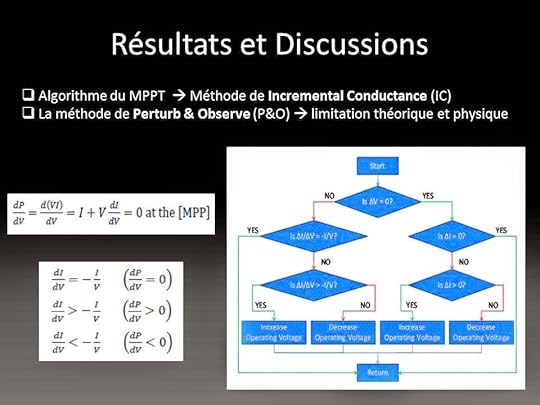
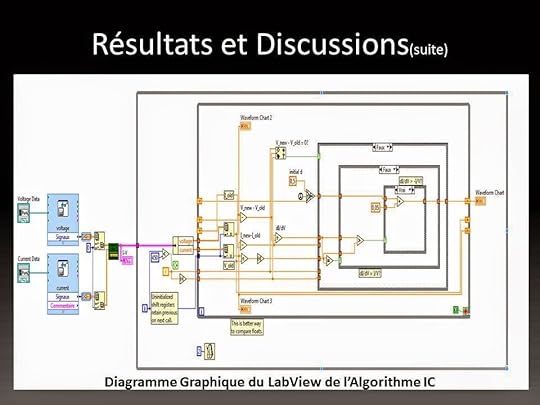
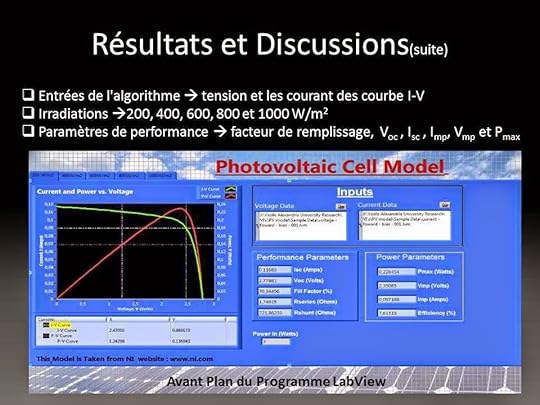
Abstract:This work presents an experimental stand for the study of a power electronics control system to locate and track the maximum power point of a photovoltaic (PV) array to ensure efficient power transfer from the solar cells to the load under varying environmental conditions. A real-time photovoltaic solar cell measurements and a control system was developed to guarantee that the maximum power output is attained. This stand is built at the Electrical Machinery Laboratory of “Vasile Alecsandri” University of Bacau, Romania.
The full paper can be found in the Constellation UQAC repository and below you will find the power point presentation presented on May 22, 2014.







May 9, 2014
The Impact of Lebanon's Political Crisis on Academic Publication and Higher Education
It doesn't take a genius to tell you that violence and triggered wars are occurring in the Middle East. As much of a pain it is to witness such violence and hate, there should be no place for pessimism. Therefore, this post is not aimed at discussing the reasons, but rather the impact of the political conflicts of the last decade on research publication in Lebanon, a small study that I hope will touch others, whom share the same responsibilities.
At first, if you are not familiar with SCImago Journal & Country Rank, I suggest you get to know the SJR metric. It basis it algorithm on the information contained in the Scopus database (Elsevier) since 1996. It allows you to visualize, compare, and analyze the ranks of journals, countries and even regions. I based my analysis and study on the results generated by SCImago on the region of the Middle East; particularly on Lebanon.
Lebanon ranks 9th in the Middle East in terms of total number of documents (citable and non-citable) published since 1996 until 2012 (see Fig. 1 for more details). Turkey holds the first position in the Middle East and twentieth worldwide, with 291 814 citable documents, which is less than 4.5 % of the total citable documents of the United States, the leading country with more than 35 % of the total published documents of the Top 10 list. In 2012, Turkey's publication formed 27.95 % of the entire Middle East research documents, and Lebanon, as mentioned before ninth in the region, recorded only 1.4 % (the highest recorded percentage is 1.65% in the year of 2000).
The numbers of the United States of America are extraordinary. Notice that 7 our of the 8 countries that represent the G8 leaders are in this list, with Russia excluded and holding the 12th spot overall. As stated before in my previous blog post on Tips for Publishing in ScientificJournals , the H-Index is an excellent metric that illustrate the impact of a journal, the impact of a scholar and even in our case evaluate the impact of a particular country in terms of citable research publication. The US has an H-Index of 1380, meaning that 1380 articles have received more than 1380 citations.
CountryDocumentsCitable DocumentsCitationsSelf-CitationsCitations per DocumentH index1United States7,063,3296,672,307129,540,19362,480,42520.451,3802China2,680,3952,655,27211,253,1196,127,5076.173853United Kingdom1,918,6501,763,76631,393,2907,513,11218.298514Germany1,782,9201,704,56625,848,7386,852,78516.167405Japan1,776,4731,734,28920,347,3776,073,93412.116356France1,283,3701,229,37617,870,5974,151,73015.66817Canada993,461946,49315,696,1683,050,50418.56588Italy959,688909,70112,719,5722,976,53315.265889Spain759,811715,4528,688,9422,212,00813.8947610India750,777716,2324,528,3021,585,2487.99301Top 10 countries based on the total number of published docs between 1996-2012 (Source: SCImago)
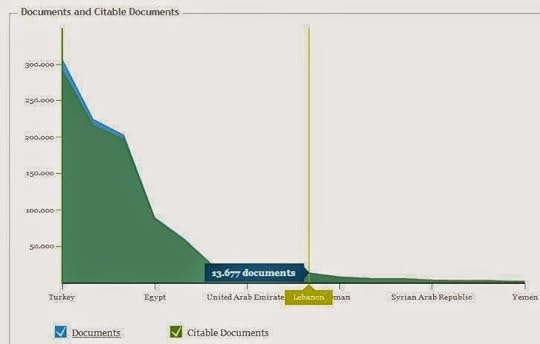 Fig 1. Documents and citable documents of the Middle East (Source: SCImago)
So where does Lebanon rank on the overall chart ? 69th, behind the Kuwait (68) and ahead of the Philippines (70), Lebanese publishers have published 13 677 documents since 1996 till 2012, with roughly 94 % citable documents. If we compare this percentage with Turkey's percentage of citable documents which is about 95 %, we can accept the notion that Lebanon's publications focus towards valuable research.
CountryDocumentsCitable DocumentsCitationsSelf-CitationsCitations per DocumentH index66Kenya16,72716,044206,88634,87415.0913167Viet Nam16,47416,116125,92718,50011.7910768Kuwait13,77513,42593,29012,8797.678369Lebanon13,67712,84797,31610,1829.79770Philippines13,16312,796141,07015,72713.3811671Puerto Rico11,20910,953150,25211,81915.3412972Iceland10,83410,359199,40819,73223.716073Cyprus10,3119,93879,31810,25212.4686Lebanon's neighbouring countries in total published docs between 1996-2012 (Source: SCImago)
[image error] Fig 2. Co-citation network subject map for Lebanon between 2011-2012 (Source SCImago)
If your wondering how the Lebanese documents are distributed with respect to subject areas, SCImago Lab Netviewer can generate a bubble map showing the impact of each respective subject area. The co-citation networks map for Lebanon (Fig. 2) shows that the majority of research publications are in Medicine and its subdivisions. In fact, between 2011 and 2012, 574 Medicine documents were published (31.38 %) followed by 162 Engineering documents (8.86 %) and in third place are the Biochemistry, Genetics and Molecular Biology with a total of 141 published documents (7.71 %). This is the same arrangement if we consider the Middle East report, where in 2012, 30 848 documents (20.92 %) in Medicine, followed by 13 569 documents (9.2%) in Engineering and 12 069 documents in Biochemistry, Genetics and Molecular Biology (8.18 %).
Over the last decade, Lebanon's reports show a fall back in research contribution. Between 2011 and 2012, the number of citation per document decreased from 2566 total citations (1.72 cites/doc.) to 550 citations (0.32 cites/doc). The highest recorded year was 2006, with an average 8.99 cites per document, a total 8993 citations.
If we rapidly recap the major chronological events that comprised the last decade, we can understand the direct correlation between research publications and the political unrest in Lebanon.
2005 (February): Rafic Harriri assassination 2006 (Summer - Fall): July war resignation of 5 ministers anti-government rally in Beirut
2007 (May - September): War of Nahr l Barid 2008 (May): Presidential election after 6 months of political deadlock 2009 (March): Formation of Saad Harriri unity government 2010 (October): Boycott of the UN Harriri tribunal 2011 (January): Collapse of the government (June): Najib Mikati government
(March): Beginning of the conflict in Syria 2012 (Summer): Clashes in Tripoli (October): Wissam Al Hassan assassination 2013 Refugee crisis and border tensions with Syria (May): No Parliament elections (Summer): Military clashes in Sidon, Tripoli and Bekaa European sanctions Bomb attacks (November): Beirut bombings 2014 (February): Tammam Salam forms new government after 10 month (April): UN announces more than 1 Million registered Syrian refugees
So how much of an impact do these events have on research publications ? I invite you to take a look at the Figure 3. In orange I indicated the documents cited during the respective year and in blue you will find the percentage of cited documents for the citable documents only since as a general rule, non-citable documents are not a valuable metric in my study. The blue arrow includes the major events of the Lebanese timeline over the last decade. Before 2006, the average cited documents in Lebanon was rising (from roughly 3000 citations in 1996 to a maximum of 8993 in 2006). The direct impact of the 2006 war is noticeable by a decrease of the average of citations per document from 8.99 to 7.82 in 2007 (take a close look at the Fig 4.). Since 2006, unfortunately Lebanon`s numbers have failed to recover.
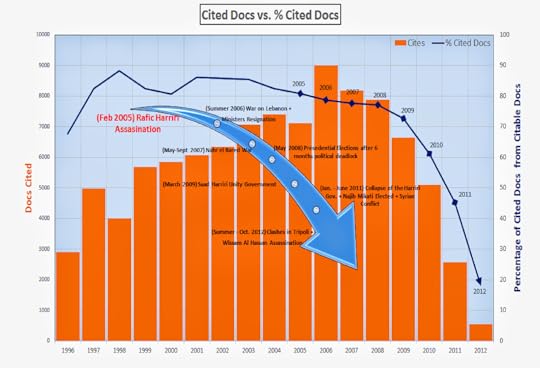 Fig 3. Cited docs vs. % cited docs with Lebanese political timeline (Chehouri A. © based on SCImago)
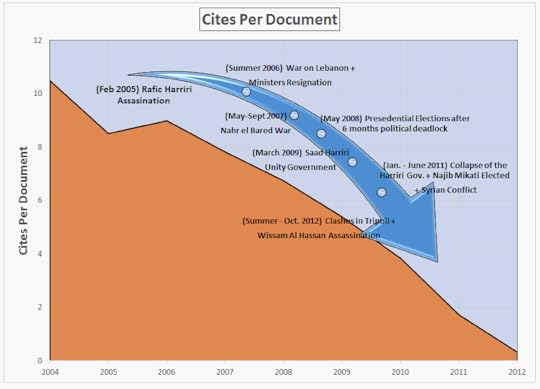 Fig 4. Cites per document (Chehouri A. © based on SCImago)
What does it take to get these curves to rise again requires us to look in depth as to the causes. Above I mentioned milestone events, mostly related to security, violence and internal conflicts. Regardless of your political opinion, you may stand in the far left, far right or somewhere near the middle, we have to admit that the citizens of Lebanon, all citizens without exclusion hold the same level of responsibility as the state. China, Iran, Brazil, South Africa, Japan and India are all examples of countries that had their share of civil wars, revolutions and economic crisis and yet believed in their educational institutions. Yet we find Vietnam, Kenya, Cuba, Colombia, Nigeria, Pakistan, Egypt and Taiwan (no point intended and all my respect to the mentioned nations) all are ranked above Lebanon. I sincerely wish that I will come across a study about the success of Lebanese researchers and scholars outside Lebanon. Individually, we succeeded, but as a nation we fail to unite under one state, one flag, and one land.
I conclude, this study by quoting Article 26 of the Universal Declaration of Human Rights, a declaration that we take pride in participating in its foundation. I have faith in the Lebanese people, not the Lebanese system.
Article 26 (1) Everyone has the right to education. Education shall be free, at least in the elementary and fundamental stages. elementary education shall be compulsory. Technical and professional education shall be made generally available and higher education shall be equally accessible to all on the basis of merit. (2) Education shall be directed to the full development of the human personality and to the strengthening of respect for human rights and fundamental freedoms. It shall promote understanding tolerance and friendship among all nations, racial or religious groups, and shall further the activities of the United Nations for the maintenance of peace.(3) Parents have a prior right to choose the ind of education that shall be given to their children.
At first, if you are not familiar with SCImago Journal & Country Rank, I suggest you get to know the SJR metric. It basis it algorithm on the information contained in the Scopus database (Elsevier) since 1996. It allows you to visualize, compare, and analyze the ranks of journals, countries and even regions. I based my analysis and study on the results generated by SCImago on the region of the Middle East; particularly on Lebanon.
Lebanon ranks 9th in the Middle East in terms of total number of documents (citable and non-citable) published since 1996 until 2012 (see Fig. 1 for more details). Turkey holds the first position in the Middle East and twentieth worldwide, with 291 814 citable documents, which is less than 4.5 % of the total citable documents of the United States, the leading country with more than 35 % of the total published documents of the Top 10 list. In 2012, Turkey's publication formed 27.95 % of the entire Middle East research documents, and Lebanon, as mentioned before ninth in the region, recorded only 1.4 % (the highest recorded percentage is 1.65% in the year of 2000).
The numbers of the United States of America are extraordinary. Notice that 7 our of the 8 countries that represent the G8 leaders are in this list, with Russia excluded and holding the 12th spot overall. As stated before in my previous blog post on Tips for Publishing in ScientificJournals , the H-Index is an excellent metric that illustrate the impact of a journal, the impact of a scholar and even in our case evaluate the impact of a particular country in terms of citable research publication. The US has an H-Index of 1380, meaning that 1380 articles have received more than 1380 citations.
CountryDocumentsCitable DocumentsCitationsSelf-CitationsCitations per DocumentH index1United States7,063,3296,672,307129,540,19362,480,42520.451,3802China2,680,3952,655,27211,253,1196,127,5076.173853United Kingdom1,918,6501,763,76631,393,2907,513,11218.298514Germany1,782,9201,704,56625,848,7386,852,78516.167405Japan1,776,4731,734,28920,347,3776,073,93412.116356France1,283,3701,229,37617,870,5974,151,73015.66817Canada993,461946,49315,696,1683,050,50418.56588Italy959,688909,70112,719,5722,976,53315.265889Spain759,811715,4528,688,9422,212,00813.8947610India750,777716,2324,528,3021,585,2487.99301Top 10 countries based on the total number of published docs between 1996-2012 (Source: SCImago)
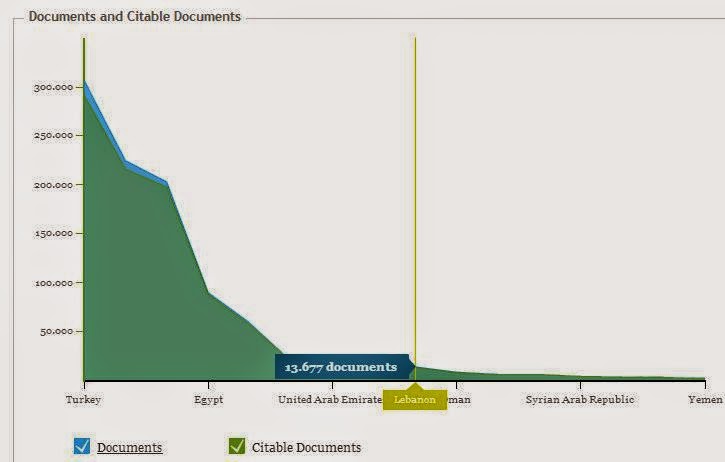 Fig 1. Documents and citable documents of the Middle East (Source: SCImago)
So where does Lebanon rank on the overall chart ? 69th, behind the Kuwait (68) and ahead of the Philippines (70), Lebanese publishers have published 13 677 documents since 1996 till 2012, with roughly 94 % citable documents. If we compare this percentage with Turkey's percentage of citable documents which is about 95 %, we can accept the notion that Lebanon's publications focus towards valuable research.
CountryDocumentsCitable DocumentsCitationsSelf-CitationsCitations per DocumentH index66Kenya16,72716,044206,88634,87415.0913167Viet Nam16,47416,116125,92718,50011.7910768Kuwait13,77513,42593,29012,8797.678369Lebanon13,67712,84797,31610,1829.79770Philippines13,16312,796141,07015,72713.3811671Puerto Rico11,20910,953150,25211,81915.3412972Iceland10,83410,359199,40819,73223.716073Cyprus10,3119,93879,31810,25212.4686Lebanon's neighbouring countries in total published docs between 1996-2012 (Source: SCImago)
[image error] Fig 2. Co-citation network subject map for Lebanon between 2011-2012 (Source SCImago)
If your wondering how the Lebanese documents are distributed with respect to subject areas, SCImago Lab Netviewer can generate a bubble map showing the impact of each respective subject area. The co-citation networks map for Lebanon (Fig. 2) shows that the majority of research publications are in Medicine and its subdivisions. In fact, between 2011 and 2012, 574 Medicine documents were published (31.38 %) followed by 162 Engineering documents (8.86 %) and in third place are the Biochemistry, Genetics and Molecular Biology with a total of 141 published documents (7.71 %). This is the same arrangement if we consider the Middle East report, where in 2012, 30 848 documents (20.92 %) in Medicine, followed by 13 569 documents (9.2%) in Engineering and 12 069 documents in Biochemistry, Genetics and Molecular Biology (8.18 %).
Over the last decade, Lebanon's reports show a fall back in research contribution. Between 2011 and 2012, the number of citation per document decreased from 2566 total citations (1.72 cites/doc.) to 550 citations (0.32 cites/doc). The highest recorded year was 2006, with an average 8.99 cites per document, a total 8993 citations.
If we rapidly recap the major chronological events that comprised the last decade, we can understand the direct correlation between research publications and the political unrest in Lebanon.
2005 (February): Rafic Harriri assassination 2006 (Summer - Fall): July war resignation of 5 ministers anti-government rally in Beirut
2007 (May - September): War of Nahr l Barid 2008 (May): Presidential election after 6 months of political deadlock 2009 (March): Formation of Saad Harriri unity government 2010 (October): Boycott of the UN Harriri tribunal 2011 (January): Collapse of the government (June): Najib Mikati government
(March): Beginning of the conflict in Syria 2012 (Summer): Clashes in Tripoli (October): Wissam Al Hassan assassination 2013 Refugee crisis and border tensions with Syria (May): No Parliament elections (Summer): Military clashes in Sidon, Tripoli and Bekaa European sanctions Bomb attacks (November): Beirut bombings 2014 (February): Tammam Salam forms new government after 10 month (April): UN announces more than 1 Million registered Syrian refugees
So how much of an impact do these events have on research publications ? I invite you to take a look at the Figure 3. In orange I indicated the documents cited during the respective year and in blue you will find the percentage of cited documents for the citable documents only since as a general rule, non-citable documents are not a valuable metric in my study. The blue arrow includes the major events of the Lebanese timeline over the last decade. Before 2006, the average cited documents in Lebanon was rising (from roughly 3000 citations in 1996 to a maximum of 8993 in 2006). The direct impact of the 2006 war is noticeable by a decrease of the average of citations per document from 8.99 to 7.82 in 2007 (take a close look at the Fig 4.). Since 2006, unfortunately Lebanon`s numbers have failed to recover.
 Fig 3. Cited docs vs. % cited docs with Lebanese political timeline (Chehouri A. © based on SCImago)
 Fig 4. Cites per document (Chehouri A. © based on SCImago)
What does it take to get these curves to rise again requires us to look in depth as to the causes. Above I mentioned milestone events, mostly related to security, violence and internal conflicts. Regardless of your political opinion, you may stand in the far left, far right or somewhere near the middle, we have to admit that the citizens of Lebanon, all citizens without exclusion hold the same level of responsibility as the state. China, Iran, Brazil, South Africa, Japan and India are all examples of countries that had their share of civil wars, revolutions and economic crisis and yet believed in their educational institutions. Yet we find Vietnam, Kenya, Cuba, Colombia, Nigeria, Pakistan, Egypt and Taiwan (no point intended and all my respect to the mentioned nations) all are ranked above Lebanon. I sincerely wish that I will come across a study about the success of Lebanese researchers and scholars outside Lebanon. Individually, we succeeded, but as a nation we fail to unite under one state, one flag, and one land.
I conclude, this study by quoting Article 26 of the Universal Declaration of Human Rights, a declaration that we take pride in participating in its foundation. I have faith in the Lebanese people, not the Lebanese system.
Article 26 (1) Everyone has the right to education. Education shall be free, at least in the elementary and fundamental stages. elementary education shall be compulsory. Technical and professional education shall be made generally available and higher education shall be equally accessible to all on the basis of merit. (2) Education shall be directed to the full development of the human personality and to the strengthening of respect for human rights and fundamental freedoms. It shall promote understanding tolerance and friendship among all nations, racial or religious groups, and shall further the activities of the United Nations for the maintenance of peace.(3) Parents have a prior right to choose the ind of education that shall be given to their children.
The Impact of Lebanon's Political Crisis on Academic Publication
It doesn't take a genius to tell you that violence and triggered wars are occurring in the Middle East. As much of a pain it is to witness such violence and hate, there should be no place for pessimism. Therefore, this post is not aimed at discussing the reasons, but rather the impact of the political conflicts of the last decade on research publication in Lebanon, a small study that I hope will touch others, whom share the same responsibilities.
At first, if you are not familiar with SCImago Journal & Country Rank, I suggest you get to know the SJR metric. It basis it algorithm on the information contained in the Scopus database (Elsevier) since 1996. It allows you to visualize, compare, and analyze the ranks of journals, countries and even regions. I based my analysis and study on the results generated by SCImago on the region of the Middle East; particularly on Lebanon.
Lebanon ranks 9th in the Middle East in terms of total number of documents (citable and non-citable) published since 1996 until 2012 (see Fig. 1 for more details). Turkey holds the first position in the Middle East and twentieth worldwide, with 291 814 citable documents, which is less than 4.5 % of the total citable documents of the United States, the leading country with more than 35 % of the total published documents of the Top 10 list. In 2012, Turkey's publication formed 27.95 % of the entire Middle East research documents, and Lebanon, as mentioned before ninth in the region, recorded only 1.4 % (the highest recorded percentage is 1.65% in the year of 2000).
The numbers of the United States of America are extraordinary. Notice that 7 our of the 8 countries that represent the G8 leaders are in this list, with Russia excluded and holding the 12th spot overall. As stated before in my previous blog post on Tips for Publishing in Scientific Journals , the H-Index is an excellent metric that illustrate the impact of a journal, the impact of a scholar and even in our case evaluate the impact of a particular country in terms of citable research publication. The US has an H-Index of 1380, meaning that 1380 articles have received more than 1380 citations.
CountryDocumentsCitable DocumentsCitationsSelf-CitationsCitations per DocumentH index1United States7,063,3296,672,307129,540,19362,480,42520.451,3802China2,680,3952,655,27211,253,1196,127,5076.173853United Kingdom1,918,6501,763,76631,393,2907,513,11218.298514Germany1,782,9201,704,56625,848,7386,852,78516.167405Japan1,776,4731,734,28920,347,3776,073,93412.116356France1,283,3701,229,37617,870,5974,151,73015.66817Canada993,461946,49315,696,1683,050,50418.56588Italy959,688909,70112,719,5722,976,53315.265889Spain759,811715,4528,688,9422,212,00813.8947610India750,777716,2324,528,3021,585,2487.99301Top 10 countries based on the total number of published docs between 1996-2012 (Source: SCImago)
Fig 1. Documents and citable documents of the Middle East (Source: SCImago)So where does Lebanon rank on the overall chart ? 69th, behind the Kuwait (68) and ahead of the Philippines (70), Lebanese publishers have published 13 677 documents since 1996 till 2012, with roughly 94 % citable documents. If we compare this percentage with Turkey's percentage of citable documents which is about 95 %, we can accept the notion that Lebanon's publications focus towards valuable research.
CountryDocumentsCitable DocumentsCitationsSelf-CitationsCitations per DocumentH index66Kenya16,72716,044206,88634,87415.0913167Viet Nam16,47416,116125,92718,50011.7910768Kuwait13,77513,42593,29012,8797.678369Lebanon13,67712,84797,31610,1829.79770Philippines13,16312,796141,07015,72713.3811671Puerto Rico11,20910,953150,25211,81915.3412972Iceland10,83410,359199,40819,73223.716073Cyprus10,3119,93879,31810,25212.4686Lebanon's neighbouring countries in total published docs between 1996-2012 (Source: SCImago)
[image error] Fig 2. Co-citation network subject map for Lebanon between 2011-2012 (Source SCImago)
If your wondering how the Lebanese documents are distributed with respect to subject areas, SCImago Lab Netviewer can generate a bubble map showing the impact of each respective subject area. The co-citation networks map for Lebanon (Fig. 2) shows that the majority of research publications are in Medicine and its subdivisions. In fact, between 2011 and 2012, 574 Medicine documents were published (31.38 %) followed by 162 Engineering documents (8.86 %) and in third place are the Biochemistry, Genetics and Molecular Biology with a total of 141 published documents (7.71 %). This is the same arrangement if we consider the Middle East report, where in 2012, 30 848 documents (20.92 %) in Medicine, followed by 13 569 documents (9.2%) in Engineering and 12 069 documents in Biochemistry, Genetics and Molecular Biology (8.18 %).
Over the last decade, Lebanon's reports show a fall back in research contribution. Between 2011 and 2012, the number of citation per document decreased from 2566 total citations (1.72 cites/doc.) to 550 citations (0.32 cites/doc). The highest recorded year was 2006, with an average 8.99 cites per document, a total 8993 citations.
If we rapidly recap the major chronological events that comprised the last decade, we can understand the direct correlation between research publications and the political unrest in Lebanon.
2005 (February): Rafic Harriri assassination 2006 (Summer - Fall): July war resignation of 5 ministers anti-government rally in Beirut
2007 (May - September): War of Nahr l Barid 2008 (May): Presidential election after 6 months of political deadlock 2009 (March): Formation of Saad Harriri unity government 2010 (October): Boycott of the UN Harriri tribunal 2011 (January): Collapse of the government (June): Najib Mikati government
(March): Beginning of the conflict in Syria 2012 (Summer): Clashes in Tripoli (October): Wissam Al Hassan assassination 2013 Refugee crisis and border tensions with Syria (May): No Parliament elections (Summer): Military clashes in Sidon, Tripoli and Bekaa European sanctions Bomb attacks (November): Beirut bombings 2014 (February): Tammam Salam forms new government after 10 month (April): UN announces more than 1 Million registered Syrian refugees
So how much of an impact do these events have on research publications ? I invite you to take a look at the Figure 3. In orange I indicated the documents cited during the respective year and in blue you will find the percentage of cited documents for the citable documents only since as a general rule, non-citable documents are not a valuable metric in my study. The blue arrow includes the major events of the Lebanese timeline over the last decade. Before 2006, the average cited documents in Lebanon was rising (from roughly 3000 citations in 1996 to a maximum of 8993 in 2006). The direct impact of the 2006 war is noticeable by a decrease of the average of citations per document from 8.99 to 7.82 in 2007 (take a close look at the Fig 4.). Since 2006, unfortunately Lebanon`s numbers have failed to recover.
Fig 3. Cited docs vs. % cited docs with Lebanese political timeline (Chehouri A. © based on SCImago)
Fig 4. Cites per document (Chehouri A. © based on SCImago)
What does it take to get these curves to rise again requires us to look in depth as to the causes. Above I mentioned milestone events, mostly related to security, violence and internal conflicts. Regardless of your political opinion, you may stand in the far left, far right or somewhere near the middle, we have to admit that the citizens of Lebanon, all citizens without exclusion hold the same level of responsibility as the state. China, Iran, Brazil, South Africa, Japan and India are all examples of countries that had their share of civil wars, revolutions and economic crisis and yet believed in their educational institutions. Yet we find Vietnam, Kenya, Cuba, Colombia, Nigeria, Pakistan, Egypt and Taiwan (no point intended and all my respect to the mentioned nations) all are ranked above Lebanon. I sincerely wish that I will come across a study about the success of Lebanese researchers and scholars outside Lebanon. Individually, we succeeded, but as a nation we fail to unite under one state, one flag, and one land.
I conclude, this study by quoting Article 26 of the Universal Declaration of Human Rights, a declaration that we take pride in participating in its foundation. I have faith in the Lebanese people, not the Lebanese system.
Article 26 (1) Everyone has the right to education. Education shall be free, at least in the elementary and fundamental stages. elementary education shall be compulsory. Technical and professional education shall be made generally available and higher education shall be equally accessible to all on the basis of merit. (2) Education shall be directed to the full development of the human personality and to the strengthening of respect for human rights and fundamental freedoms. It shall promote understanding tolerance and friendship among all nations, racial or religious groups, and shall further the activities of the United Nations for the maintenance of peace.(3) Parents have a prior right to choose the ind of education that shall be given to their children.
At first, if you are not familiar with SCImago Journal & Country Rank, I suggest you get to know the SJR metric. It basis it algorithm on the information contained in the Scopus database (Elsevier) since 1996. It allows you to visualize, compare, and analyze the ranks of journals, countries and even regions. I based my analysis and study on the results generated by SCImago on the region of the Middle East; particularly on Lebanon.
Lebanon ranks 9th in the Middle East in terms of total number of documents (citable and non-citable) published since 1996 until 2012 (see Fig. 1 for more details). Turkey holds the first position in the Middle East and twentieth worldwide, with 291 814 citable documents, which is less than 4.5 % of the total citable documents of the United States, the leading country with more than 35 % of the total published documents of the Top 10 list. In 2012, Turkey's publication formed 27.95 % of the entire Middle East research documents, and Lebanon, as mentioned before ninth in the region, recorded only 1.4 % (the highest recorded percentage is 1.65% in the year of 2000).
The numbers of the United States of America are extraordinary. Notice that 7 our of the 8 countries that represent the G8 leaders are in this list, with Russia excluded and holding the 12th spot overall. As stated before in my previous blog post on Tips for Publishing in Scientific Journals , the H-Index is an excellent metric that illustrate the impact of a journal, the impact of a scholar and even in our case evaluate the impact of a particular country in terms of citable research publication. The US has an H-Index of 1380, meaning that 1380 articles have received more than 1380 citations.
CountryDocumentsCitable DocumentsCitationsSelf-CitationsCitations per DocumentH index1United States7,063,3296,672,307129,540,19362,480,42520.451,3802China2,680,3952,655,27211,253,1196,127,5076.173853United Kingdom1,918,6501,763,76631,393,2907,513,11218.298514Germany1,782,9201,704,56625,848,7386,852,78516.167405Japan1,776,4731,734,28920,347,3776,073,93412.116356France1,283,3701,229,37617,870,5974,151,73015.66817Canada993,461946,49315,696,1683,050,50418.56588Italy959,688909,70112,719,5722,976,53315.265889Spain759,811715,4528,688,9422,212,00813.8947610India750,777716,2324,528,3021,585,2487.99301Top 10 countries based on the total number of published docs between 1996-2012 (Source: SCImago)
Fig 1. Documents and citable documents of the Middle East (Source: SCImago)So where does Lebanon rank on the overall chart ? 69th, behind the Kuwait (68) and ahead of the Philippines (70), Lebanese publishers have published 13 677 documents since 1996 till 2012, with roughly 94 % citable documents. If we compare this percentage with Turkey's percentage of citable documents which is about 95 %, we can accept the notion that Lebanon's publications focus towards valuable research.CountryDocumentsCitable DocumentsCitationsSelf-CitationsCitations per DocumentH index66Kenya16,72716,044206,88634,87415.0913167Viet Nam16,47416,116125,92718,50011.7910768Kuwait13,77513,42593,29012,8797.678369Lebanon13,67712,84797,31610,1829.79770Philippines13,16312,796141,07015,72713.3811671Puerto Rico11,20910,953150,25211,81915.3412972Iceland10,83410,359199,40819,73223.716073Cyprus10,3119,93879,31810,25212.4686Lebanon's neighbouring countries in total published docs between 1996-2012 (Source: SCImago)
[image error] Fig 2. Co-citation network subject map for Lebanon between 2011-2012 (Source SCImago)
If your wondering how the Lebanese documents are distributed with respect to subject areas, SCImago Lab Netviewer can generate a bubble map showing the impact of each respective subject area. The co-citation networks map for Lebanon (Fig. 2) shows that the majority of research publications are in Medicine and its subdivisions. In fact, between 2011 and 2012, 574 Medicine documents were published (31.38 %) followed by 162 Engineering documents (8.86 %) and in third place are the Biochemistry, Genetics and Molecular Biology with a total of 141 published documents (7.71 %). This is the same arrangement if we consider the Middle East report, where in 2012, 30 848 documents (20.92 %) in Medicine, followed by 13 569 documents (9.2%) in Engineering and 12 069 documents in Biochemistry, Genetics and Molecular Biology (8.18 %).
Over the last decade, Lebanon's reports show a fall back in research contribution. Between 2011 and 2012, the number of citation per document decreased from 2566 total citations (1.72 cites/doc.) to 550 citations (0.32 cites/doc). The highest recorded year was 2006, with an average 8.99 cites per document, a total 8993 citations.
If we rapidly recap the major chronological events that comprised the last decade, we can understand the direct correlation between research publications and the political unrest in Lebanon.
2005 (February): Rafic Harriri assassination 2006 (Summer - Fall): July war resignation of 5 ministers anti-government rally in Beirut
2007 (May - September): War of Nahr l Barid 2008 (May): Presidential election after 6 months of political deadlock 2009 (March): Formation of Saad Harriri unity government 2010 (October): Boycott of the UN Harriri tribunal 2011 (January): Collapse of the government (June): Najib Mikati government
(March): Beginning of the conflict in Syria 2012 (Summer): Clashes in Tripoli (October): Wissam Al Hassan assassination 2013 Refugee crisis and border tensions with Syria (May): No Parliament elections (Summer): Military clashes in Sidon, Tripoli and Bekaa European sanctions Bomb attacks (November): Beirut bombings 2014 (February): Tammam Salam forms new government after 10 month (April): UN announces more than 1 Million registered Syrian refugees
So how much of an impact do these events have on research publications ? I invite you to take a look at the Figure 3. In orange I indicated the documents cited during the respective year and in blue you will find the percentage of cited documents for the citable documents only since as a general rule, non-citable documents are not a valuable metric in my study. The blue arrow includes the major events of the Lebanese timeline over the last decade. Before 2006, the average cited documents in Lebanon was rising (from roughly 3000 citations in 1996 to a maximum of 8993 in 2006). The direct impact of the 2006 war is noticeable by a decrease of the average of citations per document from 8.99 to 7.82 in 2007 (take a close look at the Fig 4.). Since 2006, unfortunately Lebanon`s numbers have failed to recover.
Fig 3. Cited docs vs. % cited docs with Lebanese political timeline (Chehouri A. © based on SCImago)
Fig 4. Cites per document (Chehouri A. © based on SCImago)What does it take to get these curves to rise again requires us to look in depth as to the causes. Above I mentioned milestone events, mostly related to security, violence and internal conflicts. Regardless of your political opinion, you may stand in the far left, far right or somewhere near the middle, we have to admit that the citizens of Lebanon, all citizens without exclusion hold the same level of responsibility as the state. China, Iran, Brazil, South Africa, Japan and India are all examples of countries that had their share of civil wars, revolutions and economic crisis and yet believed in their educational institutions. Yet we find Vietnam, Kenya, Cuba, Colombia, Nigeria, Pakistan, Egypt and Taiwan (no point intended and all my respect to the mentioned nations) all are ranked above Lebanon. I sincerely wish that I will come across a study about the success of Lebanese researchers and scholars outside Lebanon. Individually, we succeeded, but as a nation we fail to unite under one state, one flag, and one land.
I conclude, this study by quoting Article 26 of the Universal Declaration of Human Rights, a declaration that we take pride in participating in its foundation. I have faith in the Lebanese people, not the Lebanese system.
Article 26 (1) Everyone has the right to education. Education shall be free, at least in the elementary and fundamental stages. elementary education shall be compulsory. Technical and professional education shall be made generally available and higher education shall be equally accessible to all on the basis of merit. (2) Education shall be directed to the full development of the human personality and to the strengthening of respect for human rights and fundamental freedoms. It shall promote understanding tolerance and friendship among all nations, racial or religious groups, and shall further the activities of the United Nations for the maintenance of peace.(3) Parents have a prior right to choose the ind of education that shall be given to their children.
April 1, 2014
Tips for Publishing in Scientific Journals
You have just finished writing your research paper and your advisor requested that you should start checking for possible journals to submit your paper... This is a common event to every PhD students, and in particular it is a new experience to first year PhD students. So here are few tips you should consider while publishing in a scientific journal based on my personal journey so far.
1. Evaluate Your Work... Please be Realistic !!
Often students aim to publish their work in high-ranking journal. I will talk about journal rankings later, but do not exaggerate too much when evaluating the impact of your research if you are a first year PhD student and this is your first publication. Be realistic, and if you need advise, find a referee, a third person if you want, and based on his feedback, you will decide to either submit your work as a conference paper or to a scientific journal. You do not want to get yourself in the headache of returning to your paper two months after you have submitted it, while you are currently working on something else, you are forced to make major adjustments.
Don't try understanding and listing all the journal and paper index's. I continue to discover new metrics every day, so take a look at the most popular index's you should know.
You are probably familiar with Google Scholar, it provides a simple way to broadly search for scholarly literature. From one place Google Scholar, you can search across many disciplines and sources from academic publishers, universities and other web sites. Google Scholar helps you find relevant work across the world of scholarly research. Google scholar uses 2 index's other than the number of citations, it uses the H index and the I index. The H-Index is the most popular metric and by definition:
H-index is the largest number h such that h publications have at least h citations. A scientist has index h if h of his/her Np papers have at least h citations each, and the other (Np − h) papers have no more than h citations each [Wikipedia].
The Wind Energy Journal has an H-Index of 33 according to SCImago, meaning that it has at least 33 articles with at least 33 citations each. Obviously, you can imagine that journals with a high H Index, have published papers that have made a high impact on the scientific community of their respective fields. The journal of Nature has the highest H index (year 2012), with an H Index of 768.
SCImago Journal & Country Rank: The SCImago Journal Rank (SJR) indicator, is a widely used known algorithm that measures the average number of weighted citations received in the selected year by the documents published in the journal in the last 3 years. The journal with the highest SJR indicator for the year of 2012 is the Reviews of Modern Physics.
The SCImago allows you to search for journal rankings based on ranking parameters: subject area, subject category, country, and could order the list by the H index and SJR indicator. Also, it permits you to search for journals based on the publisher, journal ISSN and the journal title.
Use SCImago to search for possible journals to submit your research paper, by sorting them based on their SJR indicator. Another bibliographic database containing abstracts and citations for academic journal articles is Scopus. It uses two metrics to sort your search; the SJR and the SNIP (source normalized impact per paper) indicator. The Journal Analyzer is another database you could use during your research paper submission brainstorming, with the possibility to check conference proceedings and even book series. I find it a good tool along with Google Scholar to use in your bibliographic study as an academic search engine.
3. Start with your References
The best way to start your search for journals is to begin with the references you cited in your research paper. Often in your introduction or the state-of-art of your article, you refer to similar work from the past, a good way is to mark down the journals or conference proceedings these references were published in. This way, proper reviewers will be assigned to evaluate your research paper. Also, you do not want your paper published in a journal that most of its features and readers are outside your field of expertise. This will impact your citations in the future, and let's admit it, it is nice to have your work cited.
4. Publishers and Databases you Must Know... Use ThemElsevier is a world-leading academic publishing company, with Sciendirect and Scopus as two major databases that allow you to access articles, conference proceedings and abstracts.John Wiley & Sons is another world leading publishing company, specialized in academic publishing, and offers an easy to use search database. Springer is a publishing company that publishes books, e-books and peer-reviewed journals in many disciplines such as science and medicine. It is the second largest publisher in STM (science, technology and medicine), according to their website. SAGE Journal and IOP Publishing are publishing company to consider. If you are interested in journal rankings even more, I suggest that you read the Global Ranking Report of the Publishing Industry of 2013. If you are considering the submission of your work to a conference, WikiCFP is a useful website allowing users to publish and share "Call For Papers" for conference in diverse disciplines. Use their search engine to check for conferences that are possibly willing to include your paper in their proceedings. It also allows you to view the location of the conference, this is very helpful if you want to be safe from any "FAKE Conference Calls", making sure that organizers have held previous conferences!!!
5. The Best Advise Comes When you ASK and READ
Often the relationship between the PhD student and the advisor is a "long distance relationship", meaning you occasionally arrange meetings over the internet. My best advise would be to don't get yourself into additional headaches and possibly even troubles during your journal selection process to publish your paper. Keep in mind, his or her name will appear in it, and so you must regard your supervisor with the selection process, he/she is more experienced than you. So you should ASK them first.
As for the READ, it is remarkable the amount of information you can learn from the journey of past and present PhD students. Since I began my blog, I started surfing the web more often and searching for people like me, first year PhD students who want to share and touch on random events during the journey of preparing our thesis. I will make sure to share as much as possible, the blogs that I find helpful and so today, I suggest you take a look at this site: Online PhD Program. No not because I am suggesting you should consider an online PhD program, but because you will find useful study tips, blogs post, article and much more. In regards to our topic, they have a wonderful post titled 105 Indispensable Resources for Online Academic Research that you should consider reading. You should save this link somewhere in your favourites if you are looking for search engines or journal databases and happen to be lost somewhere in your study and tumbled with thoughts and ideas.
I leave you today with this statement which I find to be very true. Consider sharing it to your friends and family, it will save you time having to explain the same questions every time, with my personal favourite: How's Your PhD Going? followed by my response.... Ummm pretty good, how is your brother doing?
1. Evaluate Your Work... Please be Realistic !!
Often students aim to publish their work in high-ranking journal. I will talk about journal rankings later, but do not exaggerate too much when evaluating the impact of your research if you are a first year PhD student and this is your first publication. Be realistic, and if you need advise, find a referee, a third person if you want, and based on his feedback, you will decide to either submit your work as a conference paper or to a scientific journal. You do not want to get yourself in the headache of returning to your paper two months after you have submitted it, while you are currently working on something else, you are forced to make major adjustments.
Don't try understanding and listing all the journal and paper index's. I continue to discover new metrics every day, so take a look at the most popular index's you should know.
You are probably familiar with Google Scholar, it provides a simple way to broadly search for scholarly literature. From one place Google Scholar, you can search across many disciplines and sources from academic publishers, universities and other web sites. Google Scholar helps you find relevant work across the world of scholarly research. Google scholar uses 2 index's other than the number of citations, it uses the H index and the I index. The H-Index is the most popular metric and by definition:
H-index is the largest number h such that h publications have at least h citations. A scientist has index h if h of his/her Np papers have at least h citations each, and the other (Np − h) papers have no more than h citations each [Wikipedia].
The Wind Energy Journal has an H-Index of 33 according to SCImago, meaning that it has at least 33 articles with at least 33 citations each. Obviously, you can imagine that journals with a high H Index, have published papers that have made a high impact on the scientific community of their respective fields. The journal of Nature has the highest H index (year 2012), with an H Index of 768.
SCImago Journal & Country Rank: The SCImago Journal Rank (SJR) indicator, is a widely used known algorithm that measures the average number of weighted citations received in the selected year by the documents published in the journal in the last 3 years. The journal with the highest SJR indicator for the year of 2012 is the Reviews of Modern Physics.
The SCImago allows you to search for journal rankings based on ranking parameters: subject area, subject category, country, and could order the list by the H index and SJR indicator. Also, it permits you to search for journals based on the publisher, journal ISSN and the journal title.
Use SCImago to search for possible journals to submit your research paper, by sorting them based on their SJR indicator. Another bibliographic database containing abstracts and citations for academic journal articles is Scopus. It uses two metrics to sort your search; the SJR and the SNIP (source normalized impact per paper) indicator. The Journal Analyzer is another database you could use during your research paper submission brainstorming, with the possibility to check conference proceedings and even book series. I find it a good tool along with Google Scholar to use in your bibliographic study as an academic search engine.
3. Start with your References
The best way to start your search for journals is to begin with the references you cited in your research paper. Often in your introduction or the state-of-art of your article, you refer to similar work from the past, a good way is to mark down the journals or conference proceedings these references were published in. This way, proper reviewers will be assigned to evaluate your research paper. Also, you do not want your paper published in a journal that most of its features and readers are outside your field of expertise. This will impact your citations in the future, and let's admit it, it is nice to have your work cited.
4. Publishers and Databases you Must Know... Use ThemElsevier is a world-leading academic publishing company, with Sciendirect and Scopus as two major databases that allow you to access articles, conference proceedings and abstracts.John Wiley & Sons is another world leading publishing company, specialized in academic publishing, and offers an easy to use search database. Springer is a publishing company that publishes books, e-books and peer-reviewed journals in many disciplines such as science and medicine. It is the second largest publisher in STM (science, technology and medicine), according to their website. SAGE Journal and IOP Publishing are publishing company to consider. If you are interested in journal rankings even more, I suggest that you read the Global Ranking Report of the Publishing Industry of 2013. If you are considering the submission of your work to a conference, WikiCFP is a useful website allowing users to publish and share "Call For Papers" for conference in diverse disciplines. Use their search engine to check for conferences that are possibly willing to include your paper in their proceedings. It also allows you to view the location of the conference, this is very helpful if you want to be safe from any "FAKE Conference Calls", making sure that organizers have held previous conferences!!!
5. The Best Advise Comes When you ASK and READ
Often the relationship between the PhD student and the advisor is a "long distance relationship", meaning you occasionally arrange meetings over the internet. My best advise would be to don't get yourself into additional headaches and possibly even troubles during your journal selection process to publish your paper. Keep in mind, his or her name will appear in it, and so you must regard your supervisor with the selection process, he/she is more experienced than you. So you should ASK them first.
As for the READ, it is remarkable the amount of information you can learn from the journey of past and present PhD students. Since I began my blog, I started surfing the web more often and searching for people like me, first year PhD students who want to share and touch on random events during the journey of preparing our thesis. I will make sure to share as much as possible, the blogs that I find helpful and so today, I suggest you take a look at this site: Online PhD Program. No not because I am suggesting you should consider an online PhD program, but because you will find useful study tips, blogs post, article and much more. In regards to our topic, they have a wonderful post titled 105 Indispensable Resources for Online Academic Research that you should consider reading. You should save this link somewhere in your favourites if you are looking for search engines or journal databases and happen to be lost somewhere in your study and tumbled with thoughts and ideas.
I leave you today with this statement which I find to be very true. Consider sharing it to your friends and family, it will save you time having to explain the same questions every time, with my personal favourite: How's Your PhD Going? followed by my response.... Ummm pretty good, how is your brother doing?
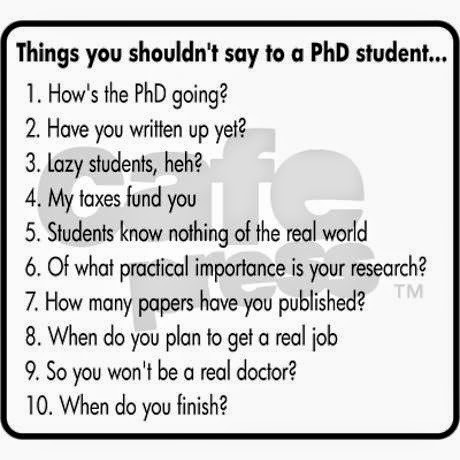



![[image error]](http://2.bp.blogspot.com/-YqUIoTx2C4Y/U11N15MIthI/AAAAAAAABLo/CQJZ74PJzzg/s1600/imported%20g3.JPG)