
Jamieson Wolf's Blog, page 78
July 22, 2014
We Are All Part of the Same House – A Poem
While I was
getting my coffee
this morning, I
noticed the barista
was wearing a
locket. Looking closer,
I read the
word “Slytherin” in
a flowing script.
Underneath, the serpent
that represented the
house was curled,
as if lying
in wait. I
pointed to it.
“Where did you get that?”
She looked at
me with shrewd
eyes as if
taking stock of
my worth. She
nodded, assessing me
as one who
was completely worthy.
“I got it at Comicon, but I’m sure there is an Etsy shop.”
I held up
my right wrist
and showed her
the scar that
was tattooed there.
She reached out
to touch it.
“Is it a real tattoo?”
I nodded, smiling.
Like recognizes like.
“What house are you in? Did you get sorted on Pottermore?”
I nodded, smiling.
“I was one of the first million people allowed to access the site.”
“So what house?”
“I got sorted into Ravenclaw, but I think I belong in Gryffindor.”
“Oh, no, you have to trust the Sorting Hat. It knows.”
“But I have the scar…”
She gave it
another hungry look.
“That’s a symbol for the whole series. It’s Harry’s story, right? But if the Sorting Hat and JK Rowling put you in Ravenclaw, that’s where you belong.”
I must have
looked put out
so she sang:
“Or yet in wise old Ravenclaw, if you’ve a ready mind, where those of wit and learning, will always find their kind.”
I recognized the
song. It’s what
the Sorting Hat
first sung when
Harry was sorted.
She looked at
me with a
strong, searching look.
“Are you wise? Do you crave knowledge? Are you drawn to air? That’s the element associated with Ravenclaw, you know.”
Something occurred to
me and I
pointed to the
necklace she wore.
“Were you sorted into Slytherin?”
I asked her.
She nodded, a
spark lighting up
her eyes. They
looked as if
they were filled
with glitter magic.
“Yes, I was. I wasn’t happy about it at first, I wanted Gryffindor, everyone does. But we’re all parts of the same house, you know. However, it’s our differences that make us strong.”
I wasn’t sure
if she was
referring to Harry
Potter, or something
deeper than that.
I took my
coffee and bade
her a nice
day. She put
her hand out,
catching my wrist.
“Trust in the Sorting Hat. It knows where you belong. We all have to belong somewhere.”
I nodded and
made my way
to work. I
looked online for
a Ravenclaw necklace.
My acceptance of
my house within
the world of
Harry Potter was
a small thing,
but at the
thought of stretching
my wings like
an eagle, and
soaring into the
air, my heart
soared with it
and I knew
where I belonged.


July 20, 2014
Living Words – A Poem
I woke one
morning with words
etched into my
skin. I tried to
read them in
mirror, but the
writing was backwards.
My friends noticed
the words and
asked why I
had tattooed myself
with just a
fraction of a
sentence. I woke
the next morning
to find the
words had doubled
on my skin,
snaking down the
inside of my
arm. I went
to the doctors
and they asked
why I had
marked myself with
words. They didn’t
understand when I
told them the
words had just
appeared there on
their own. They
sent me home
with a mild
sedative. When I
woke on the
third morning, I
found that both
my arms were
now covered in
looping black words.
I tried to
read them, attempted
to make sense
of what they
said, but I
could not see
all of the
words. Looking in
the mirror, I
saw they had
started to appear
along the back
of my neck.
My mother was
the one who
explained it to
me. She read
the words, running
her fingers along
some of them,
turning my arms
in order to
read others. She
looked at me.
“Don’t you recognize this?”
I shook my head
no. I shrugged.
“I haven’t been able to see all of them to read them. What does it say?”
“You should know. You wrote them.”
I was shocked.
“What do you mean?”
She pointed to
the words that
ran along the
inside of my
arm, then ran
her fingers along.
“As the cards flew from my grasp, I knew I had made the right decision. I was the Broken Man no longer.”
She paused for
breath, and to
point to another
set of words.
“And this here? These say: I had let a piece of my past go and looked forward to what the future would bring.”
I shook my head,
not knowing what
to say. My
mother took my
hands and held
them in hers.
“Your life is a living poem. A wonderful, exciting, awesome living poem.”
I wondered at
her words, at
what they meant.
What the words
on my skin
meant. She could
see my confusion.
“You put so much of yourself in your words, it is only natural that they will mark you even as you mark the page. Do not be afraid of them.”
“How do I get the words out of my skin?”
She looked at
me with a
half smile and
that wise look
she got in
her eyes, deep
and somehow comforting.
“Write. More words will come and you will always be marked by them, but you are a living poem. It has always been this way.”
I nodded and
pulled a piece
of paper towards
me. I put my
hand down on
the paper and
watched as the words
on my skin
began to slip
and slide off
of it. I
looked at the
page to see
what they had
to say.

July 17, 2014
People From My Past – A Poem
We were walking
back from the
coffee shop, drinks
in hand, when
I saw him.
I gestured to
her and made
sure she had
seen. I pointed
to him, saying
That’s my ex-husband.
It was the
first time I had
seen him in
six years. Later,
I wondered at
his appearance.
He was but
the latest in
a long line
of people from
my past that
I had seen
recently. I had
come across people
I used to know,
ex-boyfriends, ex-friends, ex-lovers.
I was wondering
at my lack
of a reaction,
at the absence
of anger that
I felt, that
had carried with
me for so
long. I had
worn my his
betrayal as if
it were a
hair shirt, or
a stone around
my neck. Instead
of reacting in
anger, I felt
oddly buoyant and
light. I walked
over to her
and asked her:
Why aren’t I reacting more? If this were last year, seeing him would have depressed me for the day. I’ve seen all these people from my past and they aren’t affecting me as I thought they would if I ever saw them again.
I paused for
breath and for
what I really
wanted to ask.
What gives?
She looked at
me with that
sage look in
her eyes that
she had and
smiled at me.
You were ready.
She said simply.
You’re a lot better now then you were. You’ve healed. You’re a different person now. You’re on the right path and you’re going where you need to. You wouldn’t be seeing them otherwise.
I nodded and
thought of all
the emotions that
these people had
caused me, all
the hurt, depression,
sadness, angst, rage,
despair and malaise.
I realised that
what I was
feeling right then
and there was
simple, unequivocal happiness.
I let go
of the pain,
of the heartache,
of the self-degradation,
and stopped judging
myself by how
other people from
my past had
seen me. All
that there was
now is me
as I chose
to be and
the emotion of
happiness. I choose
to be happy.
All the rest
is just stardust
and the possibilities
of the future.

July 16, 2014
The Mind Garden – A Poem
I came upon
a doorway. It
was tall and
narrow and was
made from old
wood painted red
that had faded
over time in
the sun. The
doorway was unremarkable
except for two
reasons: It stood
in the middle
of a parking
lot and from
the open door
there came the
sound of laughter.
A boy came
out and looked
at me. He wore
round glasses and
had a dark brown
mop of hair.
He smiled, the
smile filled with
gaps. He let out
another loud laugh.
“Do you want to come see the garden?”
I looked around to
see if the
boys parents were
around, but there was
no one. He
laughed loudly again.
“Don’t be afraid. You’ll be okay.”
“Where are your parents?”
I asked him.
Surely, he wasn’t
alone. He grinned.
“They’re close. They’re your parents! Come on!”
Beckoning with one
hand, he raced
away from the
doorway. He stood,
looking at me,
a smile still
playing upon his
lips. He was standing
in what looked
to be a large
meadow surrounded by
trees. I went
around to the
back of the
doorway, but there
was nothing. Only
a brick wall
and some grease
stains. I went
back around to
the front and
looked inside again.
The boy still
stood there, looking
at me with
twinkling, bright eyes.
“Come on! There’s nothing to be afraid of!”
I nodded, not
trusting myself to
speak. Stepping over
the threshold of
the door, there
was a loud rushing
sound and my
ears popped from
sudden pressure. Then
I was through,
and my ears
cleared. The boy
reached for my
hand. When our
fingers touched, a
wind began to
dance in the
grass and flew
upwards. I looked
at the boy.
“What was that?”
He took his
time before he
answered my question.
“The meadow remembers you. Come on, the garden isn’t that far.”
He pulled me
along and within
moments, we were
at the entrance
of a small
garden. There were
orchids and roses,
petunias and chrysanthemums,
tiger lilies and
ivy. There were
flowers of every
kind, but they
were all relatively
small, as if
they had just
started to grow.
I looked beyond
the small garden
and saw another
one behind it.
I pointed with
a shaking hand.
“What’s over there? What’s that garden?”
The boys face
darkened. He looked
sad all of
a sudden, as
if the other
garden held nightmares.
“That’s the dead garden. Nothing grows there anymore.”
He could see
from my face
that I wanted
to explore it.
So he led
the way, keeping
hold of my
hand. As we
walked, a question
occurred to me.
“If this garden is dead, how did the new one grow?”
The boy laughed
again and the
breeze responded in
kind, laughing among
the grass. The
boy looked at
me with strangely
serious, mature eyes.
“Do you really not know?”
I shook my
head, but an
answer came to
me moments before
he said it.
“They come from imagination. From ideas. All you have to do is think of it and the ideas will grow.”
He led on
until we came
to the dead
garden. It’s plants
were all dead
and none that
I could name.
It was filled
with spiky plants
that looked as
if they were
ready to draw
blood should we
touch one. I
looked at the
boy, trying to
find my voice.
“Did ideas grow this garden too?”
He nodded, a
tear sliding down
his cheek. He
made no effort
to wipe it
off his face.
“Yours. It was your ideas and imagination that caused both gardens to grow.”
I was shaken
but his words
had the ring
of truth to
them. I asked
the first thing
that came to
mind, letting the
words spill out.
“How could I grow this?”
“You were unhappy. The thoughts that you have hold power. What’s inside your mind takes root in the real world.”
“Then why does the other garden exist?”
The boy let
out a hearty
laugh and squeezed
my hand tightly.
“Because your better now. We’re better.”
I looked back
at the healthy
garden, so full
of life. Then
I looked at
the dead garden.
“I want you to help me to do something. Will you?”
“Of course.”
“If imagination caused this garden, maybe new thoughts, new ideas, will make it better again.”
I was pretty
sure I knew
who the boy
was, what he
was. He nodded
and took both
my hands. I
took a deep
breath and imagined
life growing around
us, coming out
of the dark
soil. There was
nothing at first,
but then we
both heard the ground
around us begin
to crack and
rumble. It shook
for a moment
and then grass
shot out of
the ground where
before there was
only black, burnt
earth. Trees shot
up out of
the ground, their
leaves green and
whole. Flowers slid
out of the ground
with small pops,
hundreds of them,
thousands of them.
Gone was the
black earth and
the plants that
looked as if
they would draw
blood. In the
trees, I could
hear birdsong. I
looked down at
the boy, smiling.
“We did it!”
I couldn’t help
letting out a
loud, joyful laugh.
He nodded, smiling
“You did it. You did all of this.”
I looked at
him, really looked
at him closely.
“You’re me, aren’t you? My inner child? You look exactly as I did when I was younger. I don’t know why I didn’t see it before.”
He nodded again.
“Because you couldn’t.”
“Then where are we? Where is this place?”
He gave me
a big grin.
“Would you believe me if I said we’re inside your mind?”
I didn’t need
to think of
a proper response.
“Yes. I would. It’s the only thing that makes sense. But how do I get out?”
“The way you came. Remember, what you imagine is given life and anything is possible.”
I turned to
walk back through
the doorway. The
boy didn’t move.
“Aren’t you coming with me?”
I asked him.
“No, I think I’ll stay here for a while longer. Now that you’ve found me again, I won’t ever be far away. Never forget me, Okay?”
“I won’t. I promise.”
I turned towards
the doorway, the
trees and plants
swaying in a
soft breeze. As
I stepped back
through the doorway,
I looked back
through the door.
There was my
inner child, playing
amongst the trees
and flowers, with
joy written on
his face and
laughter in his
heart. I closed
the door, knowing
he’d be safe
now and began
to make my
way home again.

July 13, 2014
My Life Is Up To Me – A Poem
I was lost
inside of myself.
I had forgotten
what it was
to actually live.
I had given
up, had chosen
to hide in
the dark. It
wasn’t as painful
as the light.
I had given
up. I was
raised not to
be a quitter,
but I could
see no other
way, could not
see around the
dark mountain inside
of my head.
I lay down
that night to
sleep and prayed
for it to
be endless, to
not wake up.
I prayed so
hard that tears
coursed down my
face while sleep
laid its claim
on my body.
I woke to a
noise in the
kitchen. I got
out of bed
and walked toward
the noise. My
grandmother, long ago
dead, stood making
a jug of
pink lemonade. She
heard me and
turned, a smile
upon her face.
Better drink up while it’s still cold. If it gets warm, it tastes like piss.
Her smile deepened
and she held
out a glass
to me. I
took it, my
hands shaking slightly.
How can you be here?
I asked her.
You died when I was eight.
She smiled and
motioned at my
glass of pink
lemonade, almost
waving at it.
Aren’t you going to drink it? I came a long way to make it for you.
I took a sip
and the tart
sweetness of it
flooded my mouth.
Now, listen. You need some sense knocked into you. You can’t keep living like this.
How else can I live?
You can stop being sorry for yourself for one thing. You can get out there and live.
I don’t know how.
She gave me
a look that
I remembered well.
It was a
look that said
you had better
pay close attention.
You were doing fine before. Now you’ve been given another chance, and you’re choosing to spend it in darkness?
I tried to
think of everything
I was feeling,
all that I
wanted to say.
I don’t know how to do anything else. I’m lost.
So find yourself again. It’s a simple change to make, a simple fix.
I don’t know how.
She sighed and
poured herself a
glass of lemonade.
Her stare softened.
She took a
sip and spoke
oh so softly.
Look, I know what’s happened to you is hard. And I know that change is hard, that it sometimes takes everything you have. You have to make a change for the better.
I don’t know how.
You keep saying that, but why do you have this?
She pointed at
a small magnet
on my fridge.
It was bright
yellow and had
six small words,
six syllables that
resounded, loud and
strong, even through
my current haze.
My life is up to me.
The words sounded
almost like music
coming from my
lips. My grandmother
nodded, smiling kindly.
Who gave you that magnet?
My mother.
Smart woman, your mother. Always liked her. You need to remember those words, every time you’re afraid of making a change. Say the words again.
I nodded and
did so. My
voice was still
soft and quiet.
My life is up to me.
No, no, that’s not working. Why are you living in such a dark place? You need a little light.
My grandmother snapped
her fingers and
the magnet began
to pulse softly
with light, shining
from the fridge.
Now say the words again.
My life is up to me.
The light from
the magnet grew
a little brighter.
And now say it again, but mean it this time, shout it!
My life is up to me!
The light increased
until it was
almost blinding. I
had to shield
my eyes from
its brilliance. I
heard my grandmother’s
voice again. She
sounded far away now.
Never forget, you control what changes in your life. That’s what gives you courage. I am so proud of you.
The light grew
even brighter, more
luminous. I had
to close my
eyes. When I
opened them again,
I was in
my bedroom, still
in bed. I
shook myself awake,
filled with an
emptiness that just
wanted to be filled.
It was a dream.
I said, not
wanting it to
be so. It
had seemed so
real, so true.
I got out
of bed and
walked into the
kitchen. There, sitting
on the counter,
was a jug
filled with pink
lemonade and two
glasses, half full.
I looked around.
Grandmother?
I said. My voice
was soft. I heard
a sound that
was like the
snapping of fingers.
I turned and
looked at the
fridge. There, the
little magnet with
six simple words
was glowing bright
like the sun.
My life is up to me.
I said, my
voice finding strength.
My life is up to me.

July 11, 2014
A Language Upon the Leaves – A Sonnet
I thought I’d try something different. 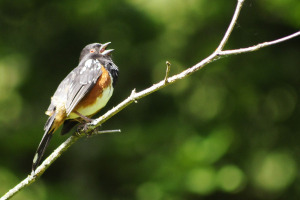
I don’t normally write poems with any rhyming scheme or iambic pentameter. However, I thought I’d try my hand at writing a sonnet. I made a comment on Facebook the other night that I felt like writing love sonnets. Someone said I should try, so I did!
I hope you enjoy my first effort.
*
You helped me relearn a language unknown
something primal and unspoken.
Our love has bloomed and has grown,
a seed beginning to spring open.
The language you taught me once again
was one that I’d forgotten.
Every touch, caress and every when,
is but a new leaf begotten.
Inside my heart, the language you speak
is written upon the leaves.
The bird takes them in his beak
and brings them to the breeze.
The tree we planted and nurtured still grows
and whispers the words every time the wind blows.

July 10, 2014
Disraeli Avenue by Caroline Smailes – A Review
 Behind closed doors, there are many secrets.
We all have secrets. We hold on to them tightly, even if they burn our hands, knowing that they must never see the light of day.
Released into the light, these secrets could heal one life and shatter another. We will take our secrets to the grave, taking comfort in the fact that no one will hear them, that no one will know them. That no one will know who we really and truly are. This is how things have always been.
On Disraeli Avenue, there are lots of secrets; lots of hidden truths buried like treasure. Some are like soft golden coins, shining in the light and begging to be heard. Some are like rubies with sharp edged teeth, waiting to bite the hand that dips into them and draw blood.
In her new novella, Caroline Smailes returns to Disraeli Avenue, the setting for her amazing debut novel In Search of Adam.During In Search of Adam, we got to know the inhabitants of Disraeli Avenue through the eyes of Jude Williams.
Now, Smailes is giving those inhabitants their own voice. Disraeli Avenue consists of thirty-four vignettes, thirty-four insights into the lives of the people who make up Disraeli Avenue.
I’ve actually read this novella seven times now. I read it three times a piece when it was released in it’s previous incarnations and I’ve read it through again. Each and every time, I’m blown away by how incredible Smailes is. It’s a hard task to give thirty-four individual people their own distinctive voice. Most seasoned authors struggle with this for years and never manage to create distinctive voices.
Thankfully, Smailes achieves this with aplomb. Told in diary entries, text messages, letters, receipts, invoices and more, Disraeli Avenue is an intimate and revealing look at the people that make up a neighbourhood; the people that live close to one another never really knowing who their neighbours are.
For those of you who have not read In Search of Adam, you can breathe easy: it’s not necessary to have read In Search of Adam to read Disraeli Avenue. But I can guarantee after reading Disraeli Avenue that you’ll want to read In Search of Adam to see where it all began. Though the subject matter may be grim, covering topics such as death, suicide, sexual abuse, theft, love, friendship, family and more, the novella is incredibly well written and will pull you in.
You will need to keep reading to find out whom you will meet next, whose voice you will hear. Whose life you will get to see into, just for a moment. You will not be able to put this book down. Each chapter brings a new voice, just begging to be heard.
I found this to be one of the novella’s strengths. Smailes has created a tapestry of people, a real live neighbourhood that must surely be around the corner. You start to recognize the different people that populate Disraeli Avenue as they appear in other stories, other vignettes. What’s more, you come to know them. To care for them, even though we only know them for an instant.
Once again, Smailes offers us a study in human nature, a study in what really makes people tick and comes out on top. She isn’t afraid to pull any punches either. There is a vibrancy to her words that leaps off the page and that makes Disraeli Avenue all the more amazing.
I was incredibly moved by Disraeli Avenue and it touched so many different emotions. It has been a long time since a book has done that, has reached down into me and pulled at my heart. I feel I know the people of Disraeli Avenue and I know that they will haunt me for a long time to come. The entire novella was a journey.
Smailes herself has been on quite a journey with Disraeli Avenue and you can read about that here: http://www.carolinesmailes.co.uk/wrote-disraeli-avenue-charity Every cent of her royalties will go to the charity One in Four. You can get your copy of Disraeli Avenue HERE.
Read and be amazed.

July 5, 2014
Searching for Amber by David Smith – A Review
 Jade does not see the world like everyone else.
A photographer by trade, she sees it more clearly through the lens of her camera. She is tough but takes photographs that show people as they really are, stripping the walls down and laying what she sees bare.
Abandoned by her mother and raised by her adoptive parents, Jade has always felt that a piece of her was missing. Only truly happy when she is creating, Jade trudges through the world, looking for that lost piece of herself. She feels alone in her village, unaware that the answers she seeks to her past are closer than she thought possible.
When she is brutally attacked, she is saved by a Martin, a boatyard worker of very few words. Jade is captivated by him and what secrets he may hold in his past. He walks with an air of sadness and Jade means to find out what is behind it.
Jade is drawn in by Martin and becomes obsessed with him. She yearns to dig underneath his skin and find out what is there. As they get closer, Martin finally tells her what happened to create the air of sadness that surrounds him.
Years ago, his sister Amber, left home. He has never seen her again. Also, his father had a tragedy while at sea. He lost both is father and his sister in on fell swoop and has never been the same. The sea took both of them from him. Though he is afraid of what the water can bring, he works at the boatyard; in that way, he is close to both of them.
Wanting to delve further into the mystery, Jade offers to help Martin find his missing sister. What they learn will change both of their lives forever…
I was blown away and left breathless by Searching for Jade.
First, because the writing is so incredible. It’s very literary in style but draws the reader in with the beauty of it’s words. I was expecting a novel I could rush though but the language slows you down as you want to make sure to read every gorgeous word. There is very little dialogue in the book, but that’s one of the novels strong points.
David Smith brings Jade and Martin’s world to life on the page until you feel as if you are inside the book, with the characters in Aldeburgh, Suffolk, London and Essex. Never before have I read such incredible writing. Smith puts more power in one sentence than many writers are able to capture in one page.
It also has pieces of poetry, dialogue and conversation sprinkled through out to serve as scene breaks or internal thoughts of the characters that help bring the reader further into the story. As the story moves from the present to the past, we are pulled even deeper as more of the story is revealed.
The characters are also engaging. Jade is a tough and life-hardened protagonist that is at once likeable and compelling. Martin is almost broodish, tortured and yet kind. You yearn for these characters and connect with them so completely. I felt I knew them, all of them, when the novel was over. Their lives were bared for us on the page as the story moved to it’s incredible conclusion.
It’s been a long time since I’ve been so entranced by a novel. I took my time reading this as I didn’t want it to end. When I finished it, I was actually left with an ache in my stomach. David Smith doesn’t just tell you a story. In Searching for Amber, he has given the reader a journey.
An absolutely incredible book beautifully told. Begin the search for Amber yourself and fall under the books spell.

July 4, 2014
Holding the Chalice Tightly – A Poem
Everyone has a
chalice inside of
them. That glass
barrier that lies
between body and
spirit. Over time,
the chalice can
break and crack.
I was forever
picking up pieces
of mine. I
would be walking
along and hear
the soft clink
of glass behind
me. I would
pick up the
shard of glass
and let it
sit in my
hand for a
moment as it
caught the light.
Then, slowly, it
would sink back
into my flesh.
It never found
it’s proper place
though, so when
I walked, it
sounded like bells
were singing as
I moved. I
healed my body,
mind and spirit
but the chalice
still remained in
pieces. Though I
was whole on
the outside, I
was still in
pieces. I didn’t
think the chalice
would be whole
again. Until I
met him. As
our feelings grew,
I could feel
the pieces of
the chalice moving
inside of me,
finding their rightful
place, forming the
chalice one more.
They were in
place, waiting for
the moment. When
he told me
that he loved
me for the
very first time,
and I told him
the same, he
pulled me into
a tight embrace.
Rather than break
the chalice, I
could feel the
pieces melding back
together, fusing and
forming. A new music
began to play
from inside of
me. It was
the sound of
bells, made from
a whole chalice
rather than a
broken one. It
began filling me
with light and
love for him.
He looked at
me and said
“I love you.”
The music of
the bells grew
until the world
around us was
filled with light
“I love you, too.”
I said. Light
poured from both
of us and
danced to the
sound of music
and I was
complete once more.

June 28, 2014
The Masks We Wear – A Poem
I used to
know someone who
insisted we wore
many masks in
our lives. We
wore one mask
at work, a
different one with
friends, another with
lovers, one more
with parents. I
imagined a closet
filled with all
sorts of different
masks instead of
shoes or clothes.
“I don’t wear masks.”
I told him.
“It’s easier that way.”
He became belligerent.
“Everyone wears masks! How else would we survive?”
I looked at
him with the
strange feeling that
I didn’t really
know him. I
wondered what kind
of mask he
wore with me.
“Would you behave the same way at work as you do at home?”
He asked me.
I nodded yes.
“I am always myself.”
He scoffed at
me, his tone
full of derision.
“Please. At work, you wear a professional mask. At home, you wear another.”
We agreed to
disagree. I thought
he had the
wrong of it,
that you didn’t
have to wear
masks to get
through life. I
pointed out that
you could be
yourself, but just
another fraction of
who you were.
“So it’s a partial mask. That’s all it is. I’m wearing a mask with you.”
He said. I
was shocked as
I hadn’t known
he needed a
mask to be
around me. I
asked him quietly:
“What mask do you wear around me?”
He scoffed again.
“You don’t want to know.”
He was right.
I didn’t want
to know. Later,
I searched my
face for a
mask, a crack
that ran along
my skin. I
saw a thin
line that ran
along the edge
of my face,
down along my
jaw. It was
a thin mask,
almost like glass
made supple and
bendable. It was
almost me, but
I was still
hiding. Still locking
my true self
behind another face.
I dug my
fingers under the
edge and gently
pulled. The mask
came away easily,
the glue holding
it on turned
dry. I wondered
if I had left
it on whether
it would have
just melted away
on its own.
When the mask
was free, I
looked at myself.
There was a
light that shone
from my skin,
bright like the
morning sun. I
thought that this
was why I
had worn the
mask, so as
not to make
him uncomfortable with
my light, as
he didn’t have
one. He didn’t
shine. I resolved
to find someone
else who shone,
who burned brightly.
I went out
into the world,
without a mask,
to see what
I could see.
Other men wore
blue masks, grey
masks, red masks.
They carried the
marks of their
souls on the
surface. They
were hiding behind
themselves. They were
locked behind their
fears, their worries,
their perceived weaknesses.
They didn’t just
wear them as
masks, but as
shrouds, mantles and
cloaks. The only
difference between them
and myself was
that I no
longer wanted to
wear a mantle
of needles. I
wanted to live
as myself, not
behind my pain.
They weren’t ready
to shine as
themselves. I despaired
about ever finding
someone who wore
no masks and
had given up.
It was when
I had given
up that he
found me. I
walked into the
coffee shop, not
thinking anything would
happen but when
he turned towards
me, I was
struck by the
light that poured
from him. I
stood there for
a moment, searching
his face for
a mask, for that
tell-tale sheen of
glass that ran
along his skin.
There wasn’t one.
“Hi.”
He said. I
was almost speechless,
unable to find
words accurate enough
for an introduction.
“Hi.”
I said, thinking
that the word
was lacking. I
had finally found
someone who didn’t
wear a mask,
or he had
found me. That
didn’t matter. What
did was that
we had found
each other. There
were no coloured
masks on his
face, no blues
or reds or
black glass or
or green. There
was only him,
shining brightly like
a star or sun.
There was only
him. He smiled
and the light
from inside him
grew only brighter.
My light glowed
in response and
the air hummed
with possibilities.


