
Pete Sutton's Blog, page 33
May 13, 2015
Some short reviews
Trout Fishing in America by Richard Brautigan
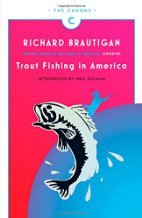
Brautigan’s most famous, and possibly most surreal book. I didn’t enjoy it as much as say [Sombrero Fallout] but entertaining nonetheless.
Overall – Odd, quirky and of its time
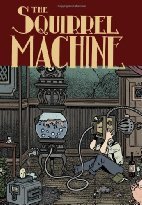
Squirrel machine by Hans Rickheit
[image error]
[image error]
This is a Surreal horror that’s all manners of odd. I liked it. I’m not sure why. The narrative is darkly nebulous but the art is very good. I’d try and summarise the plot but I’m not sure that’s possible. Ostensibly it’s the story of two brothers, a pig lady, musical instruments made from taxidermied animals and a doorway into a dreamscape full of metaphor.
Overall - It’s a dark mindscape
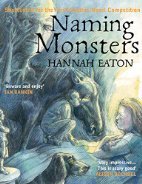
Naming Monsters By Hannah Eaton
[image error]
[image error]
A coming of age tale. Fran is an amateur cryptozoologist who catalogues monsters to cope with the world. Her relationship with her best friend, her father, her boyfriend and her nana are explored and the usual sexual awakening is explored. Not sure the narrative quite gelled and the monster stuff seemed like an adjunct rather than fully blended.
Overall – OK coming of age tale
Brautigan’s most famous, and possibly most surreal book. I didn’t enjoy it as much as say [Sombrero Fallout] but entertaining nonetheless.
Overall – Odd, quirky and of its time
Squirrel machine by Hans Rickheit
[image error]
[image error]
This is a Surreal horror that’s all manners of odd. I liked it. I’m not sure why. The narrative is darkly nebulous but the art is very good. I’d try and summarise the plot but I’m not sure that’s possible. Ostensibly it’s the story of two brothers, a pig lady, musical instruments made from taxidermied animals and a doorway into a dreamscape full of metaphor.
Overall - It’s a dark mindscape
Naming Monsters By Hannah Eaton
[image error]
[image error]
A coming of age tale. Fran is an amateur cryptozoologist who catalogues monsters to cope with the world. Her relationship with her best friend, her father, her boyfriend and her nana are explored and the usual sexual awakening is explored. Not sure the narrative quite gelled and the monster stuff seemed like an adjunct rather than fully blended.
Overall – OK coming of age tale


May 4, 2015
Writers of the Future Volume 31 - Review
[image error]
Writers of the Future is a competition established by L Ron Hubbard (yes the Scientology founder) which chooses twelve writers and twelve illustrators every year who win large cash prizes. The stories, all of them anonymous, are read by a blue-ribbon panel of judges that include some of the greatest luminaries in science fiction and fantasy. Art pieces by the illustrator entrants are similarly judged by powerhouse artists in the field. And out of thousands of submissions, the judges each quarter choose the top three, the very best.
All of the quarterly winners are invited to attend an intensive, five-day master-class workshop where they are taught the skills and techniques to become professionals.
Their winning stories, along with accompanying illustrations, are published in an annual anthology. This anthology also has stories by (as you can see from the picture) Orson Scott Card, Larry Niven and other luminaries. (Although I do take issue with OSC I didn't know he was involved when I agreed to review this book).
This is, as you'd expect, an eclectic mix of styles and voices. Some very good, some fairly average, none bad. However this variety is the strength of the book, it will pretty much have something for every fan of SF.
I really liked the opening story Switch by Steve Pantazis which was about experimental drugs and a whole "to catch a thief" feel. Other stories of note were A Revolutionary ’s Guide to Practical Conjuration by Auston Habershaw A coming of age in a city at war with an almost Steampunk style and great worldbuilding, also had my favourite of the illustrations, by Shuangjian Liu and Twelve minutes to Vinh Quang by Tim Napper with gangsters, refugees a believable female protagonist and a look forward in time to the future of Southeast Asia.
Some of the names in this book will only become more familiar with time I expect.
Overall - Great mix of SF stories
Writers of the Future is a competition established by L Ron Hubbard (yes the Scientology founder) which chooses twelve writers and twelve illustrators every year who win large cash prizes. The stories, all of them anonymous, are read by a blue-ribbon panel of judges that include some of the greatest luminaries in science fiction and fantasy. Art pieces by the illustrator entrants are similarly judged by powerhouse artists in the field. And out of thousands of submissions, the judges each quarter choose the top three, the very best.
All of the quarterly winners are invited to attend an intensive, five-day master-class workshop where they are taught the skills and techniques to become professionals.
Their winning stories, along with accompanying illustrations, are published in an annual anthology. This anthology also has stories by (as you can see from the picture) Orson Scott Card, Larry Niven and other luminaries. (Although I do take issue with OSC I didn't know he was involved when I agreed to review this book).
This is, as you'd expect, an eclectic mix of styles and voices. Some very good, some fairly average, none bad. However this variety is the strength of the book, it will pretty much have something for every fan of SF.
I really liked the opening story Switch by Steve Pantazis which was about experimental drugs and a whole "to catch a thief" feel. Other stories of note were A Revolutionary ’s Guide to Practical Conjuration by Auston Habershaw A coming of age in a city at war with an almost Steampunk style and great worldbuilding, also had my favourite of the illustrations, by Shuangjian Liu and Twelve minutes to Vinh Quang by Tim Napper with gangsters, refugees a believable female protagonist and a look forward in time to the future of Southeast Asia.
Some of the names in this book will only become more familiar with time I expect.
Overall - Great mix of SF stories
April 30, 2015
Review - Sleeps with Angels by Dave Hutchison
Sleeps with Angels by Dave Hutchinson
[image error]
Having read and enjoyed Europe in Autumn I jumped at the chance to review this collection of shorts which was sent to me as an ARC. Hutchinson’s prose is absorbing and in each short he demonstrates an intelligent take on alternate worlds. They mostly sit in SF but are quite unobtrusive, even where they rely on hard science. The story, and the characters are the thing here.
There are six fairly long short stories in here that deal with themes that will be familiar if, like me, you’ve read Hutchinson’s previous book. A fragmented world with fragmented politics on a truly modern stage. In The Fortunate Isle We get a police procedural where a man, shot through the head, is claimed to be a woman’s husband but his provenance is much, much stranger. Dali’s clocks Is a sly story about creativity, as provided by drugs. Sugar Engines is a cosy catastrophe in a nanopocalypse. Sic Transit Gloria Mundi sees an archaeological investigation into the mysteries of a Roman merchant’s far-fetched stories and All of the news, All the time, From Everywhere has a post-collapse world where the news can only be gleaned through animal sacrifice and elves now run the world. The last tale in the book The incredible exploding man is about an accident in a particle collider and is rather excellent – did the editor save the best for last?
Each story has a note on its genesis from the author, which is always interesting. The stories have all been published before, except for Sic Transit Gloria Mundi and are described as Science fiction, although that title does more to obfuscate than reveal what to expect from these stories. I’m glad to say that Hutchinson is as good with a short as he was with the novel and I eagerly await his next book & will keep an eye out for previous collections.
Overall – Very accomplished writing, it’s well worth visiting the many worlds of Dave Hutchinson
[image error]
Having read and enjoyed Europe in Autumn I jumped at the chance to review this collection of shorts which was sent to me as an ARC. Hutchinson’s prose is absorbing and in each short he demonstrates an intelligent take on alternate worlds. They mostly sit in SF but are quite unobtrusive, even where they rely on hard science. The story, and the characters are the thing here.
There are six fairly long short stories in here that deal with themes that will be familiar if, like me, you’ve read Hutchinson’s previous book. A fragmented world with fragmented politics on a truly modern stage. In The Fortunate Isle We get a police procedural where a man, shot through the head, is claimed to be a woman’s husband but his provenance is much, much stranger. Dali’s clocks Is a sly story about creativity, as provided by drugs. Sugar Engines is a cosy catastrophe in a nanopocalypse. Sic Transit Gloria Mundi sees an archaeological investigation into the mysteries of a Roman merchant’s far-fetched stories and All of the news, All the time, From Everywhere has a post-collapse world where the news can only be gleaned through animal sacrifice and elves now run the world. The last tale in the book The incredible exploding man is about an accident in a particle collider and is rather excellent – did the editor save the best for last?
Each story has a note on its genesis from the author, which is always interesting. The stories have all been published before, except for Sic Transit Gloria Mundi and are described as Science fiction, although that title does more to obfuscate than reveal what to expect from these stories. I’m glad to say that Hutchinson is as good with a short as he was with the novel and I eagerly await his next book & will keep an eye out for previous collections.
Overall – Very accomplished writing, it’s well worth visiting the many worlds of Dave Hutchinson
April 29, 2015
A couple of year's on I caught up with Nic Bottomley for a follow up interview
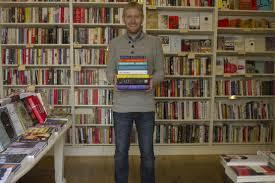
A second interview with Nic Bottomley of Mr B’s Emporium of Reading Delights & Fox, Finch & Tepper @mrbsemporium @foxfinchtepper
So, a lot seems to have happened in the last two years. Mr B’s seems to go from strength to strength and you are now a bona fide publisher.
When we last spoke I asked – “have you been inspired by this success and the example of Shakespeare & Co/Ulysses story? To create a Mr B's publishing imprint?” and you said – “A Mr B's publishing imprint would be an altogether different proposition -the beauty of what we've done here is that we've worked together with a publisher and borrowed their expertise on the printing side and used an existing title but just created our own special edition to get a bit of artwork experience. I'm not sure we're ready to dedicate the time to producing a book from scratch (and all the other complications that go with it). What changed?
Good question! I suppose the thing is that we’re always looking to do new and different things and we hate standing still. That’s both from me and Juliette as owners but also from every one of our team who thrive on new challenges. To set up a publishing effort of our own needed a big commitment in terms of time dedicated to the project and we spotted a gap in our schedule when that could begin once we knew we would be having a hiatus in our role as official bookseller for the Bath Lit Fest for at least a couple of years (for 2014-2015). That Lit Fest project is a mammoth one in terms of logistics, preparation and stock management time and not being involved gave us an opportunity to dedicate the freed up time to learn something new.

Can you tell us a bit about Fox, Finch and Tepper - what was the impetus to create a publishing house?
We had thoroughly enjoyed creating our special editions of Rogue Male and The Howling Miller in collaboration with Orion and Canongate respectively and it had definitely given us a taste for having a go at publishing all by ourselves. There are so many books out there that we love and that have dropped out of print and we’re forever hearing of others from customers. We’re in the business of championing unsung books as booksellers and I think we just fancy the challenge of championing unsung books to other bookshops too via publishing.
From a more pragmatic business perspective too, people often ask about a second Mr B’s shop and my answer is always “no” because it would inevitably put me on the busy South West motorways for a couple of days a week and I don’t need that in my life whilst I’ve got three lovely young children who want their bedtime stories read to them on those days that I can get back home. A publishing venture as an add on is a different matter though, it doesn’t require that constant geographical pull and it can begin at least from our existing premises.
[image error](The one and only Mr B's Emporium of Reading Delight's - 14-15 John Street, Bath, Avon BA1 2JL
Obviously the most important part of the process is choosing the name, why Fox, Finch & Tepper?
Three characters that reflect what we want to do. Fox is Fantastic Mr Fox, the soon tail-less hero who battles adverse conditions in the most creative and pragmatic fashion. Finch is Scout Finch, soon to return to our consciousness as it now turns out given Harper Lee’s forthcoming second book, the brave young girl who confidently marches to the beat of her own drum. Tepper is Murray Tepper, the hero of an obscure American novel by Calvin Trillin that we love and who, when he finds the ideal parking space, sits in it, luxuriates in it, and reads.
How did you go about choosing the books? Tell us a bit about them.
We have a long list of books we admire and that we think should be in print. These two were high on the list. I don’t want to spoil our introductions to each book which detail exactly how we began our relationship with them.
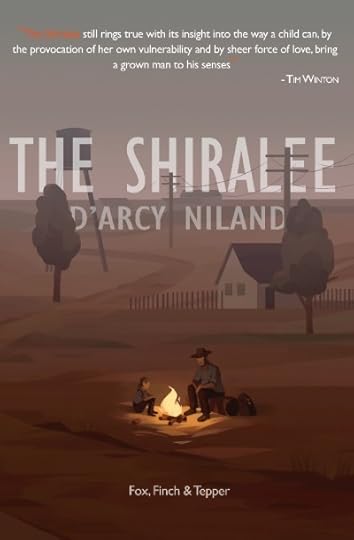
Basically though, with The Shiralee by D’Arcy Niland I had seen the 80’s TV adaptation with Bryan Brown (who gave us a quote for our edition) and loved it as a teenager. Then my Penguin rep showed us an Australian import back in 2009 and my interest was piqued immediately as I remembered that TV show. I read the novel and was blown away. Partly because my eldest daughter was two months old at the time and, if nothing else, this is a novel that gets to the heart of what it is to be a father. The novel was published in 1955 originally and it sees itinerant worker Macauley take his four-year-old daughter Buster on the road with him as he searches for work in the dusty backroads of New South Wales. It’s not a landscape for a kid but Buster, though vulnerable, is tenacious. Shiralee means burden and that’s how Macauley sees Buster at the outset (he only takes her on the road because her mother isn’t looking after her properly and he wants to spite his estranged wife). The novel is about life in New South Wales at that time, it’s about the many dramatic encounters that the pair have, but most of all perhaps it’s about a father and daughter going through the process of connecting with one another and learning how to relate to one another. It has incredible tension right to the end.
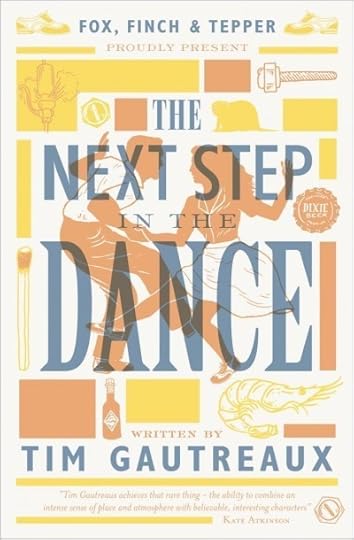
We published The Next Step in the Dance because The Missing, also by Tim Gautreaux, was, and still is, our bestselling book ever here at Mr B’s. It just has that incredible blend of plot, sense of place and characterisation that means it appeals to a great many readers. When we decided to create Fox, Finch& Tepper our first thought was “What about Gautreaux’s debut novel?”. We were managing to sell a handful of the ugly print on demand American editions every year and we knew the novel was as superb as The Missing but had somehow fallen out of print here in the UK.
The Next Step in the Dance is set in an economically troubled town deep in watery Louisiana. Tiger Island has community, friends, family and dance-halls which is all Paul needs to survive. It also helps that he’s married to the most beautiful young woman in town, Colette. The problem is that Colette wants something more. She wants a better life and she wants her Paul to be ambitious. When she asks him about the future he sees himself transforming from machinist to machine-shop owner, but that’s definitely not enough for Colette who is brilliantly described as having a tongue like a skillet-knife. The novel is about Tiger Island and it’s about how Paul and Colette deal with the differences between them and whether either is going to compromise. That makes it sound terribly character-led though and yet the beauty of this novel is the glut of memorable tense and incredibly dramatic scenes that punctuate the story. Colette holds no prisoners, and is perhaps too tough on Paul at times, but she can certainly hold her own in a very blokey shooting contest and you wouldn’t want to be a nutria (Louisiana’s loathed invasive species of giant water-rat) when Colette and her gun are out and about.
[image error]
What were the challenges and benefits you didn’t forsee?
There is one benefit that I recognised but hadn’t appreciated the extent of. Namely, our trade contacts from the last 9 years. We knew that compared to any other start-up indie publisher we would have some doors that we could knock on, first for advice and then to twist arms in terms of stocking the books at other shops. I don’t think that I’d anticipated quite the level of support from my friends and colleagues in the trade though and the extent to which other shops were willing to give the books a go because we were saying they were books we loved.
The challenges really were all around knowing how long things would take (as with any new project) and, especially, in balancing the demands of doing all this for the first time vs. the demands of our existing and incredibly busy business. That was always going to be the case though and the whole team mucked in to make the project work, whether it was contributing directly on the publishing side or firefighting on the bookshop side at the critical publishing moments.
The books are beautifully designed, was it a team effort? How did you go about commissioning the art?
Thank you! We always wanted them to be beautiful objects that reflected the contents well. They have deep flaps, a detachable perforated bookmark, and each of our illustrators has reimagined our Fox, Finch and Tepper logo for the inner flap too.
With The Next Step in the Dance we wanted a homage to a Hatch Show Print which we thought worked great for the dancehall vibe of the early book particularly. We also knew we wanted many motifs from the book to be in there – steam whistles, shrimp etc. Letter press style was always the way to go and anyone in Bath will tell you that when you think that you need to be thinking of the magnificent Meticulous Ink on Walcot Street. Athena Cauley-Yu read the book and created our beautiful cover for us. It was a fantastic local collaboration.
For The Shiralee we spent a long time looking at graduate design student work hunting for someone who might create for us the perfect image of the evening road-side camp or the two wanderers walking. There have been a lot of covers for this book, many howlers and a couple of gems. We found Mark Boardman’s work and loved what he did with firelight – on his website you can see images he made after having read Murakami novels and they are stunning – and as he was a Bristol man we thought we’d get in touch and see if he fancied working with us. Again, a great local collaboration.
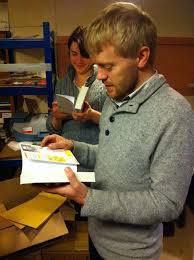
The books are not just sold in Mr B’s, was distribution difficult?
We were supported from the off by Gardners and Bertrams the two trade wholesalers who deliver next-day to most shops. They understood we’d be talking direct to our bookselling contacts across the trade (both in independent stores and chains) to persuade them to take our books and give them a go and they realised it made sense for them to take a decent stock-holding so that those shops could order quickly. That meant the only distribution we had to worry about was restocking Gardners and Bertrams. I certainly wouldn’t have taken on self-distribution given that we published the books in November at the start of our most hectic season of bookselling.
You are concentrating on reprints, have rights been an issue?
For the first two, actually no. With “The Shiralee” I contacted the Australian publisher first as I had assumed they might hold rights, but the literary estate soon got in touch with us and asked us to approach them formally. With “The Next Step in the Dance“ we dealt with the author’s American agent. We invested a lot of time in explaining and presenting exactly how we envisaged this venture would work and would resurrect interest in these titles and to our relief and, to a degree, surprise, the representatives of both authors quickly expressed a willingness to consider entrusting us with the rights to the books.
With the books we are working on now it has proven trickier to identify rights-holders. But we’re still learning not to be put off the scent by radio silence to a given enquiry, and we’re getting better and better at our detective work now.
Which books with a deep sense of place (that would fit the Fox, Finch & Tepper ideal) that have come out in the past few years would you recommend?
American Rust by Philipp Meyer for its intense characterisation and its sense of a broken wooded Pennsylvania steel-town in the recent recession. It is actually a great companion piece for The Next Step in the Dance.
If Kate (Mr B’s assistant manager and the one who typeset the first two books and steered the creation of Fox, Finch & Tepper) was answering this I think she’d say “Strange Weather in Tokyo” by Hiromi Kawakami for its Japanese insights.
[image error]Also, I just read an incredible novel called “All This Belongs to Me” by Czech novelist Petra Hulova which gives the most incredible insight into, wait for it, Mongolian life – both on the steppe and in gritty Ulan Bator. How a Czech novelist can so brilliantly transports you to Mongolia is a fair question, but she does it.
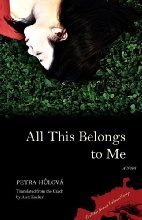
Any hints of what’s coming next?
I’m afraid not, but there will hopefully be at least 4 this year and we’ll be in a position to announce a couple of them very soon. All have been published previously, all are magnificent and it’s a scandal that they’re not in print in the UK already.
Many thanks to Nic for chatting with us - go check out Fox, Finch & Tepper's books & if you are in the area drop into the shop. Be warned though, you won't leave empty handed and once the staff know what you like you won't be short of recommendations either!
April 28, 2015
Bristol Horrorcon Writing Competition
Bristol Horrorcon in association with Bristol Festival of Literature are running a competition via Far Horizons e-magazine:
"Do you think you can scare us? Then get scribbling. We are looking for the best Horror short stories. We want shivers down our spines, we want to be disturbed, we want you to confront us with your, and our, worst nightmares.
Your story must be set in Bristol UK, it must be 4,000 words or less and it must be Horror. Apart from that go wild.Stories should be sent to BRSBKBLOG (at) gmail.com with the subject line – “I think this will scare you: story title: your name”. Stories will be judged anonymously by the editorial team at Far Horizons so please don’t put your name in the file. Please send as .doc, .docx or .rtf in a readable font, 12 point, in English with UK spelling.The top three stories will be published in Far Horizons November Issue and also win fabulous prizes kindly donated by PS Publishing and Forbidden Planet"For more details please go to Far Horizons website here
"Do you think you can scare us? Then get scribbling. We are looking for the best Horror short stories. We want shivers down our spines, we want to be disturbed, we want you to confront us with your, and our, worst nightmares.
Your story must be set in Bristol UK, it must be 4,000 words or less and it must be Horror. Apart from that go wild.Stories should be sent to BRSBKBLOG (at) gmail.com with the subject line – “I think this will scare you: story title: your name”. Stories will be judged anonymously by the editorial team at Far Horizons so please don’t put your name in the file. Please send as .doc, .docx or .rtf in a readable font, 12 point, in English with UK spelling.The top three stories will be published in Far Horizons November Issue and also win fabulous prizes kindly donated by PS Publishing and Forbidden Planet"For more details please go to Far Horizons website here
April 24, 2015
And now for some reviews
Cockfighter by Charles Willeford
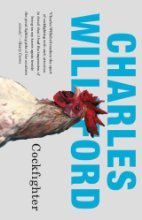
Frank is the monomaniacal cockfighter of the title. He wishes to win the best cockfighter medal and we first meet him down on his luck, on the verge of losing everything but of course he builds himself back up and enters the cockfighting tournament which will give him back his pride. Along the way though everything else, including his relationships with friends, family and fiancée are secondary to his goal. This is a book that’ll disgust, unnerve and excite you in equal measure. The brutality of cockfighting is dealt with without any gloss but also it is a masterful character study. Following a typical sporting format – can the plucky outsider win against the odds? It’s a gritty, dark and above all gripping narrative.
Overall - Don’t be put off by the blood sport activity, this is a book well worth reading.
writing for comics by Alan Moore
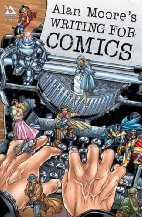
A not so useful guide to writing comics, which is more about how to write a story than it is a comic. Very thin book can be read in an hour or so.
Overall - Interesting but ultimately not very useful.
Stories in the stars: An atlas of constellations by Susanna Hislop
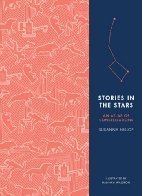
A very mixed bag of stories inspired by the constellations. Some draw heavily, or merely repeat, the Greek myths, some are flights of the writer’s fancy, some are to do with historical events. The book is useful however for having all the constellations illustrated in a way of being able to identify them.
Overall – Some stories are just bad, others are great so on the whole an average experience
Early science fiction tales by David Lear
This collection of tales from early history by a mix of writers including Cicero, Lucian of Samasota, a couple of tales from the 1001 nights and the man in the Moone by Francis Godwin. It’s an interesting collection and the stories, being pre-science proper aren’t really science fiction, but use science fiction tropes such as journeys to the moon and time travel (the first ever time travel tale is included) the stories are interesting rather than absorbing and I wondered why the Godwin tale had not been modernised but the others had, probably due to the fact the others were in translation? It made the Godwin tale very hard to read though.
Overall – Interesting to see some tropes used BC
Neurogastronomy by Gordon Shepherd
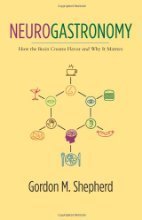
Have you ever wondered what’s going on in your brain whilst you eat? If so then this book is for you. A fascinating look at food science from a neurological perspective, although there is a good overview of the physiology too. At times a little too esoteric for pop science but otherwise very well written it gives an overview of the relatively new science of neurogastronomy.
Overall – We eat therefore we think
making comics by Scott McCloud
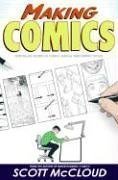
If Understanding comics is the theory then this is the practise. Written for the comic creator it includes tips on storytelling and art. A little less interesting than the first but very useful if you ever wondered about the nuts and bolts of how to make a comic.
Overall – A good how to guide
Sequential art and graphic storytelling by Will Eisner
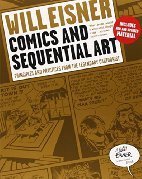
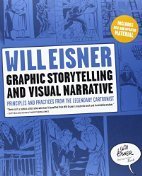
Theory & practise of making comics. Obviously McCloud has read these books and thought he could do better. And has. Coming to these after McCloud’s seems like a retrograde step. Although Eisner does cover topics in a different way, and some topics McCloud doesn’t and the books are useful, just a little less accessible than McCloud’s. If you were going to only read one I’d recommend McCloud’s, if you were going to read both I’d go for Eisner first then McCloud.
Overall – Good overview on the theory and practise of making comics.
the skeleton cupboard by Tanya Byron
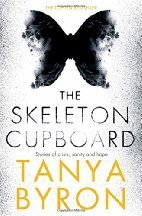
This is an account of Byron’s years training to be a clinical psychologist with the toughest placements of her career. There are amalgamate stories carefully constructed around her experiences with each of the topics she deals with – grief and loss, child psychology, eating disorders, drug dependency, coping with dementia. Each story is compelling but there are a couple that will grab you by the heartstrings and give a great tug. The dementia chapter is simply heartbreaking. Byron is unflinching in self-regard, laying out many of the mistakes she made as she learned her job. There is a deep honesty here that is refreshing and it is good to see the people treated as humans not victims.
Overall – Beautifully written, often harrowing, bring a hankie
American Elsewhere by Robert Jackson Bennet
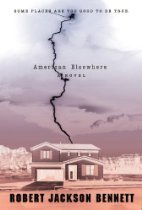
When ex-cop Mona Bright’s father dies she finds that she has just inherited her mother’s house in Wink, New Mexico. The only problem is, the town of Wink doesn’t exist on any map. She has a limited time to claim it and must perform some detective work to find it. She discovers that her mother, a basket case and suicide in Mona’s troubled childhood, used to work for a physics laboratory. When she arrives in Wink she finds that it is almost too good to be true, a perfect little town. But what is the secret at the heart of the town, why is the laboratory abandoned, what’s the significance of the lightning storm in the town’s history and why are so many of the townsfolk odd? This is a large book but doesn’t read like one. The central ‘mystery’ may have been drawn out a little too long but it isn’t a drag to get there. Bright is a fantastic protagonist and the book is chock full of great characters, scenes and ideas. A fascinating premise, a heavy dollop of weird, some truly disturbing imagery, this is truly memorable and I’ll be getting to Bennet’s other books directly.
Overall - Scientific and spooky, this is a fantastic book.
How to write everything by David Quantick
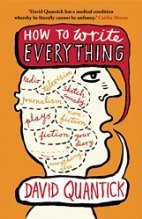
Listened to this on audio book which I think was the best decision. It’s a whirlwind tour of all and every possible writing job from poetry to writing sketches for TV comedy, writing novels to writing for newspapers. As a whirlwind tour it’s obviously not very detailed but Quantick’s soft West Country burr, gentle humour and pub storytelling style is always engaging. I’m just not sure if it’s useful. As an insider’s view of the writing industry it may be worth a look if you’ve never really thought about how all these different writing jobs really work. There’s also interviews with Quantick’s writing chums from the worlds of literature such as Ben Aaronovitch which are mildly interesting.
Overall – Light overview of the writing industry, If I’d read this rather than listened to it I reckon it would only have been an Average read.
The art of subtext by Charles Baxter
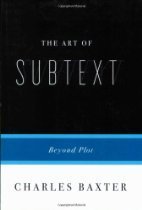
This is a collection of academic essays on subtext in literature, not a how to guide, which is slightly misleading in the way it’s packaged. However Baxter has some clever insights into various aspects of subtext and it’s worth a visit if literary criticism is your thing.
Overall – A deep pondering of the intricacies of what happens between the lines in good writing.
The consolations of the forest by Sylvain Tesson
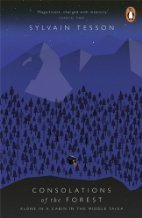
Silence falls from the sky in little white shavings. To be alone is to hear silence. A blast of wind; sleet muddles the view. I let out a scream. I open my arms, raise my face to the icy emptiness, and go back inside where it's warm.
Tesson, after a visit to Baikal, determines that he will lock himself away in a small wooden hut, on the shores of the lake, for six months, February to July. This is his edited journal, that he kept during those six months of mostly isolation, with crates of vodka, good cigars and lots of books as his main form of company. Along the way he makes friends with his nearest neighbours, who live many miles away, is given two dogs for companions and is visited by a variety of folk travelling across the lake. He endures extreme weather and reads, a lot.
His journal is, as you’d expect, by turns joyful, despairing, ecstatic, thoughtful and mindful. He ranges across the various topics suggested by the books he reads, the sights he sees, the natural world, fishing, the Russian way of life and its people and much more. The journal goes from the sublime to the ridiculous and back again, sometimes on the same page. Hunting is a way of life for his neighbours, but he never takes it up but there are some descriptions that may upset animal lovers. He makes friends with small birds and is fearful of the bears despite his Grizzly Adams existence.
Overall - This is deeply contemplative, poetic and wonderful book
Ricky Rouse has a gun by Jorg Tittel
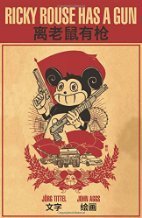
A graphic novel satire on East West relations, remakes, IPR and the modern world. Richard Rose is a deserter from the US army who travels across Asia and ends up in China working for an amusement park as Ricky Rouse, there is also Ronald Ruck, Rambi and Bumbo… A group of Western terrorists take the park hostage and Rouse, with help from a buddy security guard must save the day because the security forces make a hash of it. The format is Die Hard in an amusement park (a not so subtle dig at Hollywood remakes and endless sequels) and all that’s really missing is the Yippee Ki-Yay. It’s entertaining enough but a few sequences are a bit too hectic, a bit confusing on the eye and don’t quite work sequentially. The satire is not so subtle either.
Overall – Entertaining read. Treat it like an action blockbuster, be carried along but don’t think too deeply about it, and you’ll enjoy it.
Frank is the monomaniacal cockfighter of the title. He wishes to win the best cockfighter medal and we first meet him down on his luck, on the verge of losing everything but of course he builds himself back up and enters the cockfighting tournament which will give him back his pride. Along the way though everything else, including his relationships with friends, family and fiancée are secondary to his goal. This is a book that’ll disgust, unnerve and excite you in equal measure. The brutality of cockfighting is dealt with without any gloss but also it is a masterful character study. Following a typical sporting format – can the plucky outsider win against the odds? It’s a gritty, dark and above all gripping narrative.
Overall - Don’t be put off by the blood sport activity, this is a book well worth reading.
writing for comics by Alan Moore
A not so useful guide to writing comics, which is more about how to write a story than it is a comic. Very thin book can be read in an hour or so.
Overall - Interesting but ultimately not very useful.
Stories in the stars: An atlas of constellations by Susanna Hislop
A very mixed bag of stories inspired by the constellations. Some draw heavily, or merely repeat, the Greek myths, some are flights of the writer’s fancy, some are to do with historical events. The book is useful however for having all the constellations illustrated in a way of being able to identify them.
Overall – Some stories are just bad, others are great so on the whole an average experience
Early science fiction tales by David Lear
This collection of tales from early history by a mix of writers including Cicero, Lucian of Samasota, a couple of tales from the 1001 nights and the man in the Moone by Francis Godwin. It’s an interesting collection and the stories, being pre-science proper aren’t really science fiction, but use science fiction tropes such as journeys to the moon and time travel (the first ever time travel tale is included) the stories are interesting rather than absorbing and I wondered why the Godwin tale had not been modernised but the others had, probably due to the fact the others were in translation? It made the Godwin tale very hard to read though.
Overall – Interesting to see some tropes used BC
Neurogastronomy by Gordon Shepherd
Have you ever wondered what’s going on in your brain whilst you eat? If so then this book is for you. A fascinating look at food science from a neurological perspective, although there is a good overview of the physiology too. At times a little too esoteric for pop science but otherwise very well written it gives an overview of the relatively new science of neurogastronomy.
Overall – We eat therefore we think
making comics by Scott McCloud
If Understanding comics is the theory then this is the practise. Written for the comic creator it includes tips on storytelling and art. A little less interesting than the first but very useful if you ever wondered about the nuts and bolts of how to make a comic.
Overall – A good how to guide
Sequential art and graphic storytelling by Will Eisner
Theory & practise of making comics. Obviously McCloud has read these books and thought he could do better. And has. Coming to these after McCloud’s seems like a retrograde step. Although Eisner does cover topics in a different way, and some topics McCloud doesn’t and the books are useful, just a little less accessible than McCloud’s. If you were going to only read one I’d recommend McCloud’s, if you were going to read both I’d go for Eisner first then McCloud.
Overall – Good overview on the theory and practise of making comics.
the skeleton cupboard by Tanya Byron
This is an account of Byron’s years training to be a clinical psychologist with the toughest placements of her career. There are amalgamate stories carefully constructed around her experiences with each of the topics she deals with – grief and loss, child psychology, eating disorders, drug dependency, coping with dementia. Each story is compelling but there are a couple that will grab you by the heartstrings and give a great tug. The dementia chapter is simply heartbreaking. Byron is unflinching in self-regard, laying out many of the mistakes she made as she learned her job. There is a deep honesty here that is refreshing and it is good to see the people treated as humans not victims.
Overall – Beautifully written, often harrowing, bring a hankie
American Elsewhere by Robert Jackson Bennet
When ex-cop Mona Bright’s father dies she finds that she has just inherited her mother’s house in Wink, New Mexico. The only problem is, the town of Wink doesn’t exist on any map. She has a limited time to claim it and must perform some detective work to find it. She discovers that her mother, a basket case and suicide in Mona’s troubled childhood, used to work for a physics laboratory. When she arrives in Wink she finds that it is almost too good to be true, a perfect little town. But what is the secret at the heart of the town, why is the laboratory abandoned, what’s the significance of the lightning storm in the town’s history and why are so many of the townsfolk odd? This is a large book but doesn’t read like one. The central ‘mystery’ may have been drawn out a little too long but it isn’t a drag to get there. Bright is a fantastic protagonist and the book is chock full of great characters, scenes and ideas. A fascinating premise, a heavy dollop of weird, some truly disturbing imagery, this is truly memorable and I’ll be getting to Bennet’s other books directly.
Overall - Scientific and spooky, this is a fantastic book.
How to write everything by David Quantick
Listened to this on audio book which I think was the best decision. It’s a whirlwind tour of all and every possible writing job from poetry to writing sketches for TV comedy, writing novels to writing for newspapers. As a whirlwind tour it’s obviously not very detailed but Quantick’s soft West Country burr, gentle humour and pub storytelling style is always engaging. I’m just not sure if it’s useful. As an insider’s view of the writing industry it may be worth a look if you’ve never really thought about how all these different writing jobs really work. There’s also interviews with Quantick’s writing chums from the worlds of literature such as Ben Aaronovitch which are mildly interesting.
Overall – Light overview of the writing industry, If I’d read this rather than listened to it I reckon it would only have been an Average read.
The art of subtext by Charles Baxter
This is a collection of academic essays on subtext in literature, not a how to guide, which is slightly misleading in the way it’s packaged. However Baxter has some clever insights into various aspects of subtext and it’s worth a visit if literary criticism is your thing.
Overall – A deep pondering of the intricacies of what happens between the lines in good writing.
The consolations of the forest by Sylvain Tesson
Silence falls from the sky in little white shavings. To be alone is to hear silence. A blast of wind; sleet muddles the view. I let out a scream. I open my arms, raise my face to the icy emptiness, and go back inside where it's warm.
Tesson, after a visit to Baikal, determines that he will lock himself away in a small wooden hut, on the shores of the lake, for six months, February to July. This is his edited journal, that he kept during those six months of mostly isolation, with crates of vodka, good cigars and lots of books as his main form of company. Along the way he makes friends with his nearest neighbours, who live many miles away, is given two dogs for companions and is visited by a variety of folk travelling across the lake. He endures extreme weather and reads, a lot.
His journal is, as you’d expect, by turns joyful, despairing, ecstatic, thoughtful and mindful. He ranges across the various topics suggested by the books he reads, the sights he sees, the natural world, fishing, the Russian way of life and its people and much more. The journal goes from the sublime to the ridiculous and back again, sometimes on the same page. Hunting is a way of life for his neighbours, but he never takes it up but there are some descriptions that may upset animal lovers. He makes friends with small birds and is fearful of the bears despite his Grizzly Adams existence.
Overall - This is deeply contemplative, poetic and wonderful book
Ricky Rouse has a gun by Jorg Tittel
A graphic novel satire on East West relations, remakes, IPR and the modern world. Richard Rose is a deserter from the US army who travels across Asia and ends up in China working for an amusement park as Ricky Rouse, there is also Ronald Ruck, Rambi and Bumbo… A group of Western terrorists take the park hostage and Rouse, with help from a buddy security guard must save the day because the security forces make a hash of it. The format is Die Hard in an amusement park (a not so subtle dig at Hollywood remakes and endless sequels) and all that’s really missing is the Yippee Ki-Yay. It’s entertaining enough but a few sequences are a bit too hectic, a bit confusing on the eye and don’t quite work sequentially. The satire is not so subtle either.
Overall – Entertaining read. Treat it like an action blockbuster, be carried along but don’t think too deeply about it, and you’ll enjoy it.
Book Giveaway - NBSW signed!
[image error]
I have a copy, signed by all of the authors, the editor and the artist that I'll be giving away.
All you need to do is tell us what you think one of Cary Grant's movies would be titled if it was set in Bristol. So for example - North by Southwest. To help you along take a look at this IMDB
The best one, judged entirely subjectively, wins the book. You have until the 8th May when we may all need cheering up once the election results roll in...
As ever all entries to BRSBKBLOG (at) Gmail.com
I have a copy, signed by all of the authors, the editor and the artist that I'll be giving away.
All you need to do is tell us what you think one of Cary Grant's movies would be titled if it was set in Bristol. So for example - North by Southwest. To help you along take a look at this IMDB
The best one, judged entirely subjectively, wins the book. You have until the 8th May when we may all need cheering up once the election results roll in...
As ever all entries to BRSBKBLOG (at) Gmail.com
April 22, 2015
Guest Post from Andrea Phillips
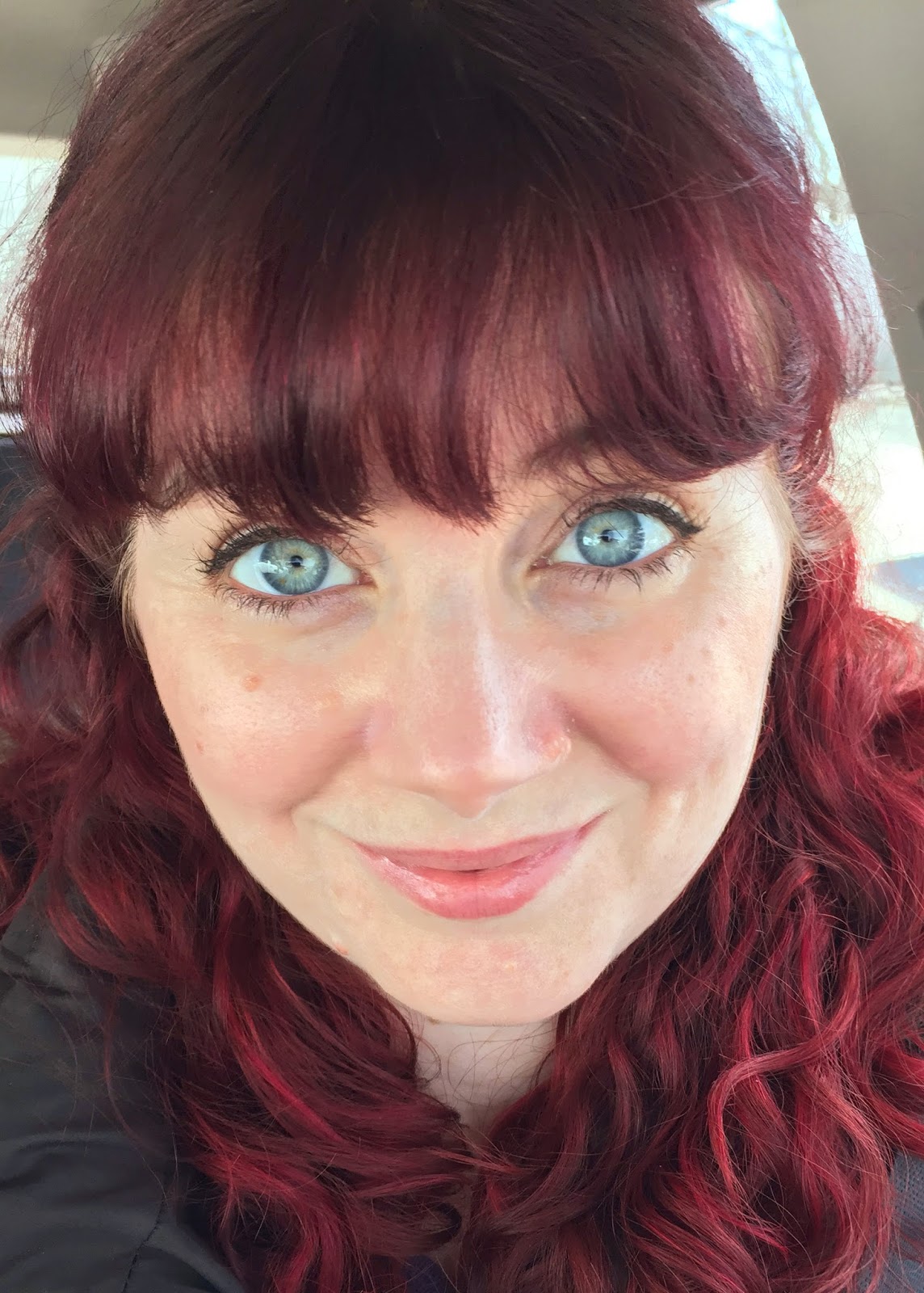 Andrea Phillips is an award-winning transmedia writer, game designer and author. She has worked on projects such as iOS fitness games Zombies, Run! and The Walk, The Maester's Path for HBO's Game of Thrones, human rights game America 2049, and the independent commercial ARG Perplex City. Her projects have variously won the Prix Jeunesse Interactivity Prize, a Broadband Digital award, a Canadian Screen Award, a BIMA, the Origins Vanguard Innovation Award, and others. Her book A Creator's Guide to Transmedia Storytelling is used to teach digital storytelling at universities around the world.
 Her independent work includes the Kickstarted serial The Daring Adventures of Captain Lucy Smokeheart and The McKinnon Account, a short story that unfolds in your email inbox. Her debut novel Revision is out on May 5from Fireside Fiction Co. and her short fiction has been published in Escape Pod and the Jews vs. Aliens anthology.
You can find Andrea on Twitter at @andrhia
Andrea dropped in to talk about her new novel - Revision:
Revision is my debut novel, but when I started it back in 2009, I'd already been a professional writer for four years. I'd written stories for games, interactive experiences, and sprawling film and TV marketing campaigns. I'd done things I couldn't have dreamed were possible when I was a little girl: recruited people into my secret conspiracies, sent them to pick up confidential documents from a stranger on a street corner, made my audience feel responsible for an innocent (fictional!) woman's murder. Good times!
And I thought, I thought, after all that, writing a novel should be dead simple. Right? It's only one piece to keep track of, after all: in my case, one Scrivener file. A piece of cake when you're used to telling stories through fragments of evidence, social media streams and video clips and emails. You don't need to worry about your readers making an unexpected choice and throwing the story in a whole different and unexpected direction. You are the god of that universe, and everything bows to your will.
HAH! I'm sure you see where this is going.
Sure, I had a good handle on some important tools in the writers' toolbox — particularly the fine art of characterization. An alternate reality game is a performance art as much as a written one, and in order to develop distinct styles and voices for your characters, you wind up deeply embedded in their minds. And that translates really well to novels, it turns out. As a writer, when you're clear on what all of your characters want and why they make the choices they do, the work only benefits from it.
But other elements translate poorly. Pacing, for example. I'm used to writing short and snappy for a digital audience. I've had to convey even the most complex plot points in a three-paragraph blog post or email, a 30-second video script, even a single Tweet. But a novel is a longer love affair. It needs space for the action to breathe; even the most action-packed adventure novels aren't all speedboat chases and leaping from helicopter. You need that other stuff so the action means something.
And the actual process is different, too. There are no "notes from the client." There's just you and the page and your brain, which is wonderful in that there's nobody to stomp all over your creative vision, smashing the metaphors and leaving muddy footprints on all your lovingly polished subtext.
But it's horrible, too, in that… you are the god of that universe, and so the universe is only as good as you are. If you're stuck, nobody else can pull you out. In a good collaboration, everyone is challenged to produce a whole far greater than the sum of its parts. When it's just you, it's just you.
But the absolute best part of these two different kinds of writing are identical: it's the audience. There is no thrill, no delight, no electric joy like knowing that you have made a reader feel something. That you reached out through the infinite spaces between us and touched someone else. A difficult task no matter what you're writing, but when it works, everything else just falls away.
April 14, 2015
Interview with Peter Newman and review of The Vagrant
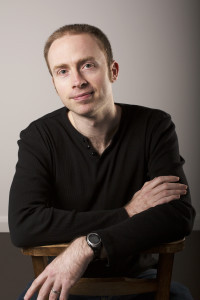
Peter Newman is a writer, runner and role-player who lives in somerset with his wife (Emma, ruler of Emtopia) and son (otherwise known as the Bean). When not writing, he works as a trainer and firewalking instructor. He co-writes the Hugo nominated Tea and Jeopardy Podcast and voices the butler, Latimer.
Bristol Book Blog were lucky to nab an early copy of Peter's debut - The Vagrant and also managed to catch up with him to ask him a few questions:
This is the first in a duology I believe – can you give us an overview of what they’re about?
The Vagrant is a story about a silent man carrying humanity’s last hope through a war-torn landscape. It’s set in a world in the far future after a demonic apocalypse. It features: demon knights, singing swords, a baby and a badass goat.
I can’t think of a way to talk about the second book in detail without spoilering. Suffice to say it picks up a little while after the first and deals with the legacy of The Vagrant. Sorry if that’s vague. I can tell you that a completed draft already exists and is with my editor.
If you could be a character in the book who would it be and why?
Hmm. That’s a tricky one. Most of the characters in my book have a really hard time, so I’m not sure I’d want to be any of them! But I suppose if I had to be one of them, I’d be the goat. She’s not phased by anything for long and has a clear idea of what she wants and isn’t afraid to get it.
What did you learn about writing by writing this book?
Having a silent protagonist made me think a lot about storytelling without being able to fall back on dialogue. We also don’t get access to the Vagrant’s inner thoughts which means everything focuses on what he does or doesn’t do. It also makes it harder to provide context. Often a character’s inner thoughts will justify why they are acting in a particular way and I didn’t have that here.
The other thing I learned was that some projects have to be written slowly. I think there is often a pressure to write ludicrous amounts of words per day but with The Vagrant if I tried to write it fast the quality of work would go down dramatically.
Why did you choose to have a goat as one of your characters?
Goats are very useful in an apocalypse. They provide milk, can give spiderman a run for his money when climbing and are generally pretty sturdy animals. I also wanted an animal companion that wasn’t too glamorous. Fantasy is full of wolves, ravens, eagles and tigers but they seemed too… nice for The Vagrant. The goat is anything but nice.
Do you write a lot of short stories? Do you prefer the long or short form? How do you feel about Flash fiction?
I spent a year or two writing stories for the Friday Flash community where people submit work of a thousand words or less every Friday. I learned a hell of lot there and it has just the right balance of people cheerleading each other while also providing critique (well worth checking out if you're looking for a group, they’re at: fridayflash.org). I like the discipline of short form fiction, how it forces you to be economical with language. Having said that, in my heart of hearts I prefer long form fiction. The Vagrant actually started life as a serial. It took me nearly twenty five episodes to realise I was actually writing a novel by stealth.
What’s the one question you never get asked in interviews that you really want to answer?
Funnily enough I’ve been asked that question before and I couldn’t think of a good answer then either. Sorry.
Do you have a set writing process, if so what is it?
I often start writing after the school run so one challenge is getting my head back into the story. I achieve this with coffee and music. I like to pick a new soundtrack for each project so that after a while, when the first few notes of a tune come on, it kind of lulls me back to that world. For The Vagrant I used the Mass Effect 3 soundtrack.
How much planning do you do before you start writing?
It varies from one project to another. With The Vagrant it was like the whole thing was sitting there, fully formed, in the deepest recesses of my brain and I had to find a way down there to excavate it all. So lots of work but only minimal planning. It’s not usually like that!
Which bit of your writing are you most proud of?
That’s a lovely question… That’s also a tough question. It’s hard to pin down a particular sentence or scene but there are things I’m fond of. Moments between the Vagrant and the baby, between the Vagrant and the goat, and the general atmosphere. I’m most pleased with the feel of the book, if that makes sense.
In one sentence what is your best piece of advice for new writers?
Do the work but take your time.*
*Although ‘don’t listen to writing advice’** is a close second.
**Apart from the advice on Chuck Wendig’s site which is both useful and funny***.
***Providing you don’t mind swearing.
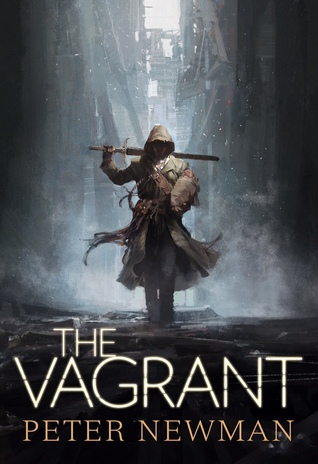
You can read an extract of the book here to whet your appetite...
Bristol Book Blog Review:
One man's journey across the rabid wasteland of a post Demonic apocalypse fantasy world. Full of mystique and unknown purpose we learn by small increments about the world, the disaster that's befallen it and who the Vagrant (That's his only name, he needs no other) is and why he is walking across the world with a baby and a sword. Along the way he picks up some companions including an irascible goat (the best character in the book imho).
The world is very interesting as it is filled with demons who are inimical to the very substance of the land, and its people, so much so that if they are not put in a shell they corrupt everything around them and are in turn somewhat, hurt? by the land. There is a history that is revealed by degrees and a large cast of interesting characters. Everyone has been affected by the apocalypse of course, in one way or another.
The book shines on the worldbuilding but it's a tough sell on characters when three you travel with are non-speaking. Although Newman does wonders with this handicap. Did I mention I loved the goat character? I did think some of the action felt a little undercooked, I wanted more staging to ground me in the moment and some of it seemed a little sketchy, although perhaps I just failed to follow the cues?
I think this book would work well as a Graphic Novel and wonder if Newman could be persuaded to adapt it. The darkly evocative gritty world, the highly imaginative demons, the knights, the fallen cities full of corrupted humanity all cry out for luscious art.
I think you'll love it if dark fantasy is your thing, Newman is an interesting new voice in the genre with his own already developed style.
Overall - John Woo's Hard Boiled in a post-apocalyptic demon infested world. With added Goat
Phot Credit - Lou Abercrombie http://www.louabercrombie.com
Cover credit Jamie Jones for the art http://www.artpad.org .
April 13, 2015
Is it wrong for adults to read young adult literature? Guest Post from Siobhan Davis
Siobhan Davis is the author of YA science fiction romance series True Calling.A self-diagnosed ‘teenager forever’—at least when it comes to books, music and movies; Siobhan is totally addicted to teen fiction and superhero/blockbuster movies. Siobhan loves baking, crime novels, shoes, bags, make-up, anti-wrinkle cream, anything pink, Kelly Clarkson, Katy Perry, and Robert Pattinson (definitely Team Edward).Siobhan has forged a successful corporate career, in Human Resources, over the last twenty years. A member of the IWI writers group, Siobhan resides in the Garden County of Ireland with her husband and two sons.
http://www.siobhandavis.com/ @siobhandavis on Twitter
True Calling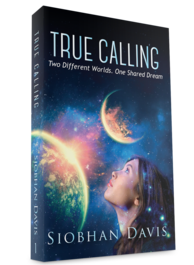 I wonder which situation is hardest.Mine, because I remember everything, or hers because she can’t. Planet Novo, nestled in space twelve hundred miles above the surface of the Earth, is the new home of 17-year-old Cadet Ariana Skyee. Confused by the government-sanctioned memory erase and distressed at her impending forced marriage and motherhood, Ariana’s plans for the future are thrown into complete disarray. As the traumatic events within her family life enfold, Ariana grows increasingly alarmed at the authorities apparent pre-occupation with her and feels progressively more isolated and alone. Her growing feelings for fellow Cadet Cal Remus intensify as the recently announced pageant, ‘The Calling’, gets underway. Struggling to comprehend the continuous, inexplicable dreams of the mysterious Zane, discovering the past helps shape her future, with devastating personal consequences.
Siobhan has dropped by to talk about what she thinks about adults reading YA
Is it wrong for adults to read young adult literature?
There has been a lot of controversial articles, blogs, posts and heated online discussions over the course of the last year on the topic of adults reading literature intended for young adults. I was particularly incensed by this inflammatory article in Slate.
As an author of young adult fiction and an avid reader of the genre, I wanted to share my thoughts on this rather heated subject matter.
It’s only fair that I should point out upfront that this post comes with a pretty hefty ‘rant warning’. You have been forewarned!
Eighty percent of my time, I am a responsible wife, mother, employee and quite strait-laced! I relish the other twenty percent where I give in to my inner-teenager and indulge my passion for teenage books, music, and movies. For me, it is pure escapism and a way to chill-out. I think life is about diversity in our choices and our interests, and we should never be afraid to show who we truly are.
Harry Potter and The Twilight saga were the stories that hooked me on the YA genre though at first I remember feeling embarrassed that I was reading them, until I realized that I was not alone. I read the same survey quoted in the Slate article, where the analysis identified that fifty-five percent of people who purchase YA books are adults. I wasn’t in the least bit surprised.
Now, I don’t just read YA books, I am also a voracious reader of murder-mysteries/crime/suspense novels. Tess Gerritsen is one of my all-time favorite writers, alongside Patricia Cornwell, Kathy Reichs, and Michael Connelly, to name a few. I also read other adult genres; I’ve read a lot of the classics, plenty of corporate non-fiction books and I do not discriminate in my choices. If I like the sound of a book or I have received a recommendation then I’ll read it.
However, there are certain times when all I want to read is YA. Because I love-love-love the action/adventure, kick-ass heroines, swoon-worthy romance, and the pure fantasy of the worlds created by some of my favorite YA authors. I don’t tend to read much contemporary YA stuff though I adore John Green’s TFIOS, and I disagree completely with Ruth Graham’s observations of this book in the Slate article. I found the dialog between Hazel and Gus to be very compelling, emotive and refreshing, and yes, it was a little cheesy at times, but I still loved it. Seriously, who doesn’t love a bit of cheese every now and then? Moreover, how is that ending a typical satisfactory ending? Or Allegiant’s ending? That had the entire Divergent fan base split right down the middle.
So if it’s seemingly wrong, as an adult, to read books ‘written for teenagers’ then does that logic apply to movies as well? Some of the greatest, and most successful, movies of all times have been children’s and teen movies. Back to the Future, Rebel without a Cause, ET, Harry Potter, etc., etc. Does going to see the latest Avengers Assemble movie with my children (one is a teenager) set a bad example? In the same way it’s suggested that my reading of Laini Taylor’s ‘Daughter of Smoke and Bone’ Trilogy or Jennifer L. Armentrout’s ‘Covenent Series’ would imply? To suggest, as Ruth Graham does in her article, that reading YA fiction sends out the wrong message to our teenage children, is absurd in my view. Surely the point is this: If children see their parents reading, they are more inclined to read themselves, irrespective of what genre the content is. Anything that encourages the youth of today to read more is a positive in my book (pardon the pun). Sharing some of the same reading material opens up opportunities for parents to engage in meaningful discussions with their children about these books, and to explore the issues/themes. Rant almost over.
Some commentators have said that the writing quality in YA literature is questionable in the extreme. I disagree. While I do not pick up a YA book expecting it to be a literary work of art, I am often pleasantly surprised at the exceptional talent of so many who write in this genre. Many of these books surpass the quality of a lot of so called ‘adult literature’ that is out there in the market.
In my opinion, readers should be allowed to make their own decisions regarding books they choose to read, without risk of vilification. Because the pleasure of reading is what it is all about, and that is purely subjective. If we start expecting people to restrict their reading material, based on a narrow societal categorization of what’s deemed appropriate, then ultimately fewer people will read, and that is not a good thing.
Are you an adult who reads young adult books? If so we'd love to hear from you! What do you feel about all the controversy? Why do you enjoy reading YA books and what is it in particular that attracts you to this genre?
http://www.siobhandavis.com/ @siobhandavis on Twitter
True Calling
I wonder which situation is hardest.Mine, because I remember everything, or hers because she can’t. Planet Novo, nestled in space twelve hundred miles above the surface of the Earth, is the new home of 17-year-old Cadet Ariana Skyee. Confused by the government-sanctioned memory erase and distressed at her impending forced marriage and motherhood, Ariana’s plans for the future are thrown into complete disarray. As the traumatic events within her family life enfold, Ariana grows increasingly alarmed at the authorities apparent pre-occupation with her and feels progressively more isolated and alone. Her growing feelings for fellow Cadet Cal Remus intensify as the recently announced pageant, ‘The Calling’, gets underway. Struggling to comprehend the continuous, inexplicable dreams of the mysterious Zane, discovering the past helps shape her future, with devastating personal consequences.Siobhan has dropped by to talk about what she thinks about adults reading YA
Is it wrong for adults to read young adult literature?
There has been a lot of controversial articles, blogs, posts and heated online discussions over the course of the last year on the topic of adults reading literature intended for young adults. I was particularly incensed by this inflammatory article in Slate.
As an author of young adult fiction and an avid reader of the genre, I wanted to share my thoughts on this rather heated subject matter.
It’s only fair that I should point out upfront that this post comes with a pretty hefty ‘rant warning’. You have been forewarned!
Eighty percent of my time, I am a responsible wife, mother, employee and quite strait-laced! I relish the other twenty percent where I give in to my inner-teenager and indulge my passion for teenage books, music, and movies. For me, it is pure escapism and a way to chill-out. I think life is about diversity in our choices and our interests, and we should never be afraid to show who we truly are.
Harry Potter and The Twilight saga were the stories that hooked me on the YA genre though at first I remember feeling embarrassed that I was reading them, until I realized that I was not alone. I read the same survey quoted in the Slate article, where the analysis identified that fifty-five percent of people who purchase YA books are adults. I wasn’t in the least bit surprised.
Now, I don’t just read YA books, I am also a voracious reader of murder-mysteries/crime/suspense novels. Tess Gerritsen is one of my all-time favorite writers, alongside Patricia Cornwell, Kathy Reichs, and Michael Connelly, to name a few. I also read other adult genres; I’ve read a lot of the classics, plenty of corporate non-fiction books and I do not discriminate in my choices. If I like the sound of a book or I have received a recommendation then I’ll read it.
However, there are certain times when all I want to read is YA. Because I love-love-love the action/adventure, kick-ass heroines, swoon-worthy romance, and the pure fantasy of the worlds created by some of my favorite YA authors. I don’t tend to read much contemporary YA stuff though I adore John Green’s TFIOS, and I disagree completely with Ruth Graham’s observations of this book in the Slate article. I found the dialog between Hazel and Gus to be very compelling, emotive and refreshing, and yes, it was a little cheesy at times, but I still loved it. Seriously, who doesn’t love a bit of cheese every now and then? Moreover, how is that ending a typical satisfactory ending? Or Allegiant’s ending? That had the entire Divergent fan base split right down the middle.
So if it’s seemingly wrong, as an adult, to read books ‘written for teenagers’ then does that logic apply to movies as well? Some of the greatest, and most successful, movies of all times have been children’s and teen movies. Back to the Future, Rebel without a Cause, ET, Harry Potter, etc., etc. Does going to see the latest Avengers Assemble movie with my children (one is a teenager) set a bad example? In the same way it’s suggested that my reading of Laini Taylor’s ‘Daughter of Smoke and Bone’ Trilogy or Jennifer L. Armentrout’s ‘Covenent Series’ would imply? To suggest, as Ruth Graham does in her article, that reading YA fiction sends out the wrong message to our teenage children, is absurd in my view. Surely the point is this: If children see their parents reading, they are more inclined to read themselves, irrespective of what genre the content is. Anything that encourages the youth of today to read more is a positive in my book (pardon the pun). Sharing some of the same reading material opens up opportunities for parents to engage in meaningful discussions with their children about these books, and to explore the issues/themes. Rant almost over.
Some commentators have said that the writing quality in YA literature is questionable in the extreme. I disagree. While I do not pick up a YA book expecting it to be a literary work of art, I am often pleasantly surprised at the exceptional talent of so many who write in this genre. Many of these books surpass the quality of a lot of so called ‘adult literature’ that is out there in the market.
In my opinion, readers should be allowed to make their own decisions regarding books they choose to read, without risk of vilification. Because the pleasure of reading is what it is all about, and that is purely subjective. If we start expecting people to restrict their reading material, based on a narrow societal categorization of what’s deemed appropriate, then ultimately fewer people will read, and that is not a good thing.
Are you an adult who reads young adult books? If so we'd love to hear from you! What do you feel about all the controversy? Why do you enjoy reading YA books and what is it in particular that attracts you to this genre?
Pete Sutton's Blog

- Pete Sutton's profile
- 14 followers
Pete Sutton isn't a Goodreads Author
(yet),
but they
do have a blog,
so here are some recent posts imported from
their feed.

