S.E. Reichert's Blog, page 14
April 6, 2023
A Word (or Several) About Writing Conferences


March 30, 2023
Listening to Our Characters
Good morning dear readers and writers. First, may I offer a huge thank you for all the comments and encouragement I received from the last post. Writer’s know what it is to get bogged down in the process, and no one is better at pulling you up from that dark, dusting off the weight of the little failures that cling to your shoulders, and giving you a gentle but determined shove back up on the road. So thank you for your advice and encouraging words. They mean a lot.
Between that last blog and this one, I was lucky enough to take Todd Mitchell’s workshop on Creativity. I’d been to a few of his classes but this one seemed serendipitous. I knew I needed to start writing again, a novel. A big project to immerse myself in, and I have a beautiful trio sort of dangling between first draft and not quite done currently on my computer. I love the second book, and that’s obvious by how close to done it is. The third, similarly has pulled me in and I’m enjoying working through the rough patches. But the first. Ah…the first. Kind of the keystone in a series…well…it’s a piece of shit.
And it took me a while to really figure out why during rewrites last year. The main character had somehow taken on the dreaded Susie Sunshine persona (probably because the concept of her was born many years ago.) So, I put her through a character-lift (like a facelift but for imaginary people without faces yet). She got a spanking new name and I roughed up her edges. But nothing in the story seemed to make sense and it felt like trying to force an incorrect puzzle piece into a million different holes that did not fit. What in the hell was wrong with her? I knew what she needed to do and the plot and arc of the book was solid.
But I didn’t believe she was the woman to live it. And I was stuck.
And then Todd said something about struggling with a novel for years until he finally sat down and wrote a letter to his main character and asked him “What is it you want me to know? What’s your story? What am I not seeing?”
For the average human reading this post, I’ve just solidified in your head what absolute insanity writers possess. What do you mean you ask your characters? You created them. You know them. That’s your brain.
But the brain is a tricky place, silly non-writer. It’s vast, and expansive and it has a million rooms we’ve never even found the doors to, let alone explored. And sometimes, characters and answers lay behind those doors. And the only way to access them is to stop trying to force the answer. (I’m planning a post on Alpha State writing so hanging in for that one). Answers com only when we calm the hell down, and sit quietly outside the door, letting go of our ego and our need to tell the story, and just listen to their story.
Sounds crazy. Absolutely, bat-shit, bonkers.
And it totally works.
I put on a meditative playlist, took some deep breaths and focused on her name. Her new name. Her newly rough edges. And I sat, with my back to her door and took some deep breaths. I closed my eyes and started typing. And I didn’t question or stop, or allow myself to think of what she was saying. I just listened to her.
Here’s what it looked like:
Hey Dani,
Hey Sarah.
So, I’ve been struggling with you.
Yeah, I know.
I want to create you
You can’t create me. I just am.
So who are you?
Wrong question
What is it you want me to know? What am I missing about you?
I’m dark.
You began so light and perfect
That’s not how the world works. Not for babies abandoned, babies with parents like mine.
What does that mean? Who are you?
I am Danika Brennen. I was left at a fire station as a baby. An orphan.
Who left you there?
A pregnant vagabond, disowned. My mom
Who was she?
An member of the High Guard,
kicked out
Are you ***’s daughter?
No, I’m Loki’s.
holy shit.
Now, I’m not going to give everything away, but that last thing she said…that was an answer I didn’t know until I let her talk to me. And it’s an answer that I can write a book from. That will help me, help her navigate through this story…to a better place. To a life she deserves. As dark as she thinks she is.
It’s crazy right? But talk to any fiction writer and I guarantee they’ve had some kind of experience with their characters talking to them, to each other, offering unwanted suggestions or criticism along the way. And yes, they’re all in our heads. But I think as humans we underestimate the expansive reach of our brains and neural capacity.
I mean what if they’re not just our consciousness, what if they’re wavelengths in a much bigger plane of existence that we’ve only just started to understand. The wavelengths and dimensions that only open to us, When we listen.
March 23, 2023
All Editing and No Writing Makes Sarah a Dull Creator
Before you get on some high horse about how editing is a part of writing, allow me to unbuckle your saddle while you’re still on it. I know that the process of being a novelist is a journey of different landscapes. The initial sunrise of bursting light (inspiration) is followed by rocky paths (writing and plotting) and raging storms (character development and killing darlings) to the darkest nights (getting stuck) and comforting moonrise (resolution the big story arcs). Then there’s editing. And it’s important, amazingly important. A piece of shit first draft only becomes a good book because of proper and often harsh rewrites.
But lately… Oh lately… I’ve been spending the majority of my time in edits for 4 different novels coming out this year.
And because it is a constant parade of fixing and rewriting, and cutting, and facing my inadequacies on the daily, editing to me feels like the endless beach scenes in The Drawing of the Three. Or slogging through an infinite desert on your way to somewhere but with no clear end in site. And though it’s repetitive you can never just let your feet (or your eyes in this case) zone out as you plod ahead. Because you’re traversing that same wondrous journey from an outside and judgmental perspective, and at least for the hundredth time and all the rocks seem to look the same, and the plot holes are huge, and there’s that lovely garden that serves no purpose so it must be felled. And when you reach the end, that moonrise? Well, it just skips forward again to the start. And you take smaller steps, sentence by sentence steps, every comma, period, flagrant and free-range POV that escaped the first dozen times. And you know this story and you’re sick of the characters and every step, every sentence feels heavier and heavier and…
You start to wonder why you’d ever want to write down another journey again.
Add to that, when you do sit down to write, you’re brain is in so much of a “Pick this shit apart and find what’s wrong with it” mode that you barely get two sentences in before you’re going back to the start of them to preemptively rewrite. The free flow of the sun coming up over the mountains looks more like a giant yellow strobe light over hills that you can no longer describe off the tip of your fingers like before.
What I’m saying is, I’ve been neck deep in editing now for months, and I’m grateful that I have so many projects coming out this year. I truly am. But if I don’t start limiting those hours of cuts and rewrites, I’m worried I’ll lose my joy in telling a story in the first place. I worry that the editor in me will take over the controls and I will be stuck in self-editing mode long enough, that I no longer am capable of telling a story. Just judging one. That I’ll be stuck in that deserted wasteland where no words are allowed out, because they don’t come out in 20th draft form.
What’s the point of this rant? I’m not sure, except that if you’re a writer, I’d love to hear how you balance out your creativity with the necessary clean up of editing. Right now, I am struggling and it’s left me frustrated, uninspired, and if I may say, more than a little disheartened. And a writer with no heart…
March 16, 2023
Poetry 3-16-2023
This heart of mine
is far too heavy to hold
[image error]Pexels.com" data-medium-file="https://thebeautifulstuffblog.files.w..." data-large-file="https://thebeautifulstuffblog.files.w..." src="https://thebeautifulstuffblog.files.w..." alt="" class="wp-image-5264" width="464" height="695" srcset="https://thebeautifulstuffblog.files.w... 464w, https://thebeautifulstuffblog.files.w... 100w, https://thebeautifulstuffblog.files.w... 200w, https://thebeautifulstuffblog.files.w... 768w, https://thebeautifulstuffblog.files.w... 867w" sizes="(max-width: 464px) 100vw, 464px" />Photo by Isabella Mariana on Pexels.comand I am tired of its weight
and the endless rain
of clouds thundering within
This heart of mine
a broken war-torn city
heaps of concrete rubble
spikes of iron that used to
hold its structure
now reach bare boned to the sky
impaling anyone who falls.
This heart of mine
an open wounded pit
and the dead buried in mass
heaped within, like layers of time
one on top of another, and another
the stench of death and sorrow
rising to the surface of my throat
This heart of mine
a constant reminder
of all the ways I’ve failed
or hurt, or burdened,
become the ruination of others
shouldered its flagrant disrespect of love
and let it scar my skin
This heart of mine
tear it out, someone please
it is useless and cancerous
a mutinous organ
that clouds my reason
and seeks to destroy
myself…others…
This heart of mine
has no place in a good world.
March 9, 2023
Letters To Ourselves
Of few things I am certain.
Change is inevitable.
Babies and puppies will always cause some kind of visceral, deep rooted reaction.
You need a night sky, devoid of city lights and full of stars to feel your appropriate size.
Fewer sounds are more calming than a river flowing, rain hitting your rooftop, or a dog snoring nearby.
Nothing tastes as good as when your grandmother made it.
Nothing comforts like the right pair of pajama pants, and
procrastinating cleaning the bathroom always takes longer than actually cleaning it.
Time is finite and infinite. It’s a construct without construction and we know so little in our tiny human brains about what happens, how the universes expand, and where our consciousness ends up in the grand scheme of things that we are little more than specs of stardust in a grand swirling ocean of time and space.
You always discover these things too late: that you’ve loved, that you’ve lost, and that you wished you would have tried harder.
We will always blame ourselves for things we cannot control,
We will always forgive others more often than they probably deserve.
Every love song written is written about you and how you deserve love.
I know that when you start loving yourself, truly, you start asking for what you deserve and
this is how we learn our worth, internally, not externally.
And letters that I write to myself, in the darkest nights of my soul are always the messiest, truest words I ever speak. True for the moment. Even if it is hard and ugly truth.
Writing, from pen to paper, is a line of truth between that infinite, unaware conscious and the swirling cosmos of existence.
So my exercise for you today, dear writer, is not to journal.
It is not to blog, or pound out letters aiming for a word count.
Sit with your breath for a solid five minutes,
just your breath,
let the chaos that you’ve been pushing to the back of your mind with endless tasks, fill the silent spaces between inhalation and exhalation.
When all that’s left, is the ocean pulling in and rushing out
and your weight is heavy against the solid seat of the earth
…write
Write about what is running torrents in your mind.
Write your worries, your fears, your wins and losses.
Write down the set backs and jump starts and the hopes.
Write a love letter to yourself.
Show patience, understanding and care as you would if you were writing to your child or someone you love beyond bounds.
Be kind.
Be honest.
Be true.
Call yourself sweet things, like Love and Darling and Starshine.
Be hopeful.
Then, tuck it away.
Get on with your work, see if the chaos has settled just a bit.
Plough ahead, and check off that to-do list…
Until one day you stumble upon that letter.
And remember…that there is truth in you.
There are words and brilliant ideas, and hope.
And you belong in the world,
That you are loved.
Remember.
March 2, 2023
What Change Can Teach Us
Ah, sweet homeostasis. That divine little holding pattern that so many of us humans cling to. Cute little creatures of habit, we like to find our lane, our niche, the familiar, the expected, the routine. I’m almost even inclined to believe that we not only enjoy it, but the longer we spend in our well-loved ruts, the harder it is to leave them. Even when we need to. Even if we want to. Even as the world changes around us. Isn’t that just when trauma and painful growth usually happens? When we are forced to change? Or are left behind because we refuse?
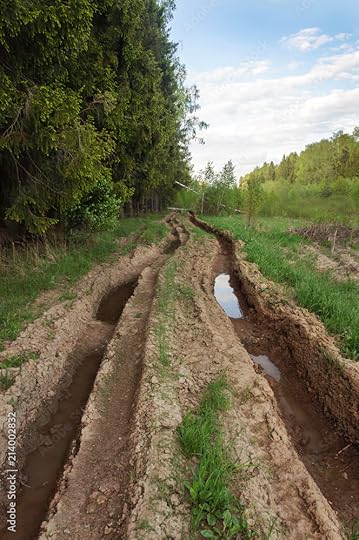
I could probably write a good 10,000 words alone on what change does to us as humans, but this blog is about writing, so I’m going to narrow it down.
Every writer has a rut. The niche you gravitate towards, the style you use, the genre, the POV, even your character choice…we have familiars that feel good to write in because they come easy. We know the pattern, the trope, the arc of a plot and all its points. And we could write this way forever and do, probably, quite well for ourselves (James Patterson and Nora Roberts own prime real estate on this front). But we don’t do very much growing.
Why is it important to grow?
Well, unless you ARE James Patterson or Nora Roberts (and if you are, holy shit welcome to my humble blog, thanks for reading) the chances of you scoring big on mass repetition are slim. Plus, the world of writing is changing and trending and learning to understand and at least try out these new waves, will help us adapt to the new and dynamic tides of readers. It will also help diversify your portfolio for future projects. Sounds like a 401k investment plan, right? Well—in a way it is.
Changing up your routine, your genre, your trope, your characters, even your plot is scary and hard and it may feel like you’re stumbling around in the dark. You may get tangled up, and blocked. But the best thing happens when you struggle and even when you fail. You learn. You learn what works, you learn how to take chances on solutions you might not have thought of before. You learn that you are capable of writing a flash fiction piece when all you’ve ever written were 200,000 word novels. You may learn you can plot a novel when all you’ve tried before is a 1200 word magazine article. You learn that you can explore different avenues of writing and still keep your voice.
You will learn. And learning empowers us, it invests in our ability and talents so when the next project, idea or work in progress comes around, we are armed with experience and inspiration to deal with it. So submit to a contest or journal that takes something you’re new to trying. Sign up for a class not in your genre. Try out a magazine article, or a poem if that’s not your normal route home. Do it. The worst that can happen is rejection and that’s not the worst that can happen in the grand scheme of things.
Get out of your comfort zone and face change and challenge as if they were opportunities for bigger, grander landscapes ahead. Say yes once in a while, even when it scares you.
We don’t always get to choose the changes that happen in our lives, but we can choose how we move forward with our art. We can jump out of the rut and careen into the unknown. We can fall. We can get scraped up. We will rise, take the lesson and keep leaping. To the end, that someday, we won’t be afraid of any new endeavor and will jump up to the opportunities that come by. And every time we do…we learn how to land on our feet. We will learn to navigate all kinds of bigger change if we chose to jump into the small changes.
You never know where your next great adventure will show up. Don’t let your head be buried in your rut when it does.
[image error]Pexels.com" data-medium-file="https://thebeautifulstuffblog.files.w..." data-large-file="https://thebeautifulstuffblog.files.w..." src="https://thebeautifulstuffblog.files.w..." alt="" class="wp-image-5221" width="320" height="421" srcset="https://thebeautifulstuffblog.files.w... 320w, https://thebeautifulstuffblog.files.w... 638w, https://thebeautifulstuffblog.files.w... 114w, https://thebeautifulstuffblog.files.w... 227w" sizes="(max-width: 320px) 100vw, 320px" />Photo by Ksusha Semakina on Pexels.comFebruary 23, 2023
Poetry 2-23-23
So, the week, again got ahead of me and I didn’t get a new post written. So, I went back to look at what I was doing this time last year. It would seem I’m perpetually behind. But at least I’m consistent? Please enjoy a little self-love talk, in this, the final week of Februrary.
(original post 2-24-2022)
I had planned a vibrant book review. But some weeks the flow of energy is a low and staggered and we have to return to center ourselves. This week, it’s all about finding my solid ground again, being my own safe space, and casting away the self doubt that has saturated my soul.
How often are we paralyzed by the expectations we put on ourselves? By what we want to be for others, or because of others. How often are we overcome with despair when we fail to meet those expectations, to garner that acceptance, to find that love?
Here is what I know to be true–
Yours is the only heart you will have for your whole life time. From its very first beat. Until its last.
Lovers, spouses, friends, parents, even children will come and go in your life, in the natural waxing and waning of time and experience. But your heart, your soul, your presence is the only one you get to spend the entire journey with. So take care of your vessel…from the engine, to the machinery, the fuel and the fire. Take care of you. Love you. Believe in you.
And now, this.
[image error]Pexels.com" data-medium-file="https://thebeautifulstuffblog.files.w..." data-large-file="https://thebeautifulstuffblog.files.w..." src="https://thebeautifulstuffblog.files.w..." alt="" class="wp-image-2991" width="420" height="629" srcset="https://thebeautifulstuffblog.files.w... 420w, https://thebeautifulstuffblog.files.w... 840w, https://thebeautifulstuffblog.files.w... 100w, https://thebeautifulstuffblog.files.w... 200w, https://thebeautifulstuffblog.files.w... 768w" sizes="(max-width: 420px) 100vw, 420px" />Photo by Abdullah Ghatasheh on Pexels.comBecomingWas there ever such a silence as this?sun warmed skin and the echo ofsmall chirping voicesamongst the barking magpie andreverberation of holy timeetched into the sides of mountainssilent, pine needle prayerI’ve been a complacent wandererfollowing the strongest floweyes on wayward trailsbranchingnever forward, exactlybut they tempt places I yearnto wanderand it feelslike losing my groundor finding it.It’s in the din of lifethe marked and constant boxesthat we lose our true coursegive away our feet on earthand forget silent places to findourselves.I miss these mountainsand cultivating space betweenwhat I dreamed of becoming andwhat I’ve become.What have I become?February 16, 2023
First Loves
You never forget. Do you? That first love. The first erratic heart palpitations, the unbridled joy and shaking knees when they’d walk into the room? It’s true. The memories of those people, places, experiences have shaped the way we approach or flee from similar feelings that arise along the path of our life. It is the same in writing.
I’m sure, if you’re a writer with some years and miles behind you, you’ve gained experience, plowed through or given up on projects, and learned a little bit from every sentence and every stanza. Even if you’re fairly new to the craft, you still probably remember your first attempts and have learned from them, how to be a little better each time.
[image error]Pexels.com" data-medium-file="https://thebeautifulstuffblog.files.w..." data-large-file="https://thebeautifulstuffblog.files.w..." src="https://thebeautifulstuffblog.files.w..." alt="" class="wp-image-5190" width="524" height="346" srcset="https://thebeautifulstuffblog.files.w... 522w, https://thebeautifulstuffblog.files.w... 1045w, https://thebeautifulstuffblog.files.w... 150w, https://thebeautifulstuffblog.files.w... 300w, https://thebeautifulstuffblog.files.w... 768w, https://thebeautifulstuffblog.files.w... 1024w" sizes="(max-width: 524px) 100vw, 524px" />Photo by Pixabay on Pexels.comI still have a folder of my poetry from high school. I don’t keep it in hopes that someday I can revamp them to share with the world. Great goddess no. I keep them to remind myself of the first tremblings of love that struck me when I realized I could put words to paper to mirror the chaos inside. That I could write out feelings and emotions. That I had a voice. That I could use it. I keep those rambling, teenage angsty writings to remind myself of the first throes of passion, as awkward and stumbling as they were, and why every new project should be approached, with the same stirrings of love, excitement and untempered desire.
I also keep them to show myself how far I’ve come. How much I’ve learned, and how much I’ve improved.
I believe the grace and goodness of a writer comes, in part, from remembering the passion and applying our ever-growing knowledge to it. If we’re all one or the other, our writing will either be an incomprehensible mess, fliting off through the meadow picking daisies and talking to forest creatures, or a stoic, by the book repetition of perfectly punctuated lines that feels more like a textbook on fiction, than an actual story.
A good story is a balance of passion and craft and remembering why we fell in love with writing in the first place helps us to approach our new projects with the fervor of that kid in Freshman English without having to rhyme every stanza or create perfect stereotypes for her characters. Just like when you are seeped in first love, your joy shows through your writing when you are doing it without too much emphasis on what it can and should do for your future endeavors, but just to enjoy the shivers it brings you in the present.
At the same time, like the earned experience of an older lover, you know how to manipulate the language, intensify the feelings, and push the right buttons with a perfect amount of pressure to bring your readers over the top in their own emotional response, all while doing it with good grammar and in a timely manner.
So today, take a few minutes and remember your first love (human or word based) and think about what stirred your heart so much about it. Think about the unbridled joy and relentless passion. Try to replicated it on the page, put yourself in the new love phase with your writing and see where it takes you. Don’t stop to judge or rewrite, or edit. Just…do what comes naturally. It’s not like anyone else will be privy to these thoughts. They’re yours alone. So have fun with them.
February 9, 2023
Feel Like Makin’ Love
You’re welcome for getting that song stuck in your head.
Last week I talked about heat index and how to define your novels for submission or how to search for the right Goldilocks-level of heat for your preference. This week, I want to talk about writing engaging love scenes in your books.
No matter the level of heat you’re writing in, the sexiness of a scene doesn’t just depend on how many engorged members you’re throwing in there.
[image error]Pexels.com" data-medium-file="https://thebeautifulstuffblog.files.w..." data-large-file="https://thebeautifulstuffblog.files.w..." src="https://thebeautifulstuffblog.files.w..." alt="" class="wp-image-5101" width="416" height="250" srcset="https://thebeautifulstuffblog.files.w... 416w, https://thebeautifulstuffblog.files.w... 830w, https://thebeautifulstuffblog.files.w... 150w, https://thebeautifulstuffblog.files.w... 300w, https://thebeautifulstuffblog.files.w... 768w" sizes="(max-width: 416px) 100vw, 416px" />Photo by Pixabay on Pexels.comWow, what a visual. Yeah, that actually makes it less sexy thinking of it…penises getting thrown into bedrooms willy-nilly. Ha, willy-nilly…ugh. Ahem, let’s move on.
Let’s get something straight right away, sexiness isn’t about sex. Heat and desire, aren’t about sex. At least not for the majority of women. (Men, if you’re reading this, get a notebook.) Sexiness is about connection. Two strangers can have sex, and people will read it. Penthouse has proven this. But if you really want someone to read a whole book about two characters, follow them through the quagmire of plot arcs and dialogue, sex is the perfectly balanced frosting on the cake of it all. Two characters that are emotionally connected interacting in a physical way, drives up the excitement and anticipation in the reader tenfold.
It’s all about chemistry. It is vital when aiming to curl the toes of your readers, that you give your characters a connection that feels genuine, deeper than surface level, and tied to their emotional well-being. Then, when you get to the point of all that delicious teasing, it makes the ‘climax’ all the better. Because it isn’t just about physical satisfaction, it’s about connecting in the most intimate way with someone who really gets you. Who loves you. Who sees your scars and your war wounds, and kisses every one of them with acceptance and care.
So if you want to up the sexiness of your scenes, establish a good connection, (even if its enemies to lovers). Find a common ground between them, a exposition of trust that opens hearts, and a deeper understanding of one another that makes the sex even better because there will be less reserve, fear, or doubt involved.
And this brings me to another point, writing good connection between characters is a subtle art that you can employ in your dialogues, body language cues, and inner dialogue (if you write that POV).
Next, depending on your comfort level, what you crave in romance, the nature of your book, or the heat index you’re working on, be honest about the sex. It doesn’t always have to be pretty. Heads get bumped, knees get scraped, giggling ensues. Don’t shy away from the human experience and the parts that make it truly beautiful. With that remember that there are a lot of senses involved in the act. Sight, sounds, smells, touch, taste. Don’t be afraid to play around with them as a way to bring readers in. How far in you bring them is up to you, but even the best closed-door scenes have an awesome build up to the point the door slams shut.
Attraction, chemistry, and desire are the tenements of any good romance, but remember that it starts with connection. Human connection, in all its glorious messiness. Putting in those beautiful messy moments will help bring your characters in a place where the love they make is a natural and much anticipated progression in your book.
February 2, 2023
Heat Index: What Spicy Pepper is Your Novel?
Hands down, one of the dumbest blog titles I’ve ever come up with. But what are you going to do? We all have seasons of creativity in our lives, and sometimes I’m in the winter of title production. Today is that sometime. On to the point.
What is a Heat Index?
Great question! Well, if you don’t write/sell/promote romance, you probably don’t need to worry about it, but as it’s the month of ‘love’ or whatever made-up Hallmark holiday craze February represents to you, I thought I at least owed ONE blog about passion, romance, and how to make sure the right readers for your work find you.
Heat Index is, as in spicy peppers, a way to grade the level of sexual interaction (description of and frequency) in your books. Now, romance has a wide and varying range of heat levels. This blog will help you understand where yours falls, where you might need to edit to keep it in a certain level, and how and who to market it to based on it’s score.
Below is the breakdown of Heat Index. Keep in mind, this may vary from publisher to publisher, but in general the levels correspond pretty closely.
“Wholesome”, Sweet” or “Clean” (I’m not a fan of either of these terms as it denotes that anything outside of this classification suggests that sex is dirty or nasty–and those are ‘bad’?) These are sometimes called ‘inspirational’ romances, and often fall into Christian Romance sub genres. They might have kissing, holding, etc, but rarely is a bodily fluid exchanged and the romance is built heavier in the emotional/spiritual attachment.“Sweet”, “Closed Door”, “Off The Page”, “Gentle”, or “Quiet”— This level of heat says that there is sex in your novel, but it happens without the reader being included. The characters may kiss, fondle, make out, and get excited physically but they will shut you (the reader) out in the hall while they get down to business. Mainstream women’s fic will employ this index more often, and there’s something to be said for leaving a few things to the imagination of the reader. I’m not sure about the terms “gentle” or “quiet”–as we don’t know what’s going on behind that door. Ha. Sorry.“Sensual”, “Sex on Page” and “Minimal Description”–This level the readers definitely know that sex happened, as it’s written down, but not poured over. Minimal description can mean an author uses euphemistic language, very basic terms and ideas, or even is more mechanical in description. They sort of “beat about the bush,”….he…heeheheheheha. Ugh, sorry, I had to. Nobody else laughing their ass off, just me? Ok.“Sexy”, “Sex on Page” and “Explicit” also “Erotica”–In other words, if you’re at your kids karate/dance/hockey/ soccer practice, it would be wise to not let anyone read over your shoulder. These scenes get as close as any good OB/GYN or proctologist might (but in a less clinical way). Sometimes the lines between 3 and 4 are more blurred. My rule of thumb, is that if it makes me blush, feel warm all over, and a bit flustered after reading it (or writing it), it’s probably a level 4. What constitutes “Sexy” might be more based on the female main character’s exploration of fantasy. “Erotica”, has much more to do with the physical aspects of romance and can be broken down by ‘special interest’ (ie bondage, monogamous menage, reverse harem etc.). In both cases, these are not “letters to playboy” books, even with more descriptive love scenes, they still have emotional attachment and a satisfying (nearly said ‘happy’) ending.Well, there you have it. If you write romance, and especially if you’re looking to query your manuscript, it helps to know what you’re selling and if the publisher is a good match. If you just like reading romance, look for these keywords (often in online descriptions and sometimes on jacket covers) to make sure you’re getting the romantic endorphin hit you crave most.
Happy Reading!