Shikhar Nigam's Blog, page 3
April 15, 2015
My Last Kiss
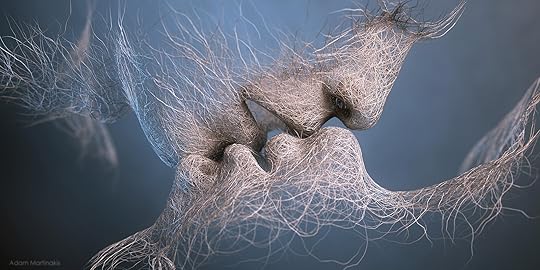
Young, naive and in love was I.
Everyday, on her I would spy,
Resolve – to gather I would try
But never once could I say 'Hi!'
One day, rotten Diffidence tripped,
As she walked by, my tongue slipped.
And soon my fortunes flipped,
As she and I, coffee, together sipped.
Verbally, everytime, her I'd compliment,
Because I knew, for her, it was important,
But, about physical praise, I was hesitant,
As I believed her brother militant.
One day my views I told her,
About how I feared her brother,
She told me not to cower
And led me into a corner.
And as I kissed her, something was amiss,
I realised I liked, not hers but his,
And this was when with a miss,
I shared my last kiss.
Written originally for Rheotrica'12 (IIT-BHU Open Literary Fest) on 28 Jan., 2012 with the given prompt, "My Last Kiss"


April 13, 2015
6 Types Of Drunk
 1. The PendulumHe's quiet and observant when sober; amazing fun and extroverted when buzzed; and quiet and sober again when drunk.
 2. The OversharerThe minute the buzz hits him, he's off sharing the most awkward, intimate secrets best left unsaid. You can try and shut the person up, but you won't really succeed.
3. The RebelliousToddlerShe basically becomes a childish drunk. Their superpowers are lots of giggling, playing hide-and-seek and asking lots of 'why' questions.. Generally, a 'her' and also the responsibility of the most sober person in the group.
4. The Black-Out DrunkHe drinks with a singular goal in mind - to stop being able to remember as soon as possible. Chug some whiskey and chase it with beer. Still functional? Do it again. It might not be the healthiest way to handle things, though.
5. The Rip Van Winkle
She crawls under tables and go to sleep.
6. The Poet / Philosopher
Get this person drunk and from their mouths will spout the most embarrassing, cringe-inducing poetry intermixed with annoyingly irritating personal nuggets of philosophy. And should they find another Drunk Poet, there's no stopping the Vogon-ism that ensues.
I'm a Pendulum-type. Which one are you?
April 12, 2015
Nerds In A "Your Mom" Battle
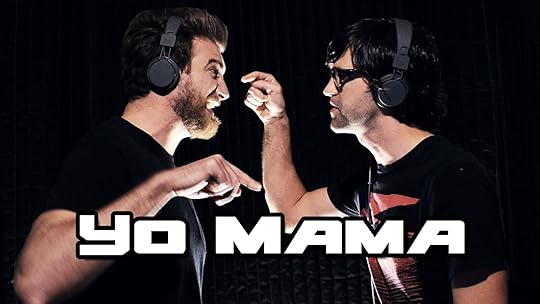
Math-nerd: "Your mom's intelligence is the square root of -1"
Physics nerd: "Your mom is so slow that, I know exactly where she is."
English-nerd: "Your mom is so ignorant that she thinks the plural of ignoramus is ignorami."
Biology-nerd: "Your mom is the reason the gene pool needs a lifeguard."
Chemistry-nerd: "Your mom is a Titanium, Holmium, Rhenium."
Finance-nerd: "Your mom is a junk bond - worthless and dumped."
Logistics-nerd: "Your mom is so fat, she wouldn't fit into this joke."
April 11, 2015
Creating An Inclusive Society For The Differently-Abled

‘They’ have been called by various names through the years and decades - most of names artfully concealing the latent ostracization that ‘they’ have to face. It is the unfortunate reality of the human condition that this ‘they’ could in this instance mean any number of people - people of different or other races (‘Negro’), people of different or other sexual identities (‘fags’) or as in this particular article, people with different abilities (‘handicapped’).
“The degree of evolvement of a society is gauged by the manner in which it cares for those placed at any kind of disadvantage vis-á-vis the rest of society at large due to force of circumstances such as birth, age or disability.”[1] In order for us to aspire to be an evolved civilization then, it becomes imperative that we do not discriminate against the differently-abled.
Discrimination can present itself in two forms - the overt and the covert. Overt discrimination is where a building or a website is not accessible or where certain people have prejudices that they are not unafraid to share or act on. However, the more iniquitous of the two discriminations is covert - where the discriminator does not even know they are committing such a deed. One of the clearest example of such discrimination is in the use of language.
What we call a particular group of people or rather how we even choose to group them forms a major foundation of the way those people are treated by the society at large and even how the concerns of those people are addressed. Language, as we know from the possibly prophetic writings of George Orwell can hold tremendous power over how people think about situations. Language has a way of seeping into our collective attitudes without us even recognizing it. It is exactly for this reason that for a non-discriminatory or more inclusive society, it is important that we do not abuse language. And we do.
Take for example the much-maligned phrase ‘handicapped people’. Better senses have prevailed in recognizing that the so called ‘handicapped’ people were often better at things than ‘normal’ people - Stephen Hawking, Helen Keller etc. So, that phrase was scrubbed from the lexicon of personal and corporate lingo. However, there are so many, many more phrases that exist in the English language that seethe with potent discrimination. Take for example the phrase ‘a disabled person’. Right there, you have made an assumption about the person’s entire identity. He/She is not a ‘disabled person’. He/She is a person. With disabilities. A disability is what someone has, not what someone is. In fact many people with disabilities see their condition as a part of who they are. They don’t think of themselves as “suffering” or “enduring” their state. They are no more "challenged" than any ‘normal’ person is in their daily activities. A person with visual impairment might be brilliant at calculating his bill at the restaurant whereas a ‘normal’ person might not be. We hardly ever call this ‘normal’ person “challenged”.
Or consider the phrase, ‘falling on deaf ears’. On the surface it seem like an innocuous enough metaphor but underneath it we are betraying our ignorance. By describing something as falling on deaf years, you are trying to say that the person was inconsiderate. That is of course not how you would describe a person who had medical hearing impairment. Yet, in our use of that phrase we perpetuate the subconscious linkage of the two. If we can frown on similes like ‘as cheap as a Gujarati’, or ‘as loud as a Punjabi’ or even ‘TDC’ that shamelessly stereotype people we know nothing about, we can certainly avoid such phrase as ‘falling on deaf ears’, ‘being blind drunk’ etc.
This is not a case of overshooting the political correctness benchmarks of contemporary culture. It is about showing respect through not only our actions, but through our words. You can call a spade, a spade without being deliberately or accidentally insensitive to the hardships a person has possibly faced.
The underlying message is this. People with disabilities in India (of which there were 2.68 crore in 2011 as per the Indian Census) [2] are often ridiculed by the public, met with discourteous treatment by drivers and conductors of public transport, and often rejected by schools and colleges not willing to admit differently-abled due to lack of differently abled-friendly infrastructure still continues [3], and while we must clamour for better and more accessible infrastructure - the real will to even actively consider these issues stems from the importance we give these issues - which can be directly addressed by the language we use to describe them. Creation of awareness is always the first step - and in this case the quickest change can come from changing ourselves and changing the language we use, to change the way we think about these issues.
[1] Empowerment for the Differently Abled, http://www.archive.india.gov.in/spotl...
[2] The Differently Abled People: They Too Have Equal Rights Of Space, January 5, 2015 by Viji Athreye. Retrieved from http://www.mapsofindia.com/my-india/society/the-differently-abled-people-they-too-have-equal-rights-of-space
[3] ‘Make public places accessible to us’. Amutha Kannan. ‘The Hindu’. Retrieved from http://www.thehindu.com/todays-paper/tp-national/tp-tamilnadu/make-public-places-accessible-to-us/article5416456.ece
April 10, 2015
Los Matrimonios De Hindu

Primero, los matrimonios hindúes son muy diferentes de los de cristianos y musulmanes. Un matrimonio Hindu no solo es sobre el esposo y la esposa, sino también sobre sus familias. Es la unión de ambas familias y no sólo de los individuos. La boda dura muchos días y tiene muchas tradiciones. En el último día, la pareja pone guirnaldas de flores alrededor del cuello de cada uno. Luego la pareja camina siete veces alrededor de un fuego mientras que un sacerdote recita los votos de la boda. No pronuncian "Si quiero" como los cristanos o "Lo acepto" como los musulmanes.
Si quiere saber más, tiene que buscarlo en Google.
April 6, 2015
10 Words That Made Their TV Shows Famous
1. Lupus
2. Bazinga
3. Gorram
4. D'oh
5. Legendary! 6. Zoinks!
7. Yaba-daba-doo!
8. Hodor
9. Unagi!
10. Her?
2. Bazinga
3. Gorram
4. D'oh
5. Legendary!
6. Zoinks!7. Yaba-daba-doo!
8. Hodor
9. Unagi!
10. Her?
April 5, 2015
The Scooby Doo Mindset
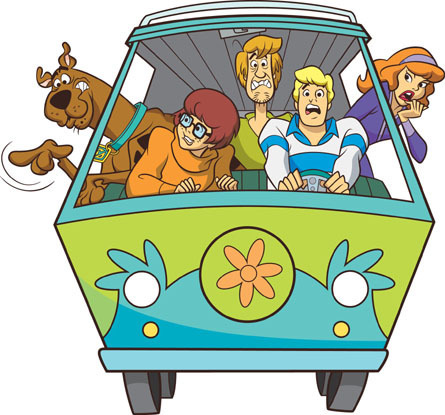
One of the cartoons that I watched most as a child was the Scooby-Doo mysteries in all its myriad versions and forms. With and without Scrappy Doo, as kids, the old version with crappy animation, the new version with good animation - all of it. It is surprising, of course, then how much of the context and subtlety you lose because of the inexperience and lack of knowledge as a kid. Like for example, the fact that the 'gang' is a bunch of hippies most likely with Fred, Velma and Daphne in a relationship while Shaggy acts as the drug-dealer. Each episode is them having a bad trip and seeing monsters and of course seeing Scooby talk. And at all times, high Shaggy has the munchies.
But the main lesson to be learnt from Scooby Doo has nothing to do with their alleged drug habits. It's more to do with their tenacity in trying to figure out the cause of the supernatural phenomena or the identity of the monster. They lay down elaborate traps despite their fear and catch the monster and have the audacity to peek under the mask. And the cause of the phenomena is always something so typically human - revenge, profit, power. This unrelenting pursuit of the truth by them and refusing to just believe the stories of the local and wanting to see under the mask under any and all circumstances is something that each of us would do well to inculcate in ourselves.
April 3, 2015
Jack y Jill
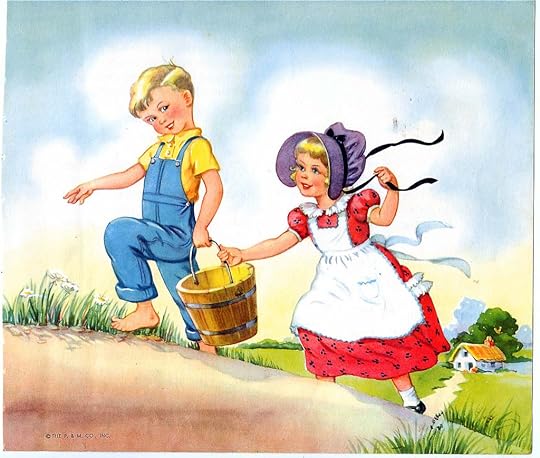
Esta es una historia de un niño y una niña. El niño se llamaba Jack y la niña se llamaba Jill. Un día decidieron conseguir un cangilión de agua. Entonces, subieron una colina. Pero Jack se cayó y le comenzó a doler la cabeza. Y luego Jill también se cayó. Nadie sabe qué pasó con el cangilión.
April 1, 2015
Glorious Age
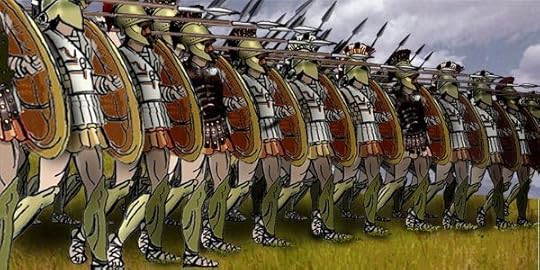
The Gods unto her hath spoke
Words mere mortals can hear not.
The Oracle, her silence, hath broke,
And gave voice to words sought.
Dawn of battle awaits dawn of day
Forth we march, Ares himself at side.
As harlots the Persians, we slay
Until the last dog has died.
Victory we sieze and the Gods smile,
They mark our return blessed,
We feast with grander style
And then take our women to bed.
And so life goes present divine blessings,
Until when, again, the silent Oracle sings.
Originally written on 10 Feb, 2012, for the creative writing competition in Kashi Yatra'12, this was my first attempt at writing a sonnet. The prerequisite of the competition was to write on "The Golden Age Of The Greeks".
March 31, 2015
The Jacket
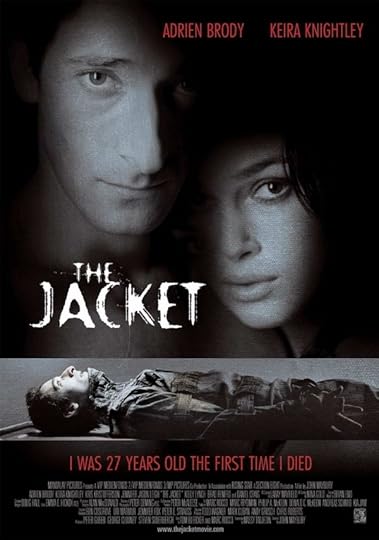
This movie had been on my watchlist for a really long time that I had even forgotten why I had put it on my list. So, when I finally got a chance to watch it, I'm glad I did so without reading any synopses. This was a smart film - in that if you are a science-fiction buff, you can take this movie to be a good time-travel sci-fi. But, if instead you are more of a philosophical nature, you can take this movie as that also in that one of the more impactful scenes of the film is about karma comes back to bite you in the ass.
I saw Adrien Brody (the protagonist) in the History Channel's historically farcical but entertaining 2-part Houdini. In that movie he had a manic melancholy to his character something which he also has in this film.
The time travel bit in the movie was also well-done. There's the obvious cop-out of trying to explain it at all, but you don't need that at all to enjoy it. It's a good movie. I'd watch it if you're into reasonable sci-fi thrillers.