
The Paris Review's Blog, page 917
May 11, 2012
What We’re Loving: Janácek, Cooke, and Literary Booze
 My brother-in-law described First Position as Spellbound without the hard words. He meant that in a good way. This story of six kids in training for an international ballet competition is just as touching and absorbing—and almost as funny—as Jeffrey Blitz’s 2002 documentary about the national spelling bee. —Lorin Stein
I saw Janáček’s The Makropulos Case on Saturday, and three-plus hours standing has never gone by so quickly. Based on Karel Čapek’s popular 1922 play of the same name (sidenote: Čapek gave us the word robot as we know it), it’s the tragicomic tale of a labyrinthian legal case, a man-eating diva, and the elixir of life. (Intimations of the decline of European aristocracy are in there, too.) The score—and the chatty libretto, for that matter—stand alone, but Karita Mattila’s performance (in what is considered one of the toughest soprano showcases) is worth seeing. —Sadie Stein
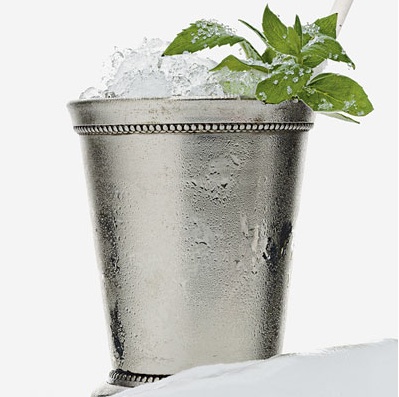
Hemingway & Bailey’s Bartending Guide to Great American Writers not only instructs us on how to get tipsy (or rip-roaring drunk) on William Faulkner’s favorite mintjuleps or Raymond Chandler’s companion gimlet, it also offers us whimsical fodder for our perfect boozy daydreams: “Imagine a warm summer evening out on the shore of Long Island—say a party at Gatsby’s house, the bartenders serving up light, refreshing Gin Rickeys as the jazz band swings.” Yes, please! (Drinking stories and famous imbibing passages included.) —Elizabeth Nelson
For fans of Soviet-era sci-fi, Olena Bormashenko’s new translation of Russian classic Roadside Picnic is being published this month. The book was originally written by brothers Arkady and Boris Stugatsky in the 1970s, but took eight years to get past Soviet censors unscathed and has been out of print in the English for three decades. Now it’s finally back on the shelves, and judging by the praise Bormashenko has received for her work, it’s in excellent shape. The hero of Picnic is a “stalker,” or a go-to guy in the black market of alien technologies that appeared on Earth after the perplexing and ancient “Visit.” And yes, it is the “stalker” of Roadside Picnic that served as inspiration for the spellbinding film by Andrei Tarkovsky. —Allison Bulger
Sam Cooke—Greatest Hits: Here is a singer too often overlooked in the great expanse of pop classics. You can have your ol’ blue eyes, I’ve got nothing against him. You can have your Bing and your Brown. All I need is a little bit o’ Cooke. I’ve been listening to this CD every minute of every day. Though blatantly missing “(Ain't That) Good News,” it makes up for it in the lounge jazz beats of “Win Your Love” and the eerily foreboding “Frankie and Johnny.” The song ends with Frankie shooting Johnny over a misunderstanding. Cooke died at thirty-three under similar circumstances. —Noah Wunsch


My Mother’s Love
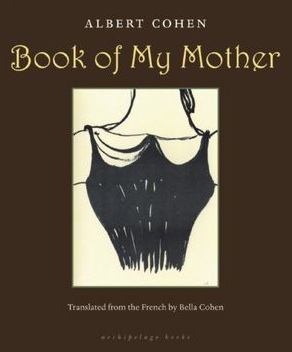
Shortly after fleeing to London from Nazi-occupied France, novelist Albert Cohen learned of his mother's death in Marseille. His grief took the form of a series of personal essays for La France libre, which later grew into Book of My Mother. It was translated into the English by his wife. In honor of Mother’s Day, we bring you this excerpt.
She waited three hours for me in that square. Three hours which I could have spent with her. While she was waiting for me, wreathed in patience, I chose to concern myself, stupidly enthralled, with some poetic amber damsel, abandoning the wheat for the chaff. I missed three hours of my mother’s life. And for whom, good God? For an Atalanta, an attractive arrangement of flesh. I dared to prefer an Atalanta to the most sacred goodness, to my mother’s love, my mother’s incomparable love.
Incidentally, if some sudden illness had deprived me of my strength or merely all my teeth, the poetic damsel would have pointed me out and ordered her maid to sweep away that toothless garbage. Read More »
Book Perfume, Newspaper Dresses
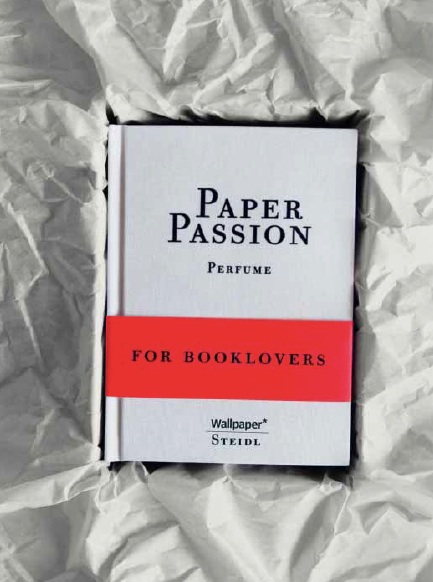
Perfumes that smell like books? Depends on the book, really!
Prom dresses made of newspapers? Depends on the broadsheet, really!
An MRI with John Jeremiah Sullivan.
A study finds that literature increases empathy.
Thomas Jefferson's gardening journal.
The best audiobooks for a road trip.
May 10, 2012
Alice Munro’s First Story, Rediscovered
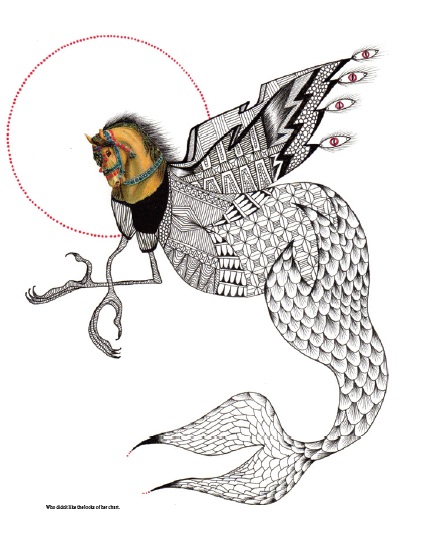
Miss Abelhart came out of the church alone. Her feet made quick, sharp, certain sounds on the cement steps—not the light tapping sounds pumps make, but harder, heavier claps. Miss Abelhart was wearing oxfords. She wore also a light tweed coat, a straight ugly coat, and an absurd little black hat. Most of her clothes were chosen for their ugliness or absurdity, and she wore them with a certain defiance, as though she proudly recognized in them a drabness closely akin to her own.
She was not ugly or absurd, in herself, only a little dried and hollowed, with straw hair tightly and tastelessly curled, and skin somewhat roughened, as if she had been for a long time facing a harsh wind. There was no blood in her cheeks, and something like dust lay over her face. People who looked at her knew that she was old, and had been old always. She was thirty-three.
Ladies, Gentlemen, and Bears: We Have a Winner!
 All contributors to our John Irving hypothetical-jacket-copy contest: Bravo! We asked you to incorporate the recurring themes of Irving’s oeuvre into a few sentences, and you ran with it. We laughed, we cried, we cringed. This was not an easy decision. But there was one entry that stood out. And that entry was the work of one Fer O’Neill. The winning entry:
Phillip is a forty-two-year-old virgin who believes that he would become a sex-addicted pedophile once he experienced his first sexual sensation. Hating himself for that slippery slope, he devotes his life to helping restore nineteenth-century houses as an antique bullion maker. Working on the Hilton Road house south of Augusta, Maine, Philip befriends the abused daughter of his employer. Forced to flee by duty of circumstance, for the next twenty years they live together an unlikely life. Can the dysfunctions that debilitate be the very things that save us? Or are the centrifugal forces that bind us together ultimately what will tear us apart?
Read More »
Dear Pete Campbell, A Word of Advice
 Dear Pete Campbell,
You’ve always creeped me out. This isn’t entirely your fault. You can blame your parents for the beady eyes and the cheeks as yet untouched by razor; for your emotional immaturity; for the fortune they squandered and the love they withheld; and for the Waspy sense of privilege they nonetheless managed to confer on your skinny ass.
And so I don’t hate you, Pete, as others are wont to do. Sure, you’ve done some shitty things—getting Peggy preggers then treating her like trash; blackmailing Don into making you head of accounts; last night’s display of pathetic adultery with that chick from The Gilmore Girls—but I feel a strange affinity for you anyway. Read More »
If You Missed the Translation Panel…
As one of our readers, Ms., pointed out, I didn't really give readers enough notice about last week’s PEN translation panel. Mea culpa! You can watch the following video of the event—featuring a distinguished assemblage of writers, editors, and translators—from the comfort of your own home. And if you have any burning questions on the topic, I feel safe in saying Lorin will be delighted to answer them, via advice@theparisreview.org!
A Panorama of ‘Gunnar’s Daughter’
A ten-foot-tall panel illustrating the 1909 Norwegian novel by Sigrid Undset. Now largely forgotten, Undset won the Nobel Prize in 1928. I think her books deserve more attention. Gunnar’s Daughter was published a century ago but takes place in the Middle Ages and has all the great dark and bizarre appeal of Icelandic legend recycled for an Edwardian audience ready to be shocked. Click in and scroll down for the whole story.

Browning at 200, Publishers at 83

Salman Rushdie and Jonathan Lethem are among the seven hundred writers and cultural marchers who signed a letter protesting the planned revamp of the New York Public Library.
Dickens isn’t the only one turning two hundred! Wishing a happy bicentenary to Robert Browning.
Madame Bovary, the pie chart.
The James Joyce papers go digital.
Maurice Sendak’s books thrilled children and terrified adults.
And speaking of Sendak, more memories and tributes.
Rock 27 is publishing eighty-three.
May 9, 2012
Family Matters: Alison Bechdel on ‘Are You My Mother?’
 Alison Bechdel’s first graphic memoir, Fun Home , told the story of her small-town Pennsylvania childhood, which was dominated by her often tyrannical father. An obsessive home restorer and closeted homosexual, he died a possible suicide just as his college-age daughter was coming out as a lesbian. Six years after Fun Home, Bechdel has published a second memoir in comics form, Are You My Mother? , but it’s more than simply the maternal counterpart to its predecessor. Thrillingly discursive, it’s framed by the artist’s struggle to create Fun Home and broker her mother’s acceptance of its public unearthing of family secrets. Bechdel recounts episodes from her romantic relationships, her beginnings as the cartoonist of the long running Dykes to Watch Out For strip, and her struggles, through fruitful years of psychotherapy, to come to terms with her sometimes difficult relationship with her mother. (The book may be one of the truest accounts of what it’s like to be on the therapist’s couch today.) Throughout, Bechdel plumbs the life and writings of Donald Winnicott, the British psychoanalyst who pioneered the field of object relations and stressed the importance of early mother and child bonding. Over lunch at New York’s Via Emilia, Bechdel confessed her childhood affection for “silly children’s comics like Little Lulu and Richie Rich,” which shows in the clarity and warmth of her artwork.
The Paris Review's Blog

- The Paris Review's profile
- 305 followers

