
Kristin Holt's Blog, page 34
September 22, 2015
NEW RELEASE: Coming November 2nd (Preorder Available)
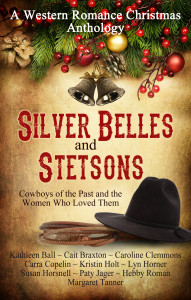
New Release: Silver Belles and Stetsons
Ten Western Romance Christmas Novellas by Amazon Bestselling and Award-Winning Authors
Available as a boxed set for a limited time
Preorder Price– $0.99
Increasing soon after release– $2.99 List Price
A savings of more than 75% if the books were purchased separately.
Bestselling and Award-winning authors bring you ten western romance novellas featuring alpha-cowboys from the past. This boxed set will take you back in time when men were rugged and handsome and the women who loved them courageous and daring.

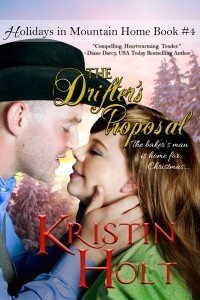
The Drifter’s Proposal
by Kristin Holt
My contribution to the Silver Belles and Stetsons Anthology
Available for preorder, NOW, in Silver Belles and Stetsons, to be released 11-2-15
Will be available for preorder in early October, as a stand alone title, to be released 11-16-15
The Drifter’s Proposal is 25,000 words (approximately 100 paperback pages). It’s book #4 in the Holidays in Mountain Home series, and like each book this series, it stands alone and may be enjoyed all by itself.
About The Drifter’s Proposal
Colorado, 1900
The baker’s man is home for Christmas…
A spinster is startled by an overdue mortgage and imminent eviction, mere days before Christmas. Dare she trust a drifter to fight at her side, and invite certain heartbreak when he moves on?
“Compelling. Heartwarming. Tender.”
~Diane Darcy, USA Today Bestselling Author
New Article. coming September 26th: The Drifter’s Proposal, Opening Scene
Copyright © 2015 Kristin Holt, LC


September 19, 2015
Book Review: The History of the Telephone by Herbert Newton Casson

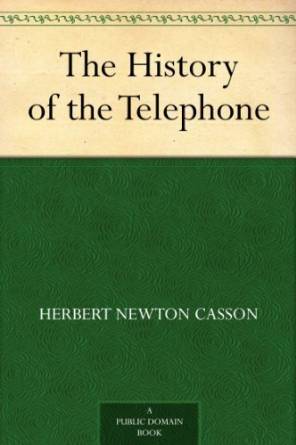
Originally published in 1910 by A. C. McClurg & Company, Chicago. 315 pages. THIS COVER ART is one available on Amazon for Kindle, price: $0.00.

This classic 1910 book– by one of the first stars of technology journalism– is a charming and highly readable overview of the impact of the telephone in its first quarter-century.
[Source 1] [Source 2] [Source 3] [Source 4]
From the preface: “Thirty-five short years, and presto! the newborn art of telephony is fullgrown. Three million telephones are now scattered abroad in foreign countries, and seven millions are massed here, in the land of its birth.” [Source]

Herbert Newton Casson
The History of the Telephone, by Herbert Newton Casson (1869-1951) was published in 1910 by A. C. McClurg & Company, Chicago. In 2011, when the copyright had ended, various editions became widely available in print, e-book, and pdf. It’s also available entirely online, as well as a downloadable Word doc.
Amazon offers a free digital copy, though another option is illustrated and costs $0.99. Please note these are the same book. There’s no reason to buy both, like I did, unless you’re particularly interested in the images available in the $0.99 version… and already picked up the free book.
Vintage 1910 Hard Cover book, “The History of the Telephone”, via Pinterest
Note: Paperbacks have had many different cover images. If it’s by Herbert N. Casson / Herbert Newton Casson, it’s all (or should be all) the same content.
It’s an incredibly readable resource. Entertaining, enlightening, an historic gem. I delved right in, entirely unaware that it had been written more than 100 years ago. It reads with the same clarity and ease as if it had been written recently, and by a gifted historian. It’s that insanely well-written.

And it should be [insanely well-written].
During his lifetime, Casson published 168 books on business success. He authored The Crime of credulity (1901), Organized Self-Help (1901), The Romance of Steel (1908), The Romance of the Reaper (1908), Cyrus Hall McCormic: his life and work (1909), Ad and sales: A Study of Advertising and Selling (1911), The story of artificial silk (1928), and more.
If you love history half as much as I do, are researching period technology, or are simply curious, pick up either book and dive right in!
Please note these are the same book. The 99-cent version has illustrations the free version does not. The 8 to 10 illustrations (99-cent version) are simply color photographs of antique telephones, without labels, links, or specifics. Unfortunately, the 99-cent version is also poorly formatted, without discernible chapter breaks (no indentations and no blank lines between paragraphs). The $0.00 (FREE!) version is a much easier read.
Related Article– Book Review: Life in a Victorian Household Related Article– Book Review: Hearts West: True Stories of Mail-Order Brides on the Frontier, by Chris Enss Related Article– Book Review: The Transcontinental Railroad Related Article– Book Review: The Doctor Wore Petticoats Related Post– Book Review: The Pony Express Related Article– Top 5 Reasons AUTHORS of Western Historical Romance Benefit From Visiting Historical Museum Residences Related Article– Top 5 Reasons READERS of Western Historical Romance Benefit From Visiting Historical Museum Residences
Copyright © 2015 Kristin Holt, LC
September 16, 2015
Book Review: Life in a Victorian Household, by Pamela Horn

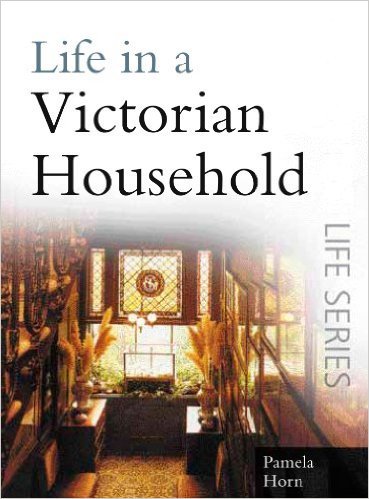

Book Blurb: “What was it like to live in a Victorian household? What time did the servants have to get up? What was the food like and who cooked it? How did the clothing differ for the different types of servants? How much did the servants get paid? This fascinating book takes you back in time and shows you what it was really like to live in Victorian times, for those both above and below stairs, and what sights and smells would be around you.” [Source]
This nonfiction book is properly categorized in European History books and Kindle books on Amazon. The “About the Author” segment on the Amazon product page says “Pamela Horn is a respected writer on British Social History. She lives in England.”
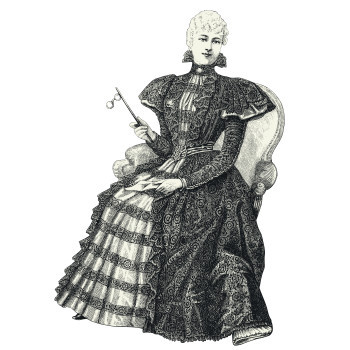
Despite knowing this book was probably only about the Victorian Era in England, and hence households in Great Britain, I was hopeful I’d learn plenty in this nonfiction volume about households of the era outside of GB. I’m satisfied that I did, without the author touching on it. While America wasn’t mentioned, more specifically, my specialty of the Western United States, the fact remains that the Old West (and the U.S. at large) did have a Victorian Era. England’s Victorian attitudes, practices, expectations, and culture most certainly did impact and strongly influence the United States. It’s evident that many things would be the same in all western cultures, e.g. housekeepers dyed curtains and repainted furniture as needed– upkeep that is most out-dated presently.
I read this book specifically for my own ongoing research and understanding of history. It explains a great deal in four chapters: 1) Middle-class Victorian Homes, 2) Mistress of the Household, 3) Recruiting and Replacing the Servants, and 4) Life Below Stairs.
Like a large house and garden, a wife or daughter with nothing to do was an emblem of success.
~Katharine Chorley, quoted in Life in a Victorian Household
Yet… Mistresses of the household were expected to maintain control of the household finances, avoid waste, and ensure matters ran smoothly. Apparently it was more about appearances than actual involvement and work.
Mrs. Haweis, for whom housekeeping meant ‘on the woman’s side, much vigilance’… the best housekeeping was ‘the largest amount of comfort with the smallest expenditure of cash’, and that could only be achieved by a careful mistress.
~ Life in a Victorian Household
Within this title, the author quotes Lady Cynthia Asquith: “…in really well-ordered households it was… the rule that no housemaid should ever be seen broom or duster in hand.”

This book will be informative and entertaining to those who enjoy history and to those who read Victorian Era Historical Romance. The more we comprehend about how things truly were, the richer our forays into fiction. It’s a quick, enjoyable read. Informative, accurate, and interesting. It brings into sharp focus the background of many favorite novels. Recommended!

She also judged other ladies by the condition of their rooms. In 1894, when visiting a Mrs. Crane, she commented disapprovingly: ‘what a dirty house, dust & crumbs of weeks, the wonder is people turn out of such houses looking comparatively clean!’ To her, Mrs. Crane was failing in her duty as mistress of her household, something which was seen as a prime female responsibility in Victorian society.
A similar approach of judging a wife by the condition of her house was adopted by Lady Colin Campbell in 1893 when she described the drawing room as ‘the lady’s room’ where ‘the character of the lady herself may be told by inspecting that one room!…
~ Life in a Victorian Household
Life in a Victorian Household, by Pamela Horn, is part of the Life Series (Life as a Victorian Lady, Life in a Tudor Palace, Life in a Medieval Castle). Each book in this series is available for Kindle (at $0.99, and also in paperback, each just under 100 pages in length). Two titles in this series are by Pamela Horn. The other two are authored by Christopher Gidlow and Brenda Ralph Lewis. This series is published by The History Press.
Related Article– Book Review: Hearts West: True Stories of Mail-Order Brides on the Frontier, by Chris Enss Related Article– Book Review: The Transcontinental Railroad Related Article– Book Review: The Doctor Wore Petticoats Related Post– Book Review: The Pony Express Related Article– Top 5 Reasons AUTHORS of Western Historical Romance Benefit From Visiting Historical Museum Residences Related Article– Top 5 Reasons READERS of Western Historical Romance Benefit From Visiting Historical Museum Residences
Copyright © 2015 Kristin Holt, LC
September 13, 2015
Book Review– The Pony Express: The History and Legacy of America’s Most Famous Mail Service

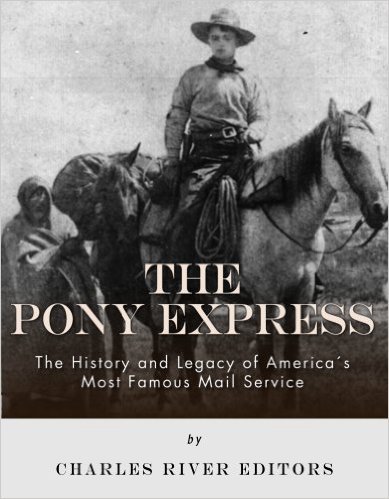
Note: According to Wikipedia’s page for the Pony Express, Frank E. Webner, a Pony Express rider is featured in the historic image on this book’s cover, 1861. [background image Public Domain]


As part of my constant, ongoing study of 19th Century American History, I listened to the Audible version of The Pony Express: The History and Legacy of America’s Most Famous Mail Service, by Charles River Editors. The audio version was narrated by James McSorley.
The paperback edition is 42 pages and includes pictures of important people, places, and events. The Audible version’s length is 1 hour and 13 minutes. Bite-sized, succinct, and met my needs to understand the big picture surrounding the 19 months the Pony Express was in service.
In 1860, riding for the Pony Express was difficult work — riders had to be tough and lightweight. A famous advertisement allegedly read:
Wanted: Young, skinny, wiry fellows not over eighteen. Must be expert riders, willing to risk death daily. Orphans preferred. source
I believe this short read (or listen) would be of interest and benefit to American history buffs, students, and fans of western historical fiction (including romance) as a greater understanding helps any reader better understand the setting of favorite novels.
![Poster from the Pony Express, advertising fast mail delivery to San Francisco. Image created December 31, 1859. [Image: Public Domain]](https://i.gr-assets.com/images/S/compressed.photo.goodreads.com/hostedimages/1442291145i/16213048._SY540_.jpg)
Poster from the Pony Express, advertising fast mail delivery to San Francisco. [Image: Public Domain]
Charles River Editors did a fine job bringing together the reasons such a risky undertaking was begun, the challenges faced, vignettes from journals and newspapers, and the overarching historical framework. I particularly enjoyed the brief segments of first-person accounts from individual Riders’ experiences, particularly when caught in blizzards in Nebraska and upon finding the relay station abandoned (no relief horse nor relief rider awaiting…and the mail had to go on, so the exhausted rider mounted up).

Top Five Things I Learned From Listening to this Audio Book:
1. The Pony Express wasn’t nearly as popular or fascinating to the American public during its historic 19 months of operation as it became afterward, when immortalized in Wild West Shows.
![Buffalo Bill's Wild West and Congress of Rough Riders of the World. Circus poster showing cowboys rounding up cattle and portrait of Col. W. F. Cody on horseback. Circa 1899. [Image: Public Domain]](https://i.gr-assets.com/images/S/compressed.photo.goodreads.com/hostedimages/1442291145i/16213049.jpg)
Buffalo Bill’s Wild West and Congress of Rough Riders of the World. Circus poster showing cowboys rounding up cattle and portrait of Col. W. F. Cody on horseback. Circa 1899. [Image: Public Domain]
2. Very little remains in the way of structures (such as relay stations) in the open stretches between St. Joseph, Missouri and San Francisco, California. In 1860, approximately 157 Pony Express stations stood about 10 miles apart along the route–the distance a horse could travel at a gallop without tiring.
3. Several reasons contributed to the relatively short time-span of the Pony Express’s operation, including (but not limited to): the Transcontinental Railroad, the Transcontinental Telegraph, and financial woes.
![National Bank Note Company--U.S. Post Office /Hi-res scan of postage stamp issued 1869. [Image: Public Domain]](https://i.gr-assets.com/images/S/compressed.photo.goodreads.com/hostedimages/1442291145i/16213050.jpg)
National Bank Note Company–U.S. Post Office /Hi-res scan of postage stamp issued 1869. [Image: Public Domain]
4. Pony Express Riders were often young men hired to work the general area they knew best. Nevada boys worked Nevada sections, Utah boys worked Utah sections, etc. Makes a lot of sense. These lightweight, young, fearless men had to ride at sometimes breakneck speed, in all weather conditions, ’round the clock. It makes good sense that they would benefit from knowing the area, climate, and routes intimately.

Wells Fargo & Co. Pony Express Stamp, $1 value. [Image: Public Domain]
5. Pony Express Riders took an oath of conduct and loyalty, though it was apparently followed with varying degrees of precision.
“I, …, do hereby swear, before the Great and Living God, that during my engagement, and while I am an employee of Russell, Majors, and Waddell, I will, under no circumstances, use profane language, that I will drink no intoxicating liquors, that I will not quarrel or fight with any other employee of the firm, and that in every respect I will conduct myself honestly, be faithful to my duties, and so direct all my acts as to win the confidence of my employers, so help me God.”
— Oath sworn by Pony Express Riders
source: Burton, Richard (1862). The City of the Saints. New York: Harper & Brothers as cited by wikipedia.org
Available formats:
Kindle book (first pane above), a FREE read with kindleunlimited
Paperback (second pane above)
Audible (easily accessible through either pane above)

The following segment contains books (both fiction and nonfiction, Kindle and paperback/hardback) about the Pony Express. Some are available as FREE reads with kindleunlimited. I’ve not read them, but offer links to them as a matter of interest and curiosity.
Related Article– Book Review: The Transcontinental Railroad Related Article– Book Review: The Doctor Wore Petticoats Related Article– Book Review: Hearts West: True Stories of Mail-Order Brides on the Frontier
Copyright © 2015 Kristin Holt, LC
September 10, 2015
Book Review: The Doctor Wore Petticoats

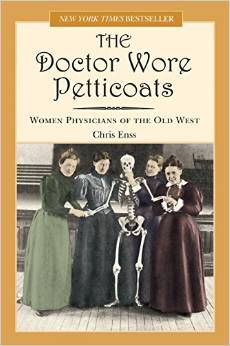

Twice now, a bit of historical research has turned into a great deal of enjoyment and reading for pleasure…
…and reminding myself to pick up the highlighter.
I’m most impressed with Chris Enss‘s ability to capture the true historic tales of women in American history, compile their stories, and bring it all together with the kind of ease in reading that makes one forget it’s nonfiction.
The same thing happened when I read Hearts West: True Stories of Mail-Order Brides on the Frontier by Chris Enss. I read Hearts West for research, and before I knew it, I’d ‘fallen in’ and read with all the fervor of a well-written western historical romance. I knew The Doctor Wore Petticoats: Women Physicians of the Old West would meet Enss’s standard of quality, and I wasn’t disappointed.
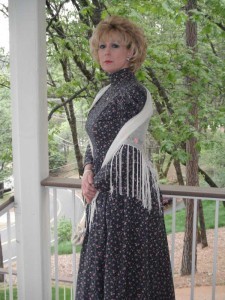
Chriss Enss, author of The Doctor Wore Petticoats: Women Physicians of the Old West
The Doctor Wore Petticoats speaks of 12 different physicians (two of them dentists), their stories, their reasons for pursuing a career in medicine, the school(s) attended, tales of their families (and marriages, many of which failed), and the communities they served. At a time in history when men and women alike adamantly opposed female doctors, the forces against these pioneers were tremendous. Each chapter’s biography illustrates characteristics of perseverance, determination, confidence, and a lifelong dream of making a difference.
I’m a registered nurse who knows little, sadly, of medical training in the 1800’s. I found the quantity of years’ study in medical school interesting. In the earlier decades, some of the women physicians completed training in two years. By the end of the century, medical school encapsulated a full four years.
The 127-page paperback edition begins with an introduction setting the stage. The reader is presented with recorded statements from books, medical journals, a protest resolution at Harvard University, and journals–all illustrating the pervasive attitude of the Victorian-Era American.
Higher education for women produces monstrous brains and puny bodies; abnormally active cerebration and abnormally weak digestion; flowing thought and constipated bowel.
~ E. H. Clarke, Sex Education: A Fair Chance for Girls, 1873, cited by Enss, The Doctor Wore Petticoats, xi
At the conclusion of eleven chapters introducing each doctor’s life and contributions to medicine, a brief chapter on Frontier Medicine is both good for a chuckle and evokes compassion for the women who fought valiantly to improve understanding of health and nutrition against such “granny remedies“–antidotes for a variety of illnesses from nausea to typhoid.
Not only did female doctors have to withstand prejudice against their sex, they also had to fight against barbaric remedies that had been passed down from generation to generation. Myths–such as believing a person could preserve his teeth and eliminate mouth order by rinsing his mouth every morning with his own urine, or that mold scraped from cheese could heal open sores–had to be dispelled.
Some medicines, like herb teas and drawing poultices, brought relief, but most had no effect at all. Indeed many of these remedies did more harm than good.
~The Doctor Wore Petticoats, Chris Enss, pp 111-112
The concluding chapter, Advertisements and Women Physicians was perhaps the crowning jewel. Enss beautifully related Doctor Elise Pfeiffer Stone‘s experience surrounding the March 5, 1888 edition of a Nevada City, California newspaper. I saw Dr. Stone’s triumph in my mind’s eye… and felt compassion for the bullying she endured. As the author (Chris Enss) so competently presents, Dr. Elise Stone’s experience mirrors that of so many other women physicians at a time; they fought not only for their own freedom to pursue higher education, better themselves, and work in a field closed to them–they fought for such freedom for all women. True pioneers, all.
Widely circulated medical journals stating how “doubtful it was that women could accomplish any good in medicine” kept women doctors from being hired. They criticized women for wanting to “leave their position as a wife and mother,” and warned the public of the physical problems that would keep women from being professionals. An 1895 Pacific Medical Journal article promised:
Obviously there are many vocations in life which women cannot follow; more than this there are many psychological phenomena connected with ovulation, menstruation and parturition which preclude service in various directions. One of those directions is medicine.
~The Doctor Wore Petticoats, Chris Enss, pp 52-53
A five-page bibliography concludes this enjoyable foray into American history and the plight of women from various regions of the country who simply wanted to learn all they could about the human body and to make a significant difference in their communities, to help the one, to help the many. As one truly fond of history, I appreciate a careful bibliography, ’cause I simply need to know where the information came from.
Who is this book for?
I believe this book will be well-enjoyed by:
All who love History, particularly American History
All who love the Old West
Fans of Western Historical Romance… for the more we comprehend about the true historical setting, all the better able we are to our favorite fictional stories.
This title is available in both Kindle edition and in paperback.
Used Paperback Copies from $1.48 + S&H

Related Article: Book Review– Hearts West: True Stories of Mail-Order Brides on the Frontier, by Chris Enss Related Article: FIRSTS in Female Education, 19th Century American West Related Article– Victorian Attitudes: The Weaker Sex & EducationRelated Article– Book Review: The Transcontinental Railroad, The History and Legacy of the First Rail Line Spanning the United States Related Article: Victorian Attitudes about Female Education, and Conflict in the Historical Romances we Love!
Copyright © 2015 Kristin Holt, LC
September 7, 2015
Celebrities Endorse Pears’ Soap in 1880’s Magazines
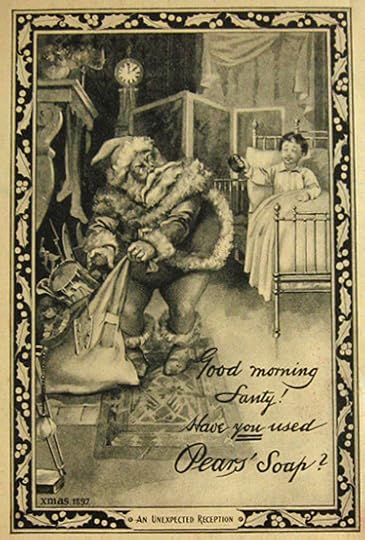
Magazine or Newspaper Advertisement, 1897, employing the common marketing phrase, “Good morning, have you used Pears’ Soap?” This ad features Santa Claus.
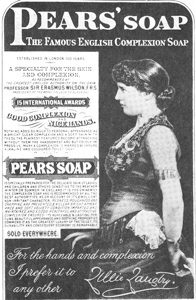
A Female Endorser of Pears’ Soap states, “For the hands and complexion, I prefer it to any other.”
Santy (Santa Claus) wasn’t the only celebrity to endorse the well-known, well-loved, imported English Pears’ Soap. Even when the method of celebrity endorsement was used to lesser extent, it’s still implied. another ad run either in a magazine or newspaper in the latter portion of the century quoted, “I have found it matchless for the hands and complexion.” 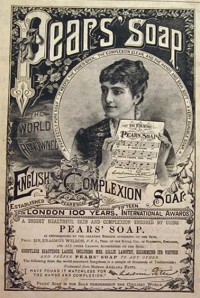

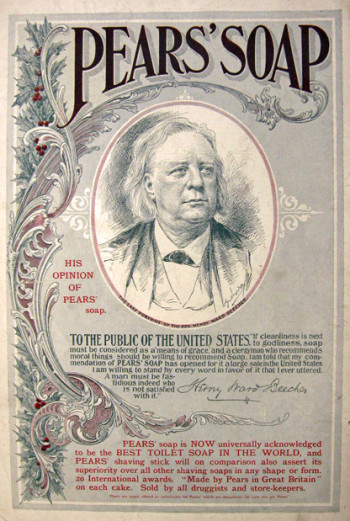
Pears’ Soap Advertisement, featuring endorsement of Henry Ward Beecher
Whenever he could, [Henry Ward] Beecher exploited his name to make money. The brother of moralist Harriet Beecher Stowe, he endorsed lingerie, Joy Gould’s nefarious schemes, and even soap. One of his most profitable endorsements, which appeared in magazines throughout the country, was for Pears’ Soap.
Source: Burton Bledstein, The Culture of Professionalism (New York: Norton, 1976), p. 52, cited on p. 149 of One-Night stands with American History; Odd, Amusing, and Little-Known Incidents by Richard Shenkman and Kurt Reiger
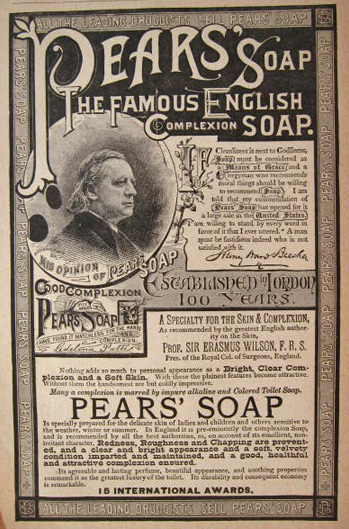
Celebrity Endorsement of Pears’ Soap by Henry Ward Beecher.
Magazines
Throughout the 19th Century, a variety of magazine periodicals were published at weekly or monthly intervals. Many were designed for women, who often bore responsibility for the spending of household budgets. Naturally, soap commercials would be appropriate in this setting. Such periodicals included familiar titles like: Godey’s Lady’s Book, Harper’s Bazaar, and Ladies’ Home Journal. Others are less familiar (at least to me): The Ladies’ Repository and Gatherings of the West and The New Monthly Belle Assemblee.
Ladies magazines typically contained sheet music (for pianoforte), reader-written sentimental poetry and romantic fiction, needlework patterns, womanly virtues of propriety and innocence, fashion and clothing design, appropriate dress for the nouveau riche, reviews of the best new literature, in-depth essays on literary and religious topics.
“In the latter part of the century, a revolution in printing technology and marketing techniques, particularly the acceptance of advertising as a major component of every magazine’s content and cash flow-combined with an increase in literacy to encourage the creation of affordable magazines for middle-class women with few or no servants and limited income. Setting the pattern was Samuel Beeton’s The Englishwoman’s Domestic Magazine (1852-1881), a monthly offering guidance on domestic economy, courtship advice, information on hygiene and nursing, and such innovative features as paper dress patterns, as well as the usual mix of fashion and fiction.” [Source]
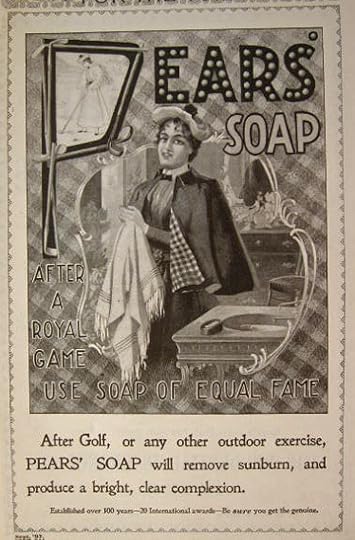
Pears’ Soap Vintage Advertisement, September, 1897, wherein the soap manufacturer cheerfully claims the soap will remove sunburn.
For those within the reach of markets–both financially and geographically–it was certainly easier and more pleasant to purchase sweet-smelling, mass-produced soap and other toiletries. Please see my related articles about the making of soap on the frontier homestead and homemade tooth powder preparations.
Related Article: Soap Making on the Old West Homestead
Related Article: Old West: Toothbrushes and Toothpaste
Copyright © 2015 Kristin Holt, LC
September 4, 2015
Old West Dentistry
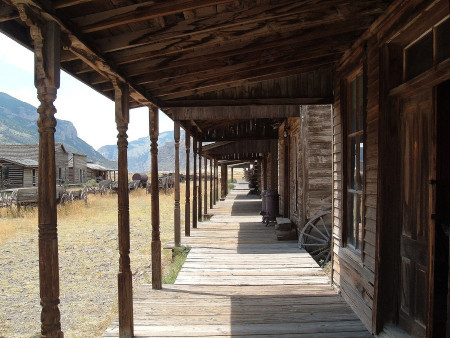
The Old West wasn’t exactly New York City or Charleston or Philadelphia. When a toothache turned mean as a rattler, who could a body turn to for help?

Have you ever had a toothache? A real, full-blown, agony that feels like someone’s stabbing a branding iron through your tooth and into your jaw? I have. Believe you me, I was never so grateful for 21st-century dentistry.
A few dentists did go west. One of the most famous was Doc Holliday (John Henry Holliday, D.D.S.), graduated from Pennsylvania College of Dental Surgery in 1872 but took himself off to frontier town Dodge City, Kansas, when tuberculosis caused him to seek a bit of living. Doc Holliday practiced dentistry by day and played cards by night. Citizens were delighted to have a real dentist on hand and Holliday was purportedly highly skilled.

Most often, though, the best a body could do was find someone handy with a pair of pliers.
Western frontier folks pretty much managed until things got so durn ugly the only thing to do was pull the offending tooth, if they could identify which molar caused the pain. The pliers could’ve been wielded by the medical doctor (if’n they had one), the blacksmith, or barber. Plenty of chairs intended for a haircut and shave doubled as a dental chair. Extractions were accomplished by brute force and the only anesthesia available was copious amounts of alcohol. Though opium could be had on the west coast, it wasn’t readily available through much of the Old West, and controlling dosages proved near impossible, leaving the patient over-medicated, under-medicated, or dead.
Gunfighter Clay Allison’s Dental Nightmare
Old West dentistry could be dangerous for both patient and practitioner. In Wyoming Territory in 1886, notorious gunfighter Clay Allison, aggrieved that a dentist had mistakenly extracted the wrong tooth, later returned to the scene of the “crime”. Here the maniacal Allison grabbed a pair of forceps and proceeded to pull out one of the doctor’s own molars. Allison was prevented from doing any further harm when a group of passing men responded to the dentist’s frantic calls for help.
Perhaps part of the Code of the West was the law of retaliation, eye for an eye, tooth for a tooth…
Most emigrants who made their way west did not

Chris Enss, Author of The Doctor Wore Petticoats: Women Physicians of the Old West
practice any kind of dental care. As a result rotten teeth and bad breath were commonplace. Toothbrushes were available in country stores by the late 1850s, as well as soap and chalk toothpastes. However, not everyone used them. Dentists wouldn’t become common on the frontier until the 1870s. The average citizen was completely toothless by the time he or she reached fifty.
~ The Doctor Wore Petticoats; Women Physicians of the Old West by Chris Enss
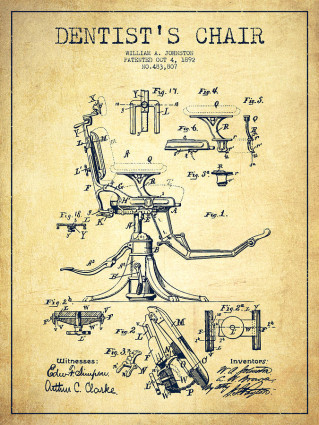
Dental Chair Patent Drawing, 1892
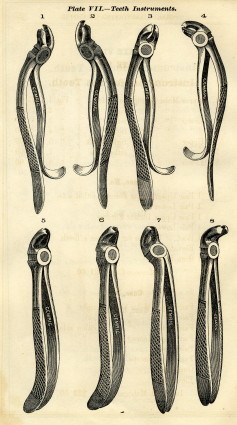
Civil War Era Dental Instruments

Victorian Dentist Office with Antique Instruments (evidently in a city and not the frontier). Note the cabinet to hold the tools and provide easy access. See the foot-pedal drill, center.
Related Article: Old West: Toothbrushes and Toothpaste Related Article: The Old West: Dental Floss & Toothpicks
Please forward this article to fans of Old West History, Old Time Dentistry, and lovers of Westerns or Western Historical Romance. It’s valuable to understand the reality behind the glossy veneer of fiction.
Copyright © 2015 Kristin Holt, LC
September 1, 2015
Victorian Era Dentistry Advertisements
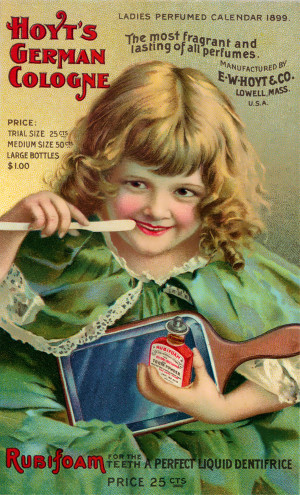
This Hoyt’s German Cologne Ladies Perfumed Calendar is labeled 1899, featuring trial size cologne at 25 cents and large bottles at $1.00. Rubifoam, a liquid dentifrice, is advertised at 25 cents. The fragrance was manufactured by E.W. Hoyt & Co., of Lowell, Massachusetts.
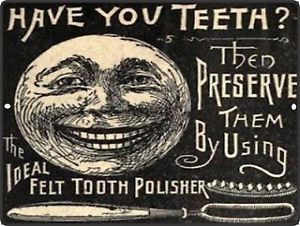
Various online searches for “Felt Tooth Polisher” credit this advertisement to the year 1883, but give no explanation as to the nature of the tool. We might simply assume it’s a device for polishing teeth, made from felt.
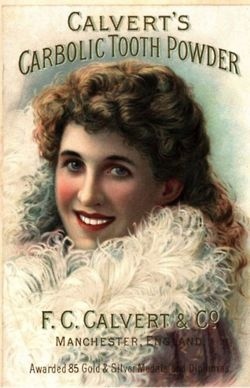
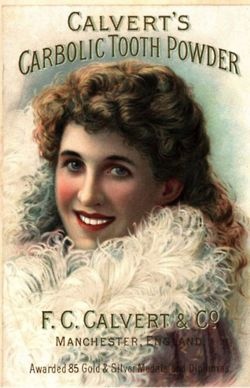
Calvert’s Carbolic Tooth Powder, Manchester, England. According to Wikipedia, Carbolic soap is a strong antiseptic.
In August 1865, Dr. Joseph Lister, 1st Baron Lister applied a piece of lint dipped in carbolic acid solution onto the wound of an eleven-year-old boy at Glasgow Royal Infirmary, who had sustained a compound fracture after a cart wheel had passed over his leg. After four days, he renewed the pad and discovered that no infection had developed, and after a total of six weeks he was amazed to discover that the boy’s bones had fused back together, without the danger of suppuration.
In 1894, William Lever, 1st Viscount Leverhulme introduced the first mass-produced carbolic soap to the market, Lifebuoy.
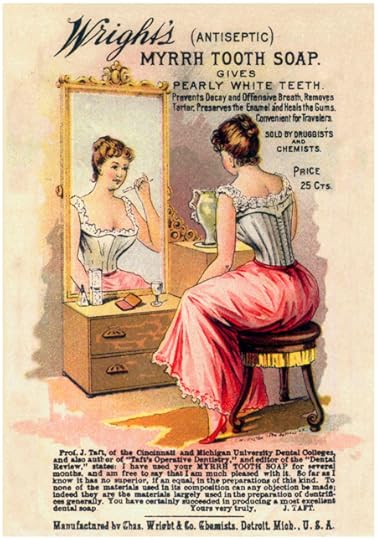
From a print ad offered on Amazon, Wright’s Antiseptic Myrrh Tooth Soap was for sale in 1885, possibly earlier and possibly later.
 In 1885, cociane was a common pain reliever found in medicines, including teething drops for infants, toothache drops, coughs, female complaints (menstrual cramps), and patent medicines.
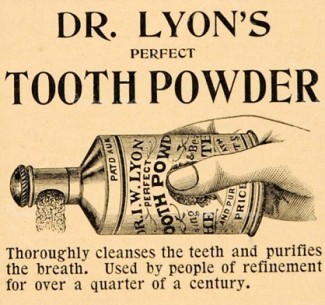
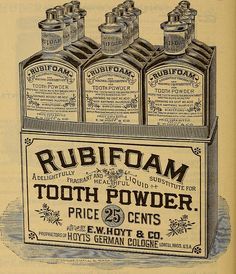
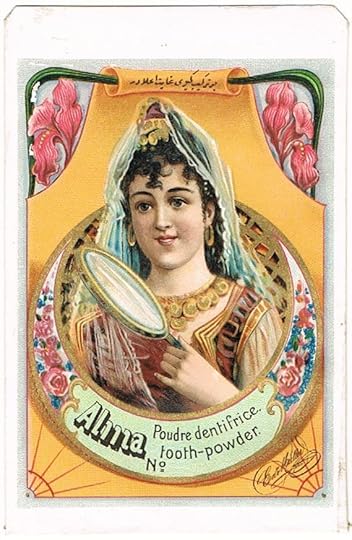
For more information about Tooth Powders, see recent article:
Related Article: Old West: Toothbrushes & Toothpaste
See also: Related Article: The Old West: Dental Floss & Toothpicks
Copyright © 2015 Kristin Holt, LC
August 29, 2015
The Old West: Dental Floss & Toothpicks

What did a CAVEMAN use to dislodge a hunk of meat from between his teeth?
He dug at it with a pointed stick, so say anthropologists, because grooves have been found in the mouths of prehistoric humans. Oh, and these early humans supplemented those pointy sticks with horse hair, which worked like floss.
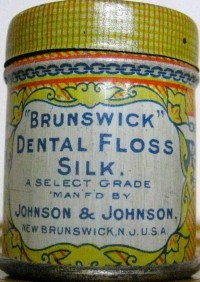
Brunswick Dental Floss Silk in a tin
What did a COWBOY use to dislodge a hunk of meat from between his teeth?
Many sources cite Levi Spear Parmly, a New Orleans Dentist (1819) (or perhaps 1815) as the first to recommend his patients use a thin silk thread to floss their teeth. This apparently worked far better than pointy twigs. In 1882, Codman and Shurtlett Company, Randolph, Massachusetts, mass-produced and marketed an unwaxed silk dental floss. In 1898, Johnson & Johnson secured a patent dental floss.

Chewing on a toothpick, or simply holding toothpick in the mouth, became a fashion statement as well as a status symbol; certain finer restaurants provided toothpicks for diners, and a toothpick implied the individual had just dined in a stylish place. Old habits die hard. Men moved west and took such habits with them. Chewing on a toothpick, or simply holding toothpick in the mouth, became a fashion statement as well as a status symbol; certain finer restaurants provided toothpicks for diners, and a toothpick implied the individual had just dined in a stylish place. Old habits die hard. Men moved west and took such habits with them.
During the Old West Era, it’s quite possible folks carried on with habits picked up ‘at home’ in the eastern, settled States. Hey, if Bob flossed in Virginia, he’d be likely to at least want to floss in the wilds of New Mexico Territory. Chances were, silk thread was hard to come by, and he more than likely used tooth picks. The Yankee way was to whittle a toothpick on demand. (Note that the video takes 4+ minutes. It’s possible people were a mite bit more patient than today.)
New Englanders went west by droves, and no doubt took this habit with them. At the same time, the United States had come through the Industrial Revolution, and just about anything could be mass produced. A young man named Charles Forster (native to Massachusetts) determined to make his fortune producing wooden toothpicks in such a cost-effective manner he could export them to South America where toothpicks were most popular. A lofty goal, and one that changed the face of toothpicks in the United States.
By 1870, Forster was capable of producing millions of toothpicks a day… but couldn’t find a market for them in Boston. Why would a Bostonian spend money on something he could easily make for himself? History cites Charles Forster as a master marketer who could, apparently, sell mass-produced toothpicks to people who didn’t know they wanted manufactured toothpicks, much less needed them. Forster appealed to vanity, a desire for status recognition, and manipulated the sale of his own products.
Related Article: Old West: Toothbrushes & Toothpaste
Copyright © 2015 Kristin Holt, LC
August 26, 2015
Old West: Toothbrushes and Toothpaste
![A photo from 1899 showing the use of a toothbrush. Created: 31 March 1899 [Image: Public Domain]](https://i.gr-assets.com/images/S/compressed.photo.goodreads.com/hostedimages/1440773757i/16022948._SY540_.jpg)
A photo from 1899 showing the use of a toothbrush. Created: 31 March 1899 [Image: Public Domain]

TOOTH POWDERS & TOOTHPASTE
The recipe for toothpaste was found on an ancient Egyptian papyrus. This toothpaste was a mixture of rock salt, dried iris flower and pepper ground up and combined together.
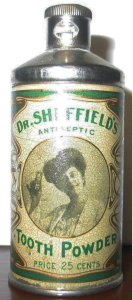
Dr. Sheffield’s Antiseptic Tooth Powder, Sheffield Pharmaceuticals – Sheffield Pharmaceuticals’ Private Archives, [Image: Public Domain]
In 1855, a recipe for toothpaste was printed in the Farmer’s Almanac. The recipe called for myrrh, honey, and green sage. This was to be used on wet teeth each night. An alternate recipe called for cream of tartar mixed with clover oil and cuttlefish bone.
In 1873, Colgate debuted a nice-smelling toothpaste and sold it in a glass jar.
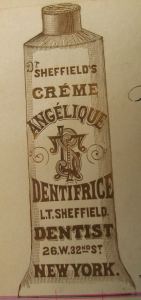
Dr. Sheffield’s Crème Angelique Dentifrice, Sheffield Pharmaceuticals – Sheffield Pharmaceuticals’ Private Archives, [Image: Public Domain]
Dr. Sheffield made his own dental cream in his office, added mint extracts to it so as to improve the flavor, and used it on his patients who expressed their liking for it. The first advertisement published for Dr. Sheffield’s Crème Angelique Dentifrice (the first commercial toothpaste) toothpaste appeared in the New London Telegram on March 12, 1881. In 1896, Colgate & Company Dental Cream was packaged in collapsible tubes imitating Sheffield. The original collapsible toothpaste tubes were made of lead.
Those living in the comparatively rural American West often concocted homemade recipes for tooth powder or used simple staples such as baking soda (sodium bicarbonate), a mild abrasive. It has a mild whitening action and helps to keep an alkaline environment (not friendly for dental plaque bacteria) in the mouth.
TOOTHBRUSHES
Toothbrushes were made from natural bristles (from the neck of a hog) until the 20th century. Handles were made from cattle bone, silver (like Napoleon Bonaparte’s), or carved from wood (including bamboo). In 1844, the first 3-row bristle brush was designed.
DID WESTERN HISTORICAL ROMANCE CHARACTERS BRUSH THEIR TEETH?
Given oral hygiene implements were most certainly available, at least at the General Store, I would hope so. We read of heroes finding the heroine’s nearness pleasant and agreeable and the fresh taste of the hero’s kiss… so it stands to reason fictional characters, at least, employed excellent oral hygiene.
Copyright © 2015 Kristin Holt, LC
Kristin Holt's Blog

- Kristin Holt's profile
- 117 followers


