Jose Vilson's Blog, page 9
August 9, 2020
It Depends On Who You Listen To (Yes, About School Reopening)
It was my first time in months riding the bus with my son since school shut down. Normally, when I’ve run an errand during the pandemic, I’ll do it on my own, mask on, huffing and puffing to make it back inside. On this errand, my son and I saw a crosstown bus sitting there, so we hopped in the back. Pre-COVID, we rode the bus home from his after-school program, so we were excited to have this sliver of normalcy.
As soon as we got to the next stop, we got a quick education on what happens outside our bubble.
Every stop told a new story. At the first stop, an elderly woman hops on, grumbling underneath her mask about having to wear one and surveying the rest of the passengers to make sure they had one, too. At the second, a man meekly walks in to the front while onlookers wondered why those without canes had to get in the back. At the fifth, a mother with two teenaged children hopped on. The daughter had on her pink plastic covering, the rest of her family members came in uncovered and sneering at the rest of us.
The bus driver yells through his loudspeaker: “NO MASK, NO SERVICE! I WILL STOP THIS BUS IF I SEE ONE PASSENGER WITH NO MASK!” The elderly woman frowns at the mother and the teenage boy. The girl looks at her family: “I told you so.” The masks come on, but not without a few eye rolls.
A few stops later, a quartet of older girls hops on, some with masks, one without a mask. They try to hide behind the numerous adults who’ve boarded but the bus driver takes a long pause before closing the doors. “I DON’T CARE WHO YOU ARE. NO MASK, NO RIDE! I AM NOT PUTTING MY LIFE IN DANGER DUE TO YOUR NOT WANTING TO WEAR A MASK!” Some yell back with a few four-letter exclamations, but we ride along after a few minutes. My son wakes up a bit from his nap. One of the girls who tried to use her t-shirt as a mask hopped off and walked off the bus without much a scene.
The other passengers had their own debates about the mask:
“I’m asthmatic and this mask is too f*ing close to my nose for me to get good air.”
“One minute, they’re telling us we don’t have to wear masks, the next we do, so which is it?”
“Why can we eat outside, but we have to wear a mask to get into a bus?”
“I’m young so I don’t even have to worry about this. I’ll just wash my hands and that’s it.”
“I tried the mask you have on right now and I smoked a blunt through it. All the smoke came out of it and that’s how I know masks don’t really work. That lets you know right there.”
In a few more stops, the arguments would die down, but the things I heard still resonated with me. Even those of us who understood why we needed to wear masks on the bus must point towards our government representatives and hold them responsible for the misinformation, bickering, lies, and obfuscation we witnessed since March that still has ramifications a few months later.
Also, I don’t want to hear what “the people” want because, if the citizens of Harlem, the Lower East Side, and other hoods like mine are any indication, the “people” want to know when they can stop wearing masks so they can get on with their survival. Their family, friends, and neighbors are dying left, right, upstairs, and downstairs. Sirens continue to blare randomly while fireworks keep them up at night. While they rather not die, they can’t trust that any number of government officials won’t send them to slaughter, regardless of what side of the political aisle they sit on. Conspiracy theories for people of color often become conspiracy facts, especially during nationwide protests.
When epidemiologists say we need to socially distance, wear masks, and wash our hands, that rings true for them. “The people” ain’t listening to science if they’ve been given little reason to trust the city, the state, or the country. But “the people” is too ambiguous a term, no matter what side of the politics you land on. “The people” may want schools open because that’s what “the people” wanted back in March. But it depends on who and how many you’re listening to.
None of this makes the school reopening discussion easier. I believe the epidemiologists who’ve said time and again that New York is about as safe as it’s going to get when it comes to this virus. I believe them when they said they’ve thought long and hard about the recommendations they’ve made for school reopening. I’m also listening when they say that schools in New York City can open with the right precautions.
As a parent and an educator, that’s where I must draw the line.
Over and again, we’ve had politicians who’ve wanted to label themselves “The Education Official,” but wanted the title without securing our school’s most basic needs. Now we’re supposed to trust that they’ve bolstered the essential conditions we’ve wanted to be remedied since pre-COVID. We’re supposed to wait for each principal to have a plan for their own schools when they, too, feel overwhelmed and under-supported. We’re supposed to “report” children who don’t wear their masks or don’t follow the CDC guidance, but this may exacerbate the school-to-confinement pipeline we pledged to destroy only a few months ago.
The coronavirus doesn’t care about our politics and how they respond to people. That’s why we must.
Granted, the most popular decision isn’t always the easiest one. When it comes to school reopening and life, the questions we think we’re answering might elicit more questions than answers. Grace, flexibility, and empathy are so critical to moving forward with any level of responsiveness to anyone we serve. Yet, there’s that part of me that literally saw how adults could barely handle a 10-minute bus ride with a mask on in a neighborhood where about 1 in 10 people have tested positive for COVID-19.
If you’re still listening to the president, the governor, and the mayor, they’re still telling you we’re ready to open schools. If you’re listening to people with access to their own healthcare and high-quality hospital care, they might feel ready or they might create their pandemic pods/shadow schools. If you’re listening to people who routinely got ignored before the pandemic, you’d get more humble about how information gets to them.
Too much of school reopening depends on who you listen to and what you heard them say. If representatives led with empathy for the victims, righteousness in our policy, responsiveness in resources, and humility/transparency when they got it wrong, they’d wear a mask for the pandemic and not simply to save face.
The post It Depends On Who You Listen To (Yes, About School Reopening) appeared first on The Jose Vilson.


August 2, 2020
re: My Nomination for US Secretary of Education
There’s a meme out there suggesting that I become the next Secretary of Education for this country. I use the word “meme” in the original sense where something gets repeated often. Some of it might have started from my pictures with then-presidential candidate Senator Elizabeth Warren and Julian Castro, but the more recent uptick ostensibly comes from Peter Greene’s Forbes article. In it, he takes on Liat Olenick’s original proposal – which then turned into a core tenet of Warren’s educational plan – and builds on it.
Greene has a few criteria that such a person should meet:
A traditional public school teacherA venerated veteran teacher, at thatA teacher who hasn’t been dubbed an edu-celebrity (an educational figure who amassed tens of thousands of social media influence in seemingly inauthentic ways)A person who has more years as a school-based educator than one who hasn’t been school-basedA person who can delve into the big picture issues, the minutiae, and everything in between
And the first name he cites is mine.
On a personal level, I think my face fluctuated from mouth agape to eyes squinted. I laughed because Greene’s writing can tow the line between satire and factual without losing his audience, so I didn’t know whether to appreciate the sentiment or just laugh at the prospect.
But let me take him seriously for a few minutes.
First, I’d like to see presumptive Democratic nominee Joseph Biden displace current president Donald Trump as America’s president. We cannot take the polls as a sign that we shouldn’t vote. With mass voter disenfranchisement, Trump’s assault on “mail-in balloting” to put distrust in the process, and the postmaster general’s recent moves to handicap USPS, we’re gonna have to fight loud and hard for the next few months. Should Biden beat Trump, there may also be a fight to physically and legally remove the tenant from the White House.
There’s also a pernicious Trumpism / neo-white supremacy that will take decades to disintegrate from our country’s fabric.
While that’s going on, I presume there’d be a process of transition. I’d be honored if my name came up in such a search given that it would have been prompted by social media, the classroom, my work on equity and anti-racism, and an op-ed in Forbes. It isn’t just my social media feed that makes me qualified, however. A quick web search would demonstrate that I’ve not only served a truly public school for 15 years, but I’ve done plenty of work to at least merit an honest conversation.
And, as a middle school math teacher, I also have the temperament and skills to deal with chaos from multiple sources at a time. I’m not afraid of the pressure at all.
But, fine.
Let’s just say I became the Secretary of Education. I understand that the EdSec has different powers than the EdSec/Minister in other countries in that much of the heavy lifting happens at the state level. I also understand that the EdSec doesn’t have direct control of schools, but can use their pulpit and federal-level funds to influence and persuade states to adopt different agendas (as was the case with the Common Core State Standards). The person should know how to engage Pre-K through 12 and higher education platforms intricately.
With that said, here’s some things I’d immediately do and others I’d do in the long term:
Follow through with The Ending PUSHOUT Act as laid out by Rep. Ayanna Pressley with explicit attention to the role that race and gender play in disparities in disciplineCreate a commission to look at discriminatory hiring and retention practices for teachers and other educators of color, following up on the National Summit on Teacher Diversity work Push Congress to eliminate student debtPush state governments to abolish corporal punishment until it becomes law across the countryDouble down on the civil rights portion of the offices with special attention to hate crimes and discriminatory practices across multiply identity markers including gender and (dis)/abilityPromote alternative assessments for students that eventually replace standardized testing across the boardEncourage sample testing aligned with the NAEP in grades 3, 7, and 10 in lieu of yearly testingCreate more opportunities for districts to use federal funds for ethnic studies and culturally responsive – sustaining education programs across the countryHold sessions for parents in various educational settings to have an audience with meAssure that schools can adequately respond to multi-lingual learners and students with (dis)/abilities through boosts in funding and other programsAbolish and dissuade school vouchers as a function of our officesLeverage partnerships with state and federal-level organizations to amplify teacher leadership opportunitiesWork with teacher unions and associations and the CDC to assure safety standards for every school with special attention to schools in districts with high levels of COVID cases and deaths
But that’s a small set of elements I have off the top of my head. With time, research, and concentration, I can probably come up with dozens more, including undoing the current administration’s approaches to schooling.
Whether the person is me or not, I will specifically look for someone who is of color and/or conscience. I’d appreciate a galvanizer, an organizer, and someone who’s attentive to the needs of students first, school-based personnel/connected community stakeholders second, and everyone else can fall where they may. I’d like to see this person visit the schools “no one” wants to visit, including our shelters, prisons, and other non-traditional child-serving institutions. Furthermore, I wouldn’t want someone who’s already been the US Secretary of Education, a Deputy Secretary, or an Under Secretary. I’d want someone who can navigate the education activist spaces, the racial justice spaces, and the other enclaves we have in education with compassion, understanding, respect, and bravery.
Oh, and I still have EduColor. My advocacy isn’t going anywhere.
If people are saying “me” and mean any number of people who can do the job well (and with the same enthusiasm/vigor), then so be it. But first: get rid of Trump. Then we can talk.
The post re: My Nomination for US Secretary of Education appeared first on The Jose Vilson.
July 15, 2020
Teaching Rectangles How To Find An Area
I didn’t write a close-out post. I feel like NYC public schools already closed back in March, back when I thought our country might have a chance to see kids again the last two weeks of June.
Everyone who’s read this blog for some time knows that hope is my passenger, realism my backseat driver. As Rebecca Solnit says:
“Hope locates itself in the premises that we don’t know what will happen and that in the spaciousness of uncertainty is room to act. When you recognize uncertainty, you recognize that you may be able to influence the outcomes–you alone or you in concert with a few dozen or several million others. Hope is an embrace of the unknown and knowable, a alternative to the certainty of both optimists and pessimists. Optimists think it will all be fine without our involvement; pessimists take the opposite position; both excuse themselves from acting. It’s the belief that what we do matters even though how and when it may matter, who and what is may impact, are not things we can know beforehand. We may not, in fact, know them afterward either, but they matter all the same, and history is full of people whose influence was most powerful after they were gone.”
As I sat there on the Friday before we shut down, hope set in. Hope came in multiple forms. I hoped, between our governor and mayor’s petty jousts, they would both listen to educators’ concerns and parents’ necessities. I looked at the dwindling number of students per class, hoping they would find rest wherever they lived. Underneath that, I hoped that America would recognize how the personal is political, and all the ways we neglected thinking of our communities allowed for the eventual and exponential number of deaths.
In addition to people, this era would also kill ideas. Like the one where I’d spend the last day of the school year doing the same dance I’ve done for fourteen years prior.
But hope kept pushing me. I learned how to take pictures, edit film, and create engaging YouTube content. I advocated for our students, families, and communities on multiple venues, most of them virtual. I wrote and crafted, and kept myself busy until the single-digit hours of the night and awake again by the single-digit hours of the day. I saw my son lead his class’ morning session a few times and deconstruct institutional racism through June. I observed my wife seemingly grow limbs like an octopus as she ran an entire school while eating breakfast and tending to our son’s literacy work.
Oh, and I was thankful I learned data entry because what is Google Classroom but a set of data? What were students but a set of data anymore? What is a student but a rectangle with an avatar, an initial, a chosen representation when they refuse to show their faces? What was a conversation but a flip between more rectangles, illuminated with a neon outline when active? What was learning but a set of slightly delayed interactions between digits?
What was emergency distance learning but a delayed lie as fellow citizens across the globe fell to their untimely deaths?
By the time June 26th rolled around, I could stop saying to myself “If this is the only way I get to reach my students, then so be it.” I used my last session with students to just listen to them. As the music quietly played and the semi-inappropriate jokes whizzed by my screen, I remembered that they, too, had to wear masks through this. Even the usual introverts missed their friends and rituals dearly. Adults aren’t “special” in feeling as we do.
But that was three weeks ago. Stay-at-home orders distorted the meaning of time for all of us. I already miss the laughter, the voices, and the questions that emanated from the rectangles. My senses knew this isn’t what teaching felt like, but I’m glad that, when I did teaching right, children were on the other side of those rectangles, seeing the same things I did.
Photo by “enigma” by craigCloutier is licensed under CC BY-SA 2.0
The post Teaching Rectangles How To Find An Area appeared first on The Jose Vilson.
June 5, 2020
Black Math Teachers Are Good For More Than Race Stuff
This #Blackout era has provided some of us with a quixotic yet prosperous platform to center our experiences without apology. The recent murders of George Floyd, Breonna Taylor, Ahmaud Arbery at the hands of police, plus the ensuing uprisings across the world have created a level of urgency among white educators to become more aware of their complicity. Rather than an abrupt “I told you so,” I’m choosing to engage this new set of subscribers with a huge sense of responsibility and awareness of the moment, holding steadfast to my identity and all the anchors that held this boat steady even when the current smacked against its starboard.
If anything, this moment has shown us how critical Black educators have been to this work.
There’s a burgeoning literature out there suggesting the importance of Black educators, from our distinct ability to recommend students for gifted and talented programs to our focus on relationship and community building. However, too many of us have paths carved out for us that has little to do with will and more to do with opportunity. School cultures often push back against our very existence as authority figures in school buildings. When we’re accepted, we’re normally assigned the more difficult classes, or, when one of our colleagues finds a student difficult, pushes said student in our direction. When we’re elevated, it’s usually to a position of dean and/or an assistant principal who works as the de facto dean of discipline. We’re often hired in the spaces with the least resources, forcing us into spaces that we thought we might change only to perhaps replicate the trauma we once felt. We’re stripped of our concerns whether the school is unionized or not.
Never mind the “race” conversation when we’re often relegated to modern-day overseers, something I’ve even said at the US Department of Education since 2015. Not much has changed since.
Professionalism is a function of the dominant culture. Because our dominant culture aspires to whiteness, Black teachers are often asked to speak to issues of race. The dynamic is pernicious and pervasive. A Black teacher might have come into a school building thinking they had been granted a license to teach math, but soon, they realize that their concentration on relationships, affirmations, and multiple representations of math get dismissed in favor of more palatable representatives of the school. Informally, I’ve heard stories where there’s conflict between student perception of said teacher compared to administrator or peer perception of the same teacher.
Let me lay this to rest. Black teachers can be experts at their given content area and its pedagogies, not just as delegates for our entire race and their experiences.
In my experience, I’ve felt the direct lineage between our understanding of social justice and math on a visceral level. As I’ve said on numerous occasions, I don’t teach math; I teach students math. I know my students’ lives matter. I know my relationships with their lives matter. I know I hear voices when I’m looking at the units and lesson plans in front of me. I’m already envisioning their faces responding to my questions and prompts. I know when to talk less or more, when to move from the front to the center of the classroom, when to duck so I’m at students’ eye level, and when to shut up so students can do more of the teaching.
This includes when students need to speak on issues of race, justice, and uprising. We can set the lesson plan aside when students are about to get their own education.
Yes, it’s critical to point out that I’m a National Board Certified Teacher and a Math for America Master Teacher. It matters that I went to Syracuse University for a computer science degree and City College of New York for a mathematics education graduate degree. It matters that I was unemployed for months and worked at close-to-minimum wage at a Wall Street education research firm. It matters that I’m from a similar neighborhood that my students come from. It matters that it was my first class of students who the system often throws away that also taught me to explain any given topic at least five different ways. It matters that I didn’t know exactly what lesson planning or developing units meant the first couple of years. It matters that my first advisor told me he thought I would quit the profession in my first year because I was too much of an idealist.
I came into this profession knowing that I could change the trajectory of my students’ lives if I could bolster their understanding of middle school math. If that led them to understanding freshman year algebra after they left me, then I immediately saw how math for my kids was as much a civil right as it was another subject that would be graded. And I would be there to deliver on that right.
Teaching well is also teaching justly. So whenever teachers of color, especially Black teachers, come into a teaching context, we teach regardless and because our identity often put us there. In a week where America wants to know how we can build a way forward, a small but significant thing our country can do is listen and learn from Black math teachers who’ve developed racial and social justice as a core of their work.
Even when we don’t explicitly mention social justice (ahem), our work often shows up in the streets and the classrooms, ready to right our country’s wrongs.
The post Black Math Teachers Are Good For More Than Race Stuff appeared first on The Jose Vilson.
May 31, 2020
A Justice Letter to Educators of Color and Conscience
This one is dedicated specifically to my educators of color and conscience,
When I became a teacher, I inherited a tradition of Black teaching that spans this country’s history since time immemorial. Similar to Black people in any official government role, Black teaching came with the complications of the job. From the standards and curriculum to the policy mandates handed down to us from administrators from every government level. Like so many of those roles, we are truly agents of the state working at the behest of the tax-funding apparatus. Unlike the other professions, Black teaching has just enough of a wedge for us to do so subversively and, in many instances, outwardly activist.
Teaching with justice in mind doesn’t necessarily contradict the job itself, unlike, say, law enforcement.
Once I learned what it meant to teach through my identity at my center, not simply as an aside, I noted the difference in my expressions of said teacher. I, like many of you, found elements of my pedagogy and curriculum that needed remaking and, where possible, complete abandonment. Scripted lessons never made it past my classroom bulletin board. Math problems that didn’t make sense to my students became solutions steeped in the neighborhoods and resources they knew. I learned when I needed to put my foot down as an authority and when to teach kids how to teach themselves.
When they graduated, I would tell them that I taught them to teach themselves because I didn’t know who would oversee their learning next. The stakes feel so damn high.
Growing up on the Lower East Side, I knew the sound of gunshots at night the way my classmates in college knew the sounds of crickets and squirrels. The incidents that felt foreign to most had raised us. I bought chips after school in the same grocery store where Amadou Diallo worked. I knew countless cousins and classmates who had or saw cops physically assault in the name of stop-and-frisk. I knew classmates who excused the behavior by highlighting their good and honest law enforcement family members. Some of my classmates became those police officers. Some of them work in the same neighborhood I live in now.
None of the personal anecdotes excuse the systemic, historical, and societal decimation of Black people in America. What’s more, when America refused outrage about this original sin, America gave permission to sustain this oppression to every other group that it did not deem normal. That’s what we mean by “white supremacy” in function and form.
We know outrage. What I’ve learned about our histories is that outrage is as germane to our work as pride and systemic underfunding. We whose consistent rage led them directly to teaching our most vulnerable, our Blackest, most underserved use that rage to point to justice when systems fail. Many of us may differ on the processes of schooling, but education is paramount to the elevation of all humanity, even more so when our country continues to deny us said humanity.
Educators of color and conscience have been ready for this moment when America has faced any reckoning. This moment hurts, as have so many times whether they prompted protests in the streets, hashtags, vigils, or funerals. The word “peaceful” has been bastardized when our laws and economic policies continue to ostracize 99.9% of our nation’s citizens and our government’s representatives have proven complicit in that robbery. The aggressions multiply when it feels like we’re alone in the professional development meeting where the facilitator let out one slight about us, then another.
The times when we’ve been told to mourn the victims of the Holocaust, but pretend that the Transatlantic Slave Trade was so very long ago that we ought to forget how enslaved people built this country. The complacency over children in cages, citizens behind bars, workers under breathtaking poverty, fascists in the White House. The history books that, at once, dilute this country’s theft of land and murder of its indigenous people, and lionize the bombing of lands from Puerto Rico to the Middle East to Hiroshima, and so many places in between and around. The writings that keep suggesting the pursuit of liberty and justice for all in our pledges while our students and communities have rarely seen our country hold itself to said ideals.
We called that in and out without apology and with full hearts. We lost colleagues, privileges, titles, positions, and maybe some sleep over it. But we didn’t lose our integrity for this. Bless us.
Along the way, we’re sure to have differences with many of our colleagues. We’d be right to be indignant with our teaching colleagues who voted for Trump because “we gotta give him a chance.” We’re also right to get annoyed at our colleagues who only now want to explore anti-Blackness and other forms of oppression after you’ve been banging on the drum since you came into this. You’re equally right to point to injustice around the world in other places where systemic oppression and global destabilization makes our work as educators that much more difficult.
I also want to make sure we hold space for justice and vigilance in the self. Whether you’re into the healing talk or not, we need to believe in ourselves and our work. Full stop. We mend our hearts constantly in community with one another. We lift our souls through song, dance, and art. We wipe our chins, dust off our clothes, and organize in our spheres. We know that these atrocities shouldn’t have happened. We recognize that our humanity shouldn’t have to depend on the eradication of the elements that ostracize us.
We are here. We were built for this. Let our struggle in the name of our kids and our predecessors fortify the joy entrenched in our bones. Let the love we have for this energy coat the consistent work and words we do. Let us perpetuate the understanding that we are socially connected through many dimensions even as we’re physically distant. As we mourn over the names, places, and events of these tragedies, we never have to tell America “We told you so.”
America already knew. It’s a lesson it needs to keep learning.
The post A Justice Letter to Educators of Color and Conscience appeared first on The Jose Vilson.
May 3, 2020
Let’s Teach in Pajamas Forever

Contrary to my own public activism and advocacy, I propose that we move the nation’s largest public school system into a completely online endeavor forever and a day. I know this may come as a shock to everyone who’s been following me for years, but I might have developed outright envy for some of my most fervent detractors. I’m jealous of the way they speak, walk, and work as if they’ve got their theory of online schooling fully figured out. Instead of having to fight them amongst the various contrarians in this little line of mine, I’m now squarely in agreement with them.
That is to say, rather than my favorite sweaters and slacks, I’ll teach in sandals and pajamas from home. With no exceptions.
At first, I thought it a ludicrous idea. Before the pandemic, I couldn’t have imagined that tens of thousands of working adults could convert 1.1 million students from full human beings with all their complexities into digits and images shifting about our monitors, but I was wrong. In a week and a day, we not only beat the number of school closures that former Mayor Michael Bloomberg, former mayor Rahm Emanuel, and former chancellor Michelle Rhee shut down combined, we moved school operations into multi-color calculators no larger than the length of a shoebox.
I too am impressed by the efficiency.
I marvel at the notion that corporations like Microsoft, Zoom, and Google knelt down to offer free services to help educators surveil their students and monitor their interactions with their platforms. I relish the notion that billion-dollar entities would so willingly enhance platforms they usually offer for thousands of dollars to Fortune 500 companies for children as young as five years old. It was already admirable when they, along with dozens of tech companies, found space and time in their own hearts to pepper our inboxes with e-mails about achievement gaps and “pandemic learning loss” during this disaster. When everything and everyone was called a disaster by disaster capitalists, I thought my colleagues and I were already working as hard as we could. Now that we’re in the middle of a worldwide epidemic, the constant e-mails asking us to measure grit and rigor have really lit a fire under me to work harder than hard.
As a teacher with 120 students that I don’t get to see in person, I’m so thankful for the opportunity to push that negative energy back onto students who can now opt out of that level of engagement. Problem solved.
What’s more, all the people who were once writing blogs and garnering tens of thousands of dollars for workshops where they taught entire districts about keyboard shortcuts now look like the Profets of the new age. Their YouTube views, Instagram likes, and other social media metrics must be off the charts. They started to slip conveniently into conversations about equity where they might have to deal with those Black and brown kids they don’t see as full people, but COVID-19 broke that tension so well, and shouldn’t we be thankful? We have more time to dedicate to reading their well-written books, buying their well-constructed materials from the off-hand teacher market that doesn’t check the sources of materials, and the pastel-colored website with everyone’s favorite bland pop star playing in the background.
They’ve been saying for years that it’s not about the platform, but the teacher – and how they set up their students’ camera angles – that ultimately determines success. I’m with that.
Really, with all the rigid and gratuitous generalizations about lazy teachers and their powerful unions, we can lean into the stereotype and teach from our pajamas. Gone are the days of standing in line for hours at local supply shops for classroom aesthetics and materials. Gone are the days of microwavable lunches and used cars to save money for loans and expenses. Gone are the days of worrying whether students might show up to class because now educators just have to monitor whether a student logged in and little more. We won’t even need to mettle in emotions and bonds because the only relationship we need is between ourselves and Wi-Fi access, no matter how unevenly distributed. Without schedules and standardized testing regulations, progressive educators – whatever that means – can say they too got a win from this shift. There’s no such thing as labor rights and dastardly unions if we’re just checking notifications all day. Almost literally all day.
The bell no longer dictates whether we pee, talk, or finish that last cup of coffee. The phone will send us notifications when we’re needed. Or not.
We’ll have to work something out with administrators. Teachers won’t be able to tell whether the administrator is observing our classes or … observing our classes because we can’t see the clipboards. The best administrators need 15 screens open at a time for every software program that Central asks them to log into daily while the worst only need two: one for that boring district meeting where they’ve set up a fake background with their face on it and one for updating their Facebook about how hard this job is. The best administrators don’t have to worry about typing up observations because they can just take screenshots of listless faces across separate rectangles and make determinations from right there. The worst administrators … well, they’ll keep doing whatever it is they were doing and that’s that on that.
I’d definitely want a principal who can lead the school and rally their staff from their houses. Sending one good link or emoji a day is much more efficient than an assembly.
It’s even a boon for kids. Instead of deciding which class is their favorite or not, they just have to worry about seeing the word “Submitted.” There’s no need for jokes and side conversations with their teachers and fellow students, either. They have the option to not show up on the screen at all. Critics who believe themselves to be “student-centered” while earning five- to six-figure salaries can now turn their attention/blogs/columns/tweets to critiquing the people who fund them. The idea of a “good” and “bad” teacher is now a matter of who gives how many unoriginal worksheets and which teacher gives projects that ask for too much printing or not. They can turn in assignments whenever/wherever and just hope Google can give them the answers if their teacher isn’t online at the moment.
Oh, and it’s a boon for parents, too. Parents can visit our classrooms whenever they want by literally sitting next to their children, thereby avoiding the whole “parent-teacher conference” mess. Parents don’t have to worry about babysitting. They can add about six hours to whatever screen time limits they set on their devices.
Sure, I had dreams, too. Like so many of our colleagues, I too imagined a truly inclusive and publicly run system. I thought, by concentrating our efforts towards the most vulnerable across identity lines, we would actually uplift the city and the world around us. By fully funding schools, creating policy that attends to race, class, disability, and sexual orientation, shrinking class size, rethinking curriculum and pedagogy, elevating civics/social studies, and strengthening classroom and school climates, I thought we had a pathway to closing opportunity gaps in place of achievement gaps. I once envisioned teaching as a profession where we built strong academic and socioemotional lenses and we cultivated students’ and parents’ voices as part of the educational processes. I believed New York City was ready for the integration conversation, especially since disaster has only exacerbated the inequity.
But, if we take our schools fully online, we don’t even have to close gaps. We can fall right through them. And who doesn’t want that?
The post Let’s Teach in Pajamas Forever appeared first on The Jose Vilson.
April 28, 2020
Some Remainders From the “Moving from Equality to Equity and Justice” Workshop for NCTM
If you’d like to watch the video, you gotta go to them. Thanks to the 800+ of you who attended and the other 3000+ of you who’ve watched it afterward. I’m so deeply appreciative. Some thoughts about this work.
Last year, I set to elevate a conversation about belonging within the National Council of Teachers of Mathematics. For almost a decade, I felt like NCTM didn’t belong to me, but to other people who saw themselves as mathematicians in classrooms. I also recognize that education has sought to center the equity conversation more intentionally lately, even if the conversation only swims on the shallow end of the pool. At some point, I also sought to change the math conversation from “How can we make sure kids learn math” to “How can we include more ways of knowing math?” That explicitly asks us to push past exclusive narratives of what a good math student looks like, but also includes narratives of what a good math teacher looks like.
Sometimes, people adhere to the stereotypes because it comforts their own identity and allows them to enforce the gates.
After last year’s keynote, I had some good conversations, specifically with Dr. Imani Goffney about math and this work. I won’t go in-depth into our conversation, but when I endeavored on proposing this workshop, I wanted folks to get a few lessons that would last them for their careers:
Historically, math isn’t neutral. Social justice in math doesn’t just mean “create a group project.” It’s also understood in the pedagogy.Students won’t ever trust you with their minds if they can’t also trust you with their persons. Building relationships is part and parcel of equity work.
I didn’t give enough attention to the first one, but here’s this: the history of the world is rife with stolen knowledge, stolen people, and stolen lands. I instantly had to state my position in the context of mathematics education in this country. When Haiti sought its liberation in 1804, France subjected them to a “reparations” that still endures to this day, under the thumb of financial oppression for centuries after. When the Dominican Republic sought its independence on a number of occasions, they knelt to the colonial wishes of Spain and the United States as well, then under dictatorial rule and political chaos for decades upon inglorious decades. In United States of America, white male landowners created visions of freedom from the English with boisterous language and assistance from France only to create tiers of inhumanity for everyone else on the lands they believed were theirs.
The stories the dominant culture teaches about “others” is also the knowledge we rarely interrogate. In so many instances, colonial rule sought to suppress humanity, which includes the right to learn.
Concurrent with the need for white male landowner independence was the need to pass anti-literacy laws. For many of us, the right to learn meant the right to resist and the right to make equal. It also meant the right to seek remuneration for centuries of enslavement and terrorizing conditions. It’s not enough to see current achievement gaps by race and say “Something must be done about it.” We must rectify the history that allowed educational suppression and theft to occur. We can’t do that by doubling down on mechanisms that are meant to exacerbate inequity. That includes teaching math as a rote set of tricks to help ace a test.
Too many Ivy League graduates-turned-politicians espouse and promote anti-intellectual movements in the hopes that people don’t catch onto the math. None of this is by accident.
In a country where it was illegal to read and write for numerous subjugated groups, it’s incumbent on all of us to understand the level of work it’ll take to make our groups whole. It’s not enough to put caricatures of children of color in a textbook. We have to intentionally train students to see themselves as burgeoning mathematicians, whether that’s their chosen profession or not. It’s not enough to hire more teachers of color. We also have to reconstruct the ideas we have about math from a subject that’s exclusive to a few to a subject of the inclusive.
But that’s for another time. Marian Dingle set the tone correctly by asking everyone to engage in their roots, not just the land they stand on, but the lands they’ve stood in. We owe so much of our energy to millions named and unnamed that came before us. Putting respect on that legacy was paramount, pandemic or not.
The post Some Remainders From the “Moving from Equality to Equity and Justice” Workshop for NCTM appeared first on The Jose Vilson.
April 5, 2020
On Disaster Distance Learning in New York City
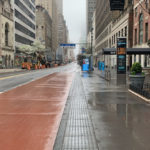
The New York Times recently did a study on confirmed coronavirus cases across the city and found that COVID-19 cases are hitting lower-income neighborhoods the hardest. Some people have taken it to mean that we need to make more concerted efforts to keep these neighborhoods at home. (In some cases, by martial force.) Others have taken it as a sign of indifference as if the denizens of these specific neighborhoods had an opportunity to voice their opinions on this matter. Others still have taken to yelling at pictures of crowded subways and grocery stores as evidence that these neighborhoods simply can’t be bothered with the death toll that’s sure to disproportionately affect their own neighborhoods.
This isn’t all that different from the pre-COVID era, either. Our country should have created policies – and can still create policies – that protect our citizens most directly affected by environmental racism. Those who live closest to pollutants and congestion, those who live in or near asbestos-ridden buildings, those more likely to work the jobs that offend middle-to-upper class sensibilities need help now more than ever. These “essential jobs” are often occupied by the very people who our government has deemed dispensable in their squalor. Should these people not go to work, their bosses and their government will dispose of their ability to survive.
Oh, and the politicians who pundits currently praise created this problem by pretending like these disparities were just normal apparatuses of our dysfunctional economy. Overcrowded subways and substandard working conditions were perhaps normal, but neither just nor humane.
This only complicates my job as an educator who has lived and still lives in these lower-income neighborhoods. Parents who entrust me with their children’s education often work jobs dawn to dusk, dusk to dawn, and every schedule in between. They work jobs where they’re thankful for the midnight train. They may not always be able to keep up with the video conferencing sessions because they’re sleeping while we’re awake, awake while we’re asleep.
These essential workers still believe their child’s education essential too.
This element has made my job most stressful of all. The vast majority of us built what I’ve dubbed “disaster distance learning” from scraps. Calling it “remote learning,” “distance learning,” or “online learning” assumes a level of normalcy that doesn’t address the reason why we had to upend our educational processes in a week and a day. Educators, including me, can’t simply jeer at other adults who’ve started disaster homeschooling their children when so many parents – particularly parents of color – rely on and trust schools to provide their children with a great education. Our governor took away a week of respite from us in the service of flattening the curve. Our mayor then took another two days from us in the service of this. We’ve created a template for the dreams of technocrats who’ve flooded our e-mails with pitches for their tools.
Also, we couldn’t do disaster distance learning without the relationships we’ve established with our students and school communities. It’s not just a function of the “teacher,” but the dynamic that existed prior to this flip.
We taught ourselves how to use online tools and curricula, then taught ourselves how to teach others to use them. Preparing plans over a week mid-year isn’t just building a plane while flying it. It’s also changing the course of the plane and the materials with the plane still mid-flight. We went into school buildings for three days while there was still evidence that many of our colleagues contracted the virus. We made ourselves available all hours of the day, longer than the contractual obligations. We learned multiple online platforms at a time and developed professional development for one another on the spot. Once on these platforms, we’ve seen endless notifications and e-mails at all times of night, giving us a glimpse into our students’ lives without the compulsory structures of school.
During normal school operations, we went home still thinking about school. Now that we’re home doing disaster distance learning, being at school is just a matter of whether we have our devices on or not.
There’s a strong temptation on behalf of educators, especially those of us who know the urgency of a great education for our most under-resourced children, to replicate the operations of schooling without the building. We’re still giving a warm-up activity in the morning, still creating assignments as we would in class, try to make a mini-lesson either through videos or live sessions that we attend. There’s even a handful of us handing out strict rules of online engagement to emphasize a form of discipline and rigor through the Internet.
We already lost face-to-face contact with our students. Google Classrooms and YouTube videos often feel like teaching into a void when we don’t see immediate responses to our works. Until at least one student responds. Then we’re fine again. Kinda. It’s not the same. No, not at all.
That’s why it’s incumbent on educational leaders, politicians, and pundits alike to actively listen to the concerns most affected by the coronavirus. Make space for the listening. Everything has changed. Simple elements of our job have taken on a different meaning. I used to pride myself on teaming up with colleagues at school to call homes to give updates on our students’ educational progress. Now, we have added other considerations to keep in mind. We have children whose close relatives now have the virus and haven’t cleared quarantine. We have children who have to work double shifts or lose their apartments. We have children without shelter and would prefer their friends to not really explore the shame they’ve been placed under.
We have children who truly want to do their work, but, for a myriad of reasons, can’t. COVID-19 exacerbated this. Our responses to this pandemic exacerbated this. Environmental racism and capitalism exacerbated this.
There’s another curve we all need to explore as well, and that’s the disinterest curve. At some point, without the compulsory nature of going to school, can these bonds we’ve forged from September to March hold until June or will the interest wane as the weather gets warmer? Can students and their parents spend hours on hours of their day in front of screens waiting for the adult on the other side of that screen in the service of learning? Many elementary and middle school teachers, students, and parents used the standardized test as an anchor for why schooling mattered. Without a test, will “because I told you so” suffice? Who will some educators blame when the assignments become less interesting, more tedious, or just not aligned to the current energy?
A longitudinal study would need to be done in collaboration with epidemiologists and educational researchers on this effect, but I can understand if the results prove unsustainable over long periods of time. I do know we’re learning lots of different ways that our institutions have failed us. We’re one to two degrees of separation from someone who’ve contracted the virus, and, in short order, we’ll all be one to two degrees from someone who’s passed away from the virus.
Without a sense of urgency, we may let these lessons go to waste. Again.
The post On Disaster Distance Learning in New York City appeared first on The Jose Vilson.
March 25, 2020
Physical Distance, Social Collective Mourning [A Plague On All Our Houses]
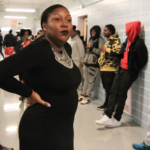
There must have been a cumulative gasp from every educator in the city when we found out Dez-Ann Romain passed away. If we don’t know her personally, we know an educator like her. Young, energetic, helpful, a team player. Once we clear this curve, may we remember the moments when we sacrificed the helpers we sought out. Those of us who showed up for the three-day ad-hoc professional development training last week all knew we would put ourselves at risk for the same energy that carried us through any number of disasters. For many of us, if “essential workers” like nurses, doctors, grocery store workers, bus drivers, conductors, police officers, firepeople, and other municipal workers had to show up, educators would count ourselves in the number.
Little did we know that we’d be one to two degrees away from knowing someone who’s been affected by COVID, if not ourselves.
For NYC teachers, disaster is another one of those unwritten stipulations in our contracts. We have big budget movies dedicated to this moment except we don’t have stunt doubles coming to save us. I learned of biblical plagues all through my Catholic education. No locusts have shown up thus far, but apathetic politicians substitute quite nicely. What’s more, we’re so faithful to the work that we reconfigure our entire set of pedagogies mid-year, call parents, and deliver electronic devices to our students just so they feel like their school cares about them.
Then, we stay home because, while we can’t move mountains, we can try to flatten statistical curves.
We’re so far away from each other physically, we can’t mourn together. We can reflect together over video screens with different levels of lighting, but no other form of energy transfer. We try to hold our human selves together because we have younger humans reliant on some stability. As our work goes from rigid hours to around-the-clock notifications, we hope our physical isolation doesn’t dissolve our sense of community, the lifeblood of an educator’s work. Ed-tech companies proselyting disruption for more than a decade find themselves on the losing side of a moral war.
Disruption isn’t the most appropriate weapon to wield in moments where we could use reassurance.
Also, rest in peace to Andrew Decker. While he didn’t pass away from COVID, we recognize that these are the moments where video conferences aren’t enough. Another set of students loses their teacher in an era of widespread death. While we practice gratitude daily, the days have started rubbing up against each other. The press conferences bleed into one another. We’re experiencing a season of new plant life and human catastrophe all the same.
I remain hopeful because that’s the only positionality that’s ever saved educators from the doldrums of depression and dejection at a political system that never seems to love our students with fierce urgency. I know on some level that my students miss school partly because they miss me. The feeling is mutual. I’ve hoped that we could replicate my in-person performances with video and comment emoji, but that’s not enough. On the Internet, I can socially relate to them. Keeping them and my peers at yards-worth lengths keep more people alive and, thus, more social.
So now we’re sitting at home, reading from afar about colleagues, friends, family members who’ve passed on. There’s a plague upon our houses, and maybe we’ll disinfect our hands when we gotta pick each other’s heads up next time we see each other.
Maybe.
The post Physical Distance, Social Collective Mourning [A Plague On All Our Houses] appeared first on The Jose Vilson.
March 17, 2020
Before This Virus (On NYC Schools and COVID-19)

It had to come to this.
In November of 2016, people kept saying that we’ll make it through this administration, as we had in the past. A critical analysis of history reveals that, to the contrary, some won’t. Indeed, some haven’t. Even with a Democratic mayor in a Democratic city and a Democratic governor as our head of state, a subset of people knew that the corrupt incompetence of the racist, sexist pseudo-billionaire from this city would reap what America has sown since its inception. America’s institutional diseases have prevailed even after mass labor transferred – ostensibly – from Black bodies to complex machines.
This country had a civil war over one of those diseases and – rather than quarantine it – decided to let the disease take new forms and spread from ocean to ocean.
As a Black Latinx teacher, I inherited the legacy of teachers who witnessed educational inequities firsthand and fought tooth and nail to overturn unjust policies and practices upon our children. For decades, the American public has known that teachers are underpaid for the preparation they do and the practice they take on. But there’s also an unwritten contract that teachers implicitly undertake when we assign ourselves to the teaching profession, whether it’s in public schools, charter schools, private schools, schools in alternative settings like prisons and shelters, and even homeschooling. Some of us are explicitly aware of this social contract in moments where the contract we signed and the contract we can’t see come into conflict.
For example, nowhere in our contract does it say we must love our children, or even build relationships with them. Nowhere in our contract does it say we have to spend above whatever monies get allotted to us. Nowhere does it say we have to get to school an hour early, an hour late, a week earlier than school starts, or come during breaks. Nowhere does it say that we have to orient ourselves as people who serve and collaborate with our students, parents, and communities to ensure learning. Nowhere does it say we have to put ourselves in clear and imminent danger. Yet, there we are doing just that because we believe our students need that extra bit. We may not like being told to do those things, but we’ll do it without prompt because we know we need to extend ourselves to do our jobs well.
These elements get complicated when we’re in the face of national emergencies. There exists a real vacuum in leadership in this country that we can’t just cap with a flag and a seal. Our more rational selves give way to human and individual responses. If we don’t see immediate action from people designated to be our leaders, we do what’s natural and protect ourselves from the rest of the world. We step away from our stated values. We rest on our more fragile instincts.
We move further from a communal spirit. Every verifiable source on this virus tells us we need to think communally.
Calls to shut down schools came fast and furious, too. Some media pundits chomped at the bit to harangue Mayor Bill de Blasio and Chancellor Richard Carranza for their lack of preparation in this situation. Many rank-and-file teachers across the school system threatened to orchestrate a sick-out while our teachers’ union had urged both the mayor and the chancellor to close schools in the foreground and the background. Throughout the week, large school systems across the country shuttered their schools and creatively set up meal centers and childcare centers in quick succession. Or so it seemed.
In the midst of the maelstrom, few, if any, had paid attention to the unwritten contract we signed, especially those of us who work with children in intentionally impoverished conditions.
In my time as a teacher, I knew deeply the importance of my position as an educator. I slept over a cousin’s house uptown when the MTA had an extended transit strike against the city. I strapped my Timberlands up during snowstorms that should have been snow days. I’ve been to former students’ funerals and former colleagues’ funerals. During Hurricane Sandy, I called parents’ houses to see if they were doing well. For months after Sandy Hook and Parkland, I felt the trauma of knowing I’d have to put myself in front of a gun to protect my students.
I am no hero. I agree that we shouldn’t have to risk our lives to do the job we do. But a larger part of me recognizes what I got myself into when I was hired as a teacher. Gravity should pull us right here.
So now NYC schools are closed until April 20th at minimum, a Pyrrhic victory in the eyes of many. Now, the vast majority of us have to plan for “remote learning” using any number of online learning tools that we may not be familiar with. Now, educators scramble to come up with a plan we didn’t give ourselves sufficient time to understand. Now, Mayor de Blasio and Governor Andrew Cuomo have said the quiet parts out loud: our education system is also one of the most extensive childcare systems in the nation as well. Our extensive childcare system makes every other job, especially our other first responders, feasible. This public reframing of NYC public schools as a set of pillars inextricable to the vitality to the city also means that our most vulnerable and institutionally forgotten in our city feel disregarded once again when we abruptly close the schools.
I agree with closing schools wholeheartedly. I have a wife and son at home who need me to come back home daily and in good health. Our house provides for our parents, too. I also think a school system with about 350 thousand more students than the second-most populous school system presents its own set of challenges. When our parents of color think we haven’t named and addressed the challenges our actions present to the whole community sufficiently, we negatively complicate our advocacy, too.
I now have more questions than answers. How will our students living in shelters get their needs met? How will our students with (dis)abilities get their services? What happens to our homeless students, our students who don’t have Internet at home, our students who didn’t update those contact forms when we asked them? Which companies do we trust with protecting our students’ data? Which adults know how to use these platforms, present these platforms, and support other adults in using them? How do we get beyond e-worksheets and e-busy work? How do we engage students in ways that allow us even a semblance of the energy we create in our classes?
Also, will capitalism and its pernicious bosses strip low-wage workers from jobs when they have to take care of their children?
I don’t have the answers. I haven’t had the time, either. I’m walking into a school building again tomorrow with the same optimism that so many of our ancestors had when they walked into perilous situations. I’ll offer hope the way they did when confronted by their peers and their detractors alike. I’ll practice social distancing because I’m generally an introvert and do my due diligence because my peers rely on me.
People often mistake my optimism for naiveté, failing to recognize I’m always angry. I don’t want to be a martyr, but I don’t write the laws that put students and teachers in the positions we’re in, at least not yet. I just need to know that we’re going to work hard together to bring some sense of calm to this electric city.
Wash your hands. Don’t touch your face. Use disinfectant where you can. Remain three to six feet away from people you don’t have in your immediate family. Yet, keep everyone in our city in mind as we move. That’s how we get rid of this virus.
Once we make it over this one, we should get to work on cleaning up the others.
The post Before This Virus (On NYC Schools and COVID-19) appeared first on The Jose Vilson.