Katherine Pathak's Blog, page 17
June 23, 2014
Five top tips for getting the correct kindle format:
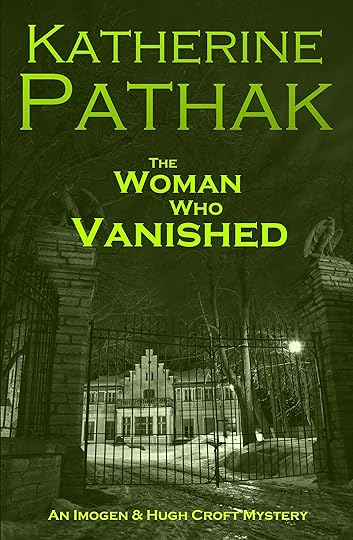
I have recently published my fourth novel. This involves getting the formatting right for both the paperback version and the Kindle e-book. I would say that only this time around have I finally worked out the best way to do it. So, here are my top five tips:
1. Use a template.
Even before you start writing your novel, make sure you are typing into the correct template. Kindle Direct Publishing provide templates on their site and there are other extremely helpful souls out there on the World Wide Web who have made their templates available for others to use. Choose the one which suits you best. Then, you will not lose the structure you’ve created when you convert it for uploading i.e. chapter headings, different fonts/ font sizes/italics. I have always used microsoft word for this process and these documents convert well into kindle format.
2. You may need to create a ‘paper’ book version of your manuscript and an e-book version.
This will only need to be done after you have finished! Kindle tends to like formatting to be as simple as possible so if you have used drop caps for the start of paragraphs or any other fancy design techniques, it might be best to keep these for your paper book but simplify them for kindle. Save them as two separate docs and name them distinctly differently.
3. For your kindle version, keep indents at the beginning of paragraphs narrow. If you are working in word, use the ruler function to keep left indent small, this will avoid them spreading out and getting out of sync when the document is converted. It has taken me until now to work this out!! V. important tip!!
4. It is essential to insert/page break at each new chapter. If you don’t, then your text will all blend together and you will not get a new page for each new chapter and your book appears much more professional with them.
5. Make sure you use the digital preview function. It will show you how the final book will look on Kindle. turn every page until you reach the end of the book. Don’t be afraid to go back to your document and make all the changes that are necessary to get it right. Now I have learnt how to do it properly, I have gone back to all my previous titles and polished up their formats. Publishers should take heed and do the same. Kindle’s service of re-upoading your interior is fast and efficient and ensures a top quality final product.
No one gets it absolutely correct first time around, but practise makes perfect! Good Luck!


June 9, 2014
Editing: why it’s just not possible to do it all yourself
When deciding to publish your own work independently, you are making a statement.
The whole idea is that the finished product will be entirely your own work, without interference from publishing companies or literary agents who may be pushing their own agendas when commenting on your book.
I have just released my fourth novel and with each one I am learning more and more about the publishing process, from editing and proof-reading, to cover design and publicity. It has been a fascinating process and I wouldn’t have done it any other way than independently.
However, despite all the fabulous new skills that you will pick up along the way, it simply isn’t possible to do it all by yourself.
Why? Because no matter how many times you read and re-read your own work, there will be typos and errors that you will miss. I am not suggesting that you always need to employ a professional editor, but you certainly need at least one other set of competent eyes checking over your finished text.
I spend at least a couple of weeks on the editing process. My ‘manuscript’ will come back from my parents who each do an independent read through and provide me with their edits and feedback. I will then make their corrections. After that, I will spend at least another week or so performing several read throughs of the entire novel. Each time I will be looking for something different; for example, the repetition of a word too many times in a chapter or simply good old fashioned typos.
What I have discovered, is that there is no substitute for a fresh set of eyes. By this stage in the process, you will have read through the novel so many times that your brain has learnt to skip past the mistakes – it really requires somebody else to notice these in the final checks.
Then, even when you believe the novel has been as thoroughly edited as you think is humanly possible, sit back and wait.
It is amazing what will suddenly strike you in the days that follow. With my latest book, I suddenly realised that I had described an entire action scene involving two cars on a winding clifftop road in Italy, as if they were driving on the left hand side. I had to go back to my final draft and make the approriate changes. But I could so easily have let that mistake go to print if I had not taken the time to reflect on my work.
For my next book, I am seriously considering bringing in an outside editor. Someone I know well does it for a living and I am very tempted to employ their services. If the editor is a person you have a connection with, it helps you to keep control of the project and ensure that your story is told in the way you intended it to be.
But take my advice, editing is certainly an area where you should be wary of going solo. Bring in some outside help and your novel will definitely be the better for it.


May 21, 2014
Do we dare to disappoint?
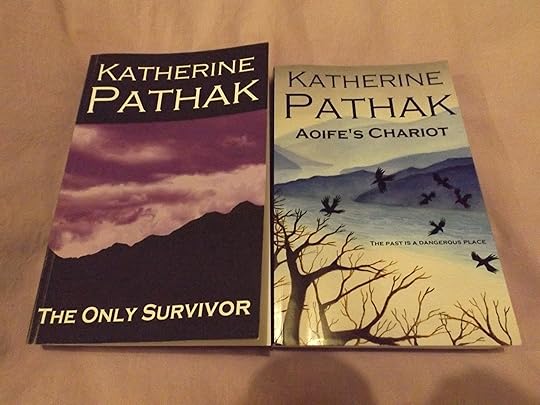
I’ve just finished writing my fourth novel. It is currently in the editing phase and we are about to begin designing the dust jacket. It’s a satisfying and exciting time for a writer. To see the final product take shape and to hear people’s feedback is daunting, but at the same time exhilarating.
My books are part of a series. The same characters appear in all of the stories, although each novel will introduce a few more. I enjoy developing the personalities of my key protagonists and showing how their relationships have changed over time. However, as I was finishing this latest instalment, I decided that for my next project it might be the right moment to depart from the pattern. I felt that a stand alone novel would be challenging for me as a writer and provide an interesting diversion, so I set about plotting this new book and even started penning some of the charater profiles.
When I mentioned my plans to members of my immediate family, they looked firstly shocked and then alarmed. They proclaimed that my readers were really enjoying the series so far and would be truly disappointed to discover that my next book wouldn’t have the same characters.
I thought very carefully about this. Some of my favourite writers have written books which run as a series; Agatha Christie, of course, Ruth Rendell and P.D James to name but a few. Each one of those authors has written stand alone novels and introduced new lead characters. But to achieve this switch, they must have had to shoulder the short-term disappointment of their readership. We do our very best, when we are creating a compelling narrative, to ensure that the reader cares about our protagonists. They need to feel empathy for them and yearn to know what happens next in their lives, otherwise the whole process wouldn’t work.
So do we dare to break that pattern? In a market so driven by sales, it is a scary prospect to think we might alienate those very people who have supported us over the years. Yet without taking risks with our writing and endeavouring to break out of the mould every so often, our creativity would surely stagnate and die.
It isn’t an easy question to answer and I am still pondering it. Ultimately, I shall end up doing both; the series will carry on but other books will be written in parallel to them. I can see now, why many authors decided to adopt another pen-name (Ruth Rendell writing as Barbara Vine, for example). it gives them a chance to diversify without offending their loyal fans. It is certainly another option to consider.
My advice would be to think carefully when you decide upon the direction of your books. Whether you plan writing a sequel, trilogy or an entire series, what you do now, will undoubtedly guide the direction of your novels for many years to come.


May 5, 2014
Short story v. novel, which is best?
If I were to describe myself professionally, it would be as a novelist. I write books. When I began writing seriously, I didn’t start with the shorts. I plunged straight in with a standard, 90,000 + word mystery novel.
I took this path, largely because it is full length books that I enjoy reading most. I certainly have worked my way through many anthologies of short stories and prose in my time, but I have always found something lacking in them. I think it might be that the constraints placed on the author by a limited word count mean it is difficult to fully develop the characters, or to subtly and gradually draw you into the story.
So, when I decided to write a short story to accompany my series of mystery novels, I was faced with something of a challenge. I wanted the piece to be a self-contained story, with all of the usual components of a full-blown book. It needed to introduce new characters whilst maintaining the dynamic between the usual protagonists. The puzzle itself had to be just as well-plotted and full of red-herrings as it would be over 300 pages. As I began the task, to be honest, I didn’t believe it was possible.
In fact, I really enjoyed the process. I found it quite liberating. I was able to quickly come up with a tight plot which I thought would successfully pan out over 50 pages. I didn’t need to consider whether the storyline was strong enough to support a whole novel, I could simply revel in the writing. The bit I liked best of all, was experiencing that wonderful sense of satisfaction you get with the ‘big reveal’ at the end of the book, far sooner than I would usually have done. I could really get used to that – its a form of near instant gratification.
Suddenly, I understood the appeal. In only an hour, the reader receives the edification provided by a neatly solved mystery. They get an insight into the characters they already recognise and identify with. The author might also drop in a little tit-bit of information that they aren’t planning on putting into the books. It’s simply a pleasant little treat, without too much effort required on anybody’s side.
So now I am re-thinking my long-held bias towards full-length books. It’s always going to be my preferred genre, but I’m keeping an open mind. Like the short stories and novellas of Sir Arthur Conan Doyle ( which I loved as a child), there is certainly a place for shorter fiction and I will definitely be exploring the format again in the near future.


March 13, 2014
A tale of two locations…
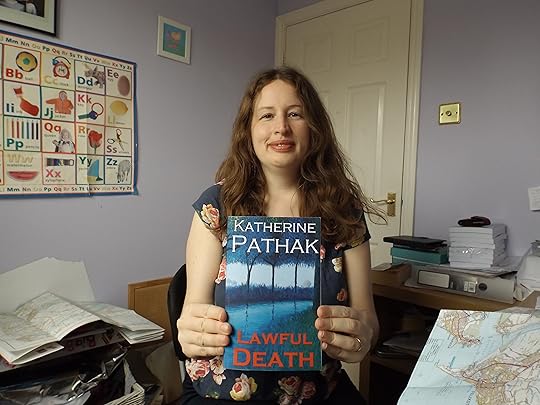
Having just published my third novel in the same mystery series, it has dawned on me that my books unintentionally reflect an interesting side of my character.
My first two books were set on the fictional Isle of Garansay and, like Anne Cleves’ series set on the Shetland Islands, place this beautiful location at the very heart of their storylines. Yet, what really unites my novels are the main characters; the husband and wife amateur sleuths, Imogen and Hugh Croft. Although Imogen hails from Garansay, the couple actually live in rural east Essex – not far from where I live now with my husband and children and a few miles from where I grew up. My third book is set almost entirely in this part of the world, which is equally as atmospheric, but in many ways quite different from the rugged Scottish Island of the earlier instalments.
Confusing? It shouldn’t be. Apart from my student days in York, I have lived all but six months of my life in the south east of England. I was born, however, in Inverness, in the Scottish Highlands and my parents are both Scots. In fact, my dad grew up on the stunning Isle of Arran – upon which Garansay is based.
We spent every family holiday on Arran as children and still go there most summers now. It is a wonderful island and in many ways it feels like home to me. But so does Essex. Without fully realising it, through my writing, I have created a set of characters who reflect my strange tendency to feel I belong in two very distinct places at once. Don’t get me wrong, Essex is my home and if anyone where to ask me, that is what I would tell them. But a chunk of me is always restless for those hills and lochs of the Western Isles. This is probably why I have decided to devote so much of my time to writing about them. It’s an environment where I feel comfortable and safe and perhaps a little nostalgic too. Isn’t that what writing is all about? To take our readers on a very special journey, to a place we think they will love just as much as we do?
As a result of this narrative split, I have created something that I had not consciously set out to do – I have a series of books with two very distinct locations, united by a single family. My novels will return to Garansay in the future without a doubt, but they will also have a firm base in Essex and the south east coast that I also know so well. And does this sense of duality work? I really believe the answer is yes. These days, very few of us would call only one area their true home. The world has become a much smaller place in recent decades and as writers we should make sure that we reflect that fact in the stories we create.


January 29, 2014
Should we worry when life starts to imitate art?
I am rapidly reaching the point where the plot of my third novel is lurching into its final phase.
This is the stage at which all the separate strands the writer has been weaving into the storyline, must be brought to their natural conclusion. My latest book begins with an unusual and uniquely earth-shattering event for the protagonists.
So, imagine my surprise when listening to the radio news on Saturday morning and hearing of an unnervingly similar misfortune befalling one of the interviewees. At first, I felt relieved. The event was by no means identical to the one described in my book and I felt immediately happy that it proved my plotline wasn’t overly far-fetched!
Then, later in the day, I began to feel a tad unsettled. All writers draw their inspiration from real life, it would odd if they didn’t. But we like to think that we add a little something special to the usual, run-of-the-mill breakfast news item.
When these off-the-wall events start to occur regularly out in the real world, we begin to worry that something more sinister might be at play – that by writing about it, we have introduced the idea into the universe and this has somehow made it enter into the realms of the possible.
This is superstitious nonsense, of course. Whatever weird and wonderful happenings us writers can come up with in our fevered brains, you can bet your life it has already occurred with bells on at some point in the history of the human race. There is no such thing as a truly original idea.
But it still made me shift about in my swivel chair a little uncomfortably on the following Monday morning, as I wrote a passage about my lead character discovering to her great horror that her daughter had been run over. I almost had to stop myself from writing it.
‘Don’t do it, you’re tempting fate,’ An inner voice was crying out at me.
I’m a rational person. An atheist and a pragmatist. Yet, I can still be lured into thinking that, just occasionally, life can imitate art. I know in my heart of hearts that tragic things happen all the time out there in the world and they don’t have anything to do with me. But those tiny coincidences in life do make you stop and question yourself every so often, and they can even make you believe, for a brief moment, that your power as a writer is far greater than it really is.


January 19, 2014
Do we need to like the lead character to enjoy the book?
A review that I recently received for my first novel has got me thinking.
How important is the reader’s engagement with the key characters of a novel to their overall appreciation of the story? I suspect that the answer to this question is essentially a very personal one. Some of us place great emphasis upon plot, whilst others absorb ourselves and revel in the writing style of our favourite authors. For others, their enjoyment is based almost solely upon the exploits of the main protagonists.
Of course, for the majority of intelligent readers, it is a combination of these factors that we are looking for in a good book. However, it is difficult to feel fully engaged with a narrative, however gripping, if we dislike the hero or heroine.
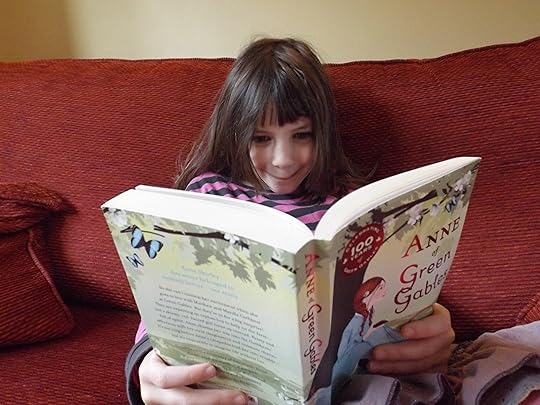
My favourite literary characters are a fairly disparate bunch; from Nancy Drew and Anne of Green Gables to John Rebus and Kay Scarpetta. As readers, we are happy to ignore flaws and mistakes, as these are all elements of everyday existance and make our heroes more believable. But for me, personally, I like them to get it right in the end; whatever slip-ups have occurred along the way. What I find frustrating, is when a character never develops at all- especially throughout a series. To read about them falling into the same old traps and experiencing the same old relationship difficulties novel after novel can become grating.
But we must remember that whether or not we connect with a character is as personal a decision as whether we like the people we meet in everyday life. Currently, my husband and I are enjoying the second series of scandi drama, The Bridge. We really like the leads, Saga and Martin and their wonderfully ambiguous and unconventional relationship. It has become a cliche to create a hero with emotional and behavioural ‘issues’, but when it is well written and acted, I am prepared to overlook it.
Essentially, we have to feel some kind of empathy with the protagonist; we need to worry when they are in peril and quietly rejoice when things go well. For me, I find my characters are almost like friends. When I sit down to write, I am keen to find out what will happen to them next. Often, as the plot develops, it gradually becomes clear what impact the events will have upon the characters. I don’t always know what this will be when I start out, so it is as much of a surprise to me as it is to the reader. I believe that in essence, this why I enjoy writing.
There are times, however, when a character is so irritating to us that we simply cannot carry on reading. I can think of several cases where I have found this and, very occassionally, I have seemed to be the only one who felt this way. But it’s personal- and I suspect that we do need to feel that empathy and that abstract connection in order to really enjoy the piece. I don’t think you can create a believable story without it.


January 17, 2014
MY TOP 5 FEMALE DETECTIVES IN FICTION
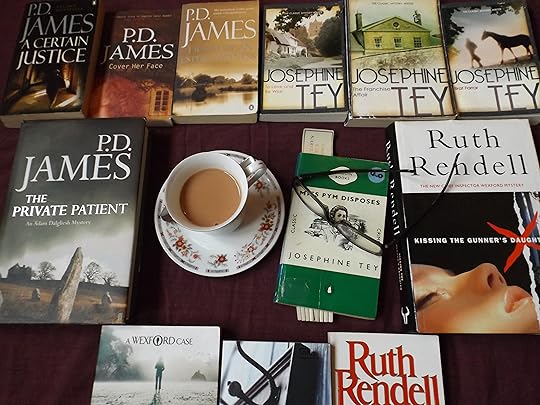
When trying to decide upon my favourite of all fictional detectives I was struck by the realisation that, after the most obvious candidates, there are actually fewer female ‘lead’ detectives in mystery fiction than I had at first imagined. Of course, we all think of Agatha Christie’s Miss Marple and perhaps Josephine Tey’s Miss Pym- who are both classic creations that withstand the test of time. However, my other favourite women sleuths tend to have originated on the small screen; such as Sarah Lund and Jane Tennison- although they remain masterfully penned personalities nonetheless. I also then considered some of my favourite detective writers and their characters. For example, P.D James and Ruth Rendell, who have both certainly created strong female sleuths in their many books are yet best known for their male leads- Adam Dalgleish and Chief Inspector Wexford. I must admit myself that I prefer the Dalgleish novels to those that feature Cordelia Gray, for instance. So this article was more of a challenge to write than I had at first thought, particularly when one considers that the traits we would traditionally apply to female characters seem to fit very well with the role of investigator. For example, we expect our fictional women to be intuitive and interested in people and what makes them tick. Yet male detectives still dominate the genre and even the great female mystery solvers- as you will note in my list below- operate as a ‘side-kick’ to a man. I have tried in my novels to make my female lead (Imogen Croft) the chief character in the book, although her husband does work alongside her and they solve cases as a team. But perhaps I have been influenced by my favourite lady detectives a little too much and have not been bold enough to allow Imogen to sleuth on her own- without a male counterpart. However, I do like the interplay between a husband and wife team of investigators and I enjoy the relationship that this creates (see numbers 3 and 5 of my list). In the end, your all time favourite lady detective is a very personal decision, but here is my top five- feel free to heartily disagree!
1. Jane Marple. (created by Dame Agatha Christie)
An amateur sleuth who needs little introduction. A completely unassuming old lady who possesses razer sharp intelligence. These mysteries are set predominantly in post-war Britain and Marple draws on her experience of the microcosm of human behaviour that she observes in the village of St Mary Mead to solve murder cases that have the police baffled. A creation of pure genius.
2. Nancy Drew. (first created in 1930 by Edward Stratermayer but more recently recognisable in the novels of Carolyn Keene)
The first ‘girl detective’, these novels and stories are a personal favourite of mine. Nancy is feisty and intelligent and has a wonderful group of girlfriends who all have something different to add to the investigation. I read these books from a very young age and spent a great deal of time searching for the next title in the series at my local library. Pure gold.
3. Harriet Vane. (Dorothy L. Sayers)
Harriet Vane appears in the Lord Peter Wimsey novels and in later books she becomes his wife. Although she is not the lead character in Sayers’ mystery stories she plays a pivotal role in the investigations. It takes an extremely strong and intelligent woman to ensnare the highly intellectual, confirmed bachelor Lord Peter and only Vane could do it.
4. Kay Scarpetta (Patricia Cornwell).
Dr Scarpetta is a Chief Medical Examiner who also solves crimes. She is an Italian American who makes great pasta as well as being a tough career woman and unmistakably the main character in this superlative series of books. Kay’s character changes and evolves over time but she never plays second fiddle to a man- something that perhaps American writers achieve better than us British do?
5. Tuppence Beresford (Agatha Christie)
Another Christie character, Tuppence solves mysteries alongside her husband, Tommy. This husband and wife team are very much equals and are touchingly supportive of eachother. This equality is interesting when you consider that these novels first appeared in the 1920s. I had to add Tuppence to my list as these novels were an inspiration for my fictional husband and wife sleuthers- Imogen and Hugh Croft.
That is my list- obviously there are plenty of great women sleuths that I have not mentioned here- so feel free to add some of your own.


Run along and play, darling. Mummy’s finishing her book.
Finishing a novel is a wonderful feeling. It is the final accomplishment of a creative urge that has driven you along for several months, or even years.
But after the initial sense of elation that flows through your entire being at the blissful realisation the thing is finally done and dusted, some uncomfortable thoughts begin to edge their way into your consciousness. Did the kids do their homework this week? Or the week before, for that matter? When was I last in touch with my wonderful and witty girlfriend who I like to meet at least once a fortnight for a coffee and a catch-up?
Or, worse than this. You may find yourself trying to recall your last walk in the park. Or suddenly observing the untidiness and grubbiness of your surroundings and wondering why the scene you are currently surveying seems so oddly unfamiliar to you.
I am beginning to believe that writing is a kind of compulsion. For me anyway. I complete my books relatively quickly but they are not particularly short and they take up huge numbers of man-hours in their careful construction. But once I have started I find I really really need to finish. It isn’t as if I haven’t got anything else to do, oh no.
I have two young children and up until a couple of months ago a teaching career too. But that is just the way I write. The story feels as if it is forcing its way out of my brain and the characters are like petulant actors continually nagging me until they are given yet another scene to play out. I’m even starting to wonder if this whole book writing business is actually any good for me at all.
But then time will pass and I will lay my eyes upon that beautiful glossy paperback and marvel at people’s admiration and (hopefully) their praise. And, like a new mother with that gorgeous little bundle placed into their waiting arms, I will immediately decide that of course another must follow. The pain was all worth it in the end.
Perhaps next time I could give myself a little longer, though. I’m already telling myself the next one doesn’t have to come out for at least six months. But how I will feel when I actually get started is quite another matter and the compulsion might inevitably kick in.
There have been a number of great writers who could turn out books in super quick time. Agatha Christie and Josephine Tey, for example. For others it is a monumental task requiring immense preparation and years of writing and re-writing before the novel finally sees the light of day. The latter, I am starting to think, may be a healthier approach.
I left my career and took up book writing full-time; firstly because it was what I always dreamed of doing and secondly so that I would have greater flexibility to combine work and home-life. On the whole, the second objective I have achieved. However, once every few months my little darlings are going to have to accept that Mummy is not quite as switched on to the daily routine as she might normally be, and hey, after a while they’ll probably just get used to it, won’t they? Because my little ones also love to lay their hands on the pristine final product and to see their names set out in print within the first few pages. So, for as long as we all think it’s worthwhile, long may the compulsion continue.


January 8, 2014
Does it really matter how the story ends?
I watched a wonderful drama on telly this week. The 7.39 by David Nichols. Although I very nearly didn’t. Why? Because I had read a review over the weekend, which said the ending was totally predictable and unimaginative. Luckily, I ignored it. Largely because I know how good a writer Nichols is and the actors in it were pretty impressive too.
As I watched the second half I began to suspect that the critic hadn’t actually seen the programme at all. To me, the story followed quite an unexpected path and I found the themes that were explored really quite original and thought provoking. The idea that when the protagonist’s wife found out about his affair and threatened to destroy his family life, he actually began to finally appreciate what he had and fundamentally changed the way he interacted with them, was an interesting one.
In fact, I thought all of the characters acted in ways that I hadn’t completely expected and the dialogue was excellent. Particularly when the mistress says, ‘I don’t think I’m a bad person.’ And the wife replies, ‘Well, bad people never do.’
There was a moral ambiguity to the tale which meant you could find some sympathy with all the characters involved. There wasn’t a two dimentional ‘baddie’ in the piece. Perhaps it was a little sentimental at times, but it was also honest and written in good humour. Nichols is also a great writer of comedy. This made me think, rightly as it turned out, that he was setting out to entertain and stimulate me as a viewer and not to upset and depress me.
I don’t think it would have mattered too much how the story had concluded. It was the journey that the characters took which was the driving force of the narrative (quite literally, as most of the affair took place on the train) We shouldn’t get overly hung up about a ‘shock’ or ‘unexpected’ ending, as all too often it comes at the expence of a well-rounded, believable and compelling story.