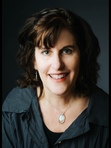
Elizabeth Graver's Blog - Posts Tagged "the-end-of-the-point"
Dear Reader,
My new novel, The End of the Point, begins in 1942 and ends in 1999 and is set almost entirely in a summer community on a two-mile long spit of land on Massachusetts’ Buzzards Bay. Inhabiting this story was, for me, an intricate and steady pleasure. Some of the time, I became the Scottish nanny character, Bea. Other days, I was a troubled young man, Charlie, born into privilege, trying to find himself during the Vietnam War, or his mother, Helen, a restless, fiery intellectual who loses her brother in World War II and later pins her highest hopes on Charlie, her eldest son.
Through all the time travel and imagining, my mind kept returning, again and again, to the paths, rocks and wind-scoured ledges of the little peninsula—the “almost island” of Ashaunt Point. Ashaunt takes its inspiration from a real place where my husband’s family has spent summers for generations; my relationship to both the real place and my invented one began as that of an outsider. Over time, as my writing brought me closer, I began to experience Ashaunt Point as the fourth central character in my book.
If place is central to The End of the Point, so, too, is the power of the written word. The people in this novel read. They read Wallace Stevens and W.H. Auden, nature guides, A Farewell to Arms, A Secret Garden, Anna Karenina, the Johnny Chuck books. They read romance novels, newspapers, real estate ads, and⎯oops!⎯each other’s diaries. And they write. Diaries, but also nature journals, letters of complaint, love letters, war letters. Postcards. Protest signs. Elegies. Messages in bottles, bobbling out to who knows where.
Place. The written word.
It is with particularly keen pleasure that I picture this novel making its way to its readers. Thank you for welcoming it.
Warmly,
Elizabeth Graver
Through all the time travel and imagining, my mind kept returning, again and again, to the paths, rocks and wind-scoured ledges of the little peninsula—the “almost island” of Ashaunt Point. Ashaunt takes its inspiration from a real place where my husband’s family has spent summers for generations; my relationship to both the real place and my invented one began as that of an outsider. Over time, as my writing brought me closer, I began to experience Ashaunt Point as the fourth central character in my book.
If place is central to The End of the Point, so, too, is the power of the written word. The people in this novel read. They read Wallace Stevens and W.H. Auden, nature guides, A Farewell to Arms, A Secret Garden, Anna Karenina, the Johnny Chuck books. They read romance novels, newspapers, real estate ads, and⎯oops!⎯each other’s diaries. And they write. Diaries, but also nature journals, letters of complaint, love letters, war letters. Postcards. Protest signs. Elegies. Messages in bottles, bobbling out to who knows where.
Place. The written word.
It is with particularly keen pleasure that I picture this novel making its way to its readers. Thank you for welcoming it.
Warmly,
Elizabeth Graver


Excerpt from THE END OF THE POINT
The Army had paved the road. It was the first thing Bea noticed, coming back with the Porters that summer when most other families stayed away-how the rutted dirt, grassy bumps, heaves and jolts, were gone; instead, a ribbon, gray and smooth. Mrs. Porter complained about it; the two older girls did, too. people will speed now, army trucks. A gash on the land, said Helen dramatically. A wound.
Bea didn’t think so. Bea, sitting in the far back seat with Janie half on her lap and one leg asleep from the long trip, was glad for the change. Where are the soldiers? asked the older girls, craning and peering. Where are the U-boats, the enemy planes? if it wasn’t safe, we wouldn’t have come, their mother said, but her voice was vague; she was trailing her hand out the window, gulping in the sea air. And even Bea, who silently resisted coming every year—and especially this one—inhaled and felt the seaside rush, moist and salty, into her throat.
Other things had changed, too; you could see that right off, although the bigger changes, the ones that might make a life swerve or stay on course, did not show themselves until later on. There was a high wooden spotting tower as you drove onto the point, where civilian volunteers took turns staring through binoculars at the sky. There was an army truck parked by the path down to the boat dock, and farther down--shouting distance from the Porters’—a high wooden gate across the road, with wire fencing on either side. On one side of the gate, a soldier, pink- faced, boy-faced; on the other side, another soldier.
Sit nice, Bea said to Janie, for the girl was awake now, leaning out the car window. Who are they, asked Janie. She was eight; it was 1942. She knew nothing about war yet, though something about suffering. No one you should talk to, Beatrice said.
The End of the Point
Bea didn’t think so. Bea, sitting in the far back seat with Janie half on her lap and one leg asleep from the long trip, was glad for the change. Where are the soldiers? asked the older girls, craning and peering. Where are the U-boats, the enemy planes? if it wasn’t safe, we wouldn’t have come, their mother said, but her voice was vague; she was trailing her hand out the window, gulping in the sea air. And even Bea, who silently resisted coming every year—and especially this one—inhaled and felt the seaside rush, moist and salty, into her throat.
Other things had changed, too; you could see that right off, although the bigger changes, the ones that might make a life swerve or stay on course, did not show themselves until later on. There was a high wooden spotting tower as you drove onto the point, where civilian volunteers took turns staring through binoculars at the sky. There was an army truck parked by the path down to the boat dock, and farther down--shouting distance from the Porters’—a high wooden gate across the road, with wire fencing on either side. On one side of the gate, a soldier, pink- faced, boy-faced; on the other side, another soldier.
Sit nice, Bea said to Janie, for the girl was awake now, leaning out the car window. Who are they, asked Janie. She was eight; it was 1942. She knew nothing about war yet, though something about suffering. No one you should talk to, Beatrice said.
The End of the Point
Amazon's Editors' Picks 10 Best Works of Fiction, March 2013
I'm thrilled that Amazon.com Editors' Picks has chosen The End of the Point as one of the ten best works of fiction for March 2013. On the list, my book sits underneath Elizabeth Strout's new novel, The Burgess Boys, and while I haven't read it, I love her other work and have a sense that our books could be friends (can books make friends with other books? I like to think so, ever the matchmaker) so the proximity is pleasing.The End of the Point
http://www.amazon.com/b/ref=s9_dnav_b...
http://www.amazon.com/b/ref=s9_dnav_b...
On Place in Fiction
n her 1956 essay, “Place in Fiction,” Eudora Welty writes about the underlying bond that connects all of the arts with place: “All [the arts] celebrate its mystery. Where does this mystery lie? Is it in the fact that place has a more lasting identity than we have?”
The setting of my new novel, The End of the Point — a fictional two mile spit of land on Massachusetts’ Buzzards Bay — does indeed have a more lasting identity than its people. I begin the book with a land transfer from the Wampanoag Indians to the Colonists in 1652 and end it in 1999, when a summer community is under some threat from human and natural forces alike. Place in my novel is a kind of central character — the rocks, the paths, the land in nature and outside of it. People in The End of the Point beg, borrow, steal, gift, set ablaze, mythologize, tear down, reject and love their rocky, windswept little jut of land.
I ended my novel in 1999 because the year felt like a way to mark a time before: Before the century turned, of course, and before 9/11, but also before the rapid acceleration that marks our 21st-century and that I view as having a profound impact our sense of place. We live in a staggeringly mobile age, where place is increasingly as much virtual as real. These crossings bring many gifts and possibilities, but they may also carry a danger of rootlessness, of disembodiment, of an “everywhere” that is, paradoxically, neither here nor there.
My novel’s four main sections take place in 1942, the 1950′s and 60′s, 1970, and 1999. People communicate with each other and themselves in the most material ways – with telegrams, letters, diaries, a message in a bottle. No one has a cell phone. When the characters are alone, they are truly alone. When they talk, they, well, talk (understanding each other is another thing, plus ça change).
What, I wonder, would Welty make of where we are now, roaming the internet on our warming planet, where actual, physical place as we know it may well not have a lasting identity, at least if we don’t radically change course? The title The End of the Point carries a double meaning – “end” as in furthest point on a peninsula, “end” as in demise. In my book, I celebrate the “there-ness” of a beloved place, even as the second meaning, the demise, hovers just outside the margin, too close to home.
The setting of my new novel, The End of the Point — a fictional two mile spit of land on Massachusetts’ Buzzards Bay — does indeed have a more lasting identity than its people. I begin the book with a land transfer from the Wampanoag Indians to the Colonists in 1652 and end it in 1999, when a summer community is under some threat from human and natural forces alike. Place in my novel is a kind of central character — the rocks, the paths, the land in nature and outside of it. People in The End of the Point beg, borrow, steal, gift, set ablaze, mythologize, tear down, reject and love their rocky, windswept little jut of land.
I ended my novel in 1999 because the year felt like a way to mark a time before: Before the century turned, of course, and before 9/11, but also before the rapid acceleration that marks our 21st-century and that I view as having a profound impact our sense of place. We live in a staggeringly mobile age, where place is increasingly as much virtual as real. These crossings bring many gifts and possibilities, but they may also carry a danger of rootlessness, of disembodiment, of an “everywhere” that is, paradoxically, neither here nor there.
My novel’s four main sections take place in 1942, the 1950′s and 60′s, 1970, and 1999. People communicate with each other and themselves in the most material ways – with telegrams, letters, diaries, a message in a bottle. No one has a cell phone. When the characters are alone, they are truly alone. When they talk, they, well, talk (understanding each other is another thing, plus ça change).
What, I wonder, would Welty make of where we are now, roaming the internet on our warming planet, where actual, physical place as we know it may well not have a lasting identity, at least if we don’t radically change course? The title The End of the Point carries a double meaning – “end” as in furthest point on a peninsula, “end” as in demise. In my book, I celebrate the “there-ness” of a beloved place, even as the second meaning, the demise, hovers just outside the margin, too close to home.
Nomad Reader Blogs on The End of the Point
Monday, March 11, 2013
book review: The End of the Point by Elizabeth Graver
The basics: Spanning three generations of the Porter family and fifty years of their relationships with their hired help, The End of the Point focuses on the family at four different times in history, beginning in the 1950's. Much of the novel takes place at their summer home in Ashaunt, Massachusetts.
My thoughts: Reading The End of the Point made me realize how much I love present-future narrators. As the story of the Porter family unfolds, the reader gets hints of how things are now, even though the story is told in the moment:
"If things had turned out differently, she would have begun the story here--or no, Smitty would have told it; unlike Bea, he loved an audience, he'd have made it funny, drawn it out."
These moments aren't frequent, but as I encountered each one, it felt as though I was unwrapping a present. We don't have the certainty of the future in our own lives, but literature can provide us with one for these characters. It's a testament to Graver's writing and character building that this technique feels so real. I was utterly absorbed in this family that kept growing in number as the generations increased. Graver infuses so much richness into each of them, it's astonishing the novel is as short as it is. It feels more epic than its number of pages, and it feels like a complete story of the people in their time and place. Ashaunt is a character itself:
"She loves her house with a tenderness that makes it feel almost human."
I pictured it so vividly and delighted in seeing how the bedrooms changed hands over the years and depending on which siblings and cousins were there on a given weekend. In fact, as the narrative moved forward to the next moment in time, the house provides the structure, both literally and figuratively, as the reader takes stock of what has changed since the last moment in time.
As I read the last pages, I wept openly and publicly in the airport terminal. When I turned the last page, I was immensely satisfied, yet sad to say goodbye to these characters who felt like family in the two short days I spent with them. Most of all, I wondered how I had not heard of Elizabeth Graver until this, her fourth novel.
Favorite passage: "Largely, now, it was not anger he felt, but rather a kind of bone-scraping, quiet, ever-present sorrow. To come to the place that was supposed to stay the same, to come and find it changed. Dr. Miller had warned him against what he called the "geographic cure." You can't fix yourself by going somewhere else, he'd said. You'll always take yourself along."
The verdict: The End of the Point is a beautifully written, deeply moving portrait of three generations of the Porter family and the their evolving relationships with their servants and caregivers.
http://nomadreader.blogspot.com/2013/...
book review: The End of the Point by Elizabeth Graver
The basics: Spanning three generations of the Porter family and fifty years of their relationships with their hired help, The End of the Point focuses on the family at four different times in history, beginning in the 1950's. Much of the novel takes place at their summer home in Ashaunt, Massachusetts.
My thoughts: Reading The End of the Point made me realize how much I love present-future narrators. As the story of the Porter family unfolds, the reader gets hints of how things are now, even though the story is told in the moment:
"If things had turned out differently, she would have begun the story here--or no, Smitty would have told it; unlike Bea, he loved an audience, he'd have made it funny, drawn it out."
These moments aren't frequent, but as I encountered each one, it felt as though I was unwrapping a present. We don't have the certainty of the future in our own lives, but literature can provide us with one for these characters. It's a testament to Graver's writing and character building that this technique feels so real. I was utterly absorbed in this family that kept growing in number as the generations increased. Graver infuses so much richness into each of them, it's astonishing the novel is as short as it is. It feels more epic than its number of pages, and it feels like a complete story of the people in their time and place. Ashaunt is a character itself:
"She loves her house with a tenderness that makes it feel almost human."
I pictured it so vividly and delighted in seeing how the bedrooms changed hands over the years and depending on which siblings and cousins were there on a given weekend. In fact, as the narrative moved forward to the next moment in time, the house provides the structure, both literally and figuratively, as the reader takes stock of what has changed since the last moment in time.
As I read the last pages, I wept openly and publicly in the airport terminal. When I turned the last page, I was immensely satisfied, yet sad to say goodbye to these characters who felt like family in the two short days I spent with them. Most of all, I wondered how I had not heard of Elizabeth Graver until this, her fourth novel.
Favorite passage: "Largely, now, it was not anger he felt, but rather a kind of bone-scraping, quiet, ever-present sorrow. To come to the place that was supposed to stay the same, to come and find it changed. Dr. Miller had warned him against what he called the "geographic cure." You can't fix yourself by going somewhere else, he'd said. You'll always take yourself along."
The verdict: The End of the Point is a beautifully written, deeply moving portrait of three generations of the Porter family and the their evolving relationships with their servants and caregivers.
http://nomadreader.blogspot.com/2013/...
Judicial Review Discusses The End of the Point, with author response
A lively arts forum where four people discuss the point of Elizabeth Graver's novel, The End of the Point. Read responses by Roberta Silman, Charlotte Bacon, Debby Waldman, and George Salvador, along with Elizabeth Graver's response.
Readers are invited to join the discussion!
http://artsfuse.org/78404/judicial-re...
Readers are invited to join the discussion!
http://artsfuse.org/78404/judicial-re...
Radio Interview, Here and Now, with Robin Young
On April 15th, 2013, at 2:30, I sat down with Robin Young, host of WBUR's Here and Now, for an interview at the WBUR station on Commonwealth Avenue in Boston. The recording studio was soundproof. Robin had read my novel carefully,
and (as I could have predicted from listening to her show) was a terrific interviewer, at once dynamic and relaxed. We sat across from each other, separated by wires and mikes, and talked. We talked about history, family, place, my book, her own family history, New England, insiders and outsiders, our fragile planet, time, war . . . .
We finished talking by a little before 3 pm. I got my car from the WBUR garage and pulled out on the bright street. Outside, everything seemed quiet, except for two police motorcycles going by, sirens on. Without giving it much thought, I pulled my car over to let the motorcycles pass.
It was not until I was halfway home, nearly a half hour later, that I switched on the radio and learned that at 2:49 pm, as Robin and I sat talking, two bombs had gone off at the marathon, two miles down the road from WBUR. My book tries to imagine, among other things, what it might have been like to be living in New England as unspeakable violence--WWII, the Vietnam War--happened far away. How strange, how unsettling, and (mostly) how very very sad, to have been sitting there chatting about my little book as huge (probably homegrown) violence took our city.
I'll never be able to think about that interview without remembering what--unbeknownst to us--was happening down the road, even as the events of that week have left me ever more grateful for the chance to talk, live, make art.
http://hereandnow.wbur.org/2013/04/29...
The End of the Point: A Novel
and (as I could have predicted from listening to her show) was a terrific interviewer, at once dynamic and relaxed. We sat across from each other, separated by wires and mikes, and talked. We talked about history, family, place, my book, her own family history, New England, insiders and outsiders, our fragile planet, time, war . . . .
We finished talking by a little before 3 pm. I got my car from the WBUR garage and pulled out on the bright street. Outside, everything seemed quiet, except for two police motorcycles going by, sirens on. Without giving it much thought, I pulled my car over to let the motorcycles pass.
It was not until I was halfway home, nearly a half hour later, that I switched on the radio and learned that at 2:49 pm, as Robin and I sat talking, two bombs had gone off at the marathon, two miles down the road from WBUR. My book tries to imagine, among other things, what it might have been like to be living in New England as unspeakable violence--WWII, the Vietnam War--happened far away. How strange, how unsettling, and (mostly) how very very sad, to have been sitting there chatting about my little book as huge (probably homegrown) violence took our city.
I'll never be able to think about that interview without remembering what--unbeknownst to us--was happening down the road, even as the events of that week have left me ever more grateful for the chance to talk, live, make art.
http://hereandnow.wbur.org/2013/04/29...
The End of the Point: A Novel
Goodreads Giveaway, The End of the Point!
Paperback pub date for The End of the Point is April 24. Enter here to win a free copy!
https://www.goodreads.com/giveaway/sh...
https://www.goodreads.com/giveaway/sh...