Chrys Fey's Blog, page 61
April 13, 2015
K is for Killings

My theme for my 2015 A to Z Challenge came from my Disaster Crimes series. Disasters are a theme in each story, so it got me thinking about all the disasters that occur from natural disasters to manmade disasters.
Today’s disaster is...KILLINGS
KILLINGS (massacres) most certainly are a disaster...a manmade disaster.
The Holocaustis the largest genocide of the 20th century, which claimed the lives of approximately 6 million Jews at the hands of the Nazi regime led by Adolf Hitler. Gypsies, Poles, communists, homosexuals, Soviet POWs, and the mentally and physically disabled were also victims, bringing the total number of causalities to about 11 million.
 Holocaust memorial in Berlin.
Image from Wikimedia
FACT: Out of those numbers, 1 million made up Jewish children.
Concentration camps were set up following the start of World War II in 1939. Horrifying acts occurred in these camps including starvation, diseases, mass shootings and gas chamber deaths.
FACT:Anne Frank died a few weeks before British troops liberated the camp where she was held with her sister, Margot, who died a few days before Anne.
 The bookcase that hid the Franks' hiding spot.
Image from Wikipedia
Pearl Harbor is a lagoon harbor on the island of Oahu, Hawaii. On December 7, 1941 the Imperial Japanese Navy conducted an airstrike against the United States naval base located at Pearl Harbor. The attack, which damaged all eight of the U.S. Navy battleships in the harbor (sinking four of them), destroyed 188 U.S. aircrafts, and killed over 2,400 Americans, led the United States to enter World War II.
_burning_after_the_Japanese_attack_on_Pearl_Harbor%2Bwikipedia.jpg) USS Arizona
USS ArizonaImage from WikipediaRIP to all who lost their lives in these horrifying events, and the ones not mentioned here. (9/11, school shootings (Virginia Tech, Sandy Hook), Salem Witch Trials, Vietnam War, etc.)
SHARE:Your prayers and messages to those who lost their lives.
Disasters:A: AvalancheB: Blizzard and BlackoutC: CycloneD: Drought and Dust Storm
E: Earthquake
F: FloodG: Gas Explosion
H: Hailstorm
I: Ice Storm and Iceberg
J. Judgment DayK: Killings
 I'm a member of Tremp's Troops!


April 11, 2015
J is for Judgment Day

My theme for my 2015 A to Z Challenge came from my Disaster Crimes series. Disasters are a theme in each story, so it got me thinking about all the disasters that occur from natural disasters to manmade disasters.
Today’s disaster is...JUDGMENT DAY
Are there any Terminator fans out there? Because today’s disaster is JUDGMENT DAY, a fictional nuclear strike featured in the Terminator series. Skynet, an artificial intelligence, initiates a nuclear war on Judgment Day and creates machines to wipeout humanity.
Sarah Connor, the mother of John Connor, the one who will lead humans in the fight against the machines, is one of my all-time favorite female characters. She is badass, and when I was a kid, I wanted to be her –especially with that shotgun! Sarah Connor was played by Linda Hamilton.
FACT: Hamilton's twin sister, Leslie Hamilton Gearren, also portrayed Sarah Connor when it was required that there be two of the character in the same shot.
 Who else here saw this picture and automatically heard the
 Terminator theme song in their head? I did!
Image from thefinalstage.com
At the end of the second movie, Terminator 2: Judgment Day, Sarah and John believe they stopped Skynet, but as we know...Judgment Day could never be stopped.
A popular saying from the movies: “The future is not set. There is no fate but what we make for ourselves."
QUESTIONS: Are you a fan of the Terminator movies? Who is your favorite badass female character?
P.S. Tomorrow (April 12th) is my birthday!! :D
Disasters:A: AvalancheB: Blizzard and BlackoutC: CycloneD: Drought and Dust Storm
E: Earthquake
F: FloodG: Gas Explosion
H: Hailstorm
I: Ice Storm and Iceberg
J. Judgment Day
I'm a member of Tremp's Troops!
April 10, 2015
I is for Ice Storm and Iceberg

My theme for my 2015 A to Z Challenge came from my Disaster Crimes series. Disasters are a theme in each story, so it got me thinking about all the disasters that occur from natural disasters to manmade disasters.
Today’s disasters are...ICE STORM and ICEBERG
I know I just talked about hailstorms, but ice storms are different.
An ICE STORM is a winter storm producing freezing rain and ice that covers at least 0.25 inches of exposed surfaces (also known as glaze event or silver thaw).
The weight of the ice from the freezing rain can snap power lines, break utility poles and even steel frames, leaving people without power for days to months. Without power, people can die from hypothermia and even carbon-dioxide poising from burning fuel in enclosed areas without enough oxygen.
 Image from WikipediaFACT:Damages from ice storms can shut down the power to an entire metropolis area.
 Branches can fall and trees can even break due to the weight of accumulated ice, landing on houses and across roads. Ice also slicks roadways, making travel impossible and deadly if attempted.
FACT:The thickest recorded ice accumulation from a storm occurred in northern Idaho (United States), which measured 8 inches in January 1961.
 Image from Flickr
New Hampshire ice storm.
I know you must be thinking that an ICEBERG isn’t a natural disaster, but a notable iceberg did cause a disaster.
On April 15, 1912 the RMS Titanic (a British passenger liner) sank after striking an iceberg in the North Atlantic Ocean during her maiden voyage. More than 1,500 people died, making the sinking of Titanic the deadliest peacetime maritime disaster.
FACT: The iceberg suspected of sinking the RMS Titanic was spotted on the morning of April 15, 1912, a few miles from where Titanic went down, and was photographed by the chief steward of the liner Prinz Adalbert.
 Titanic iceberg.
SHOUT OUT:PK Hrezo wrote an amazing book about a time traveler who ventures onto the Titanic moments before it sinks in her book "Induction Day." Read it!
QUESTIONS: Have you ever experienced an ice storm? Are you fascinated by Titanic?
Disasters:A: AvalancheB: Blizzard and BlackoutC: CycloneD: Drought and Dust Storm
E: Earthquake
F: FloodG: Gas Explosion
H: Hailstorm
I: Ice Storm and Iceberg
I'm a member of Tremp's Troops!
April 9, 2015
H is for Hailstorm
My theme for my 2015 A to Z Challenge came from my Disaster Crimes series. Disasters are a theme in each story, so it got me thinking about all the disasters that occur from natural disasters to manmade disasters.
Today’s disaster is...HAILSTORM

HAILSTORMS are thunderstorms that produce hailstones. Hailstones are chunks of ice that measure between 5 millimeters and 15 centimeters (6 inches) in diameter. They fall from storm clouds like rain and snow, but create considerable damage to vehicles, aircrafts, buildings, and farmer’s crops. Hail also produces injuries to people caught outside such as bruising and even concussions and fatal head trauma in rare cases.
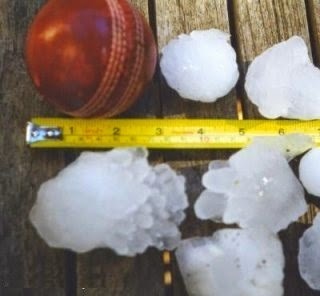 Image from Wikipedia
1999 Sydney Hailstorm
Hail formation requires strong, upward motion like with tornadoes, which is why hail is often a sign that a tornado is nearby.
FACT:Stronger storms will create larger hailstones.
Hail starts as water droplets in cumulonimbus clouds, but when they hit below freezing temperatures in the atmosphere, they become supercooled water and freeze.
FACT:Clouds with a greenish coloration indicates hail.
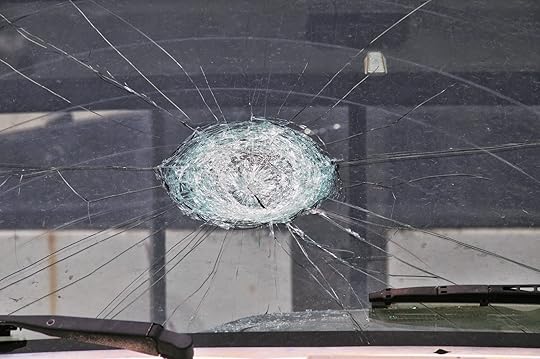 Image from Wikimedia
Windshield damage from a hailstone.
In North America, the area where Colorado, Nebraska, and Wyoming meet is known as “Hail Alley.” If you live in this area, hailstorms are common. China also experiences a lot of hailstorms.
FACT: The largest hailstone ever recorded was found in Vivian, South Dakota (United States) on July 23, 2013, measuring 8 inches in diameter and 18.62 inches in circumference.
QUESTION:Have you experienced a hailstorm?I remember them as a kid and being terrified as ice pelted my house during a blackout.
Disasters:A: AvalancheB: Blizzard and BlackoutC: CycloneD: Drought and Dust Storm
E: Earthquake
F: FloodG: Gas Explosion
H: Hailstorm
 I'm a member of Tremp's Troops!

Today’s disaster is...HAILSTORM

HAILSTORMS are thunderstorms that produce hailstones. Hailstones are chunks of ice that measure between 5 millimeters and 15 centimeters (6 inches) in diameter. They fall from storm clouds like rain and snow, but create considerable damage to vehicles, aircrafts, buildings, and farmer’s crops. Hail also produces injuries to people caught outside such as bruising and even concussions and fatal head trauma in rare cases.
 Image from Wikipedia
1999 Sydney Hailstorm
Hail formation requires strong, upward motion like with tornadoes, which is why hail is often a sign that a tornado is nearby.
FACT:Stronger storms will create larger hailstones.
Hail starts as water droplets in cumulonimbus clouds, but when they hit below freezing temperatures in the atmosphere, they become supercooled water and freeze.
FACT:Clouds with a greenish coloration indicates hail.
 Image from Wikimedia
Windshield damage from a hailstone.
In North America, the area where Colorado, Nebraska, and Wyoming meet is known as “Hail Alley.” If you live in this area, hailstorms are common. China also experiences a lot of hailstorms.
FACT: The largest hailstone ever recorded was found in Vivian, South Dakota (United States) on July 23, 2013, measuring 8 inches in diameter and 18.62 inches in circumference.
QUESTION:Have you experienced a hailstorm?I remember them as a kid and being terrified as ice pelted my house during a blackout.
Disasters:A: AvalancheB: Blizzard and BlackoutC: CycloneD: Drought and Dust Storm
E: Earthquake
F: FloodG: Gas Explosion
H: Hailstorm
I'm a member of Tremp's Troops!
April 8, 2015
G is for Gas Explosion

My theme for my 2015 A to Z Challenge came from my Disaster Crimes series. Disasters are a theme in each story, so it got me thinking about all the disasters that occur from natural disasters to manmade disasters.
Today’s disaster is...GAS EXPLOSIONS
GAS EXPLOSIONS are theresult of gas leaks in close proximity to ignition sources. Gases like natural gas, methane, propane, and butane are commonly used to heat houses and buildings, which increases the risk of leaks and explosions.
Gas explosions can also happen in mines and even sewer systems. Basically anywhere that gas pipelines are located.
FACT: The deadliest railway accident in Russian and Soviet history happened when a leaking natural gas pipeline exploded from the sparks created by two passenger trains passing each other. 575 people were killed and over 800 were injured.
 Image from Wikimedia
Gas explosion in Puerto RicoIn September 2014, a series of underground gas explosions tore apart a main road in Taiwan. The explosions were so powerful that vehicles and people launched into the air. A car was found on the roof of a three-story building, and two people were blown to the roof of a four-story building.
Disaster Crimes Tidbit: Earthquakes can cause damage to gas pipelines, resulting in leaks...so of course there’s a gas explosion in my sequel to Hurricane Crimes and it’s a thrilling scene involving one of my characters, but I’m not going to reveal whether it’s Beth or Donovan in that blast. Sorry!
Disasters:A: AvalancheB: Blizzard and BlackoutC: CycloneD: Drought and Dust Storm
E: Earthquake
F: Flood
G: Gas Explosion
I'm a member of Tremp's Troops!
April 7, 2015
F is for Flood

My theme for my 2015 A to Z Challenge came from my Disaster Crimes series. Disasters are a theme in each story, so it got me thinking about all the disasters that occur from natural disasters to manmade disasters.
Today’s disaster is...FLOOD
FLOODS are caused when an excess of rain causes rivers and lakes to swell past their normal size and leak water on both sides. Floods can also occur when there’s so much rain that the ground can’t soak it up fast enough, so the water just keeps getting higher. Flashfloods can happen even without signs of rain, and are so fast that they can sweep away cars.
FACT: Two feet of water can carry away an SUV.
 Image from Wikipedia
Battery Park Tunnel flooded after Hurricane Sandy.
Floods can happen during hurricanes, tropical storms and severe thunderstorms, and can occur from damage after earthquakes and even volcano eruptions.
Not only do floods cover roadways, subways and bridges but houses, too, causing tremendous damage and many deaths. They also fill sewage systems, which results in human sewage getting mixed into the flood waters, causing waterborne diseases.
FACT: One inch of rainfall in an hour can cause flooding in urban areas.
 Image from Wikipedia
Worcester FloodsIf there’s a flood warning where you live, sandbags are a great defense along doors to stop water from getting in, but you’d need several bags to keep back floodwaters that are over a foot deep.
In case of a flood, seek higher ground.
FACT: A flood that hit China in 1931 caused 2,500,000–3,700,000 deaths.
QUESTION: What cherished possession would you try to save from a flood?
Disasters:A: AvalancheB: Blizzard and BlackoutC: CycloneD: Drought and Dust Storm
E: Earthquake
F: Flood
I'm a member of Tremp's TroopsApril 6, 2015
E is for Earthquake

My theme for my 2015 A to Z Challenge came from my Disaster Crimes series. Disasters are a theme in each story, so it got me thinking about all the disasters that occur from natural disasters to manmade disasters.
ANNOUNCEMENT: Many of you may know I finished writing the sequel to Hurricane Crimes, but I haven't revealed what disaster my characters face in book two. Until now...
Today’s disaster is...EARTHQUAKE
An EARTHQUAKE occurs when tectonic plates move. These plates separate, slide past each other, or collide into each other. This movement happens because the crust, which is made up of the oceans and continents, is floating on top of an elastic layer, like crackers on top of a bowl of tomato soup. The quake is the vibration of rocks.
 2008 Earthquake in Sichuan
Image from Wikipedia
FACT:There is absolutely no way to know when an earthquake will strike, and no place is completely earthquake free.
Earthquakes may only last about 40-45 seconds, but their impact can be deadly. Furniture can move or overturn, pictures and mirrors on the wall can fall, windows can break, buildings and chimneys can collapse, and power lines can fall down.
 Image from Wikipedia
7.1 earthquake in Washington.FACT:Atlantis is believed to have been swallowed by earthquakes that originated in the Mediterranean, creating tsunamis.
Primary waves (push and pull) arrive first during an earthquake because they travel faster than slower secondary waves (side to side). A near quake can have a combination of both push/pull and side to side motions because the waves don’t have a chance to separate over distance. Following the initial quake, aftershocks are extremely common as the plates settle. Aftershocks can last for months after a quake, getting less powerful over time.
FACT: 700 quakes rock the United States a year.
 Image from Flickr
Earthquake in Mulchen
Earthquake Dangers:· Bridges and buildings collapse· Falling debris· Tsunamis· Floods· Mud/rock slides· Fires· Gas leaks· Sink holes· Dams break· Looting
If you ever experience an earthquake, stand in a doorway and cover your head with your arms. Doorways are sturdy and can protect you from injury.
After a quake, check for damage to your home, and seek shelter if necessary. Even if a building is left standing after a quake, a weak structure can collapse during aftershocks. Never light a gas stove or drink water from a pipe until you know it’s safe.
FACT:There is a 25% chance of an earthquake measuring 7.0 or higher on the Richter scale in the next 20 years on the San Andreas Fault.
 Image from Wikipedia
Haiti earthquakes.
QUESTIONS: Have you experienced an earthquake? If so, what was the magnitude, and what was it like?
How many people here live in California?
FINAL MESSAGE: Since so many commenters mention hurricanes (cyclones) as something they have experienced, might I suggest reading my short story Hurricane Crimes? It's about 50 pages long and is packed with a lot of action. Plus, you'll understand the characters a little more if you're interested in reading the earthquake-inspired sequel, which I plan to send to my publisher for consideration very soon. :)
Hurricane Crimes:Amazon US / Amazon UK / NOOK / KOBOGoodreads
Disasters:A: AvalancheB: Blizzard and BlackoutC: CycloneD: Drought and Dust Storm
E: Earthquake
I'm a member of Tremp's TroopsApril 4, 2015
D is for Drought and Dust Storm

My theme for my 2015 A to Z Challenge came from my Disaster Crime series. Disasters are a theme in each story, so it got me thinking about all the disasters that occur from natural disasters to manmade disasters.
Today’s disasters are...DROUGHTS and DUST STORMS
A DROUGHT is an extended period of time (months to years) when a region goes without rain and experiences a decline in its water supply. During this time, the land dries up, grasses die and trees wither. Wildlife and livestock also parish. Without water, people suffer dehydration, hunger (due to no crops), and diseases. There is also a great risk of wildfires.
FACT: In 2005, parts of the Amazon experienced its worst drought conditions in 100 years, and in 2011, Texas lived under a drought emergency for the whole calendar year.
%2Bwikipedia.jpg) Image from Wikipedia
Image from WikipediaBrought in Australia
A DUST STORM (also known as sandstorm or haboob in Arabic) occurs when strong winds lift loose sand and dirt from dry land and blow it over a region for hundreds of miles with wind speeds of at least 25 mph.
 Image from Wikipedia
Sandstorm in Iraq
 Image from Flickr
FACT:Dust can be lifted as high as 20,000 feet.
Dust storms resemble giant walls of dirt that become blinding and suffocating. Sand pelting your skin can also be painful. If you ever see a dust storm coming or are caught in one, it would be best to pull over to the side of the road or find some kind of shelter. If your outdoors when one hits, lie down and cover your head/face.
FACT:Dust storms usually last a few minutes, but afterward everything is covered with dust and sand, which can still be in the air, making breathing difficult.
 Image from Wikipedia
Sydney, Australia
WRITING TIP:If you write about cowboys in Texas or Australia, or soldiers in Iraq, throwing in a dust storm could be an exciting addition to your story that’ll give your readers an idea about what the conditions are like in those places of the world.
QUESTION: Have you ever been in a drought or dust storm?If so, what was it like?
Disasters:A: AvalancheB: Blizzard and BlackoutC: CycloneD: Drought and Dust Storm
 I'm a member of Tremp's Troops!
April 3, 2015
C is for Cyclone

My theme for my 2015 A to Z Challenge came from my Disaster Crime series. Disasters are a theme in each story, so it got me thinking about all the disasters that occur from natural disasters to manmade disasters.
Today’s disaster is...CYCLONE
A cyclone is a hurricane (or typhoon) that impacts the South Pacific and Indian Oceans, but they have also been seen on extraterrestrial planets, such as Mars and Neptune!
Cyclones are low-pressure areas with their core (the eye of the storm) at the lowest atmospheric pressure of the region, which is why many people complain of aches and pains as they get closer.
FACT: The wind flowing around a cyclone moves in the counterclockwise direction in the Northern Hemisphere, and clockwise in the Southern Hemisphere.
 Image from Wikipedia
Hurricane Andrew
Tropical Cyclones are formed because of heat, giving them warm cores. There are also Polar Low Cyclones that have cold cores that can be found in or near the Arctic during the winter.
Tropical Cyclone/Hurricane Threats:· Powerful winds (74-155 mph)· Torrential rain· Floods· High waves that tear at the coast line.· Storm Surges· Tornados · Water spouts
FACT:Floods count for 60% of hurricane-related deaths.
 Image from Wikipedia
Hurricane Katrina
Precautions:1. Have a plan for evacuation, including road routes you should take.2. Stock up on water, non-perishable food (canned goods), batteries, candles, matches, and gas.3. Get flashlights, a battery-operated radio, and invest in a generator. 4. Prepare your house by boarding up the windows, securing patio furniture, bringing in trashcans, and winding swings around the top of the swing set.5. Have a little extra cash on you.
During a cyclone (hurricane), monitor broadcasts and stay indoors!
Shameless Plug: If you’re interested in a story involving these conditions, read my short story eBook, Hurricane Crimes. It is $1.99 on Amazon. :)
QUESTION: What was the worst storm you’ve ever experienced?Tell me about it!
I went through three hurricanes in the space of two weeks: Charley, Francis, and Ivan. Francis was a beast! She's the hurricane that inspired Hurricane Sabrina in my story.
Disasters:A: AvalancheB: Blizzard and BlackoutC: Cyclone
I'm a member of Tremp's Troops!April 2, 2015
B is for Blizzard and Blackout

My theme for my 2015 A to Z Challenge came from my Disaster Crime series. Disasters are a theme in each story, so it got me thinking about all the disasters that occur from natural disasters to manmade disasters.
Today’s disasters are...BLIZZARDS and BLACKOUTS
First, I’ll discuss blizzards as part of my avalanche post for A.
A BLIZZARD is a severe snowstorm that typically lasts for three hours or more. Frequent snow fall combined with wind of 35 mph or greater reduces visibility (this is known as a whiteout), making driving and even venturing outdoors dangerous. Sleet and freezing rain can make matters worse when you’re traveling. And blizzards can cause snowdrifts (huge mountains of snow) that you may not see until you run into one. Snowdrifts can get so big that they can bury houses and trap residents inside for days.
 Image from Wikipedia
FACT: The Storm of the 20th Century took place in March 1993, causing 300 deaths and 10 million power outages.
Blizzards are very dangerous if you’re caught outside in one. Low wind chill (the amount of cooling one “feels” due to wind and temperature) can result in frostbite and hypothermia. Even If you’re safe indoors, heavy snowfall can cave in roofs, freeze pipes, and snap power lines, which will take out your electricity and heat. If you’re trapped inside a house, waiting for the snowdrifts to melt, food and water may run low.
 Image from Wikipedia
FACT: A severe blizzard has near or below zero temperature.
If you’re ever stuck in a blizzard outside:1. Stay hydrated and well nourished.2. Keep moving to avoid hypothermia.3. Build a snow cave to block the wind.4. NEVER drink snow! (It'll freeze your insides if you can't warm it.)
If there is a blizzard warning, stock up on non-perishable food, bottled water, blankets, candles and matches.
 Image from Wikipedia
New York 1977
A BLACKOUT is a total loss of power to an area due to a power station tripping, and is the most extreme form of power outage that can ever occur. It is difficult to recover from this type of outage and it can last anywhere from minutes to weeks. In a blackout, whole cities are impacted.
 Image from Wikipedia
At night, it becomes so dark without the glow of streetlights, buildings and cars that it can appear pitch-black, as if a cloak is covering the city. Blackouts are dangerous because if they last for days, food and clean water can run low. Crimes also spike.
QUESTION: Has anyone here ever been in a blizzard or blackout? Tell me about it!
Disasters:A: AvalancheB: Blizzard and Blackout
I'ma member of Tremp's Troops!