
R.J. Blain's Blog, page 77
October 6, 2014
Quantity over Quality… or not?

(c) Jo Naylor (Creative Commons License – Flickr)
We’re coming up to November, where a great many people are planning on participating in NaNoWriMo. It’s the time of year where accusations of quantity over quality are thrown at leisure, with no real care who is targeted.
I’m going to kick this concept to the curb right now. This is a tough-love type of post, and I’m not going to sugar coat, butter, or add bacon to any of this.
You can have quantity and quality at the same time. So go ahead, bleed on the page, and be proud of writing 5,000, 7,000, or 10,000 words in a day.
No, I’m being serious. You can. There’s a simple math formula for this.
For the sake of this post, I’m going to confess I typically max out at around 1,000 words per hour, if I’m working with little distraction. (I can write closer to 3,000 if I’m doing direct transcription needing little edits.) I’m closer to the 500-750 range, and there are some hours I only write 200 words in an hour.
So, I’m going to use three data sets: (A) 200, (B) 500, and (C) 1,000 words per hour.
For the sake of this argument, my goal is 1,667 words for the day.
A: At a rate of 1,000 words an hour, it will take me just over an hour and a half hours to write 1,667 words.
B: At a rate of 500 words an hour, it will take me just over three and a half hours to write 1,667 words.
C: At a rate of 200 words an hour, it will take me eight and a third hours to write 1,667 words.
Same author, three different word per hour counts. Now, here’s the kicker.
People automatically assume the quality of the writing, at the 200 words per hour rate, is better than the quality of the writing at the 1,000 words per hour rate.
It’s not. (It’s actually worse, true story.)
The quality of writing does not differ between the 1,000 word rate and the 200 word rate. If anything, the quality of the 200 word rate might actually be lower, as I am distracted and am not writing as well as I could.
Quantity has absolutely no bearing over the quality of what you’re writing. Get over it, please. Thank you.
You are writing.
You have a specific writing skill at this moment in time. Don’t like it? Well, go do something about it. Take some online creative writing courses. Find one of those $40 programs to have an experienced author guide you through their method of writing a novel. Read books on writing.
In short, shut the fuck up and do something about it, if you aren’t happy with your quality. Hire an editor. Hire three editors. Get involved in critiquing and beta-reading exchanges.
Whether you’re writing 200 words per hour or 1,000 words per hour, you are the person coming up with those words. You are the indicator of your quality, no matter how much you write.
What matters is how much time you invest in your writing.
See, the thing with NaNoWriMo is this: A lot of writers who have never written before, or who only write during November, are trying to write books.
Of course the quality isn’t going to be as good. They aren’t professional authors.
It is generally accepted that many published authors target 2,000 new words per day. Yet, we’re happy with their quality. It’s not quantity over quality, not for them! Oh no, never for them.
The math is simple: How many hours you invest plus the number of words you write is your quantity.
Your quality is not going to change because you invested more hours.
Your quality is not going to improve because you invest more hours, either. I know, that sounds rather counter intuitive, but bear with me a moment: Improvement only occurs when you approach something with the intent to improve.
Your writing quality is more of a static than a variable; You are you, and you have a certain skill with the written word.
So, do not be ashamed of writing a lot of words in a day, if you’re investing more time to do it. Quantity is no indicator of quality.
(Sure, if you’re trying to bang out as many words in an hour as you can, you’ll have a little bit more editorial cleanup to do, but typos aren’t an indicator of quality.)
You’d still tell the same story, using the same style, regardless of whether or not you write 500 words an hour, 1,000 words an hour, or 3,000 words an hour. Why am I making this broad assumption?
I’ve done it, and my editors haven’t been wiser for it–though when I write slower, closer to the 200 words per minute rate, I get scolded for trying too hard. I’ll let you figure that one out for yourself, but it’s true. Slower quantity resulted in lower quality.
Next time someone tries to berate you for writing a lot of words today, remember this: You are the factor for whether they are quality words or not… and you’ll only write quality words if you practice writing with the intent to improve.
So, the next time you think 7,000 words in a 18 hour period of time is insane, remember this: That’s only 390 words an hour, and most writers can accomplish such a goal.
Here’s a tough love message for some of you: When someone is proud of the work they’ve done, shut the fuck up unless you’re congratulating them for working hard, and keep your jealousy to yourself.
Jealousy over someone investing a great deal of time doing what they love isn’t the right way to approach it. If you want their word count, sit down and fucking write.
You are you, and your quality isn’t going to be negatively impacted because you’re actually bothering to work. Almost every writer I know can manage 390 words in an hour. Most people are awake for 18 hours at a time.
If you really want to write so many words in a day, you can. If you choose to.
Quality over quantity is a bullshit mechanism trying to make productive people who want to work feel guilty for doing something others are too lazy to do. So, next time you point your finger at someone and squeal, “Quantity over quality!” remember you’re wrong.
It’s in your head, and those poisonous little thoughts should stay there. Don’t belittle others because of what you fail to do.
I used to feel that way about quantity, too…
I was a petty, jealous little bitch. For that, I’m sorry. But now I know better: Quantity and quality have very little correlation in a draft; you will always be you, and your quality is consistent with that, and will not change for the better or the worse because you decide to actually sit down and work.
But consider this: Our society doesn’t value hard workers, not really. That doesn’t give you the right to belittle someone because you’re jealous, however.
If you’re that jealous, sit down and do as they do. Write. It’s the only way to write a lot of quality words. There’s no other way to do it. Invest the time working seriously, and the words will come.


September 30, 2014
The Beauty of Failure
When I set out to write this blog post, I was going to link to a whole slew of epic fails.
… once upon a time, there was a site dedicated to some pretty epic fails. I failed to find the fails. They were… wins? Cool things? Some propaganda, but no fails.
I checked through three pages of archives.
I failed to find the fails, and the irony of this made me laugh quite a bit.
So, come journey with me on a rambling discussion on failures–and what failures birth, which is success. There is a liberal amount of cursing, so you may want to look away at some places, if that sort of thing bothers you. This applies to writing, in a certain sense, although I’ll be illustrating the point with photography rather than the written word.

Lion Fish is Displeased with RJ’s Fail.
Failure can be a beautiful thing. When it happens to us, we don’t like it… generally. I’m going to pretend those who are either masochistic or sadistic don’t exist right now. I definitely don’t like it, though I’ve been told I belong in both camps for some reason. (I’m a writer… isn’t it obvious?) There’s a certain amount of dread and anxiety I associate with failure, whether I scored poorly on a test, stubbed my toe while falling up the stairs ( a common occurrence, I assure you), or not meeting a goal I set for myself. It’s usually negative.
However, it’s merely one side of a coin. I’m a firm believer that failure can lead to really good things–if I take the time to learn from my mistakes and do something about it. It can be motivational. I don’t like the feeling of failure. It reminds me I’m not perfect (le gaspe!!!) and that I need to keep improving. Without this feeling, I don’t think I’d work nearly as hard to avoid feeling it again.
Failure is the mother of success, in my opinion, because without the bitterness of defeat, I don’t think I’d have the motivation to push myself as hard as I can.
In short, I enjoy the thrill of success, and only through failure am I able to reach that place. If everything was easy, if I never failed at anything, I don’t think I’d go nearly as far.
But failure hurts. Losing hurts. It doesn’t just hurt–it sucks a lot.
I want to draw your attention to the photograph above. It is a picture of a lion fish. I took it. It is one of seven or eight lion fish pictures I took, and the only one worth keeping–the others were blurred beyond salvation, or I got a shot of a fish ass, which didn’t interest me as a photographer. I’m sure there’s a market for fish ass, but it’s not me. I know, I’m such a prude.
If I want fish ass, I’d like caviar. It comes from a fish’s ass–but I don’t like caviar, so more fish ass for you folks!
Going back to the picture… in short, six or seven failures happened before I found one picture I wanted to keep. But because one shot didn’t work, I kept trying, until I got one I could be happy with.
I was not leaving Mandalay Bay’s Shark Reef without a picture of a lion fish. I used to have one as a pet, and it made me happy seeing them–and remembering my mother’s pet lion fish. Lion fish! Lion fish!
There’s a lesson here for me, and maybe for others, if they care. Success, even for small things like taking a photograph, isn’t guaranteed. Try, try, and try again. Sometimes, you’ll bust. Other times, you’ll get lucky and the lion fish will stare you in the camera, all pissed you’re pointing things in his face.
More importantly: Lion fish are fucking ninjas. Don’t let that spiky, hey, look at me!!! visage fool you. They’re fucking ninjas. Not only are they fucking ninjas, they will kill you. Kings of the mother fucking ocean, I tell you. Forget sharks, whales, and so on. Lion fish rule the seas.
I warned you I would ramble, didn’t I? If not, consider yourself schooled.
Sometimes success isn’t directly accompanied by failure. On the same trip I met Mr. Ninja Lion Fish, King of the Mother Fucking Ocean, I also met a bee. I stalked this bee, because he was pretty, and he was with flowers. I like bees, and I like flowers. I had my camera.
I don’t like being stung by a bee. Bee stings fucking suck. So, respect those bees, yo!
I took a single photograph and moved on. Here is the result.

This bee is not a ninja.
I have now subjected you to bee ass. You’re welcome. Because bee ass is far superior to fish ass.
There was no direct failure associated with this photograph, but because I spent so much time failing with other photographs, I had the skill I needed to capture a little bee in one shot. What? You haven’t seen failures yet? Here, let me introduce you.
To make this make sense, I’m going to showcase a ‘success’, and then I’m going to showcase a bunch of photographs I had to take to get that one success. I’m going to showcase a squirrel.
Squirrels are motherfucking ninjas, too, in case you didn’t know.

This squirrel is a hockey playing ninja, and he’s coming for you.
You may notice I put quotes around success above. That’s right, I did. Let’s look at this mother fucker hockey playing squirrel who is ready to take your face and smash it on the ice. His legs are blurry, and he’s kinda… he’s going to get you with those demon paws. You’re fucked, we’re all fucked. He must have taken lessons from the Lion Fish.
It’s not a well-composed picture… but it’s so comical I love it. Therefor, to me, it is a success. Success and failure is sometimes a personal opinion. I really like this photograph, so it is a failure.
That’s right, squirrels. Now, for an entire gallery of fail squirrels! I find there’s something wrong with pretty much every single photograph in this gallery. There’s one I was on-the-fence over, but ultimately, it didn’t make my list of favorites, so it counts as a failure.
Some of you may disagree. My failures might count as a success for someone else… and that’s a good thing. It’s a sign of progress and alteration of goals. Once upon a time, any one of these photographs would have been a success for me, but I wanted to get better than what I was, so what used to be successes became failures.










There’s a moral of the story in here somewhere, and I’m pretty sure it doesn’t have to do with photography, although I’m sure you really wanted to see pictures of ninja animals being awesome.
There are times you don’t get to decide what a failure or success is. That’s a part of life. But, you control how you approach your failures and successes.
Will your success be good enough, or will you decide you can do better?
Failure is how you learn you can do better. Success is the reward for doing better.
But the real trick is in deciding that a simple success isn’t good enough, and that there are more hills to climb. Sometimes you can’t turn failure into successes, either. Throw away the bullshit your mom and dad told you about being able to do anything. You can’t. If you’re an asthmatic person, you’re not going to be modeling the walkway wearing perfume. You’d die.
If you’re someone with average IQ, becoming a rocket scientist may not happen for you either. But that’s a failure you can learn from–just because you can’t become a rocket scientist because holy fuck those people are super smart doesn’t mean you can’t learn from them, and it doesn’t mean you can’t love rocket science.
It just means you are a hobbyist instead of career-oriented, and you can hunt for successes within your reach.
But that’s another beauty of failure: Only through failure can you learn your limitations. Limitations exist for all of us. I have lots of them, and many of them involve social awkwardness. I never did pick up on social cues very well, so I don’t get along well with as many people as I would like to. (This may be a case of trying too hard.)
The truly brave, the truly admirable… those people find those limitations through effort, work, and ultimately failure. And when they can, they surpass those limitations.
Failure hurts, but it’s a beautiful thing.
September 24, 2014
NaNoWriMo 2014: Writing Through Troubled Times

Gratuitous Winter Wolf Cover
I’m jumping the shark. Maybe I should have found a picture of a shark jumping at a helicopter, which in turn is being chased by a blue whale… in space.
If you just stopped and wondered at that imagery, allow me to welcome you to the brain space of someone who has participated in NaNoWriMo successfully a few too many times.
Things like this happen when words won’t come–and I need words to happen. Random, silly, never-will-see-the-final-product additions to help blow through trouble scenes.
In Winter Wolf, there is a chapter that has caused me nothing but problems. They (the chapters) are all in my head and more than a few area already on notebook paper, but it was brutally slow to write. What should have only taken my an afternoon took me three days–writing word by painful word. I understand the whole bleeding on the page thing with this chapter. It’s my bane.
But if there’s one thing I’ve learned from NaNoWriMo, it’s how to write through troubled times. Each writer has a different way of pushing through difficult times. For me, it happens at least once each and every book–usually in a scene critical to a character’s development.
Here is how I handle writing through troubled times. These are my tips and tricks to keep words flowing, even if it takes an hour to get out 200 words. There’s no shame in writing slow, so long as you write. Remember that: If you’re stringing words together, you’ll get through the trouble spots. It’s inevitable.
Even if it means you write at a snail’s pace.
Here’s what I do… and my suggestions to you, if this is a problem you’re having.
Warning: Foul language ahead.
Step One: Identify the Problem.
The instant I start writing at a snail’s pace–which means, an hour of writing with less than 500 words to show for my efforts–I take a look at what I’m doing. I’m a slow writer at times, so 500 words in an hour isn’t uncommon for me. But, 500 words in an hour is the slowest I should be going. If I’m going any slower than that, there’s something wrong.
I usually average closer to 1,000 in an hour. I can spike up to 2,000 an hour in some circumstances. In recent days, my best has been 3,000 in an hour, and I was transcribing without doing much editorial. (Once upon a time, I could write a lot faster, but… it was garbage.)
The key to being able to do this is to understand how you write–know yourself, your habits, and where you should be. If you write slow by nature, then there’s probably nothing wrong if you’re writing slow now. But if you’re writing slower than normal, that’s when you look to see why you’re writing slow.
What people like to call ‘writer’s block’ is usually a symptom of a problem in the story: Faulty character development, a plot hole, that sort of thing. So, take a look at your habits and what you’re writing–and learn to identify the problem.
And yes, being lazy is a problem. To that I say, “Shut the fuck up and write.”
We all need a kick in the ass sometimes.
Step Two: Fix the Problem
Knowing what’s wrong is only part of the battle–it’s up to you to do something about it. If you’re being lazy, the answer is as I said above… and only you can motivate yourself. Posters with fancy sayings aren’t going to do it. You are.
If you want to succeed at NaNoWriMo–or writing anything, for that matter–get used to the idea.
If you have a plot hole, either identify the hole and write notes on how to fix it or go ahead and fix it. But either way, eliminate whatever is stopping you from writing. If you have a broken character, make a note–and keep writing. It’s okay to dramatically shift a character’s personality midway through. You’ll fix it during the editorial phase. But in the first draft? Your draft zero? You’re learning your character. You might even be learning about yourself.
If you feel you must cut text, open a new file, cut the text there, keep it, and resume writing. When you take your daily NaNoWriMo word count, include that text. You wrote it during November. It counts.
If you’re telling yourself the writing isn’t good enough, I have one thing to say: “Shut the fuck up and write.”
Good or bad isn’t even a factor when writing. Just do it.
There is a time to make bad writing good or great–during editorial.
This is actually hard, convincing yourself to write without worrying about the quality, but you have to motivate yourself. Once again, a pretty poster with some fancy text isn’t going to give you the ability to sit down and write. You are. It’s tough love, but someone has to tell the truth. You are the only person who can help you write. Once you’re trying to improve your skills, you’ll need the help of others, be it writing partners and editors, but they can’t force you to write. You can, though.
So shut the fuck up and go write.
I tell myself this fairly frequently, by the way. Especially when I’m feeling lazy. And it works, it really does.
Step Three: Write.
Once you’ve finished your psychological warfare with yourself, go write.
That’s it. Just write.
At the end of the day, be it a plot hole, a character development issue, or just not liking a scene, if you aren’t writing, all you are doing is making excuses.
So stop making them and write.
You might surprise yourself with how much you get done if you really try instead of making up a list of stupid reasons about why you aren’t writing.
Writing is hard, but once you’re in the habit of writing, and once you’re in the habit of ignoring the things distracting you, it gets much easier.
Go write.
September 22, 2014
Royalties versus Readership
A few days ago, I stumbled across a post by Hugh Howey on exclusivity with Amazon. It made me think–a lot.
Right now, I only have one series exclusive to Amazon. I opened the other books to epub readers recently. I wanted to try to expand my readership.
So far, it has not worked very well. I am going to leave my titles as is–for now. After Winter Wolf releases in November, (and I give it three months) I will go back to exclusivity with Amazon.
I’m about to say some things some people won’t agree with, and I may lose good faith by having this opinion… but I’m going to say it anyway. (For some reason, people don’t like hearing the truth, especially not when it is bluntly spoken.)
Epubs are a sinking ship for me, and I will very probably bail out while I can.
Here’s why:
Sales through the other venues (all epub), combined, is less than my total daily average with Amazon.
It’s not about the money–okay, I’m lying. It is about the money. Writing is my career. It’s my life. It doesn’t come free–and living isn’t free, either.
I want to be paid for my hard work.
Draft2Digital is a great site. I really love it. The people there work hard, and have made a very simple system. Unfortunately, I am not connecting to readers on these venues.
It’s much easier to connect with readers on Amazon. I may get a lower royalty, but I reach a lot more readers. It’s no contest. I’ve been asked about epub versions a lot… but asking the author (in this case, me) doesn’t mean it’ll turn into sales.
In my case, it hasn’t. Sorry, but it hasn’t. Sure, fifty people may ask if I’m releasing an epub version, but if only 3 purchase the epub version, I’m losing out on hundreds of connections forged with other readers. I’ve seen a huge decrease of my readership since I removed exclusivity with amazon. On average, somewhere around $300-500 a month. That’s a big deal.
I sell more paperback copies in a month than I have with epubs in two.
My original hope was to take a hit to start with, but start seeing a little bit of a return within two or three months.
I’ve sold three epub novels between two books in this period of time. Three whole books. I’m entirely grateful to these new readers, and I really hope they enjoy the stories. But I want to reach more people–a lot more people.
I’m sure there is a market out there, but I’m not connecting with it in the same way I do with amazon.
So, after Winter Wolf launches, I’ll see how the promotions help my epub sales. I don’t have high expectations, to be honest. I’m expecting a landslide in Amazon’s favor.
Storm Without End will be returning to exclusivity with Amazon shorty. I’m going to give Winter Wolf three months–until after the Christmas rush, maybe–until I do the same with it and Inquisitor.
Unless a miracle happens, of course, and epub readers magically find my books. A lot more readers finding my books, that is.
Readers are more important than royalties, but a girl has to live–and $300 a month in lost sales matter. A lot.
You can cry all you want about how evil Amazon is… but that evil keeps my afloat.
Epubs don’t.
September 20, 2014
NaNoWriMo 2014: Creating Interesting Characters
As a part of preparing for NaNoWriMo 2014, I want to take some time to talk about the most important element of any book: the characters. Characters make or break books far more than the plot every will. Of course, this is just my opinion, and your mileage will vary, but I read for characters. The plot is secondary to them–without those characters, there is no plot. There are plenty of issues with books without plot, but I’ll talk about how to marry plots to their characters later.
Let’s not invent the car before we deal with the wheel, and the characters are the wheels of your story.
The first thing to remember is that characters are people. Sure, they’re imaginary people, but they’re people you’re bringing to life on the page. As such, they need to act like people, think like people, and behave as people generally do.
This is why I’m a fan of starting every character I write with a trope or stereotype. These are traits I focus a character for, and these traits define what the character does.
A shy individual, for example, is not going to hurry to make friends with each and every last person they meet. They’re shy–often, they’re too scared to go make friends, even if they want to. A shy character might have the motivation to go make a friend, but there is often something holding them back.
To build a shy character, it’s important to understand why they are shy. That’s where the background and history of a character comes in. But, don’t fool yourself into thinking you need to know every element of their background and history. You don’t. You need important facts: Birthday/Age, Basic Personality Traits (Shy, Anxious, Happy), Key Events in their life–death of family, trauma, and so on. Most of these you don’t even need to detail much–you need to know it happened/exists. You can build your characters up as you write.
By understanding why someone is as they are, it’s possible to write them in such a way they feel real. And that’s what makes characters fun to read and write. It isn’t always the trouble they get themselves in and out of, but rather the complexity of their present, their past, and their hopes for the future mingling into the person they are on the page.
People, after all, are influenced by their past, what they want to achieve, and where they are right now. They’re bolstered by their successes, and they’re brought down by their failures. Some crumble under those failures, unable to stand back up. Some rise to the challenge, becoming so much more than who they were when the story started.
It never ceases to surprise me how many words I can add to a story when I decide to let my characters be true to their past and their aspirations for the future. A survivalist will hunt for any means to come out on top, while someone who suffers from depression will struggle to simply exist–depending on the story, they may lose that battle. But that doesn’t end their story, as the other characters will feel and live the impact of that loss.
A character, a single character alone, isn’t fun to write about. It’s the relationships of people, and how they change each other, that really makes a story interesting for me–to write, and to read.
So, this year when you approach your NaNoWriMo, keep your characters in the forefront of your thoughts.
Characters make plots happen–with one exception: Natural disasters.
So, next time you write, ask yourself why a character is doing what they are doing, and run with it. And if you aren’t sure what a shy person would do in a certain instance, study them. Psychology books are amazing for learning how to understand how (and why) people behave the way they do.
And if psychology books aren’t your thing, there are other options. At the top of the list, in my opinion, is by going people watching. Go sit at a busy cafe and listen to the conversations around you. Profile people. Ask why you think real people behave in the fashion they are behaving.
Learn from them, and then use them as cannon fodder for your novels.
And while you’re at it, learn to identify who you think is interest: Capture them, include them in your story. People you think are interesting in a novel will become interesting for others. Why? That’s a good question, but I think it has something to do with authorial interest. An author who is ‘into’ a project just writes better, in my opinion.
And getting ‘into’ a project involves falling in love with the characters–even if that love means you love to hate them.
Characters you feel nothing for become mediocre on the page, in my experience. You don’t have to like them, but you need to have a certain amount of empathy with them.
That helps them become real–just my opinion, of course.
Your mileage may vary.
September 17, 2014
Two Ladies. Two Minority Groups. One Cover.
Today I fell in love with Tor Books again, and I haven’t even read the book yet. It arrived in the mail this morning, which made me very happy. Little pleases me more than a new book in the mail. I acquired the title as an ARC through a review group. When we pick titles to read, we get a one-liner description of the book’s genre, the publisher, and the price of the title–that’s it.
So when I requested Full Fathom Five, I didn’t really have any idea what the book was about–which is okay by me. I sometimes enjoy blind readings of books. It’s a little like getting a Christmas present, and it lets me vary my reading a bit.
I was expecting the typical fantasy or science fiction cover: White woman, white man, normal things.
I wasn’t expecting an Asian woman and a Black woman together on the cover–and the fantasy detailing on the Black woman made it all the better. I wish I knew their characters names, so I wasn’t describing them by their skin color, but I haven’t even read the back of the book yet. (And for this one, I won’t–I will just open it and start reading.)
Introducing Full Fathom Five’s gorgeous cover (which is out now, by the way, so you can buy it right away if you’d like):
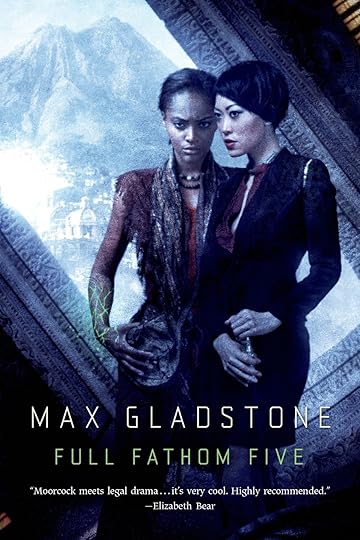
Minority groups are an interesting thing in fantasy and science fiction–interesting as in either not there or hidden. I write in a lot of different ethnic groups in both Requiem for the Rift King and The Fall of Erelith, but the predominant racial groups are based on Caucasian heritage; that’s what I know. Rifters, in a way, are a mix of Native American and Black; they tan really dark, darker than Caucasian-heritage groups, although they don’t share a lot of the traits of African Americans. (For example, lips–I love how robust and thick many African American’s lips are, but Rifters don’t have this trait, nor do they share other traits shared by many African Americans.) Skin color matters, though–like Africans and African Americans, Rifters come from a very hot climate, which is why they share skin colors.
So I find this interesting–and great fun.
One of my Requiem for the Rift King novels will feature Breton, who is one of the dark-skinned Rifters, too–very likely the final book, which has the series name. Kalen is featured on the others, so I’m hoping that the shift to Breton for the cover star makes sense. (It matches the book best. But don’t worry. Kalen is in it, for those of you who do like the little firecracker.)
There is another lady who managed to get a black woman on her cover, too–Mary Robinette Kowal. She writes historical fantasy with a lot of romance, which is a genre I don’t typically read–though I might, just because of the cover from Of Noble Family. I don’t have a link for you for the book, unfortunately–it’s so new it isn’t even available for pre-order yet.
But Mary shared the cover on Google+, and it’s gorgeous.
It’s so lovely to see something that should have been happening ten years ago finally hit mainstream–at least for the fantasy and science fiction genres.
September 10, 2014
Copyright, Piracy, Libraries, Novels, and You…

(c) JordyR (Creative Commons – Flickr)
I’ve been reading a lot of posts and articles lately on how piracy is killing authors–or their bottom lines, that is. There have been articles (okay, more like facebook rants, really) on copyright and intellectual property.
Unlike I normally do, I’m not sharing links to these discussions. Why? They aren’t mine to share, and I don’t know if my friends and the authors I talk to want their thoughts shared. You’ll have to take my word that these discussions exist. They do.
This is my take on copyright, piracy, libraries, and novels.
I’ll begin with a library. A library is a collection of books, where readers can loan a title and read it–for free. The author sees one payment. The library may loan a title hundreds of times in the book’s lifespan, if the lenders take good care of the title.
One payment, hundreds of loans. This is okay, because we all know that library lending makes authors popular, right?
It’s okay that authors only get paid once, because the books are loaned from a library.
Authors are okay with this. We get paid for that one book. The rest is exposure–a lot of exposure.
Yet, authors are so damned touchy about copyright and piracy. I spoke about this before, about how I acquired a book, and the copyright notice was so threatening I was offended by it. I got the book legally. What did I do to deserve six pages of warnings on what would happen to me if I dared share the book with anyone?
I own the legal copyright for all of my books. It’s a $50 formality, really–but a necessary one. If something happens I do not want, I’m protected.
But, I’m about to say something unsettling:
I’m okay with libraries, because I know and understand that reading books is expensive without them. One year, I spent far over $1,000 on books. Closer to $2,000. I’ve paid the piper so many times. This year alone, I’ve spent several hundred dollars on books. I love to read.
I love paying authors for the chance to read.
But I’ll be among the first to admit that I will read books for free, be it from amazon’s sampling system, or a horrible text pasted to some website. I use the internet like I do libraries: I test books before I buy them. Kinda like cars, except a little cheaper if I make a mistake.
I do it with comics, too. I don’t buy a comic without sampling it. Usually this means reading the entire thing and buying it because I liked it. You can walk into a comic book store and do this all day long, so long as you leave with a stack of comics you are buying.
With hundreds of thousands of bad books out there, I take fewer risks with my money. I use the internet like I do a library: a place to check out new books, so I can buy the ones I like.
I like owning my own books. I always have.
I like using libraries, because owning books is expensive.
I’m okay with libraries. An author gets paid once per copy. That’s it, that’s all. Yet we’re okay with this–I’m okay with this, because it spreads word about our novels around the world.
Yet, we’re not okay with pirated copies of books. Is it scale? Is it the thought that someone paid for a book and then shared it?
Or is it because it is so easy for people to purchase a book and then refund it–after they’ve read it? We’re not sure if we got paid for that one precious copy when something gets pirated. The scale is larger. Instead of hundreds per book, thousands of people are reading the books.
That’s a problem! It’s a money problem. It obviously shouldn’t be allowed…
… or should it?
Piracy costs people money; I’m not denying that. I’m not denying that I’m worried about what will happen if more people get my books for free than they do paying for it. Those payments make or break me.
But libraries exist because literacy isn’t cheap.
I like to think I’m on to something here–something about our nature, about our opinions, and about our wallets.
We’ve put a price on literacy, and it’s quite a high one–for my titles, up to $5.99 a book. And people will pay that, because they enjoy my stories–even when I make mistakes and mess them up. With each book, I try harder. I want to tell great stories.
I want to tell stories people will pay $5.99 for.
I want to tell stories that people who can’t pay $5.99 for are so desperate to read they’ll use piracy–the internet’s illegal public library–to get a copy of one to read.
I want to tell stories that people enjoy so much that after they’ve gotten that free copy from the internet’s illegal public library–also known as pirating sites–that they take the $5.99 they get later and pay me for a legitimate copy of the book.
But each of these statements starts with one key phrase: I want to tell stories.
And it ends with this: I want people to read my stories.
I’m okay with libraries.
By extension, I’m also okay with piracy.
Why?
Because literacy is important to me.
Literacy isn’t cheap. Reading isn’t cheap.
I had to sit for a long time and use my brain about this, thinking outside of the box for longer than I like admitting. Why did it take me so long to acknowledge that piracy of books is the same exact situation as public libraries?
It shouldn’t have taken me so long.
Because it is.
Yet we fear piracy.
Why? Maybe it’s because we don’t control the flow of books. But we don’t control the flow of books at public libraries, either. Librarians choose whether or not a title is picked up, not the author or publisher. Getting into a library is difficult. Yet we threaten readers if they do not pay for the book legitimately. I’ve had books threatening fines for more than I’ve made in my entire lifetime if I got the book other than their allowed venues.
Yet borrowing a book from the public library is okay.
Of course I want people paying for my books. Those payments put food on my table and allow me to keep writing. But literacy is more important to me. Not falling prey to a stupid double standard is also important to me.
I support public libraries because I support literacy. I support people being able to read, be it for knowledge or pleasure.
And I guess that means I approve, at least a little, of piracy–because that’s the internet’s public library, albeit illegal.
Maybe I should just join the times, and instead of forcing pirates to grab the books that way, upload them to torrent sites myself, with specialized copies of the book–complete, specialized copies of the book, with a line at the very end.
It would read: Thank you for reading this book. This was uploaded to your favorite torrent sites by the author. Enjoy this book? Consider supporting the writer of this book by purchasing a copy for yourself or a friend from amazon, kobo, or your favorite vendor. Your support is appreciated!
Because if I can’t get into the legitimate libraries, maybe there is something to getting into the internet’s illegal one–except it wouldn’t be illegal, would it?
Because I would be making the choice to allow people to download that torrent.
How much do we as authors and readers really care about literacy?
Or have we gotten to the point that our bottom line is all that matters? Sure, there are thousands of libraries in the US–that could be tens of thousands of sales for a single author. But authors like me aren’t in those public libraries.
We’re on the internet.
And our public library has become bittorrent sites.
Now that’s something to think about.
September 8, 2014
Book Review: Moon Called by Patricia Briggs (UF)
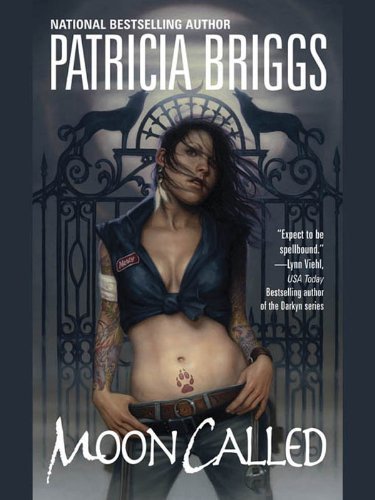 Werewolves, Vampires, and Coyotes… the world of Mercy Thompson is full of many things that go bump in the night; some are new twists on classic favorites, and some borrow from myth, legend, and tradition without much embellishment–some cultures and their stories simply do not need them.
Moon Called is the first book of the Mercy Thompson series, and dumps us headfirst into the world of the paranormal and supernatural. Unlike the normal fantasy fare, Mercy Thompson is a walker–a coyote walker–in a world where werewolves rule over most canines. To werewolves, coyotes are prey, and Mercy Thompson survives in the Tri-Cities with a little help from Adam, the Alpha male of the Columbia Basin werewolf pack. With the pack’s protection, and an arrangement with the local vampire seethe, Mercy works and lives as a Volkswagen mechanic.
The story begins when Mercy meets Mac, a very young werewolf who is on the run, without a pack to help him control his wolf. When she asks Adam for help, she doesn’t anticipate how much trouble Mac will bring to her door.
The story is written in an interesting style; it blends present and past tenses as appropriate to the story, an interesting technique I’ve never really seen used elsewhere–at least not without making me flinch a lot. Patricia Briggs does a masterful job at it, although there are a few times where I did wince at the shift in tenses.
It’s a quirk to Briggs’ writing that makes her stories unique–and intense.
But what I think I enjoy most about Moon Called is the use of stereotypes and tropes, twisted in such a way where the story feels very unique–all the while remaining on familiar, comfortable ground. This is a good thing. It makes Moon Called an easy read, and very easy to get absorbed into, without the reader being forced to think too hard to understand how the world works. Now, I’ll be honest here–I enjoy when stories make me think and work to understand them. That’s why I like Jim Butcher’s stories–I have to work to follow the threads, and I like that.
But Briggs manages to use comfortable ground to propel the story forward, and the depth I like is built from novel to novel, with crossovers from Mercy Thompson’s series to Alpha and Omega, which focuses on Anna and Charles. One thing that bothers me—a little—is that I walked away feeling like the twist and conclusion could have had a bit more punch.
But I’m a picky reader. Those who just want a really good story will likely enjoy Moon Called–as well as the later novels in the Mercy Thompson Series.
Now, that said, there is one thing about Moon Called that I found a little saddening; there are romantic elements at play, but as a general rule, there are very few surprises in the romance department; it’s so straight forward that you would have to have skimmed every page of the book not to figure out who was partnering with whom. Mercy is given a harem of potential lover boys, but from the very start, it’s pretty obvious which male she’s most likely to hunt as much as she’s being hunted.
Still, I enjoyed the story quite a bit–and there are a lot of good things going for this plot, even considering the fact there are times where I felt it could be a lot more complex.
Some people may not agree with me, but I find this is one of those cozy urban fantasies–the type you read when you want to get lost in another world and forget about your own for a while. I first read Moon Called in an airport, and trust me on this one, there’s definitely reason to want to get lost in a good story. Moon Called delivered.
I recommend this novel to anyone who enjoys urban fantasy with some thriller and horror components. It also has romance and mystery; in short, I feel this type of story is about life, which is more than one simple classification–a life full of werewolves, vampires, and coyotes, of course.
This book was a very quick read for me; without skimming (as I will skim if my attention wanders… it didn’t in this novel) it took me about two to two and a half hours to work my way through. Quick, but entirely enjoyable.
I enjoyed Moon Called the first time I read it… and the second… and the third… and the fourth.
For those who care, it is written in first person.
I recommend it.
September 7, 2014
Random Rambles: Book Reviewing
I’ve been reading a lot more books lately–old favorites, as well as new titles. As a result, I’m going to be trying to review a lot more books. My target goal will be one new review each week.
Usually, I get my advanced review copies directly from small, mid-sized, and large publishers. As a general rule, I haven’t reviewed as many independent novelists, although I will consider them. I’m not an exception in regards to this–many reviewers shy away from independently written works. Quality is a reason, although my main reasons involves the sheer number of rehashed, unoriginal stories–or stories that try too hard to be original and fail to entertain me.
I find that even if the trad published works fall into comfortable, familiar territories, the stories are so well written that it’s hard to hate them for being old, familiar, and comfortable.
So, while I won’t immediately say no to reviewing an independent novel, I’m not going to be a reviewer who jumps at the first opportunity to read and review your title. You can approach me about it. (Blain . rj @ gmail . com) But I do not guarantee I will review a novel. If I do decide to review a novel, I will review it honestly, even if it results in a constructive, negative review.
If your book is full of holes and errors, I will say so. If I find it boring, I will say so.
I do not treat independent novels any different than I do professionally published ones, so consider yourself warned.
September 5, 2014
NaNoWriMo 2014: The Habit of Writing
In just under two months, NaNoWriMo 2014 will begin. Some people don’t plan anything, expecting to roll into November and just get their novels done. This works for some people!
Others need help preparing for NaNoWriMo, so they won’t be setting themselves up for failure. Building a writing habit without causing burnout is a key strategy for succeeding at NaNoWriMo. There are many ways you can build a writing habit, but before I get into them, I want to go into the benefits of creating such a habit.
NaNoWriMo, or National Novel Writing Month, is a writing marathon. The goal is to finish a novel within 30 days. In order to do that, you need to sit down every day and work–and work hard. While professional writers often benchmark at least 2,000 words a day (some are slower, some are faster) those who are more casual writers struggle with producing words each day.
And when you aren’t used to writing, it’s difficult to make words appear on a blank page. Where does one begin a story? How does one create a character? How does one string together words to create legible sentences?
These questions are little murderers, especially when it comes to those who aren’t in the habit of writing.
If the idea of writing every day intimidates you, I want to challenge you until November. Each day, write a single sentence. That’s it, that’s all. Write one sentence. If you feel inspired to write more, do it–but every day, sit down and work until you’ve written one sentence.
If writing that one sentence becomes easy, change your goal. Every day, write two sentences.
Then three.
Then four.
If you’re serious, and are sitting down each day, you’ll form the habit of writing. Sure, it’ll only be one, two, or maybe three sentences a day, but for each day you’re successful at writing that single little sentence, the easier it’ll become the next day, until there comes a point when you can’t remember the last time you hadn’t wrote a sentence each and every day.
One sentence doesn’t seem like much, but it’s a cure for the blank page–and the gateway to a novel being written.
After all, a novel is nothing more than words put into a string until a story has been written.
One sentence a day will not fully prepare you for writing the daily word count for NaNoWriMo. But it is a start, especially if you’re worried about whether or not you can write every day.
This year, I’ll be transcribing the entirety of Storm Surge onto my computer. What I have now is a very thorough, handwritten outline. It’ll become a novel in November. My goal is to transcribe the entire novel, start to finish, in the 30 days.
Wish me luck. I’ll need it. (I’m targetting approximately 125,000 words for Storm Surge.)
What will you be writing this year? Will you be building a writing habit before November? Do you already have a writing habit? If so, how did you build it?
Good luck, writers!


