
Lisa Niver's Blog: We Said Go Travel, page 482
July 31, 2013
Nuh, India: Starry Nights

Gazing long into the endless night skies sprinkled with diamond like stars had always fascinated me.
In the autumn of 2004, came an unexpected opportunity. It brought S.P.A.C.E. in my life. S.P.A.C.E. i.e. Science Popularization Association of Commutators and Educators is an organization which promote science and in particular astronomy. The moment I heard about it I felt a sense of joy and I knew instantly that this is a life time opportunity which cannot be missed. In spite of facing some turbulence from family and some negative suggestions from my friends on how my studies can get affected by pursuing an extracurricular activity such as this which demands a lot of time, I never gave a second thought to the decision I took instantly while sitting in the conference room of my school attending the introductory workshop from S.P.A.C.E.
On 30 April 2005, I realized what I would have missed in my life if I would not have heard of my heart to pursuing my dream.
As a part of the program offered to us by S.P.A.C.E. were 2 nights in 1 year in which they would take us to a remote sight separated from the glorious life of city to observe the night sky in its full glory.
The first of such night was on 30 April 2005 when I went to the magical land of Nuh. Nuh is a small village in Haryana, India which has hardly got a population of few hundred at the most. Its serene environment, surrounding hills and scenic beauty can mesmerize anyone. Nuh is not a popular tourist destination and so to observe the beauty of the place one needs to have an urge to find peace.
My first trip to Nuh, India and for the matter of fact, every subsequent visit to that place somehow brought me closer to myself. It was like discovering my own self. Whenever I think of that place my heart fills with beautiful memories and it replenishes me with joy and happiness.
Not only did I reconnect with myself but I connected a lot with the locals of that place. Staying with the local people was a great experience, the one I could never have if I hadn’t joined the astronomy club. Listening to their stories, working with them and sharing our lives proved too fascinating for them as much as it was for us.
But the main exciting part of our trip used to start after 12 am when the night sky is usually in its full glory.
From our resting place we used to move further on the outskirts of village where the darkness seems to engulf everything. It used to be so dark that our torch beams seemed to stretch miles when pointed towards the deep dark sky. The instant I first arrived at this deserted place I was in complete awe.
Without any lights in the vicinity of the place the sky seemed to be a blanket of thousands of stars. It was the sky like I had never seen in my life.
 I never understood what was so special about that place but somehow lying on the ground staring deep into to sky surrounded by small hills, observing hundreds of star patterns gave me a reason to believe in my own existence and the reason behind it. The aura of that place at night used to make me feel connected with the universe at once.
Everything about Nuh is special to me. Whether be it the people there, our resting place, our observation site, the forest or the hills. I believe the place itself can give a sense of peace to anyone one who is in dire need of it. To me, Nuh gave me a reason to believe that I am not only a part of this universe but that too an important one. It gave me the much needed sense of freedom. Even today when the frustrations of life start to take a toll on me, I prefer to go to that place and spend a night in this wonderful magical place whose magic lies in its simplicity and quietness.
About the Author: Aakash Baweja from New Delhi, India. I am an IT engineer, an amateur astronomer and a part time actor. I love travelling especially to places which offer plethora of scenic beauty.
The post Nuh, India: Starry Nights appeared first on We Said Go Travel.


Contraband: Kyrgyzstan and Kazakhstan
 Contraband: Border crossing between Kyrgyzstan and Kazakhstan
The late afternoon sun was relentless as we waited in no man’s land between Kazakhstan and Kyrgyzstan. A slight breeze came up from the river separating the two countries, so we stood on the bridge in an attempt to feel it on our burning skin. The river, equipped with sharp rocks and fast rapids was the perfect border, the gravel path on the Kazakh side too wide to jump across and graded so that any footprints were ruthlessly visible, barbed wire fences poised to greet any intruders.
It was a busy border crossing with hustling and bustling in both directions; a lot of people waiting in no man’s land like we were. We watched on as hoards of ladies stopped between the borders to get dressed into entire bags of clothing, tags still visible, nobody batting an eyelid. Every so often a border guard/army official/policeman would saunter through no man’s land from Kyrgyzstan to meet a border guard/army official/policeman from Kazakhstan. They would shake hands, exchange cash, hand over a passport or two and return minutes later to their respective posts.
As we waited the crowd suddenly became thicker, and before we knew it there was a group of about sixty people frantically pushing each other and screaming. They were alarmingly desperate, scrambling over the massive overground pipe to get onto the road, but we had no idea what the ruckus was about.
An army truck began reversing out of the Kazakh border area and into no man’s land. The crowd moved forward, thrusting themselves at the truck, and we watched in horror as the vehicle reversed into the throng, the people at the back pushing forward towards the truck, crushing all who were at the front. Did they have refugee family members inside the vehicle? The trampling and stampeding was bordering on inhumane, but we couldn’t help but be enthralled by the commotion.
The truck stopped reversing and a man dressed in an army uniform climbed out of the driver’s seat and stood aside whilst a man in civilian clothing appeared from the passenger’s side and made his way through the jostling crowd to the back doors. The group was so tightly squeezed against the truck that he didn’t seem to be able to get to them and just when the crowd was becoming uncomfortably indignant towards him, a stocky lady in a yellow t-shirt suddenly rose above the horde and with supporting chants, managed to heave herself onto the back ledge of the truck.
We watched in amazement as Yellow T-shirt and Civvies opened the back doors of the truck into the swarm, shoving crowd members into each other in the process. We really had no idea what to expect once the doors were open – were they all going to jump in to smuggle themselves across the border? Were people going to jump out? Would the truck be full of illegal goods or food products? Then Yellow T-shirt started holding up handbags, shopping bags, children’s backpacks, brief cases and other small pieces of personal luggage. For each item she held up, a selection of crowd members waved their arms and called out, presumably attempting to claim that item. Now it looked like some sort of charity delivery, but these people didn’t look like they were particularly poor and why would something like that be happening in no man’s land?
The army officer who had reversed the truck and was standing aside spotted us watching what was going on and obviously bored, approached us. To our delight we were greeted with limited English and he went on to enlighten us as to what the situation was.
“Contraband,” he spat, disdainfully gesturing to the items being tossed around in the throng and going on to explain that the Kyrgyz people go into Kazakhstan to sell their goods. “Kyrgyzstan, little money. Kazakhstan, big money,” which also explained all the ladies in seventeen layers of clothing. He ruefully told us about how they import goods to Kazakhstan every day, and every day they take more than the personal limit. Every day the excess goods are confiscated, and every day they are returned. He rolled his eyes and made a circle with his finger, indicating the vicious cycle that he, the smugglers and everyone else at the border were involved in every day.
And there we were about to leave this place behind us, continuing on our trip across the world. The freedom of our lives compared to the oppression and struggle that so many people have to deal with on a daily basis had never been more apparent to us than it was at that moment. It’s sad but true that sometimes we need to witness something awful to truly appreciate the freedoms that we are blessed with.
About the Author: Eilidh Robertson: Originally from Scotland I now live in Australia, and amidst a variety of jobs my adult life thus far has revolved around travelling. I’m doing my best to experience the untouched corners of the world as much as possible and my most recent trip was an overland roadtrip by car from Australia to Scotland. Find me on Facebook or check out my blog.
(Because of the sensitive nature of border areas unfortunately we weren’t able to take any photos of this experience, so instead I have included a picture of a Kyrgyz bazaar.)
The post Contraband: Kyrgyzstan and Kazakhstan appeared first on We Said Go Travel.
Switzerland: Hiking the Eiger Trail
 Change sneaks up on you, each tiny increment like the wings of a hummingbird, hovering with seemingly invisible forward and back strokes near 80 times per second, until finally the bird lifts and soars away.
But hummingbirds don’t hover at Jungfraujoch, the icy top of Europe that sits between the Mönch and Jungfrau mountains in the Bernese Alps in Switzerland. Here, at 3,471 meters above sea level, I found little but an ice castle guarding, not a king or a queen, but the largest glacier in the Alps mountain range, the Aletsch.
I love the majesty of mountains, but hate the way their shadows cast darkness over the places below.
That said, I’ve always found being in the shadows preferable to standing at the top of the peaks, perched on the edge of nothingness. To put in bluntly, I’ve been afraid of heights all my life—none of the challenges I’ve taken have ever eliminated it. I guess that’s why I’m still a prairie girl.
Fear, however, wasn’t about to stop me from experiencing Switzerland’s Jungfraujoch or the Eiger Trail, one of the world’s most famous hikes.
My morning at the mountain top disappeared in a whirl: In and out of the ice palace rooms and sculptures; through the Sphinx observation hall and terrace; a walk on the snow trail that leads to the 120 sq. km. glacier; even smiles for friends on the zipline that flew them down from the castle until they dragged their feet in the snow to stop.
After that, it was time for the Eiger Trail. I’d been getting in shape for months, however, in Saskatchewan we can’t even imagine a landscape as steep as the Alps, never mind hike it.
 I boarded the train down the mountain, braced my feet against the incline to keep in my seat, and rode to the Eigergletscher railway station where I nervously exited.
The mountain stretched above and below me, so I felt tucked into the belt of a tall, skinny giant. It was easy to find the trailhead where it started at a lone wooden gate with no fence attached.
There didn’t seem to be a counter to log the number of hikers, nor would the gate keep animals of any sort from the train depot. After a few moments, I had to ask the guide accompanying our group what purpose it served.
He said, “If you’re too big to get through, you’re probably not fit enough to make the hike, so should take the train to a lower level.”
Question answered.
I stepped between the posts, thinking a gate measure at home might embarrass a lot of Canadians into considering their fitness level more seriously.
The Eiger Trail, now that it stretched out in front of me, seemed little more than a cow path twisting and turning down the mountain. In fact, hikers shared the trail with numerous cattle, the bells around their necks cling-clanging a tune that reminded me of Heidi, the famous Swiss character I’d met in a novel during childhood.
I kept my fear of heights at bay by keeping my eyes focused on my hiking boots, and my thoughts on where to stab my trekking poles into the worn path. Left. Right. Left. Right. The rhythm controlled my breathing and my fears.
Lumpy pebbles and pointy rocks clattered away, tumbling down the mountain as I poked at the ground. I didn’t want to follow them…
Most of the first half hour the path curled down, but then we came to a section where it snaked up a steep incline. Ten minutes into it and my legs felt like rubber sticks. I sat, pulled out my water bottle, and contemplated turning around and returning to the train.
 No.
No.
I forged on, one foot after another, following cows, following the group I’d come with, following the steps of other hikers who’d passed this way a decade, even five and ten decades ago.
Pretty soon only the mountain mattered. The sun, a yellow smiley face in the empty blue sky, encouraged me on.
The trail grew tougher again and I pulled myself along by rough ropes hung from weathered posts, panting as I caught glimpses of what must be a village far below.
A waterfall splashed over rock above me, its gurgles mixing into the harmony of cowbells.
Another half hour passed.
Cattle grazed ahead, blocking the path, and we slowed again, waited for them to move. I smiled, turned until I faced down the mountain and caught a breeze that caressed my face.
At last, I stared at the grassy alpine slope spread out around me, so steep I felt I could leap off and fly. I realized I was the hummingbird, finally free of the thing that had challenged my independence—fear.
About the Author: Linda Aksomitis teaches the online courses, Introduction to Internet Writing Markets and Publish and Sell Your E-Books, through community colleges around the world. She has conducted class from the top of the mountains in the Yukon to the rainforests of Borneo to the Mayan jungle in Mexico.
The post Switzerland: Hiking the Eiger Trail appeared first on We Said Go Travel.
July 30, 2013
Barefoot Freedom: Redwood Trees in California
Barefoot Freedom: Climbing Redwood Trees in Santa Cruz, California
by Amberly Young
The sun has just set and a soft blue glow radiates from the heart of the forest. My feet are bare and I feel the moist earth beneath my soles.
These trees are hundreds of years old, I think to myself as I walk, gazing up into the canopy.
The only noise is the gentle breeze shifting through the branches and the quiet crackle of my footsteps on the dry pine needles.

The redwood forest of Santa Cruz, California surrounds me, and I lose myself in the beauty of the swaying saplings and deep red trunks. An ancient wisdom reverberates around me. I follow the path by the meadow, crossing the field I recognize from full moon drum circles. Past the small bridge over a trickling creek, the trail winds through trees as wide as trucks and as tall as skyscrapers.

I pass the Wishing Tree, a small oak, where people write their prayers and dreams on slips of paper and tie them to branches in the hopes of being heard.
Finally I reach my destination. In the center of a small clearing she stands, a 150-foot tall douglas fir. We call her Tree 9. A swing twirls lazily from the lowest branch, along with a rope ladder inviting you to ascent the magnificent giant.

No one else is with me today, although I often bring my friends here to show them one of my favourite places on our university campus. We go to school in the middle of a magical redwood forest - the University of California at Santa Cruz. I selected this wonderland as my top choice, turning down the competitive and prestigious UC Los Angeles. I didn’t want to live in a city, surrounded by buildings and traffic.
I’m proud of my decision, I think as I climb up the lower branches. Though I’m alone, I feel safe, I know this route, I’ve done this before. I lose myself in the rhythm, wrapping my arms around branches as big as my waist, always maintaining 3 points of contact, stepping close to the tree where the limbs are strongest.

Already I feel a sense of calm, and find myself forgetting to worry. My typical cycle of thought shuts down as I continue up the tree. She beckons me up, up, up. I feel my heart race as I ascend, my brain warning me that I wouldn’t survive a fall from this height. But I trust my body, and remember to breathe, and I trust this beautiful tree that has stood here, in this spot, since before I was born, since before my great grandmother’s grandmother was born.
Near the top I feel her swaying. She is supportive but not stiff. She weaves with the wind. Her limbs are thinner now, some no thicker than my wrist.
At the very top, there is sort of a seat, a plateau, a place to rest. Now I can relax.
Stretched before me are hundreds of other trees, each a majestic being in itself. Together they are an undulating forest of deep green, clustered in threes, cascading far into the distance. I can just make out the ocean, a dark blue under the softening sky.
Behind the trees, nestled in the forest, there are the classrooms and dormitories and laboratories and libraries and lecture halls of my university, but I can’t see them. Here I can forget everything and just sit in my gratitude for this world I was born into. Here I can meditate and appreciate my being, my freedom to climb, to explore. Here I can relax and ease into myself, part of the forest, silent, smiling, thankful.

About the Author : Nature lover Amberly Young is a traveling writer, photographer, and musician. After she graduated from university in Santa Cruz, California, she hopped on a plane to New Zealand, stayed there for a year volunteering on farms, and then spent 4 months travelling in Southeast Asia. She is currently living in Melbourne, Australia, finishing up her one-year working holiday visa, before traveling more in Asia. Check out her website at www.whereisamber.com
The post Barefoot Freedom: Redwood Trees in California appeared first on We Said Go Travel.
America: Our Freedom

To me, feeling free means escaping the daily struggle of life in America. The daily expenses, the daily stress at work, the daily drama. But curling into a ball, hiding inside, or going ‘crazy’ spending money on materialistic nonsense is no escape.
My particular escape is when I find myself breathing heavy, feeling my legs getting wobbly, and my head pounding. This particular escape starts under the calming shade of greens and near the bubbling sound of a stream. This escape continues through winding trails in and out of the tree line, following ridges, pastures, and fields of flowers, oceans, sunrises, and sunsets.
This freedom is tough. Sometimes I am too tired to eat. The humidity of New England feels like a wave I can’t get out of. The never-ending walls of rocks I have to scale with a clumsily packed backpack take a toll, but the challenge is all part of the freedom.
The lone moose, with its handsome, colossal frame that glances at me and continues on its way is freedom. The music from robins in the morning during my watered down coffee is beautiful. Meeting others in search for the same freedom is enlightening. Telling stories over salsa and rice is clarifying. Writing in journals and reading old books by flashlight and wondering if things are okay is peaceful and provoking.
And the most freeing part of my freedom hikes is at the top of the mountain I’ve decided to dominate. The immense view of a peaceful world, where there is no violence, no hate, just beauty. This nature that so many have never even seen is my real freedom.
 I breathe in the unpolluted air and consider how many times I thought about turning back but never did. I couldn’t and never would because the struggle to get to the top is just too tempting. Having done it many times before, I realize the beauty and tranquility I will eventually encounter if I can just keep walking. The celebratory sandwich or smashed strawberry while dangling my legs over the cliff, watching the millions of trees rustle in the high winds, is a treat for only the most free, the biggest fighters. Laying down, taking in the sun, feeling my hair blown in every direction, I feel my body begin to cool, my damp shirt clinging to my skin. My aches and pains as a new hiker are wonderful. They’re proof of my fight for freedom, so I stand back up and stretch my muscles.
Hiking back down is a different pain. My muscles are tired though I am not out of breath. I am still in awe from my surprising accomplishment, excited to reread my thoughts in my journal and to relive my adventure in pictures. I think about the other mountains I would like to hike next week and how I will manage escaping work for a week for a real trek. For now, my escapes will be sporadic, but I am working towards becoming free all of the time.
 When the dangerous rocks seem to subside, I reach a slow jog and eventually increase my pace. I run through the woods, exhausted and sweaty, after having just hiked for a day or maybe the entire weekend. I run for what seems to be eternity, back out of my freedom, back to the parking lot where my financed car is parked. Back to the road that takes me back to civilization, to work, to bills, to school. I run back to my family and friends to show them what I have reached and what I will continue to reach as a free person.
About the Author: Jackie Aldama is a software engineer and computer science student originally from Boston. She lived in Mexico City for most of her teenage years and plans to pack up to explore again once she finishes her degree. Jackie recently started a website where she shares travel stories and plans locally and abroad. Follow her on twitter @band0lera
The post America: Our Freedom appeared first on We Said Go Travel.
True Weight Loss Story: Diets in Review
Thank you to Dani Stone for her article about my True Weight Loss Journey in Diets in Review.

Lisa Niver Rajna is a member of the prestigious Traveler’s Century Club, a unique group limited to travelers who have visited 100 or more countries. She enjoys trekking to new locales so much, she even co-authors a popular blog with her husband, We Said Go Travel. Over the last few years, Lisa has been hiking, biking, boating and walking across Asia but there was a time when she could barely walk a mile without feeling exhausted. She has so many stories she could write a memoir, and she did, but the adventure that gave Lisa the most satisfaction was her weight loss journey. Though it spans years and thousands of miles, it’s one of her favorite tales to share.
In 2001, Lisa was single, fit and working on a cruise ship. Then, the tragic events of September 11th enfolded. Subsequently, her company went bankrupt, she stopped traveling, moved in with her parents and turned to food for comfort. Her weight crept up so slowly, she actually argued with her doctor who told her, “I don’t care if your clothes still fit. You gained more weight.” After an honest self-assessment, she finally saw what the doctor was trying to tell her. Initially she started walking, and made it her mission to keep going until the weight came off. At the time, Lisa was a science teacher. ”For three years, I walked to work. It was two miles each way,” she said. “There were several other teachers (who were younger and lived closer) who all drove every day. When it was rainy, cold or dark, it was hard to keep going but I chose to walk.” She was making great strides in her weight loss when she met a man named George. Their whirlwind romance led her to join him on a year-long sabbatical in Asia. Shortly after their arrival she exclaimed, “I’ve lost 12 pounds, I’m skinny now.” When George replied that he hadn’t noticed, Lisa was angry but then realized that although the comment seemed brusque, he was right, she still had a long way to go before she felt fit and healthy again.
Continue reading the article.
Buy our memoir, Traveling in Sin, from Amazon.
The post True Weight Loss Story: Diets in Review appeared first on We Said Go Travel.
July 29, 2013
Exploring the English County of Kent
Kent, or The Garden of England as it’s known, is the most South-Easterly county in England. As the nickname implies, it boasts a stunning, lush landscape full of orchards and green fields. It’s not party central but if you’re like the majority of people, you’ll want to actually relax and de-stress on your well earned break from work. Kent is the perfect place for just that!
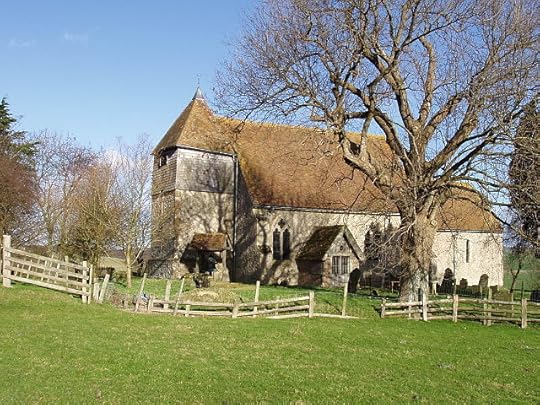
Personally, I love camping trips and Kent has an abundance of great locations to base your camping holiday, or you move around as well. If you’re doing the traditional English caravanning holiday, Kent is pretty much designed for you. It’s the warmest part of Britain so the chances of the sun being out is especially good and a lovely bonus for campers!
Most people will be coming from a north-Westerly direction, down the M2 or M20 so you can start your Kent trip in Dartford or Sevenoaks and go around in a clockwise or anticlockwise direction. You can pick up the coast road either side and follow it around.
Be forewarned, campsites in Kent are popular and moreso in the height of summer which is obviously the best time to go. Other great times outside peak are September when kids are back to school so you might prefer the quieter atmosphere. Spring is also a beautiful time to visit.
Things to do in Kent
Beaches
If the weather is good, you can take advantage of the many great beaches along the Kent coastline. The best in my opinion is the Camber Sands (technically East Sussex but let’s not split hairs, it’s a stone throws from Kent). A fantastic day out for all the family, load up a picnic in the car and you’re good to go. Let the kids run amok in the sand dunes while the parents kick back and relax on the beautiful sandy beach.
Cliffs of Dover

By Immanuel Giel via Wikimedia Commons
The famous white chalk cliffs of Dover are one of the iconic images of Britain. A major location in the Battle of Britain, don’t miss the opportunity to stand on the top and gaze over to France, which you can see on a nice clear day. The location for many an invasion over Britain’s long, active history, it makes for a thoughtful experience.
Dover Castle

By Jake Keup via Wikimedia Commons
The “Key to England” has a long long history, and the roman lighthouse built on the site is thought to be one of Britains oldest buildings. The largest castle in England is a sight to behold and a fascinating day tour which runs through it’s incredible history. It is a very popular tourist stop now and you can even visit the secret runnels built underneath which was an important planning are during WWII.
Shepherd Neame
The oldest brewing company in Britain is certainly worth a visit if you’re thirsty and over 18 of course. Taking advantage of well earned title The Garden of England, orchards and hops have long been grown and cultivated in the South East county. Breweries are plentiful and there is even more surprisingly a vineyard or two. English wine, not something you hear of everyday.
All in all, when it comes to a holiday break in the South of England, you really couldn’t go wrong with a self-catering holiday in Kent with Freedom Holiday Homes. A short trip from London and you’re in the heart of the countryside and on the coastline at the same time. Give it a try and you’ll be rewarded!
The post Exploring the English County of Kent appeared first on We Said Go Travel.
Ireland: Land of the Horse
 Unbridled Freedom in the Hills of Connaught
I journeyed to Ireland to explore the Land of the Horse from the saddle. I have spent every day of my life with horses; nothing compares to the joy of riding. It is a euphoric experience that offers a freedom all its own.
Traveling through Galway towards my destination The Connemara Trail, a land of dramatic contrasts emerged. Lush green pastures, brilliant wildflowers, soggy peat bogs, and magnificent mountains with rock-strewn hillsides presented a pastiche of austere epic beauty. Old castle ruins stood as a testament to an earlier time in history. The landscape gracing my eyes has inspired writers and artists through the centuries.
A sense of wonder took charge of me as I gazed out the bus window. Horse lovers from all over the world filled the other seats. Their enthusiasm bubbled out in a rise of international tongues. I could not speak, and thus began a journey inward.
 The bus slowed, sheep crossed. In Connemara, the wooly ones have the right of way. Our local driver yielded, and he announced, “Just a few more minutes’ folks”. It took me a moment to decipher the words from his Gaelic accent.
Soon after, a muffled, “OK, here you go, here ya go folks”, accompanied by an abrupt stop and hand gesture to disembark. We arrived ready to ride. I did not see a stable.
On a vista, across a steep rocky valley, a colorful group of horses grazed near old ruins. I expected Liv Tyler to appear at any moment.
Our guide, Willie Leahy, a legendary trail master, instructed us, “grab a bridle and get a horse”. The tack room consisted of two walls, and a partial roof of a stone structure built into the hillside. Lucky to be among seasoned horse people, this seemingly daunting task [catching loose horses] went along like clockwork.
Soon saddled we began the world’s oldest trail ride atop Ireland’s only native breed of horse, the Connemara, of course.
My first pony, Snowflake, was a Connemara. She taught me to ride. Three decades later, across the Atlantic Ocean a member of her clan was co-creating yet another milestone in my life. It was a very cathartic moment.
 The harsh terrain of the West Coast is intimidating to negotiate on horseback. Our mounts swiftly revealed their strong and sturdy qualities. They have endured the ruggedness of this environment since the 4th century B.C.
Willie assured a handful of nervous riders, “Connemara-bred horses can go through, get around or climb over anything”. He has guided riders through the hills for over 40 years.
As I rode, a panorama of magical and utterly wild countryside enveloped me. It is a dramatic, mysterious feeling to simultaneously experience the personal exhilaration of riding in this setting, coupled with County Galway’s history of tragedy and inspiration.
The trail took us on “famine roads” past the ruins of abandoned village cottages. These small winding roads are a haunting reminder of the terrible potato crop failures in the 1840s. The Irish population was decimated. Over one million lives were cut short. In 1847, Relief Committees gave the starving Irish such roads to build. Where the roads end, the Irish died. Stepping back onto grass forced me into silence. I offered a bowed heart as I envisioned the horror the Irish must have endured.
Below the trail is the Quiet Man Bridge, made famous by the 1950s John Wayne and Maureen O’Hara movie bearing its name. Director John Ford won an Academy Award.
 As midday approached we prepared for lunch in a craggy meadow. To my amazement, we completely untacked the horses. Bridles off, saddles off, and no halters — I have this on video! For an hour, without any ties, the herd and the humans lunched … together.
Not long into our fine dining experience the Atlantic delivered gales of rain. Quickly, we tacked up.
A symphony of hoof beats built to a beautiful crescendo as we moved in one harmonious unit. The staggering sights before me, the horse beneath me, and the history we rode through enriched me forever.
The great Yeats, McDonagh, Wilde, and Joyce have each expressed the affect of Ireland’s wild west coast in their works.
To really stop, look, and appreciate the bleak rugged beauty of this land is to dance with pure freedom … unbridled freedom in the Hills of Connaught.
About the Author: Susan Kayne is the creator of Unbridled TV, an equine lifestyles TV series broadcasting on HRTV. She spent several weeks riding in Ireland tape Unbridled TV. Connect with her on Twitter @Susan_Kayne.
The post Ireland: Land of the Horse appeared first on We Said Go Travel.
California Back Road: Quatal Canyon
 There are places I’ve been to that are out of time. Places that are imbued with spirit, and although man has touched it with roads and trails, it remains itself and deeply authentic, a place that takes me back in time. This is what I am drawn to, what I hunger for. To drop down into another realm that is all encompassing, overpowering – to feel it, see it, smell it and open to it.
This place is only two hours from where I live, it exists in Central California’s Los Padres National Forest, it is not easy to get to or go through, but worth the effort, it is a journey to an ancient and vital place.
I enter off a paved highway at Hudson Ranch Rd., to the east soar Kern County’s tallest peaks, Cerro Noroeste and Mt. Pinos and San Emigdio. To my right is a washed out sign with pealed back paint that shows the way – Quatal Canyon -a bright white arrow points left to forest road 9N09. The entrance is plain, it is easy to miss, an allee of Pinyon pines surrounds a curving road and pulls me in, for I know enchantment lies ahead.
I cross over the highway and slow down my all wheel drive car onto the stone scattered dirt road. Here motionless grey green Pinyon pines envelope me. Without warning, oaks rise up from the canyon floor, soon the Pinyon branches turn dark and wild and hang from the sandy hillsides, roots exposed, no rails to guard the eroded road that drops off steeply below. Around another curve emerge red stained hills and contrasting sage green shrubs above and around the scoured formations.
 Suddenly a hairpin turn appears, I must pay attention and slow down even more which is why I am here, to unhurry my pace. On my right I see the brilliant white California buckwheat, the pale yellow plumed swords of Yucca whippelei punching up to the sky, the maroon smooth bark of twisted Manzanita and smell the fragrant mountain sage. This thrills me, I design landscapes and outdoor spaces, I have studied them in books, and seen them in square plastic pots, but this is where they live. They have survived flash floods, the delicate purple blue lupine have struggled through rocky places to stand upright and courageous. The ancient Chumash wilderness envelopes me, I am part of it, I feel alive in it.
Quatal Canyon, according to legend, is named after a great Chumash warrior. It is a giant desert wash formed from waters ripping down from Cerro Noroeste (Mt. Abel) and from severe erosion created by nearby San Andreas fault lines.
I stop my car, I get out and stand at the road’s edge and listen to the silence. I am alone, I have seen no one. The canyon wash drops down below. A screech breaks the quiet, it is a Western scrub jay who lives in this dry lowland, perched on a scrubby oak, then I see a jackrabbit with giant ears hop between tall grasses on the canyon floor. Slowing down, getting still.
 Back on the road runnels suddenly appear, deep narrow channels created by the powerful flash floods that are carved out from November to April. I take it slow and clear one after another. Then the road becomes a roller coaster of humps that are crazy and fun to ride. Soon the road straightens out and a quiet isolation descends. I pass western style post and beam gateways like Crying R Ranch and shortly a sign tells me I am leaving the Los Padres National Forest. This rare passage is almost at an end. A concoction of oil and dirt smooths out the road and signs of civilization start to appear. Incongruous emerald green vineyards spread out below fractured arid hills, here miles of cabernet grape vines are planted.
 The road ends at Highway 33, turning left and south is Ojai, turning right and north is another destination, a eccentric hole in the wall inn where gold medal wines are poured and thick steaks sizzle on a grill, called Sage Brush Annie’s.
My journey through time is over, I am buoyant, I have been somewhere primal and I feel full of its enchanted light.
About the Author: Linda Jassim earned her Masters of Fine Arts from the American Film Institute in Communications and Film Directing and received a Masters of Landscape Architecture from the University of Southern California. Linda is a landscape designer and has worked on residential and commercial projects in the Southern California region. She was editor of “The Power of Gardens,” a monograph of landscape designer Nancy Power’s life work. She has published articles about architecture and urban issues in print and online. Linda also has had an extensive career as an EMMY award winning TV and film Producer and Director.
The post California Back Road: Quatal Canyon appeared first on We Said Go Travel.
India: Lost and Found in Mumbai
 LOST AND FOUND IN MUMBAI
By Arti Agarwal
I was an oilfield engineer; the kind who wear muddy, greasy coveralls, work with hefty tools in the sun and the rain, have big degrees from an IIT (Indian Institute of Technology), work on five computers all at the same time, monitor data from the earth in their sleep, live on a drill-ship, attend meetings with clients, get regular firings from their bosses and clients, and are wondering why they do all this at the end of every day.
I lived in Mumbai, in a manner of speaking – since I was in Mumbai for only a few days in the whole year. I used to suffer from migraines, which became more and more frequent as the number of colleagues and trainees working with me on the drill ships became fewer and fewer, until a day saw me lying numb in my bunk bed from ceaseless pain, with a completely new trainee popping into my room every hour asking me what needs to be done.
I was not a worker. I was a creative human being, who yearned for a meaning to life. I was a qualified architect and a skilled photographer, and every bone in my body screamed to be released from the bondages of the insensitive management of my oilfield services company.
 As the chopper was taking off from the drill ship, I looked at the waves in the sea, at the steel equipment, at the people walking, working, smoking on the rig. I saw the endless deep blue of the sea surging up in front of me as the chopper gained altitude. “I am not coming back”, I whispered to myself. I didn’t tell it to anyone else just yet, I didn’t want to jinx it.
The flight landed in Mumbai as I woke up with a start. I had not slept well for days. One chopper and two flights, and from being lost somewhere on a ship in the Bay of Bengal, I was now standing in the pleasantly cool breeze of Mumbai, already feeling more and more sure about my decision.
–
I was standing in front of the Express Towers on the Marine Drive, in my running shoes, headband and running shorts, iPod pinned on. The sounds of the waves of the sea crashing on the rocks were not very different from the mix of emotions rising and falling inside me. I was now running on the waterfront, skilfully avoiding running into people on evening walks; young and old, happy and sad, singles and couples, corporates and the jobless, in party clothes and in strict formals. In one run, I encountered a sizeable cross section of the human society.
At the end of the run, I felt as alive as the blood circulating in my veins. As I sat down after running 3 km, gasping for breath, ears stinging from the strong winds hitting them, I knew I wanted this – this freedom to run, to think about the things I love, to do what I wanted. I turned around, and saw the “Queen’s necklace”, the skyscrapers along the sea front on the Marine Drive, sparkling with the night lights, inviting people to have a good time.
–
 Four days later, I walked into the cubicle of a senior manager for my location, with the suppressed excitement of a child who is finally going on a summer holiday.
“Give it a little thought”, said my manager
“I have”
“What do you want, just let me know. Do you want a promotion? A transfer? A change of job role?”
“I want to quit”
My manager shrugged.
I walked out with a smile no one could wipe off my face, and I knew for a fact that many did want to do that.–
It was in the wee hours of the morning that can neither be called night, nor morning, when I reached the Gateway of India. The Gateway of India was the place from where the British left India, when their rule in India came to an end. And this is where I wanted to celebrate my freedom too, doing the two things I loved the most: experimenting with pictures, and exploring the city I lived in.
As the sun started to rise in the sky, a group of elderly people gathered in front of the Gateway, in a circle. And to my big surprise, they all started laughing. Laughing, non-stop. No one else around me seemed to be surprised. “It’s the laughter club of Mumbai”, explained someone.
It was infectious. I had a wide smile on my face, breaking into a laughter. I was now a freelance photographer and writer, out to explore the world, one city at a time, starting with Mumbai.
About the Author: Arti Agarwal is a creative professional. She is a freelance photographer, writer, artist and designer and the founder of –en-light-art-, her new venture. She finished her Bachelor of Architecture from IIT (Indian Institute of Technology) Roorkee, where she caught the creative bug to last a lifetime.
The post India: Lost and Found in Mumbai appeared first on We Said Go Travel.
We Said Go Travel

- Lisa Niver's profile
- 57 followers

