
Elgon Williams's Blog, page 29
October 17, 2014
Update – The Wolfcat Chronicles and Writing a Series

It’s been nine months or so since I last looked at Book One of The Wolfcat Chronicles. Since then I’ve read a lot of books from other authors and experienced the meticulous process of professional content editing for Fried Windows. I’ve learned a lot.
It isn’t like I haven’t read The Spectre’s Warning several times in it various iterations with it previous tentative titles. I’ve always felt it was a good story. But I wrote it about ten years ago while I was concurrently revising The Last Wolfcat – the final three books of the series. The impetus to write the book came from from two directions. First my publisher at the time had asked me to proof read a children’s book for a mutual friend. After I suggested adding two more chapters and changing the ending slightly he suggested I try writing a children’s book. I told him I don’t do children’s books but regardless of my mindset I gave it a go. Second, since I was working on the concluding part of a epic fantasy I had something int he back of my mind akin to how J R R Tolkien’s The Hobbit serves as a prequel to Lord Of The Rings. I recalled reading somewhere that he wrote that story intending it for his children.
Anyway, I started writing the prequel to One Pack, the initial story I wrote about The Wolfcats. It didn’t take more than a few thousand words to realize that despite my intent what I was writing was not children’s story.

As happened with writing each of the volumes of The Wolfcat Chronicles, the story flowed mostly of its own accord. The difference was that, having written One Pack an about half of The Last Wolfcat, I knew where the story was headed, so there was some guidance to the development of characters that would populate the story. So it was more like filling int he gaps and writing a backstory. Still I didn’t know how all the pieces – the various backstory elements mentioned in the subsequent books – could possibly fit together. Yet, in the course of writing about Ela’na and Rotor as pups growing into maturity those storylines fell into place. And pretty much, the tale told itself.

I’ve always liked the story. Having completed the draft in 2005, I have revised it and tweaked it several times. And, having drafted the entire story across the ten books of The Wolfcat Chronicles I had the rare ability as an author to revise them as a collective whole ensuring continuity and concurrence between the books.
In 2010, as a member of Fanstory, I posted the entire series in draft, one chapter at a time. A dozen or so fellow authors read and critiqued the story. I took notes. Some parts needed to be amended. Other parts were repetitive and needed to be removed altogether. But the feedback was essential to improving the story. Most of the authors liked the story. Some had favorite characters and offered me suggestions about how they would like to see the events resolved. A couple of authors have become my cheerleaders and can’t wait for me to get around to publishing the books.

Following that experience I revised the entire series of books. And last year I revised everything again up to book 9, which is the second book of The Last Wolfcat. You see, over the years I have written other stories that have threads that tie into these books. And yes, there is a connection to Fried Windows. There are several other threads connected to One Over X and The Attributes. Many character’s stories interrelate and they appear in one another’s lives outside of the immediate context of the stories written specifically about them.
I guess there are different reasons for writing a series. Sometimes its just that the ending does come about after 100,000 words. Maybe, as an author, you become too attached tot he characters to let go of them. Perhaps the author is not the creator of a world at all but serves as a conduit for a story from somewhere else to be told. The truth is that I’m not sure why it was necessary for all the books to connect one to another. That’s how it turned out, though. And at some point it occurred to me that I had not written a series of stories so much as was describing an alternate universe in which the characters reside.
I’ve made it to Chapter 8 in The Spectre’s Warning. I’ve removed about three pages of text so far and amplified this and that. But mainly I’m reading it again. This time I intend to see it through publication and distribution. I think the time has come for everyone to have the change to read about the wolfcats.

#TheWolfcatChronicles #FriedWindows #OneOverX #TheAttributes #Writing #Series



October 16, 2014
Throwback Thursday – Steely Dan’s Debut Album ‘Can’t Buy A Thrill’

Growing up in the 60’s and 70’s was all about music. It seemed there was always a new group not he scene with an innovative twist and sound. 1972’s Can’t Buy A Thrill by Steely Dan was a good example that fused jazz and rock with complex arrangements and exceptional musicianship.
Core members Donald Fagan and Walter Becker met in 1968. Although they worked together on several musical projects including a musical score for a low budget Richard Pryor movie it was not until 1972’s debut album that the duo receive success. Along with Jeff ‘Skunk’ Baxter, Denny Dias, David Palmer and Jim Hodder, Fagan and Becker recorded Can’t Buy A Thrill which featured two Top-40 hits, Do It Again and Reeling In The Years and Dirty Work that receiving FM airplay as well.

Although the band toured for several months eventually releasing Countdown to Ecstasy which was not as commercially successful as their debut. Blaming the album’s performance on a rush job to record it while touring, Fagan and Becker decided to become more of a studio only venture bringing in session musicians to complete their recording projects, Pretzel Logic, Katy Lied, Royal Scam and Aja. Steely Dan alumni appear in several other popular groups of the era such as Toto and the Doobie Brothers.

In 1981 Fagan and Becker split for more than a decade to reunite in 1993. in 2000, they released the multiple Grammy Award winning album Two Against Nature. In 2001 they were inducted into the Rock’n’Roll Hall Of Fame.

#Music #SteelyDan #CantBuyAThrill #70sMusic


October 13, 2014
Politics, You and Me

Getting involved in political or religious arguments is something I avoid. But that doesn’t mean I’m apathetic or don’t have opinions. I’m about as politically neutral a fellow as you will ever meet. And as far as preaching goes, I don’t. I believe what I believe and most of you wouldn’t believe what I believe – and thats okay. What I will say is that over the centuries a lot of people have died because of both politics and religion and the death tolls are still mounting.
The point of this – whatever this blog post is – is to state my feelings about why people are disenfranchised and unrepresented. It’s pretty clear that modern mass media has become a propaganda instrument, regardless which side of any argument they support. Despite every major issue having multiple aspects and varying shades of gray between the extremes, our political system, being dominated as it is by two major parties, the media portrays choices in terms of an artificial dichotomy. If pressed about other views and opinions they will outright tell you that you are wasting your vote unless you side with one or the other major political parties.

But that’s analyze that more closely. Somewhere between 25 and 30% of the population declares political affiliation with the Democratic Party. Roughly the same number declare membership in the Republican Party. What is misleading in these number is that they are based on party registration which in many states is required in order to vote in a primary election. In some states you can vote for the opposite party’s slate of candidates in a primary which confuses the matter even more since in those states it has happened that Democrat turn out to vote for the Republican candidate least likely to win against a Democratic opponent – and vice versa.
So I’m not sure how many Republicans or Democrats there really are but I have read that about 15% of the population identities themselves as liberal while somewhere between 15% and 20% state they are conservative. For argument’s sake, lets say that both extremes have about 17% of the population. That means 34% – a little more than one third of the voting aged public strongly supports one extreme political view over the other. But that about all those registered voters who claim they are Democrats or Republicans? Twenty-six to thirty percent of the public declares party affiliation without strong support. In election campaigns those are people who may or may not vote, or in polling terminology ‘the undecided’ voters. They are lumped in with the undecided who declare themselves ‘independent’ because those people sometimes vote as well. And, oddly enough, those independents comprise roughly 40% of the registered voters.

The media, pollsters and both political parties couldn’t care less about the voting aged people who don’t want to vote. They count on them staying home. To the media they are brain dead. Their minds have been numbed into apathy toward anything other than their favorite TV shows and sports teams. They do not pay attention to the news unless they have to – like in the vent of an emergency evacuation or severe weather. They work, pay taxes and pretty much do what they are supposed to do, which is stay away from the polls come election day. .
Now, I admit my numbers are estimates based on educated guesses from what I have read. They are not precise but I bet they are pretty close. Yet the mass media would have us believe that we must support either the liberal or the conservative point of view. How many times has a third party candidate throated to shake up an election? Remember the media telling you not to bother voting for that candidate because your vote won’t really count? But how can that be? Well, simply put, it is not the real case. Provided everyone who is declared independent and those who declare a leaning to one or the other party without firm support actually shifted their votes to a third party, that candidate could actually win. Historically it has happened, though not in recent times.
Instead of being divided 50-50 between Democrats and Republicans as the media would have us believe, the truth is quite different. A distinct plurality believe something between the two extremes that is largely unrepresented by either extreme of the political spectrum. Why else is it that around election time both major parties begin to modify their rhetoric to court votes from the centrist perspective? It’s because the middle ground is where most Americans opinions reside.
The two political parties count of low election turnout because it supports their best interests. Their loyal supports numbers are effectively made much more important that way so, in effect, their votes count more. Historically between 40 and 50% of voting age people will not vote in any election. They remain disenfranchised because they are not motivated by either political party to go to the polls or request an absentee ballot. Neither major party cares all that much about them or what they believe. They assume those people won’t vote and pray they do not because they present an unknown variable in their scientific polls simply because they do not know much about them and couldn’t care less about finding out.

However, those people don’t vote because neither major party candidate excites them. The political parties do not express their views. If asked their opinions on elections they are likely as not to say they have none or that both candidates are despicable, though perhaps for different reasons, and therefore undesirable. Why bother voting for someone who puppets the platform of a political party that doesn’t represent the interests of a majority of people?
And so we end up with a government at every level that doesn’t reflect the interests or care for the needs of the majority.
The reason all this came to mind is that elections are less than a month away. Gasoline prices are trending down. Unemployment figures are also trending down. Imagine that! Seems like those in power plan to stay in power, depending on the people believing the illusion that things are getting better.
#Politics #Voting #Democrats #Republicans #MassMedia #Propaganda #Elections


October 9, 2014
Throwback Thursday Spotlight – Fleetwood Mac Self-Titled Album
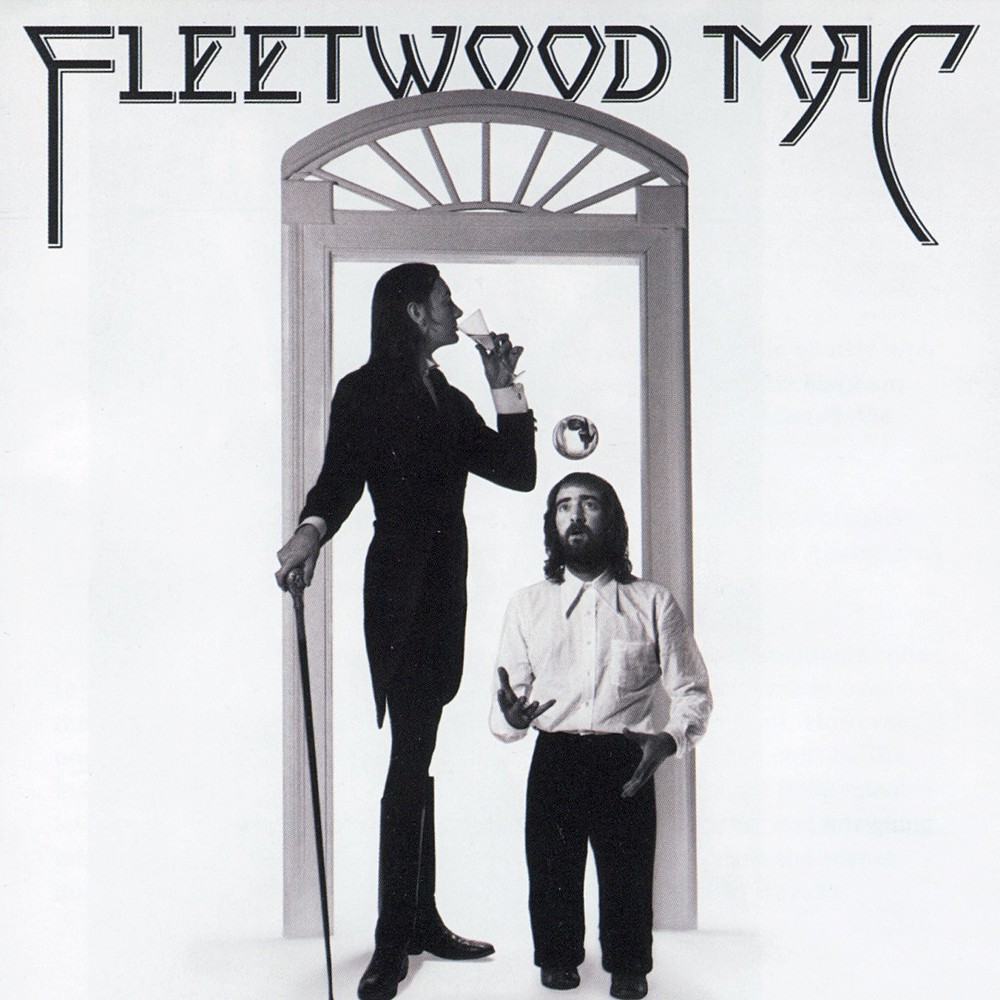
Usually if a band self-titles an album it is the debut production, but there was nothing ordinary about Fleetwood Mac or their multi-platinum selling effort. The band had been around for sometime as a blues-rock band formed in 1967. The all-British iteration of the band included guitarist Peter Green who named the band by combining the names of Mick Fleetwood (percussion) and John McVie (bass). All three were members of John Mayall’s Bluesbreakers. Interestingly enough John McVie did not play on the band’s first single or perform with the group on their first tour, opting instead to continue playing with play for John Mayall.

Christine McVie (keyboards), John’s wife at the time, joined the band in 1970 and American Bob Welch replaced Peter Green turning the band more in a melodic direction leading to some commercial success with the song Sentimental Lady. Although the early iterations of the group received critical acclaim for their efforts their greatest success came after Mick and John and Christine invited two American songwriters Lindsay Buckingham and Stevie Nicks to join.
Buckingham and Nicks had received some commercial success with their country-flavored duet album Buckingham Nicks that featured some songs that would be reworked and included on the first Fleetwood Mac to include them as members. The addition of the two Californians helped fuse the group’s blues/rock roots to a somewhat softer, west coast pop sound in legendary way. The The songwriting of Buckingham, Nicks and Christine McVie resulted in a string of commercially successful hit singles and albums, some of them like Rumors still rank among the most successful of all times.
The Fleetwood Mac album was released in 1975 and featured the hit songs Over My Head, Rhiannon, Say You Love Me, Landslide and Monday Morning although every song on the album received some airplay on FM Radio.
#FleetwoodMac #70sMusic


October 7, 2014
The Questions People Ask…
My favorite author has changed over time. So whenever someone asks me that inevitable question – as if an author can only have one favorite – it may actually be whomever I am reading at the moment. However, knowing that won’t work for the sake of an interview or even a general query from a reader, here is what I usually say.


Kurt Vonnegut Jr was my favorite author through high school and college, though as my interests broadened I became interested in Douglas Adams for some of the same reasons I liked Vonnegut’s novels, but I also tended toward more intense themes and complex plots from writers like Samuel R. Delany, Ursula K Le Guin, Frank Herbert and Robert A. Heinlein.


There are dozens of authors whose work I have followed over the years and many new writers I’m watching. Hopefully someone is observing my development as well.
Another question is: when did you decide to be a writer? I’m not sure there was an exact moment because I believe you are born with the gene and over the course of childhood you discover the inclination for storytelling. I think I always wanted to tell stories to people but it took some time to hone the skills to the point that I was better at it that the average person. From then on it became a matter of learning everything I could about the art of writing in such a way that others would want to spend their money buying a book and their time reading it. For me, I became aware of the process around age 13. Mainly I was pissed off when my 9th grade English teacher wrote a note on a writing assignment that I took as a personal challenge. She said, “You’ll never be a writer.”
When do you know a book is ready to be published? I get that one every once in a while from aspiring writers. By the way, just because you have something published doesn’t mean you’re not still aspiring. A writer who is not still honing his or her craft has either lost the creative connection or has passed away. Writing is a lifelong adventure. Having said all that, I don’t know if there is a point that you as a writer know a book is ready to be published. There is a moment when you are satisfied that it is a good as it will get for the time being. You can overdo things, you know?
I think after the first dozen revisions, a book is probably good enough for others to read. That is not to say it is ready to be published. I think a lot of inexperienced writers are too eager to be published. He or she may arrive at the point of the latest book being as good as it will get for a while and mistake that for being ready to publish. Unfortunately, modern technology has permitted every writer to become published and all too often self published books are not ready for prime time. Whether the issue is substantive errors or lack of professional editing many a good story is not being enjoyed because it did not go through the complete process.

Steph Post, author of the recently released A Tree Born Crooked, said in an interview that her manuscript went through a hundred revisions prior to publication. I have no trouble believing that. Recalling the editing process for Fried Windows, a hundred revisions may actually be a little on the conservative side. Also there isn’t a magic number or a moment or revelation when the author is completely confident that a book is perfect. There is no such thing as a perfect book outside of marketing hyperbole. Every book, no matter who the writer is or how many best sellers he or she has published or the accolades received, has some mistakes in it.
Post also pointed out that you need to really love your manuscript because you will be reading it over and over again. So, it appears that the first real test for whether a a piece of writing deserves to be a book is if the author can read it that many times and still enjoy it. There is some magic on the pages after fall the nit picking if, as the author, you can read through the book you have revised countless times and progress from cover to cover without wanting to change a single word.
There are moments in the process of writing a manuscript that you gain confidence in a story. That may come as a chill that passes through your body or a general sense that you’re connected to the creative flow of the universe – depending on your mental state, the time of day and whether you have been drinking coffee or wine. If several days later you revisit what you wrote and read it sober and it still gives you the chill, you may be onto something. Don’t get me wrong. I am not condoning writing under the influence. I have done some of that in the past but I have not written anything in the past three years that was not composed while sober. Also, I don’t drink coffee anymore. I have found that my writer improved greatly. The need to go back and correct errors diminished significantly and, guess what, my mind actually comes up with a lot of strange things all by itself without any artificial stimulation.
I believe writers as a lot are obsessive, compulsive people and therefore we are prone to addictions born of comfortable habits. We may need to have a couple of beers to take the edge off of things and allow us to slip more comfortably into the alpha state that creativity requires. There are other ways to accomplish the same results, though. Oddly enough, exercising – taking the dog for a long walk, riding a bike or jogging – yields greater mental focus and connection with creativity. Listening to music also works for most people. So, even though I fell into a rut for a time and felt I needed to drink a few beers in order to be creative I have since learned there are many other ways of accomplishing the same thing.
#writing #authors #creativity #influences #KurtVonnegut #DouglasAdams #SamuelRDelany #StephPost #ATreeBornCrooked


October 6, 2014
Reading Other Author’s Books
A fellow author, Rose Montague, author of Jade, posted an open query yesterday on one of her social media pages concerning reading other writer’s material. Since making a brief post on that thread yesterday I’ve been giving the matter some additional thought.
Let’s start off with a qualification. Writers may seem the natural sort of person to approach for feedback on something you have written but if you submit your manuscript to an author for review be sure you have a thick skin. You see, your fellow writers can be brutally honest sorts. Also the more experience we have in dealing with editors, the more little quirky things we pick up and hone in on. In other words, be prepared to be told your baby is ugly. That manuscript you have labored over for the past weeks, months or even years may need some cosmetic surgery before it is ready to put out there for the world to see.
Over the past few years I have acquired a disproportionate number of authors as friends (not exclusive to social media) when compared to non-authors. I suppose the birds-of-a-feather thing may prevail there. More likely I’m drawn to other creative people because I seem to have a number of friends who are artists. That’s not a problem. I like being around creative people. The rub comes when one of the authors asks me for a professional opinion on something. Most of my friends know me well enough by now to expect some frank feedback. Those who have never asked before I warn in advance. I will not publicly post a bad review of something, though, unless the author is aware of it. I offer feedback directly to them. And I always qualify it with a general understanding that I am not a professional editor or book critic.
Here’s the problem writers have with other writers reviewing their stuff. We are creative but that doesn’t necessarily mean that we are attuned to the same creative flow or our muses speak the same language. In other words, I may or may not get the message, the point or whatever about your masterpiece. That doesn’t mean it is not art or worthwhile as a piece of literature. It means simply, I didn’t get it – nothing more than that. It happens. I like what I like and I tend to write in a few genres with which I am comfortable. I may venture outside of my comfort zone to read a good book, but generally I read sci-fi and fantasy. For some reason, over the course of the past couple of years, I have read several paranormal novels and some romance, mostly historical.
It is the bane of being a writer to be asked to read something for comment. I do some of that too, approaching my friends with a new manuscript. Some will read it others will not. Many will post reviews when a book is published, some won’t. Sometimes a review isn’t posted for the simple reason that writers do not like trashing the hard work of others in a public forum. Privately, well, that’s another matter.
I hate assigning stars to reviews as a means of rating. It is a way of quantifying something that is subjective and therein is the rub. My 3-star may be someone else’s 5-star. Why? We key on different things. So there really isn’t any standardization for the ratings unless one considers the source. Even then, do you, as a reader, pay more attention to an author who has reviewed another author’s book than you do to someone you don’t know – and for all you know they might be the author’s uncle or best friend? Would it be best to focus on what other readers say about a book as opposed to a writer? Each reader and potential buyer must decide who to listen to and perhaps once you find a reviewer who seems to share your interests in books you follow that person’s reviews in the future.
Star ratings are particularly misleading when one considers this: Amazon.com, the largest domestic venue for buying books online, considers 1, 2 and 3-star reviews ‘bad’ while 4 and 5-star reviews are ‘good’. Amazon will headline the most popular ‘good’ review directly next to the most popular ‘bad’ review to give some contrast for the reader to make a buying decision. The glaring inequity of this is when a ‘book troll’ posts a purposefully negative review for no other reason than to trash an author and his or her work. All an author can do is post a complaint to Amazon but it is almost impossible to get Amazon to remove the unfair review. After all, a review is just an opinion. Everyone has one.
Also, readers who look only at the star ratings without reading the content of the review do not understand that in the mind of the reviewer the star rating equates to a specific point on the following scale: bad=1-star, fair=2-star, good=3-star, very good=4-star, excellent=5-star. Some reviewers offer a rare 6th star – meaning outstanding. I have also seen a couple of reviewers assign a 0-star rating meaning awful.
Knowing the system at Amazon I refuse to post a ‘bad’ review without the author’s knowledge. My 3-star review means I liked the book but there are things that could be improved that would have made the book more appealing to me. I will never post a 2-star or 1-star review because I know what that does to an author’s overall rating. There may be something I don’t like about a book that is just me and totally because I am a writer. If I rate something lower because of something the average reader wouldn’t notice then such a rating would not be fair. However, I will provide feedback to the author concerning what I did not like about the book and what I think could be done to improve it.
Having said all that, there are professional reviewers, bloggers and critics out there who rarely give 5-star ratings. Their rationale is persuasive, though. They consider the highest rating reserved for a book that truly exceeds expectations, an instant classic, or something so cutting edge that it will set a new standard for everything that follows. Some use established, best-selling authors in a category as a benchmark, pegging their work as 5-star and measuring every book against that. I don’t have a problem with this method except that so many others do not do it that way and so the value of a 5-star rating has been diluted to the point that an honest 4-star from a critical reviewer – which is a very good review – makes a potential reader think there is something wrong with a really good book.
For a couple of years I actively posted on a writer’s website called Fanstory and found it most helpful to receive almost immediate feedback on my writing. Receiving the opinions of ten or twenty other writers was beneficial, especially when they spent the time to mention things that worked and didn’t work for them as a reader. The problem I had with the site was that they also used star ratings. And, just as with the Amazon.com situation, there was inflation of the ratings rendering them meaningless in most cases to the point that an honest reviewer’s critical rating would severely impact the author’s overall ranking. That is one of the reasons I no longer post there. However, I do read and comment on the submissions of authors I have followed for a few years, now. In the process of belonging to the site I have learned that there is a wide variance of opinion on whether something is or is not good.
It’s hard to take criticism but it is absolutely essential that you learn to do so if you intend to become a professional writer. Your goal must always and ever be to improve you craft and the quality of the work you produce. Even if you don’t agree with what a critic says you need to pay attention and determine whether it is valid and might make your story a better reading experience. The reader is the ultimate critic for every writer. And so, it becomes moot whether a critic liked your story or even how you feel about your work.
#writing #criticism #reviews #authors #Amazon


October 2, 2014
Throwback Thursday Music – Spring Session M – Missing Persons

I’m starting a new feature for the blog today, a variation of Throwback Thursday featuring albums froth sixties, seventies and early eighties.
As many of you know I have a variety of interests including music. I played bass guitar in a couple of rock bands when I was in high school and college and I did a graveyard shift radio show on a small station while I attended Purdue University. An avid audiophile, I also worked at a stereo shop that was next door to a record store where I maintained my music fix while matriculating.
Today’s featured album has hung with me throughout the years, although I’m not sure how many others will remember it. Originally released in 1982 and rereleased as a CD in 1995, it was certified Gold at the time and, though the band continued to record and perform until 1986, it is the most commercially successful of the band’s work. The odd title is actually and anagram of the band’s name.
Spring Session M featured Dale Bozzio on lead vocals, Terry Bozzio of drums, Warren Cuccurullo on guitar, Patrick O’Hearn on bass and Chuck Wild on Keyboards. Missing Persons formed in 1980 shortly after Cuccurullo began working with the Bozzio’s who had met in 1979 while working for Frank Zappa. The group’s music is a fusion of new wave, jazz and hard rock styles with amazing drum work throughout. The album includes the hits Destination Unknown, Walking In LA, Words, Windows that received regional and national FM-airplay. But it was the video play (back when the ‘M’ in MTV really stood for music) that featured some cutting edge visual effects that drove the band’s initial popularity. Lead singer, Dale Bozzio, married to the percussionist Terry Bozzio, wore revealing costumes that augmented the use of lighting and striking colors in a way that was novel for the fledgeling music video industry. The band enjoyed moderate commercial success until the break-up in 1986 which coincided with Dale and Terry’s divorce.
Terry Bozzio is highly regarded as a session and tour percussionist who, in addition to Frank Zappa, has worked with Mick Jagger and Jeff Beck and was the tour percussionist for The Knack. A picture and diagram of his 200-piece drum kit can be seen on his website, http://www.terrybozzio.com. Warren Cuccurullo worked for many years with Duran Duran. Chuck Wild was an in-demand session keyboardist who worked with Michael Jackson, Paula Abdul and The Pointer Sisters. Patrick O’Hearn is a skilled composer of instrumental interludes.
#MissingPersons #TerryBozio #DaleBozio #WarrenCuccurullo #ChuckWild #PatrickOHearn #FrankZappa #JeffBeck #MickJagger #MichaelJackson #PaulaAbdul #ThePointerSisters #SpringSessionM #ThrowbackThursday


October 1, 2014
Everything You Ever Wanted To Know About Elgon – An Update
Ambitious title, I know. But since there’s not that much to tell, I think I can pull this off.
What’s going on in my publishing life?

Fried Windows is doing fine. There were a couple of free ebook promotions that created more awareness of the book and a Goodreads Giveaway I did last month. There will be some more things coming down the pike. So look for them. I still need for everyone who has read the book to post a review to Amazon and Goodreads. I realize that’s a challenge for every author out there, getting readers to post reviews. Readers aren’t writer, after all. But it only takes a couple of minutes to write two lines about what you liked or didn’t like about the book. What you may not know is how important total number of reviews are for promoting a book, especially receiving some gratis attention from Amazon. I’m told you must have a minimum of fifty reviews posted to receive a serious push. I have seventeen.
Becoming Thuperman, my next project in the pipeline, is in revisions right now. I have about a day or two left on that before sending the new and improved, latest version to my publisher so it can be reviewed for subediting. The tentative release date on that book right now is the end of January 2015.
Once I finish the revisions on BT, I have committed to reading and reviewing a couple of new books, on a fellow Pandamoon author named Jeff Messick whose debut novel, Knights Of The Shield – a paranormal cop thriller – comes out in mid-November. The other book I just received and it looks interesting. It’s called Stealing Destiny and is in the paranormal genre. Its author, J. D. Selmser contacted me kind of out of the blue. I happened to have a gap in my schedule so I agreed to give it a read. It’s the first book of the Immortal Obsession series. I seem to be reading a lot of paranormal books lately.

In my publicist gig I’ve been promoting Steph Post’s A Tree Born Crooked which launched yesterday. Readers of this blog know I’m very high on this book. It’s different in a great way, paving a lot of new ground in gutsy, gritty realism. It’s seriously a great piece of literature and deserves all the critical attention it has already received. Also, Steph is a sweetheart. I’ve only now her for a little more than a year but she’s a great friend and amazingly talented writer.

Christine Gabriel’s Crimson Forest launched at the end of August and it’s been doing very well in sales. It’s another paranormal book but with a few twists and a lot of differences from the usual fare of vampires and creepy things. It’s a first novel for Christine and also the first in a series. She is nearing completion of the sequel work, Crimson Moon that will launch sometime in March 2015.
Remember The Wolfcat Chronicles, that ten book series I penned between 2000 and 2005? Well, I’m going to be doing a new revision to the first book of the series and submitting it to my publisher. I have submitted a version previously. The problem is scheduling the editing required to release ten books in a fairly short time interval. Also I need to revise the entire series in a narrow window as well. The first seven books are pretty close to being ready for prime time. The last three could use another revision and I want to rewrite the ending because some of the plot ties into Fried Windows. Yeah, imagine that. I’m hoping Spectre of Dammerwald, the first two books of the series, can be released this summer and fall with One Pack, the next five books, coming out in 2016.
Other projects I’m working on: a sequel to Fried Windows tentatively titled Ninja Bread Cookies and a sequel to Becoming Thuperman titled Being Thuperman. On the back burner is a book I started last year titled Bongwater Moses. Those books will make it into print eventually, perhaps in between the individual Wolfcat books. Although there are a few threads of continuity between them and the Wolfcat books they are intended to stand alone.
There are a couple of other books kicking around that I’d like to publish. One is a background book about Brent Woods, the lead character in Fried Windows, titled Fifteen Days of Danielle. Another is a book that I haven’t decided what to call is loosely based on my experiences growing up around South Charleston, Ohio in the sixties. There is also a book I want to revise one more time before submitting it titled Selling The Morning Calm which is loosely based on my couple of years spent in Korea. And there is a supernatural book about text messaging that I wrote in 2009 and another supernatural one that has Brent woods as a character that is set in a haunted house. Add to those a couple of books that sort of provide some backs story for The Wolfcat Chronicles that need to be revised and another book about Brent Woods and how he got involved with The Program that is mentioned in Fried Windows.
Later on I plan a rewriting of the One Over X series which I began last summer with a revised new edition that split the first book into two books. I self published that and posted it to Amazon back in August 2013.
All told there are some twenty books that will see their way into print over the next three or four years.
In my personal life, my nomadic life continues. This time I moved only a few miles from where I had been staying. It’s a longer commute by bike to where I work part-time but it’s good exercise. Over the past year or so I have dropped over sixty-five pounds. I’ll probably shed a few more in the process of biking to and from work. I may pick up a second part-time job for Christmas season.

#writing #publishing


September 29, 2014
Gluten For Punishment

Yeah, I know it’s a pun. Sorry but I was looking for a title for this one and, frankly, that was the only thing that came to mind. Please bear with me, though. I think this might be of interest to a lot of people who, like me, are concerned about our health but wonder about all the healthy food in the grocery store and whether the added expense is worth it.
First of all, I’m not a nutritionist. But I know how to research things and rarely am I persuaded to follow a food fad. I eat whatever I like that I can afford. I exercise when I consume too many calories because taking the pounds off takes a lot longer than putting the pound on. I figure there are a lot of people out there who are like me. I’ve heard a lot of about gluten free foods. Whenever something is new and has a lot of buzz it seems like everyone starts to jump on it like it’s the solution to everything imaginable that is wrong. I’m suspicious of hype, especially when something costs significantly more.
I’ve tried some gluten free foods and I have to say they aren’t bad. But how much good do they do for the body?Are they worth it?
First of all, what is gluten? According to Wikipedia:
Gluten is a protein composite found in wheat and related grains, including barley and rye. Gluten gives elasticity to dough, helping it rise and keep its shape and often gives the final product a chewy texture. Gluten is used in cosmetics, hair products, and other dermatological preparations.
So, it the component in grain that allows bread to rise when the grain interacts with yeast. There are other ways of producing fluffy breads, though, but, of course, that costs extra money.
Is gluten bad for you? If you have a medical condition that requires eliminating gluten from your diet, you obviously need to be extremely aware and conscious of what is in your food. Pain, often severe, is the consequence of eating the wrong things.
It is estimated that at least 15% of the population is gluten intolerant. According to Mind Body Green (http://www.mindbodygreen.com/0-7482/10-signs-youre-gluten-intolerant.html) Here are 10 signs of gluten intolerance:
1. Digestive issues such as gas, bloating, diarrhea and even constipation. I see the constipation particularly in children after eating gluten.
2. Keratosis Pilaris, (also known as ‘chicken skin’ on the back of your arms). This tends be as a result of a fatty acid deficiency and vitamin A deficiency secondary to fat-malabsorption caused by gluten damaging the gut.
3. Fatigue, brain fog or feeling tired after eating a meal that contains gluten.
4. Diagnosis of an autoimmune disease such as Hashimoto’s thyroiditis, Rheumatoid arthritis, Ulcerative colitis, Lupus, Psoriasis, Scleroderma or Multiple sclerosis.
5. Neurologic symptoms such as dizziness or feeling of being off balance.
6. Hormone imbalances such as PMS, PCOS or unexplained infertility.
7. Migraine headaches.
8. Diagnosis of chronic fatigue or fibromyalgia. These diagnoses simply indicate your conventional doctor cannot pin point the cause of your fatigue or pain.
9. Inflammation, swelling or pain in your joints such as fingers, knees or hips.
10. Mood issues such as anxiety, depression, mood swings and ADD.
If you have any of those symptoms you should see a doctor about it. But unless you have been diagnosed with a digestive disorder there is no significant evidence that eating gluten in your food is harmful other than to say anything in excess is probably not good. It is a fact that if you reduce the intake of bread, for example, you will find it easier to lose weight. That’s good news for most of us who like the taste and smell of freshly baked bread. We just need to eat it in some moderation.

Gluten is also found in many cosmetic products as well and those who have sensitivity to the protein should avoid them. Again, if you have been diagnosed, be aware of what is in the products you purchase. Otherwise, the expense if any, in using gluten free is not necessary.
So for most people it comes down to a matter of choice, whether you buy gluten free products. If you don’t have a medical reason and can afford the additional expense going gluten free is the current trend.
#gluten #glutenfree #bread #glutenintollerance


September 25, 2014
Beards, Razors and Marketing
Maybe a weird kind of topics for a writer’s blog, but bear with me. This could raise a bit of controversy in a $13 Billion a year industry. You see, I think the whole thing about shaving is overdone.


It’s a matter of personal taste and grooming, isn’t it? To shave or not to shave. Most guys know the cleanest shave comes from a barber with a single edge blade that is sharp as hell. The barber prepares the client with a hot towel to soften the tiny facial hair follicles while he hones the blade with a letter sharpening strap. This was how it was done for decades. And I dare to say it is still the best way to get a truly close shave.

So the personal shaving business came about because men’s grooming requirements for business in our modern age dictates daily shaves. Maintaining facial hair took a back seat. Most businesses allow for mustaches and some might allow well maintained bears, meaning something like that worn by a British man’s man not the standard Duck Dynasty or Z Z Top kind of monumental feature. You see, in the past men did not go to a barber daily for a shave and a haircut. They took periodic trips (weekly, bi-weekly, etc) depending on their personal standards. With the advent of the personal razor and shaving cream, men had the option to scrape the tiny hairs off their cheeks, chins and throats every morning – and for some men in the evening before going out.
Now, some of you may know I have sported a mustache and/or a beard for certain spans over the years. At present my part-time employer requires a neatly tripped mustache but does not allow a beard. Being a little tired of how I look with a mustache alone, I shaved it off earlier this year, around my birthday, actually. A couple of months prior to that, when I was still diligently looking for a job to supplement my income as a writer, I shaved off a beard I had worn for well over seven years – at varying lengths.

I’ve had to get used to shaving regularly. It causes some problems. It irritates sensitive skin, especially after wearing a beard for so long. Also, those of us who have naturally curly hair, and especially men with nappy roots, can develop a condition called
pseudofolliculitis barbae, also known as barber’s itch. This happens when the sharp ends of recently cut hair follicles curve back into the skin and embed themselves producing a small pimple-like pustule. It is not something you want to have and the only real cure for it is letting your beard grow enough. But for those who must shave you can let the beard grow for the few days necessary for the sharp hairs to pull themselves out of the skin. The time interval also allows for the attendant skin rash to heal.
Now there are a plethora of shaving products out there and many treat irritated skin. Many contain alcohol which not only produces a cool kind of burning of the recently scraped skin but also toughens the skin to the daily abuse men must endure to have the clean shaven look.


Now, lets enter the marketing realm and take a look at the crass business side of things along with the development of electric and multi-blade razors. First off electric razors are a ;poor substitute for a wet shave, in my opinion. I’ve owned one and like most men who received one as a gift at one or more points in life it wound up stuffed in a drawer after a period of less than satisfying use. Do they work at all? Yes, they remove beard from sight. Pretreating the skin and beard aids in creating the feel of a close shave but I think most men prefer lathering up and shaving – if they need to shave at all.
I occurs to me that electric roars, including the more recent wet electric roars – are mainly marketing gimmicks. They work well enough to be used with some modicum of overall satisfaction from the general public and a lot of time, effort and expense has gone into researching and development of improved products over the years. But nothing compared to the barber’s shave as the standard of excellence.


In the quest for a personally substitute for a trip to the barber we’ve seen straight razors evolve into injector blade roars, doubled edged razors (that allowed one to flip it over to continue shaving before ring off the accumulated amalgam of beard and saving cream) and multiple blade razors.


I am old enough to recall the first wave of double blade products and the initial pitches – usually during televised sporting events. There was one commercial in particular that simple amazed me and prompted me to replicate the ‘test’ in a mocking way using the edge of one of my first credit cards. The commercial purported to demonstrate how much closer the see of a man;s face way when it was shaved with a double blade roar as opposed to a single edged one. What a marketing coup! The problem is that the less than scientific evidence was easily faked as I demonstrated many times by applying more pressure to the credit card when running it over the stubble of my face.
The principle behind the double blade roars was that the first blade pulled the hair out slightly and the second blade comes along quickly, before the beard hair has time to recover and it lops it off a second time, supposedly below the skin’s surface. After wards the shaven hair is naturally tugged back into the skin, just below the surface. Of course, I would be concerned that this would promote the aforementioned irritated skin condition,if, in fact, what was really happening was that the beard was being trimmed twice, at different levels. Personally, I doubt that the second blade is actually cutting the hair off before it has time to revert to its rest state int he skin. I’m pretty sure the beard snaps back faster than any number of blades could come along and lop it off again. So the whole multi blade roar phenomenon is a mostly marketing gimmick.

If two blades are better than one, what about three? Four? Five? Look at the genius of this. The blade manufacturers can sell you five blades at a time and five or more time the cost of a single blade and…imagine this, you will be forced to use it fewer times because of the close proximity of the blade and the difficulty cleaning away the debris that gums up the gap between the blades. The more blades and the closer they are spaced together the worse the situation. So, you are getting two, three, four or five blades and paying two, three, four or five times what you would pay for a single blade. They are made in a process that bonds thin metal foil to a flexible strip of mylar The sharpness outlasts the utility of the blade unless you figure out how to clear away the debris with an old toothbrush or some precision dental instrument. Even so, the blades have often been decided to limit the amount if flow through from the front to the back, enhancing the likelihood that a clog of hair and cream will render the device useless.
So, I’m pretty sure that by design these multiple blade razors were a means of getting men to pay more some something that by design they will be able to use less before replacing. That’s how an industry grows.
All razors work well enough. There is probably some minor increase in closeness of a shave from multiple blade razors because, after all, two blades would, in theory, reduce the number of stroked the shaver must be pulled across the face, regardless of whether it actually cuts the beard below the skin’s surface. But the downside is the increased expense of the blades and the diminished longevity of utility. So more blades me more money and fewer shaves per dollar spent.
#shaving #razors #barbers #marketing #beards #RazorBurn



