
Elgon Williams's Blog, page 27
November 13, 2014
Throwback Thursday – Chicago (Transit Authority) Debut Album

The year is 1969. The Vietnam War continues despite campaign promises from President Nixon to end the war. NASA is on target for the first lunar landing in July. And a band named after the public transit system in America’s second largest city debuts with a double album – unheard of in the recording industry, but then this is no ordinary group.
All the years later the first Chicago album is still one of those in my collection that I listen to often.
The band’s original lineup included saxophonist Walter Parazaider, guitarist Terry Kath, drummer Danny Seraphine, trombonist Jame Pankow, trumpeter Lee Laughnane, and keyboardist/singer Robert Lamm. The band’s nucleus met in 1967 at Indiana’s DePaul University. Lamm attended Roosevelt University. Called “The Big Thing”, playing top 40 hits, they realized they needed a tenor to complement baritone Lamm and Kath and bassist Peter Cetera. After moving to LA the band signed with Columbia Records and changed their name to Chicago Transit Authority.
Their first album sold over one million copies (platinum disc) by 1970 and included the hits Does Anybody Really Know What Time It Is, Beginnings, Questions 67 and 68 and I’m A Man. Threatened with legal action for use of the Transit Authority’s name the band shortened their name to simply Chicago.

The well engineered album featured a number of innovative recording techniques using multiple track recording to capture not only the individual instruments and vocals but also multiple microphones on the drums to allow for a “panoramic” sound as if the listener were sitting on stage with the group. Listen to it with a great pair of headphones to receive the full effect. Although the recording method was not unique to this album it was rare for its time. Most stereo recordings were mastered featured instruments mixed to favor either the left or right channels with the vocal more or less centered if not more prominent over the instrumentation in one or the other channels. Some recording engineers attempted to recreate the experience of listening to a group from an audience perspective. Both methods are still used today to create the stereo image of the music in playback.
Chicago went on to become one of the most successful and prolific recording groups in history producing several hits in the seventies and eighties. Although there have been personnel changes over the years the band is still actively performing.
#Chicago #ChicagoTransitAuthority #70sMusic #Recording


November 12, 2014
Overcoming Things – Being A Slow Reader
Have you ever responded to one of those social media challenges to tell some obscure fact about you or answer the question, I wish I could go back to when I was younger and tell myself… I have a response that straddles both criteria. I have dyslexia and if I could go back to when I was a bashful, stammering five-year-old I’d let me know that it’s okay.
There’s an advantage to perceiving things in ways others don’t, can’t or won’t. It’s just my mind is wired differently and because of that I think outside of the box – really I live outside of the box. I won’t often fit in, but again that’s fine because, in the words of the great Groucho Marx, I’ve never wanted to belong to any club that would have someone like me as a member.

Here’s the deal. I have a disability. If most people were honest they would admit to having a disability too. Sometimes I wonder if everyone doesn’t have something going on and perhaps the disabilities, challenges of whatever you want to term them are really gifts in a way. You see, being different and accepting who and what you are liberates you from ever having to conform to being like everyone else in their miserable lots.
My dyslexia went undiagnosed largely because of the rural area where I grew up. Maybe it wasn’t a well-known disability back in the late 50′s and early 60′s – when I was a little kid. Because of it I struggled with reading in the conventional way it was taught. In fact reading in class when I was first grader was a painful experience in public ridicule as I stammered and stalled trying to make it to the end of a sentence - let along a paragraph. With no positive reinforcement I considered reading torment and prayed the teacher would not call on me to read aloud. To this day, over fifty years later, I struggle when called upon to read aloud.

You might think it funny or ironic that a published author suffered from what is now considered a learning disability, albeit it a mild one if identified early on. When I tell people I hated reading it surprises them because, after all, authors write books and promote literacy and all that. The key is I hated reading, not that I hate it now.
What turned the tables for me was a second grade teacher who chose to read a story to the class. In anticipation of Christmas she read Charles Dickens’ A Christmas Carol. And over the course of her daily reads to the class I got it. I understood the magic contained in words. A story well told can conjure images in the mind and, if hearing read words can do that so can learning to read them myself. I was determined to learn how to read even if I couldn’t do it the way they were teaching me in school.
I figured I needed to learn words at a glance. That would speed up the process of reading them if I didn’t have to sound them out. So, in effect, I taught myself how to read silently – meaning i didn’t sound out the world in my head. The benefit of immediately recognizing and knowing the meaning of a word without sounding it out was that I could read considerably faster than my peers who were using a traditional approach. Still, I struggled whenever called upon to read aloud in class. Over time, from memorizing words, I got better at making the connection between my eyes and mouth but it took years and, as i have said already, I still struggle with it.

By the time I reached the 6th grade I could read at a rate of 400 words per minute. I know that because my sixth grade teacher called me out, thinking that anyone who struggled as much as I did with reading aloud – and was officially branded a slow reader – could not possibly be on the same reading level as the best reader in the class on the self paced Science Reacher Associates modules. In fact I was actually a little ahead of her.
My integrity was questioned and my mother got directly in the middle between my teacher and the principal, the latter administering a simple test. He gave me an adult reading level novel, one that he had read, and started me out on a random page and told me to read for one minute. After turning several pages the time limit expired. He asked me what I’d just read. Although there were a few words I didn’t know, I got the gist of the story well enough that he was convinced I read it. Then he asked me what page I was on at the end. He made a simple word per page calculation and arrived at the conclusion that I was reading at 400 to 450 words per minute.
Despite overcoming the disability I still really didn’t enjoy reading, not until high school. By then I had discovered science fiction and fantasy and had begun to have favorite authors whose every book I read.

It was in college that I became an avid reader, out of necessity as I challenged myself to take literature courses. One year I read over 400 books, not counting the text books for my other classes.
I don’t think I have ever felt like I am a strong reader but learning to read was essential to my growth as a person and my adventure in becoming a writer. Sometime you have to take your problems as challenges and figure out how to become the master of your situation.
#Reading #Dyslexia #Disability #Overcoming #Writing #Author #GrouchoMarx


November 11, 2014
Why I Served

Like a lot of people I volunteered of military service for economic reasons. After finishing college in the late 70’s the economy sucked. I continued my education for a couple of years hoping things would improve in the job market. It didn’t. I wanted to work in my chosen career field which was marketing. I found a part time job in advertising (a really small firm) close to where my folks lived and otherwise I stocked shelves in a grocery store to make a little money. There wasn’t much of a future for either endeavor. At least I didn’t see it.
After a wild hair moment, I went to see an Air Force recruiter. Why that branch? My older sister was an officer. She eventually retired as a Colonel.
I thought I could get in as an officer. Trouble was they weren’t accepting marketing people. In other words my degree was not math, engineering or anything they really wanted. My vision wasn’t great enough to qualify for flying – I’m partially color blind. Besides, I’m afraid of heights. Yeah, I know it seems silly that I’d be thinking Air Force. But, anyway, after taking recruiter he suggested I take the entrance examination the ASVAB (Armed Services Vocational Aptitude Battery) for enlistment and consider getting into OTS from inside the service. My sister had done it that way.
I scored high on the test and so when they processed me through my physical they also wanted me to take some other tests in morse code and languages. I scored pretty high in foreign language aptitude, which was ironic since I had been turned down for a job with Bank Of America’s International Division because they didn’t think I had sufficient language ability. Go Figure.
I was a Chinese Cryptologic Linguist Specialist in military intelligence. The job was important but it sounds a lot more interesting than it really was. I spent a lot of time in Asia, of course, half of my brief four year career. And like a lot of veterans I can’t discuss some of the things I did for security reasons. Again, that makes everything sound a lot more mysterious and interesting than it really was.
My experiences while in the military I wouldn’t trade for the world but thinking back I probably wouldn’t do it over again. It is potentially dangerous work regardless of what you do or where you serve. In time of war it is extremely dangerous. I have always had the utmost respect for anyone who served but particularly those who fought in foreign wars.

So, on this Veteran’s Day please remember to thank those who also served. The reason you are free to do what you do everyday is because others have and still are sacrificing their young lives away from family and home to defend and protect our way of life.
#VeteransDay #AirForce #Military


November 10, 2014
How Not To Fail at Retail
I’ve spent most of my adult life working in retail, most of that time in management. It’s not a career I would recommend to anyone but if you like talking to the general public and having a career where no two days are alike, usually busy and at times you feel like a plate juggler with sixteen plats spinning and half of them wobbling, then it’s the right career for you.
I bring that up because over the course of working in retail I attended a lot of training seminars on selling techniques, motivation, leadership and even something called training the trainer. The last was intended, of course, to train me to return to my store and train everyone else. A recurring theme in all of the training I received was How to Succeed. Isn’t that really what we would all like to know? What’s the secret? What are the keys? Is success a strategic decision or does it happen as a random chance accident.
One of the greatest lessons I picked up from all those training seminars is that success is not a destination but a process. One of the most common mistakes people make in their quest for success is seeing it as a goal. You have only to look at successful people to determine that one of the reasons they succeed is they refuse to fail. Sounds silly, I know, but it’s true. They learn from their mistakes, make adjustments, start over again, keep working at it until they achieve the intended results. But once they arrive a some point that from the outside perspective may appear to be success, they seem completely oblivious to the fact that they might have succeeded. Why? Bbecause they are still engaged in the process of success. They have a longer range plan perhaps or their goals are constantly in flux. But they never seem to arrive at a point of satisfaction with what they have accomplished.
The adage about if at first you don’t succeed is kind of misleading, though. Trying is part of the problem in failure. “As long as you tried your best” will often result in lowered expectations. You become content with the attempt and not the outcome. “I tried” cannot be a satisfactory answer. To only ever try is to only ever fail to succeed. It’s easily proven. Drop something on the floor and try to pick it up. If you actually try you can’t possibly pick it up because that would not accomplish what you stated was your goal. If you pick the object up you have succeeded in not trying but instead doing.
With all that in mind, failure, then, is an opportunity to learn more about the process of succeeding. I had a boss when I worked for a major retailer. His motto was if you don’t fail you’re not trying hard enough. The company was extremely successful because it allowed its employees to have an entrepreneurial spirit. For managers it was really kind of like having your own company and using someone else’s bankroll. We were encouraged to think for ourselves and do what’s right for the customer without needing anyone’s approval. As front line employees, the ones who actually interact with he customers where all the revenue for the company is really generated, we were given the authority to be the hero and make the customer happy. This led to some exciting times during the a period of rapid growth and expansion for the company. It was kind of a perfect storm situation, a confluence of doing enough things right that even when we made mistakes it didn’t matter much because everything else covered for it. Sometimes we did really crazy things and because we believed we were going to succeed we made the impossible or unlikely happen. Not only did we think outside the box but also we were constantly working outside of the box.
Here’s an example of one of the craziest things I ever did . With every opportunity to fail instead I succeeded:

I ordered 12,000 – 1 gallon azaleas to be delivered the day an ad broke on the third week of February in Florida. They were in bloom. It was the right time of the year to make customer start thinking about springtime in Florida. I had one week to sell them. Did I do it? Well, no. But the only reason I didn’t sell 12,000 was that the vendor could only fit 11,500 on the truck. No one in his or her right mind would order that many live plants with the risk of them dying and suffering a sizable markdown to zero. But who said I was ever in my right mind?
I didn’t ask anyone’s permission to do it. I had a open checkbook when it came to ordering whatever I intended to sell. To everyone else who looked at it from the outside, including my district manager who showed up the day I was unloading the truck, it was a career decision. Yes, he told me if I didn’t sell all of them I was fired. Frankly, I didn’t believe him because firing someone who was crazy enough to work for that company at the time didn’t make a lot of sense. Going to work each day was a lot like jumping onto a train that was whizzing by at 90 miles per hour. It took a special breed of lunatic just to survive. Still, I took the ‘threat’ as a challenge and motivation to move a whole lot of azaleas in a short amount of time. I was not about to fail so making it happen was all I could do.
Certainly it was a gamble. But to me and the people who worked for me it became a fun adventure. Let’s see how many azaleas we can sell! Keep track of your sales, print out a duplicate receipt from the register every time you take a customer up to check out with azaleas. But the contest was not based on how many plants were sold but instead everything else on the ticket. To make it fair to everyone there was a prize for the most dollars total over the sale period and another price for the largest single sales ticket. It was a easy enough award. Each winner got a day off with pay.
Now we did a lot of other things too, like I had one of the employees out at the street with some azaleas and a sandwich board sign promoting the sale. I called local landscapers to let them know about the great deal we had going on. We were not going to mark down a single distressed plant. We were determined to sell everything we brought in.
One of the parts of the story that really confuses some people is this. We lost money on every azalea we sold, meaning our delivered cost on the item was higher than our retail. Azaleas were on sale for $1.25 each with a cost of $1.38. Investment was 11,500 X $1.38 = $15,870. We sold every single one of the plants. So the revenue on that one product was 11,500 X $1.25 = $14,375 for a net loss of $1,495.
How can a company make money doing that? Well it can’t if that is all you sell. But I considered that an investment, like advertising. It was a promotional expense in order to call attention to all the other great deals we had on things that we actually made a little money on. We were promoting everything on sale in our catalog paying particular attention to everything featured that applied to azaleas because they were in season and in demand. We made it a circus-like experience for customers. You didn’t have to ask if the plants were on sale. You didn’t even have to ask were the plans were because when you have 11,500 azaleas you merchandise them everywhere!
Making a sale into a true event, generating a lot of talk in the local community, we planned to succeed. And if you think people weren’t going home and calling their other plant-loving friends you’re wrong. We also had customer asking if they could use out store phone tell their friends. (This was before cell phones were ubiquitous).
How we made money was that while the customers were buying five or ten azaleas they were also buying the soil amendments like peat moss, fertilizer, shovels, landscaping fabric, edging and decorative mulch. A few decided to buy a new lawnmower, string trimmer or hedge trimmer. We sold a lot of grass sheers, gardening gloves and garden hoses as well.
As a result of ordering a truckload of 1 gallon azaleas between Thursday when the ad broke and the end of the sale, which was the following Wednesday, the garden department in my store was the top department in the entire chain with sales of $127,000 in February! The promotion has a residual effect as well. The following week sales comped (meaning comparative sales from one year to the next) 15%. The largest ticket sold during the contest period was $1,213. The largest total sales by employee was $23,455.
A week after the event my buyer from corporate office flew in just to take me to lunch. He decided he wanted to shake the hand of anyone who did something that crazy and made it happen. I finagled free lunches for both of the employees who won the sales contest and my department lead as well. Since it was kind of her idea to order a lot of azaleas in the first place it only seemed right, though her original order had one less significant digit to the left of the decimal point from the one I actually signed.

#failure #success #overcoming #retail #management #sales #azaleas


November 8, 2014
The Wolfcat Chronicles – An Update
And so it goes…the revision that is. I’ve been crunching through the manuscript adding here deleting there – mainly deleting, actually. I’m on Chapter 26 of 32. I might finish the revision today.
Early this morning I made a decision that, though hardly irreversible, affects the beginning of book 1. You see, sometimes an author has to choose between telling a story as he or she would like it to be and having the correct pacing and flow to enhance the reader’s overall experience. Everything these days is rush, rush. In a previous revision I broke up longer chapters from the original draft into shorter chapters and, at times, deleted long narratives that gave backstory.
A lot of times the backstory is superfluous. Writers use it for connecting other details into the story later on. Some of the information may or may not have a direct bearing on the story at hand. Usually it can be discarded or at least removed from the story without impacting the experience for the reader. Mainly its like knowing and explaining how to build a clock when all the reader wants is to know what time it is.
What I did today was eliminate the entire first chapter of book 1. Why? Because it was all backstory and history, perhaps of interest if you are into the story already but it would have been a boring way to start out the story for most readers. Besides, the information contained in that chapter does not really advance the story and pertains to matters that are covered elsewhere in the series. It may have also gave away too much information with its foreshadowing of events that occur later on in the series.
Rather than delete the chapter completely, I saved it as is. It might be included as a prologue in a special version of the novel in the future. In fact I have saved much of the material I have deleted for the purpose of creating a backstory piece later on. Don’t know if that will happen, but those were my thoughts. As you may or may not know, writers suffer over what they delete from a story. The pain is lessened if, at the time of removal, there is a potential of using the material in some other way later on. We’ll see how that works out.
The purpose of a revision is to make the story more readable. What I’ve done has accomplished that. Both books are now below the magical 100,000 word goal I set. I plan to keep them there as it would make for a book of around 350 to 380 pages depending on line spacing. Even though I know that in the course of publishing these books I will read and revise them many more times, at least two more times but more likely five or six times before turning loose the content editor to whip it into shape for prime time, each time I revise something I fully intend for it to be the last.
Nothing has changed in the story line, which is good news for anyone who has read early drafts and enjoyed the tale. Structural and substantive changes take more time to work out. Each book will have to endure a fresh set of eyes from new perspective – one that knows next to nothing about wolfcats – before the books can enter into the production process. Every book can benefit from that level of scrutiny because the author easily overlooks things that someone new to the story will pick up on. Those details if left be can adversely affect the reader’s experience. It is a level of editing that publishers require but many self-published authors do not bother with.
Substantive editing can be expensive, especially if a manuscript has not been worked over extensively. A good example of a substantive flaw would be having a character owning a red truck in the first chapter but suddenly the truck is blue in chapter ten. Readers notice things like that and it ruins the story for them.
Content editing focuses on spelling, typos, and grammar. Most editors are reading each sentence and perhaps checking to see if the paragraph makes sense in terms of its construction but there is little or no substantive focus. Where content editing can cost a few hundred dollars substantive editing can cost considerably more. Few self-published authors can afford the expense.
Following the current revision I may venture into book three and continue on with The Wolfcat Chronicles. Or I may take a break of sorts and work on the sequel to Fried Windows, Ninja-Bread Cookies. I would like to see the sequel release somewhere between book two and book three of The Wolfcat Chronicles in order that a subsequent book involving Brent, the main character in Fried Windows, could be released between Books seven and eight of the wolfcat series. That would lead directly to the books that continue the One Over X series that brings together all the plot lines of the various series. Each of those books has been written in draft except for the sequel to Fried Windows. That one is incomplete at this point.

#writing #TheWolfcatChronicles #Author #editing #revisions


November 6, 2014
Throwback Thursday – Supertramp’s Crime Of The Century

When I first heard Supertramp I was in a record store in the Student Service Center at Purdue University. I was a Freshman and had been at school for about two weeks, I think. The store clerk was playing the album and it was displayed as a new release.
Like a lot of kids my age I was into progressive rock at the time and the album definitely interested me. It was a well-recorded, well-performed collection of songs that included Dreamer, a UK hit that wasn’t released in the US as a single, however the song received airplay and later on in the group’s career a live version of the song was released in the US. But the commercial success for the album in the US was driven from the release of Bloody Well Right, the album’s big US hit.

The band was originally formed in the late sixties under the name Daddy and received financial backing from a Dutch millionaire. Rick Davies (keyboards) and Roger Hodgson (guitar, bass, piano and vocals) formed the nucleus of the band. After renaming the group Supertramp they released a couple of albums that were not commercial successes. There were some personnel changes prior to recording Crime Of The Century including Bob Siebenburg (listed as Bob Denberg in credits) on drums, Dougie Tomson on bass and John Helliwell on saxophone, keyboards and backing vocals.

Supertramp went on to release a series of albums that leaned more and more in the direction of pop music scoring their biggest hits with the release of Breakfast in America in 1979. The album features the songs The Logical Song, Breakfast in American, Take The Long Way Home and Goodbye Stranger.


November 4, 2014
Where Alligators Sleep, by Sheldon Lee Compton

Steph Post’s review for Where Alligators Sleep posted at Heavy Feather Review.
 Originally posted on Heavy Feather Review:
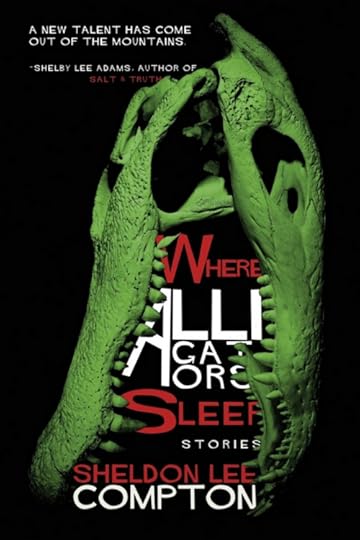
Where Alligators Sleep, by Sheldon Lee Compton. Foxhead Books. 160 pages. $18.00, paper.
I love flash fiction. I love reading it, writing it, teaching it, sharing it. In a world where our attention spans are shrinking and our desire for something new is ever-expanding, flash fiction is a powerful way to satiate and surprise, to deliver the jolt of a story straight to the vein. I thought I knew flash. I felt pretty comfortable with its range and scope, its genre boundaries and limitations. And then I read Sheldon Lee Compton’s Where Alligators Sleep. And everything I thought I knew and loved about flash fiction went sailing out the front door, hit the curb and was run over by a pickup truck.
Compton’s collection of sixty-six flash stories, some a few pages in length, some as short as a paragraph, is visceral. The pieces are risky, in some cases…
View original 882 more words


Progress on The Wolfcat Chronicles

A couple of days ago I completed the most recent revision of the first book of The Wolfcat Chronicles, The Spectre’s Warning. I have submitted it to my publisher. Since this will be my third book with Pandamoon Publishing (if it is contracted) it is not the next one in the queue. When and if it is acquired, I’ll let everyone know and a tentative publication date when that information is available. For now I’m seven chapters into revising the second book of the series, A Warrior’s Heart.
I know I have discussed the evolution of The Chronicles previously on this blog, but as I continue to grow in followers, I wanted to sort of bring the whole story together in one place and say a few things about how the series came about.
Whenever I tell people I have a book almost always they ask what it’s about? And if the conversation continues beyond that, invariably the question comes up, where did you get that idea? I’m offering the answer to both here and now for future reference.

The beginning of The Wolfcat Chronicles can be traced back to a creative writing course I took in the spring semester of 1977 at Purdue University. On January 13th, I submitted a character profile as an assignment. It pretty much described a wolfcat. As my instructor hated science fiction/fantasy he picked it apart. First of all, how could there possibly be a creature with he attributes of a wolf, cat and human? I proposed something along the lines of gene splicing but received laughs from the other down of so would be writers in the classroom. My response that anything is possible in fiction was unsatisfactory to one and all. I received a C for the assignment and suffered through the remainder of the course listening to the instructor pontificate about how choosing writing as a career is anything by lucrative (which is true) and that it is next to impossible to get a book published (which was true for him).
Also I spent most of my time in class justifying why I wrote what I wrote as part of in class critiques on writing assignments. You see, my dialogue wasn’t realistic enough to satisfy anyone else in the class – not their their writing was better, mind you. I took that last part to heart, though, and have spent a good deal of effort over the years getting a better feel for dialogue. As a result, I’m told the dialogue in my stories is pretty good.
Anyway, the first novel I wrote was titled Tarot. The characters were based on the major arcana of the fortune telling cards. Of course it was a fantasy story. How could it not be, right? I banged out a typewritten manuscript in 1978. A couple of friends read it and thought it was pretty good. I even thought about having several copies made at the campus bookstore and submitting it to publishers. Realize that back then each page of a manuscript had to be xerox copied.
At some point I decided to read it and as a direct result had serious doubts about my ability to write a decent story. In other words, after the euphoria of having finished something that was novel length had subsided reality set in and I could see the novel in progress for what it was – a lame, pretentious, uninspiring piece of crap. Having said that, I kept the manuscript and still have it stored in a box somewhere. If I ever feel like being humbled, I can always pull it out and read a few pages.

I’ve come a long way on my journey to be a writer.
There are a few things that survive from the story line of Tarot, though. And they found their ways into One Over X, my first publication, and The Wolfcat Chronicles, my current major project.

While I was revising One Over X in the summer of the 2000, about a year before it was published, I spent some of my free time online with several other people in an IRC chatroom. A lot of those folks played Dungeons and Dragons back int he day. They had invented a role playing game where we were all members of a wolf pack. We wrote our profiles and carried out adventures, some of them pretty humorous.
I was working two part time jobs at the time, one delivering newspapers early in the morning and the other involved driving to Orlando from Melbourne each day to service retail stores as a vendor representative. For those who don’t know Florida geography, Orlando is about a hour’s drive from Melbourne. Between driving, delivering papers and completing revisions prior to submitting them to my publisher, I had maybe a few hours to sleep. I’m not sure how I did it, except I enjoyed the role playing game and looked forward to chatting with the people for a few hours each night.

At some point I told some of the chatters I I was a writer and that I was working on a book that was going to be published. Everybody is writing a book, right? It wasn’t a huge deal at all. But one of the folks said she’d like to read it. After explaining it was going to be about a year before it was released she was disappointed. She said she wanted to read something I had written. So, I committed to writing a story about the wolf pack and sending it to her. Thirteen weeks later there was a 413-page rough draft of the core story contained in the middle five books of The Wolfcat Chronciles. So let’s just say that between May and July of 2000 was when I started work on the series.
The server where the wolf pack’s chatroom was located went down forever. Some of us who had personal contact through email or instant messenger stayed in touch but it was never quite the same. Also, I lost all contact for a while the the lady for whom I had written the story, my muse. I figured I’d finish the book, publish it and she’d hear about it and get to read it in that way. So, in the background as I continued to work two jobs and revise a book for publication I was also revising a book titled One Pack.
As any writer can tell you the goal of revising a book is taking out all the parts that aren’t necessary or redundant, fixing grammar, misspelling and typos, and making certain the story is clearly written. The idea is making a book as complete as possible while being succinct. What usually happen, though, is the story expands and goes off on all sorts of tangents as the writer follows the characters on their adventures and misadventures. You see, a writer of any story is probably the worst person possible to revise a story. Having said that, who except the writer knows the story better?
While I wasn’t paying attention to page count One Pack outgrew the expected confines of a novel. All I wanted to do was see where the story was headed as it kind of took on its own life and wrote itself.


The beginning of One Pack is pretty bleak. It kind of reflected my overall mood at the time of the writing. Each day I had to drive through smoke from a brush fire that continued to burn for several weeks. At times the visibility was nearly zero and the smoke irritated my eyes, saturated my clothes and stung my nose. Some of that found its way into the story, of course.
I never really paid attention to how long the story was becoming until much later on. But as of December 2000, when I made contact with someone who personally knew my muse who had inspired me to write One Pack, it was probably around 500 to 600 pages. She told me she’d give my email address to her friend and I could send the story to her that way. We made contact in January and I send her the wolf story, as she called it. She later told me she had no idea how long it was until she started to print it out – expecting something a few pages in length but having to halt the printing after twenty of the pages rolled out. She emailed me back asking me how long the story was. Honestly, that was the first time I looked at the page count. Obviously the story had grown in the course of filling in all the background and details about the characters.
So, from those beginnings The Wolfcat Chronicles was born. One Pack became five books. And the way One Pack ended left many loose ends so it demanded a sequel, which became The Last Wolfcat that evolved into another three books. While half way through The Last Wolfcat, I was editing a children’s book for a friend and my publisher suggested I try writing a book for kids. There were some things I need to know about Ela’na and Rotor’s past prior to One Pack so I considered a prequel to flesh out all those details. I originally conceived of it as a children’s book about Elana and Rotor as pups. It would be sort of like The Hobbit served The Lord Of The Rings, a story to set up the epic portion o the story to follow. A few chapters into the prequel, though, it became clear the characters weren’t about to let it be a children’s story. And so, another two books came into being that add a lot of history and detail to the series.
All the while I was working on other projects and working a full time job in retail management. I finished the drafts of all ten books of The Wolfcat Chronicles in 2005. By that time I’d become pretty close friends with my muse despite us living on different sides of the country. Along the way I asked her what her birthday way so I could send her a card. When she told me it was January 13th it didn’t register as significant. It wasn’t until I was sorting through my old papers int he process of throwing away things I didn’t need in preparation for moving that I found the notebook from college. It contained the character profile I had written all this years ago describing a wolfcat – though it did not name the creature or its species. I’d written the piece on the day she was born.
The first revision of the entirety took about a year as did the second revision. In 2007, after a major publisher rejected the first book – from the wording of the standardized letter citing economic conditions and the changing book market it was clear no one bothered looking at it – I attempted to self-publish a part of the series. That didn’t turn out exactly like I planned though it was experience with the fledgling systems available for authors at the time.
I revised the entire series again in 2009 and another time in 2011 after sampling the entire series on Fanstory. Roughly a dozen people followed the story from start to end and I picked up a few fans in the process. One of my fans is a British poetess who composed a poem about my story.
There was another revision to the first seven books of The Chronicles in 2013 just prior to my submission of Fried Windows to Pandamoon Publishing. The last revision of the first two books before this current session was in January of 2014.

As a very wise author once told me you’d best love your story if you ever hope to have it published because you will read it many, many times before it is finished.
#writing #publishing #revisions #TheWolfcatChronicles #authors #muses #origins #PandamoonPublishing #FriedWindows #OneOverX


November 3, 2014
Reblog: Steph Post Writes About Writing and Her Busy Life


Steph Post is the author of the recently published novel A Tree Born Crooked. She lives, writes, and teaches writing in St. Petersburg, Florida. Connect with her at http://www.stephpostfiction.com.
BOOK GIVEAWAY! To win a SIGNED COPY of A Tree Born Crooked, share the link to this post on Facebook or Twitter (by using the links at the bottom of this post) and leave a comment below with your Twitter handle or email so I can contact you if you win. The winner will be chosen randomly on Friday, November 7. You can also use this short link in your share/tweet: http://wp.me/p3EtWm-nH
Note: Click on this link for the original blog post for the links to enter contest:
For me, the dreaded question of “What’s your book about?” has always been paralyzing. Most people who ask are looking for about a ten-second synopsis, even shorter than an elevator pitch, and I find it challenging to sum up an entire novel, an entire year’s worth of work, in the amount of time it takes a person to unwrap and start chewing a stick of gum. Or check a text message. Or look over my shoulder at something more interesting. All of which that person is most likely doing while I’m trying to explain one of the most important things I’ve ever created in my entire life.
I’ll admit that I’ve gotten better at it. I’ve distilled my novel down into short, easy to manage, 21st century sound bites that hopefully catch a spark in the listener’s eyes, depending on what he or she is into. Southern. Literary. When the eyes start to drift, I ramp it up. Thriller. Crime. Guns. Then I narrow it down, hone in on what the reader is really looking for. I’m getting somewhere. Florida. Dirty Motels. Alcohol. Road Trips. Banana Moon Pies. I sold a book last week just because the woman had a huge crush on Timothy Olyphant (well, who wouldn’t?). She had no idea what my book was about, but she hauled out the cash as soon as she saw the word “Justified” on the cover.
So I thought I was nailing it with the sales pitch. I was feeling pretty good about it. And then I had a true deer-in-the-headlights moment the other day. The question was the same as always — “what’s your book about” — but I froze. “Um. Er. Stuff. And then some stuff happens. To these people. In this place. And then some more stuff. There’s all kinds of stuff in the book. Yep. That’s right. Lots of stuff.” I don’t have to tell you that I lost that sale…. But it wasn’t because I didn’t know how to pitch my novel. It’s because I suddenly couldn’t remember which novel I was talking about. And now an entirely new author challenge has been thrown my way: how to balance promoting a novel, shopping a second, and writing a third. All without losing my mind.
I have always thought of writing as a war. In addition to being an author and editor, I teach high school students how to write. When we get ready for the state writing test, my students have their battle faces on. During writing boot camp, we plot out sneak attacks, counterattacks, revision strategies, grammar arsenals, weapons of diction, hand-cramping survival tactics, and the ultimate ways to blow up the enemy (the state-appointed essay scorer) and win the war (be eligible to graduate). Some of my students look at me warily and edge away, some roll their eyes, but those who struggle with writing get it. Those who struggle and those who have the demon of a novice writer stirring deep inside of them.
Whenever I’m in the middle of writing a novel, I always feel like I’m deep in the trenches. I’m slogging away, looking out over no-man’s land, wondering if I’ll ever see daylight again. It’s messy and can be disheartening, though filled with explosions of brilliance and moments of adrenaline-fueled panic and triumph. I sit in front of my notebook or computer and imagine what people out in the “real world” are doing. Having fun. Going to parties. Interacting with other human beings. But I’m stuck in the trenches with gritted teeth, banging out chapters because the characters won’t let me sleep until I’m finished. Sounds like fun, right?
Now, I’d give anything to be back, safely ensconced in my trench, shutting the rest of the world out with only my notebooks and my keyboard, my music and my dogs for company. But there’s no going back. I’m running across the field now, grenades being lobbed in my direction from all angles, bullets whizzing past my head, the ground on fire. I thought writing was a battle. No. Writing is a walk in the park on a summer day. Being an author is a battle. Being an author is a fight to death.
Instead of being able to focus, with blissfully intense tunnel-vision, on one story, I have three jostling around in my head at all times. My debut novel, A Tree Born Crooked, was just published in September. I had moved on from the story and its characters in the year’s time from writing to publishing, but now the world of Crystal Springs and its bedraggled inhabitants are right back in the forefront again (and being packaged into ten-second pitch-bites). During this past year, I wrote another novel, so on top of promoting one book to readers, I’m promoting a second book to agents and editors. And then I’ve spent the last three months working hard on research for my third novel, which I hope to begin writing this month.
So when the unassuming reader asked me what my book was about and I provided the elegant response of “stuff,” what was really going through my head was a frantic moment of trying to remember which book they were asking about. The one with the crazy Pentecostal preacher or the one with the Alligator Mafia? Or the tattooed snake charmer? The one set in rural Florida or in a traveling carnival? Wait, is there mythology in this one or is that the one I’m working on now? Literary, noir, Southern Gothic? It must have all shown on my face, because the potential buyer of A Tree Born Crooked carefully set the copy down and backed away slowly.
Three books, one part-time job as an editor, one full-time job as a high school writing coach, occasional forays into book reviewing and short story writing. I’m not claiming to be a multi-tasking soccer mom, but I do have a lot of writing- and reading-related activity going on. I’m taking fire on all sides, so it’s time I created a new battle plan. Hunkering down in the trenches just isn’t going to cut it anymore. Here’s what I’ve got so far:
Reserve the weekends for working on the new novel. It’s the most important thing, and will always be the most important thing, because writing is, well, the point of being a writer. Period.
Do everything else (promoting, querying, blogging, tweeting, editing, reviewing, teaching, living) during the week.
Also:
Stop sleeping.
Forget about ever having a clean house.
Teach my five dogs how to take themselves for a walk.
Tell my husband that I’ll see him sometime. Maybe in the next year. Possibly.
Ditto to all my friends.
Hold off on having kids.
Pretend holidays don’t exist. (Plus side: save money to buy wine)
Sell the television.
Buy a wine cellar. Fully stocked.
Remind myself over and over that I’m an author not because I have to be, but because I want to be. I’m doing this because I love it. It’s frustrating and irritating and painful and heart-wrenching and has completely ruined my social life forever. But I love it.
And I’m open to suggestions. For now, I’m suiting up, checking my ammo, and heading into battle.
#StephPost #ATreeBornCrooked #Promotion #Blogging #Publishing #Editing #Teaching


November 1, 2014
One At A Time

A lot of people have the idea that when they publish a book they’re going to be rich. It’s a myth supported to some extent by the media and, certainly, there are examples of successful authors who are well-to-do based largely on the proceeds from their books and perhaps movie rights. That is an exceptional situation and it does not just happen as a result of publishing a book. For most successful authors there is a lot of hard work over years involved to gain a loyal following.
The sad truth is that most books will not be successful. And in many cases it doesn’t appear to matter how well the author writes. Some of the best written books I have ever read were the offerings of relatively obscure writers. If there is a simple formula for accomplishing success at the publishing game it’s telling a story well enough to entertain one reader at a time.
I could be wrong but I’m not sure a book can be written for the masses. Instead an author should have a target reader in mind whenever he or she is writing a book. If a story has natural appeal to a reader it will work out well for the author. Also the more hooks a book has that offer a way for the reader to get into the story the greater and more generalized the interest will be for the book.
Still, selling a book is mainly a one to one transaction. It has always been that way. It may take place at a public event between the author and a prospective reader. It could be a response to a social media posting the author makes that piques the potential reader’s interest. It might come as a result of a personal recommendation from a satisfied reader through a posted review or verbally expressed.
The point is that the best thing an author can do to sell his or her book is to address each reader individually and, if possible, personalize the pitch for the book. It is not easy. That’s part of the reason why there are millions of authors and only a small percentage of them are successful enough to earn some portion of their living from writing. But I’ve learned a few tips from reading about those who are successful.
Sell yourself as an author before you sell the book you wrote. First and foremost you must build your reputation as an author. In this way with each successive book release the author’s brand is reinforced and over time a following is established. Then it becomes easier to promote books through word-of-mouth. You can begin the process of selling yourself in advance of your first book’s publication. Create a groundswell of interest in your writing. You may do this through establishing your expertise in the subject area or the genre of fiction you have chosen for your writing.
Examples of what you can do through your personal blog are posting articles or reviews on books of your genre, exchanging personal interviews with other authors and promoting the work of others in your genre through your blog.
Make personal appearances even if they are not traditional author venues. Authors compete for the same space in bookstores, libraries and all the other expected places for book signings, readings or speeches. Go where the people are but think outside the box. What about scheduling an appearance at race track, a shopping mall, a grocery store, a home improvements center. Almost every weekend there are events in most major cities that an author might also appear. Attend conventions and fairs as a vendor and sell your books. Establish contact with local associations, clubs, literacy groups. Approach your local schools and colleges about your support for literacy – after all you write books and you want people to read them. Join groups that interest you. Build a support base as an author who is active in your local community.
Use your hobbies and other interests to gain attention. The media will help you sell books but only if it benefits them in some way. Sending out press releases about your book does not differentiate you much from the other million authors out there. Reporters are looking for an angle or an item of special interest to their readers, listeners or viewers. They want to know that makes you unique. What’s your personal story? Have you overcome some adversity or disability? If you are an expert in some field or an active proponent of some cause this can help define you as well and it will become a vehicle for pitching your book. Sell the expertise and your publication will be mentioned in support of your expertise.
Establish a street team to help sell your book. You need to get people talking about your book in advance of its release. Once it is released your efforts are far from over. People need to continue talking about your book. Enlisting the help of family and friends just to get started is fine but you must grow your support base organically from there. The most successful authors have loyal followers who eagerly anticipate the next book.
Initially an author grows the support base one person at a time and knows every member of the street team personally in some way, whether face to face, via email or social media. Over time the author acquires followers he or she may not know personally. A good sign that a fan base has evolved is when an author begins to receive unsolicited reviews from strangers. Another sign is when a reader spontaneously starts a fan club.
Create a way to interact regularly with your readers. Readers love making contact with authors. They also like to have the inside scoop on such things as when the next book is coming out, what it’s about, the inspiration for a book and even obscure facts about the author like favorite colors, biggest fears or interesting idiosyncrasies. Building rapport with readers firms a fan base.
Allow personal access at some level through a special email account you check periodically, membership on your blog, a social media page or account that you use specifically for reader connections. Send out special advance announcements and promotions to reward followers for their support. Make sure you maintain your connections, though. Otherwise something that was good for you can backfire making you appear aloof.
Be creative and be yourself. Be different in some way from other authors. After all, you are creative, right? Come up with contests. One author I know ran a special deal that rewarded the winner with having a character in the next book named after him or her. Another author posted excerpts from her novel in progress and entertained suggestions from readers on how to advance the plot or just make the story better.
Whenever you interact with your readers or potential readers be yourself. Reading is a somewhat intimate experience between two people through a medium they share. One person writes the story the other enjoys reading it. Anything phony is pretty easily identified.

#writing #authors #branding #selling #tips #books #fans


