Matthew C. Mitchell's Blog, page 92
September 8, 2015
Two Years of "Resisting Gossip"
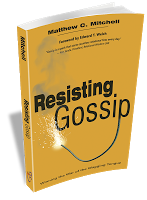 It's hard to be believe, but Resisting Gossip has just turned two years old.
Yesterday, I went through all of the posts on this blog marked Resisting Gossip, and reviewed what a fun ride it's been over the last twelve months.
Some highlights from this second year:
Resisting Gossip Together
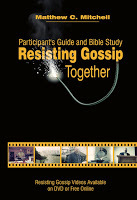 In October, CLC Publications released
Resisting Gossip Together: Participant's Guide and Bible Study
as a companion book. This Summer, RGT already went into its second printing. I'm thankful for the chance to provide this study guide for folks who want to go deeper into God's Word on gossip. I was able to include material that didn't make it into the original book.
In October, CLC Publications released
Resisting Gossip Together: Participant's Guide and Bible Study
as a companion book. This Summer, RGT already went into its second printing. I'm thankful for the chance to provide this study guide for folks who want to go deeper into God's Word on gossip. I was able to include material that didn't make it into the original book.For more information, see this page on my blog which include even more resources and my interview with the Biblical Counseling Coalition.
A great place to purchase Resisting Gossip Together is Westminster Bookstore who also has a starter pack of 5 books and study guides at 35% off the list price.
The Resisting Gossip Video Teaching Series
At the same time, CLC Publications also released a complementary set of videos featuring me teaching on the ten chapters of Resisting Gossip. They were produced, filmed, and directed by Spencer Folmar of Third Brother Films and have great music from The Gray Havens.
What I love most about these videos is that they are available for FREE to the world--downloadable and sharable. The first video has already been viewed more than a thousand times. (A DVD set is available for those who need it.)
Restiendo el Chisme on Colombian National Television
 I never saw this one coming!
On March 31st, the Spanish version was featured in an 18 minute segment on the morning show of Channel One, the national television station in Colombia. (Click on the picture here to got to the YouTube video.)
I don't know much Spanish, but from what I can tell, they did a great job of covering the contents and even the corny humor from the book.
I love the international reach of CLC Ministries.
The Korean and Russian translations are in production, and I can't wait to learn how the Lord might use those in parts of the world I will never see.
Disciplemaking, Not Just Resisting Gossip
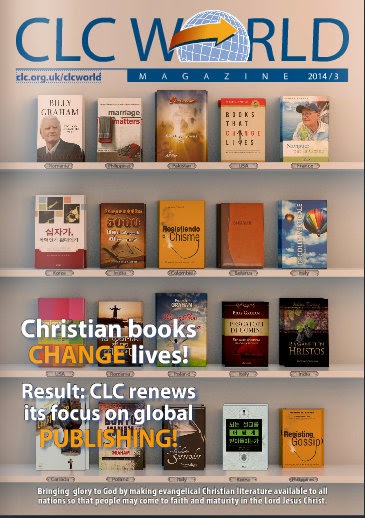 The best part of being the author of this book is that it's not about me, it's about ministry. It's not just about resisting gossip; it's about making disciples of Jesus Christ.
So, my favorite part is hearing stories from people who have been helped by the material.
Stories from folks like Allison Bies, the Federated Church's Adult VBS, this ladies' Bible study group, this family, Uche in Sudan, and this anonymous pastor.
It's a great privilege and joy to be used in ministry.
What's Next?
 1. Résister à la médisance!
The French translation has just been released by CLC France in Europe and will soon be released in Quebec by CLC Canada.
I'm particularly excited about this new release because I get to be a part of it in Montreal! On September 25th, Dave Almack and will be traveling up Montreal for the launch of Résister à la médisance. I'll be sharing more about this event as it gets closer.
CLC France has posted the cover, table of contents, the foreword, introduction and a bit of the first chapter in French.
2. "Side by Side."
Next month, Heather and I will be traveling to Virginia Beach to participate in the 2015 CCEF National Conference. I've been asked to teach a breakout session on "Behind the Back: When Side by Side Ministry is Distorted by Gossip."

I love the ministry of CCEF so I consider it a great honor and a high privilege to get to serve in this way. I can't hardly wait!
In preparation for the conference, CCEF ran a new version of my article on how to keep gossip out of prayer requests.
My heart is full of thanks to God for all of these blessings (and also the countless ones I have no idea He's sending me). May He get the glory now and forever.


September 6, 2015
[Matt's Messages] "Working for the Lord"
 “Working for the Lord”
Working for the Lord - Fall 2015
September 6, 2015 :: Colossians 3:22-4:1
Today, we’re going to begin a new sermon series entitled, “Working for the Lord” and the first message in that series has the same title, “Working for the Lord.”
Now, some of you are wondering, what happened to Romans? Are we ever going to finish Romans together?
It was one year ago last weekend that we embarked on our study of Romans, but we only got as far as chapter 13. There are still 3 chapters left to go.
I told you once that I wasn’t going to go into Romans and never come out like some preachers do. Little did I know how true that was!
I want to put Romans on the shelf for a few more months. Maybe in January we’ll come back to Romans.
But the Lord has been stirring in my heart a desire to preach on work, labor, vocation, calling, the workplace, the marketplace, our jobs–the kinds of things we tend to do on Monday through Friday. What we give ourselves to for most of our week.
And for months I’ve been planning to start that new series on Labor Day weekend, this weekend and go through the Fall.
And since this is the weekend that the Lord has seen fit to raise me up again to preach, I decided to start in this new series.
So, instead of trying to catch everybody up on Romans 1-13 and get back into that right now, I want to turn the page and start something new.
“Working for the Lord.”
Now, let me say a little more about this series before we get into this week’s message in particular.
You might be worried that this series won’t apply to you.
Perhaps you are a second or third or fourth grader.
Raise your hand if you are in second or third or fourth grade.
I know you’re in here because our children’s church only goes up through first grade.
And I have a note posted to myself right above my computer where I write my messages that reminds me that there are second graders listening to each of my sermons.
And I try hard to make sure that the messages I preach can be understood and applied to a second grader. Not every word. In fact, many of my words will be over your heads. But that’s normal when you’re learning things. We all need to stretch.
But these messages on work will apply to you to in your job.
What is your job?
Your job is being a student in second, third, or fourth grade.
It’s also the jobs that Mommy and Daddy give you to do around the house.
This sermon series is not about being employed. It’s about working.
It’s not primarily about getting paid. It’s about what God says about our labor, our work.
So, if you are retired, this series is about you, as well.
If you are your own employer or unemployed (not being paid right), this series applies to you, too.
If you are a homemaker and no one ever pays you any money for all of your backbreaking labor, this series is for you, as well.
Of course, it is also for those who have a “regular job,” too.
And I have a few goals for this series.
One is to encourage you in you in your work. To celebrate you in your work.
God made work and made us to work. We’re going to see that next week. And I’ve been convicted that I haven’t done enough work at celebrating your work.
I feel like you celebrate my work all of the time. You set aside a whole month for pastor appreciation. It’s almost embarrassing how appreciated I feel. Especially this last month when I wasn’t able to work.
But I don’t feel like I’ve done enough to appreciate and celebrate your work. At EFCA One this year, I went to a series of talks on connecting Sunday worship with Monday work connected closely with this book Work Matters by Tom Nelson, an EFCA pastor. And I was already planning this series for the Fall, but I was blown away by all of the biblical teaching and rich theological reflection that they were offering. I came home with pages of notes. I couldn’t write them fast enough!
And one of those items was appreciating your work. That as a pastor, I need to understand more what you do the rest of the week and celebrate it.
But also, secondly, to teach more what the Bible says about work. Because the Bible has a lot to say about work. It’s not just a minor theme in the Scriptures.
Over the last couple of decades, we’ve offered a lot of Sunday School classes on connecting your faith to your work. I went through my library yesterday and noted resources with titles like, “Your Work Matters to God,” and A Man’s Guide to Work, “Created for Work” that the youth boys did a couple of years ago. And our Basic Training that the men did a few years ago (remember that), had a whole module on Biblical Principles for Work).
This Summer, your interns studied a book with me called “Becoming Worldly Saints” which had a lot of teaching on how the gospel intersects with our work-life.
And I’ve preached on this subject whenever it came up in the Bible book we’re studying.
But this is the first time I’ve preached a whole series just on that theme.
And there is so much to share. About working hard, about ethics, about witnessing on the job, about calling and vocation, about work and rest, about greed and money, about prayer on the job, about doing work with excellence. There is so much to learn about.
And I know that you have questions, as well. I have a pile here of surveys that have been returned and I want to try to answer your questions biblically as we go through this series.
One last goal I have is to empower you with grace to do your jobs.
You need to know that God cares about your work and that God wants to give you the grace to do your work in the way that He desires.
I don’t want this series to beat you up about what you are doing wrong. I’m sure there will be some parts that are like that. Sometimes we need that. Good preaching comforts the afflicted and afflicts the comfortable.
But I want this series to be encouraging and inspiring and helpful. To give you grace to persevere in the calling that God has called you to.
I know that your job is hard and that following Christ on your job is hard. But God offers the grace to hang on, hold on, and even thrive.
So, in fact, I’m going to end each week of this series with the same benediction, a prayer, prayed over you from Psalm 90, verse 17 which says, “May the favor of the Lord our God rest upon us; establish the work of our hands for us–yes, establish the work of our hands.”
And what better day to start a series like that than Labor Day weekend, the day we celebrate the gift of work and the contribution that labor makes to our society?
Let’s focus now Colossians chapter 3.
If you’re like me, then you immediately get hung up by the first word, “Slaves.”
Does this mean that the Bible condones slavery?
Because here it says that the Christian slaves were to be obedient in everything.
And that’s a very good and important question, and the best answer is long and complex.
One thing that makes it difficult is that when we think “slave” here in the US, we immediately think of “blacks” enslaved in the South before the Civil War. Most of that slavery called chattel slavery was built on the sin of manstealing–kidnapping.
But most of the slaves being addressed in the Roman world were in a very different kind of slavery than the old South. It wasn’t based on race. It was in many cases an economic arrangement. You could use yourself as collateral and sell your services to get out of debt. Or you were enslaved because your nation had been conquered so you were put into this master/slave relationship to work for and be bound to this employer.
In most cases in the Roman world, it wasn’t nearly as bad and evil a situation as what we think about in our American history.
Not that you would want to be a slave per se–it would be better to be free–but it wasn’t such an evil institution that needed to be so strongly opposed.
Paul tells slaves elsewhere to get out of that arrangement if they can as soon as they can and the seeds of global emancipation are present in the New Testament, as well.
But I don’t want to preach on slavery itself today. If you have more questions about it, I’d love to talk further about that subject another time.
But I want you to put yourself as a worker in that word “slave” in verse 22 and apply all of verses 22 through 25 to you.
Because Paul was introducing a different perspective on work here in this verses.
A different perspective than most slaves would have ever heard.
And a different perspective on work than world offers us today.
What does the world tell us about our work today?
It tells us to live for the weekends, right?
That work is a necessary evil.
On the other side, it tells us that our work is something to give our lives to. To worship our work. To make it an idol.
And that’s wrong, as well.
Here’s the amazing life-changing perspective that Paul wants these Christian workers to gain for their lives.
The Lord Jesus Christ is their true boss.
You and I are working for the Lord.
Did you hear it when I read those verses?
How many times does Paul use the word “Lord?”
Let’s read them again.
“Slaves, obey your earthly masters [Greek “lords”] in everything; and do it, not only when their eye is on you and to win their favor, but with sincerity of heart and reverence for the Lord. Whatever you do, work at it with all your heart, as working for the Lord [that’s our title], not for men, since you know that you will receive an inheritance from the Lord as a reward. [And just in case you missed it:] It is the Lord Christ you are serving.”
So, raise your hand if you work for the Lord Jesus Christ.
You see some people think that only pastors and missionaries are working for the Lord.
There is a theological word for that idea: Baloney.
Whatever you do as you work, your ultimate Boss is the Lord Jesus Christ.
“It is the Lord Christ you are serving.”
So, second, third, and fourth graders.
Who is your Boss?
Is it your teacher or your Mommy or your Daddy?
Yes, they are your boss. You do work for them.
But who is your True Boss? Your Boss’s boss?
The Lord Jesus Christ.
And He’s the One for whom you should your work.
Does that change anything?
If you are retired or unemployed you still have a boss. You are still under authority.
“It is the Lord Christ you are serving.”
And whether you work in the prison or the church office or the hospital or the school, your true boss is still Jesus Christ.
Does that change things?
Does that give a different perspective on our work?
In our family, we like to joke that my Boss never lets me have Christmas or Easter off. I always have to work those holidays.
But He’s not just my boss, is He?
He’s just as much your boss and He is mine.
Were these slaves pastors and missionaries on the payroll of the church?
No, but they were working for the Lord.
And that colors everything about our work-lives.
I see at least four ways that we should now work because we have this Lordship perspective.
#1. SINCERELY. V.22
“Slaves, obey your earthly masters in everything; and do it, not only when their eye is on you and to win their favor, but with sincerity of heart and reverence for the Lord.”
Sincerely here means, “Conscientiously, with pure motives, with singleness of heart.” It means to really mean to work.
And it’s contrasted with those who work only when boss is watching.
Paul uses this Greek word which he made have made up. And it means working while the eye is on you.” It used to be translate “eye-service.”
When I was a student at the Moody Bible Institute, I worked on the grounds-crew. Believe it or not, my job was to mow lawns (!) and trim hedges. Our supervisor was a man named Tom.
Now, when Tom was around, work bustled! We clipped things and cut things and trimmed things.
There was this plant all over campus called “Euonymous coloradois” and we clipped it doooown when Tom was around.
But when Tom went to check on things here or there, our work slowed dooooown. And the talk started. We didn’t stop and take too long breaks, we just found a slower pace that suited us.
Can you identify?
Now, what if we had thought not so much about Tom but about the Lord Christ?
How about you? Are you doing your work just because the boss is around?
Let me tell you something. Your true boss is always around.
Sincerely.
Not to gain the favor of others but with sincerity of heart.
And #2. REVERENTLY.
Paul says in verse 22 that we should work with “reverence for the Lord.”
The Greek word is the word from which we get the word “phobia.”
It literally means to fear the Lord. Not to be frightened of Him, but to revere Him.
To stand in awe of Him.
To worship Him.
Do you think of your work as worship?
We’ll talk more about this in weeks to come, but our work is a form of worship.
We live out the fear of the Lord when we do our work reverently.
And that’s not just me leading worship here on Sunday mornings.
That’s whatever you do out there Monday through Friday or whenever you do your work.
Trucking. Nursing. Building. Teaching. Selling. Shipping. Typing. Creating. Producing.
Protecting. Rescuing. This week marks the 14th anniversary of 9/11. And we remember those firefighters especially who ran into the devastation to save lives.
Whatever you do, if you are a follower of Jesus, is to be worship.
You’re to do it reverently. Worshipfully. Fearfully of the Lord.
And part of that if caring about the quality of it. Because the Inspector isn’t Inspector 12. It’s the Lord Jesus Christ!
Reverently.
Do you offer up your work as worship to the Lord Jesus?
Second graders. When you do your school work for Jesus, you are worshiping Him.
Working for the Lord: Reverently.
#3. WHOLE-HEARTEDLY. V.23
“Whatever you do, work at it with all your heart, as working for the Lord, not for men...”
“With all your heart.”
Literally, “out of yourself” our “out of your soul.”
Throw yourself into your work and do it heartily.
Why?
Because you are doing it for the Lord Jesus Christ.
If you remember anything from this morning’s message, remember this. You are working for the Lord.
No matter what your job is. Maybe it’s digging ditches. Maybe it’s taking out the garbage. Maybe it’s flipping burgers.
Whatever it is do it wholeheartedly for your Lord.
Because He wants your whole heart.
And because it will bring Him glory.
Paul just used this phrase, “whatever you do” up in verse 17. Look up there.
“And whatever you do, whether in word or deed, do it all in the name of the Lord Jesus, giving thanks to God the Father through him.”
That’s how we need to learn to think about our work.
Back in 1993, I joined a circus.
I was a sophomore in college who had just a month before proposed marriage to a beautiful young lady from Western Canada and then I ran off and because a juggler for the Circus Kingdom which traveled up and down the Eastern Seaboard doing at least one show a day.
And that was hard work. I’ve seldom worked as hard as I did the Summer of 1993.
We traveled in a caravan with a box truck full of circus equipment, a 15 seat passenger van and 2 Ford LTD’s with 400,000 miles on them a piece.
Needless to say, we had a few breakdowns along the way.
And we’d stop at least once a day and get the whole thing out of the truck and set it up and then tear it all down and travel to the next place.
It was a lot of work. I’m tired just thinking about it.
Well, I decided my first day there to not talk to anyone about Jesus until someone asked me about Him.
I decided I wasn’t going to bring Him up. I was just going to live and work for Him wholeheartedly and then see where that led.
It took about one week.
And here’s what I did.
Whenever someone asked me to do something, no matter what it was–to move some heavy piece of circus equipment or to do some tiring, menial job, even though it wasn't my turn, I jumped up like Jesus had asked me to do it.
What if Jesus was the one asking me to do that?
How would I act? How fast would I go?
What attitude would I do it with?
It took about a week before my friends asked me, “Okay. We can tell there is something about you. What’s going on?”
The leader of the circus was very religious but didn't believe that the Bible was God's Word.
And he gave me (and therefore my Lord) one of the greatest compliments I have ever received. He said, “Matt, you are the first ‘fundamentalist’ (and by that he meant Bible-believer) whom I've ever met that lived out what he preaches.”
Praise the Lord!
Jesus got glory through that. Wholehearted service to Him through earthly masters.
Now, I’m not saying that it will work out every time like we want.
But the Bible is saying here that we need to work wholeheartedly in whatever we are called to do because we aren’t doing it for men but working for the Lord.
What about you?
Are you’re a whole-hearted worker?
I confess that I haven’t always done as well as I did the Summer of 1993.
There are times I don’t want to do my job and times when I’ve done it very poorly indeed.
How about you?
Are you working sincerely, reverently, whole-heartedly?
If not, what needs to change? And how?
One more way that we work because of this Christ-centered perspective.
#4. EXPECTANTLY. V.24
“Whatever you do, work at it with all your heart, as working for the Lord, not for men, since you know that you will receive an inheritance from the Lord as a reward.”
Good news!
The Lord Jesus Christ is a AWESOME BOSS!
He really takes care of His employees!
Work hard because you know that you will be rewarded.
That’s amazing.
You see these slaves that Paul was writing to had no inheritance to look forward to.
They weren’t sons, they were slaves.
And while they would have been taken care of and even paid, most of them. You could be a doctor or an administrator and also be a slave. It was just who did you work for but on more less-free more permanent basis. It wasn’t just menial work. So most would have been paid something, but the rewards of being a slave were minimal at best.
But Paul was promising them great reward for just doing their slave-tasks for Jesus’ sake. “It is the Lord Christ you are serving.”
And He rewards!
Some people think that we shouldn’t do what is right for the reward, but the Bible constantly holds out rewards to us as motivation to do what is right.
The rewards are mostly eternal. We don’t get them right away.
But they are more real than the what we see here every day.
So...it really doesn’t matter how much you make.
It doesn’t matter whether it’s a great-paying job or minimum wage.
Do it for the Lord and expect a great reward!
Because that’s the kind of Lord we have!
Now, it works both ways. V.25 is true, as well.
“Anyone who does wrong will be repaid for his wrong, and there is no favoritism.”
Our Boss is very fair. He brings justice. Injustice will not stand.
And workers need to know that. And bosses do, too. Because He is the Boss of the Boss’s. Chapter 4, verse 1.
“Masters, provide your slaves with what is right and fair, because you know that you also have a Master [Lord] in heaven.”
There will be accountability for our work and for the management of our work.
And we should expect it.
We should live not for the here and now but the for the then and forever.
And for Him.
Expectantly.
Our gracious Lord loves to hand out rewards. So we should work hard.
Christians should be the hardest workers.
Sincerely, reverently, whole-heartedly.
Not because off the little paycheck we get but because of the payoff to come when our gracious Lord Jesus starts handing out the eternal bonuses.
Does that change your perspective at all?
It should shape our perspective every day for what we do.
Because it’s the Lord Christ we are serving.
Working for the Lord.
September 5, 2015

September 3, 2015
#23. What should we NOT pray for?
 Christian Prayer Catechism: Question #23
Q. What should we NOT pray for?
A. We should not pray for our lusts.
"When you ask, you do not receive, because you ask with wrong motives, that you may spend what you get on your pleasures" (James 4:3). God will not be used.
August 29, 2015

August 28, 2015
Love Walked Among Us - Review & Discussion Guide
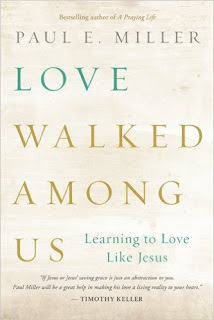 I was having a great conversation yesterday with a friend about this terrific book (which has a new cover and is now available in multiple formats) and realized that my short review isn't available on my blog anywhere.
So here it is:
Loved Walked Among Us has quickly become one of my “everyone” books.
As soon as I read it, I ordered a case of copies to put in the hands of everyone in our church and everyone who crossed my path. Paul Miller’s keen study of how Jesus loved people is fresh, unique, and eminently readable–full of winsome wisdom in succinct sentences and 3D stories.
Everyone can profit from reading it–from closet Pharisees (like me) to honest unbelievers searching out the true identity of Jesus. Miller takes us on a tour of the gospels, shining a spotlight on the surprising ways and whys of Jesus’ love for people and connecting the dots to our lives today. The book is the condensed fruit of a longer study of the Person of Jesus available on the author’s helpful website: SeeJesus.net.
The only thing missing in LWAU is a chapter by chapter discussion guide for small groups, so I wrote one for our church. Love Walked Among Us climaxes with our Lord’s death and resurrection, making it a great book for everyone to read as Easter approaches. Buy two copies: one to read and one to give away.
***
This review was originally published in EFCA Today (Winter 2009) and is used with permission.
August 27, 2015
#22. What should we pray for?
Christian Prayer Catechism: Question #22
Q. What should we pray for?
A. We should pray for whatever concerns us and those we are called to love.
The Bible gives us a host of things to pray for (ex. Matt. 6:9-15, 1 Tim. 2:1-2, Col 4:2-5). Nothing in life is off-limits for prayer. We need to pray for ourselves, loved ones, church family, for the advance of the Gospel, for government, for health and healing, for spiritual warfare, etc.
August 26, 2015
And the Winner Is...
... Heather Dobo!
 Congratulations, Heather, on winning a copy of
God Made All Of Me
by Justin and Lindsey Holcomb.
Congratulations, Heather, on winning a copy of
God Made All Of Me
by Justin and Lindsey Holcomb.
Thank you, everyone, who entered the contest and shared with others about this helpful new resource.
Remember, New Growth Press is offering about $100 worth of free resources for those who pre-order a copy before it comes out on September 8th. Check out the website for details.
Interview with Authors
Info-Graphic About Child Abuse
Congratulations, Heather, on winning a copy of
God Made All Of Me
by Justin and Lindsey Holcomb.Thank you, everyone, who entered the contest and shared with others about this helpful new resource.
Remember, New Growth Press is offering about $100 worth of free resources for those who pre-order a copy before it comes out on September 8th. Check out the website for details.
Interview with Authors
Info-Graphic About Child Abuse
August 25, 2015
I Don't Hate My Guts Anymore - Health Update
 Rejoice with me!
My surgery on July 29th was a success, and I'm well on the way to recovery.
Today I had my last follow-up visit with my surgeon, and he has cleared me, as I feel able, to go back to work, exercise, and activity.
I still have various post-surgery aches and pains, get tuckered out easily, and need to be careful how I add things to my diet, but I'm feeling much better, have lost 34 pounds, and am happy to have regained a properly working digestive system. (I guess I won't write that book on Resisting Diverticulitis after all).
I have so many things I'm thankful for:
- My remarkable wife who walked with me every step of this difficult Summer.
- Prayerful and caring friends and family. Visits, cards, calls, a load of gravel, help for Heather, and so much more.
- A supportive team of church elders and a congregation that have given me time and space to heal.
- The skillful hands of my surgeon and the expertise of his medical team.
- An amazing set of nurses and aides on the third floor at Dubois Hospital. Today, I dropped off a few dozen donuts to say thanks for their excellent care for me those 11 days I live under their watchcare. They have a difficult job, and they do it with panache.
- Lessons I've learned in the school of affliction. As I begin to feel better, I don't want to forget them.
- These and so much more are my Lord's mercies which are served up fresh and hot each day.
I'm really excited about to getting back into full time active ministry: preaching the word, equipping the saints, shepherding the flock, and making disciples of Jesus Christ.
I know that each day I get is a gift, and I resolve to use them for what really counts--His Kingdom and His righteousness.
An Interview with Justin and Lindsey Holcomb about #GodMadeAllOfMe
 Sexual abuse hurts children, families, and communities like few other sins. The statistics are dishearteningly high and the painful results are utterly devastating.
And yet, most parents have been almost completely unprepared to talk to their children about how to prevent and respond to sexual abuse. I know that when my kids were little, I had almost no idea of what to say to them that would be helpful without frightening them.
That's why I'm excited about this brand new book from Justin and Lindsey Holcomb, God Made All Of Me, which comes out on September 8th.
I've gotten a sneak peak, and it's very good. I wish it existed ten years ago!
The Holcombs were kind enough to answer some questions* about this new resource.
What prompted you to write God Made All of Me? Who are you hoping will read and use it? Why did you use the "children's storybook" approach?
The book is for 2-8 year olds. We wrote it because we have two young children and know that
 parents need tools to help talk with their kids about their bodies and to help them understand the difference between appropriate and inappropriate touch. It allows families to build a first line of defense against sexual abuse in the safety of their own homes. Our goal is to help parents and caregivers in protecting their children from sexual abuse. Because private parts are private, there can be lots of questions, curiosity, or shame regarding them. For their protection, children need to know about private parts and understand that God made their body and made it special.
Our hope is that parents and caregivers will use this book to help you in protecting their child from sexual abuse. We want parents and caregivers to be smarter and better prepared than those who would want to harm children. While we know that actions by adults can be more effective than expecting children to protect themselves from sexual abuse, children still need accurate, age-appropriate information about child sexual abuse and confidence their parents and caregivers will support them. That is why we used the storybook approach.
In God Made All of Me, you were intentional about using the terms “appropriate” and “inappropriate,” when referring to kinds of touch, instead of the words “good” or “bad.” Why is that?
It is important to be clear with adults and children about the difference between touch that is appropriate and touch that is inappropriate. Experts discourage any use of the phrases “good touch” and “bad touch” for two main reasons. First, some sexual touch feels good and then children get confused wondering if it was good or bad. Second, children who have been taught “good touch” or “bad touch” would be less likely to tell a trusted adult as they perceive they have done something bad.
To your child say something like: “Most of the time you like to be hugged, snuggled, tickled, and kissed, but sometimes you don’t and that’s OK. Let me know if anyone—family member, friend, or anyone else—touches you or talks to you in a way that makes you feel uncomfortable.”
Is there a way to educate our children about this without instilling fear?
To teach children about sexual abuse it is important to explain about private parts. Clearly identify for your child which parts of their anatomy are private. Explain to your child that “some places on your body should never be touched by other people—except when you need help in the bathroom, or are getting dressed, or when you go to the doctor.” You can do this with young children during bath time or have your child dress in a bathing suit and show them that all areas covered by a bathing suit are “private.” The bathing suit analogy can be a bit misleading because it fails to mention that other parts of the body can be touched inappropriately (like mouth, legs, neck, arms), but it is a good start for little ones to understand the concept of private parts.
To teach about sexual abuse offenders, it is important to teach your kids about “tricky people.” Tricky people are grown-ups who ask kids for help or tell kids to keep a secret from their parents. Teach your kids not to do anything or go anywhere with any adult at all, unless they ask for permission first.
Aside from reading your book to our kids, what are some practical things we parents can do to protect our children from sexual abuse?
In our book, the last page is to parents and called, “9 Ways to Protect Your Children from Sexual Abuse.” Some of the key practical things parents can do are: teach proper names of private body parts, talk about touches, throw out the word “secret,” and identify whom to trust. You can read about all 9 here.
This subject is so hard to talk about. What advice do you have for parents who want to create an open environment in their home, so children always feel comfortable talking to them about issues related to their sexuality or body?
We remind parents that some people are out their looking to prey on our children. We have a duty to protect and prepare them for the world and to fight for them. By talking with them candidly (and again developmentally appropriate) about their bodies we are setting up safe guards around them.
Dr. John T. Chirban has written an excellent book How to Talk to Your Kids about Sex that we highly recommend to all parents. He explains: “Someone is going to teach your kids about sex…shouldn’t it be you?” His book gives parents tools to talk with their children about the connections between sex, intimacy, and love.
Thank you, Justin & Lindsey, for visiting my blog and, more importantly, for creating this helpful resources for children, parents, and care-givers. May the Lord use it to protect thousands of children from evil.
***
Exciting offer from New Growth Press:
If you pre-order God Made All of Me by September 7 and receive $100 worth of free music and books. Visit www.godmadeallofme.com for more information.
To keep up with Justin and Lindsey Holcomb, visit www.godmadeallofme.com. You can also like and follow Justin or Lindsey's pages on Facebook or follow them on Twitter (@justinholcomb and @lindseyholcomb).
And don't forget to enter my contest for a free copy of "God Made All Of Me."
* Some of these questions were supplied by the authors--very helpful for getting to the central ideas of the book.