Matthew C. Mitchell's Blog, page 53
September 3, 2018
5 Years of Resisting Gossip
Rejoice with me!
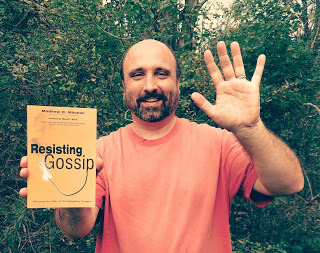 Resisting Gossip
was released 5 years ago today. Back in September of 2013, I could never have imagined all of the places it would go and the ways it has been used by the Lord. Today, my heart is overflowing with thankfulness for the blessings of the last half decade.
Resisting Gossip
was released 5 years ago today. Back in September of 2013, I could never have imagined all of the places it would go and the ways it has been used by the Lord. Today, my heart is overflowing with thankfulness for the blessings of the last half decade.
To name just a few:
- Resisting Gossip is now translated into 5 other languages around the world: Spanish (including an e-book), French [in both Canada and France], Russian, Romanian, and Korean. I’m excited to think that I’m getting to teach people God’s Word that I would never meet nor ever be able to converse with all over the globe.
- Resisting Gossip has been a bestseller for CLC Publications every single quarter since its release. For me, those sales translate into real people I hope have been helped to win the war of the wagging tongue in their own lives.
- Resisting Gossip has been recognized by many readers and leaders as helpful in the fight for holiness and love. The gracious words of folks like Kevin DeYoung (and on video), Tim Challies (once, twice, and then thrice at World Magazine!), Joe Valenti, Deb Welch, Monergism.com, Andy Naselli, Alex Chediak, Steve Kemp at BILD, Greg Strand, Bob Kelleman, Daniel Holmquist, Todd Hardin at the Biblical Counseling Coalition, Marci Ferrell at the Thankful Homemaker, Benjamin Vrbicek at Fan and Flame, Will Turner, and Mark Lauterbach at TGC have encouraged me to no end. It’s got 67 reviews on Amazon, and all but 1 of them are very positive. I'm also very thankful for the heartening support that WTSBooks has always shown for the book, as well.
- The message of Resisting Gossip and Resisting Gossip Together continues to resonate with people through online videos [Vimeo, YouTube], live seminars, podcasts, articles, and personal interactions. I love getting to share at conferences like CCEF and Challenge, teach at retreats, camps, and schools like Miracle Mountain Ranch, and speak in local churches such as the upcoming event at Hope EFC in Fertile, Minnesota. I feel so grateful to get to be used in this way.
Into the future:
Unfortunately, the global gossip plague continues to rage on unabated. My little book is just a drop in the bucket of what is needed to effect large scale change. I knew that going in (see the “final word” “The End of Gossip” on pg. 151). But hopefully it’s a drop in the right bucket and continues to be used by the Lord to move the right people in the right direction. That’s my prayer.
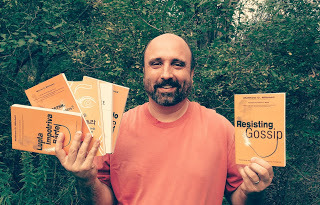 The good folks at CLC Publications are making arrangements right now to offer a special 5 year anniversary sale price and maybe even release an audiobook version of Resisting Gossip this Fall. I’ll let you know when I know more about those things. What I do know right now is that I never could have predicted how this would have turned out, and I give all the praise to Jesus Christ. May He receive all the glory due Him forever.
 Resisting Gossip
was released 5 years ago today. Back in September of 2013, I could never have imagined all of the places it would go and the ways it has been used by the Lord. Today, my heart is overflowing with thankfulness for the blessings of the last half decade.
Resisting Gossip
was released 5 years ago today. Back in September of 2013, I could never have imagined all of the places it would go and the ways it has been used by the Lord. Today, my heart is overflowing with thankfulness for the blessings of the last half decade.To name just a few:
- Resisting Gossip is now translated into 5 other languages around the world: Spanish (including an e-book), French [in both Canada and France], Russian, Romanian, and Korean. I’m excited to think that I’m getting to teach people God’s Word that I would never meet nor ever be able to converse with all over the globe.
- Resisting Gossip has been a bestseller for CLC Publications every single quarter since its release. For me, those sales translate into real people I hope have been helped to win the war of the wagging tongue in their own lives.
- Resisting Gossip has been recognized by many readers and leaders as helpful in the fight for holiness and love. The gracious words of folks like Kevin DeYoung (and on video), Tim Challies (once, twice, and then thrice at World Magazine!), Joe Valenti, Deb Welch, Monergism.com, Andy Naselli, Alex Chediak, Steve Kemp at BILD, Greg Strand, Bob Kelleman, Daniel Holmquist, Todd Hardin at the Biblical Counseling Coalition, Marci Ferrell at the Thankful Homemaker, Benjamin Vrbicek at Fan and Flame, Will Turner, and Mark Lauterbach at TGC have encouraged me to no end. It’s got 67 reviews on Amazon, and all but 1 of them are very positive. I'm also very thankful for the heartening support that WTSBooks has always shown for the book, as well.
- The message of Resisting Gossip and Resisting Gossip Together continues to resonate with people through online videos [Vimeo, YouTube], live seminars, podcasts, articles, and personal interactions. I love getting to share at conferences like CCEF and Challenge, teach at retreats, camps, and schools like Miracle Mountain Ranch, and speak in local churches such as the upcoming event at Hope EFC in Fertile, Minnesota. I feel so grateful to get to be used in this way.
Into the future:
Unfortunately, the global gossip plague continues to rage on unabated. My little book is just a drop in the bucket of what is needed to effect large scale change. I knew that going in (see the “final word” “The End of Gossip” on pg. 151). But hopefully it’s a drop in the right bucket and continues to be used by the Lord to move the right people in the right direction. That’s my prayer.
 The good folks at CLC Publications are making arrangements right now to offer a special 5 year anniversary sale price and maybe even release an audiobook version of Resisting Gossip this Fall. I’ll let you know when I know more about those things. What I do know right now is that I never could have predicted how this would have turned out, and I give all the praise to Jesus Christ. May He receive all the glory due Him forever.


September 2, 2018
[Matt's Messages] "Our Greatest Problem"
 “Our Greatest Problem”
Following Jesus - The Gospel of Matthew
September 2, 2018 :: Matthew 9:1-13
We’re in the section of the Gospel of Matthew (chapters 8&9) that you might call “Following Jesus the Miracle Worker.” Because right after the Sermon on the Mount Matthew tells a whole bunch of stories about the amazing miracles that Jesus did and punctuates, intersperses between these miracle stories, with Jesus’ calls to discipleship.
Last week, the sermon was called, “Follow Me.” And you know just about every sermon on every chapter in the Gospel of Matthew could have that title. Jesus is constantly calling people to follow Him.
He says those exact same words again in our passage for today. In fact, he says it to a certain tax collector named...Matthew!
That’s why our whole sermon series on the Gospel of Matthew is called “Following Jesus.” Because in Matthew, Jesus is constantly calling us to a life of discipleship.
He’s constantly showing us that He is wonderful and powerful and authoritative, with an authority unlike anyone else’s. And He uses that unparalleled authority to call us to follow Him.
In Matthew chapter 8, Jesus showed us that He has unparalleled authority over sickness (he heals leper, a paralyzed man, a woman with a great fever and all kinds of other diseases). And then He showed us that He has unparalleled authority over all of creation (He tells a storm to settle down and it actually does!). And then Jesus showed us that He has unparalleled authority even over the demonic. Even over unseen unclean spirits. When He say, “Go!” they must go.
And now in Matthew chapter 9, Jesus shows us that He has authority over our greatest problem.
You know what our greatest problem is, don’t you?
The problem that we all have.
And that we cannot solve on our own?
And it’s a greater problem for humanity than any other problem.
Matthew chapter 9, verse 1.
“Jesus stepped into a boat, crossed over and came to his own town. [At this point in His life that is Capernaum.] Some men brought to him a paralytic, lying on a mat.” Stop there for a second.
Matthew has condensed this story. In Mark and Luke we find out that these men actually dug through a roof and elevatored this guy down on ropes into the house where Jesus was staying.
They were desperate to get their friend to Jesus.
But Matthew focuses on the essential detail here.
This man can’t walk on his own.
He must be brought on a mat.
What do you think Jesus is going to do?
Can you imagine what this fellow’s life was like?
He might not have been a leper and ostracized from society, but there are no wheelchairs in that society either. There are no elevators except some friends. There are very few accommodations for handicaps in that society in that time period.
He could not get anywhere on his own.
What do you think Jesus is going to do?
He is going to solve this man’s greatest problem! V.2
“When Jesus saw their faith [the man and his friends], he said to the paralytic, ‘Take heart, son; your sins are forgiven.’”
Wait, what?
Is that what you thought Jesus was going to do?
From what we have read so far in Matthew, especially chapter 8, that’s a surprise.
I would have thought that Jesus would have healed the guy.
I mean it doesn’t say anything about that guy asking for forgiveness.
That’s not why they have come. At least, I don’t think so.
I think they came for the healing.
But Jesus goes for something much deeper, doesn’t He?
Jesus indicates that He is solving the deeper problem. The deepest problem.
Not just sickness but the root cause of all sickness. Sin.
Not that every sickness is caused by a particular sin. I’m not saying that this guy was sick because he sinned.
But his greatest problem wasn’t his lameness. It was his sin.
And Jesus says, “Take heart, son; your sins are forgiven.’”
Now, what Jesus has said creates a conflict with the religious authorities. They are not happy about this. V.3
“At this, some of the teachers of the law said to themselves, ‘This fellow is blaspheming!’”
Why are they so upset?
What does it mean to blaspheme?
It means to say something utterly untrue about God.
So you can blaspheme by saying that God is the same as the devil.
Ore you could blaspheme by saying that you are the same as God.
That you are God.
That’s what they think Jesus is saying.
Why?
Because who can forgive sins but God alone?
Think about it. Jesus is not just saying, “God forgives your sin.”
He’s really saying, “I forgive your sin.”
And the scribes know it. They know that’s what Jesus is saying.
Think about it.
If I went out into the parking lot and stole Rob's truck.
Would it make any sense for Jane over here to forgive me for stealing Rob's truck?
“I forgive you, Pastor Matt.”
Thanks, but it’s really Rob that needs to forgive me.
But if Jesus is acting like the offended party and is forgiving people their sins then by doing that Who is He claiming to be?
The other title we could give to this sermon series on the Gospel of Matthew is “Who Does He Think He Is?” v.4
“Knowing their thoughts [supernaturally], Jesus said, ‘Why do you entertain evil thoughts in your hearts? [Reading minds is also something only God can do!] Which is easier: to say, 'Your sins are forgiven,' or to say, 'Get up and walk'?”
What’s the answer to that one?
Which one is easier TO SAY?
It’s easier to say, “Your sins are forgiven.” Because who can tell if it’s happened or not?
It’s harder TO DO! But it’s easier to say.
It’s hard to say, “Get up and walk” to a lame man because what if they don’t get up and walk?! V.6
“But so that you may know that the Son of Man has authority on earth [solve your greatest problem...] to forgive sins....’ Then he said to the paralytic, ‘Get up, take your mat and go home.’ And the man got up and went home.”
Wow! You see what happened there?
Jesus said the harder thing to say to prove that He could do the harder thing to do.
“And the man got up and went home.”
Imagine how that guy felt now!
Not only was he able to walk, but the man who made him able to walk just told him that his sins are forgiven.
Wow!
Here’s point #1 about Jesus today.
#1. JESUS CAN FORGIVE SINS.
V.6 “The Son of Man has authority on earth to forgive sins...”
That is such good news!
Because that’s our greatest problem.
Let me give you two simple questions for applying that first point.
Two questions to ask yourself now that we know that Jesus doesn’t just have the power to change the weather or send demons into pigs, but that Jesus as the authority Himself to actually forgive our sins.
- Have you come to Him for forgiveness?
Because He’s where it’s at.
You can’t get forgiveness anywhere else.
Search high and low, try everything out there, and you will come up short.
Church attendance, doing good works, doing penance, trying to repay those you have sinned against. Pretending that you haven’t sinned.
Anything and everything you try outside of Jesus will not work.
But Jesus can forgive your sins.
We know HOW He can do that, too, don’t we?
We know the end of this book. Where the Son of Man was crucified. He paid for our sins with blood. These sins are forgiven because they are going to be paid for. He absorbs the cost.
So when He says, “Take heart, son; your sins are forgiven,” He knows how much that forgiveness will cost Him.
Think about that.
That’s what this table down here represents. The ultimate sacrifice so that He can say, “Your sins are forgiven.”
But only to those who have faith, right? Only those who trust Him. V.2,m “When Jesus saw their faith.”
If they had hard hearts, He might have healed the man but He wouldn’t have said, “Your sins are forgiven.”
So what about you? Have you come to Jesus for the solving of your greatest problem?
So many have asked Jesus for much lesser things.
And we can ask for the lesser things. He cares about them, too.
But do you see your sin?
Do you see how you need to be saved from your sin?
Have you come to Jesus for forgiveness?
- Are you worshipping Him as God?
That’s the point of this story, isn’t it?
We know Who Jesus is!
He claims to forgive sins, and He proves it by healing sicknesses. V.8
“When the crowd saw this, they were filled with awe; and they praised God, who had given such authority to men.”
Hmmm.
I’m not sure about that phrase.
It’s good that they praised God.
We should be doing that, too, for every good gift He gives us.
But my read on verse 8 is that they intentionally missed the point of this story.
They couldn’t ignore the miracle. They were astonished!
But they didn’t worship Jesus as God.
The people of Capernaum are kind of famous for NOT believing that Jesus is Who he claimed to be.
They had all of the facts. They had all of the evidence. But they didn’t trust Jesus, they didn’t follow Jesus, they didn’t accept Jesus, and by and large, they didn’t worship Him as God.
Let’s not make that mistake here, okay?
Jesus is not just a miracle worker, He is God in the flesh. And He invites our worship.
Because He has come to solve our greatest problem.
Point #2 of 2 about Jesus.
#2. JESUS CAME FOR SINNERS.
This is why He came.
He came to solve our greatest problem. V.9
“As Jesus went on from there, he saw a man named Matthew [what a great name!] sitting at the tax collector's booth. ‘Follow me,’ he told him, and Matthew got up and followed him.”
Now, we don’t get just how scandalous that was.
Because as much as we don’t like taxes, we don’t have tax collectors like these guys.
They were kind of a like mafia.
They were extortionists.
They were in bed with the Romans. The Romans wanted taxes from the people. The people had no choice. They might pay as much as 40% of their income as small as it was in taxes.
And these guys contracted with the Romans to collect the taxes. So they had the authority and they used it to shake down the citizens for as much as they could do.
So they were Jewish but they were working for the oppressive enemy.
And they were doing the oppressing themselves.
Every time you read the word “tax collector,” you should under your breath say, “Boo! Hiss! Despised!”
They were traitors.
And they were getting rich off you by being traitors.
And there wasn’t anything you could do about it.
And Jesus says, “Yeah, I want you to come follow me. Matt, come be my disciple.”
And may even more amazingly, Matthew does.
Nobody saw that one coming.
The people that Jesus picks to be on His team?! This is crazy.
And then you know what Matthew does? He throws a party.
And He invites all of the low-lifes that He knows to come and meet Jesus. V.10
“While Jesus was having dinner at Matthew's house, many tax collectors and ‘sinners’ came and ate with him and his disciples.”
It’s getting even more scandalous, isn’t it?
A bunch of these extortionist traitors in one place.
And bunch of other notorious sinners.
This word “sinners” comes up again and again in this story. Three times in four verses.
This party has prostitutes at it. It has pimps. It has thieves. It has gamblers. It has gang-members. It has drug dealers. It has thugs. It has those people you don’t want your kids to hang out with.
But Jesus is there.
And He’s eating with them.
And it’s scandalizing the Pharisees.
We’re going to see again and again the scribes and the Pharisees getting madder and madder at Jesus. And one day, this conflict is going to come to head. V.11
“When the Pharisees saw this [Jesus eating with the sinners], they asked his disciples, ‘Why does your teacher eat with tax collectors and 'sinners'?’”
I doubt they were at Matthew’s party.
My guess is that they were across the street taking notes on who came and went to this party.
“Oh, them? Eww. Oh, him, too? Yuck.”
And they don’t come to Jesus. They come to his disciples. Because they want to shake the tree and see if anything falls out of it.
“Why does your teacher eat with tax collectors and 'sinners'?”
Jesus is like, “I’m a teacher am I? Okay, I’ve got a lesson for you.” v.12
“On hearing this, Jesus said, ‘It is not the healthy who need a doctor, but the sick. But go and learn what this means: 'I desire mercy, not sacrifice.' For I have not come to call the righteous, but sinners.’”
That’s really important.
Jesus is not condoning their sin.
He doesn’t like their sins.
He hates their sins.
He knows that their sins are their greatest problem.
Just because He’s eating with them doesn’t mean that He is accepting their sin or approving of their sin.
But He has come for sinners.
He uses the proverb, “It is not the healthy who need a doctor, but the sick.”
He’s saying that it’s not those who think they are fine who need a doctor but those who know they are sick. And in this case, sin-sick.
You have to know that you’re a sinner to get saved!
“For I have not come to call the [so called] righteous, but sinners.’”
That’s the very reason why He came.
Let me give you two application question for this point about Jesus.
- Have you begun to follow Him?
Like Matthew, I mean. Matthew left his table, left I assume all of that money on the table. He left a life of luxury.
Tax collectors ate the best food, stayed in the best hotels, got the best service. Because they had the money.
Matthew left all of that because Jesus called him to follow Him.
Jesus is saying that same thing to you today, “Follow me.”
He has come all this way to find sinners, to call sinners first to repentance, then to salvation, and then to a life of discipleship.
Have you begun to follow Him?
One last question.
- Are you seeking sinners, too?
Are you like Matthew or like the Pharisees?
Matthew wanted his sinner friends to know Jesus. So he went after them and invited them to his party.
The Pharisees were too “good” for that.
They were too pure for that.
They wouldn’t ever eat with “sinners.”
They would never eat with “those people.”
Who are “those people” for you?
“Those people” who nauseate you.
“Those people” who are beneath you.
“Those people” whom you love to complain about on social media.
They don’t have their act together.
They don’t act like you.
They believe all of the wrong things.
They disgust you.
In verse 13, Jesus quotes Hosea 6:6 and says, “Learn what this means: ‘I desire mercy [or love or grace, hesed in the original, mercy], not sacrifice.”
God is looking for a heart of love, not just for outward obedience. Not even for sacrifices and offerings if you don’t love others.
God is after those who do not deserve it!
“For I have not come to call the righteous, but sinners.’”
And that’s good news for you and me. Because that’s what we are.
But we have to own it.
And we have to see that He didn’t just come for us.
He came for other sinners, too.
And what we doing about it?
Are we seeking out the sin-sick, as well?
And introducing them to the Savior?
Or are we just congratulating ourselves for having cleaned up so nice?
I think that so often we misjudge whom Jesus is seeking.
We think that otherwise nice people, clean people, respectable people are where it’s at.
But Jesus is going after the hard cases. He is.
[And, by the way, that includes all of the nice, clean, respectable people who come to realize what their truly greatest problem really is!]
But Jesus is going after the hard cases.
He is not a cushy doctor who is just doing routine check-ups.
He is an ER doctor with his sleeves rolled up and blood up to his elbows saving the most desperate cases from their greatest problem.
In fact, He is the doctor who takes on the sickness Himself to cure the patient, dying in the process.
Jesus came for sinners.
He is the answer to our greatest problem.
***
Previous Messages in This Series: 01. The Genealogy of Jesus
02. The Birth of Jesus Christ
03. The Search for Jesus Christ
04. The Baptism of Jesus
05. The Temptation of Jesus
06. Following Jesus
07. Jesus' Sermon on the Mount
08. The Good Life (Part One)
09. The Good Life (Part Two)
10. You Are The...
11. Jesus and the First 2/3 of the Bible
12. But I Tell You
13. But I Tell You (2)
14. But I Tell You (3)
15. In Secret
16. Choose Wisely
17. Seek First His Kingdom
18. Generous
19. These Words of Mine
20. When He Saw the Crowds
21. When He Came Down from the Mountainside
22. Follow Me
August 26, 2018
[Matt's Messages] "Follow Me"
 “Follow Me”
Following Jesus - The Gospel of Matthew
August 26, 2018 :: Matthew 8:18-34
Our sermon series on the Gospel of Matthew is called “Following Jesus,” because that’s what Matthew wants us to do.
Matthew wrote his gospel as a theological biography of the Lord Jesus Christ–the most compelling person that ever lived and ever will live. Matthew set out to introduce us to Jesus and to hear Jesus’ call to discipleship.
And that’s what we’re going to hear again today. In verse 22, Jesus says, “Follow me.” And that’s what I want to make the title of today’s message.
“Follow Me.”
It’s not the first time that He’s said it in the Gospel of Matthew.
Back in January, we memorized Matthew 4:19. Remember that?
“‘Come follow me,’ Jesus said, ‘and I will make you fishers of men.’”
He calls us to follow Him and to persuade others to follow Him, too.
Today, I have only one point to make. Just one.
I’ll say a bunch of other things, but I’ve only got one central thing to get across. Just one slide up there. And here it is:
FOLLOW JESUS BECAUSE THERE IS NOTHING AND NO-ONE MORE IMPORTANT.
Jesus calls us to follow Him first and foremost because there is nothing more important and there is no-one more important in all the world.
So those are the stakes this morning.
There is nothing more important than following Jesus.
Let’s see how this plays out in Matthew chapter 8.
Two weeks ago, we jumped to the end of Matthew chapter 9, the end of this bigger section of Matthew, and there, when Jesus saw the crowds He felt compassion on them.
But here, in chapter 8 verse 18, when Jesus sees the crowd that day, He decides to get away. V.18
“When Jesus saw the crowd around him, he gave orders to cross to the other side of the lake.”
He is not running away, but He is getting away. He’s taking a kind of retreat.
When we left off last week, Jesus was giving them all a foretaste of the kingdom at Peter’s house in Capernaum. He was casting out evil spirits, healing all the sick including Peter’s mother-in-law. He was exercising great power and authority.
But Jesus didn’t want them to get addicted to His miracles, and He needed a little time away. So He told his disciples to get a boat together and set off across the Sea of Galilee.
But before they can go, Jesus interacts with two potential new followers. V.19
“Then a teacher of the law came to him and said, ‘Teacher, I will follow you wherever you go.’”
I don’t know about you, but that sounds really good to me.
That sounds like something we ought to be saying to Jesus.
It sounds like something we might sing on a Sunday morning in a hymn or a worship song.
“Teacher, I will follow you wherever you go.”
But Jesus doesn’t seem that impressed.
It may be because he’s a teacher of the law, a scribe.
And we know from the Sermon on the Mount, what Jesus thought about the scribes in general.
And it might have been because this guy had his focus on what he was going to do for Jesus not how worthy Jesus was.
I will follow you wherever you go. Yes, I will.
In fact, he might have been saying, “Jesus, this is your lucky day. I am going to follow you wherever you go! I see that you have all of these fishermen and other “lower-class” folks. But now you have me. A teacher of the Law. What are going to do today, Jesus? I hear we’re going for a sail across the lake.”
Listen to Jesus. V.20
“Jesus replied, ‘Foxes have holes and birds of the air have nests, but the Son of Man has no place to lay his head.’”
What do you hear there?
I hear Him saying, “Are you really going to follow me? That’s good, because there is nothing more important than following me. But it’s not going to be easy. It’s not going to be cushy and soft and comfortable.”
This is serious stuff.
Jesus is not discouraging the man from following Him.
He’s disabusing him of his mistaken notions of what it will be like.
Following Jesus is more important than our comfort.
Now, Jesus Himself is comforting. He promises us rest. “Come to me, all you who are weary and burdened, and I will give you rest.”
But at the same time it’s a hard road to walk.
Following Jesus is a hard road to walk. A narrow road, He called it.
What are you willing to give up to follow Jesus?
Ask yourself that question.
What are you willing to give up to follow Jesus?
Have you ever thought about how we who are Christians follow a homeless man?
My Savior was a homeless man.
And He has not promised me an earthly home.
He often provides them. But that’s not the promise.
The promise is an eternal home.
And between now and then there will be trouble.
“II have told you these things, so that in me you may have peace. In this world you will have trouble. But take heart! I have overcome the world.”
In other words, we should follow Jesus, but it’s going to be hard. And yet it is absolutely worth it. ...
We don’t know if this guy kept on following Jesus or not.
We do know that Jesus is looking for real followers.
Not just the ones who say they are going to follow Him and then bail when the going gets tough.
What are you willing to give up to follow Jesus?
I hope the answer is everything. Because He’s worth it.
But so often we hold onto thing. We hold onto our comfort. We hold onto our money. We hold onto our family.
That was the problem of the next guy. V.21
“Another disciple said to him, ‘Lord, first let me go and bury my father.’”
Which sounds totally reasonable to you and me. Right?
Let me do this funeral thing first and then I’ll be right there, Jesus. V.22
“But Jesus told him, ‘Follow me, and let the dead bury their own dead.’”
Whoa. Those are strong words!
Why did Jesus get so salty with him?
There are two possibilities. One is that the man is asking for basically a year off of discipleship so that he can follow all of the traditions of caring for your deceased parents. That included the funeral and then actually digging up the bones many months later and putting them in an ossuary. And settling the estate. Gotta make sure the money is all there and in the right place. And, then I’m all yours, Jesus.
The other possibility that I think is even more likely. The man’s father isn’t dead yet. And maybe he isn’t even sick!
This guy is asking for a indefinite deferment of his discipleship.
He’s putting it off.
He’s putting Jesus off.
In either of those scenarios, it’s Dad first and Jesus second. Right? V.21 again.
“Lord, FIRST, let me go and bury my father.”
You are important, sure. But this is my Dad!
Have you ever said something like that to Jesus?
I know I have.
You are important, sure. But this is my Sleep!
You are important, sure. But this is my last one (my last dollar, my bite, my last year, my last chance).
Jesus, sure you are important. But first let me...
That’s why Jesus is so up in his face.
“But Jesus told him, ‘Follow me, and let the dead bury their own dead.’”
He’s not saying that we should dishonor our father and mother. Jesus is big on honoring them.
But that is not more important than following Him!
That’s the priority of the spiritually dead. Let them put second things first.
We need to put first things first. And Jesus is our first thing.
Follow Jesus FIRST AND FOREMOST because there is nothing and no-one more important.
I think it’s interesting that the very next thing they do is follow Him. V.23
“Then he got into the boat and his disciples followed him. [Of course, they didn’t know what they were in for.] Without warning, a furious storm came up on the lake, so that the waves swept over the boat. But Jesus was sleeping.”
Now we know why He needed to get away. He was TIRED.
There is an furious storm. The Greek word is the one for earthquake. There was an earthquake of a storm attacking their boat, and Jesus is asleep.
I love how that shows Jesus’ humanity. He was tired. He needed sleep. He was so tired that he could sleep through a violent storm with the waves coming in over the sides of the boat! V.25
“The disciples went and woke him, saying, ‘Lord, save us! We're going to drown!’ He replied, ‘You of little faith, why are you so afraid?’ Then he got up and rebuked the winds and the waves, and it was completely calm.”
Can you imagine?
How about the rebuke from Jesus?
“You of little faith, why are you so afraid?”
In the Greek the phrase is “oligopistoi.” “You of little faith.” Jesus used it already in the Sermon on the Mount when He was talking about worry.
Oligopistoi? Why are you so afraid?
The answer is because we know about the storms! We can feel the wind and the waves.
Now, they were right to turn to Jesus. So they had a little faith and it was directed toward the right person.
But Jesus thinks that they should have known by now that they wouldn’t drown in any boat that He is in.
That’s not how He’s going to die!
“Don’t you know who is in your boat?”
I don’t think they did.
When the wind and the waves quieted down, they just stood there gaping at Jesus. V.27
“The men were amazed and asked, ‘What kind of man is this? Even the winds and the waves obey him!’”
Don’t miss that.
And don’t make it all mythical.
This is not about the “storms in your life.”
Jesus can calm the storms in your life.
That’s true. And I guess it’s even an application of this story.
But this story is history.
Jesus actually talked to the storm, and it had to obey Him!
Who does that?
Only God.
Only the Creator does that.
Listen to Psalm 89:8-9, “O LORD God Almighty, who is like you? You are mighty, O LORD, and your faithfulness surrounds you. You rule over the surging sea; when its waves mount up, you still them.”
Who did that? Who alone is like that? Only God.
Follow Jesus because there is no-one more important.
Following Jesus means putting your faith and trust in Him.
It’s believing that Jesus is God incarnate, God-in-the-flesh.
Believing that the wind and waves obey Him.
Jesus is not just a great teacher.
He is a great teacher. On Back-2-School Sunday, we can safely say that there was never and will never be a greater teacher than the Lord Jesus Christ.
And we just studied one of His greatest teachings, the Sermon on the Mount.
But He is not just a great teacher.
He taught with a greater authority than anyone ever before Him.
And His authority is not just over words and concepts and ideas and truth.
It’s over matter and energy!
It’s over creation itself.
And that should cause us to worship Him in reverence and awe.
That’s why we are here today. Because we worship Jesus.
He is worthy of our worship.
There is no one more important.
One more story. And this is a weird one.
They get to the other side of the lake, and they meet up with two demon-possessed men. V.28
“When he arrived at the other side in the region of the Gadarenes, two demon-possessed men coming from the tombs met him. They were so violent that no one could pass that way.”
Matthew is the only gospel writer that tells us there were two of them. Probably one was the more violent and scary and so he got all of the attention from Mark and Luke. But Matthew tells us that there two. And nobody could pass that way because these two guys were possessed by evil spirits.
Unclean spirits and living among the dead in the tombs. Very very unclean! Very very powerful.
But not too powerful for Jesus. V.29. The demons speak.
“‘What do you want with us, Son of God?’ they shouted. ‘Have you come here to torture us before the appointed time?’”
Notice the answer to the question of verse 27.
The demons know.
The men asked, “What kind of man is this?”
And the demons say, “This is the Son of God.”
And they have a question for Jesus. Are you here to torture us before judgment day?
One of the commentators I read this week said, yes, that’s why He’s there. To give them a little taste of their own medicine and to give them a little taste of the judgment to come. That’s His prerogative. V.30
“Some distance from them a large herd of pigs was feeding [even more unclean!]. The demons begged Jesus, ‘If you drive us out, send us into the herd of pigs.’ [I don’t know why. But it’s okay with Jesus. V.32] He said to them, ‘Go!’ So they came out and went into the pigs, and the whole herd rushed down the steep bank into the lake and died in the water.”
Yes, the same late that the disciples just thought they were going to drown in.
It’s now full of deviled ham.
[Sorry, not sorry.]
This is a strange story.
It teaches us that people are more important than animals.
It teaches us that there is an appointed time for demons to be punished.
It teaches us that demons know that Jesus is the Son of God.
All important items.
But I think, most importantly, it teaches us that Jesus IS the Son of God.
That He has authority and power not just over the wind and the waves but over the unseen spirits that inhabit the heavenly realms.
Even the unclean impure evil demonic spirits are subject to Jesus.
What does Jesus say in this story?
What speech does Jesus make?
He just says one word, right?
“Go.”
It’s just like in verse 26. He just stands up and rebukes the storm and it goes, “Sorry.”
And gets all quiet.
He just says to these demons (the other gospels tell us that there are a legion of demons and 2000 pigs). He just says one word. And it’s all over.
There is no one more powerful than Jesus.
There is no one more important in the whole world than Jesus.
And He says, “Follow me.”
Here’s the scary thing though. Not everybody does. Look at verse 33.
“Those tending the pigs ran off, went into the town and reported all this, including what had happened to the demon-possessed men. Then the whole town went out to meet Jesus. And when they saw him, they pleaded with him to leave their region.”
Will you please go away?
That’s what they said to Jesus.
It doesn’t say why.
Perhaps they were scared of Him.
You should be.
They were scared of the demon-possessed guys. And this guy says one word and all pig hell breaks loose.
Imagine the squealing violent scary sight that was when those pigs went and drowned themselves!
But I doubt they asked Him to leave because they were scared.
I think they were mad.
I think they had just lost what was most important to them.
Their pigs.
Their money.
That was their bank account. Jesus just sent all of their bank accounts to the bottom of the sea.
He just tossed all of their wallets into the lake.
He just hit delete on all of their accounts.
“Will you please just go away?”
I think their story is in here as a cautionary tale for you and me.
Because they encountered Jesus and decided NOT to follow Him.
There song was, “We have decided to NOT follow Jesus. Please turn back, Jesus. Please turn back.”
They had decided that there was something more important than Jesus.
Today, Jesus is inviting us to follow Him.
But to do that we have to count the cost.
We have to ask ourselves what we are willing to give up.
You see salvation is absolutely free. But it is not easy.
Salvation is by grace through faith and not by our good works.
But Jesus saves us to do good works.
And He calls us to follow Him no matter the cost.
He is more important than our comfort, than our family, than our money.
There is nothing earth and no-one in the universe more important than Jesus.
And we have Him, then we have everything.
***
Previous Messages in This Series:
01. The Genealogy of Jesus
02. The Birth of Jesus Christ
03. The Search for Jesus Christ
04. The Baptism of Jesus
05. The Temptation of Jesus
06. Following Jesus
07. Jesus' Sermon on the Mount
08. The Good Life (Part One)
09. The Good Life (Part Two)
10. You Are The...
11. Jesus and the First 2/3 of the Bible
12. But I Tell You
13. But I Tell You (2)
14. But I Tell You (3)
15. In Secret
16. Choose Wisely
17. Seek First His Kingdom
18. Generous
19. These Words of Mine
20. When He Saw the Crowds
21. When He Came Down from the Mountainside
August 19, 2018
[Matt's Messages] "When He Came Down from the Mountainside"
 “When He Came Down From the Mountainside”
Following Jesus - The Gospel of Matthew
August 17, 2018 :: Matthew 8:1-17
We’re back where we belong in the Gospel of Matthew. Last week, we skipped head of ourselves to the end of chapter 9, but this week, we’re right back where belong– right at the end of Jesus’ Sermon on the Mount.
For three power-packed chapters, Jesus has taught with unparalleled authority. He has taught about the inside-out upside-down kingdom of heaven of which He is the coming King.
He’s invited us to join that kingdom and follow Him. To repent for the kingdom of heaven is near. To seek first, before anything else, His kingdom and His righteousness. And to build our lives on His authoritative teaching so that when the storms come, our lives do not crash but stand firm.
And now we find out what happens next.
What happens when Jesus comes down from the mountainside.
Here’s what happens: Jesus shows that He is the King.
If Jesus has been showing that He is the Messiah who was to come through His words in chapter 5, 6, and 7, now in chapters 8 and 9 He shows that He is the Messiah who was to come through His deeds.
There are many many miracles here in chapters 8 and 9–healings, exorcisms, control of nature, even a resurrection of a dead girl. And all of these miracles, these demonstrations of Jesus’ power point to His identity. They reveal Who Jesus really is.
And sprinkled through all of those are calls to discipleship. We’ll see that strongly next week. Jesus doesn’t just heal people. He calls people to follow Him because of Who He really is. He calls people to trust Him because of Who He really is.
This week, because we don’t have much time, we’re just going to look briefly at the first 3 short stories. They are all healing stories. Healing miracles that Jesus did after He came down from the mountainside. They might not be in chronological order. Mark and Luke put them in a different order in their gospels. The chronological order wasn’t as important to Matthew as the theological message was to him.
Matthew is committed to revealing to us Who Jesus really is. And we get that through not only hearing what He taught but seeing what He did when He came down from the mountainside.
You’ll notice that all three of these stories show Jesus’ concern for and care for and love for outsiders. For what Bill Hamel used to call, “the last, the least, and the lost.”
We saw that last week at the end of this section, at the end of chapter 9. Jesus always had a eye out for the harassed and the helpless. The outcasts, the outsiders.
Nobody was more outcast or outsider in Jesus’ day than a leper.
If you had one of those infectious skin diseases that fell under the general category of leprosy whether it was Hanson’s disease or not, you were an outcast. You were lonely and ostracized and alone. Nobody touched you. You had to live outside of the camp, outside of town.
And if anybody came near to you, you had to yell out, “Unclean! Unclean!”
Because the Law said that you weren’t just sick, you were ritually unclean.
You were defiled. And if you touched others, you would defile them. They would become unclean.
Can you imagine what that felt like?
Some of you can. Some of you carry around so much shame, you feel like this all the time.
You feel alone, and dirty, and untouchable and unlovable.
Well, this is what happened when Jesus came down from the mountainside”
#1. HE BROUGHT TOTAL CLEANSING. V.1 again.
“When he came down from the mountainside, large crowds followed him. [He was a rockstar!] A man with leprosy came and knelt before him and said, ‘Lord, if you are willing, you can make me clean.’”
That’s interesting, isn’t it?
He kneels before the Teacher. He calls Him, “Lord.” That was a term of respect, but it was also used to refer to God in the Old Testament. Does this leper guy know Who Jesus really is? He seems to. He seems to worship Him. At the very least, he trusts Him completely. “Lord, if you are willing, you can make me clean.”
He doesn’t say, “Lord, if you can, please heal me.”
He says, “You can, if you will.” That’s faith!
And Jesus does the most amazing thing. The last thing you might expect this Jewish man named Jesus to do.
He touches the leper! V.3
“Jesus reached out his hand and touched the man. ‘I am willing,’ he said. ‘Be clean!’ Immediately he was cured of his leprosy.”
Isn’t that amazing?!
Jesus didn’t become unclean. The man became clean!
That’s amazing! That’s the opposite of how it was supposed to work. If you touched a leper, you became unclean. But Jesus touched a leper and they became clean.
Totally clean.
Totally you can take it to the bank you are clean.
That’s the point of verse 4.
Then Jesus said to him, ‘See that you don't tell anyone. [I’m not looking for publicity here.] But go, show yourself to the priest and offer the gift Moses commanded, as a testimony to them.’”
This is the real deal.
Leviticus 13 and 14 give Moses’ instructions for what to do when you think you’ve been healed of your leprosy.
And this guy gets to go do it. And it’s 100%.
Total cleansing.
You know what that means?
It means that he can enter into society again.
He won’t be an outcast. He won’t be an outsider any longer.
He can be touched. He can be included.
He’s clean!
All because of Jesus.
Can you imagine what that would be like?
You know leprosy in the Old Testament was a picture or a symbol for sin.
It wasn’t sin itself. Uncleanness was not sinfulness. But it was visual parable of sinfulness and how sinfulness is sickness and defiling and affects others.
So when there is healing like this and cleansing like this, it is a picture of salvation.
And when we are cleansed from our sins, we are brought into fellowship not just with God but others. So this total cleansing is a picture of the total cleansing we can have when we come to Jesus by faith and all of the blessings that come with it.
Now in the second story, there is another kind of outcast. This time it’s a Gentile, a Roman Centurion, a military leader over a 100 soldiers.
Now he may have been in charge of his regiment but he was a long way from home and the Israelites were not happy to have him around. As a Gentile he was an outsider. Way outside.
But this man had faith. V.5
“When Jesus had entered Capernaum, a centurion came to him, asking for help. [He probably didn’t do that very often!] ‘Lord,’ he said, ‘my servant lies at home paralyzed and in terrible suffering.’ Jesus said to him, ‘I will go and heal him.’ The centurion replied, ‘Lord, I do not deserve to have you come under my roof. But just say the word, and my servant will be healed. For I myself am a man under authority, with soldiers under me. I tell this one, 'Go,' and he goes; and that one, 'Come,' and he comes. I say to my servant, 'Do this,' and he does it.’ When Jesus heard this, he was astonished and said to those following him, ‘I tell you the truth, I have not found anyone in Israel with such great faith. I say to you that many will come from the east and the west, and will take their places at the feast with Abraham, Isaac and Jacob in the kingdom of heaven. But the subjects of the kingdom will be thrown outside, into the darkness, where there will be weeping and gnashing of teeth.’ Then Jesus said to the centurion, ‘Go! It will be done just as you believed it would.’ And his servant was healed at that very hour.”
When Jesus came down from the mountainside:
#2. HE BROUGHT TOTAL AUTHORITY.
This guy knew about authority.
He was part of a great chain of command that stretched from Caesar to him so that when he told his men to jump, they asked, “How high?” on the way up.
“I tell this one, 'Go,' and he goes; and that one, 'Come,' and he comes. I say to my servant, 'Do this,' and he does it.’”
And what’s amazing is that this Centurion thinks that Jesus has that kind of authority over PARALYSIS and SICKNESS and SUFFERING!
“Just say the word.”
And that kind of faith is astounding to Jesus.
You want to surprise Jesus when He was here back in the day?
Trust Him fully. Give Him your unlimited confidence.
Especially if you didn’t know that much about Him.
I mean this guy was a Gentile!
He didn’t have the Old Testament!
He hadn’t been expecting a Messiah for thousands of years!
“I have not found anyone in Israel with such great faith.”
That’s a sick burn if I ever heard one.
This guy gets it. Where are you guys?
He has total faith in my total authority.
Do you?
That was the question that He was asking at the end of the Sermon on the Mount, right?
You going to enter through the narrow gate?
You going to “do the will of my Father who is in heaven?”
You going to build your life on my authoritative teachings?
Or are you going to go your own way? On the broad road.
Saying, “Lord, Lord but actually not following Me.”
Building your life on the sand.
Jesus says, “I want more people like this guy. Who trust me completely.”
And He says that there are more on the way. V.11 again.
“I say to you that many will come from the east and the west [Gentiles!, and will take their places at the feast with Abraham, Isaac and Jacob in the [upside-down, inside-out] kingdom of heaven. But the subjects of the kingdom [the ones who should know better] will be thrown outside, into the darkness, where there will be weeping and gnashing of teeth.’
Because they didn’t accept their Messiah.
Because they didn’t receive Him.
Because they didn’t trust Him. They didn’t entrust themselves to Him.
These people reject Jesus. They don’t have faith. So they will have agony and sorrow and anguish and eternal despair. Weeping and gnashing of teeth.
But it doesn’t have to be that way for you and me.
Jesus invites us to trust Him like this Centurion did. Total faith in His total authority.
You don’t have to be Jewish.
You can be a Gentile from Pennsylvania!
All you have to do is put your total faith in His total authority.
And you will take your place at the feast with Abraham, Isaac, and Jacob in the kingdom of heaven!
And to prove it, Jesus said, “Done.”
“Go! It will be done just as you believed it would. Because I have total authority. And his servant was healed at that very hour.”
The last story just shows how total that cleansing and that authority really was and where it came from. V.14
“When Jesus came into Peter's house, he saw Peter's mother-in-law lying in bed with a fever.”
Did you know that Peter was married?
How would you like to be Peter’s wife?!
Apparently he had a house in Capernaum. And his mother-in-law lived with him.
By the way, this is another kind of outcast. I don’t mean mother-in-laws! I mean women in general.
In that society at that time in history women didn’t have much status or social standing.
They weren’t lepers or Gentiles, but they weren’t respected all the time either. In some situations they were treated worse.
But Jesus always lifts up women.
He sees women.
He respects them.
He always improves their lives.
And here He heals one. She has a raging fever. Maybe malaria? And again. He touches her. V.15
“He touched her hand and the fever left her, and she got up and began to wait on him.”
The point of that is not that He was worthy of her service.
The point is that she was healed so completely that she felt like making dinner!
She felt like getting up and setting the table!
This complete healing! And he’s doing that left and right at this moment. V.16
“When evening came, many who were demon-possessed were brought to him, and he drove out the spirits with a word and healed all the sick. This was to fulfill what was spoken through the prophet Isaiah: ‘He took up our infirmities and carried our diseases.’”
When Jesus came down from the mountainside:
#3. HE BROUGHT TOTAL SALVATION.
No disease was too much for Him.
No evil spirit had any chance against Him.
You see all of that authority here? V.16 “with a word.”
There is no question about Who Jesus is.
Jesus is the Messiah who was to come!
Jesus is the Son of God!
Jesus is the King of the Kingdom of Heaven!
And Matthew says, “Jesus is the suffering servant promised in Isaiah 53.”
All of this healing? It was a foretaste of the kingdom to come.
When all of the evil spirits are gone.
When every disease is gone.
When every sorrow is gone.
When every tear is wiped away.
When there is no more pain, no more sickness, no more death.
No more orphans!
Total salvation.
That’s what this is was a foretaste of.
That’s what was going on that evening at Peter’s house in Capernaum.
King Jesus was bringing the Kingdom.
Total salvation. Body and soul and world. All made new and right again.
But we know what it’s going to take to get there, don’t we?
Jesus knew what it was going to take to get there.
Matthew knew what it was going to take get there.
That’s why He brings in Isaiah 53.
“This was to fulfill what was spoken through the prophet Isaiah: ‘He took up our infirmities and carried our diseases.”
When He came down from the mountainside and then went up on the mount of crucifixion.
Matthew quoted Isaiah 53:4 and he knew what came next:
“Surely he took up our infirmities and carried our sorrows, yet we considered him stricken by God, smitten by him, and afflicted.
But he was pierced for our transgressions, he was crushed for our iniquities;the punishment that brought us peace was upon him,and by his wounds we are healed.
We all, like sheep, have gone astray, each of us has turned to his own way; and the LORD has laid on him the iniquity of us all.”
To bring that total salvation, Jesus went to the Cross.
Have you come to trust in Jesus for your total salvation?
All of the cleansing you need?
All of the blessings that come with that cleansing?
If you haven’t, I invite you totally trust Him now.
If you have, I invite you to totally thank Him now.
What He did for us!
He didn’t have to take up our infirmities.
He didn’t have to carry our diseases.
He didn’t have to get punctured for our transgressions.
And yet He did.
And all He’s asking from us is total trust and to follow Him with all of our lives.
That’s not too much to task.
That’s nothing!
He gave His all for us, let’s give Him all of us for Him.
***
Previous Messages in This Series:
01. The Genealogy of Jesus
02. The Birth of Jesus Christ
03. The Search for Jesus Christ
04. The Baptism of Jesus
05. The Temptation of Jesus
06. Following Jesus
07. Jesus' Sermon on the Mount
08. The Good Life (Part One)
09. The Good Life (Part Two)
10. You Are The...
11. Jesus and the First 2/3 of the Bible
12. But I Tell You
13. But I Tell You (2)
14. But I Tell You (3)
15. In Secret
16. Choose Wisely
17. Seek First His Kingdom
18. Generous
19. These Words of Mine
20. When He Saw the Crowds
August 12, 2018
[Matt's Messages] "When He Saw the Crowds"
 “When He Saw the Crowds”
Following Jesus - The Gospel of Matthew
August 12, 2018 :: Matthew 9:35-38
We’re skipping ahead today.
We should be in Matthew chapter 8, verse 1.
We are in a long term series working through the theological biography of Jesus called The Gospel of Matthew, a series we’re calling, “Following Jesus,” and we just finished the section normally called “The Sermon on the Mount” Matthew chapters 5 through 7.
So, the normal next step would be to watch Jesus come down from the mountainside and see what happens next. I’ll tell you what happens next. Jesus goes right back to healing people, calling people to follow Him, and working amazing miracles that reveal Who He really is.
We’ll see that next week.
But as I was reading ahead, I got stuck on this paragraph, Matthew chapter 9, verses 35 through 38. I’ve preached it before several times. It’s very meaningful to me and probably very familiar to most of you.
But as I was reading it this week, I was thinking especially about the Good News Cruise.
And our hopes for what will happen here on our campus this coming Saturday.
This passage is about the mission that Jesus is on and the mission that Jesus calls us to, as well.
We often think of it as a missions text. International missions. But it’s just a relevant to our living the missional life here today.
I think of this passage of Scripture as a guide for how to do the Good News Cruise.
As we watch Jesus see the crowd and react to the crowd, I think it shows us how we are supposed to see the people who will be visiting our campus and how to think about them and pray for them and try to reach them with the gospel.
So, let’s skip ahead to chapter 9, verses 35 through 38.
Keith Folmar likes to remind us that the Good News Cruise is not primarily about cars. It’s primarily about...people.
And every year we get more people here on our campus. There’s a sea of people out there between the cars.
How should we look at them? How should we see them?
What should be our perspective on these people who are our guests?
I love to walk up and down the aisles of cars at the Good News Cruise.
Not so much to look at the cars themselves–though there sure are some beauties out there.
But more to look at and talk to the people.
One year, Keith was looking for me at the cruise-in, and he easily found me and said, “I knew where you’d be–out there the middle somewhere talking to someone.” That made me feel good that I could be predictable like that.
There’s a lot of different kinds of people here at the cruise, aren’t there?
There are people like you and me in significant ways, and there are people not like you and me in significant ways.
I look around at the crowd, and I have various initial reactions when I see these people coming.
What is your initial reaction?
In Matthew chapter 9, our Lord Jesus sees a large crowd. In fact, he sees more than one large crowd. In this stage of His life and ministry there were many crowds that He interacted with. He was like a rock star at this point between His teachings and His miracles. Especially the miracles.
There were people everywhere.
What did Jesus see when He looked at the crowds?
Our Lord often sees things differently than we do, doesn’t He?
Our Lord often sees things differently than we do.
I think this passage tells us about our Lord’s perspective and shows us what to see when we look out at the crowd at the Good News Cruise.
Three questions for us this morning. Here’s number one.
#1. DO YOU SEE THE PEOPLE?
In verse 35, we get a bullet-point description of Jesus’ work in these early years of His traveling ministry. It’s really a bookend to the section that began in chapter 4, verse 23. It sound almost just like 4:23. There are three main actions of Jesus: teaching (in synagogues), preaching (the gospel of the [upside-down, inside-out] Kingdom of God), and healing (all kinds of diseases and sicknesses). We’ll see more about that next week.
It was a very busy period of time for Jesus, and He was on a mission.
But in the rush of ministry, our Lord did not fail to notice the people.
Everywhere He went, Jesus saw people. Big people, small people, clean people, dirty people, rich people, poor people, hungry people, sick people. People, people, people.
And v.36 says, that when He saw the crowds, He had “compassion on them...”
The Greek word for “compassion” here literally means to have your guts wrenched in pity and sympathy. Uggh. He felt it right here in His gut.
When Jesus looked out and saw the people, he just grieved in His spirit with a gut-wrenching feeling.
Uggh. It hurt Him to see people like this. I mean it. It hurt.
The people were in Jesus’ sight (v.36) “harassed and helpless, like sheep without a shepherd.”
What do you think a sheep is like that doesn’t have a shepherd? I’ll tell you in one word: LOST.
Sheep are dumb animals. I’ve said this many times, and it makes me laugh every time. Sheep are so dumb they can get lost by walking into an open garage and then not being able to figure out how to escape!
If sheep don’t have a shepherd, they don’t have a leader, they don’t have a provider, they don’t have a care-taker, they are done-in, they are a lost cause, they are helpless.
And Jesus, when He looked out upon the crowds of people, saw shepherdless sheep.
They were harassed and helpless. They had forces at work against them which were way too powerful for them to stand against. They were in danger and in turmoil.
They were lost.
And our Lord felt compassion for them. Jesus loved the shepherdless sheep. Jesus loved lost people.
And the question that God is asking us today is this:
Do we see the people?
Do we see how they really are?
Not just the cars. But the people.
Do our hearts break when we see and interact with lost people?
Or are we too complacent and self-satisfied and self-centered?
Do we love the lost?
Or are we, rather, repulsed by them?
I firmly believe that our biggest problem in evangelism is not that we don’t know what to say. I think that many of us here know what the gospel is.
I believe that our biggest problem in evangelism is a lack of love.
I know that it’s my biggest problem in evangelism.
Our hearts are not moved by the plight of those who do not know Jesus Christ as their Shepherd.
Bill Hamel–the former President of the EFCA whom we are praying for as he is in hospice now with untreatable cancer–Bill Hamel regularly challenged our churches to love the LAST, the LEAST, and the LOST. That was his phrase, “The last, the least, and the lost.”
And if we don’t, he said we aren’t acting like Jesus.
Because Jesus did this for us!
Jesus looked at our helplessness before sin. He looked at our harassment by Satan. And He took pity upon us. It hurt Him to see how we were. Ugh.
Jesus loved us, even though there was nothing in us to commend us to Him. We were His enemies!
And yet, Jesus pulled us to Himself with covenant love.
If you are a Christian today, it is because Jesus saw how harassed and helpless you were without him...and He compassion on you!
And so we should do the same.
When I say the word MUSLIM, what happens in your heart?
Do you feel anger? Do you feel revulsion? Do you feel fear?
Or are you moved with compassion?
Muslim people are lost people.
And we should love them.
Not because Muslims are innately lovable, but because Jesus chose to love them, you and I should have our guts wrenched with an ache for their salvation.
I’ve heard supposed Christians call them, “Towel heads,” and hope they get out of our country. Yuck!
There are over 1.1 billion Muslims in the world. 80% of whom have never heard the gospel–ever! I read a statistic this week that of the 350,000 Christian missionaries in the world, only around 5,000 of them work in Muslim countries!
Do you see the people?
Not that I expect there to be many Muslims here on Saturday.
But the question is do we care?
How about this one.
When I say the words POOR PEOPLE, what happens in your heart?
Do you squirm? Do you feel revulsion? An aversion to talking about poverty?
Over a billion people in this world live on about one US dollar per day. 3 billion live on less than $2.50. Every day, around 10,000 people (most of them children) die from the results of dirty drinking water. There are 68.5 million refugees in this world. And 85% of the world’s poorest countries lie within the 10/40 window: the least evangelized part of the world.
In other words, if you are poor, you are harassed, helpless, and have a much smaller chance of hearing the gospel.
And do we care? Do we see the people?
Your neighbor down the street with the loud dogs, the beer cans in his yard, the raucous parties on Saturday night, the four-wheelers peeling over your newly planted grass? You see him coming your way...what do you do? Turn away? Walk down the other side of the street?
What do you feel?
Do you fear for His soul?
We see the people?
Or do we care too much for our comfort, our convenience, and our security?
What are you going to see when you look out at the people on Saturday?
You know, in saying that they are harassed and helpless, I don’t mean that some of don’t look really good. They clean up well. They have a nice looking car. Many of them are good upstanding moral people.
And we can learn from them, too!
We need to be careful labeling people as lost or helpless and make it sound like if they were just smart people like us then they’d have it all together. And they have nothing to offer others.
That’s far from the truth!
But we know what we were like before we knew Jesus, right?
Harassed and helpless like lost sheep.
“We all, like sheep, have gone astray, each of us has turned to his own way...”
What do you see?
When you go to Sheetz, and there are bunch of people in the line.
What do you see?
When you look out here and see community people on our playground.
What do you see?
Do you see single moms that are struggling to make it?
Do you see people trapped in addictive behaviors?
Do you see sheep that don’t have a shepherd?
In my job, I talk to a lot of people. And sometimes, it’s easy to get “compassion” fatigue and to stop caring.
I struggle with that a lot. I want to be a compassionate person, but I get tired. I get weary.
I’m sure that Jesus got tired.
But when He saw the crowds, He got compassionate.
What do you see?
What do we see as we as we look out on our community?
Do we just see our school, our post offices, our truck stop, our families, our things.
Or do we see shepherdless sheep who are harassed and helpless without Jesus?
That’s why we do the Good News Cruise.
Keith has written up a little message called “Tuned for Life” which is about our theme this year. It will go in all of the goodie bags that we’re going to pack on Thursday night.
He talks about spark, fuel, and air.
This is what he says, “God and his saving grace through Jesus is our SPARK! Without Christ, we have no hope in the future. We need Jesus to be the point of hope in this life and throughout eternity.”
That’s why we do the Good News Cruise.
Because we want to see people the way that Jesus sees people.
In verse 37, Jesus turns to His disciples and says that He can see something else that they probably can’t. V.37
“The harvest is plentiful, but the workers are few.”
Jesus, looking at these Shepherdless Sheep, sees something more that we often don’t see–potential!
#2. DO YOU SEE THE POTENTIAL?
Jesus looked at those people [sinners–every single one of them], and He saw some potential followers. He saw a church that He was going to build using lost people. He saw a harvest of souls won to the gospel of the kingdom–won to the King.
Do we see the potential?
Everywhere you go, among all the people you see, are the elect of God, sprinkled throughout humanity.
Do you see potential Christians everywhere you go?
Some of us see the lost, and feel their lostness, but we don’t feel hope for them.
We see their harassment, and we see their helplessness on their own.
We see their shepherdlessness. But we miss their potential to be Shepherded.
That’s a big part of my problem. I see the lostness. I feel it in my gut. But often, so often, too often, I have a hard time envisioning what God might do with them if I am bold enough to allow Him to use me.
But Jesus sees redeemable humanity among the lostness.
He did in me! He saw beyond my sin and my guilt and my shame.
And He went after me. He saw the potential harvest in me. Not that I had anything to offer Him. I didn’t qualify for even one of His gifts to me. But He knew what He was going to do with me. And I’ll be forever grateful.
That co-worker who bugs the living day-lights out of you could soon be your brother in Christ!
Your landlord who just about steals your hard-earned money, might soon be your sister!
Your hard-hearted father who has never had anything good to say about you or to you, may soon become a fellow Christian!
Some person you’d rather despise that is walking up and down the aisles of cars next week, somebody who is basically your enemy, might soon be part of your spiritual family!
Because the Gospel is the power of God for the salvation of everyone who believes!
Ask the Apostle Paul! God is in the business of changing murderers into saints.
You and I need to ask God that we begin to see every lost person we come into contact with as a potential Christian.
They won’t all turn to Christ. In fact, a depressing number of them will take the broad road that leads to destruction that Jesus was talking at the end of the Sermon on the Mount.
But we have no idea who will. And Jesus wants Shepherdless Sheep to have a Good Shepherd!
Do you see the people?
Do you see their potential?
Do you see how we need to pray?
#3. DO YOU SEE HOW WE NEED TO PRAY?
V.38. “Ask the Lord of the harvest, therefore, to send out workers into his harvest field.”
Do you see how we need to pray?
If you see the lostness of people and your heart is broken.
If you see how many people God desires to save through His gospel.
Then pray. Ask the Lord of the Harvest to send out workers into the harvest field to bring those Shepherdless Sheep to the Good Shepherd.
Do we pray for more workers?
There are 7.6 billion people on the planet today. Most of them do not know Jesus Christ as their personal Lord and Savior.
The current missionary force that we have will not reach the world. We need to ask God to send more of us into the world to reach the world for Jesus Christ.
Next weekend, we’re going to have a special missionary guest, Sarah [I can’t say her last name so we just say, “Kay.”]. She has been called to go serve the last, the least, and the lost in Panama. She is called to work with orphans.
I’m sure that seeing them will break her heart.
Sarah Kay is going to be with us at the Good News Cruise and she’ll be here on Sunday to share her story with us.
She has heard the call of the Lord of the Harvest and is going out into the field.
And we need to pray for MORE.
“Ask the Lord of the harvest, therefore, to send out workers into his harvest field.”
It will only happen through prayer.
That’s why we have the Harvest Prayer Time every month. Last Saturday of every month, a group of believers meets in the prayer room for one hour to pray the whole time for the lost. We’ve been praying for the Good New Cruise.
It will only happen through prayer.
Why is that?
Why does Jesus want us to ask the Lord of the Harvest to send out more workers?
Doesn’t the Harvest-Lord know that there is a worker-shortage?
Of course He does!
At least 2 reasons why He wants us to ask:
#1. Because when we ask, we get involved. When we are praying, there is a much greater chance that we will care about what God does with these situations. It pulls us in. In fact, we are often the answer to our own prayers.
What happens in the very next verse? Chapter 10, verse 1? Those who were praying are sent on a mission themselves.
When we begin to pray for the person down the street who needs the Lord so desperately, often He sends us to go get them.
#2. Because God gets the most glory that way. Instead of OUR amassing a missionary army, we acknowledge our need and our dependence upon God to do it. And when He raises the army through our prayers–He gets the most glory.
Notice in v.38 that it is GOD’s harvest field? And that He is Lord of the Harvest?
The Lord of the Harvest is most glorified when He is most needed. And prayer is the most humbling and needful act that the church can participate in.
So we should pray for more workers.
We should pray that people on Saturday would walk out into that crowd and share Jesus with shepherdless sheep.
We should pray that we would be bold to talk to the people whose names were put in this fishbowl a few months ago. Have we forgotten about them?
We need to pray for workers for our various ministries this Fall. Misty will need help putting on Family Bible Night. Teachers, helpers, game leaders, song leaders, the whole nine yards. ABC Kids, Kids for Christ, Youth Group, Prayer Meeting. Link Groups. We need to pray for these.
And we need to pray for more workers to go out into the harvest field internationally.
And for people to support them to get there.
Abe and Jordyn Skacel still have like 25% of their support that still needs raised so they can go on campus and talk to shepherdless sheep about the Good Shepherd.
Sarah Kay needs support to make it to Panama.
We need to pray hard this week for the Good News Cruise.
Not for good weather.
Not for enough hot dogs.
Not for a bumper crop of cars.
We can pray for those things. That’s fine. God cares about them, too.
But that’s not what Jesus was seeing.
Jesus was seeing spiritually needy people.
And He was sending people who know Him and know His gospel to connnect with them.
So we need to pray that we would be sent out into the aisles with the gospel of Jesus Christ.
“Ask the Lord of the harvest, therefore, to send out workers into”...that field right over there.
Do you see how you need to pray?
Is there some person in your life that drives you nuts, that you’d love to complain about on your Facebook page?
That you need to pray for instead?
Pray about this. Pray that you would see them as Jesus sees them. “Harassed and helpless like sheep without a shepherd.”
And see them as Jesus sees that they could be.
And then ask the Lord what to do. And do what He says.
***
Previous Messages in This Series:
01. The Genealogy of Jesus
02. The Birth of Jesus Christ
03. The Search for Jesus Christ
04. The Baptism of Jesus
05. The Temptation of Jesus
06. Following Jesus
07. Jesus' Sermon on the Mount
08. The Good Life (Part One)
09. The Good Life (Part Two)
10. You Are The...
11. Jesus and the First 2/3 of the Bible
12. But I Tell You
13. But I Tell You (2)
14. But I Tell You (3)
15. In Secret
16. Choose Wisely
17. Seek First His Kingdom
18. Generous
19. These Words of Mine
July 29, 2018
[Matt's Messages] "These Words of Mine"
 “These Words of Mine”
Following Jesus - The Gospel of Matthew
July 29, 2018 :: Matthew 7:13-29
It’s been forever since we’ve been together in the Gospel of Matthew. We started our series back in December of 2017! And this is the 19th message in this series. But we’ve taken a lot of breaks along the way, especially the last four Sundays! Joel preached while I was at Challenge, the Challenge group brought their report, and last week was Family Bible Week so it was over a month ago that we were in the Gospel of Matthew together.
I wouldn’t blame you if you couldn’t answer the question, “Where is Pastor Matt preaching from these days at church?”
Well, the answer is “The Gospel of Matthew.” And our series is called, “Following Jesus” because that’s what we’re learning to do as we study Matthew’s Gospel.
Matthew is a theological biography of the Lord Jesus Christ.
Matthew tells us who Jesus is, His background, His backstory, His baptism, everything.
And Matthew tells us how He began His ministry calling people to “repent for the kingdom of heaven is near.”
He called His first disciples to follow Him and make more followers of Him, and He began teaching, preaching, and healing.
And then Jesus went up on a mountainside and taught what we have come to call, “The Sermon on the Mount.”
It is the first of five major blocks of Jesus’ teaching in the Gospel of Matthew and arguably the most famous.
Like a new Moses, Jesus went up on a mountainside and delivered His kingdom manifesto. And He taught with unparalleled authority.
In fact, look down to the last two verses of chapter 7 to see how the people responded this sermon on the mount. Look at verse 28.
“When Jesus had finished saying these things [when He had finished the Sermon on the Mount], the crowds were amazed at his teaching, because he taught as one who had authority, and not as their teachers of the law.”
These people were astonished by what they heard.
We have grown familiar with so many of these teachings. They are very famous and rightfully so. Ever since February, we have been slowly working our way through these teachings, and we have come to know them.
But the first people to hear these teachings were flabbergasted by them.
They were knocked off their pins.
Their jaws were dropping. “Did just hear what I think I heard?!”
“I don’t know. I’m amazed, too. This guy teaches like no one else. He teaches with His own authority.
Who does He think He is?”
That’s what I thought again and again these last five months. “Who does Jesus think He is?”
Just as important as understanding what Jesus is teaching is to understand Who Jesus is as He teaches it!
Jesus does not teach like one of the scribes. One of the other teachers of the Law.
Jesus teaches from His own authority.
We’ve seen that again and again. Remember the “But I Tell You’s” from back in chapter 5?
“You have heard that it was said, but I tell you this...”
Nobody teaches like that.
And gets away with it.
Nobody but Jesus.
We’ve reached the conclusion of Jesus’ message.
Do you remember how He started it? With the Beatitudes?
With the blessings?
“Blessed are the...”
Jesus invited us to live the good life, the blessed life, the “Good on you” life, the flourishing life–as His followers.
But what He said was the good life was completely surprising. Do you remember?
Jesus invites us into an upside-down kingdom.
His values are not the world’s values.
Everything is upside-down.
Jesus said blessed are the needy. The sad. The lowly. The unsatisfied. The persecuted.
Those are the kind of people Jesus says are in a good place!
Which good news if you know you are needy!
And it’s not just an upside-down kingdom.
It’s also an inside-out kingdom. Do you remember this?
Jesus calls His followers to live a whole life, a perfect life, that is a life that is the same on the inside as it is on the outside.
It’s not good enough to just have an external righteousness. Jesus insists that His followers have a greater righteousness than the Pharisees and the teachers of the Law.
They were totally focused on the externals, but Jesus drives to the heart.
It’s not good enough for Jesus that we keep from murdering each other. We aren’t allowed to hate each other.
It’s not good enough for Jesus to keep from jumping into bed with someone who is not your spouse, we aren’t allowed to lust after each other.
It’s not good enough to just keep certain oaths. We are to be totally trustworthy.
It’s not good enough for Jesus for us to just love our neighbors. He wants us to love our enemies.
From the inside out.
Because His Father sees our insides. Not just outsides.
That’s why we can’t just give or pray or fast when people are watching and for their approval. We’ve got give, pray, and fast when nobody sees but the Father.
Inside-out.
The kingdom’s values are very different from the world’s values.
The world values money. We aren’t allowed to serve both God and Money.
The world values worry. We aren’t allowed to worry about our futures.
The world values judgmentalism. We aren’t allowed to condemn others.
In fact, we are called to do to other what we would have them do to us.
That’s what Jesus is telling us to do!
That’s the kind of kingdom that Jesus is inviting us to join.
Are you in?
Upside-down, inside-out, counter-cultural, counter-intuitive, Kingdom of Heaven.
Following Jesus.
Are you in?
Because that’s the part of the Sermon we’ve finally got to. The part where Jesus gives the invitation.
Jesus calls for a response.
In Matthew chapter 7 verses 13 through 29, Jesus lands the plane.
And He does it in a very strong way.
While He was very tender at beginning of the sermon, He is very firm at the end.
Because there are only two ways to respond to Jesus’ teaching. A right way and wrong way.
And Jesus invites us to respond the right way and warns us not to respond the wrong way.
He does this with a series of contrasts that reveal the two ways.
Two roads, two trees, two claims, two builders.
And in each one, He is inviting us to respond the right way and warning us to NOT respond the wrong way to what He calls, “These Words of Mine.”
He says that in verse 24 and again in verse 26.
And I don’t know how many times I’ve missed those words as I’ve read this chapter.
Jesus is calling for a response to His sermon, to His teachings.
Not just to God’s words and God’s teachings.
The teachers of the Law did that.
But Jesus is calling for a response to these words of His.
Are you in? Or are you out?
I have three points to make today, and here is number one:
#1. TAKE THE HARD ROAD.
Look at verses 13 and 14.
Jesus says, “Enter through the narrow gate. For wide is the gate and broad is the road that leads to destruction, and many enter through it. But small is the gate and narrow the road that leads to life, and only a few find it.”
Do you get the picture?
As Jesus concludes His message, He says that there are two roads. Two ways to go.
And they are very different. And they lead to very different destinations.
And Jesus makes abundantly it clear which road He wants us to take.
There’s no question about it. There is no neutrality on this question.
He is not saying that they are equally valid roads. It doesn’t matter; just choose one.
He is saying that there is right road and a wrong road.
The right road is the narrow road. A small, narrow gate and a very narrow road to walk. That’s the one to take.
But it’s harder.
He says the other road is a lot easier and more popular. It’s gate is wide. You can take extra stuff with you when you cross into it. The road is broad, you can careen all over it. Many people go this way. It’s very popular. It’s very comfortable. It’s very easy.
And it leads to destruction.
But the other gate, the other road is small and narrow and confining and unpopular.
But it’s the road to life.
That’s the kingdom road.
What is He is talking about?
He’s talking about following His teachings.
He’s talking about receiving the Sermon on the Mount and living now as a citizen of the kingdom of heaven which is near.
And that means repentance.
Repentance is hard.
It’s no fun. At least at first.
It’s uncomfortable.
It’s unpopular!
Not very people choose it.
But it’s the road that leads to life.
Which road are you on?
As you look back over chapters 5, 6, and 7 of the Gospel of Matthew, would you say that this life is the life that you’ve chosen?
That this kingdom is the kingdom you are living for?
Upside-down, inside-out, counter-cultural, counter-intuitive, kingdom of heaven?
I don’t mean do you live out these values perfectly.
I’m sure you don’t. That’s actually kind of part of the point.
If you know you don’t then you are poor in spirit and know that you are needy.
And, ironically, that means that you are living them out.
If you think you have it all together, then you certainly don’t!
But have you embraced Jesus’ teachings and decided to follow Him on this road?
It’s not easy!
Look back over chapters 5, 6, and 7, and you’ll see that Jesus is calling us to walk a difficult path.
“Small is the gate and narrow the road,” but it leads to life!
The second thing Jesus says is to:
#2. BEWARE OF FAKE CHRISTIANITY. V.15
“Watch out for false prophets. They come to you in sheep's clothing, but inwardly they are ferocious wolves.”
This is where we get the phrase, “A wolf in sheep’s clothing.”
Jesus says that there are going to be people out there who are going to seem like they are people worth following, people worth knowing, people who are God’s sheep just like you and me, but actually are ferocious wolves.
They are completely and totally dangerous to us.
And we need to keep on the look for them.
Appearances can be deceiving.
These people are not a genuine part of the inside-out kingdom.
On the outside, they look like followers of Jesus, but on the inside, they most certainly are not.
These false prophets regularly recommend the wrong road.
They invite us onto the wrong road.
And they warn us against the right road.
That’s the definition of false prophet.
But they can look so good!
They can be great communicators. Awesome story-tellers.
Powerful preachers.
Popular preachers.
They seem to have it all together and have all of the answers.
The Pharisees were like that! Everybody thought those guys were the godly guys.
But most of them were actually fakes.
How do we know which ones to listen to?
How do you know whether or not to listen to me, for example?
Well, one way is to line up what I’m teaching with what Jesus is teaching here and see if they match.
If I’m encouraging you to go the wrong way, you should run away from me, right away.
But the other way is to tell is to keep eye on their fruit. V.16
“By their fruit you will recognize them. Do people pick grapes from thornbushes, or figs from thistles? [No!] Likewise every good tree bears good fruit, but a bad tree bears bad fruit. A good tree cannot bear bad fruit, and a bad tree cannot bear good fruit. Every tree that does not bear good fruit is cut down and thrown into the fire. Thus, by their fruit you will recognize them.”
Jesus loves to use this metaphor.
He says, if you are not sure whether or not they are good teacher or a bad teacher, just give it a little time and watch what comes out of their life.
They might seem good at first because they have on the sheep’s clothing, but eventually a wolf will act like a wolf.
A good tree bears good fruit, and bad tree bears bad fruit. Sooner or later.
Eventually, ultimately, you can tell by watching their lives.
And the Lord is also watching their lives. And if they continually produce bad fruit and prove to be a bad tree, they become firewood.
So watch out.
Beware of whom you listen to.
I think that Jesus is continuing this same thought in verse 21.
“Not everyone who says to me, 'Lord, Lord,' will enter the kingdom of heaven, but only he who does the will of my Father who is in heaven.”
You do have to call upon the name of the Lord.
You do have to confess with your mouth Jesus is Lord.
But that’s not good enough if He really isn’t.
This is scary, but Jesus says that there will be many people who actually have taken the broad path in life and yet will try to convince Jesus on the last day that they took the narrow one. V.22
“Many will say to me on that day, 'Lord, Lord, did we not prophesy in your name, and in your name drive out demons and perform many miracles?' Then I will tell them plainly, 'I never knew you. Away from me, you evildoers!'”
Now, I think that, in general, the wrong people get scared by that teaching from Jesus.
People who love Jesus and are following Him by faith should not be scared of those words.
They should watch out for those people who are like this. They should beware false teachers who do lots of things in the name of Jesus even preaching and prophecies, and miracles. But they don’t really know Jesus.
“Watch out for false prophets.”
You don’t want to be in their shoes when Jesus says that He doesn’t know them.
There’s no real relationship there.
And you can tell because they chose the broad path.
And it showed in their fruit.
It was clear from the fruit of their lives they did not trust and love and follow Jesus.
Now, if that is true of you, then you should be scared.
Beware of fake Christianity in your own life.
The proof is not church attendance or church activity or singing songs or giving alms or even doing prophecies and miracles in the name of Jesus.
The proof is in the pudding.
The proof is in the fruit.
The proof is in what path you have chosen.
Have you taken the narrow road?
Have you chosen to trust and love and follow Jesus?
Have you repented?
Are you repenting?
Are you in?
Are you a citizen of this upside-down, inside-out, counter-cultural, counter-intuitive, counter-your-own-sinful-heart kingdom?
If so, then don’t worry. Jesus isn’t talking about you.
Jesus is telling you to watch out for people like that.
Jesus is calling you to:
#3. BUILD YOUR LIFE ON JESUS’ TEACHINGS. V.24
I love this parable. I’ll try not to break song. The kids’ song about this. V.24
“Therefore [notice that! Therefore. He’s drawing it all to a conclusion. Therefore] everyone who hears these words of mine and puts them into practice is like a wise man who built his house on the rock. [Like the wise man in Proverbs that we looked at last week.] The rain came down, the streams rose, and the winds blew and beat against that house; yet it did not fall, because it had its foundation on the rock.
But everyone who hears these words of mine [you see what He’s talking about? He’s talking the Sermon on the Mount] and does not put them into practice is like a foolish man who built his house on sand. [Why would he do that? It’s a lot easier! You don’t have to dig into that rock. It goes up much faster. You can build a bigger one because you don’t have to waste that time and energy and resources on digging into the rock if you build on sand. But the storm is coming. The storms of life and the eschatalogical storm of judgment is coming.] The rain came down, the streams rose, and the winds blew and beat against that house, and it fell with a great crash.’”
Isn’t amazing Who Jesus thinks He is? Look at verse 28 again.
“When Jesus had finished saying these things, the crowds were amazed at his teaching, because he taught as one who had authority, and not as their teachers of the law.”
They were right to be amazed.
Because Jesus is saying if you build your life on His teachings, then you will stand.
Your life will stand the test of time and the test of eternity.
But if you don’t build your life on “these words of mine,” of these words of Jesus, then you will fall with a great crash.
Now, He’s not saying that you can save yourself by putting His words into practice.
But He is saying that if you are genuinely trusting Him with genuine faith, then you will put His words into practice.
And it will be obvious.
Maybe not at first.
I’m sure that both of these houses looked great.
But when the storms comes, all will be made plain.
Do you feel the invitation and the warning from Jesus’ conclusion to His sermon?
He is warning us to not ignore these words of His.
They are that important.
They are not optional.
Look over chapters 5, 6, and 7 and ask yourself if you are building your life on these teachings.
And ask yourself if there is evidence that you are.
They are not optional for those who would want to enter into the kingdom, to enter into life, to flourish now and forever.
Jesus is warning that we don’t build our lives on His teachings that there will be great destruction.
He is that important. What He says is that important.
And at the same time, Jesus is inviting us to build our lives on the solid rock of His words, on the firm foundation of His teachings.
His teachings are sometimes hard to swallow.
It’s not the easiest road to walk.
But it’s the road to life.
And we get to walk it with Him!
***
Previous Messages in This Series:
01. The Genealogy of Jesus
02. The Birth of Jesus Christ
03. The Search for Jesus Christ
04. The Baptism of Jesus
05. The Temptation of Jesus
06. Following Jesus
07. Jesus' Sermon on the Mount
08. The Good Life (Part One)
09. The Good Life (Part Two)
10. You Are The...
11. Jesus and the First 2/3 of the Bible
12. But I Tell You
13. But I Tell You (2)
14. But I Tell You (3)
15. In Secret
16. Choose Wisely
17. Seek First His Kingdom
18. Generous
July 22, 2018
[Matt's Messages] "Flawless"
 “Flawless”
Family Bible Week :: July 22, 2018
Proverbs 30:1-6
We’ve had a fantastic Family Bible Week here at Lanse Free Church.
As your pastor, I’ve got to say that I am so proud of you.
It takes a whole church to put on a terrific week of Bible teaching, worship, fun, fellowship, and evangelism like that each year, and this was a really good one.
Thank you to everyone who served. It takes a big team to get this kind of Game On, and everybody played their part so well!
Next week, I hope to return to Jesus’ Sermon on the Mount in the Gospel of Matthew and maybe even finish studying The Sermon on the Mount together. We started it in February, and we haven’t even looked at it for a whole month! It’s about time we complete that loop.
But because this is Family Bible Week, and because the adult class has been studying the Proverbs all week, I thought it would be best if we were in the Book of Proverbs together today.
And this particular passage, Proverbs chapter 30 verses 1-6, is about WHY we have Family BIBLE Week in the first place.
Why do we have Family Bible Week?
Why is Bible our middle name for these events?
In the Summer, Family Bible Week.
During the school year, Family Bible Night.
And each and every Sunday, our central message come across in the preaching is the B-I-B-L-E.
Now, I’ve been to churches where there is very little preaching from the Bible.
The Bible is on display, but it isn’t central to the life of the church or to the believers in that church.
Several of you told me this week, that you had never heard the stuff we were learning in the Adult Class even though you grew up going to church!
The Bible was not opened. It wasn’t studied. It wasn’t preached. It wasn’t taught.
And you weren’t encouraged to read it for yourself!
Why is the Bible so central to our ministry here?
It’s because the Bible is God’s Word, and it is completely and absolutely trustworthy.
God’s Word can be trusted.
You can you trust your Bible.
You can take what it says to the bank.
And that’s the message of Proverbs 30, especially verses 5 and 6 today.
I want to get us to verses 5 and 6, but to truly understand them we have to get to know the person who wrote them.
His name is Agur. A-G-U-R. He’s the son of Jakeh, and that’s about all we know of him. His name doesn’t appear anywhere else in the whole Bible for us to look him up and find out more about him.
Some people think that Agur was a pseudonym for Solomon, a pen-name, but I don’t see much evidence for that.
I think he was just another person God used to reveal Himself to us, and God’s people recognized that and included his sayings in this chapter of Proverbs for us.
The Bible says that his words here in Proverbs 30 are an “oracle,” or King James, “prophecy” or as the 2011 NIV says, an “inspired utterance.” They came from God.
And verse 1 says that he spoke these words to Ithiel and Ucal whom we also don’t know anything about. Are they Agur’s sons? We don’t know.
I wish Heather and I had named a couple of our sons, Ithiel and Ucal. Wouldn’t that be fun? Which one is Ithiel and which one is Ucal?
It’s also possible by switching in different Hebrews vowels that verse 1 actually says, “This man uttered, “I am weary, O God; I am weary, O God, and faint.” or “I am weary God, but I can prevail.”
Biblical scholars aren’t 100% certain about which vowels belong where here because the original text didn’t have any vowels; they were just understood or implied!
But we do know one thing. Agur did not have a big head.
Agur was humble, and he did not have an inflated opinion of himself.
Listen again to how he feels about himself. V.2.
This is what he said to Ithiel and Ucal.
“I am the most ignorant of men; I do not have a man’s understanding. I have not learned wisdom, nor have I knowledge of the Holy One.”
Here is one great big, “Duh” coming from Agur!
That’s how he feels about himself.
Is that who you’d like to have your write your Bible for you?
Obviously, it’s who God wanted to write Proverbs 30 for us.
Actually, this is someone who has realized something profound:
On his own, he is not wise.
Let me say that again.
On his own, he is not wise.
We sang it this morning. W-I-S-D-O-M.
“Left to my own self, I always tend to go astray, but in the Bible you reveal your perfect ways. You teach me to think like you instead of being a fool.”
Agur knows that on his own, he is a fool.
He’s a brute. He’s an ignoramus.
What does Agur have here? What is another name for this kind of humility before God?
“The fear of the LORD,” right?
That’s the beginning of knowledge. That’s the beginning of wisdom.
Agur is saying, “Don’t listen to me if what I tell you is just what I think.”
Who am I? What do I know? Nothing!
More than that, he says that’s what everyone is like down here.
What does anyone know? Really?
Who truly has wisdom here on earth? V.4
“Who has gone up to heaven and come down? Who has gathered up the wind in the hollow of his hands? Who has wrapped up the waters in his cloak? Who has established all the ends of the earth? What is his name, and the name of his son? Tell me if you know!”
What does that sound like to you?
What other book of the Bible does that sound like?
It’s also in the wisdom literature.
The Book of Job, right?
What is the answer to all of those rhetorical questions?
“Who has gone up to heaven and come down?”
What man has done that? You done that?
“Who has gathered up the wind in the hollow of his hands?”
Anybody here?
“Who has wrapped up the waters in his cloak?”
Not me.
“Who has established all the ends of the earth? What is his name, and the name of his son? Tell me if you know!”
Some translations say, “Surely you know!” It’s a challenge.
Come on. Give me a name. Tell me who his son is!
What guy on earth has got the corner on truth and wisdom?
The answer is nobody knows anything trully and fully and comprehensively.
Nobody...but God alone.
So, if we’re going to truly know anything, we have to have a word from God.
And that sets us up to truly hear verses 5 and 6.
“Every word of God is flawless; he is a shield to those who take refuge in him. Do not add to his words, or he will rebuke you and prove you a liar.”
I don’t know diddly-squat, not really, not on my own.
But “every word of God is...flawless.”
That is such good news because we live in a very flawed world.
Have you ever felt like Agur? I sure have.
I do regularly. There is so much I don’t know and so much that I so often get wrong.
And other people fail me, too. I have some heroes, especially some pastors and theologians who are my heroes, but they have feet of clay.
The best of men are men at best, and they all make mistakes.
But “every word of God is flawless.”
That is so good to grab a hold of.
“Every word of God is flawless.”
Let’s think about that together for a few minutes.
Let’s chew on that. Ruminate on it like we’ve learned this week in our class on Proverbs.
This proverbs is a little different than some of the ones we looked at this week, but it’s still a proverb and operates in much the same way.
Let’s think about it together and turn it over in our minds.
First, “every word.”
#1. EVERY WORD!
Not just some of them. God isn’t like your best friend that you can trust most of the time.
God is absolutely trustworthy in everything He says 100% of the time. 24/7/365.25!
Every word.
Not every other word.
Every word is flawless.
Statements like this is where theologians get the phrase “plenary verbal inspiration” of the Bible.
“Plenary” means full. It means “every,” no admixture of falsehood or untrustworthiness. Flawless through and through.
“Verbal” means words. The Bible is inspired by God down to the very words of Scripture. Not just the ideas or the concepts but the very words of Scripture are the trustworthy words of God.
And “inspiration” means “breathed out.” From God.
Plenary Verbal Inspiration.
“Every word of God is flawless.”
Wow! That is such good news.
#2. FLAWLESS.
Now think about that for a second.
Flaw-less.
Without flaw. Perfect.
The King James and the new Christian Standard Bible translates that word as “pure.”
The English Standard Version says, “proves true.”
“Every word of God proves true.”
The picture is that of a precious metal like silver or gold that has had its dross removed. It has been heated and cooled and heated and cooled until all of the impurities have been risen to the top and been scraped off.
And what is left is 100% pure.
100% “Flawless.”
100% trustworthy.
You can trust the words of God.
Now, that doesn’t mean that there was a time when God’s word was impure or flaw-full. It didn’t go through a refining process.
Agur is saying that this just the way the Word of God is.
“Every word of God is flawless.”
Of course, that doesn’t mean that I understand all of the words of God.
I certainly don’t, and I don’t know anyone who does either, though there are people much wiser than I am.
But as I do come to understand God’s words, I know that I can trust them 100%.
Now, every once in a while, there is a question about which words are God’s and which ones aren’t.
We already saw in verse 1 that there are multiple ways of understanding where the vowels go which might give us a little bit of confusion at times.
And there are other places in Scripture where small copying errors have crept in over the centuries, and we have to make a judgement call about which reading is original.
But catch this! There is no major doctrine affected by any of those insignificant textual questions! Not even one. Most of the time, it’s questions like, “how many n’s are there in John’s name? One or two?”
And we have so many thousands of ancient manuscripts at our fingertips that scholars can confidently reconstruct the originals within a percentage point or so of perfect accuracy!
The Lord has so preserved His word that we have today virtually the same thing that was written thousands of years ago.
“Every word of God is flawless.”
Don’t let somebody tell you that the Bible is full of errors.
If they do, ask them which ones and then look them up.
I have done that again and again, and I have found that “Every word of God is flawless.”
Now, I don’t always find the answer the tough questions, and there are tough questions.
But the problem, it seems to me, rests in my understanding of the solutions, not in the words of God.
“Every word of God is flawless.”
Now, let me say a word about translations.
Here’s what the words of Proverbs 30, verse 5 are:
כָּל־אִמְרַ֣ת אֱל֣וֹהַּ צְרוּפָ֑ה מָגֵ֥ן ה֝֗וּא לַֽחֹסִ֥ים בּֽוֹ׃
The Bible wasn’t written in English.
It was written in Hebrew, a little bit of Aramaic, and in Greek.
Those are the words of God that are flawless.
And the closer an English translation gets to capturing the meaning of those words, the better the translation is.
But because Hebrew and Greek are not the same as English, and because English changes throughout the years, it will take many English translations for us to “get” what is embedded in the flawless words of God of Proverbs 30, verse 5.
What you have in your hands is the Word of God written.
And it is authoritative for life.
Because of the work of faithful translators, we can trust that we are reading the flawless words of God translated into our own heart language.
That’s awesome!
Some translations are better than others.
But most of the major translations are very very good.
Different translators have different translation philosophies. It’s important to understand what the philosophy is of the translation that you are using.
Some are emphasizing, for example, a more wooden literal word for word translation which tends to make it sound like Greek in English. It’s bad English, but it preserves more of the word-for-word literalness.
The NASB is like that. Very good, very wooden.
On the other side are translations that emphasize a more “thought for thought” approach to translation. And they are often called more “dynamic” translations that still believe that the very words of God are flawless, but that it will take different words in English to convey the very words of God from Hebrew in a thought-for-thought manner.
On the far end of that spectrum is the Living Bible which was a paraphrase. Or the New Living Translation. Those are the most dynamic in their approach.
They are very readable. You might lump “The Message” in there, too, but I don’t think that is really a paraphrase even; it’s more like an artistic reinterpretation.
Those are good to read, but I probably wouldn’t use them for studying.
What would I use?
Well the King James Version is always very good.
The King James Version is over 400 years old and going strong! Long Live King James!
And it has proven to be an incredible translation of God’s Word.
I refer to it each week as I study. It has been a true gift to the church.
I think there are places where it can be improved in its textual basis and especially in its modern English.
Sometimes we don’t know what it’s talking about because we don’t speak that English anymore.
But it’s a good translation. As is the New King James which took out some of the thees and thous and other ancient language that we don’t use and neither did the authors of Scripture.
The translation my wife uses is the English Standard Version or ESV.
I’ve been reading that, too, for the last fifteen years. It’s more on the word-for-word side of things, and its translators have tried to keep the feel of the King James while giving the best of up-to-date faithful scholarship to the translation.
It’s the version that we’ve been using in the Gospel Project in Sunday School the last 3 years.
I highly recommend the ESV, and if I were starting my preaching ministry today, I might preach from it each week.
(By the way, it’s free on your phone or device.)
For the last twenty years, I have been preaching from the NIV, the New International Version of the Bible.
For many years it was kind of our central Bible currency here at Lanse Free. How many are looking at an NIV right now?
I really have felt like it’s been in the dead center on the spectrum between readability and accuracy.
So, that’s why I picked that one. It’s also been very popular.
And I’ve been preaching out of this copy which has the version published in 1984. It originally came out in 1973 (when I was born), then was updated in 1978, and then found it’s final form in 1984.
And then in 2011, the Committee on Bible Translation published an updated version also called the NIV.
Does anybody know if they have the 2011 NIV? How many know that they have a newer one?
The 2011 NIV has a slightly different translation philosophy than the 1984 version and a number of significant changes to it because the translators believe that English has changed significantly since 1984.
We don’t talk like we did back in 1984. And we don’t understand English like we did back in 1984.
So there is a newer NIV. It’s actually 7 or 8 years old now. It’s a really good translation, and I expect to start preaching some from it over time.
It’s the one that we’ve been giving to the graduates for the last several years.
Another new Bible translation that just came out last year is the Christian Standard Bible or the CSB. It’s also a full scale update of a version called the Holman Christian Standard Bible.
It’s a lot like the NIV to me. Very readable and very accurate.
You know the musician, Michael Card? He wrote “El Shaddai” and that song the choir sang at Easter called “Why?”
He was the word stylist for the whole CSB so that it reads so fluidly.
I’ve been using the CSB Study Bible as I preach through the Gospel of Matthew, and I find it very helpful.
The Catch the Word memory verse we did this week for Family Bible Week was from the CSB, and our new Sunday School materials this Fall will also be using the CSB.
It’s good stuff.
What I want to emphasize is that all of these translations are good and faithful.
The scholars who have done the work of translating God’s Word believe that “every word of God is flawless,” and their work reflects that.
Not that they agree at every point. That would be great, but it’s not happened yet.
But they all agree that “every word of God is flawless,” and that we should not tamper with it.
That’s the point of verse 6:
“Do not add to his words, or he will rebuke you and prove you a liar.”
#3. DON’T CHANGE THEM!
Agur says, “You don’t want to go there.”
You don’t know squat.
I don’t know squat.
We should not presume to add to God’s words!
Now, obviously, at this point the Bible wasn’t completed, and Agur was adding to God’s words by speaking these words to Ithiel and Ucal.
But his words here were God’s words, too.
And Agur doesn’t go out on his own spreading his own wisdom, his own truth, his own ideas, his own concepts into the world.
“Do not add to his words, or [God] will rebuke you and prove you a liar.”
That’s serious stuff.
Have the fear of the LORD!
I don’t want to be rebuked by God for adding in my own 2 cents.
How scary is that?
How would you like the Lord to say to you, “You are a liar!”
There will be foolish preachers who will have to hear God say that to them on the day of judgment. “You liars! Why did you speak those words in my name?!”
I would not want to be in their shoes.
Every word of God is flawless.
Don’t mess with it.
Don’t add to it, and other Scriptures says, “Don’t take away from it.”
Don’t change those words.
Don’t confuse His meaning and throw in your own stuff.
Don’t say, “He can’t mean that (for the thing He does mean) and change it to suit your own desires.”
Don’t change those words.
What should we do with it?
Trust it!
#4. TAKE REFUGE IN HIM.
Look at v.5 again.
“Every word of God is flawless; he is a shield to those who take refuge in him.”
Agur is quoting and riffing on King David.
The Bible loves to quote the Bible.
It’s from Psalm 18, verse 30.
David sings, “As for God, his way is perfect; the word of the LORD is flawless. He is a shield for all who take refuge in him.”
Now, let’s do a Proverbs analysis of verse 5.
Like we did all week in the adult class.
The Hebrews liked to what?
Repeat themselves. Hebrew Parallelism.
Where would you divide this one up? Is there and A line and a B line?
A. Every word of God is flawless.
B. He is a shield to those who take refuge in him.
Is one a wise line and one a foolish line?
What is the relationship between the A line and B line?
They are saying the same thing. A = B.
Or better yet, “A what is more B.”
Do you see that? The second line is saying the same thing as the first line.
They are both wise lines because they are both about God.
I love how the focus shifts from the words of God to the author of those words.
God’s words are trustworthy because God is trustworthy.
In fact, He is a shield.
He is a safe place to hide behind.
What He has said is safe to believe.
Let me say that again.
What God has said is safe to believe.
“He is a shield to those who take refuge in him.”
Is that just good information?
No.
The proverbs are not just informational they are...transformational.
Agur wants you to take refuge in the LORD.
Because every word of God is flawless.
This is how we say it in our EFCA Statement of Faith. It’s point #2 about the Bible.
“We believe that God has spoken in the Scriptures, both Old and New Testaments, through the words of human authors. As the verbally inspired Word of God, the Bible is without error in the original writings, the complete revelation of His will for salvation, and the ultimate authority by which every realm of human knowledge and endeavor should be judged. Therefore, it is to be believed in all that it teaches, obeyed in all that it requires, and trusted in all that it promises.”
Amen?
That’s why we have Family BIBLE Week every year!
That’s why we have an adult class at Family Bible Week.
That’s why I preach from the B-I-B-L-E.
So that we can go get the wisdom that we need for life.
This is a glorious thing to hang onto.
What are you going to do about it?
Read your Bible!
If every word of God is flawless, why wouldn’t we read our Bibles?
I talk to people all of the time who say that they pray, but they don’t read their Bibles.
That’s a one-sided relationship!
Imagine a friendship where only one of you talks and the other person just listens. And never the other way around.
How about I stop listening to you and just talk from now on?
Sure there is a time for talking. God wants us to pray!
But He wants us to listen, too.
It’s a two-way relationship.
Read your Bible.
And believe what it says and do what it says.
Take Refuge in the Author of the Bible.
What is your plan for meeting with God over the pages of Scripture this week?
I’ve tried to show our adult class how they could just take one proverb a day and meet with God over that one proverb and how good that would be for growing in the art of living skillfully.
Of knowing the right thing to do in a given situation.
Of being a wise person.
Take Refuge in the Author of the Bible.
July is birthday month for our family. Heather has a birthday. Robin has a birthday. She just turned 18! Peter has a birthday. He just turned 15 last week. Isaac has a birthday. He just turned 14 and was one of our teachers for Family Bible Week.
I can’t believe how old they are all getting. Drew will be 17 in December.
There was supposed to be another July birthday in our family.
Her name was Charis, and she would have turned 19 this month if we had got to keep her.
Back in 1999, Heather was six months pregnant with a very active little girl.
And the worst thing we could imagine happened. The little girl died in her Mommy’s womb.
We realized that something was wrong and took a painful ride to a hospital to confirm our worst suspicions. I have never cried so hard or so long. I just talked to the teens at Challenge about that terrible day.
We drove back home. Heather was induced, and we held our little one in our arms for the first and the last time.
We named her Charis.
It means grace. Because she was grace to us.
How do I know that?
Because of God’s words.
In that time of terror and sadness and grief, Heather held onto Romans 8:32.
“He who did not spare his own Son, but gave him up for us all–how will he not also, along with him, graciously give us all things?”
That’s God’s word.
And it was our refuge.
If we didn’t know Romans 8:32, then we would have been lost in our grief.
But we knew then and we know now that, “His divine power has given us everything required for life and godliness through the knowledge of him who called us by his own glory and goodness. By these he has given us very great and precious promises...” (2 Peter 3:1-2a).
And they will call come true.
“Every word of God is flawless, he is a shield to those who take refuge in him.”
I am the most ignorant of men; I do not have a man’s understanding. I have not learned wisdom, nor have I the knowledge of the Holy One.
I have not gone to heaven and come down.
I have not gathered up the wind in the hollow of my hand.
I have not wrapped up the waters in my coat.
I have not established the ends of the Earth.
I don’t know why my daughter died!
But I know that every word of God is flawless, and I know that he is a shield to those who take refuge in Him.
***
Readers with good memories might recall an earlier version of this sermon, preached in April of 2012.
July 10, 2018
"Divine Rendezvous" by John Crocker (Book Review)
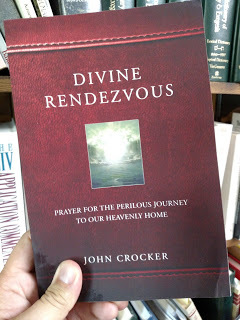 A couple of years ago, I was introduced by a mutual friend to a retired pastor who had written a manuscript about the prayer pattern Jesus taught His disciples which we tend to call the Lord's Prayer. John Crocker was looking for feedback on his work and help in navigating the publishing world.
So I got to read a pre-publishing version of his book and use it as the basis for an in-depth study on Wednesday nights in with our prayer meeting group. It was really good, and I was able to offer this endorsement:
In Divine Rendezvous, veteran pastor John Crocker takes readers on a guided tour of the most important prayer in history. Reading it was nourishing for my soul. Crocker helped me to push past over-familiarity and see profound things in the Lord's Prayer that I had always missed before. I recommend this book for both new believers and mature disciples to learn how to pray as Jesus taught us.Today, I get to hold the finished product in my hand! Thank you, John, for sending it my way. Congratulations on its publication!
They are also available on Amazon. You might want to pick one up to read it this summer. It's good for your soul.
June 30, 2018
Going Deeper: Good Books on the Problem of Suffering
 These are some of the books I'd recommend for people who are wrestling with the problem of pain and suffering:
When God Weeps: Why Our Sufferings Matter to the Almighty by Joni Earekson Tada and Steven Estes
The best book I’ve ever read on suffering by someone who has truly suffered. Joni shares from her experience as a quadriplegic after a tragic accident. Estes is her theological mentor and an EFCA pastor. Together they emphasize the compatibility of God’s wise sovereignty and His loving care.
Why Does God Allow Evil? Compelling Answers For Life’s Toughest Questions by Clay Jones
Jones is a professor of apologetics at Biola University. In this very readable book, he emphasizes the concept of free-will.
The Problem of Pain: The Intellectual Problem Raised by Human Suffering, Examined with Sympathy and Realism by C.S. Lewis.
A 20th century classic. Lewis approaches the problem on a more academic level but shows great compassion.
How Long, O LORD? Reflections on Suffering and Evil by D.A. Carson
Carson is the president of The Gospel Coalition and has taught for decades at the Trinity. His deeply insightful book is also on a higher level but is brimming with Scripture not just philosophy.
The Problem of God: Answering a Skeptic’s Challenges to Christianity by Mark Clark
Pastor Clark’s short chapter on suffering and evil is worth the price of the book. He suggests that the problem of pain is just as problematic to atheists and proponents of other religions and world views. Easy to read and thoughtful.
A Sacred Sorrow: Reaching Out to God in the Lost Language of Lament by Michael Card
A beautiful elegy to tear-filled faith. The award-winning singer/songwriter reintroduces us to the rich biblical writings that express our sadness, especially the psalms of lament (like Psalm 13).
Side by Side: Walking with Others in Wisdom and Love by Ed Welch
How do we relate to people who are suffering? Life is hard, and we need each other. Welch gives us the do’s and don’ts of walking alongside folks who are hurting.